
Warm Rustic Living Room Ideas: 22 Inspiring Ways to Create a Cozy Space
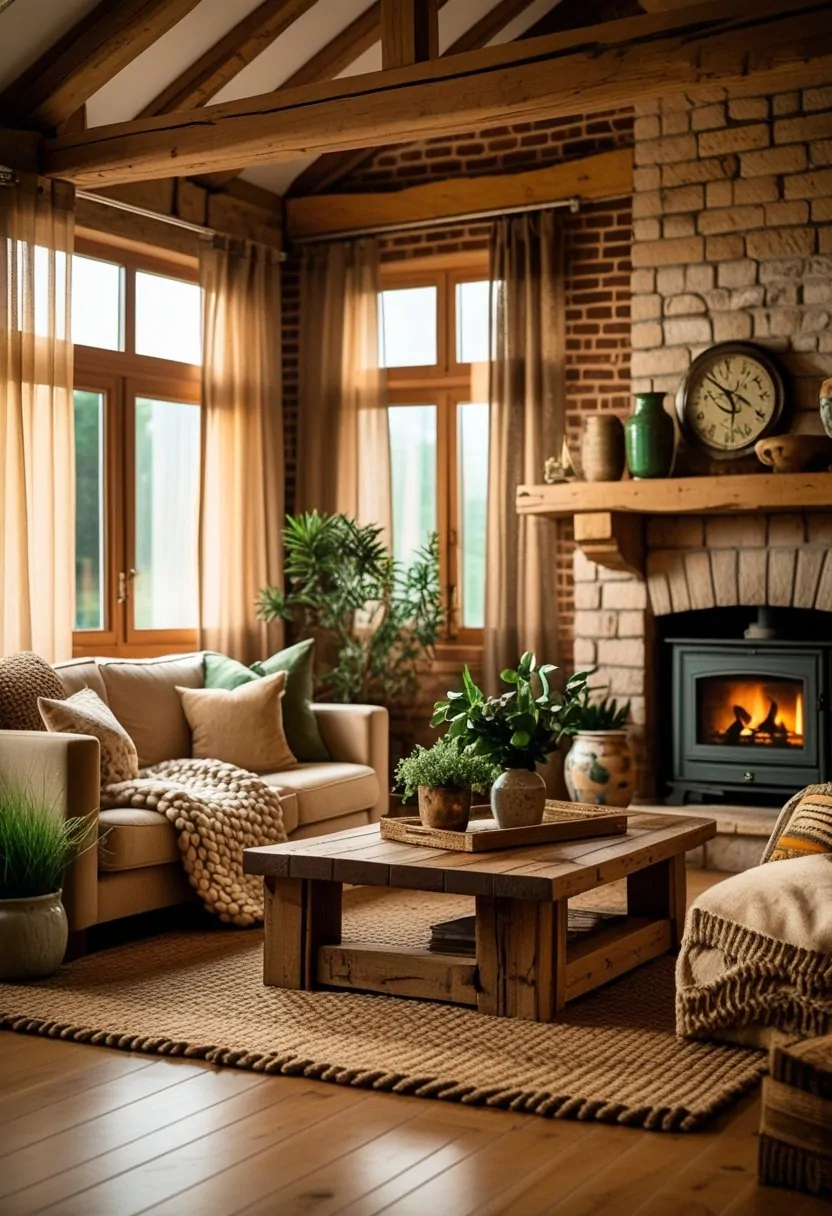
A warm rustic living room creates a comfortable space that feels both timeless and inviting. Natural elements, soft textures, and simple design choices work together to form a style that balances charm with practicality. It shows how everyday materials like wood, stone, and fabric can turn any living room into a cozy retreat.
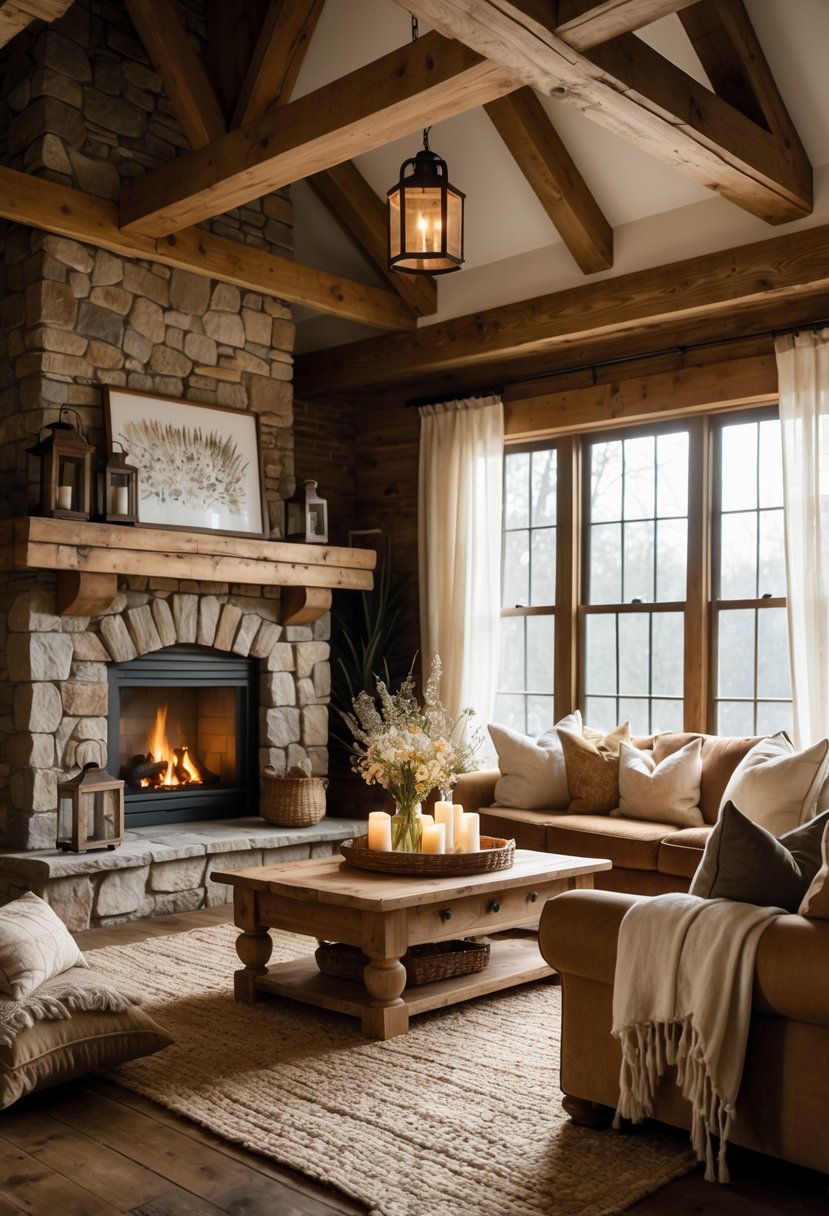
This style works well in both small and large spaces because it focuses on warmth and function rather than formality. By blending classic rustic features with thoughtful details, it allows a living room to feel relaxed while still looking well put together.
Exposed wooden beams to enhance rustic charm
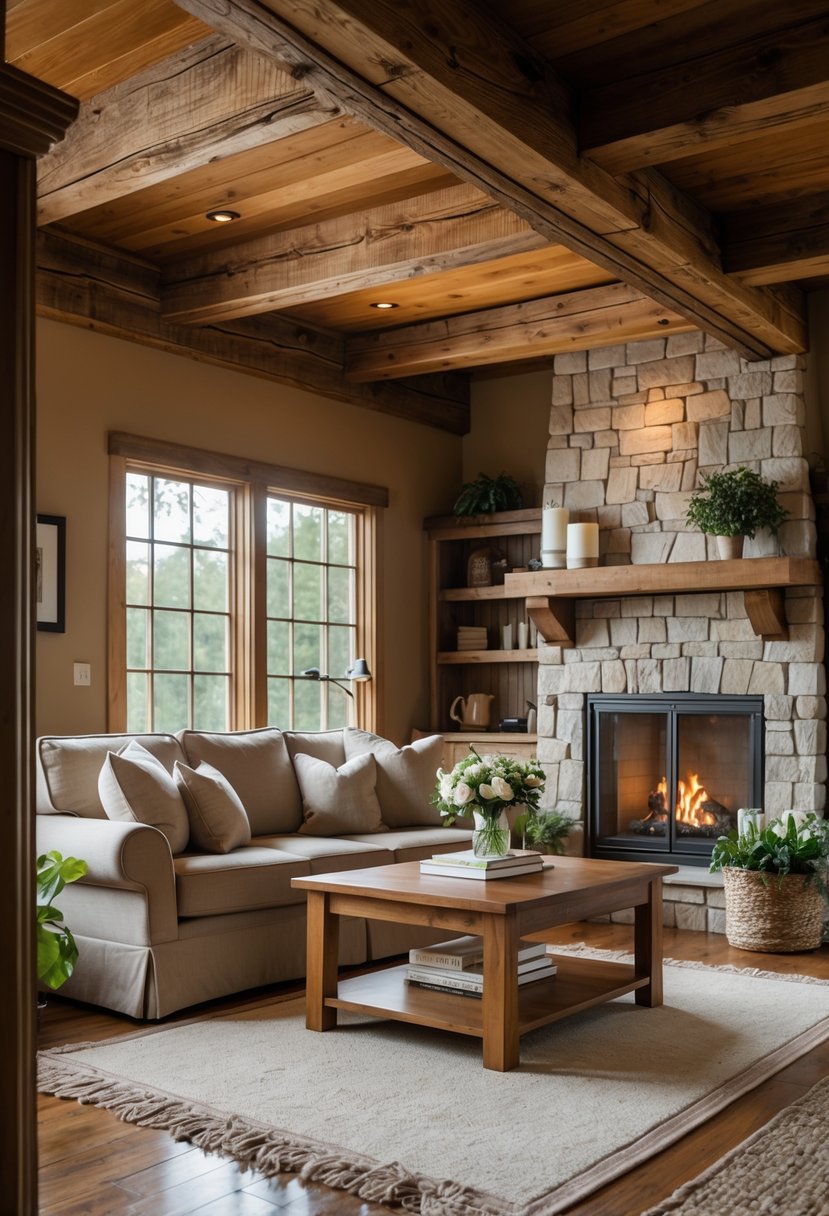
Exposed wooden beams add natural texture and visual interest to a living room. They highlight the structure of the space while keeping the design simple and warm.
Pairing beams with stone, neutral colors, or natural fabrics helps create a balanced rustic look. This combination works well in both traditional and modern settings.
Stone fireplace as a focal point
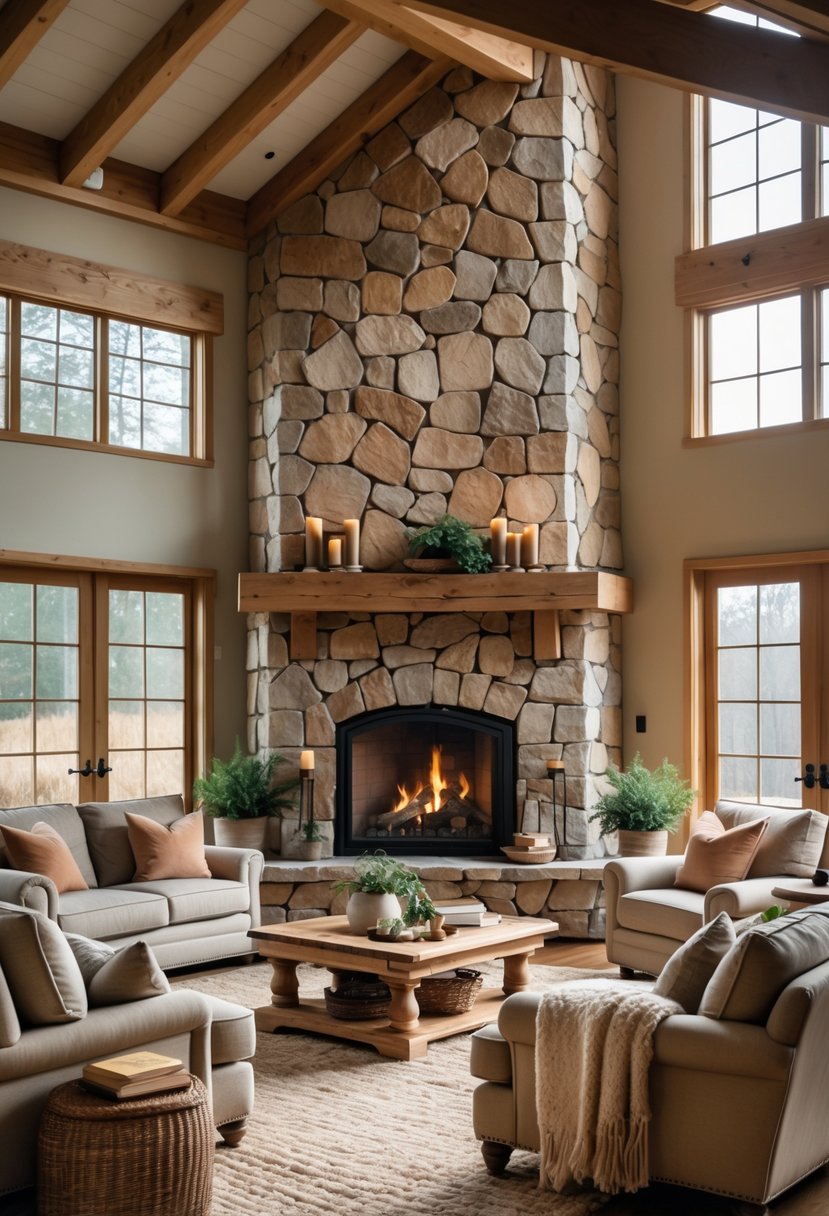
A stone fireplace naturally draws attention in a rustic living room. Its texture and color add depth without overwhelming the space.
Many designs use stacked or fieldstone to create a simple yet strong centerpiece. The stone pairs well with wood beams, shelves, or soft textiles for balance.
Lighting can highlight the stone surface and make the fireplace feel more inviting.
Teak wood vaulted ceiling panels
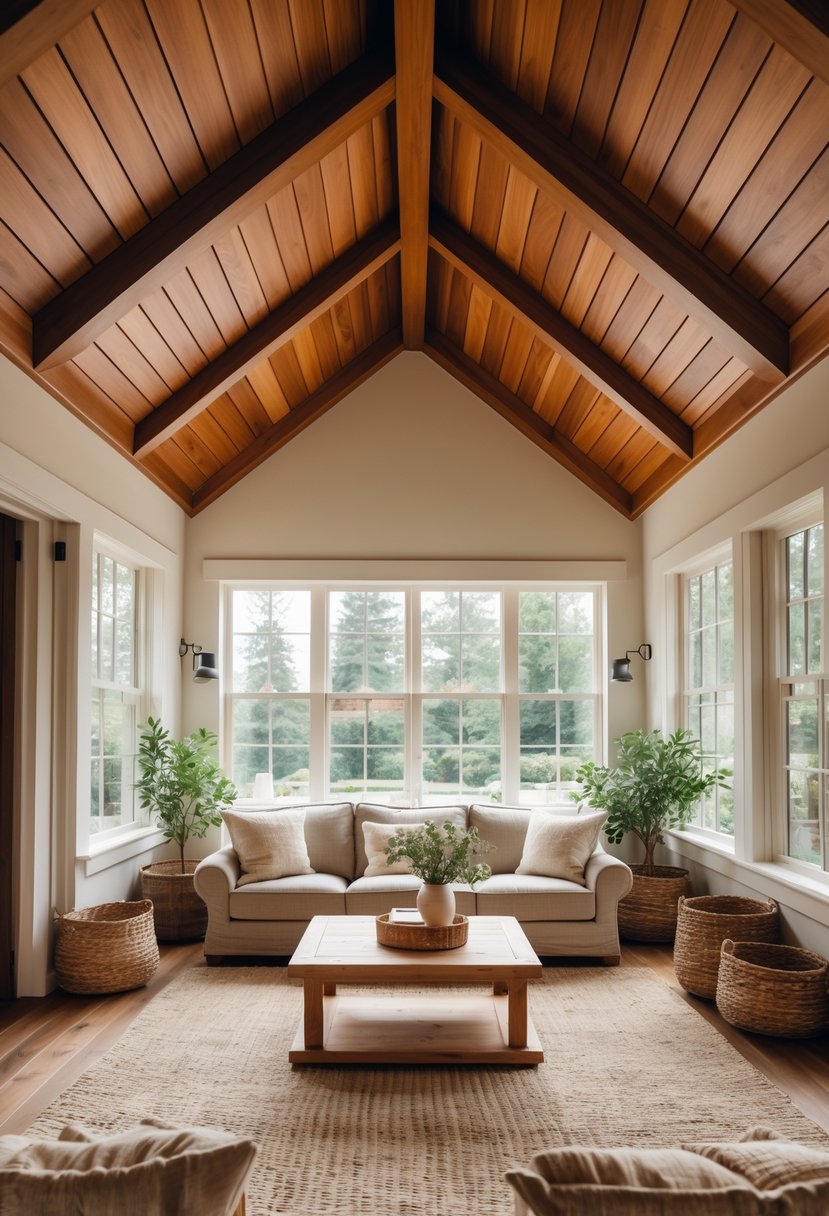
Teak wood panels add natural warmth and durability to a vaulted ceiling. Their rich tone pairs well with rustic beams and stone features.
The smooth finish of teak creates a clean contrast against textured walls or rough-hewn furniture. Large windows enhance the effect by reflecting light across the wood.
Large jute area rug for texture
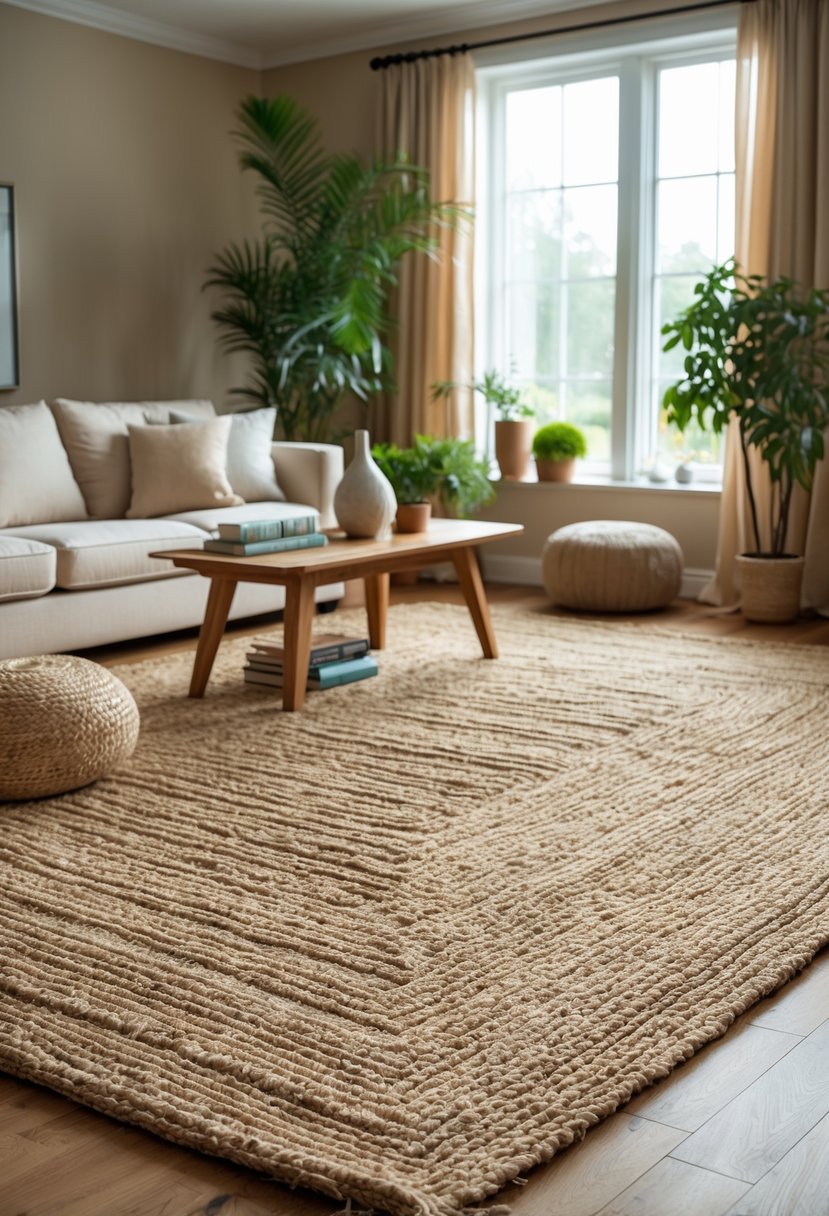
A large jute rug adds natural texture to a rustic living room. Its woven fibers bring depth without overpowering other design elements.
The neutral tone makes it easy to pair with wood furniture and soft fabrics. It also works well in high-traffic areas, offering durability and warmth.
Neutral-toned plush sofas
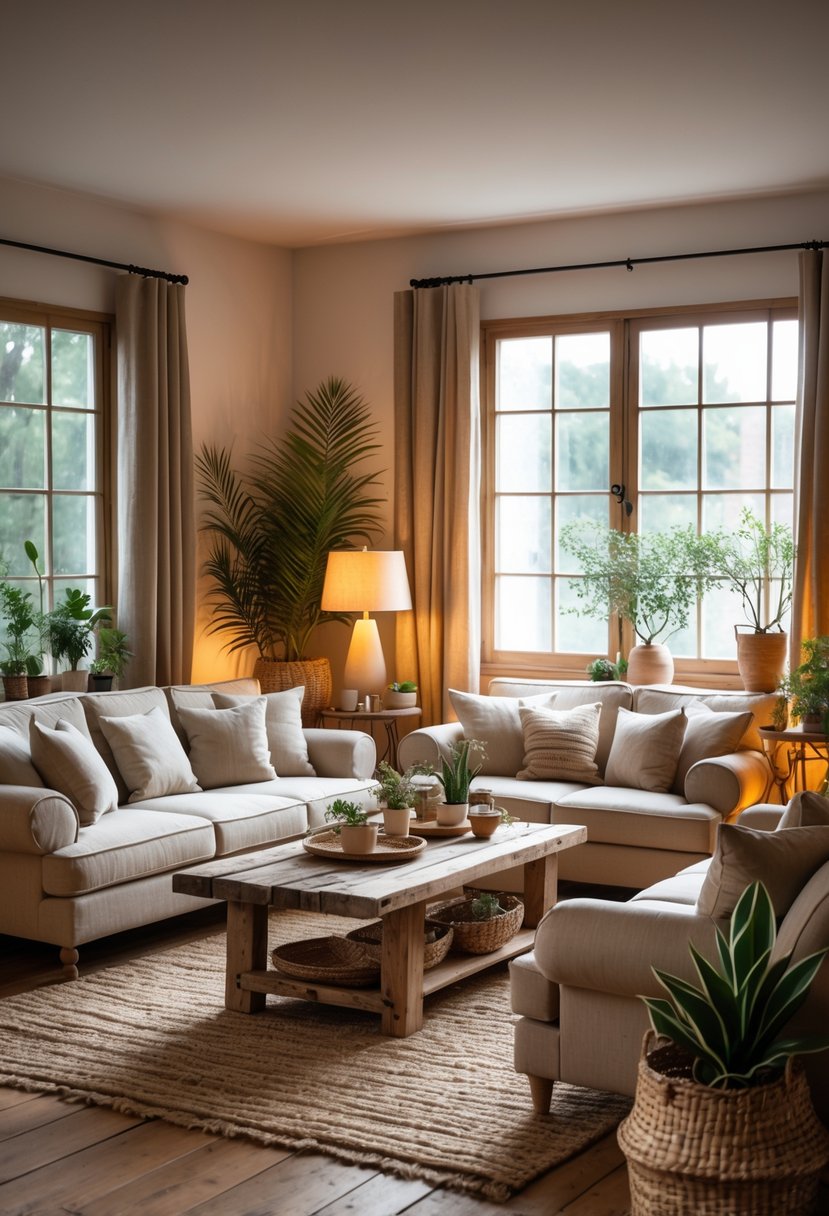
Neutral-toned plush sofas create a soft foundation for a rustic living room. Shades like beige, cream, or light gray blend easily with wood and natural textures.
Their cushioned design adds comfort while keeping the space calm and inviting. Layering with simple throws or pillows enhances warmth without overwhelming the room.
Wheel chandelier for rustic elegance
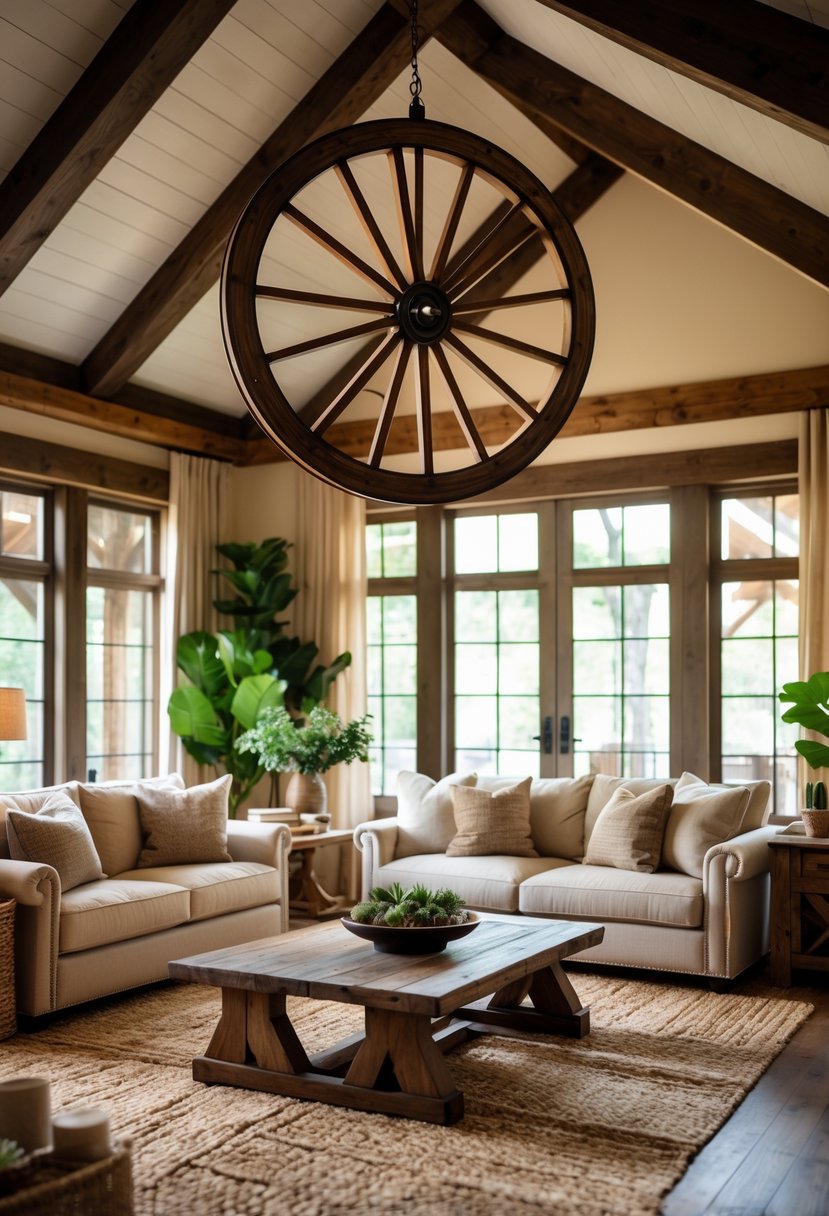
A wheel chandelier adds a rustic focal point to a living room. Its round frame often combines wood and metal for a balanced look.
Many designs use candle-style lights or Edison bulbs to create a warm glow. This soft lighting helps the space feel comfortable and inviting.
Reclaimed wood coffee table
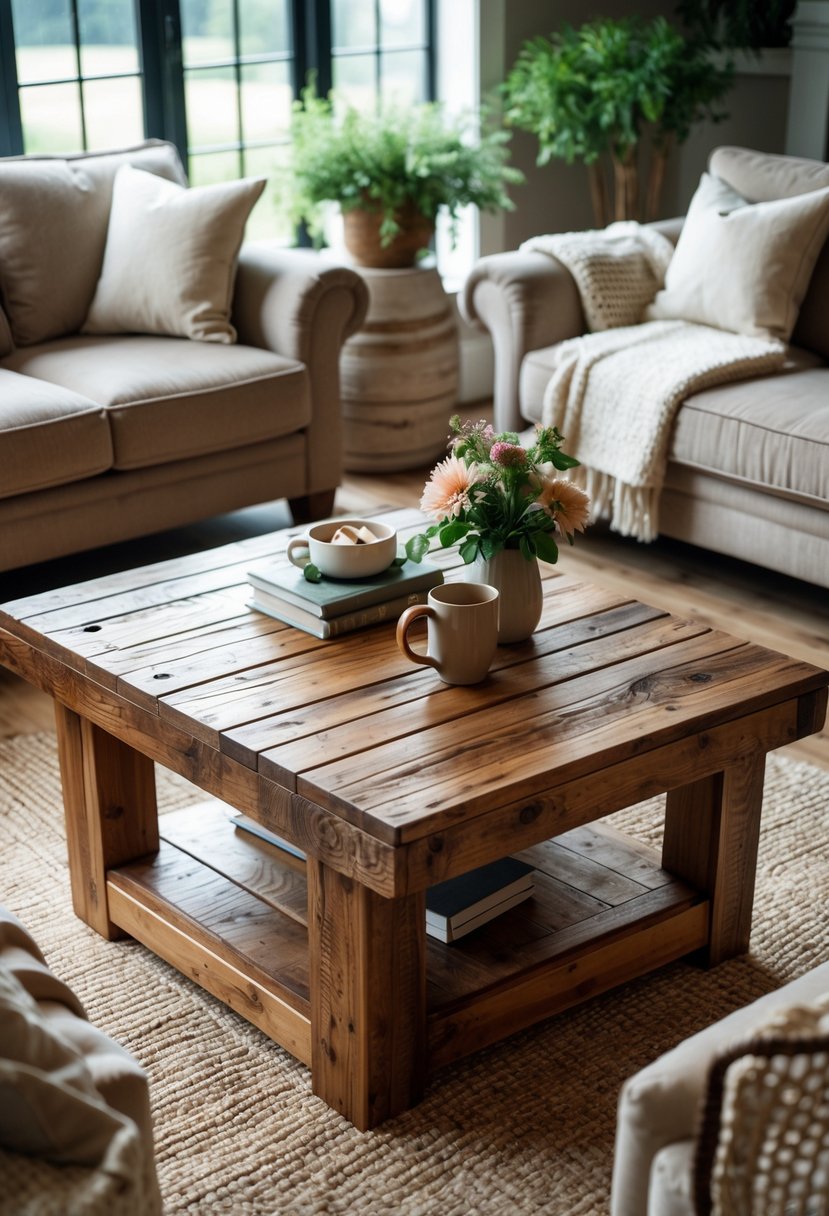
A reclaimed wood coffee table adds natural texture and character to a living room. Its weathered surface shows knots and grain that make each piece distinct.
Many people choose reclaimed wood because it is durable and sustainable. It reuses old materials while giving the space a rustic, timeless look.
Leather armchairs for warmth
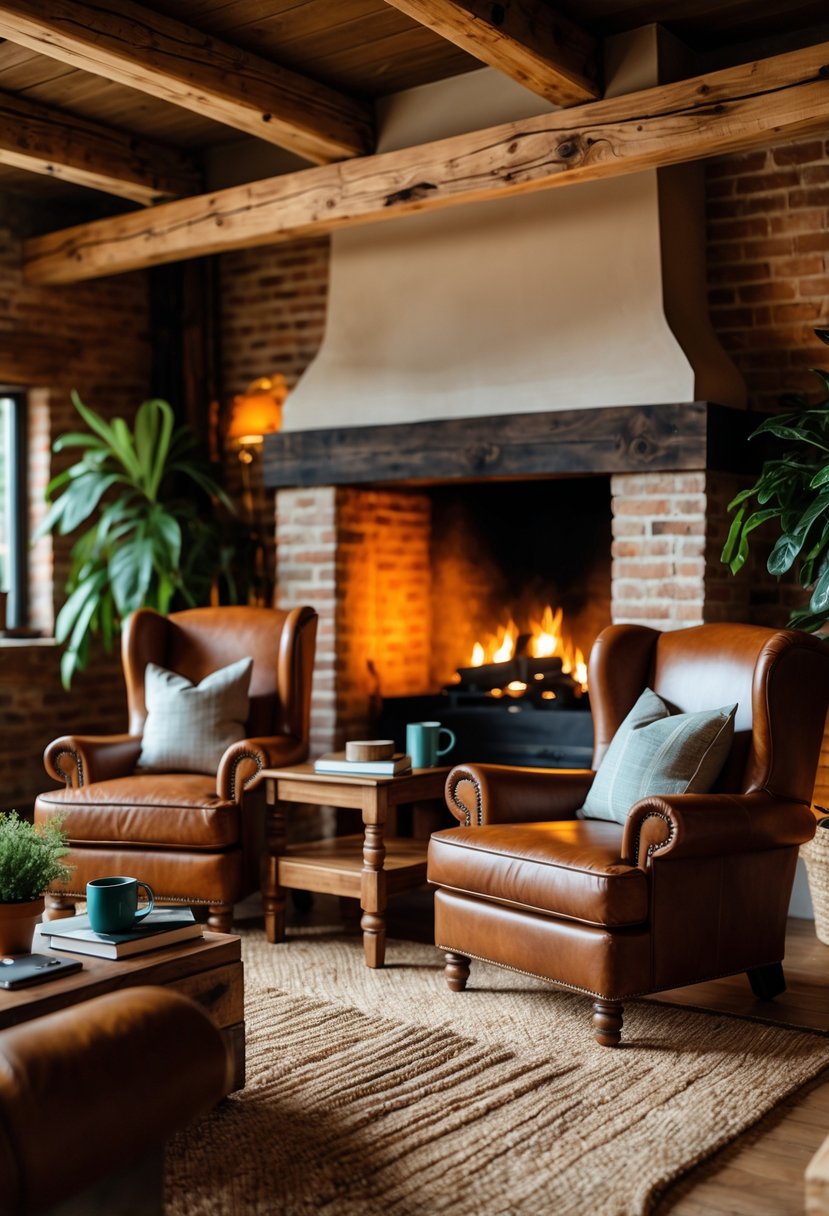
Leather armchairs add comfort while blending well with rustic design. Their natural texture pairs with wood, stone, and other raw materials.
They create a cozy spot for seating and can serve as a focal point in the room. Warm tones in leather enhance the inviting atmosphere.
Woven basket storage accents
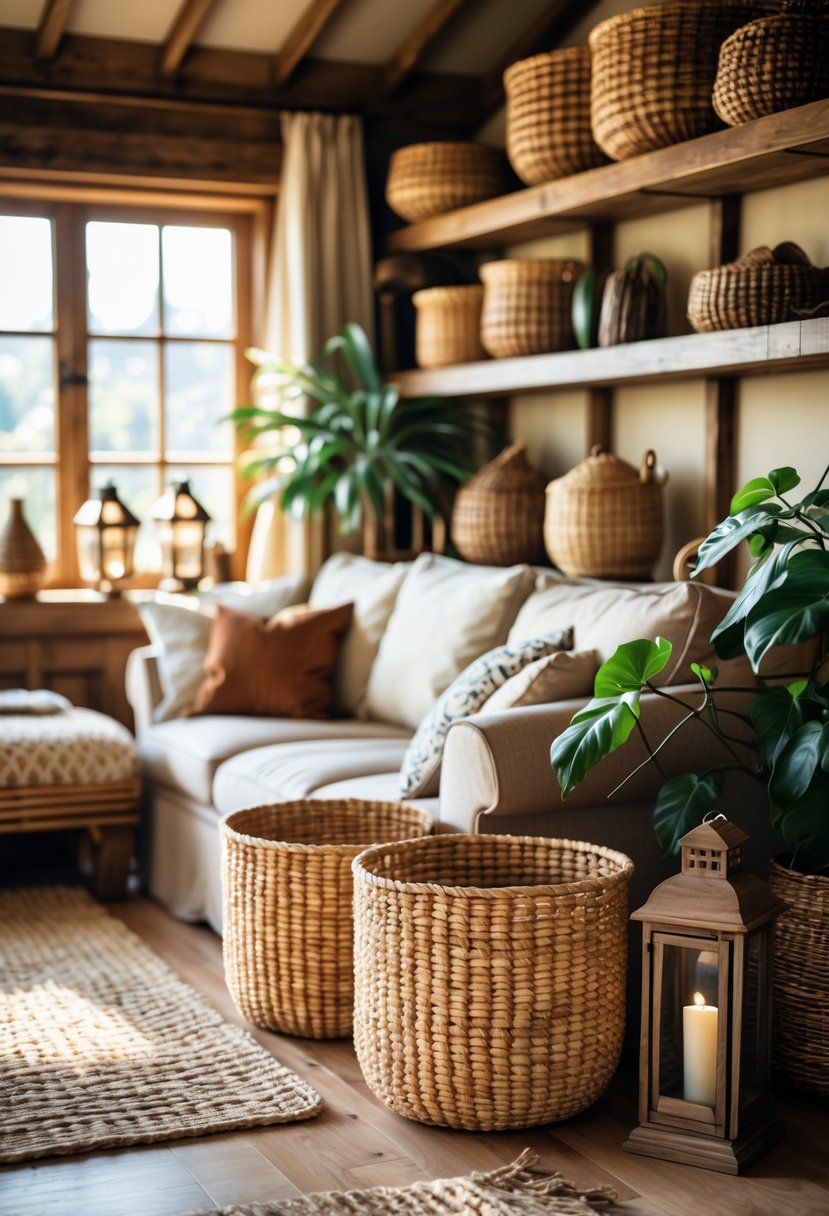
Woven baskets bring both function and texture to a rustic living room. They hold blankets, magazines, or small items while blending naturally with wood and stone.
Different sizes and shapes make them versatile. A large basket can sit beside a sofa, while smaller ones fit neatly on shelves or under tables.
Earth tone throw pillows
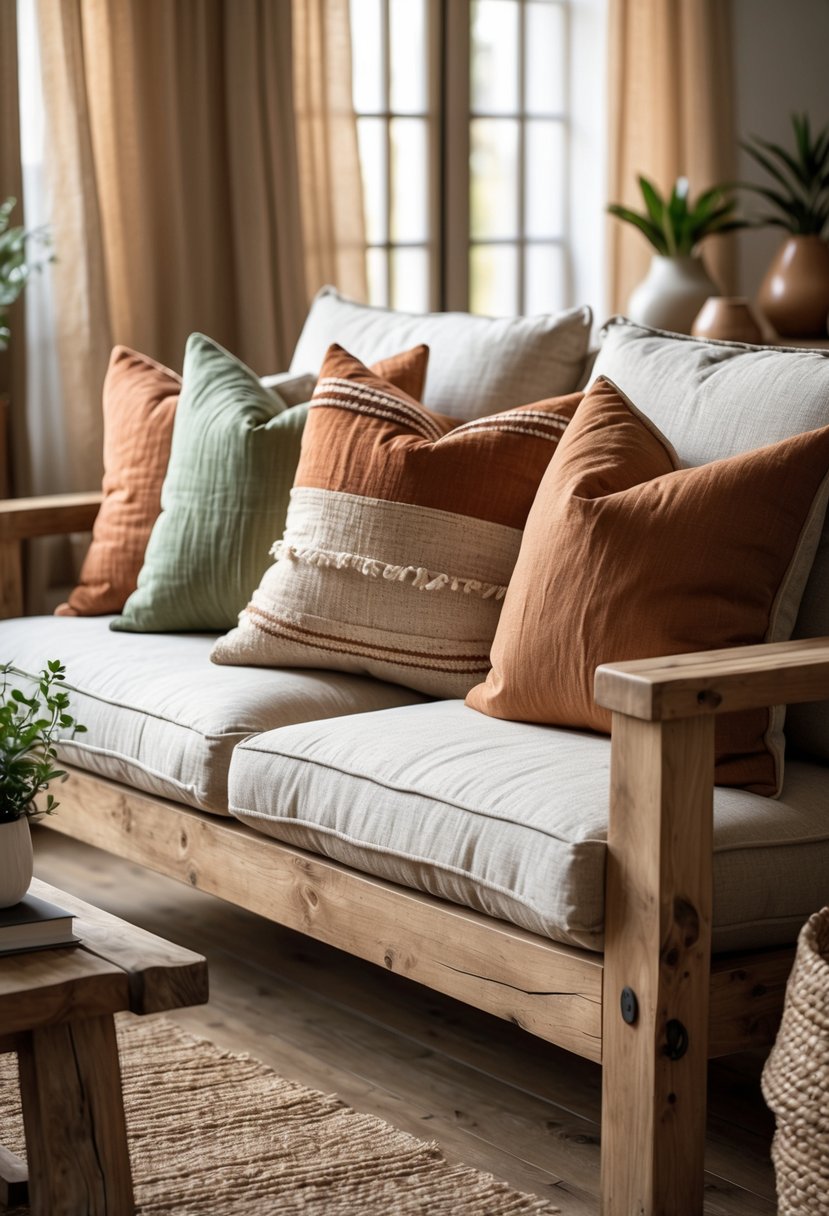
Earth tone throw pillows add warmth and texture to a rustic living room. Shades like beige, brown, olive, and terracotta blend naturally with wood and neutral fabrics.
They work well on sofas, armchairs, or benches, creating a grounded look. Mixing solid colors with subtle patterns adds depth without overwhelming the space.
Natural linen curtains
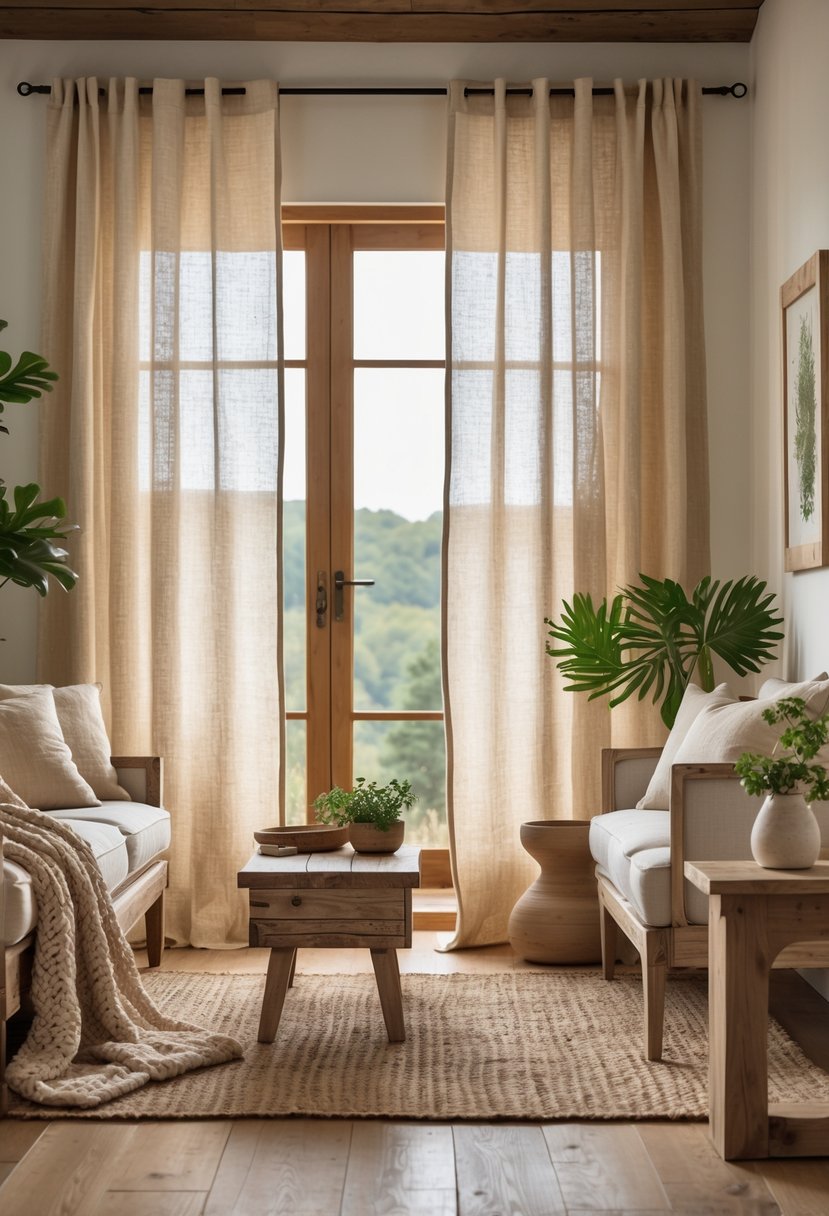
Natural linen curtains add soft texture and a relaxed look to a rustic living room. Their light weave lets in natural light while keeping the space comfortable.
The neutral tones of linen pair well with wood, stone, and other natural materials. This makes them a versatile choice for farmhouse or rustic decor.
Rustic metal wall sconces
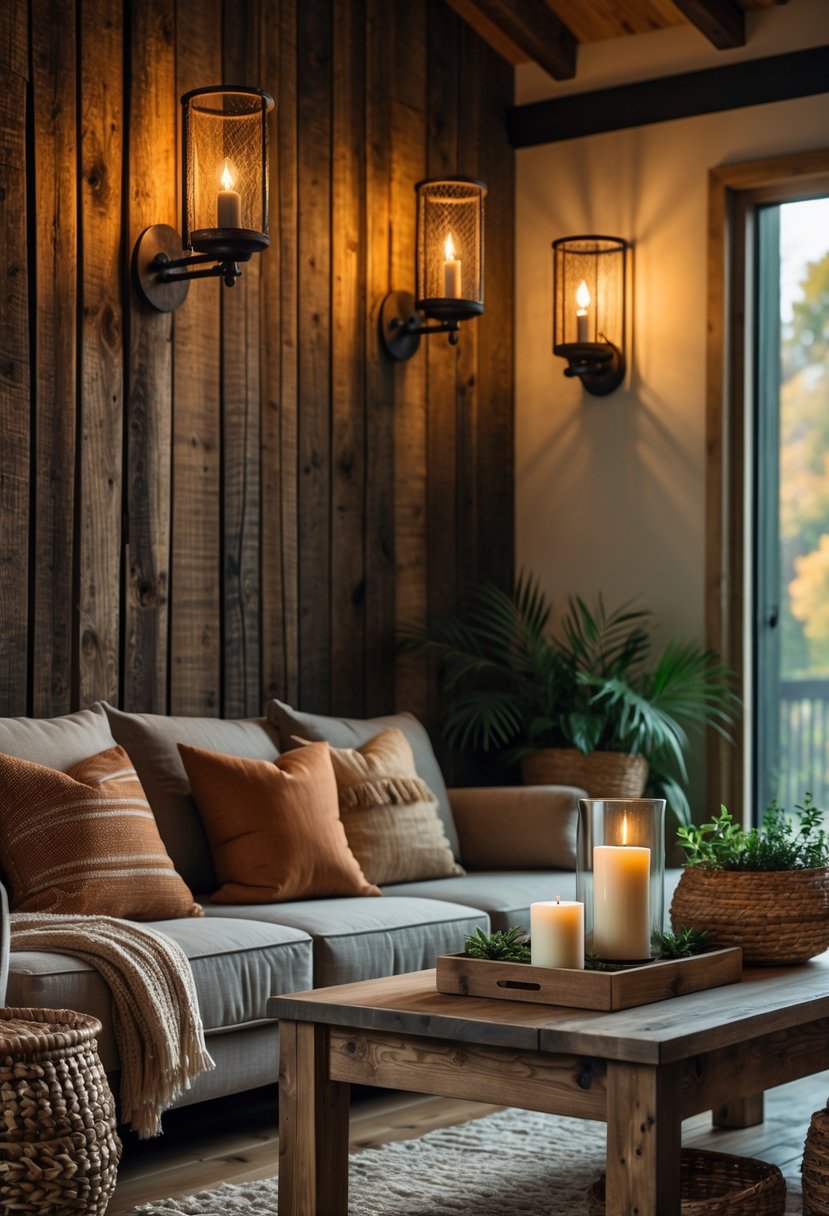
Rustic metal wall sconces add both light and texture to a living room. Their simple forms and sturdy materials create a functional accent that blends well with wood and stone surfaces.
They often feature iron or steel with dark finishes, giving a subtle industrial touch while maintaining a warm, inviting atmosphere.
Vintage wooden ladder as decor
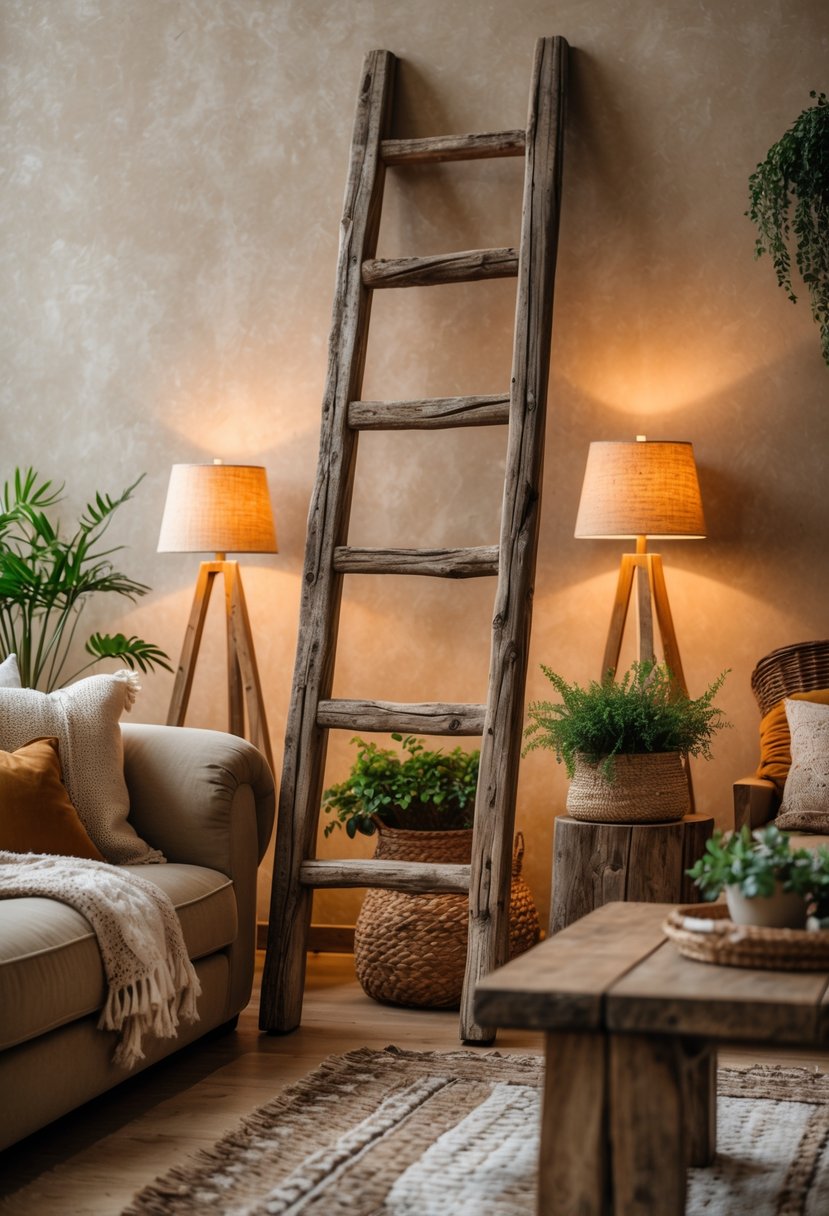
A vintage wooden ladder adds a simple rustic touch to a living room.
It can lean against a wall to hold blankets or small plants.
Some place it horizontally on the wall as a shelf or display piece.
Antique wooden trunk as a coffee table
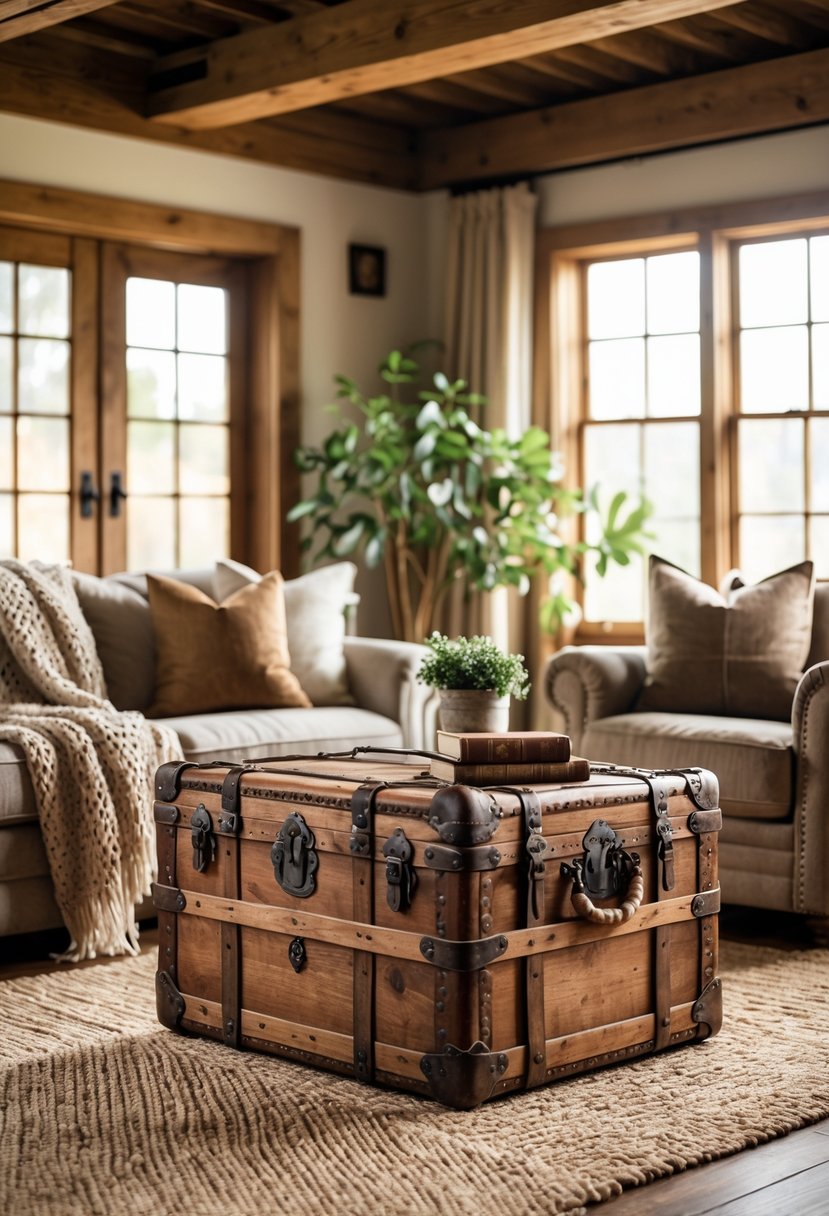
An antique wooden trunk can serve as both a coffee table and storage piece. Its solid build and aged finish add warmth to a rustic living room.
The trunk’s surface works well for books, trays, or seasonal decor. Inside, it provides space for blankets, games, or other items.
Handwoven wool blankets
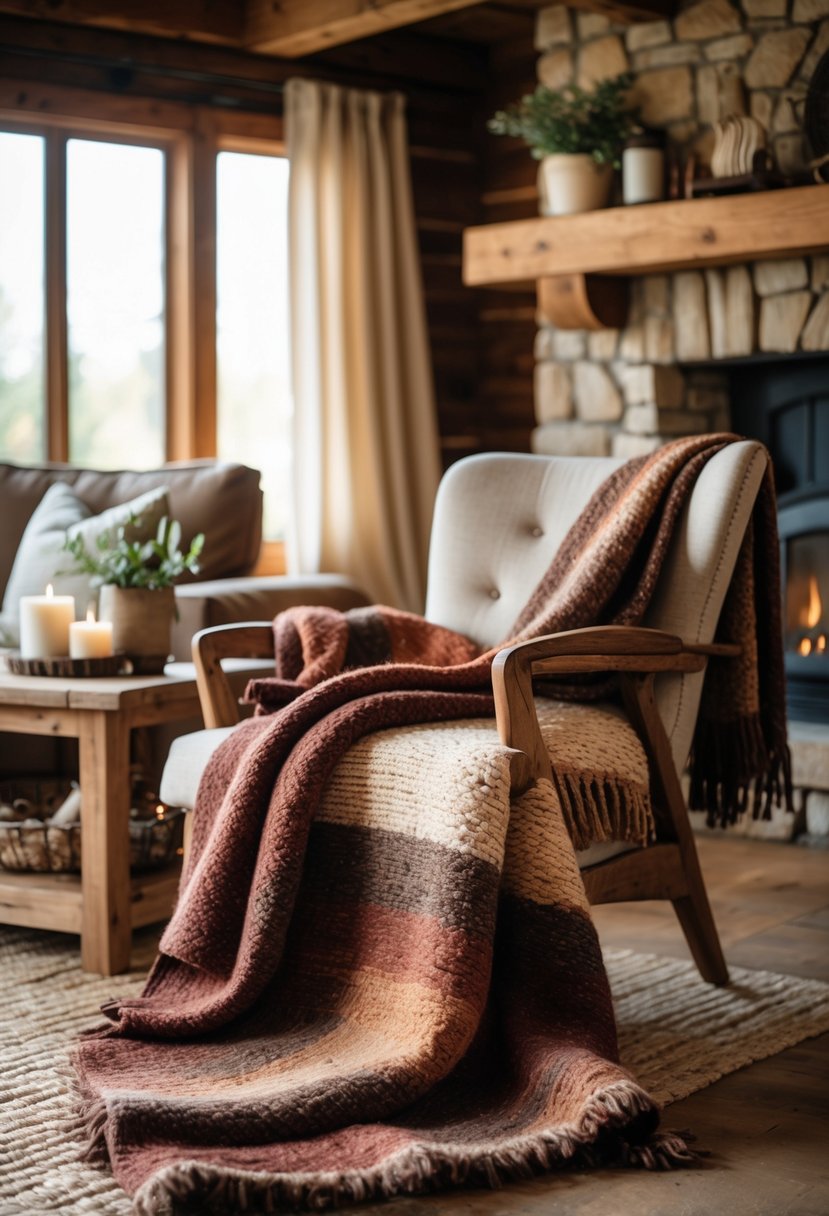
Handwoven wool blankets add warmth and texture to a rustic living room. Their natural fibers create a cozy layer that feels both practical and inviting.
They work well draped over sofas, armchairs, or even at the foot of a daybed. The simple patterns and earthy tones blend easily with wood and stone elements.
Rustic open shelving with natural wood
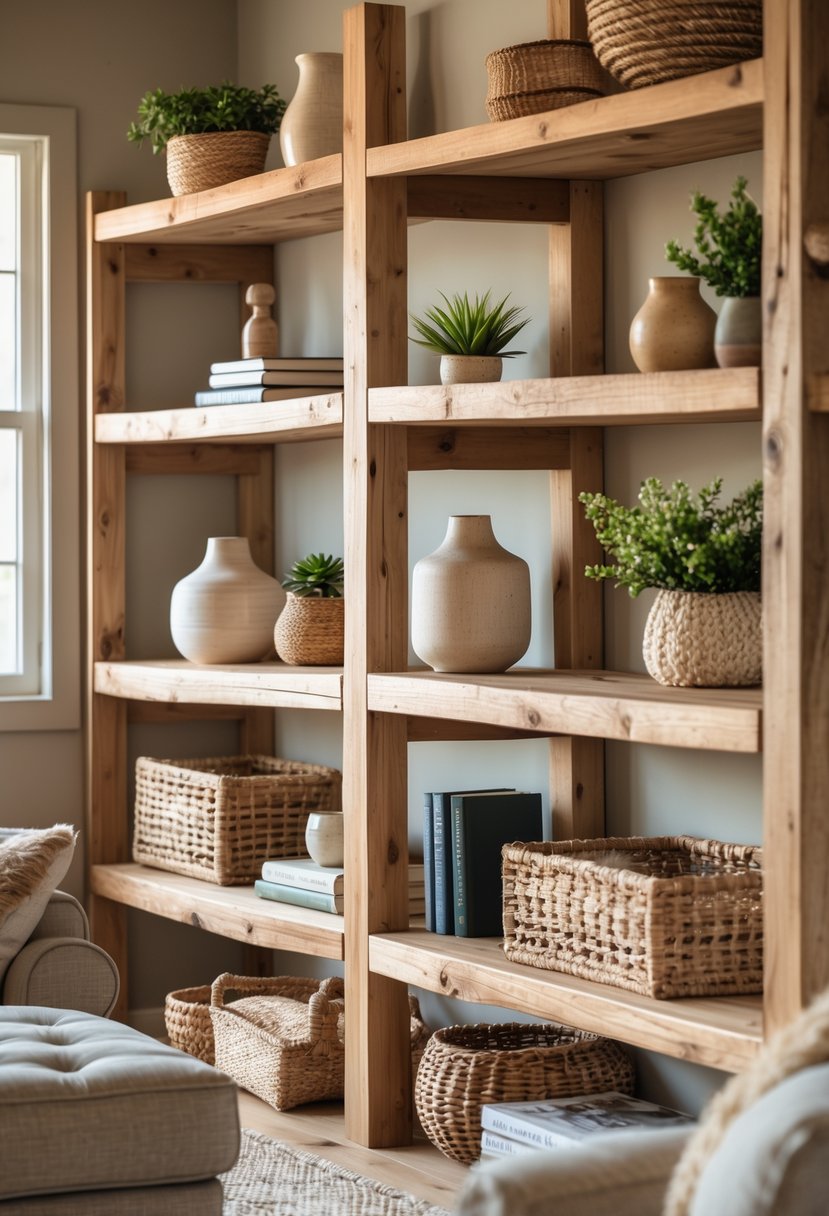
Rustic open shelving uses natural wood to bring warmth and texture into a living room. The visible grain and simple design create a grounded, timeless look.
Homeowners often choose reclaimed or rough-cut wood for added character. These shelves work well for displaying books, pottery, or plants without feeling crowded.
Potted greenery for natural touch
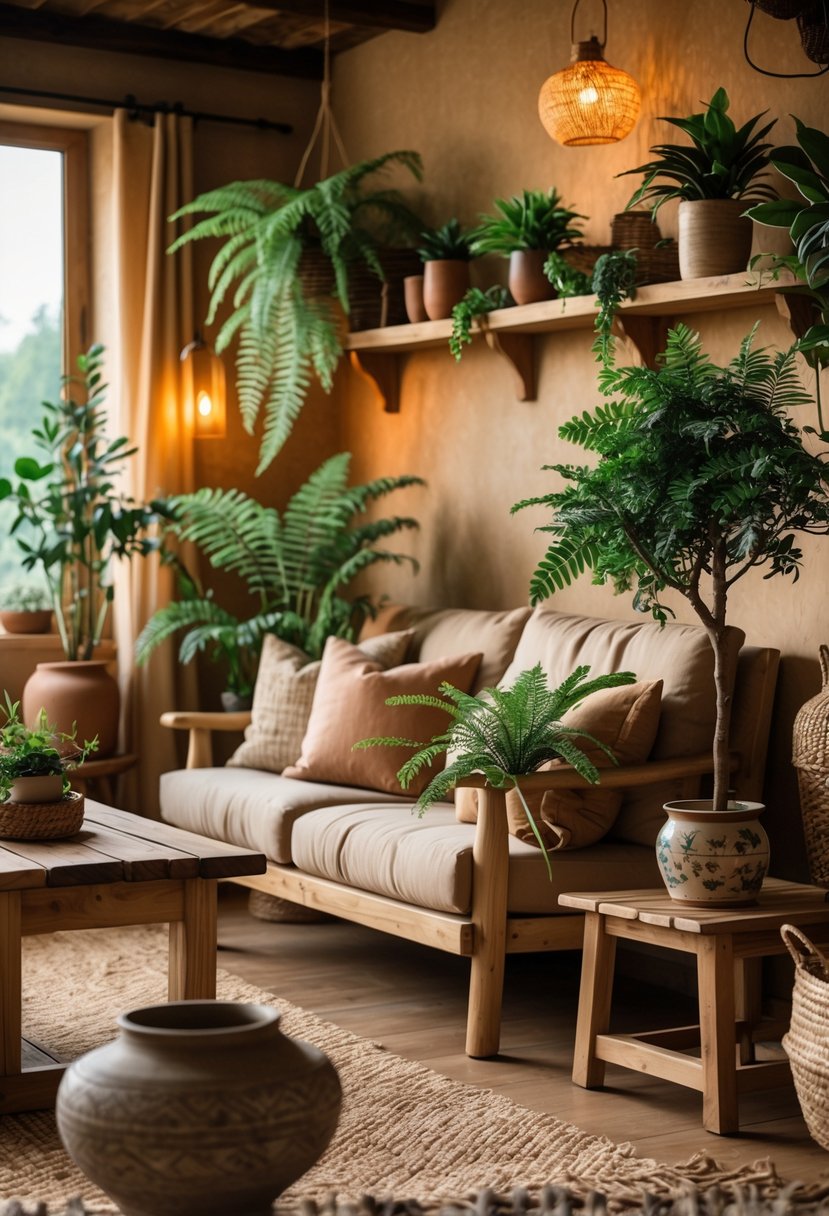
Potted plants bring a simple way to add life to a rustic living room. They soften wood and stone textures with natural color.
Small pots on shelves or tables create subtle accents, while larger floor plants can serve as focal points.
Using clay, ceramic, or woven baskets keeps the look warm and consistent with rustic style.
Distressed wood side tables
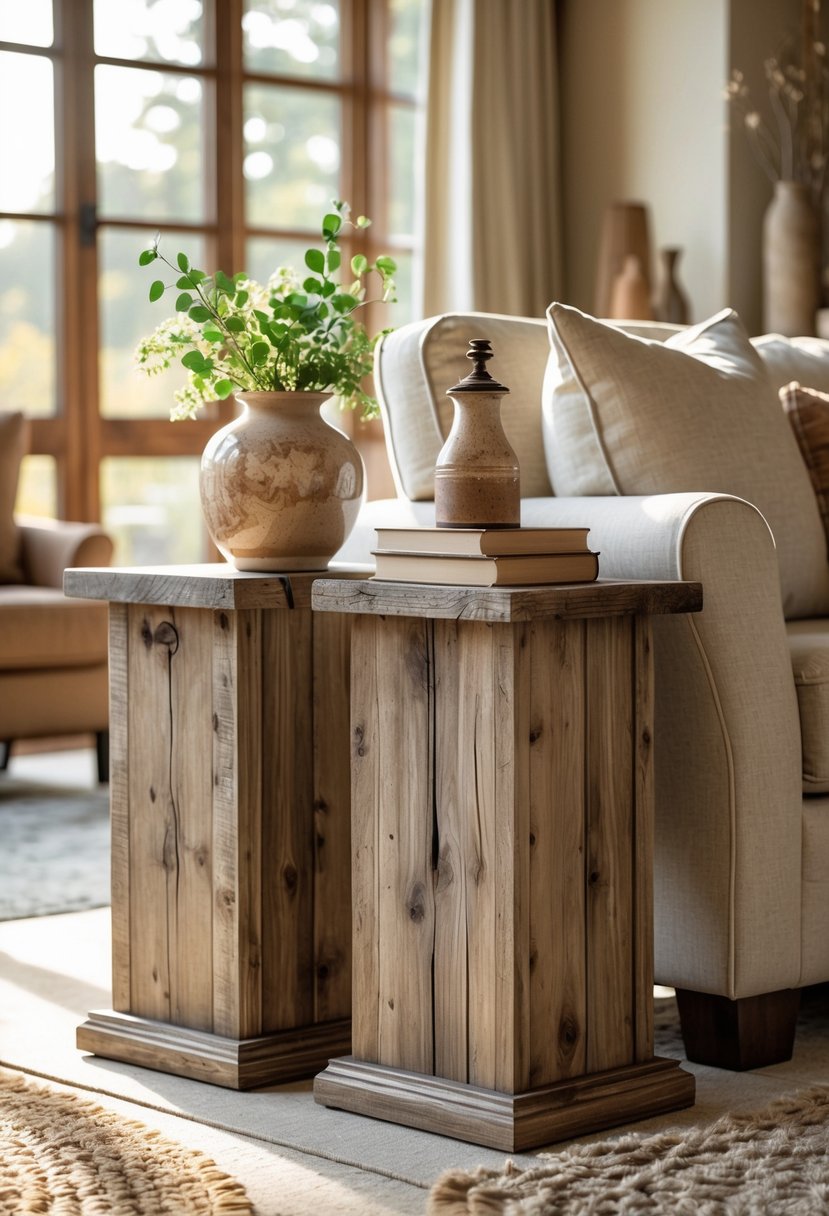
Distressed wood side tables bring a worn, natural look that fits well in a rustic living room. Their weathered finish adds texture without overpowering the space.
They work well next to sofas or chairs, offering a practical spot for lamps, books, or drinks. Each piece often shows unique grain and marks.
These tables pair easily with other rustic elements like reclaimed wood coffee tables or vintage decor. Their simple design helps create a balanced, inviting room.
Rustic farmhouse-style ceiling fan
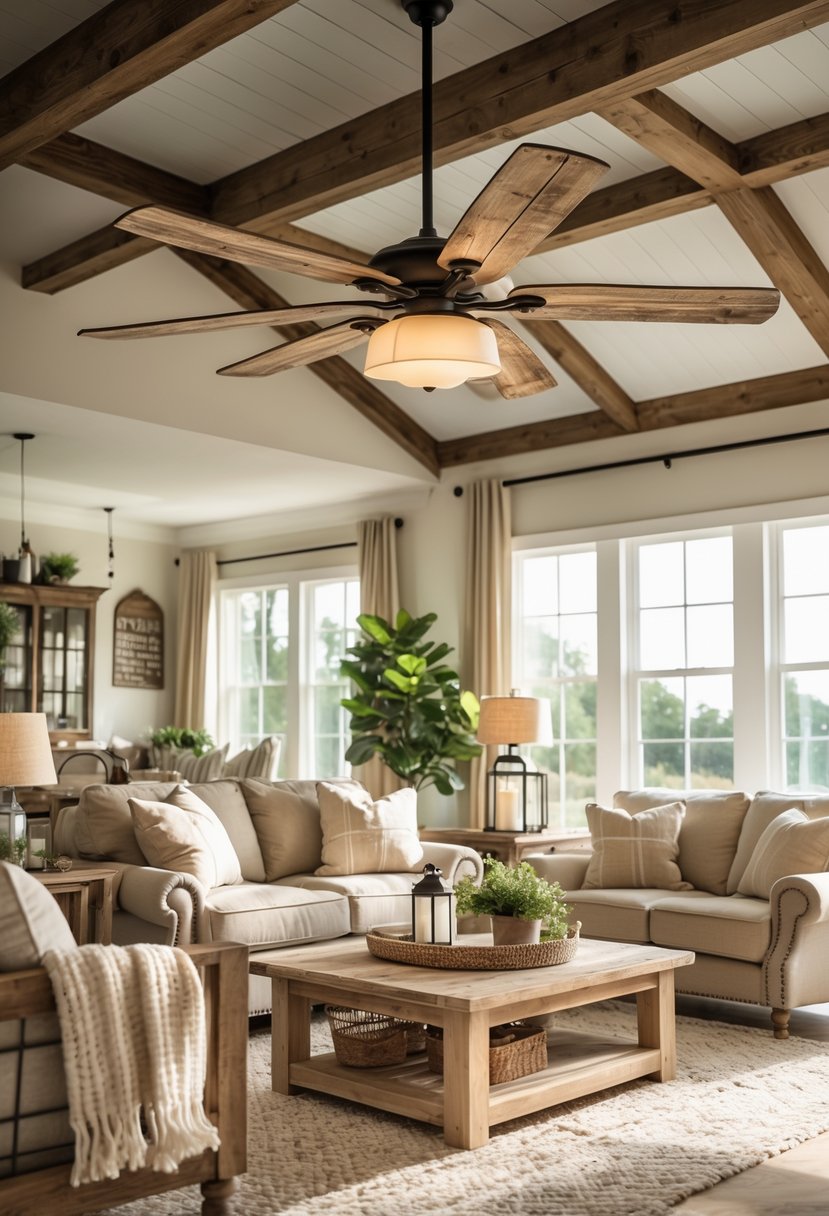
A rustic farmhouse-style ceiling fan adds both function and charm to a living room. Its design often features wood blades, metal accents, and neutral tones that blend well with farmhouse decor.
These fans provide airflow while complementing natural materials like reclaimed wood and stone. They work as a practical piece that also ties the space together.
Iron and wood mixed furniture pieces
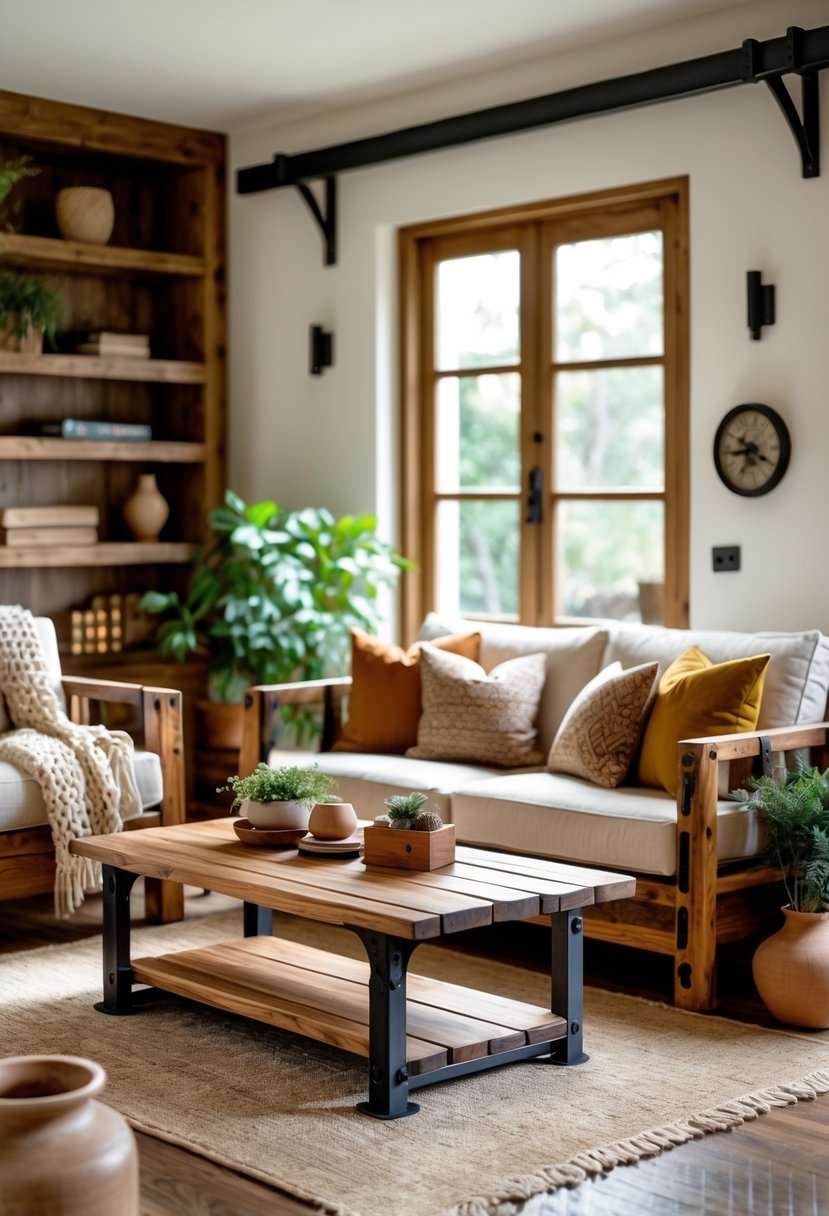
Iron and wood furniture adds balance between strength and warmth. The metal provides structure, while the wood introduces natural texture.
They often choose coffee tables with iron frames and wooden tops, or shelving that combines open metal supports with reclaimed wood planks.
This pairing works well in rustic spaces because it blends durability with a simple, timeless look.
Textured clay or ceramic vases
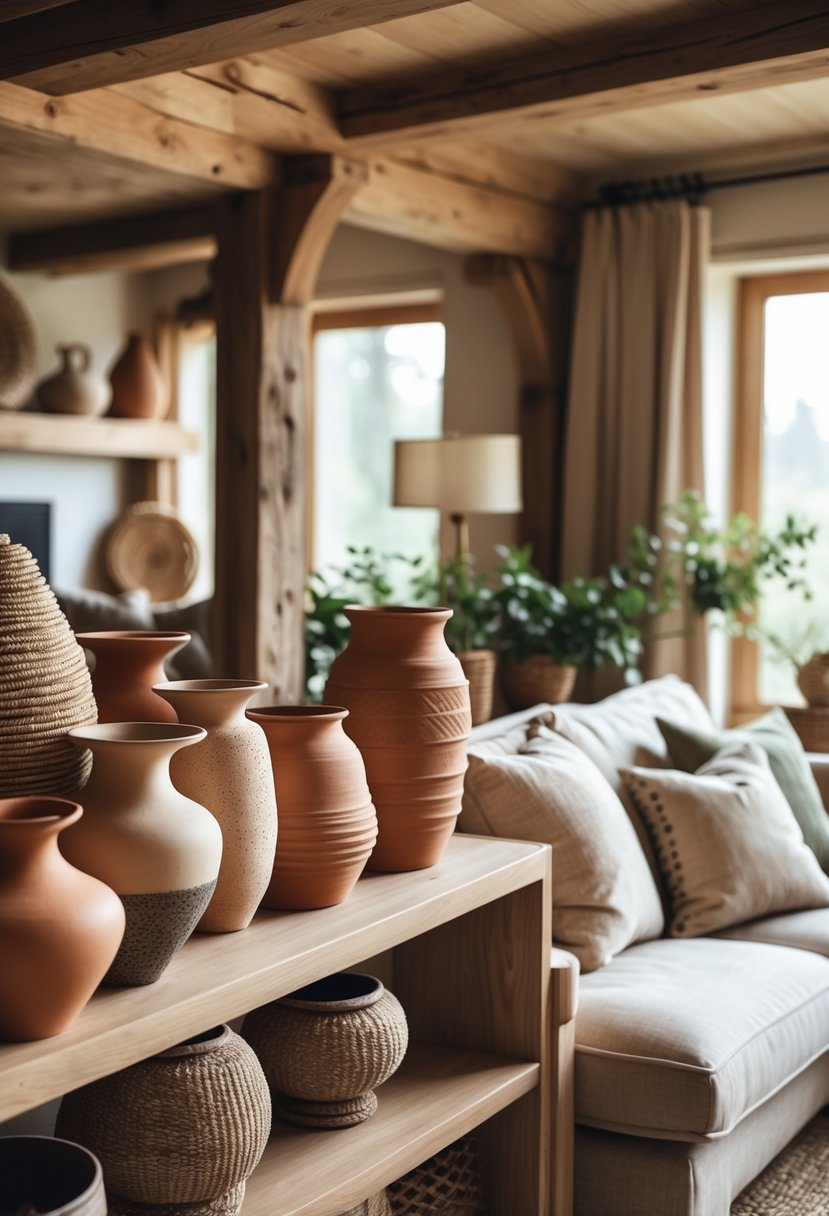
Textured clay or ceramic vases add natural detail to a rustic living room. Their earthy surfaces bring depth without overwhelming the space.
They work well on coffee tables, shelves, or beside fireplaces. Neutral tones blend easily, while darker glazes or hand-carved patterns create subtle contrast.
Brick accent wall
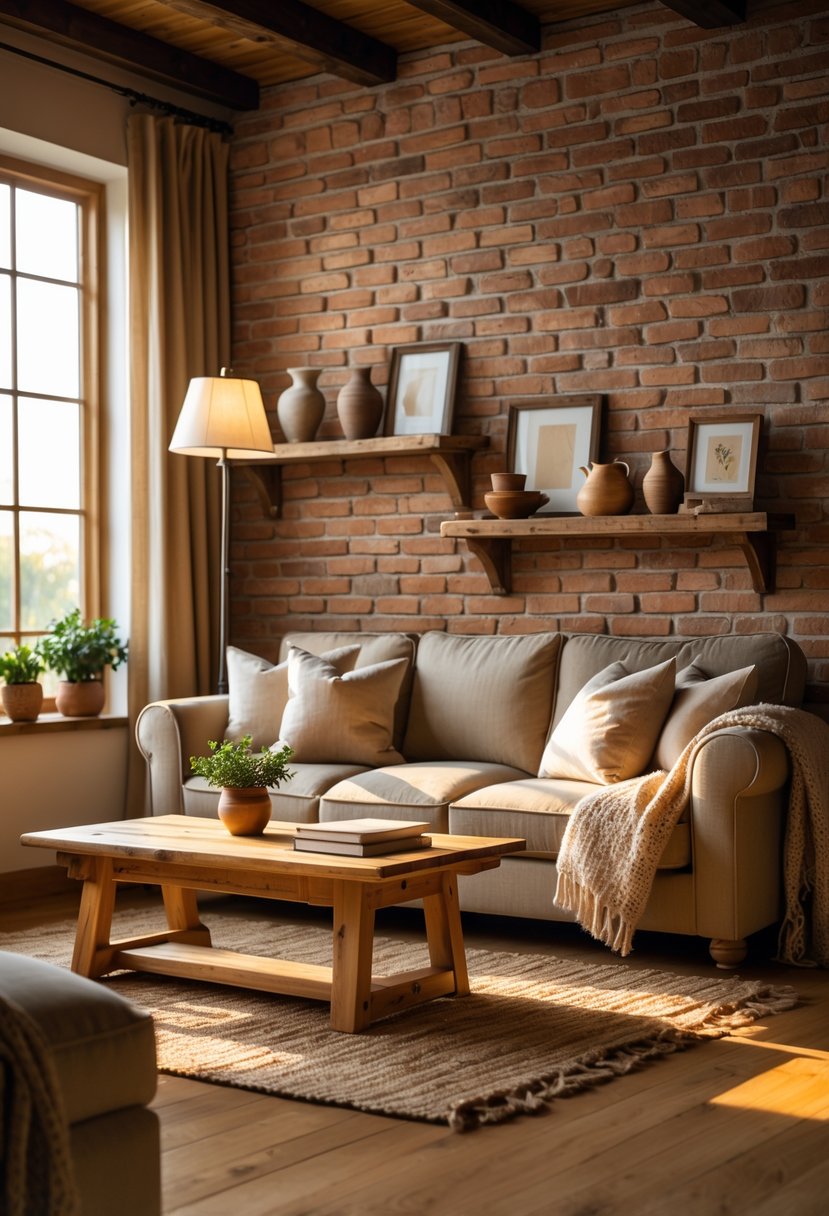
A brick accent wall adds texture and depth to a rustic living room. It creates a natural backdrop that pairs well with wood and neutral tones.
Exposed brick works with both traditional and modern furniture. Its warm color and rough surface help the space feel inviting without overwhelming the room.
Fundamental Elements of a Warm Rustic Living Room
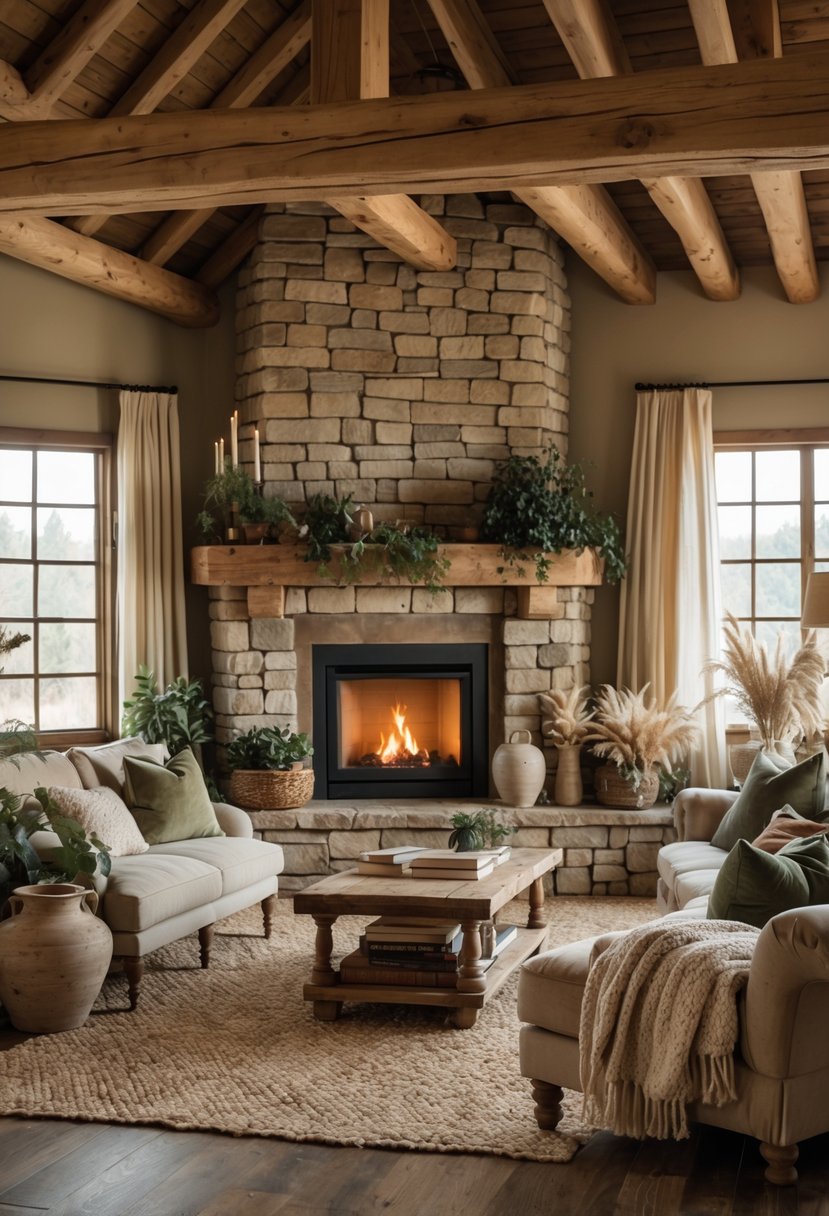
A warm rustic living room relies on natural tones, layered textures, and sturdy materials that bring comfort and character. Each element should balance style with function so the space feels both inviting and practical.
Color Palettes That Evoke Warmth
Warm rustic spaces use colors that reflect nature and create a sense of comfort. Earth tones like browns, tans, and muted greens form the base, while warm neutrals such as cream or beige keep the room light.
Accent shades like rust, terracotta, or deep red can highlight furniture or textiles without overwhelming the space. These tones work best in smaller details such as throw pillows, rugs, or wall art.
A simple palette example might look like this:
| Base | Accent | Neutral |
|---|---|---|
| Warm brown | Terracotta | Cream |
| Olive green | Rust red | Beige |
By sticking to a consistent palette, the room feels cohesive and visually calm.
Textural Layering for a Cozy Feel
Texture plays a central role in rustic design because it adds depth and comfort. Mixing soft fabrics with rougher natural finishes creates balance and prevents the space from looking flat.
Common pairings include:
- Wool or knit blankets on leather sofas
- Linen curtains against wood-paneled walls
- Woven rugs layered on hardwood floors
Using more than one textile in the same space makes it feel warmer. For example, a cotton throw paired with a wool rug adds both softness and durability.
Even small details such as wicker baskets or stone coasters contribute to a layered, cozy atmosphere.
Incorporating Natural Materials
Natural materials define rustic style and give the room its character. Wood, stone, leather, and metal are the most common choices, each bringing a different quality.
- Wood: Reclaimed beams, coffee tables, or shelving
- Stone: Fireplaces, accent walls, or tabletops
- Leather: Sofas, chairs, or ottomans
- Metal: Iron hardware, light fixtures, or side tables
These materials work best when kept in their raw or slightly weathered state. A reclaimed wood coffee table with visible grain, for example, adds authenticity.
Combining different natural elements ensures the room feels grounded while still offering variety in texture and appearance.
Design Tips for Enhancing Rustic Ambiance
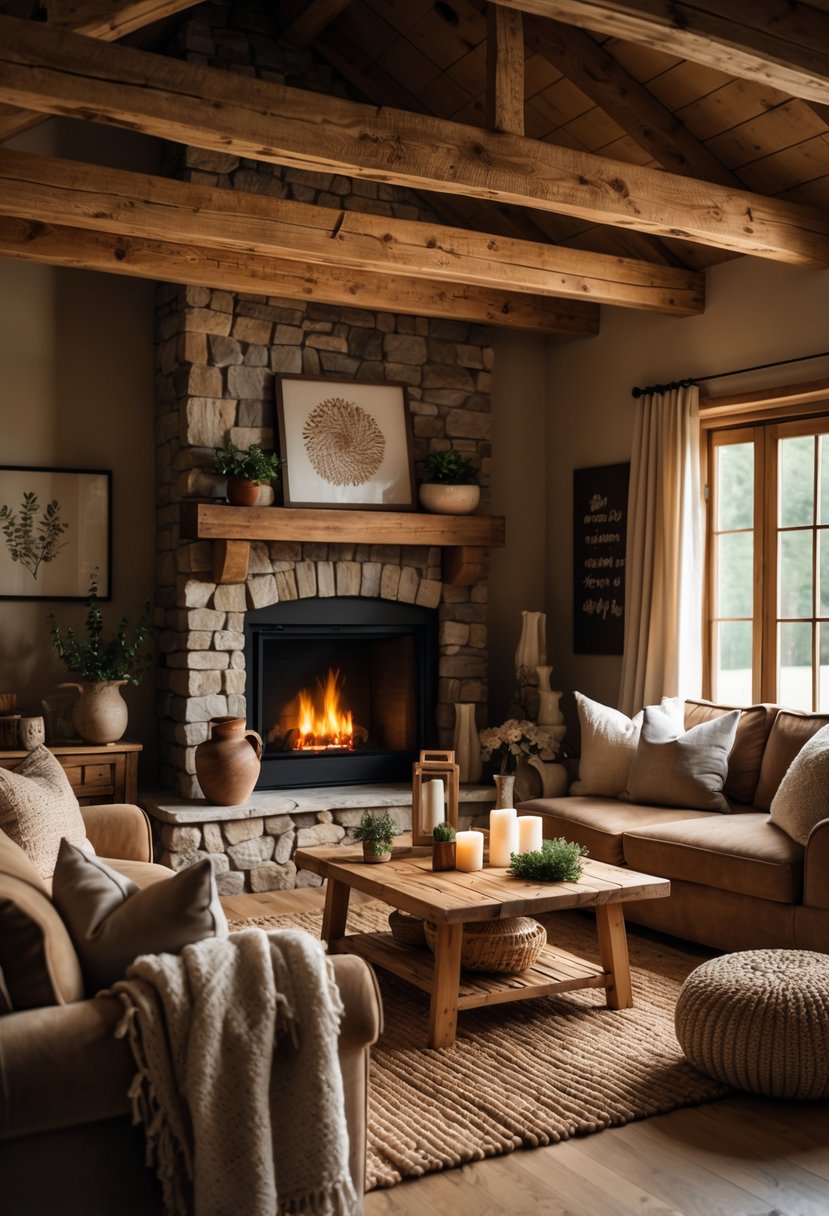
A rustic living room feels most inviting when natural elements, thoughtful lighting, and carefully chosen accents work together. Wood, stone, and warm textures set the foundation, while lighting and decor choices determine how cozy and personal the space becomes.
Balancing Modern and Rustic Styles
Blending rustic and modern design creates a space that feels both timeless and practical. A room with reclaimed wood beams or stone fireplaces can still include clean-lined furniture or sleek metal accents. This mix prevents the space from looking dated or overly traditional.
One approach is to pair neutral modern sofas with rustic touches like a wooden coffee table or woven rug. The contrast highlights each style without overwhelming the room.
A simple table can help guide choices:
| Rustic Element | Modern Pairing |
|---|---|
| Reclaimed wood | Glass or metal |
| Stone fireplace | Minimalist wall art |
| Woven textiles | Neutral sectional |
This balance works best when rustic elements remain the anchor, while modern details add function and refinement.
Lighting Strategies for Warmth
Lighting plays a central role in creating a warm rustic feel. Instead of one bright overhead light, layered lighting makes the space more inviting. Floor lamps, table lamps, and sconces with soft bulbs spread light evenly and reduce harsh shadows.
Warm-toned bulbs, usually in the 2700K–3000K range, give a glow that highlights wood grain and natural textures. Fixtures made of wrought iron, aged brass, or wood complement the rustic look while still being functional.
Candles or lantern-style lamps also add soft light that feels natural. Placing them near stone or wood surfaces enhances texture and creates depth. A dimmer switch offers flexibility, making it easy to shift from bright task lighting to a relaxed evening setting.
Decor Accents That Add Character
Small details often define a rustic living room. Textiles such as wool throws, linen curtains, or leather cushions add comfort and texture. Natural materials like clay vases, woven baskets, or stone bowls reinforce the rustic theme without cluttering the space.
Wall decor can include simple framed prints, landscape artwork, or vintage pieces. Antler-inspired accents, weathered mirrors, or handmade pottery bring character without feeling forced.
Plants also work well in rustic rooms. Potted greenery or dried branches add life and connect the interior to nature. By choosing a few key accents instead of many, the room feels personal while keeping a clean, balanced look.
Want to keep the inspiration going? Browse these living room decorating ideas for more expert tips.


