
22 Minimalist Dorm Room Design Ideas for a Stylish and Functional Space
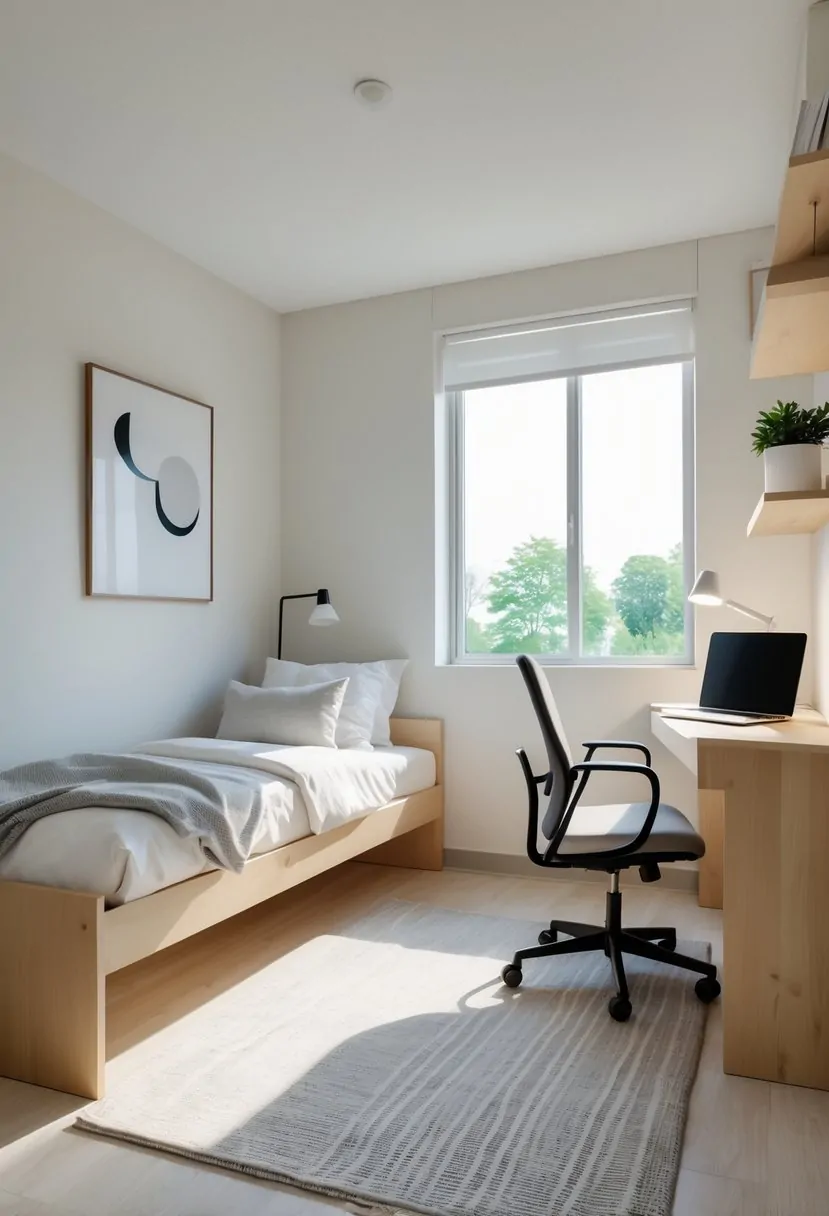
Moving into a dorm often means working with limited space, which can quickly feel crowded and overwhelming. A minimalist approach helps create a calm and organized environment where every item has a purpose and nothing feels out of place. Minimalist dorm design makes small spaces feel more open, functional, and comfortable without sacrificing style.
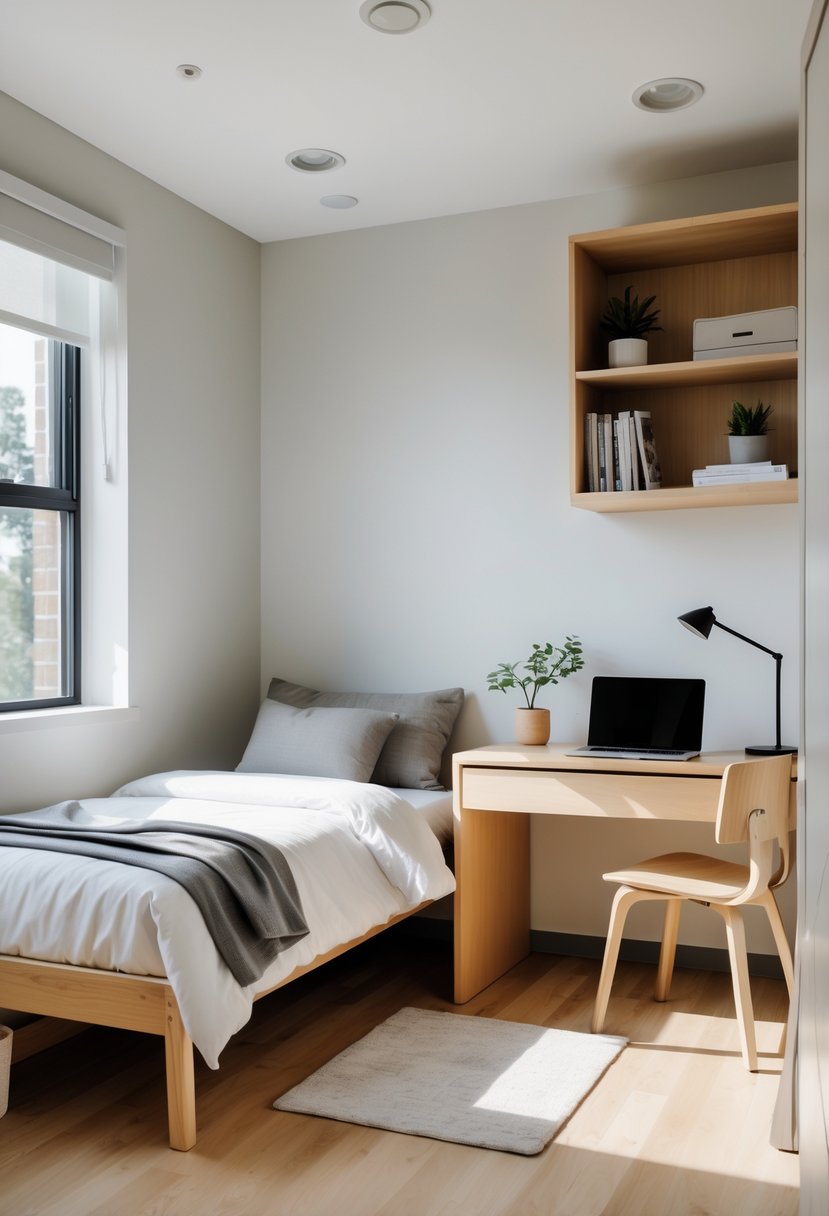
This article explores 22 practical ways to bring minimalist design into a dorm room. From smart storage solutions to simple furniture choices and clean color palettes, each idea focuses on creating a space that feels both efficient and inviting. By following these strategies, anyone can transform a compact dorm into a balanced and clutter-free living space.
1) Use neutral color palettes like white, beige, or soft gray
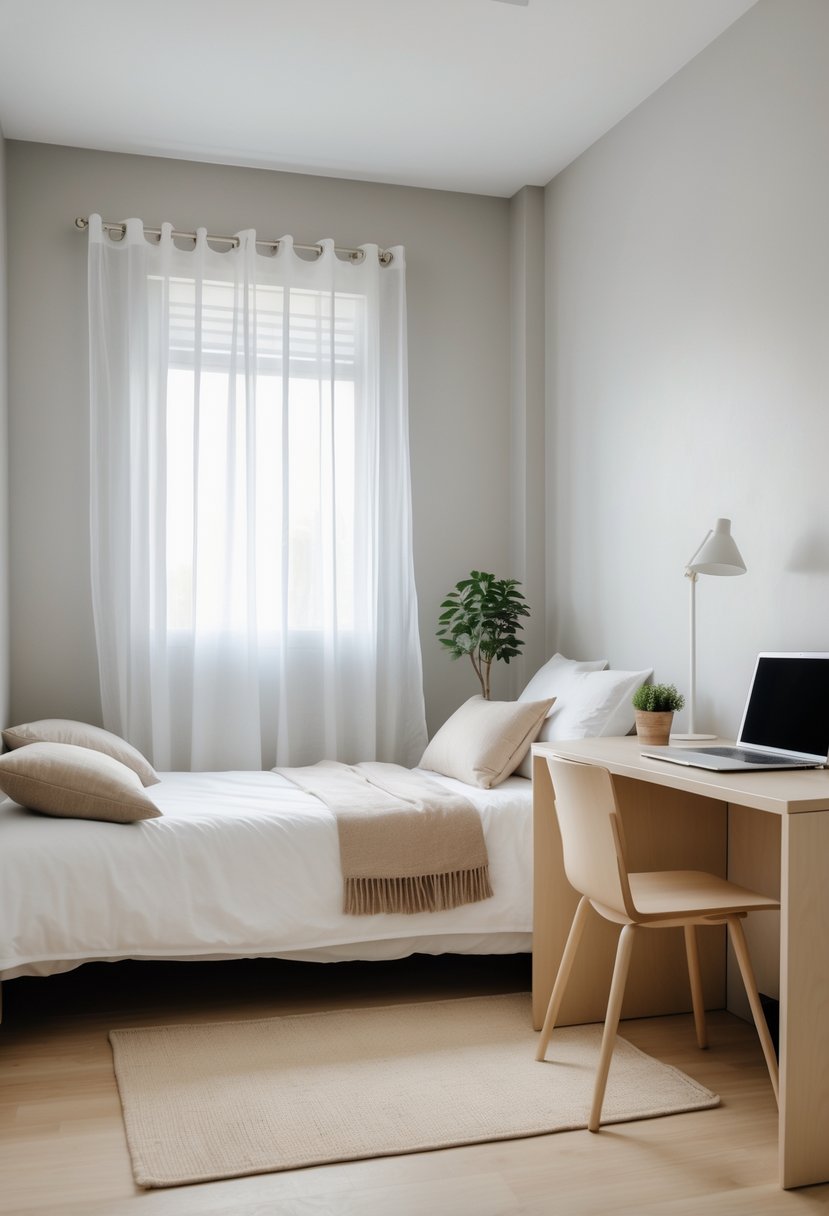
Neutral colors help make a dorm room feel calm and uncluttered. Shades like white, beige, and soft gray work well with small spaces.
These tones create a simple backdrop that pairs easily with furniture and décor. They also make the room look brighter and more open.
2) Incorporate multi-functional furniture such as a bed with storage drawers
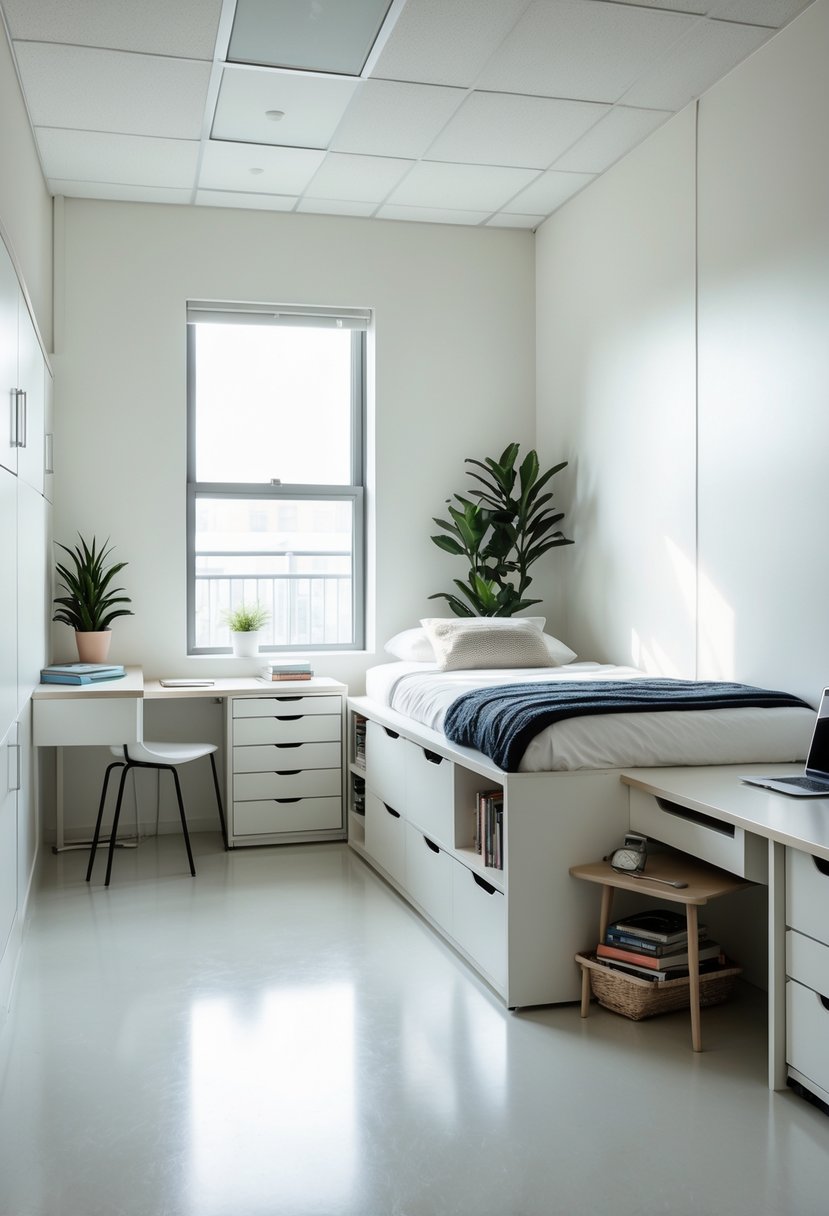
A bed with built-in drawers helps students keep belongings organized without needing extra cabinets.
This design makes use of space under the bed, which often goes unused in small dorm rooms.
It allows storage for clothes, bedding, or supplies while keeping the room tidy and functional.
3) Opt for floating shelves to save floor space
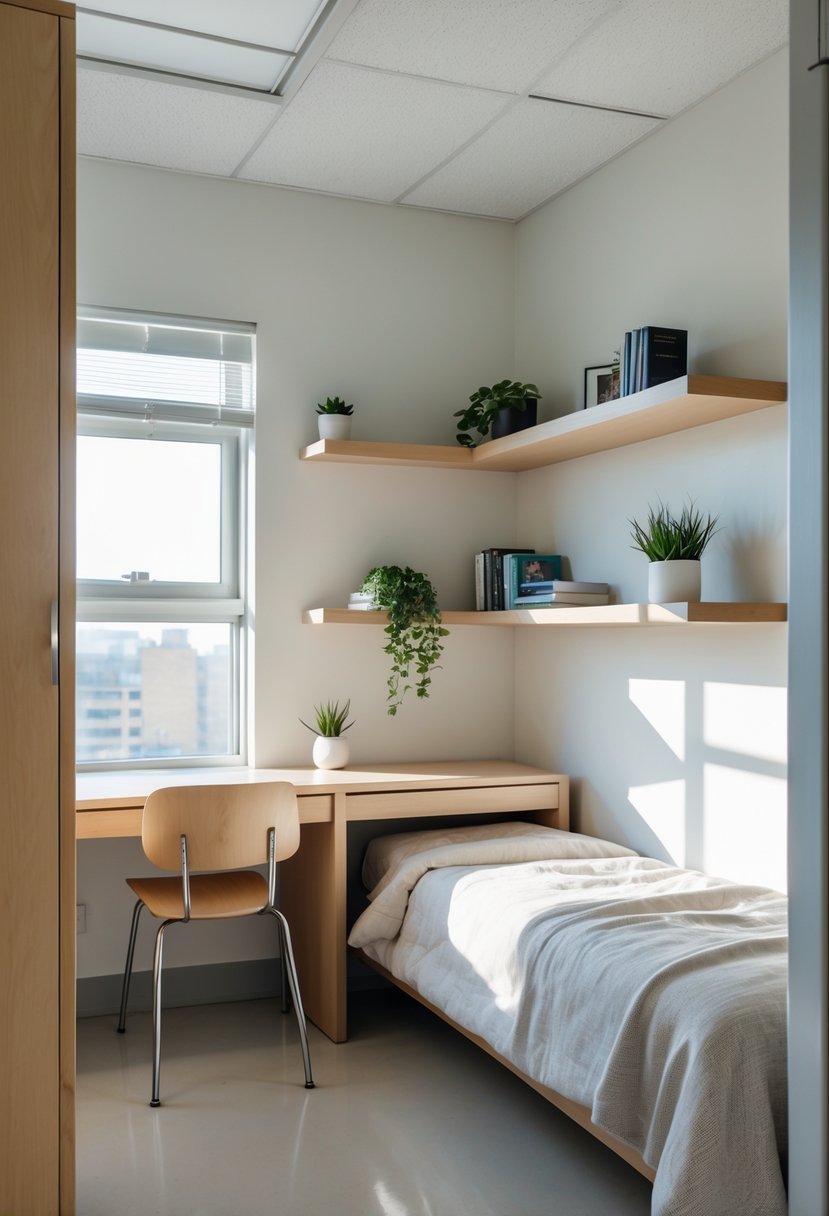
Floating shelves give students a way to store items without using bulky furniture.
They keep books, plants, or decor off the floor, which helps small dorm rooms feel less crowded.
Their simple design also blends well with most minimalist styles, making them both functional and visually clean.
4) Choose a minimalist desk with clean lines
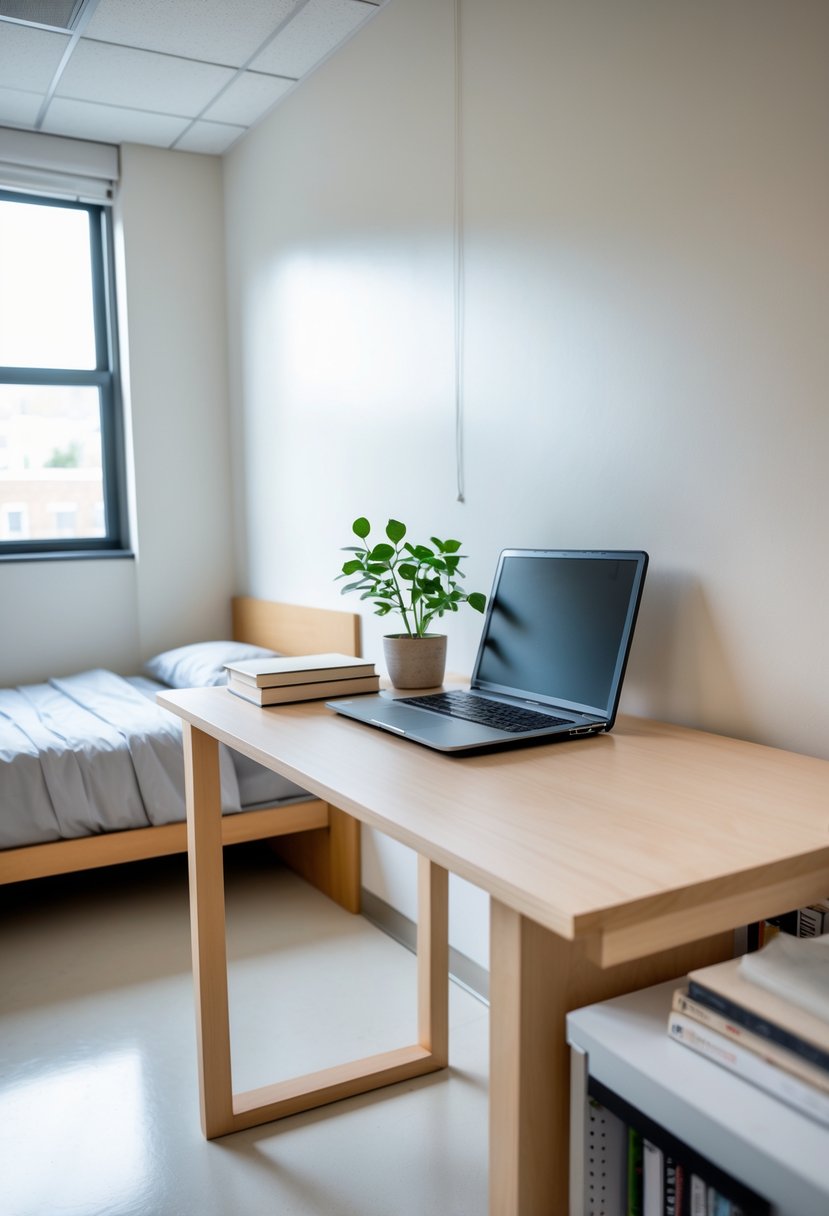
A minimalist desk with clean lines helps keep the dorm room looking open and uncluttered.
Simple shapes and neutral finishes work well because they blend with different room styles.
Desks with built-in storage or drawers provide function while maintaining a neat appearance.
5) Add a simple, sleek desk lamp with adjustable brightness
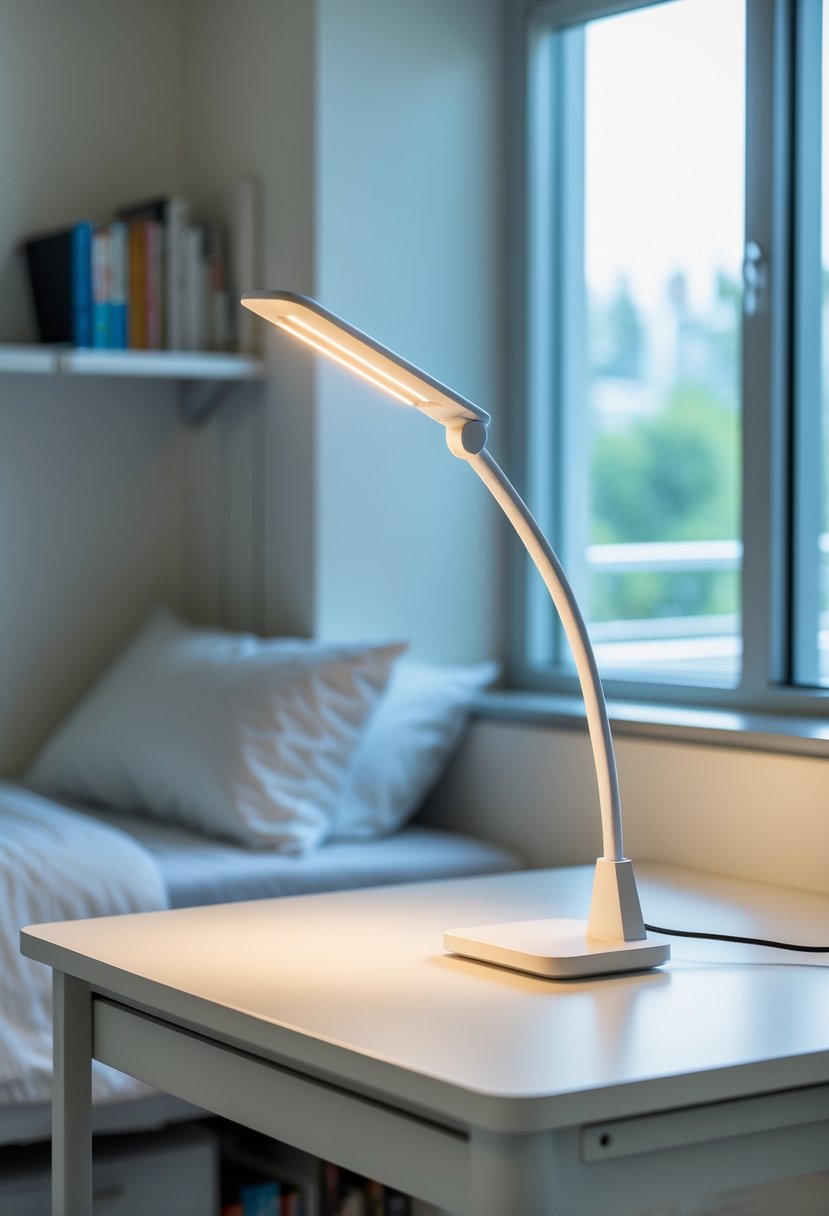
A compact desk lamp helps create a focused study area without taking up much space.
Models with adjustable brightness let students control light levels for reading, writing, or late-night work.
Slim designs with flexible arms or pivoting shades make it easy to direct light exactly where it’s needed.
6) Use under-bed storage bins to reduce clutter
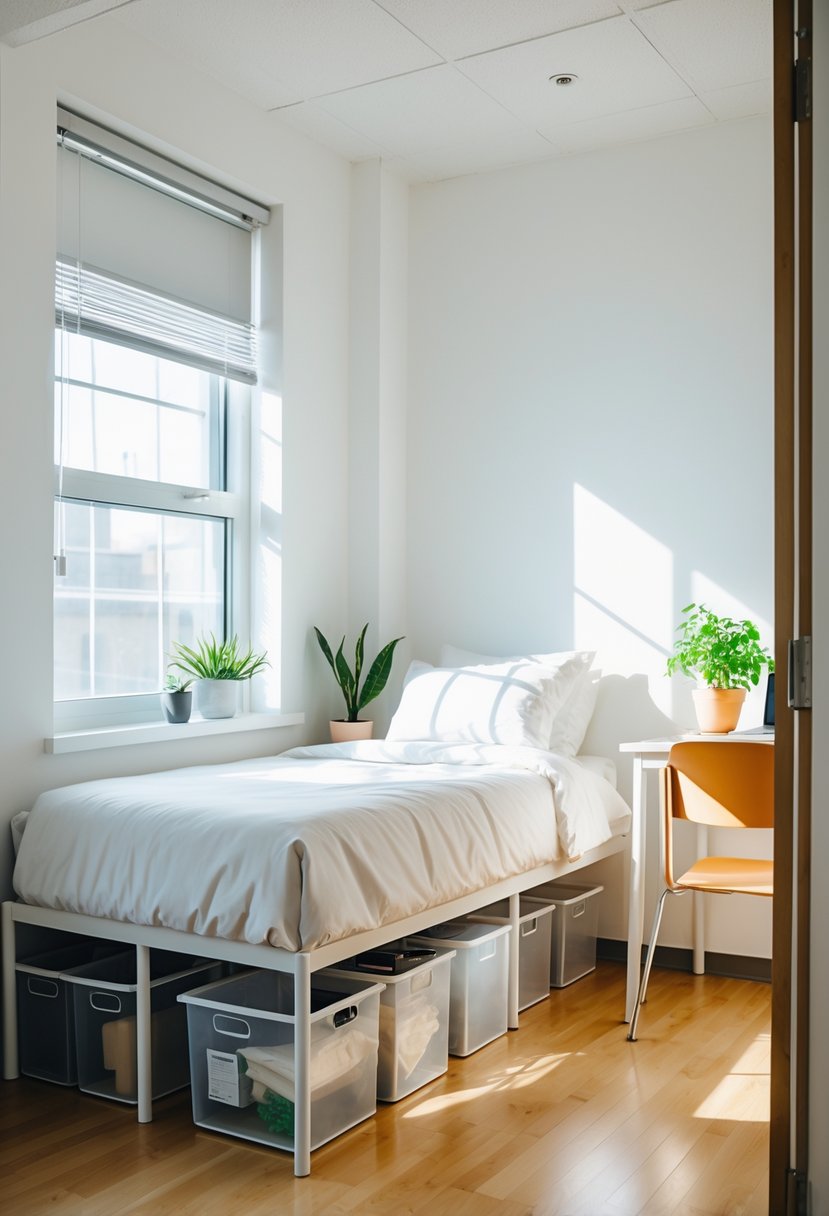
Under-bed storage bins help students make use of space that often goes unused. Most dorm beds provide 7–10 inches of clearance, which fits many low-profile bins.
These bins can hold clothes, shoes, books, or supplies. Using labeled or clear containers makes it easier to find items quickly.
7) Select bedding in solid, calming colors
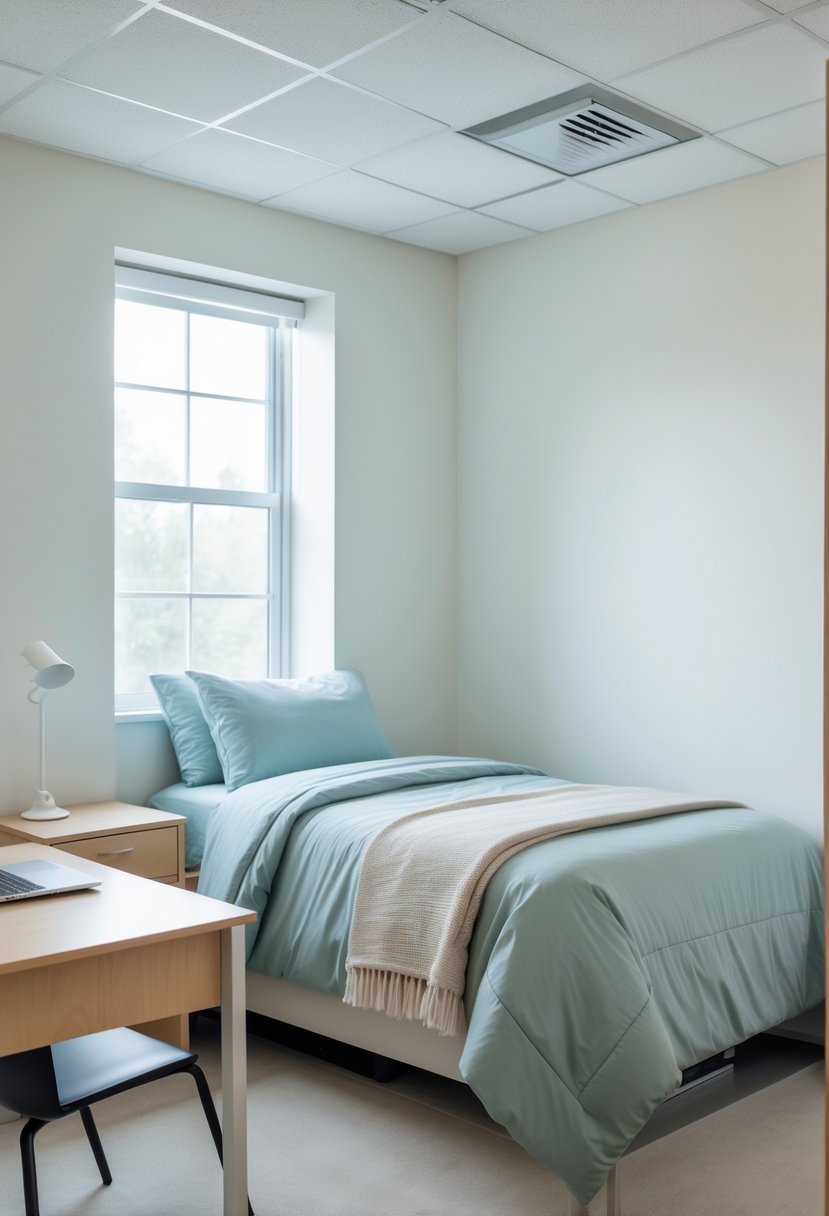
Solid bedding in neutral tones helps a dorm room feel more open and organized. Shades like white, beige, or gray create a clean base that reduces visual clutter.
Soft, calming colors also make the space more relaxing. Students can add small accents, like a throw pillow or blanket, for subtle variety.
8) Install blackout curtains in a neutral tone
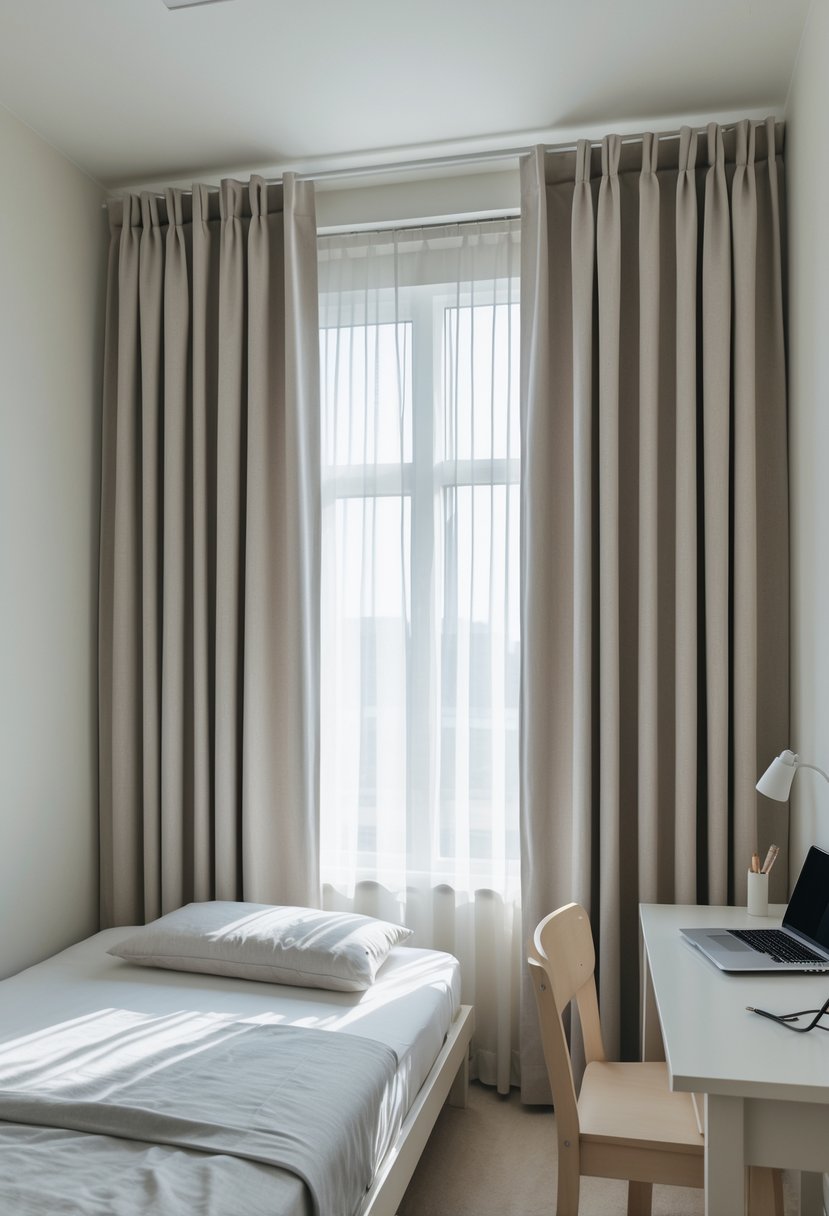
Blackout curtains help reduce light and create a calmer space for rest or study. They also add privacy, which is useful in shared dorm settings.
Choosing a neutral color keeps the room simple and uncluttered. Shades like gray, beige, or white blend easily with most dorm furniture and bedding.
Students can hang them with tension rods or adhesive hooks to avoid wall damage. This makes them both practical and easy to remove later.
9) Keep wall decor minimal with one or two framed prints
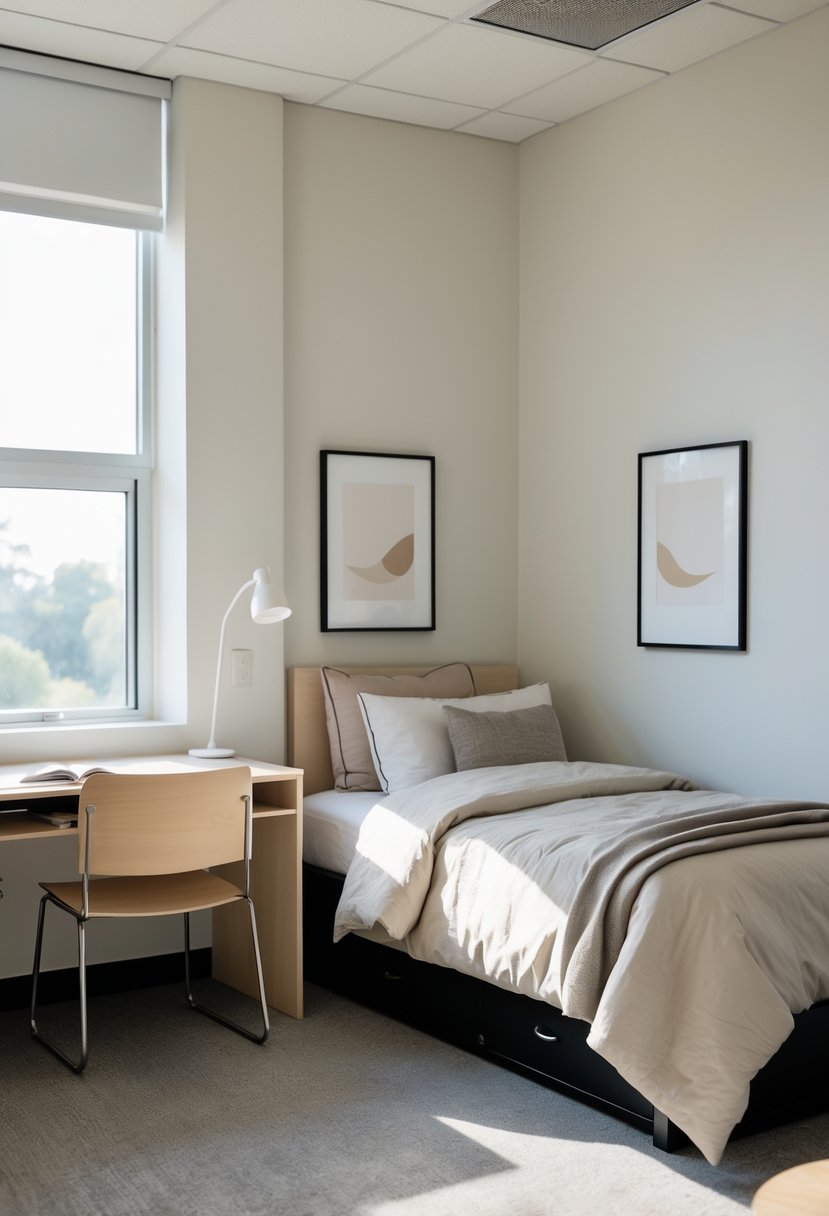
One or two framed prints add style without making the wall feel crowded.
Simple artwork or photography works best in small dorm spaces.
This approach keeps the room clean and balanced while still showing personality.
10) Use a pegboard for organizing accessories and supplies
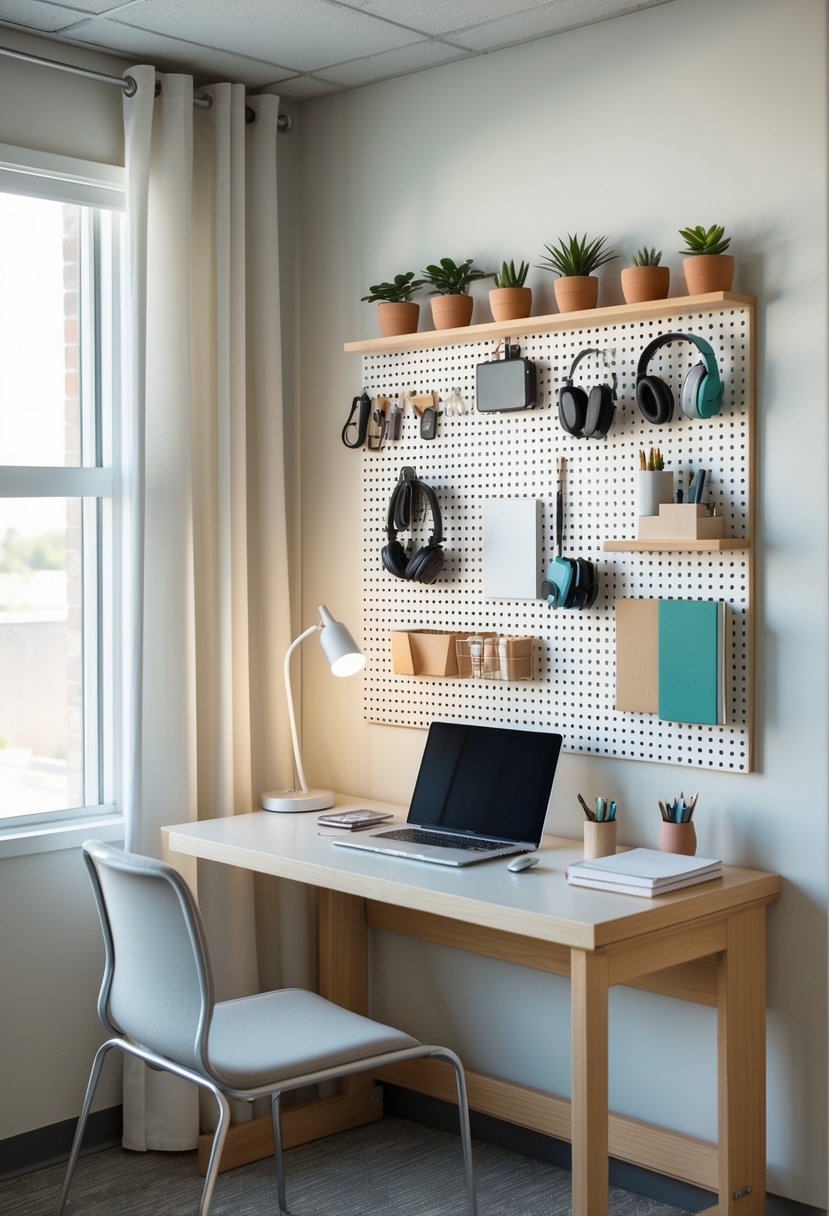
A pegboard helps students keep small items visible and easy to reach.
They can hang headphones, keys, or bags without taking up desk space.
Adding small shelves or hooks allows storage for pens, chargers, or notebooks.
11) Incorporate a small, low-profile rug in muted colors
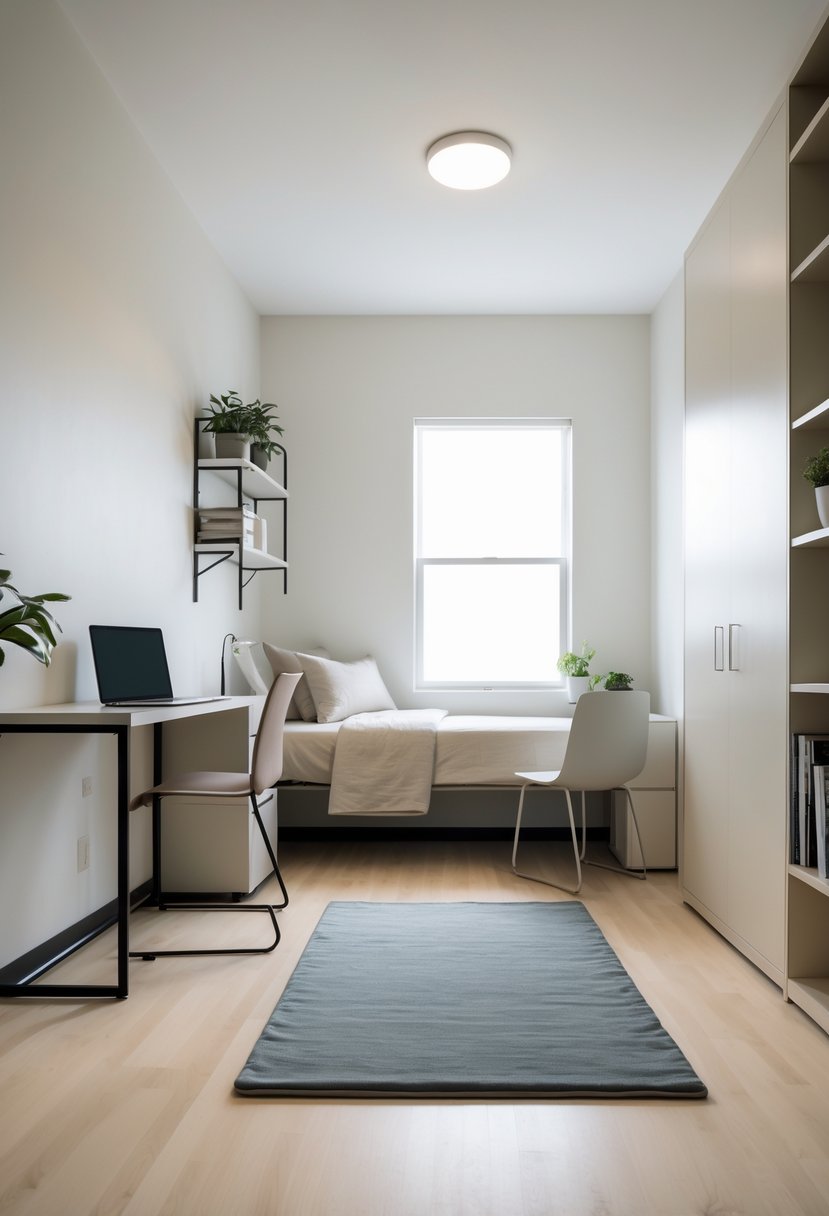
A small, low-profile rug adds softness without overwhelming a dorm room. Its slim design helps keep the floor space open and uncluttered.
Muted tones like beige, gray, or taupe blend easily with minimalist furniture and bedding. These colors create a calm look while tying the room together.
12) Choose a compact, ergonomic chair
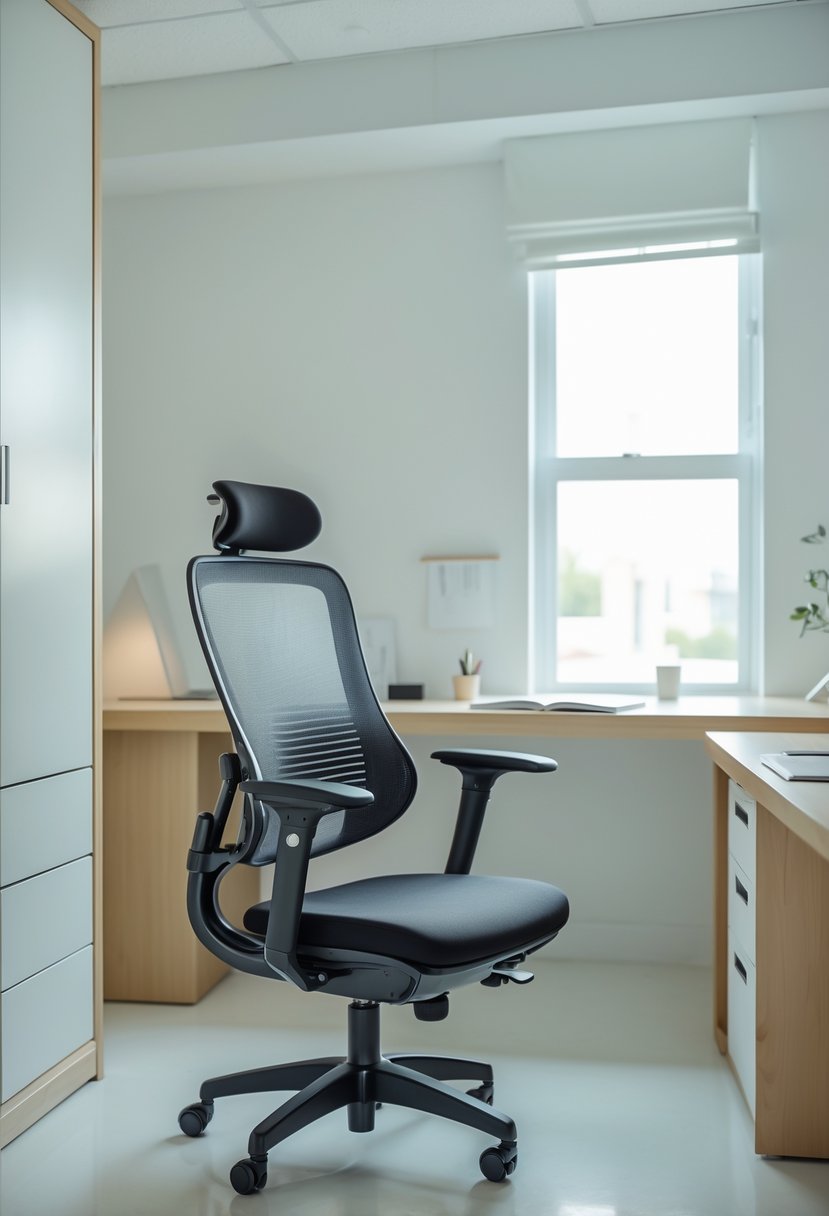
A compact, ergonomic chair helps save space while supporting good posture during study sessions.
Students benefit from chairs that adjust in height and provide back support, making long hours at a desk more comfortable.
Lightweight designs also make it easier to move the chair around in a small dorm room.
13) Add a single large mirror to create a sense of space
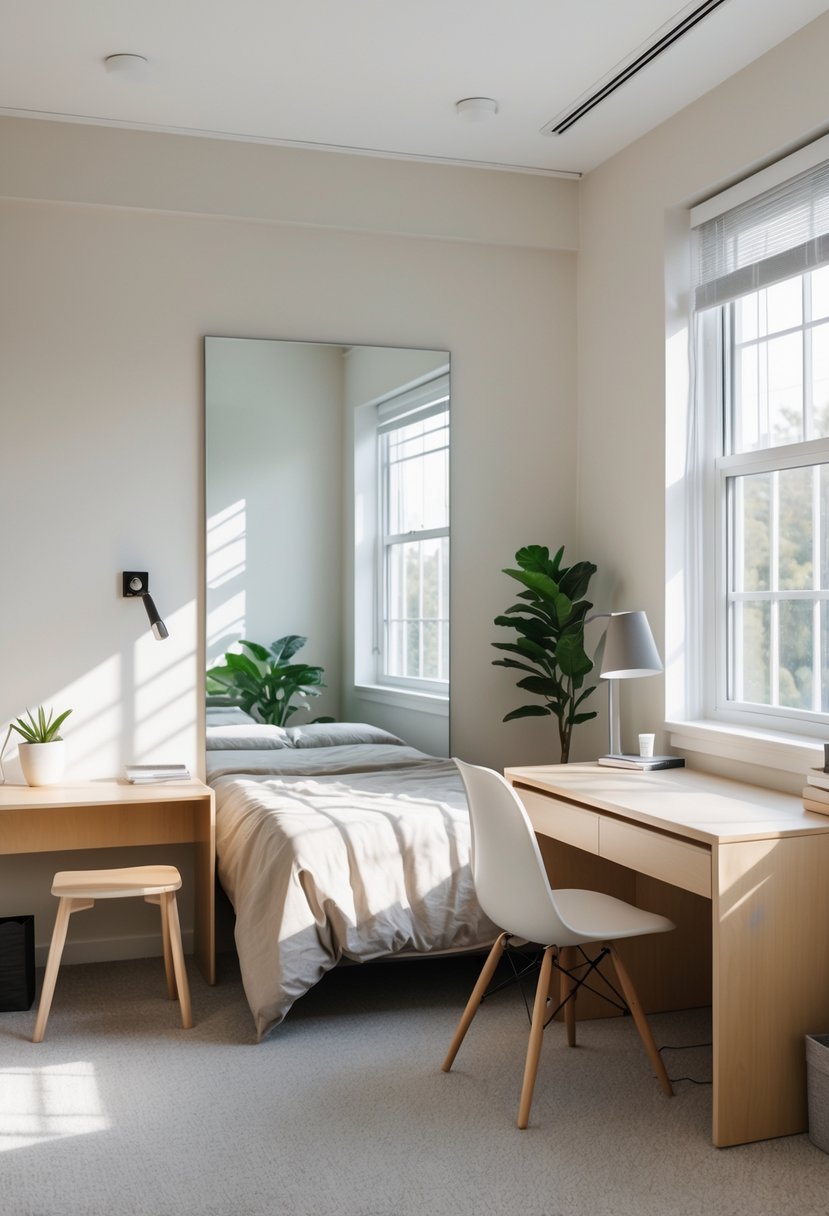
A large mirror can make a small dorm feel more open by reflecting light and nearby surfaces.
Placing it on a main wall helps the room appear brighter and less cramped.
Choosing a simple frame keeps the design clean and fits a minimalist style.
14) Use cable organizers to keep cords tidy
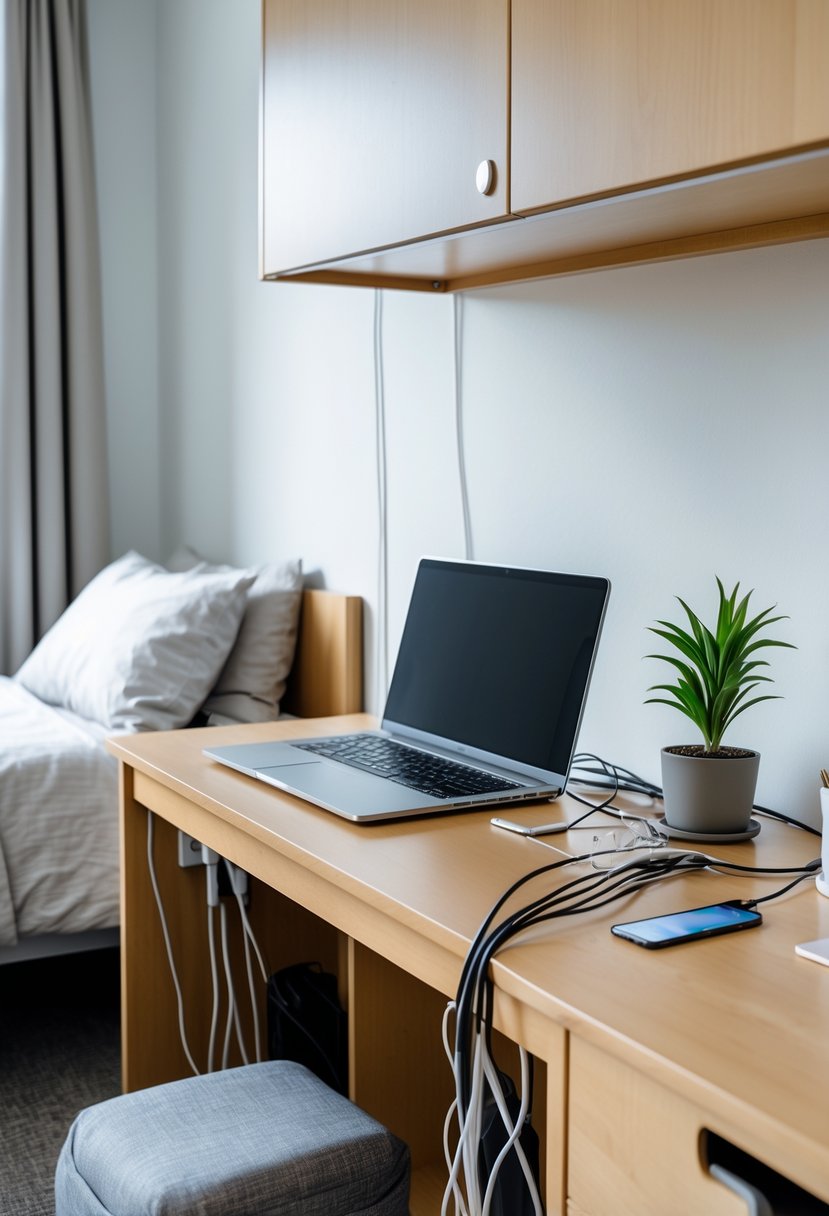
Cable organizers help reduce clutter by keeping wires in one place. They prevent tangling and make a small space look more orderly.
Students can use clips, trays, or sleeves to guide cords along walls or under desks. This keeps study areas neat and easier to clean.
15) Limit personal items on display to maintain simplicity
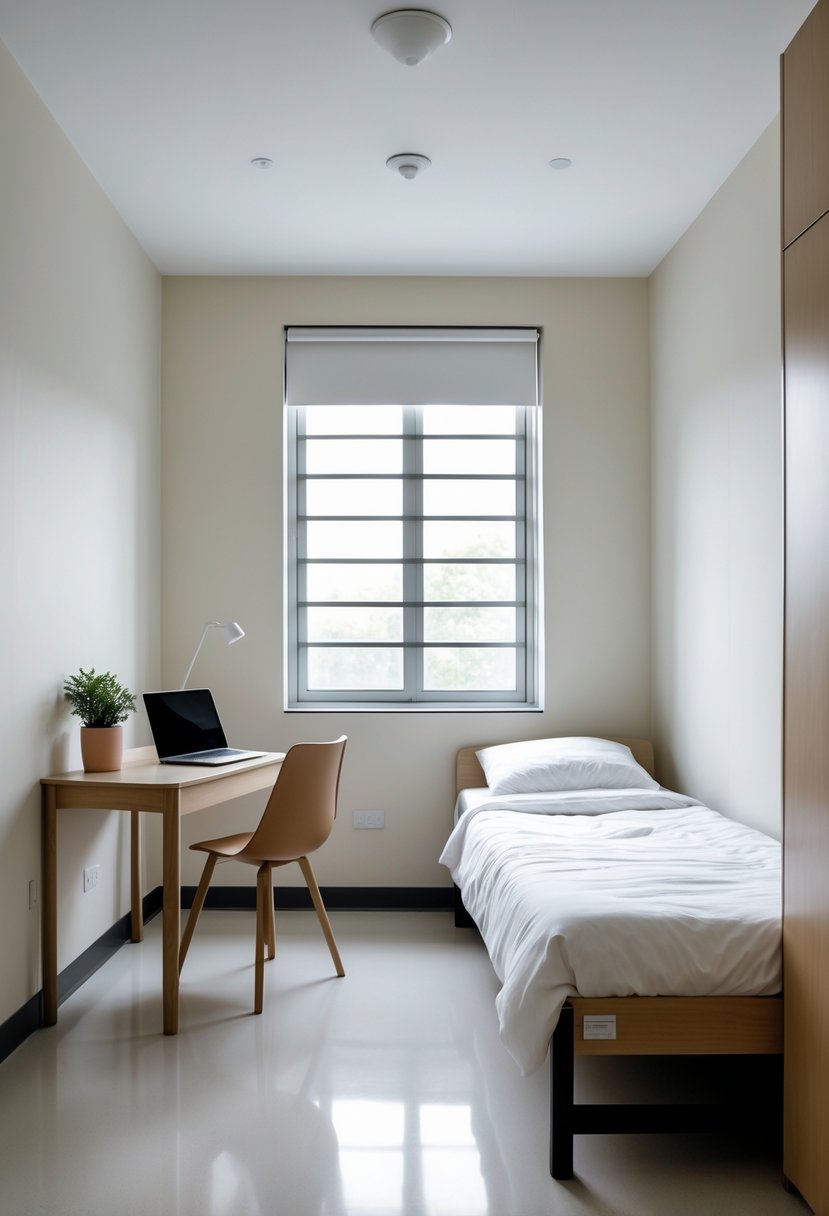
Keeping only a few personal items visible helps reduce visual clutter. A clean surface creates a calmer and more open space.
Students can choose one or two meaningful objects, such as a framed photo or small plant. This keeps the room personal without overwhelming the minimalist design.
16) Incorporate plants with simple pots for a touch of nature
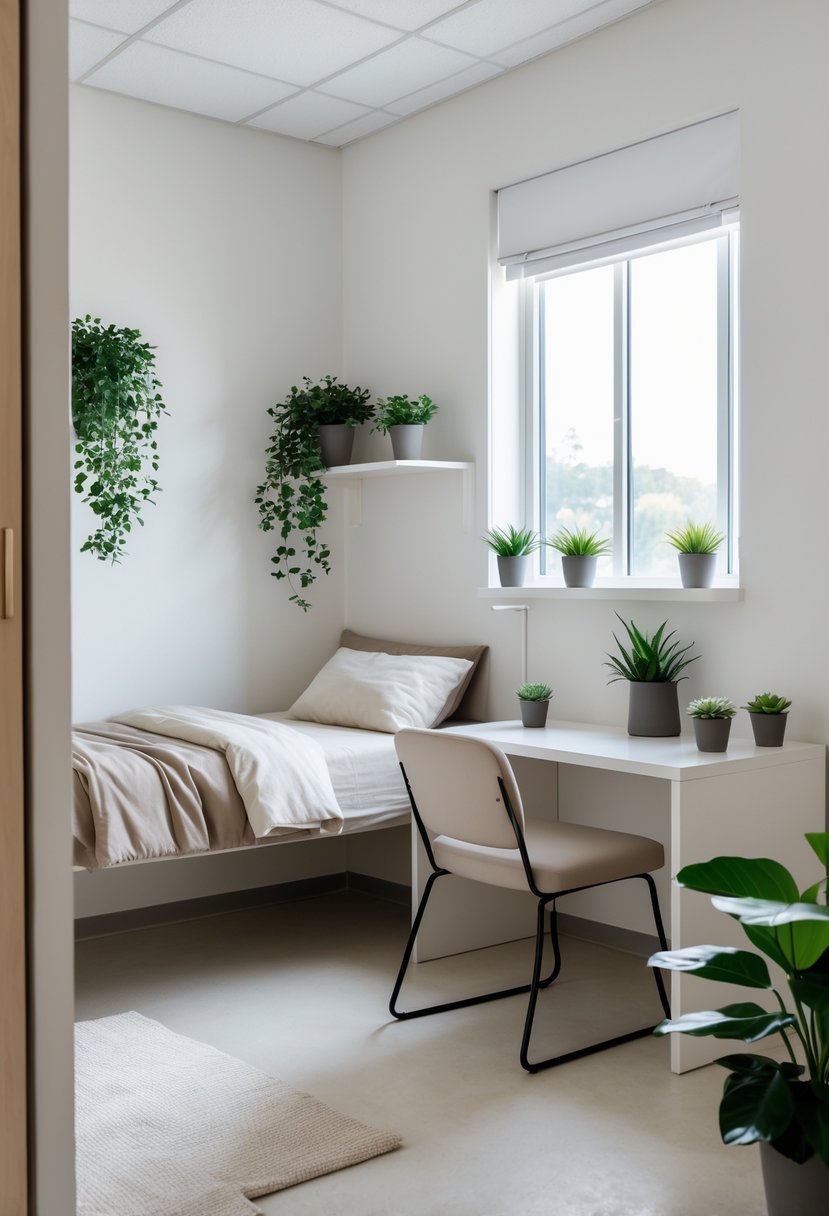
Plants add a clean, natural element to a dorm without taking up much space.
Simple pots in neutral colors help the plants blend with minimalist decor.
Placing one or two small plants on a desk, shelf, or windowsill keeps the room fresh and uncluttered.
17) Use stackable storage boxes in uniform colors
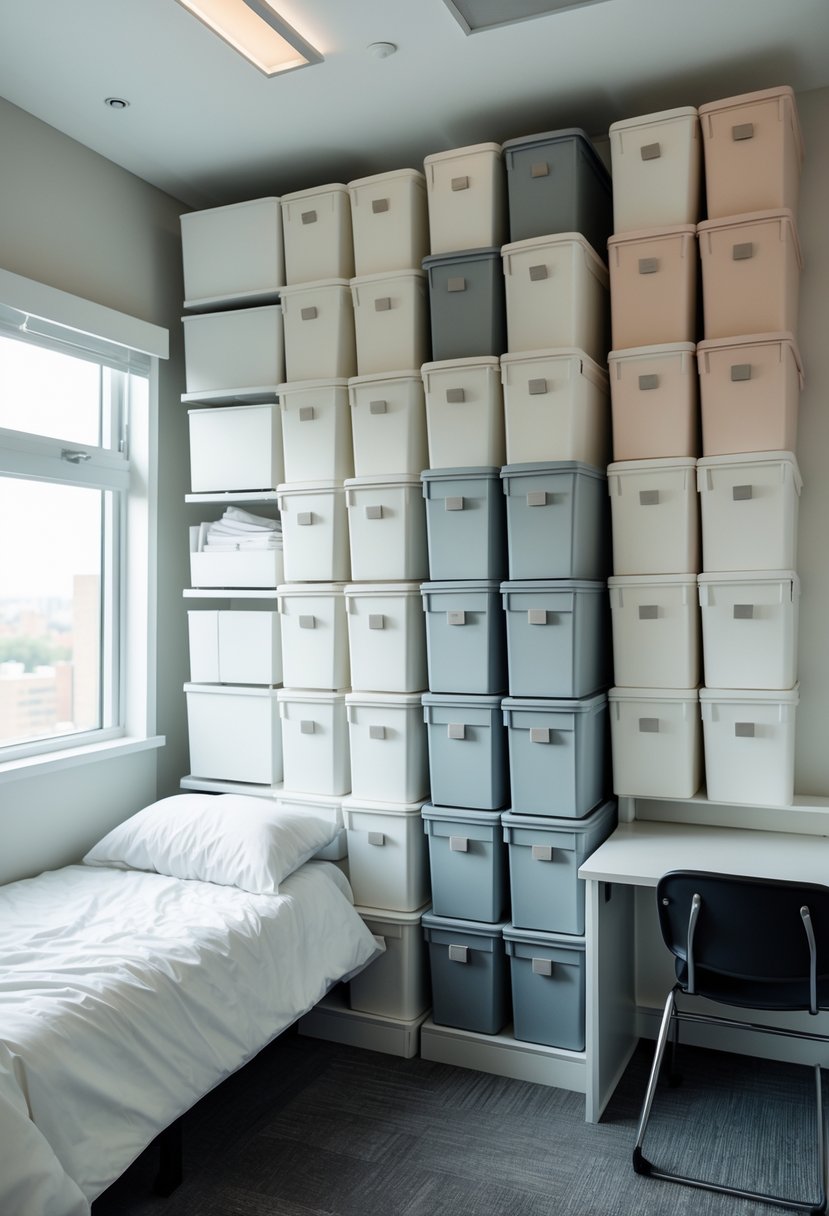
Stackable storage boxes help students keep items organized without taking up extra floor space. They fit easily in closets, under beds, or against walls.
Choosing boxes in uniform colors creates a cleaner look. This simple detail reduces visual clutter and makes the dorm feel more orderly.
18) Choose a minimalist alarm clock with a clean design

A minimalist alarm clock helps keep a dorm room free of clutter. Its simple design provides only the essentials, such as time and alarm settings.
Many options come in analog or digital styles with easy-to-read displays. They fit well in small spaces and reduce distractions.
19) Incorporate a small bookshelf with vertical storage
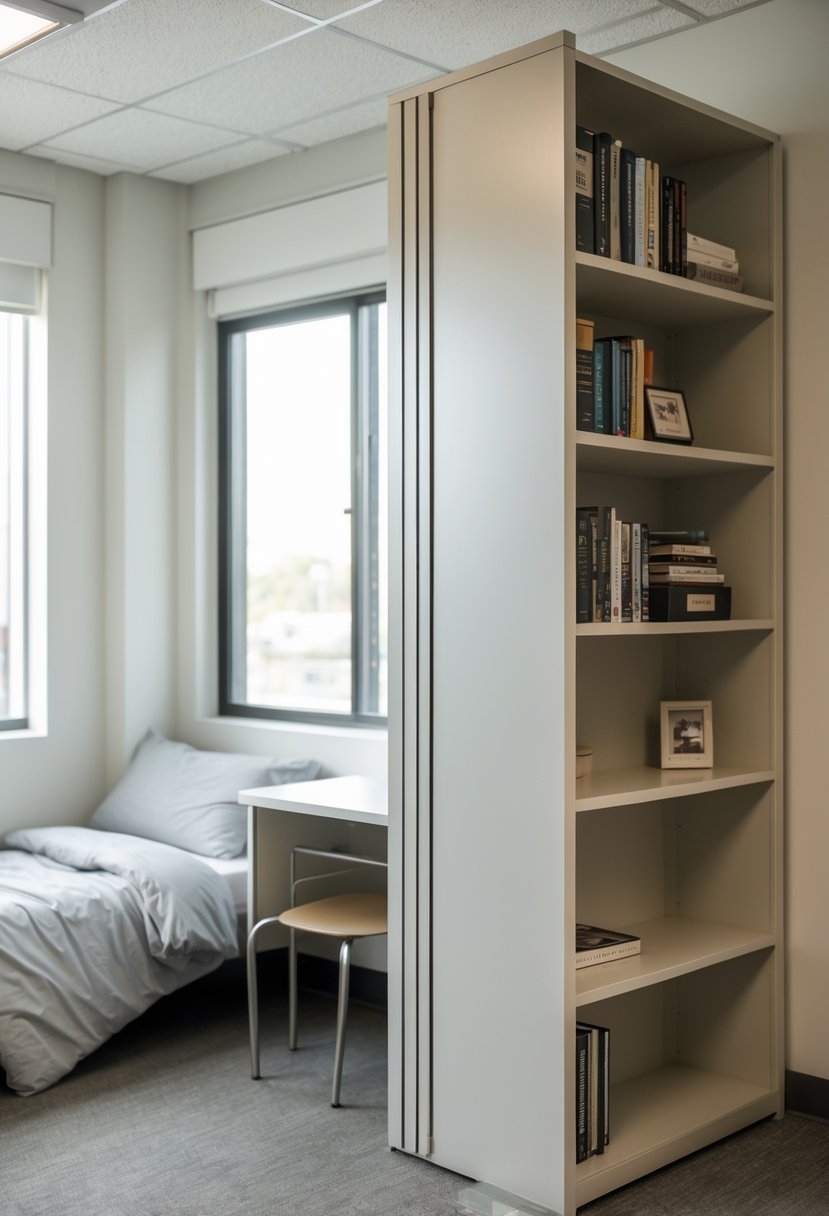
A small bookshelf with vertical storage helps keep items organized without taking up much floor space.
Students can use it for books, decor, or storage bins, making the room look tidy.
Placing it against a wall or near a desk adds function while keeping the layout simple.
20) Use a simple laundry hamper with a lid
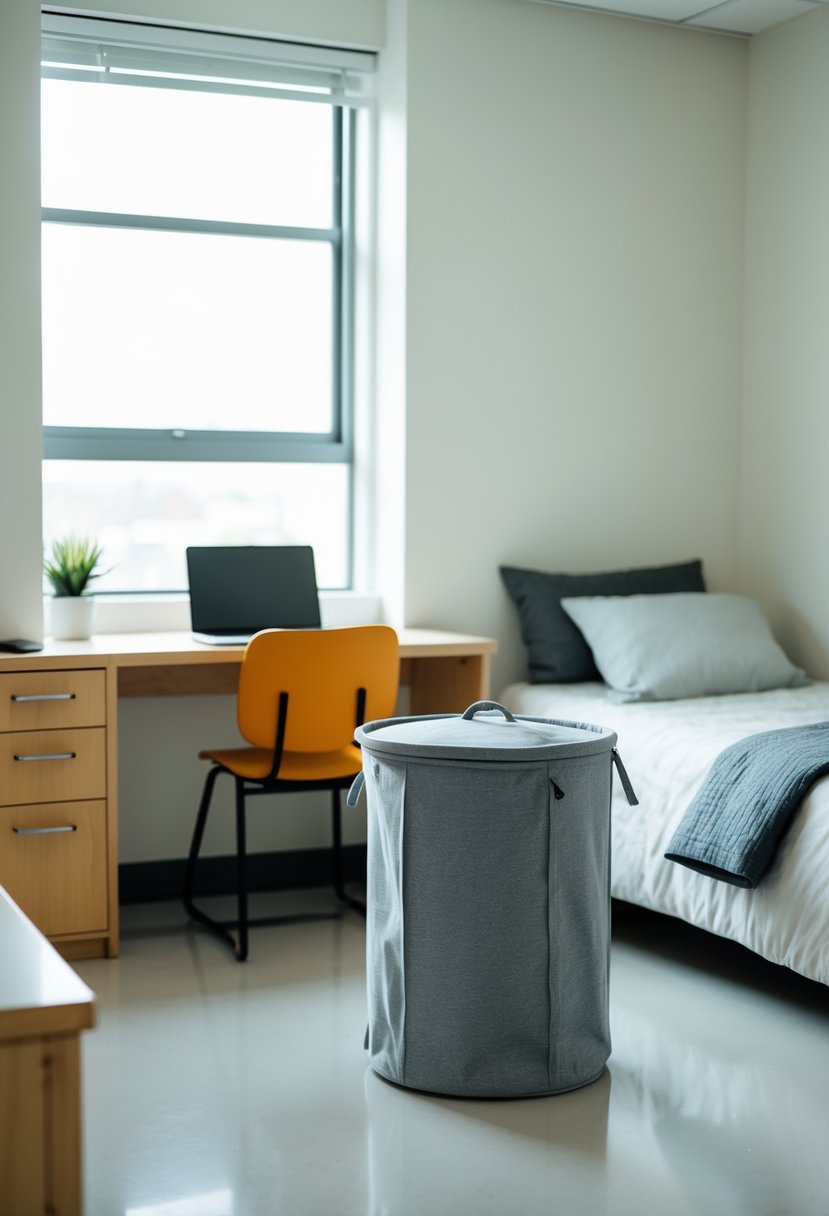
A laundry hamper with a lid helps keep clothes out of sight and the room looking tidy.
Choosing a simple design with neutral colors blends well with a minimalist dorm style.
A lid also helps control odors, making the space feel cleaner and more organized.
21) Add soft, warm LED string lights for ambiance
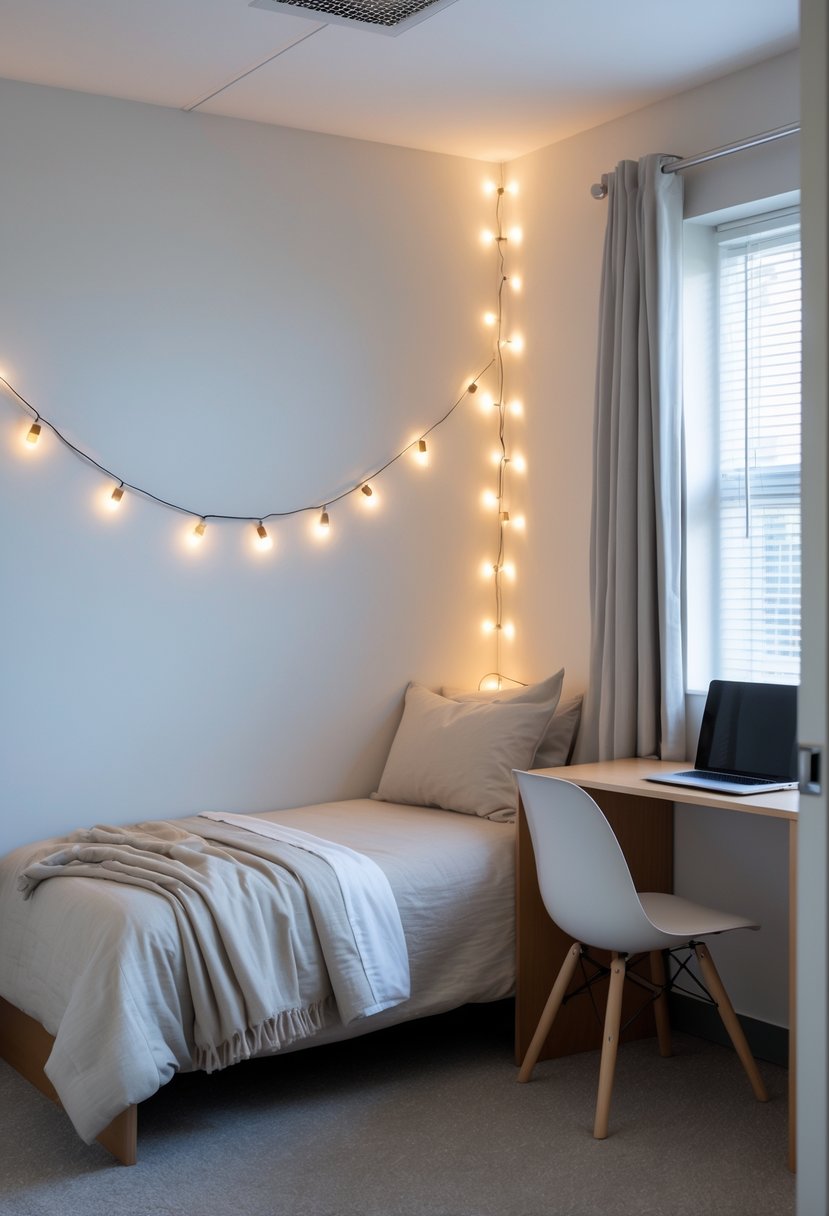
LED string lights create a gentle glow that makes a dorm room feel more inviting. They provide a softer alternative to harsh overhead lighting.
Students can hang them along walls, around a bed frame, or across a desk area. This adds warmth without taking up much space.
22) Keep desk accessories to a minimum, using only essentials

A minimalist desk works best when it holds only the items used daily. This may include a laptop, a notebook, and a pen.
They can store other supplies in drawers or organizers nearby. This keeps the workspace clear and easy to maintain.
Simple setups reduce clutter and support better focus.
Principles of Minimalist Dorm Room Design
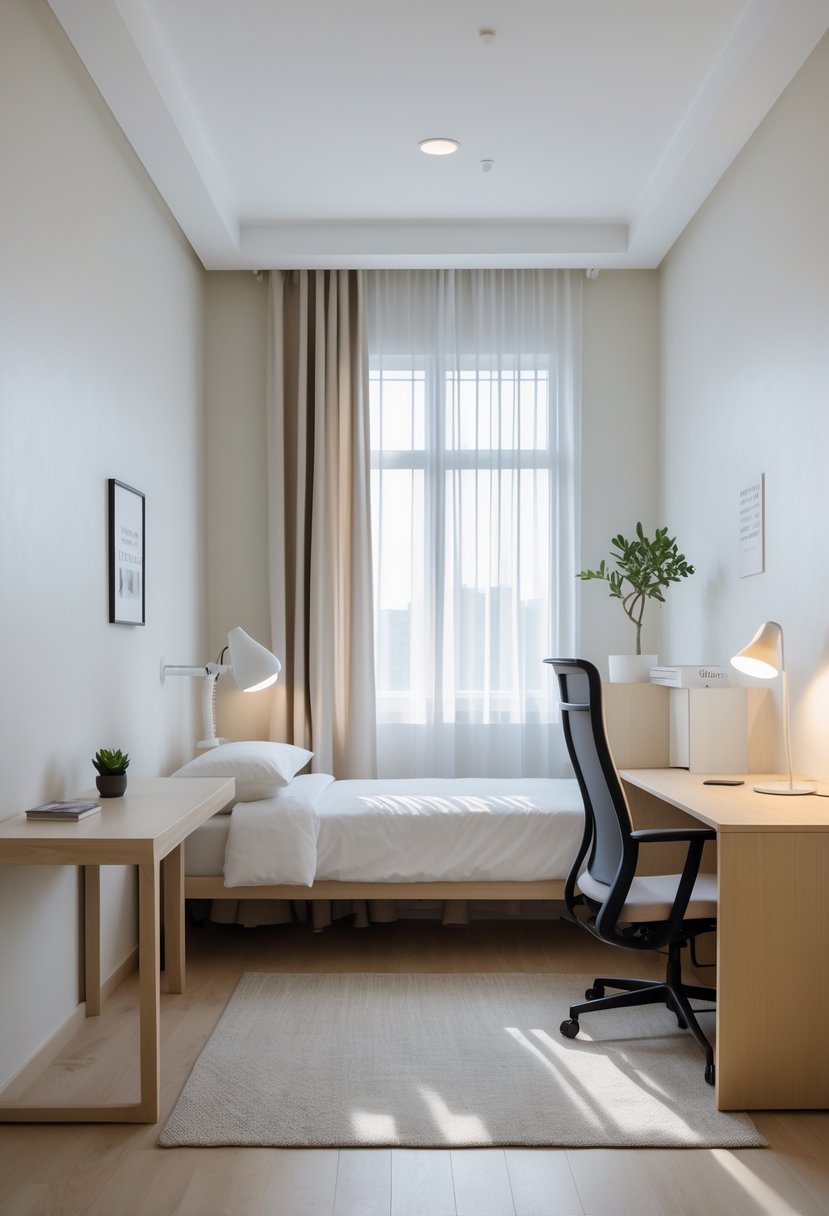
Minimalist dorm rooms balance function and comfort by focusing on space-saving layouts, calm color choices, and purposeful decoration. Each element should serve a clear role while keeping the room uncluttered and easy to maintain.
Maximizing Space Efficiency
Dorm rooms are often small, so every inch matters. Students benefit from furniture that serves more than one purpose, such as a bed with storage drawers or a foldable desk. These pieces reduce clutter and open up the floor.
Vertical space is also valuable. Wall-mounted shelves, hooks, and organizers keep items off the ground while still within reach. This approach helps maintain a clean and open layout without adding bulky furniture.
A simple layout works best. Placing the bed against a wall, keeping the desk near natural light, and using under-bed storage creates a functional flow. By limiting extra furniture, the room feels larger and easier to move around.
Choosing a Neutral Color Palette
Neutral colors create a calm and cohesive look. Shades like white, beige, gray, and soft pastels make small spaces feel brighter and more open. These tones also reduce visual clutter, which supports a minimalist style.
Layering different shades of the same color brings depth without overwhelming the space. For example, pairing light gray bedding with a darker gray rug adds contrast while keeping the design simple.
Accent colors can be used sparingly. A single throw pillow or small decor piece in muted blue or green adds personality without breaking the clean look. Keeping the base neutral ensures the room stays balanced and easy to update.
Incorporating Functional Decor
Minimalist design avoids unnecessary decoration, but a few functional pieces can add comfort and style. Items like a soft area rug, a desk lamp, or a wall calendar serve a purpose while also contributing to the room’s look.
Textiles are especially useful. A blanket or set of curtains softens the space without adding clutter. Choosing simple patterns or solid colors keeps the design consistent.
Personal touches should be limited but meaningful. A framed photo, small plant, or single piece of wall art adds character without overwhelming the room. Each item should have a clear role in either function or atmosphere.
Maintaining a Minimalist Dorm Room
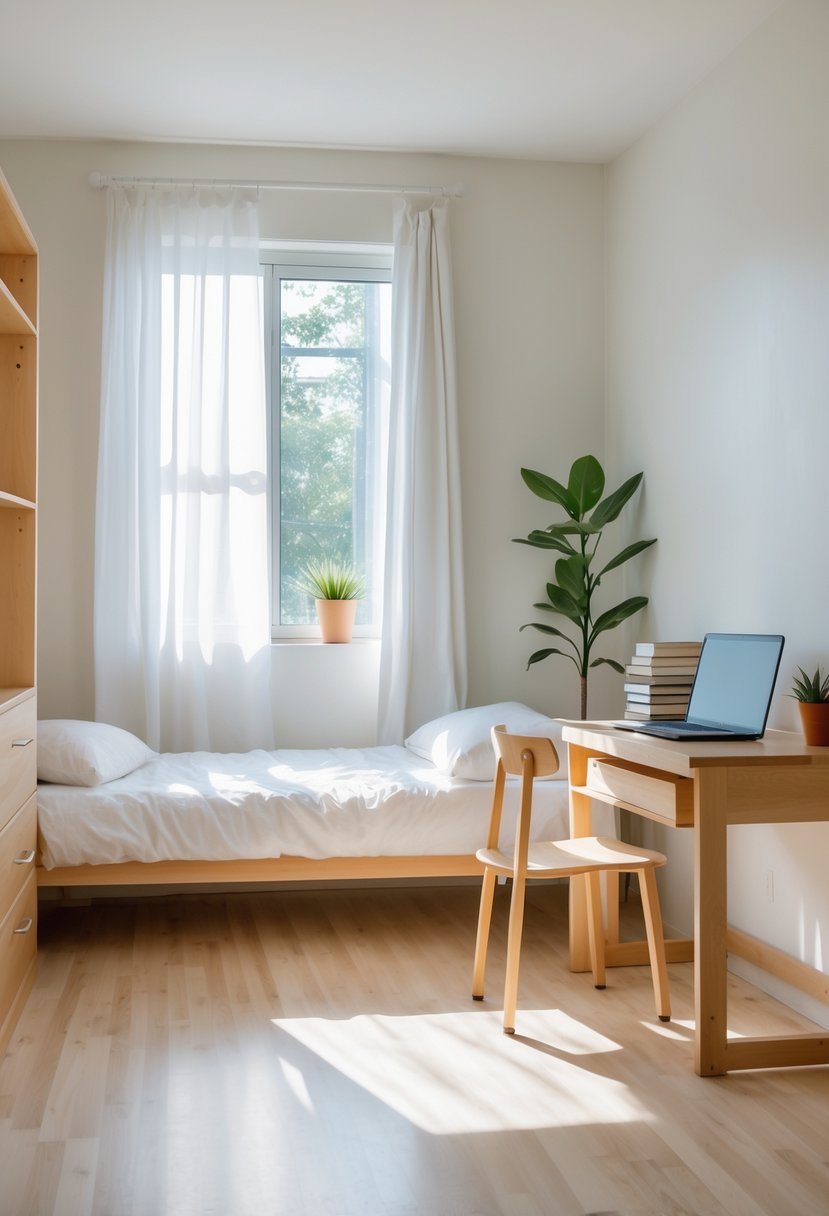
Keeping a minimalist dorm room requires steady habits that prevent clutter and encourage simple organization. Small actions like reducing unnecessary items and using smart storage can make the space easier to live in and maintain.
Decluttering Strategies for Students
Students often collect items quickly, from free campus giveaways to extra clothes. To avoid clutter, they can follow a one-in, one-out rule: when a new item comes in, an old one goes out. This keeps belongings balanced and prevents overcrowding.
Regular check-ins help as well. Setting aside 10 minutes each week to sort through desks, drawers, and shelves can stop small messes from growing. Items not used in the past month should be reconsidered.
It also helps to group belongings by purpose. For example:
- Study items: notebooks, pens, laptop
- Daily essentials: toiletries, keys, wallet
- Leisure items: headphones, books, games
By limiting categories, students can see what is unnecessary and let go of extras.
Sustainable Organization Tips
Minimalist organization works best when it is simple and eco-friendly. Students can use multi-purpose storage like under-bed bins, foldable crates, or stackable boxes. These save space while reducing the need for extra furniture.
Reusing what is already available is another smart approach. A glass jar can hold pens, while a shoe box can store cables. This avoids buying new containers and keeps costs low.
Color coding can also help. Using neutral or single-tone storage pieces creates a clean look and makes the room feel less busy. A small table can compare options:
| Storage Type | Benefit | Example Use |
|---|---|---|
| Under-bed bins | Saves floor space | Extra bedding |
| Foldable crates | Easy to move and store | Laundry or snacks |
| Stackable boxes | Vertical organization | School supplies |
By combining function with simplicity, students can maintain order without overfilling the room.
For more ideas, check out these college dorm room essentials to refresh your space for the school year.


