Art Deco Revival Living Room Décor: 21 Stylish Ideas for a Modern Update
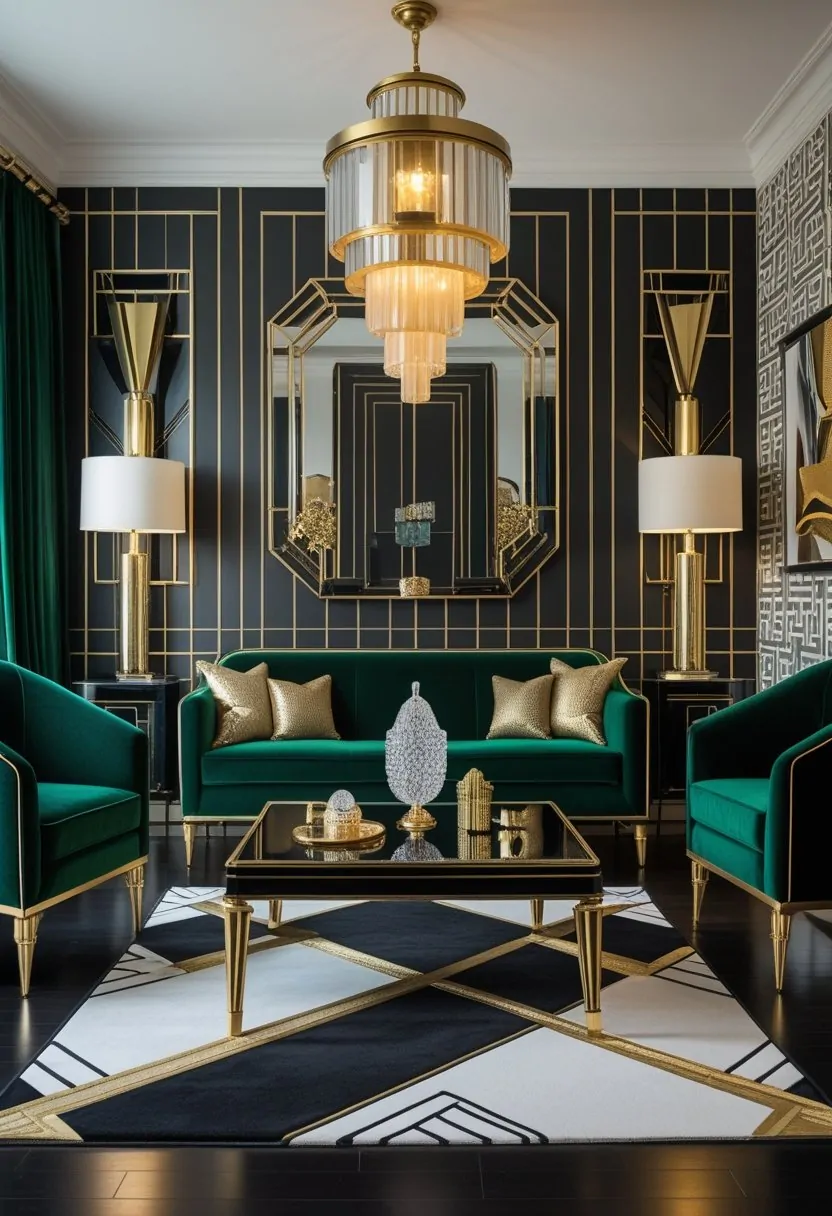
Art Deco Revival living room décor brings back the bold elegance of the 1920s and 1930s with a fresh, modern touch. This style values symmetry, strong lines, and luxurious materials, making it both timeless and adaptable to today’s homes. It offers a way to create a space that feels stylish, comfortable, and rooted in design history.
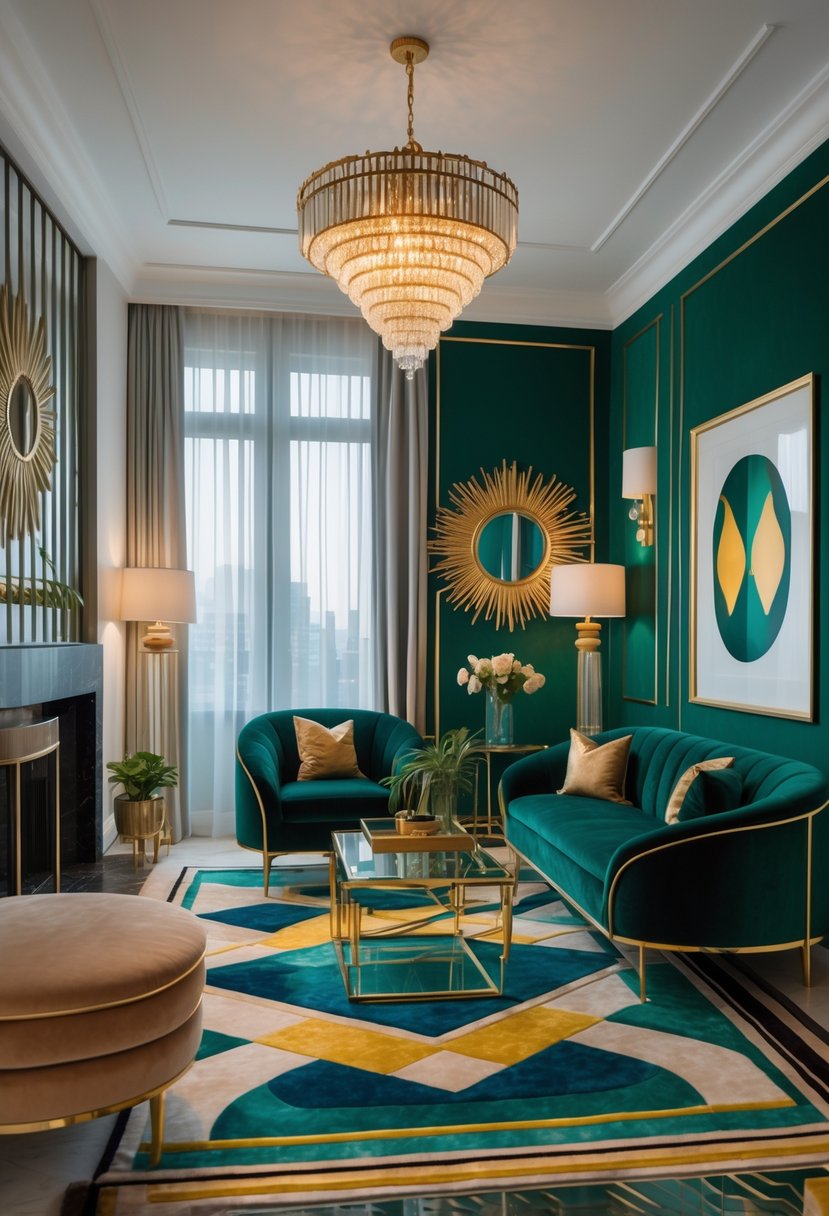
From striking patterns to rich finishes, the look blends classic glamour with practical comfort. Each element, whether furniture, lighting, or accessories, plays a role in shaping a room that feels both sophisticated and inviting. This approach allows anyone to enjoy the character of Art Deco while still fitting seamlessly into modern living.
Bold geometric wallpaper

Bold geometric wallpaper defines much of the Art Deco revival style. It often features sharp lines, repeated patterns, and balanced symmetry.
Designers use shapes like chevrons, fans, and diamonds to create visual interest. These patterns work well as a focal point in a living room.
Metallic accents within the wallpaper can add depth. Gold, silver, or bronze highlights often complement the strong geometric forms.
Velvet upholstered sofas
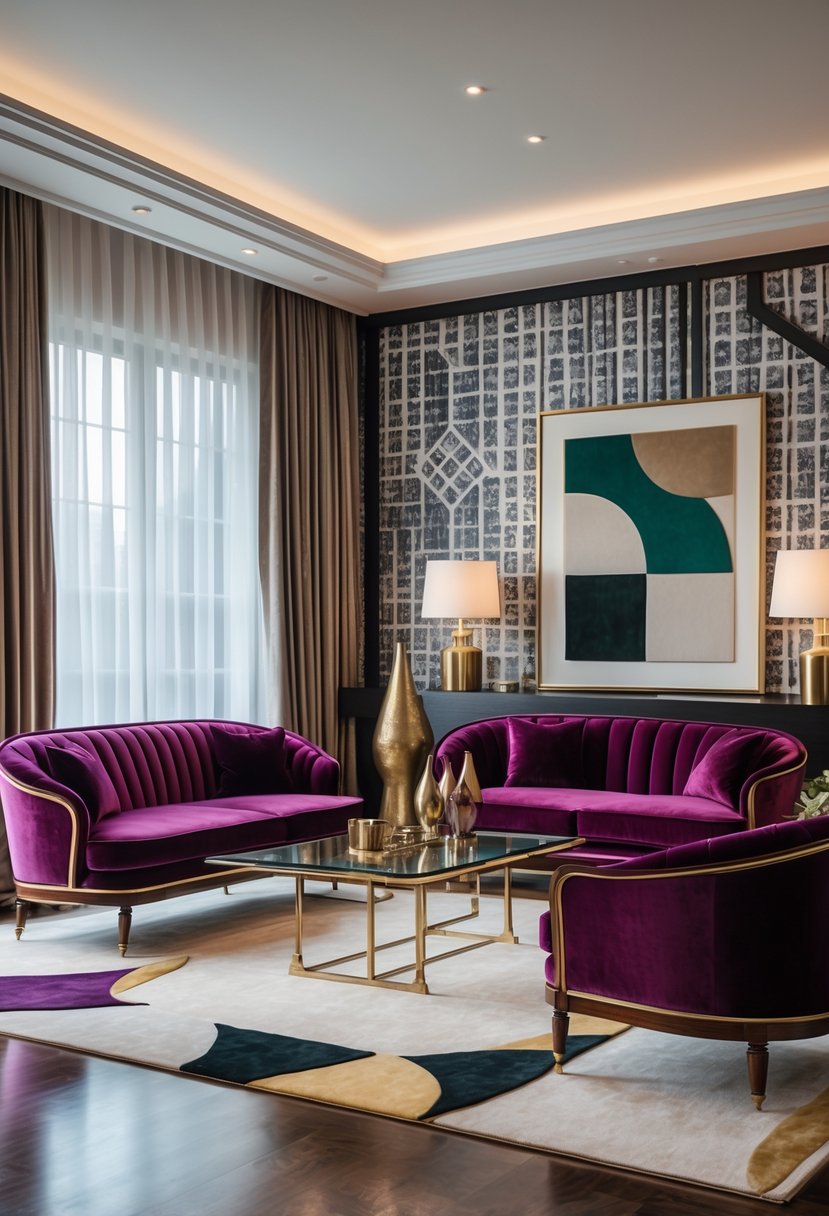
Velvet sofas fit well with Art Deco revival design because of their rich texture and smooth finish.
They often feature curved shapes, channel tufting, or shell-inspired backs that reflect classic Art Deco style.
Colors like deep blue, gray, or rose add contrast and bring a refined look to living spaces.
Mirrored coffee tables
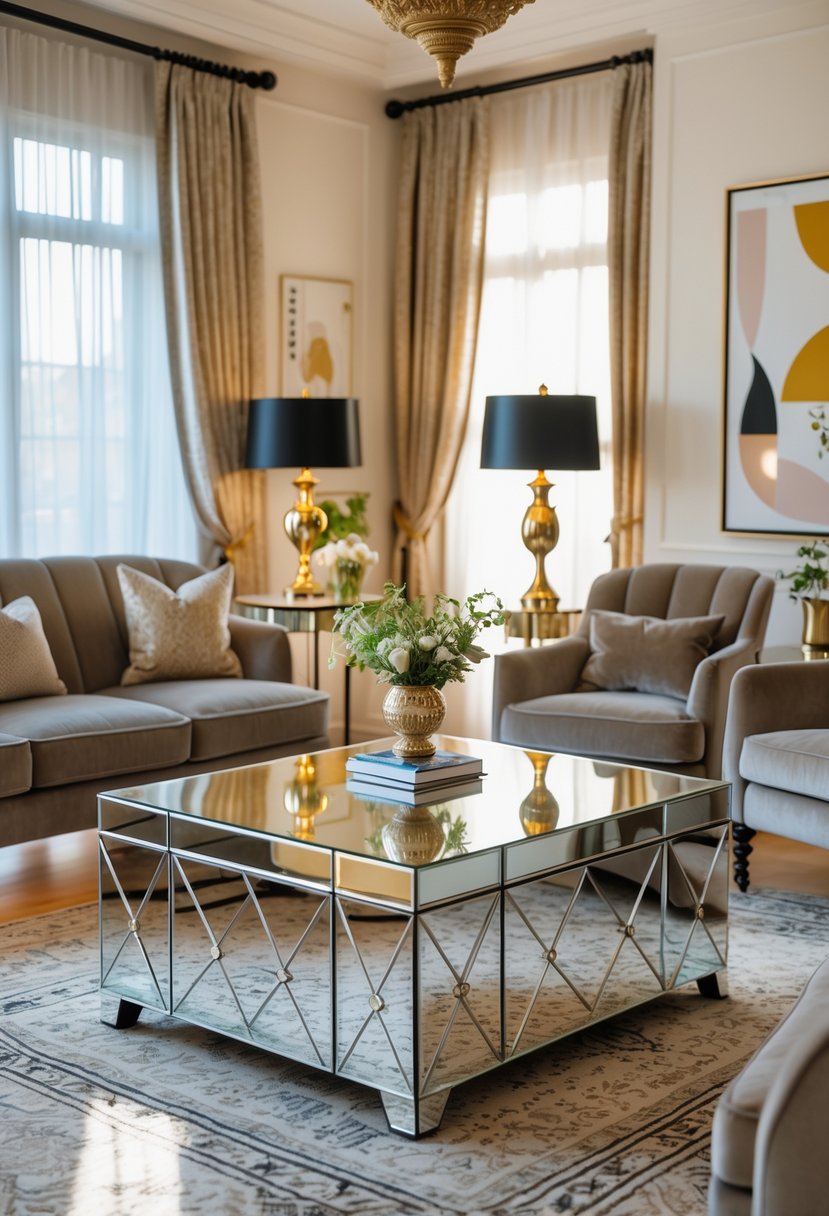
Mirrored coffee tables reflect light and help brighten a living room. Their surfaces create a sense of openness, which works well in smaller spaces.
In Art Deco revival design, these tables often feature geometric shapes and metallic accents. They add a touch of symmetry while keeping the room visually balanced.
Brass and gold lighting fixtures

Brass and gold lighting fixtures bring warmth and subtle shine to an Art Deco revival living room. These finishes work well with geometric shapes and bold lines.
They often appear in pendant lights, sconces, or table lamps. Their metallic tones add contrast to dark furniture and rich fabrics.
Using these fixtures in key spots, like above a coffee table or near seating, helps highlight the room’s design.
Black lacquered furniture
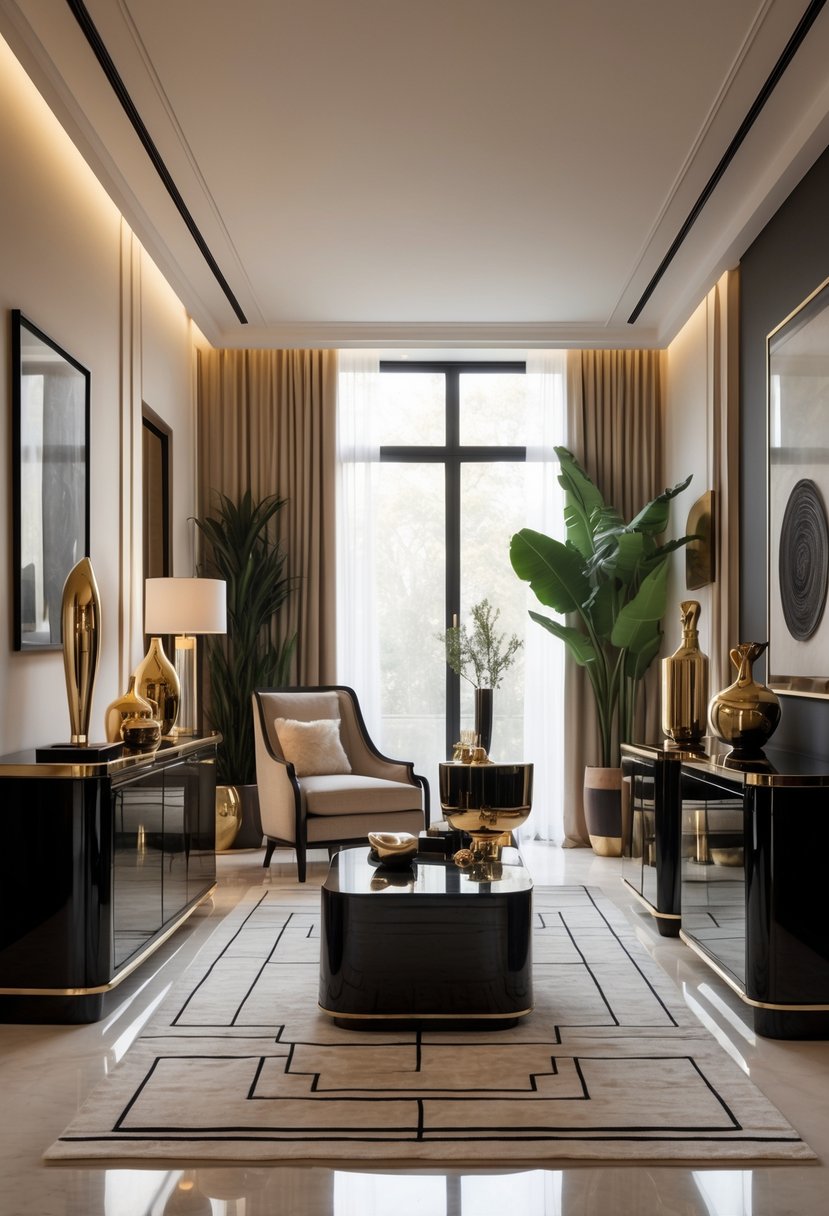
Black lacquered furniture adds a sleek, reflective surface that fits well with Art Deco style.
Its glossy finish highlights clean lines and geometric shapes often seen in this design period.
Pieces like cabinets, tables, or sideboards in black lacquer create contrast against bold colors and metallic accents.
Chevron patterned rugs
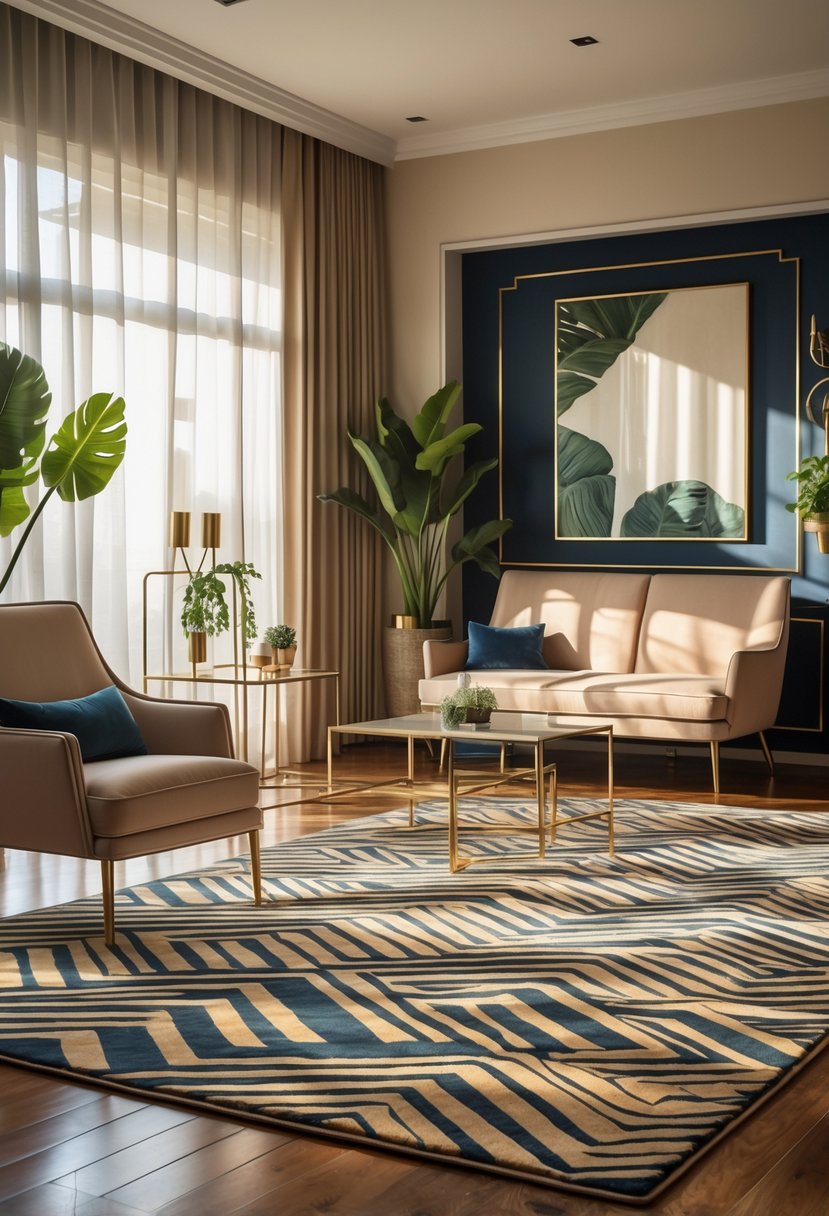
Chevron patterned rugs add structure to a living room with their clean zigzag design. They work well in Art Deco Revival spaces because the pattern reflects the bold geometry of the era.
These rugs come in many colors and sizes, making them easy to fit into different layouts and styles.
Sunburst wall mirrors
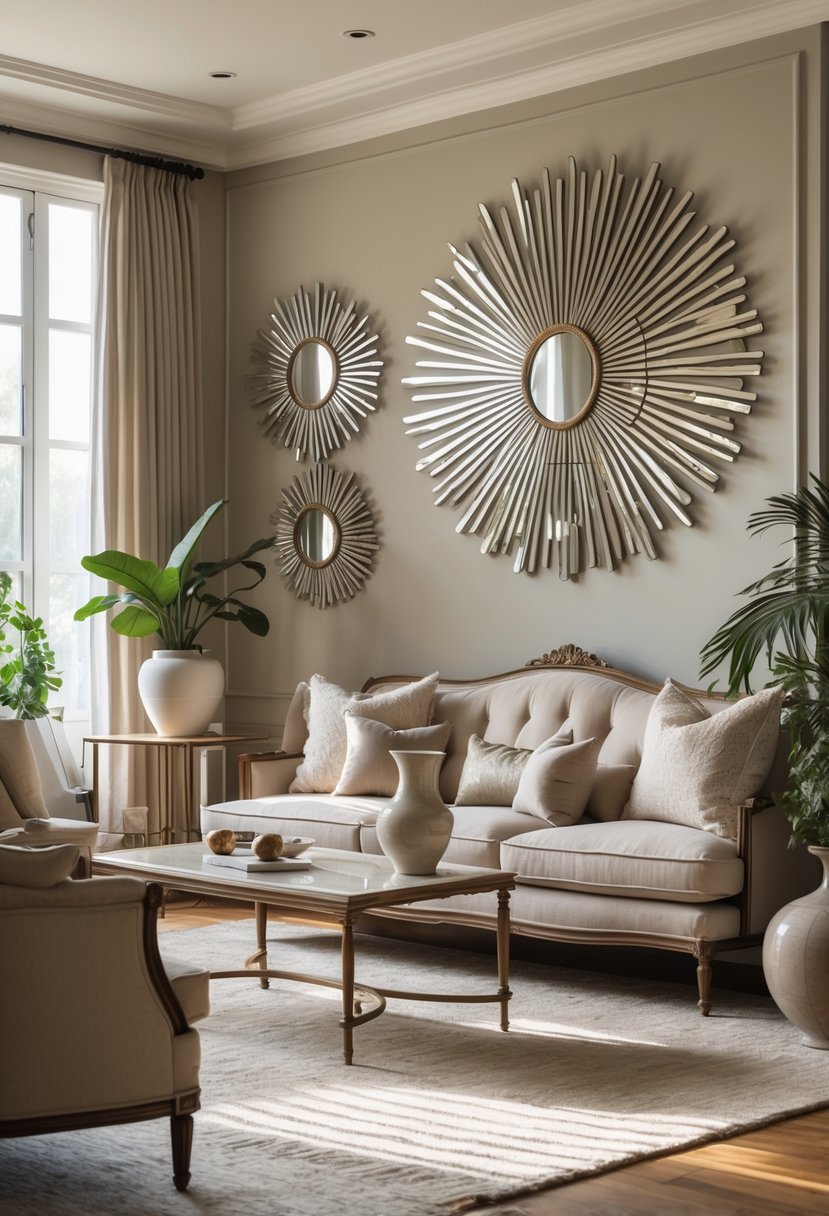
Sunburst wall mirrors became popular during the Art Deco era for their bold geometric design.
They often feature a round center mirror with rays extending outward in metal, wood, or glass.
These mirrors work well as statement pieces in living rooms, adding symmetry and a touch of vintage style.
Jewel-toned throw pillows
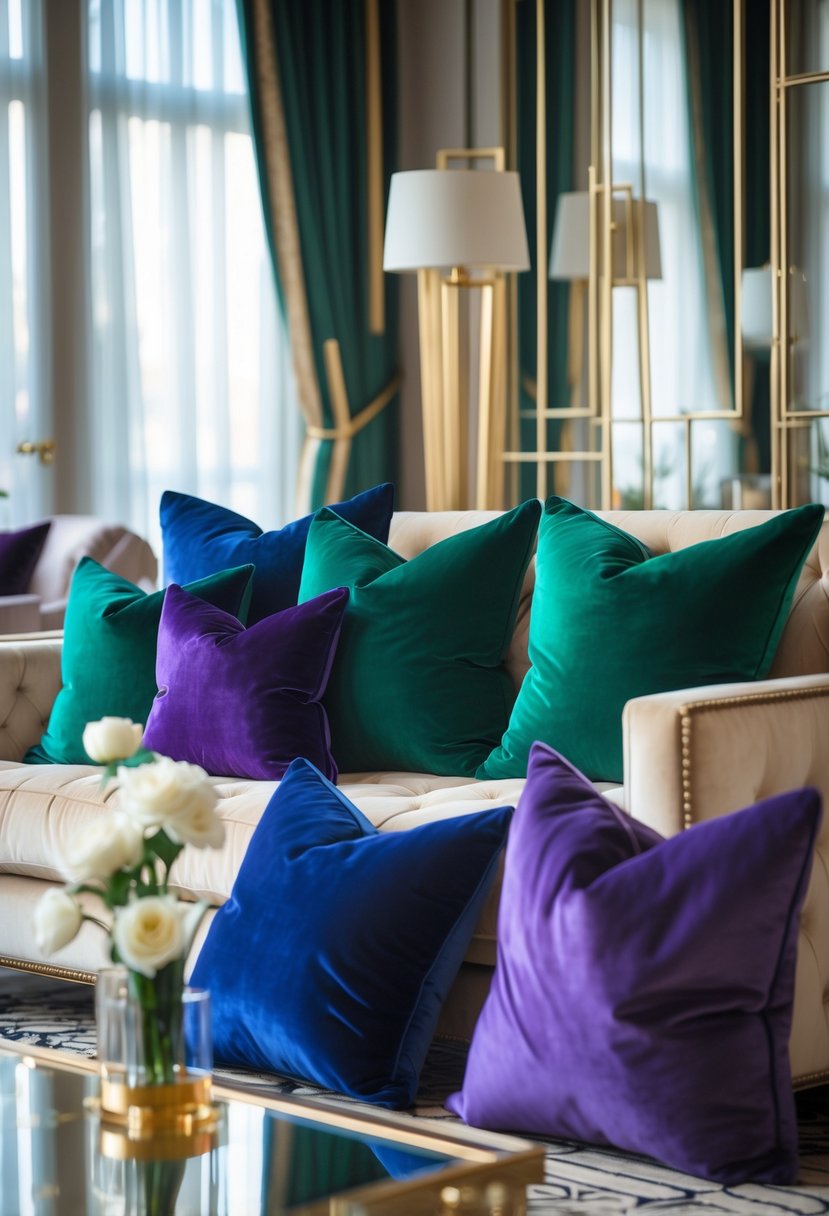
Jewel-toned throw pillows add rich color to an Art Deco-inspired living room. Shades like emerald, sapphire, and ruby work well with the bold patterns common in this style.
They bring contrast to neutral sofas and highlight metallic details in furniture or lighting. This makes the space feel more layered and balanced.
Chrome and glass side tables
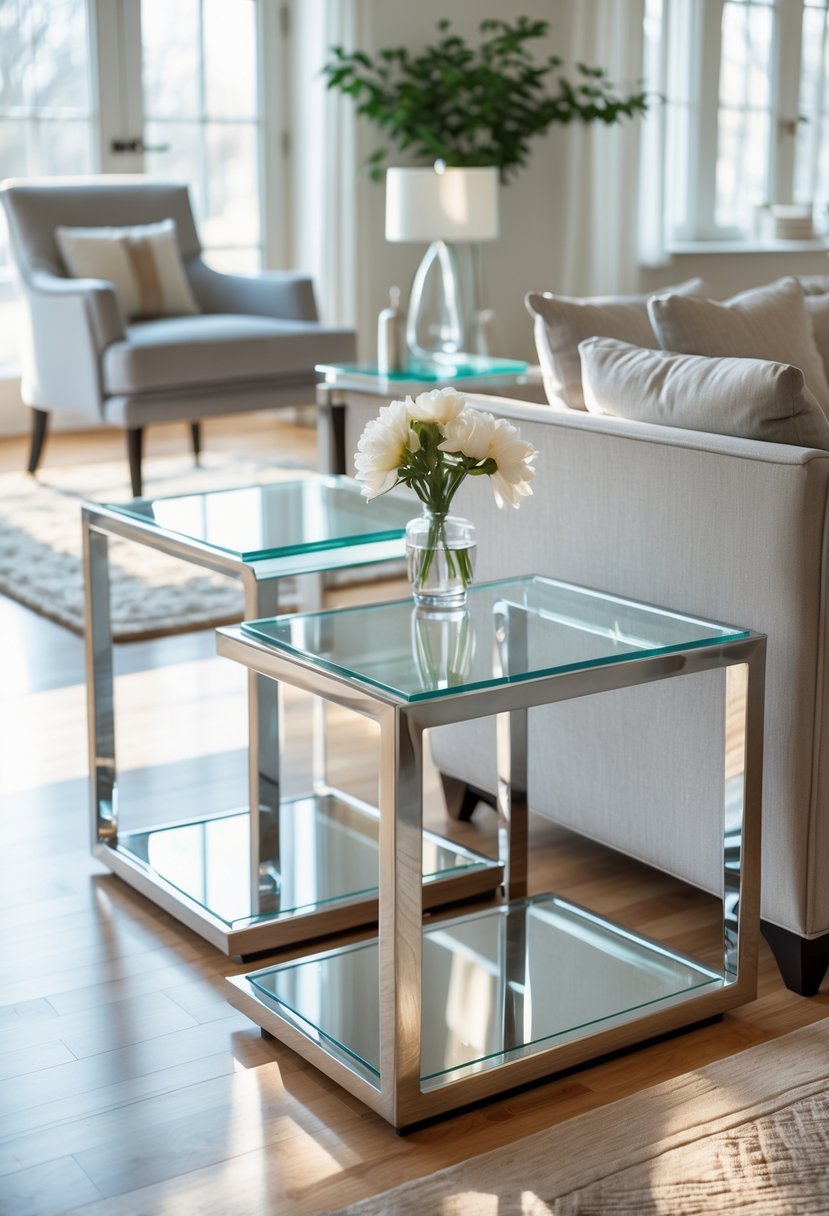
Chrome and glass side tables fit well into Art Deco revival spaces. Their reflective surfaces highlight the clean lines and geometric shapes common in the style.
These tables often feature round or square glass tops supported by polished chrome bases. The combination creates a sleek look that blends function with decorative appeal.
They work in living rooms as accent pieces next to seating. Their simple design makes them versatile while still adding a touch of Art Deco character.
Art Deco style chandeliers

Art Deco chandeliers often feature geometric shapes, stepped forms, and bold symmetry. They use materials like glass, crystal, and polished metal to create a clean but decorative look.
Many designs act as a focal point in the living room. A sunburst or tiered chandelier can highlight the style without overwhelming the space.
Exotic wood paneling
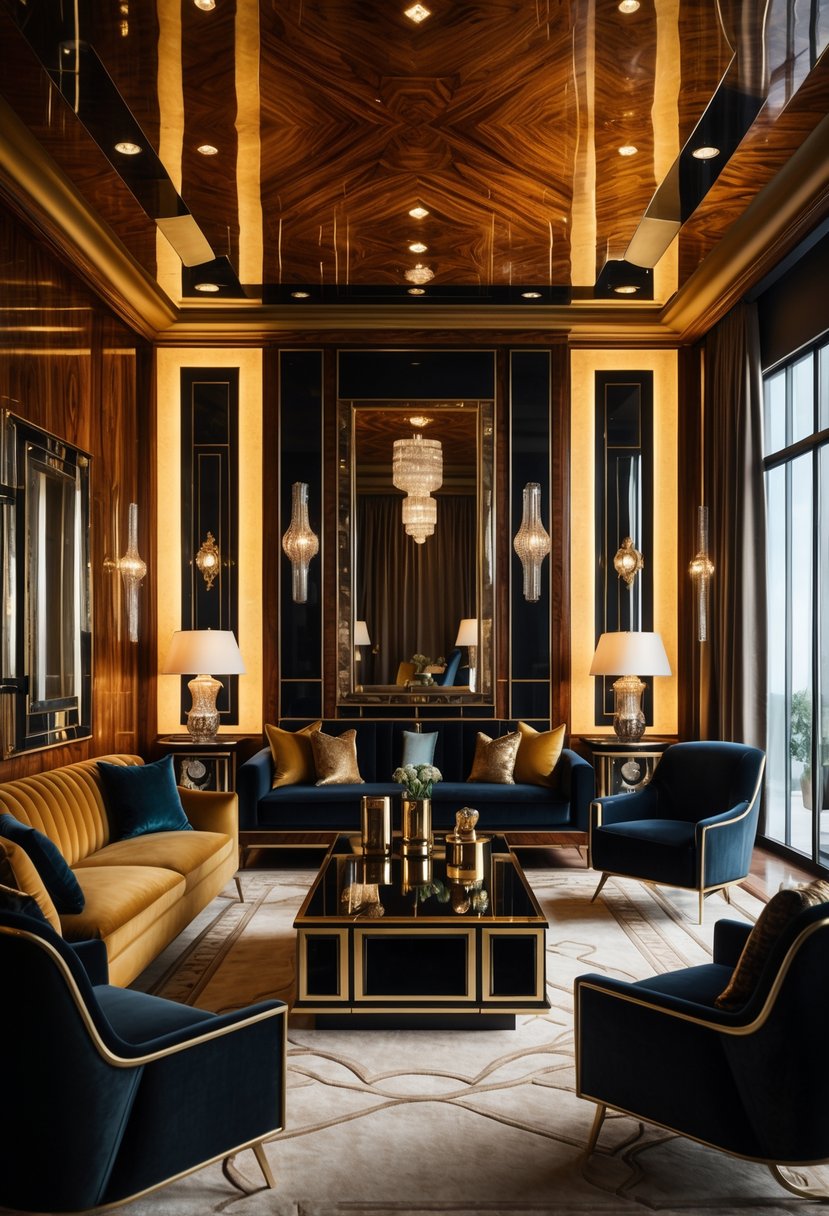
Exotic wood paneling adds depth and warmth to an Art Deco living room. Its rich tones highlight the clean lines and bold shapes common in the style.
They can use finishes like mahogany or walnut to create contrast with lighter walls or metallic accents. This pairing enhances the room’s structured design.
Inlaid details or polished surfaces further emphasize the geometric patterns often found in Art Deco décor.
Stepped-back shelving units
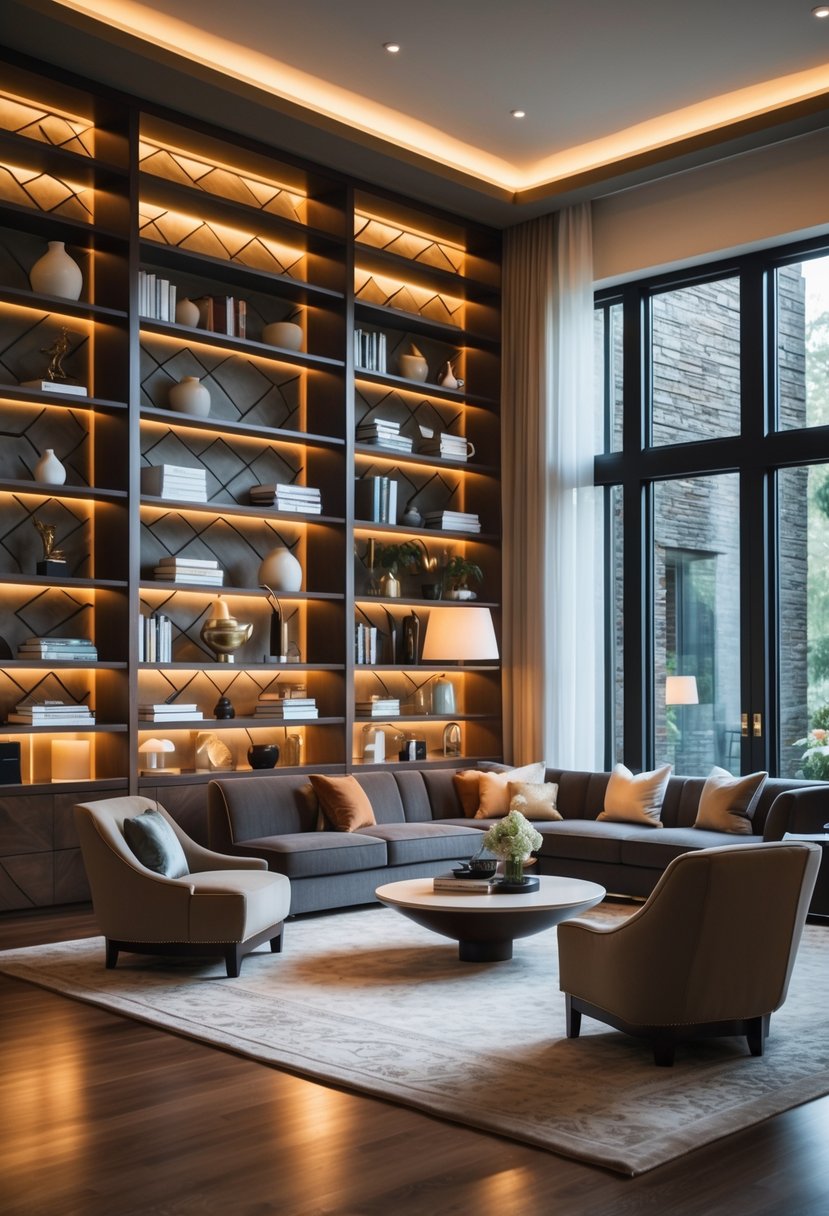
Stepped-back shelving units reflect a key Art Deco detail with their tiered, geometric form. They create visual rhythm while keeping storage practical.
These shelves often feature clean lines, metallic accents, or dark wood finishes. Their structured shape makes them well-suited for displaying books, art, or decorative objects.
Lacquered decorative trays

Lacquered decorative trays add a polished surface that reflects the sleek style of Art Deco design.
They work well on coffee tables, sideboards, or consoles, offering both function and visual interest.
Available in round or rectangular shapes, these trays often feature glossy finishes that highlight bold colors or simple geometric patterns.
Stylized animal sculptures
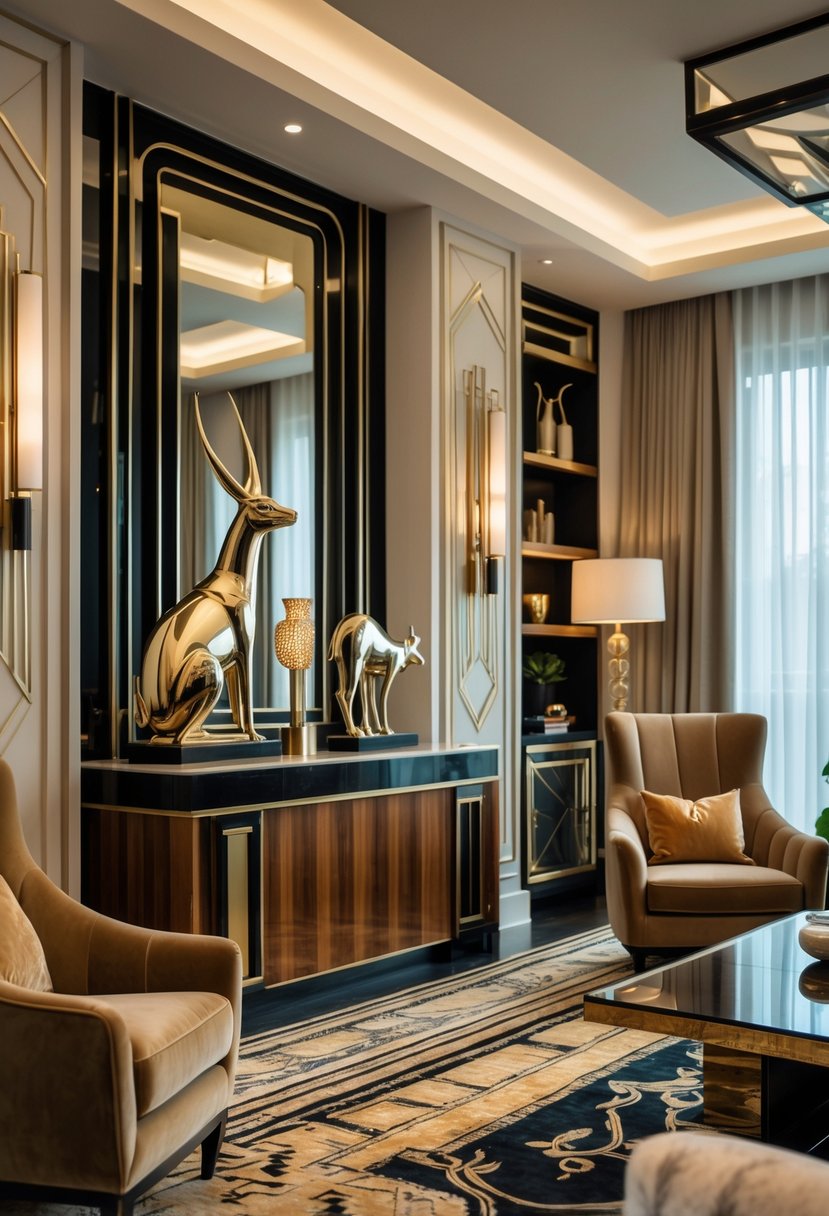
Stylized animal sculptures add character to an Art Deco living room. They often feature clean lines, bold shapes, and polished finishes.
Bronze, glass, and ceramic are common materials, giving the pieces a refined look. These sculptures can serve as focal points on mantels, shelves, or side tables.
Bold zigzag patterns
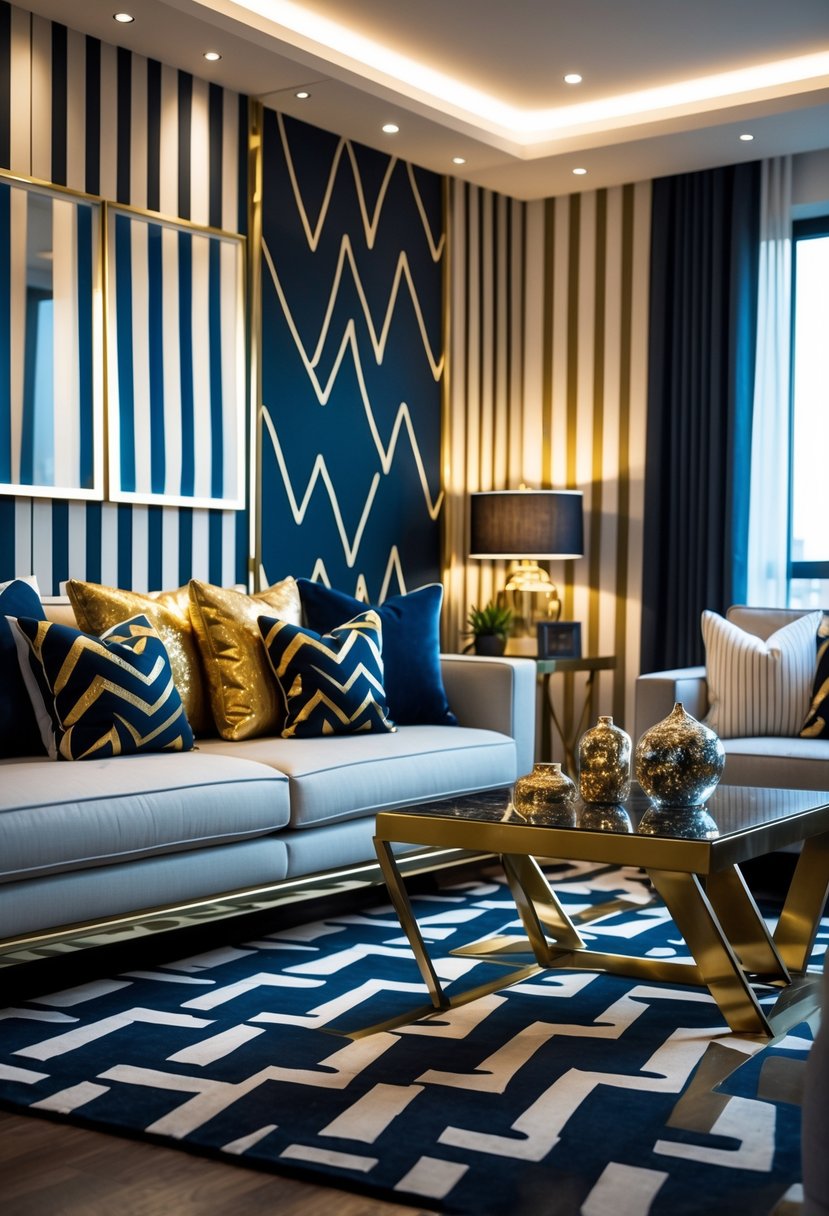
Zigzag patterns bring structure and rhythm to an Art Deco living room. They often appear on rugs, wallpaper, or upholstery.
Designers use them in black and white for contrast or in jewel tones for a richer look. These patterns add energy without overwhelming the space.
Glossy marble accents

Marble adds a polished surface that fits well with Art Deco style. Its smooth finish reflects light and enhances geometric lines.
They often use marble for coffee tables, side tables, or fireplace surrounds. Black, white, or green marble pairs well with metallic details.
Glossy marble accents bring structure and contrast without overwhelming other design elements.
Metallic gold leaf detailing

Metallic gold leaf accents add a subtle touch of shine to an Art Deco living room. They work well on wall décor, mirrors, or framed artwork.
Many designs feature layered or overlapping leaf patterns in metal. These create texture while keeping the style clean and elegant.
Gold detailing pairs easily with gray, black, or jewel tones. This contrast highlights the geometric and luxurious look often linked to Art Deco design.
Inlaid wood furniture
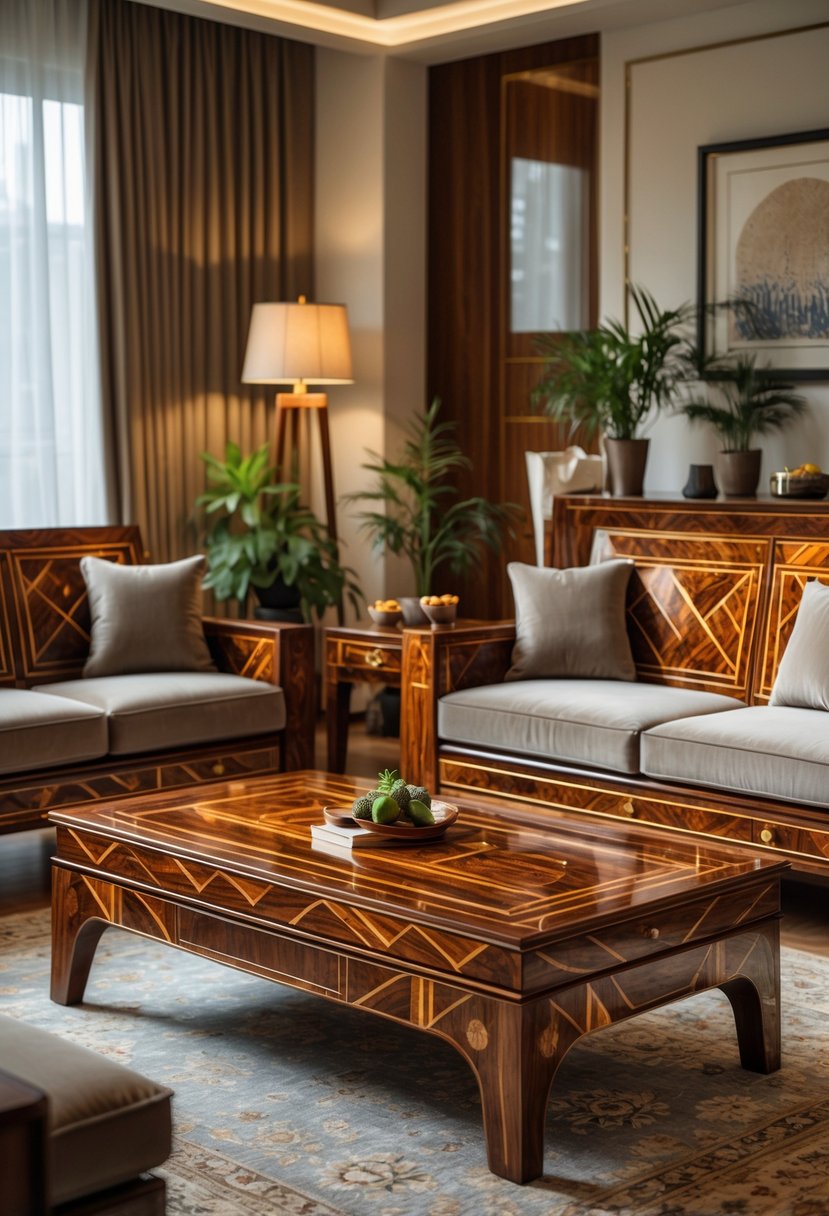
Inlaid wood furniture adds detail and craftsmanship to an Art Deco living room. It often features geometric patterns or contrasting wood tones.
These pieces work well as coffee tables, sideboards, or accent tables. The designs highlight clean lines while still giving a decorative touch.
They combine function with style, fitting the Art Deco focus on both utility and visual appeal.
Sleek velvet curtains

Velvet curtains bring a soft yet structured look that fits well with Art Deco design. Their smooth texture adds depth without overwhelming the room.
Rich tones like navy, emerald, or deep burgundy highlight the geometric lines and metallic accents often found in this style.
They also provide practical benefits by blocking light and offering privacy.
Geometric stained glass lamps
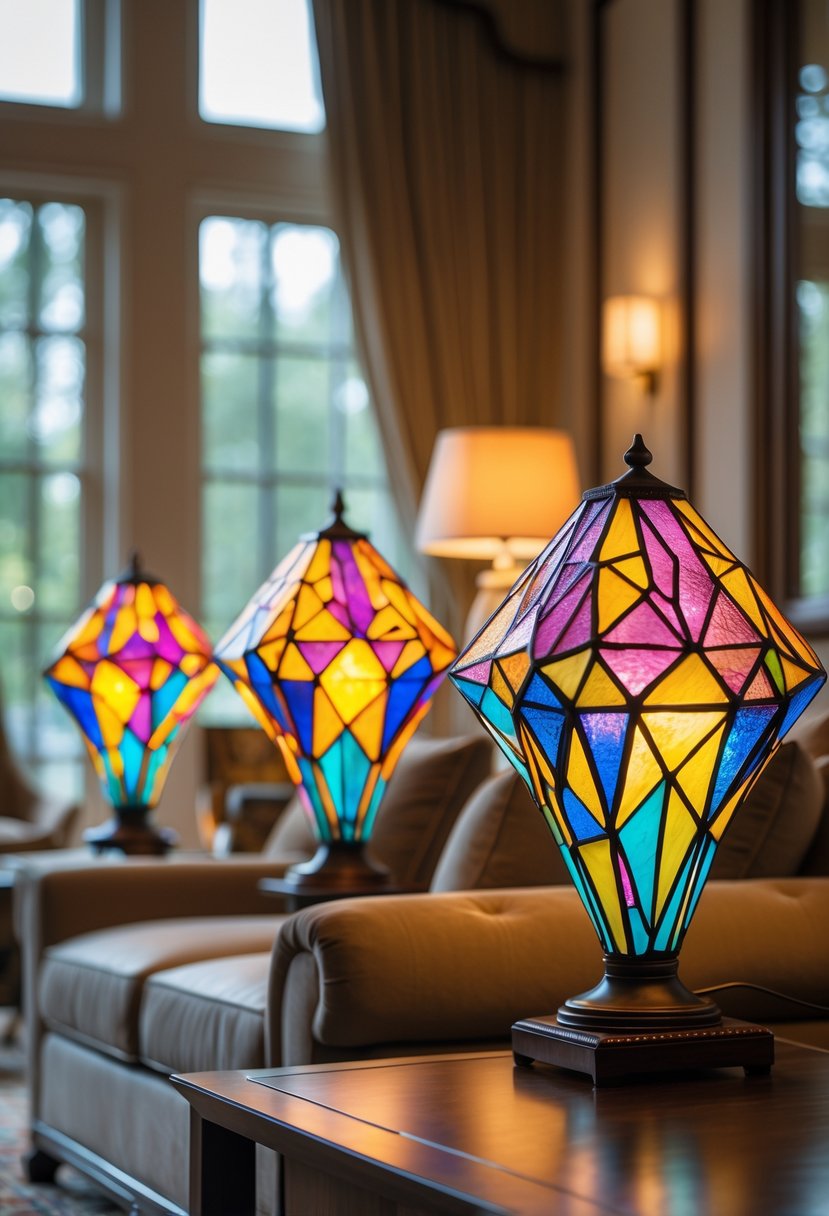
Geometric stained glass lamps bring color and structure into an Art Deco living room. Their bold patterns reflect the movement’s focus on symmetry and clean lines.
These lamps often feature angular shapes and contrasting tones. They work well as statement pieces while also providing soft, diffused light.
Polished chrome picture frames
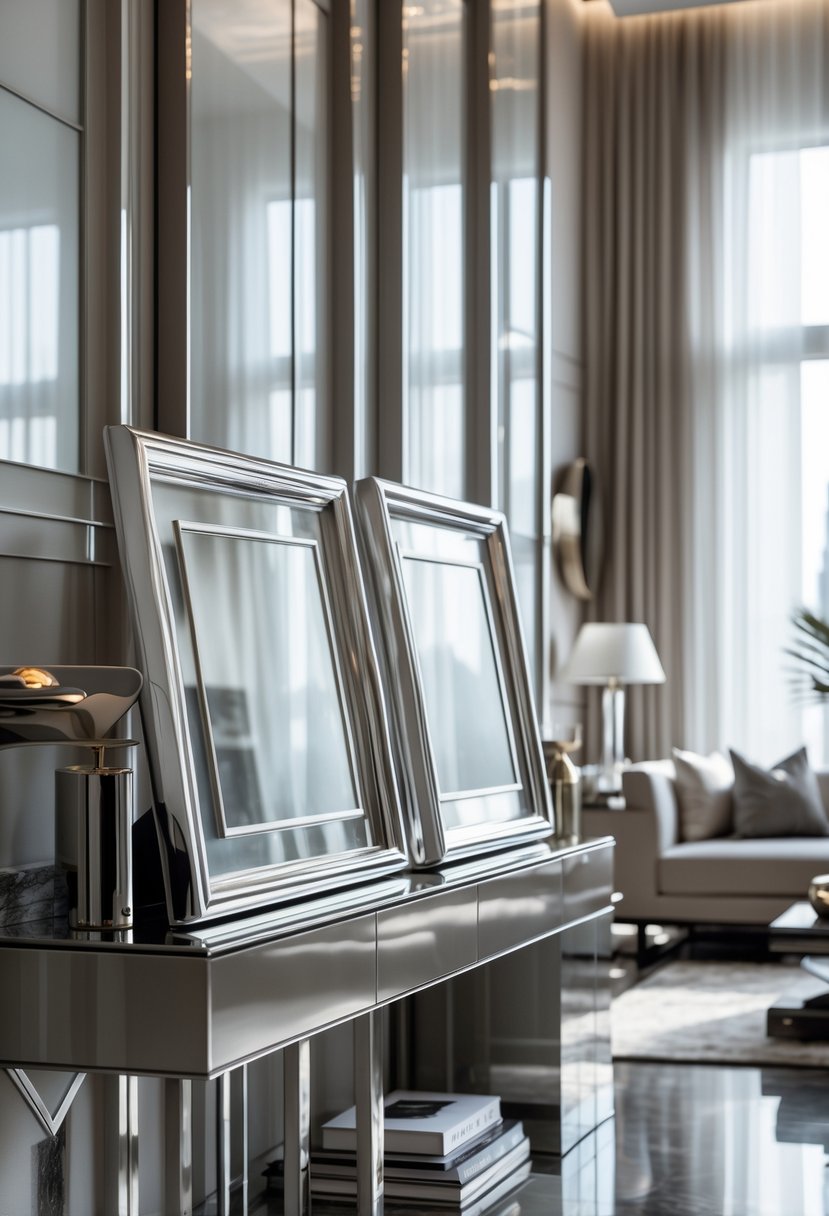
Polished chrome picture frames bring a sleek and reflective finish that fits well with Art Deco Revival interiors. Their clean lines highlight the geometric style common in the period.
They work in living rooms as both wall and tabletop frames. The metallic surface pairs well with bold colors, mirrors, and glass accents.
Defining Art Deco Revival Style
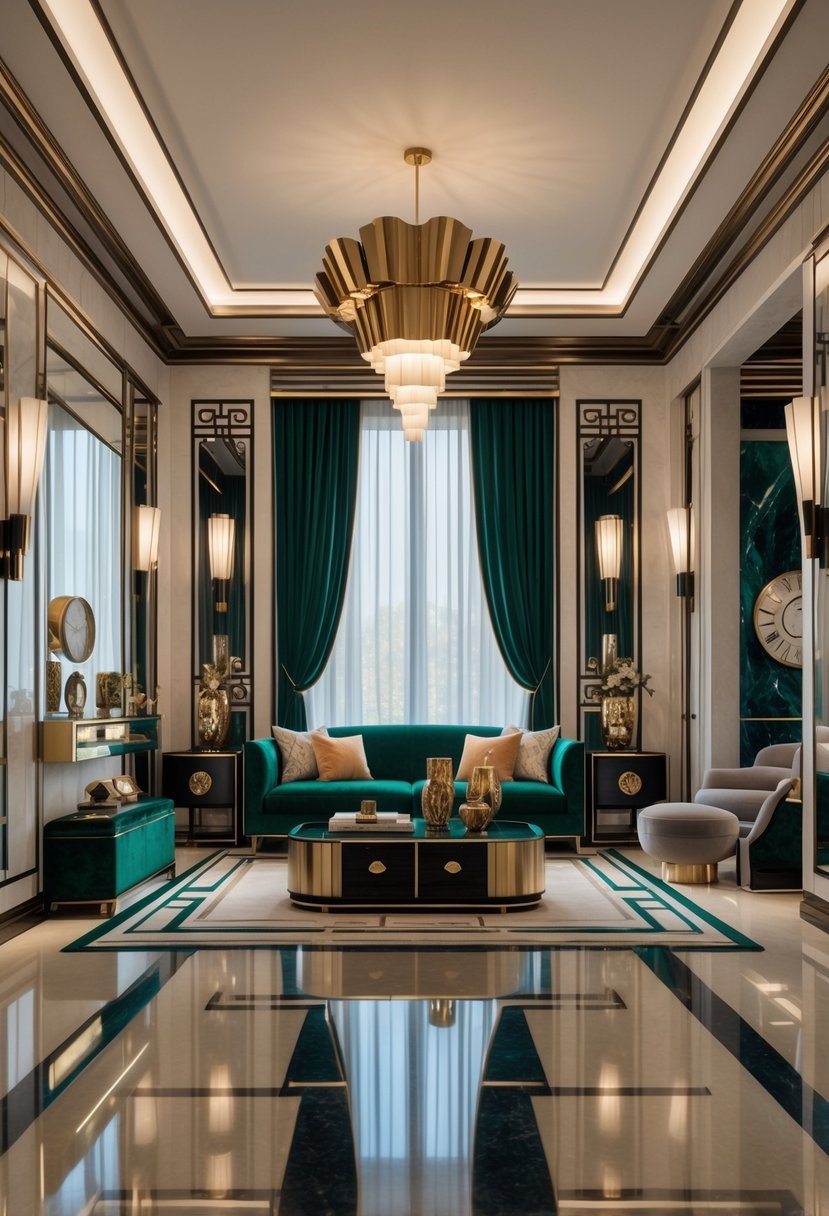
Art Deco Revival blends the glamour of the 1920s and 1930s with modern comfort. It focuses on bold geometry, rich textures, and materials that highlight both luxury and function.
Key Characteristics
Art Deco Revival emphasizes symmetry, balance, and clean lines. Furniture often has sleek, streamlined shapes with subtle curves. Geometric patterns such as chevrons, zigzags, and sunbursts remain central to the style.
Decorative details play a strong role. Items like mirrors with stepped frames, metallic accents, and sculptural lighting fixtures add visual interest without excess clutter. This creates a space that feels refined but not overwhelming.
Scale matters in this style. Larger statement pieces—like a bold chandelier, a velvet sofa, or a lacquered cabinet—anchor the room. Smaller accents, such as patterned cushions or art prints, support the larger design without competing for attention.
The overall effect is a room that feels structured, elegant, and timeless while still fitting into modern homes.
Color Palettes and Materials
Art Deco Revival uses deep, saturated tones paired with metallic finishes. Common colors include emerald green, sapphire blue, burgundy, and black. These shades often contrast with lighter neutrals such as cream, beige, or soft gray to keep the palette from feeling too heavy.
Materials highlight both luxury and durability. Popular choices include:
- Velvet and leather for upholstery
- Glass, chrome, and brass for lighting and accents
- Lacquered wood and marble for tables and cabinets
Patterns often appear in rugs, wallpaper, or textiles. Bold geometric prints or stylized motifs add energy without overwhelming the space. By mixing rich colors with high-quality finishes, the style creates a polished and cohesive look.
Integrating Modern Touches

Modern updates can refresh Art Deco spaces without losing their character. Clean-lined furniture and thoughtful lighting create balance between vintage details and current design needs.
Blending Contemporary Furniture
Furniture with simple shapes works well alongside bold Art Deco patterns. A sleek sofa in a neutral fabric can soften the strong lines of geometric rugs or wall art. This mix prevents the room from feeling overly busy.
Materials also play a key role. Glass, steel, and lacquered finishes echo Art Deco while keeping a modern edge. Pairing a marble coffee table with velvet chairs, for example, combines luxury with practicality.
Scale matters, too. Low-profile seating or slim console tables help open the space. This allows standout Art Deco pieces, like a mirrored cabinet, to remain the focal point.
A short list of practical combinations:
- Neutral sofa + patterned cushions
- Slim dining table + bold chandelier
- Velvet armchair + glass side table
This approach keeps the room stylish yet functional for daily use.
Lighting Choices for Ambiance
Lighting defines mood in an Art Deco-inspired room. Modern fixtures with geometric or sculptural forms fit seamlessly into the style. For example, a brass floor lamp with a cone shade can highlight angular furniture.
Layering light sources adds depth. Overhead chandeliers provide drama, while wall sconces or table lamps create softer zones. Using dimmers makes it easy to adjust brightness for different times of day.
Materials should reflect both glamour and function. Glass globes, polished metal, and frosted finishes diffuse light evenly while reinforcing Art Deco elegance.
Placement is equally important. Accent lights can draw attention to artwork or architectural details, while concealed LED strips can highlight shelving without distraction.
By combining statement pieces with subtle lighting layers, the room feels both inviting and refined.
Learn more about Art Deco style from Better Homes & Gardens.