Japanese Living Room Design: 22 Inspiring Ideas for a Calm and Modern Space
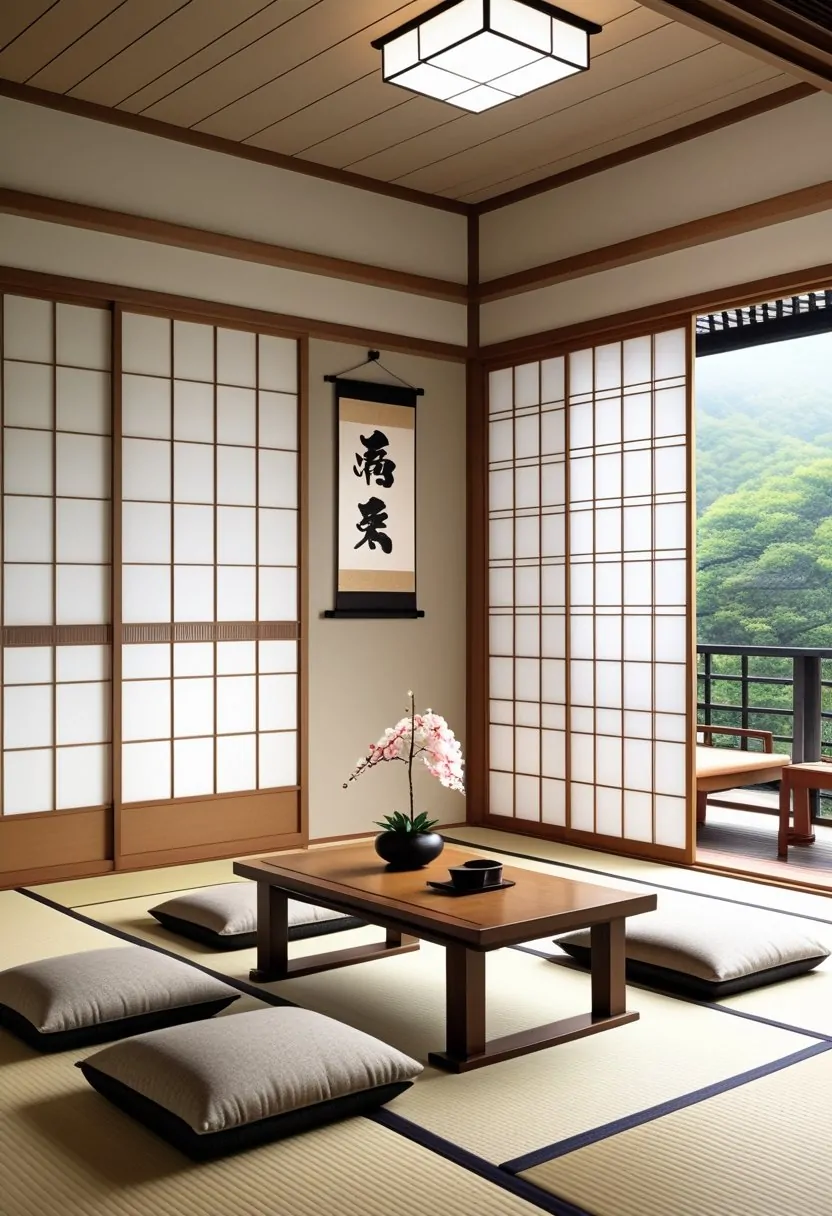
Japanese living room design focuses on creating calm, balanced spaces that feel both functional and inviting. It values simplicity, natural elements, and thoughtful details that bring a sense of order and peace into daily life. This style shows how a living room can feel open, uncluttered, and connected to nature without losing comfort.
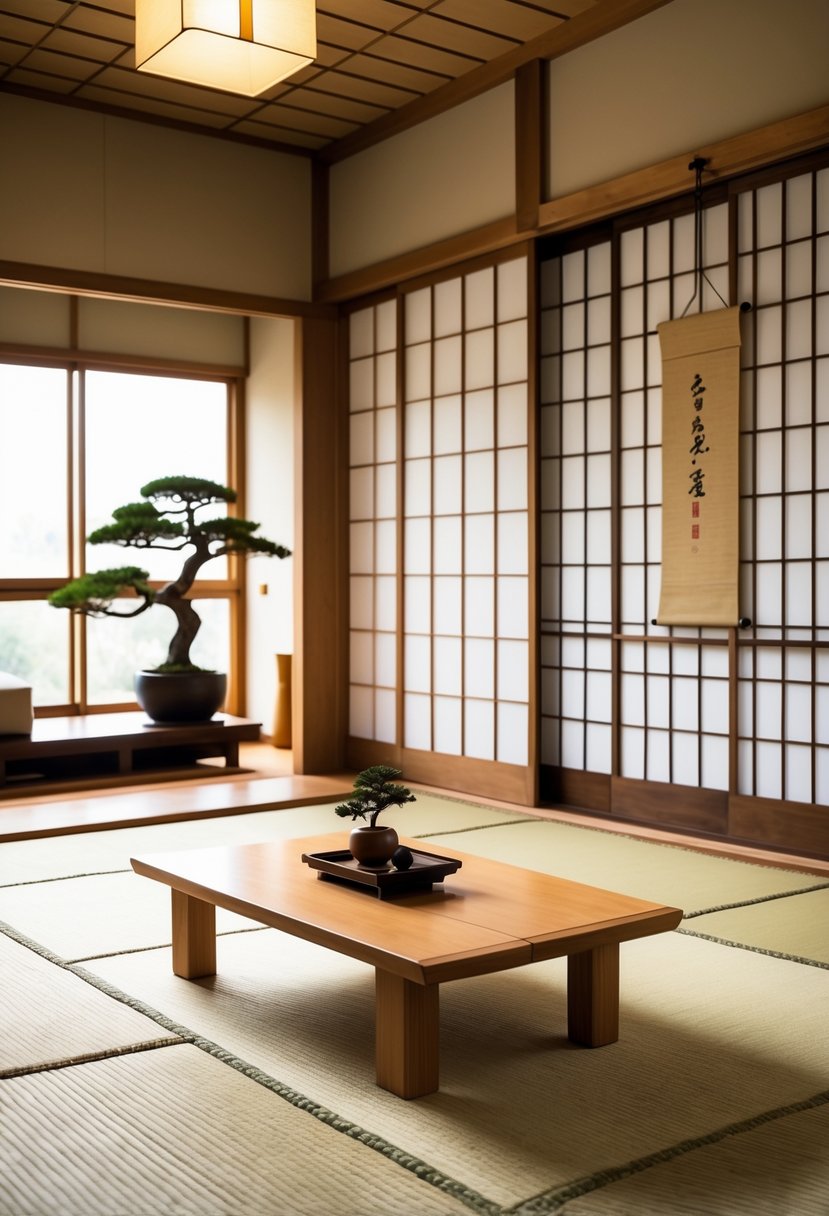
By blending traditional features with modern touches, Japanese interiors offer a clear path to designing spaces that feel timeless. Each element, from the choice of materials to the layout, works together to support harmony and ease in the home.
Incorporate tatami mats for authentic flooring
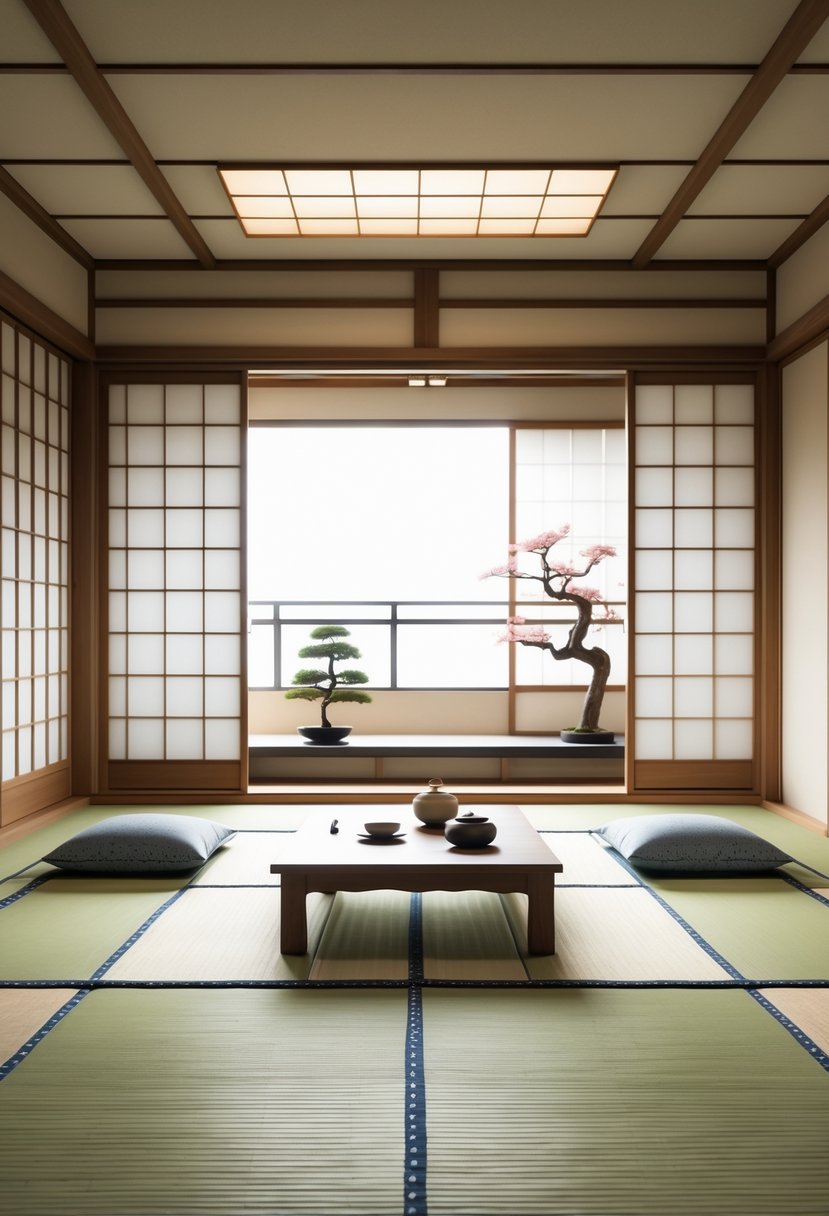
Tatami mats give a Japanese living room a traditional base. They provide a natural look and a soft surface underfoot.
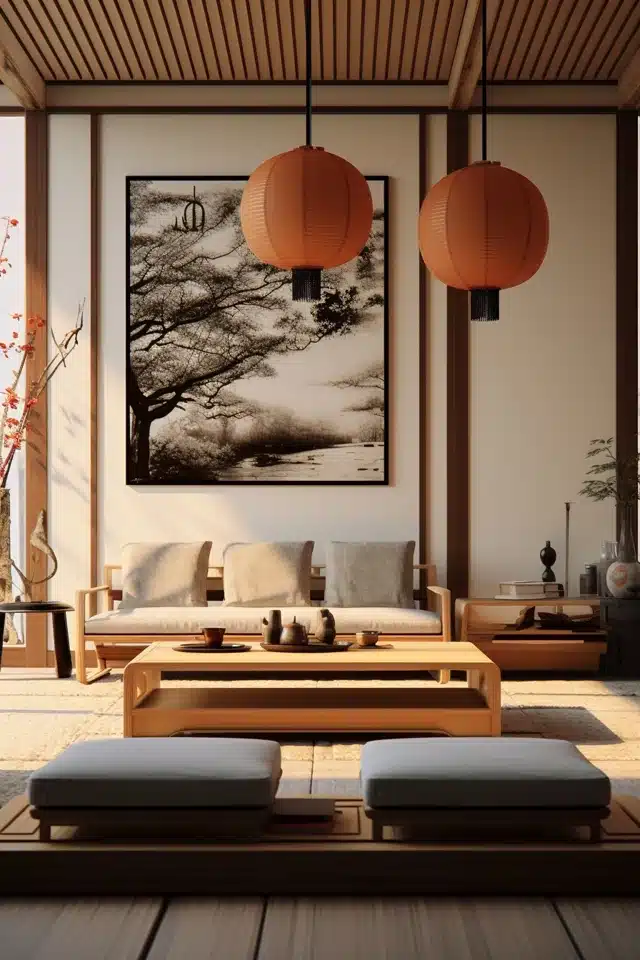
Made from rice straw and woven rush, tatami mats create a calm and simple atmosphere. They also fit well with minimalist or modern interiors.
Use shoji screens to divide spaces softly
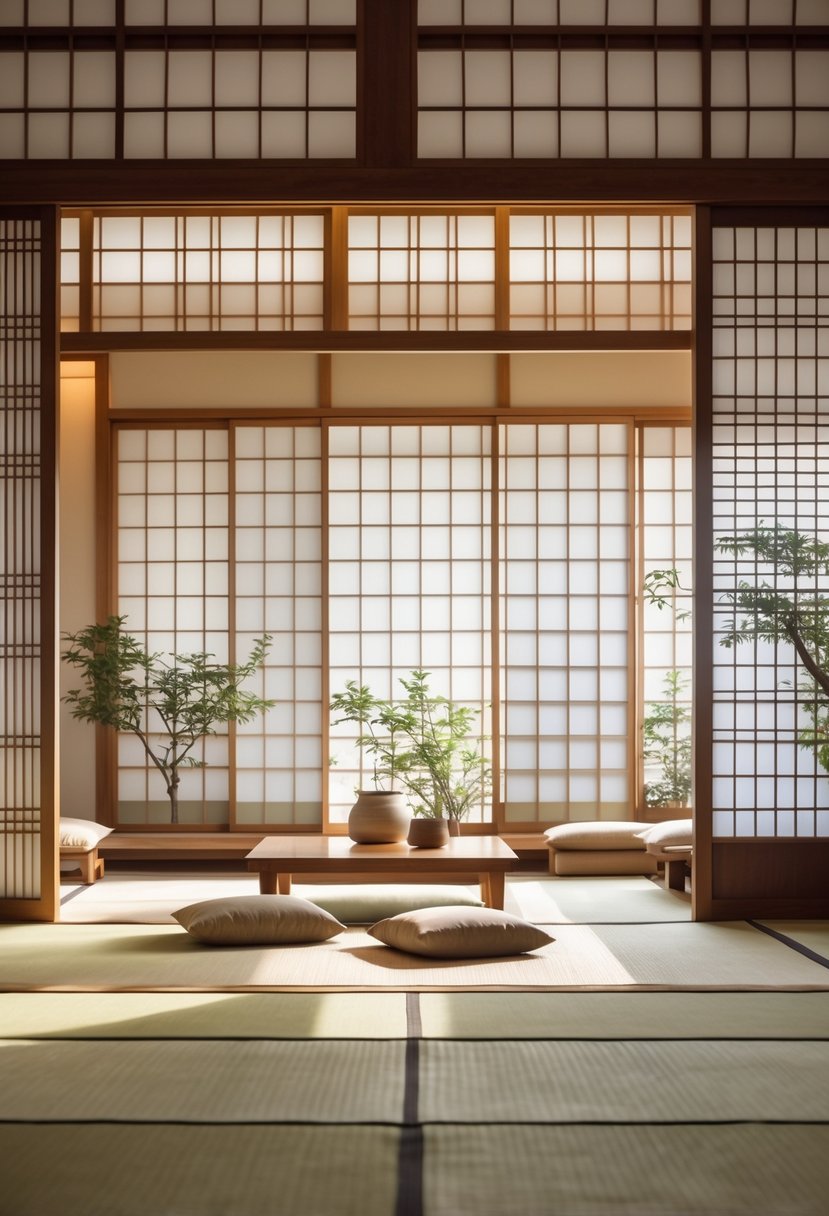
Shoji screens create separation without closing off a room. Their wooden frames and translucent paper allow light to pass through, keeping areas bright.
They work well between living and dining areas, offering privacy while maintaining an open feel. Shoji screens also add a traditional Japanese design element.
Choose low-profile wooden furniture
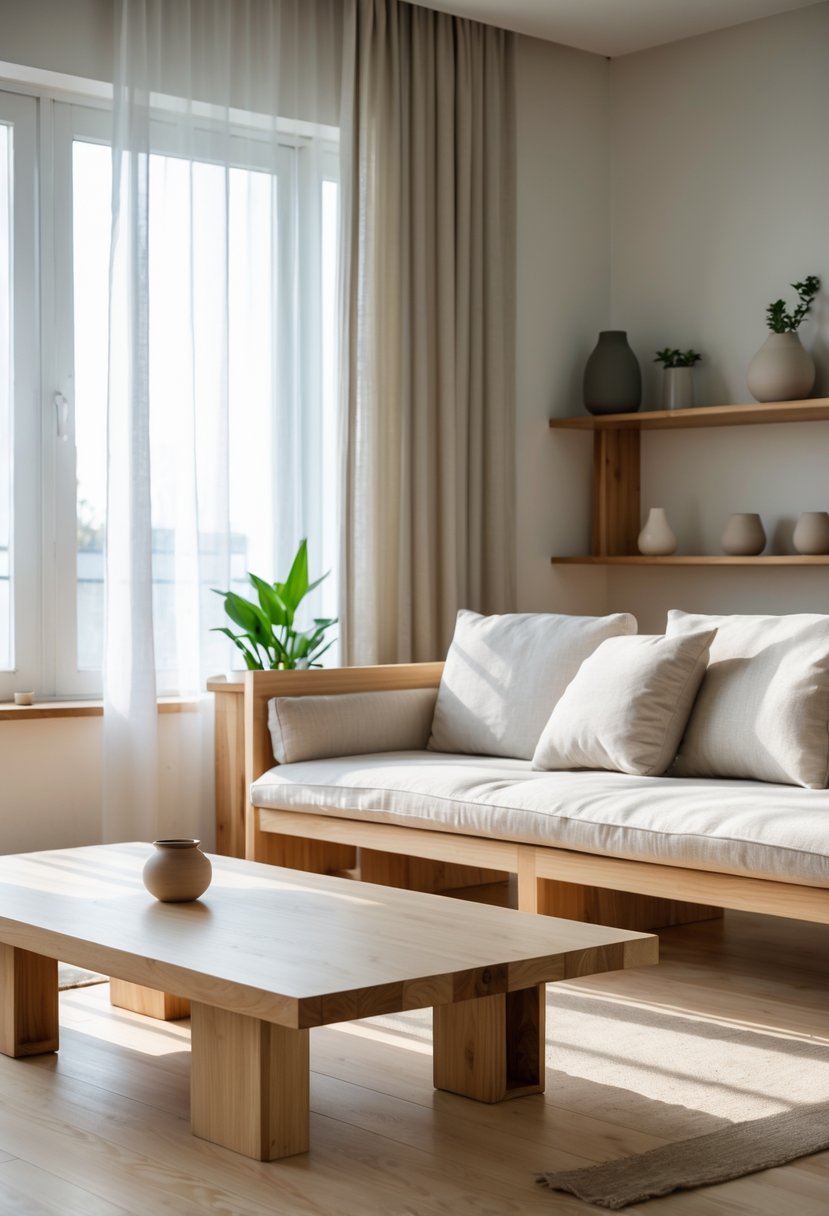
Low-profile wooden furniture reflects the simplicity found in Japanese living spaces. Pieces such as short-legged tables or platform sofas create a grounded look.
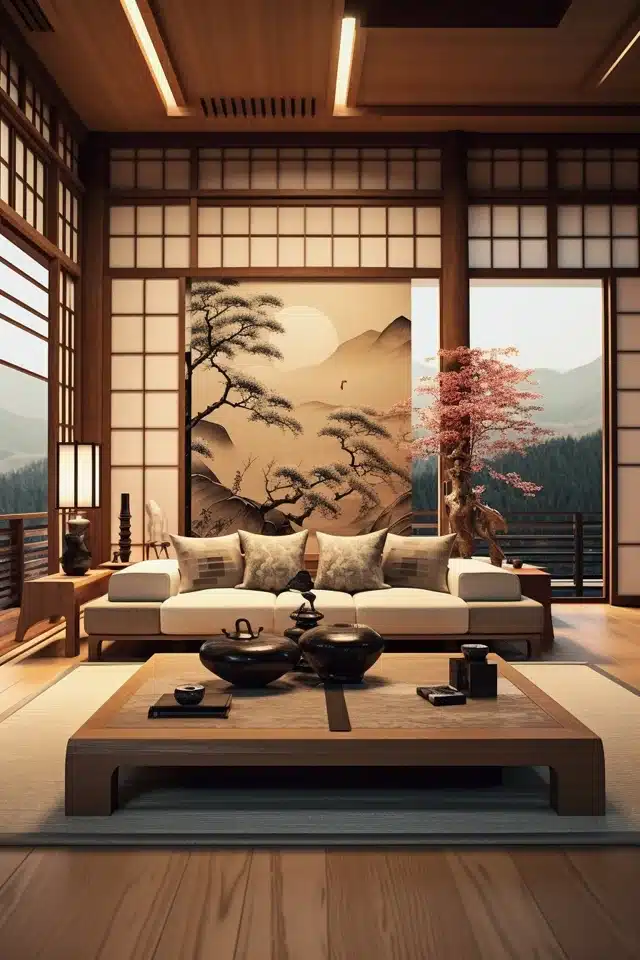
These designs open up vertical space, making the room feel less crowded. Natural materials like oak or bamboo add warmth while keeping the style minimal.
Add bonsai plants for natural decor
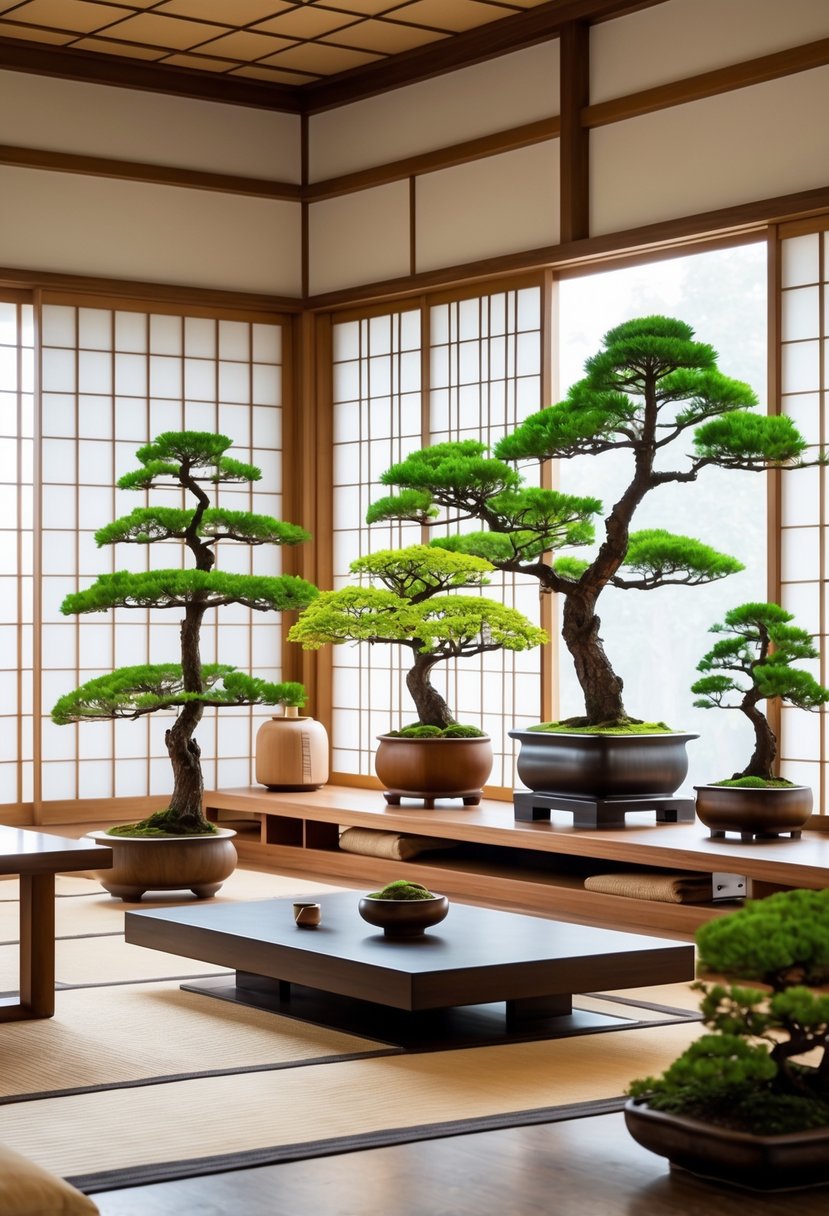
Bonsai plants bring a touch of nature into a living room while keeping the design simple and balanced.
They work well as a small centerpiece on a coffee table or as an accent on a shelf.
Choosing a pot that matches the room’s style helps the bonsai blend with the space.
Opt for neutral color palettes with earth tones
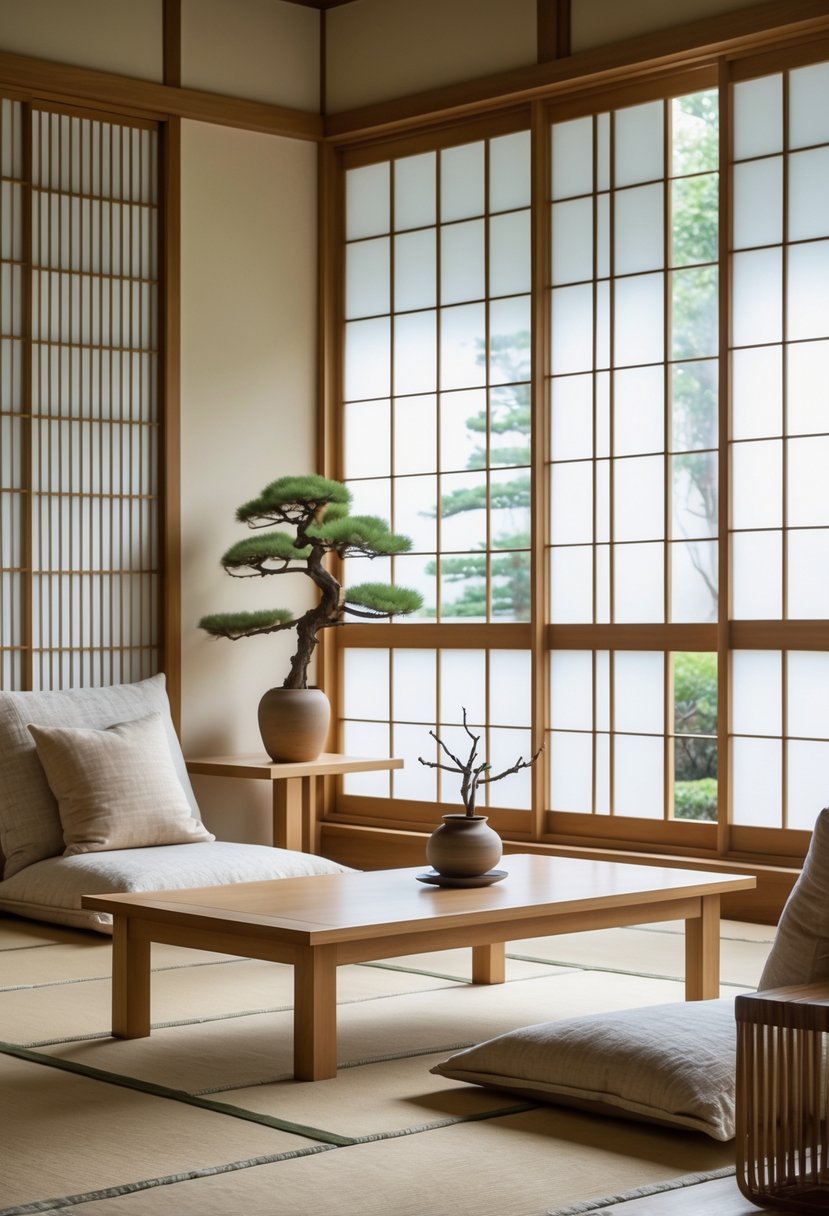
They often use neutral shades like beige, white, and gray to create a calm base.
Earth tones such as soft browns and muted greens add warmth and balance.

This mix of colors helps the living room feel simple, natural, and uncluttered.
Integrate natural materials like bamboo and rice paper
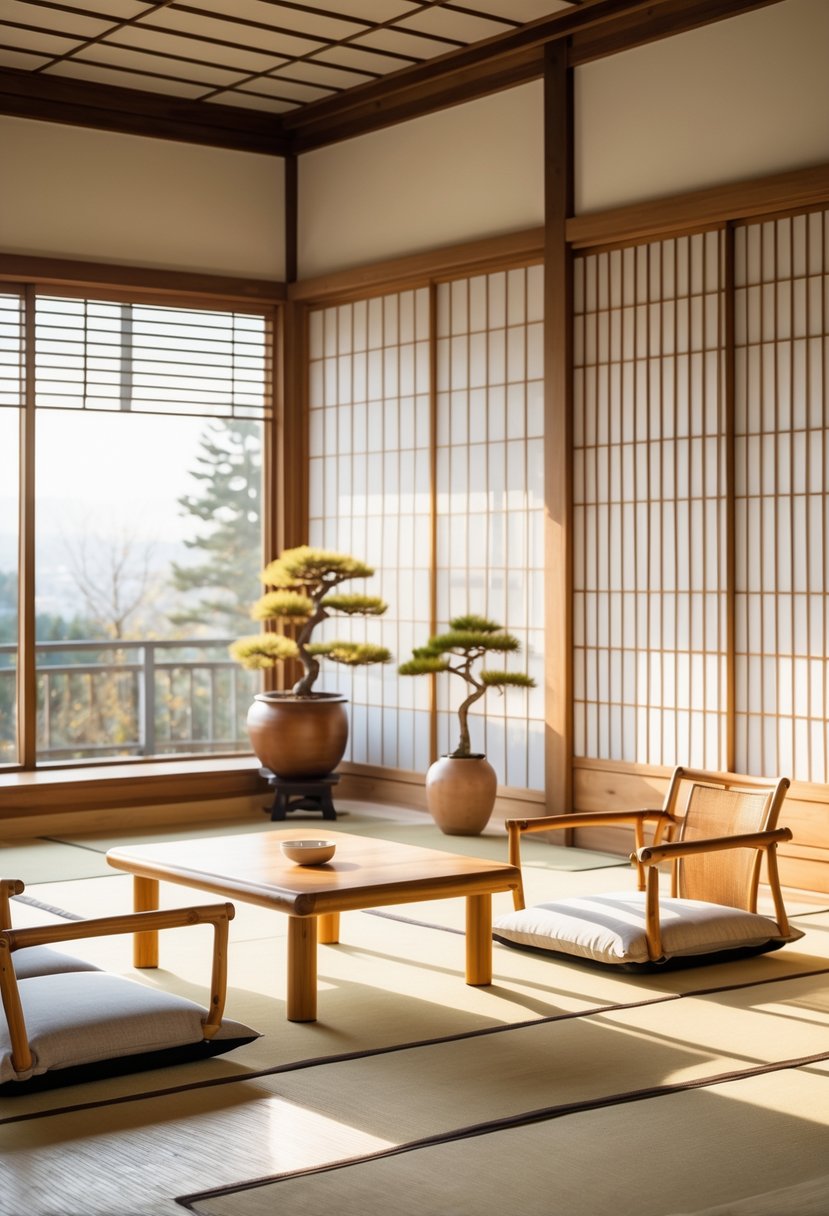
Bamboo works well for flooring, screens, or furniture because it is durable and simple in appearance. It adds texture without overwhelming the room.
Rice paper is often used in shoji screens to filter light softly. It creates a calm atmosphere while maintaining privacy.
Keep the layout open and uncluttered
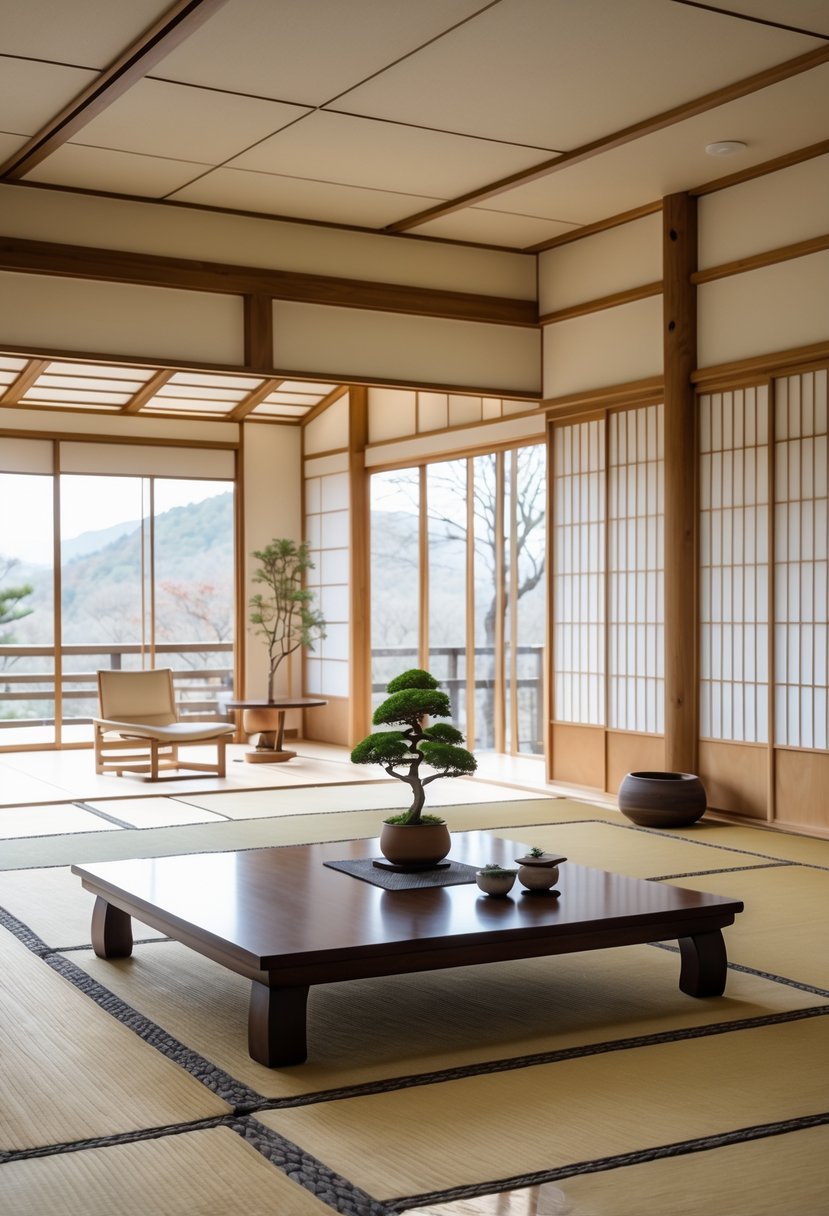
Japanese living rooms often use open layouts that allow easy movement and clear sightlines.
They avoid excess furniture, keeping only essential pieces like a low table or floor seating.
Storage stays hidden to maintain clean surfaces and reduce visual clutter.
Use futons or floor cushions for seating
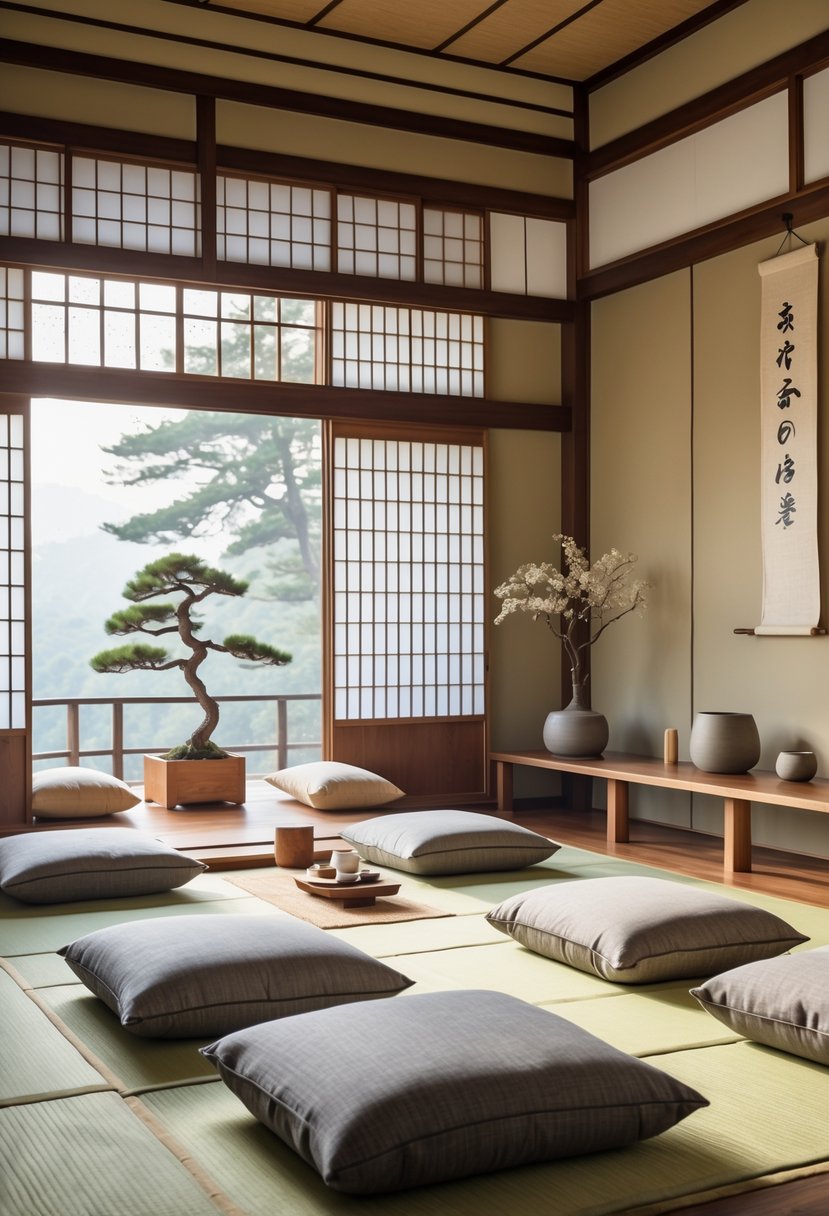
Futons and floor cushions provide flexible seating that fits well in Japanese living rooms.
They allow people to sit closer to the ground, which encourages a relaxed and informal atmosphere.
Both options are easy to move, store, and arrange, making them practical for small or multipurpose spaces.
Incorporate sliding doors to save space
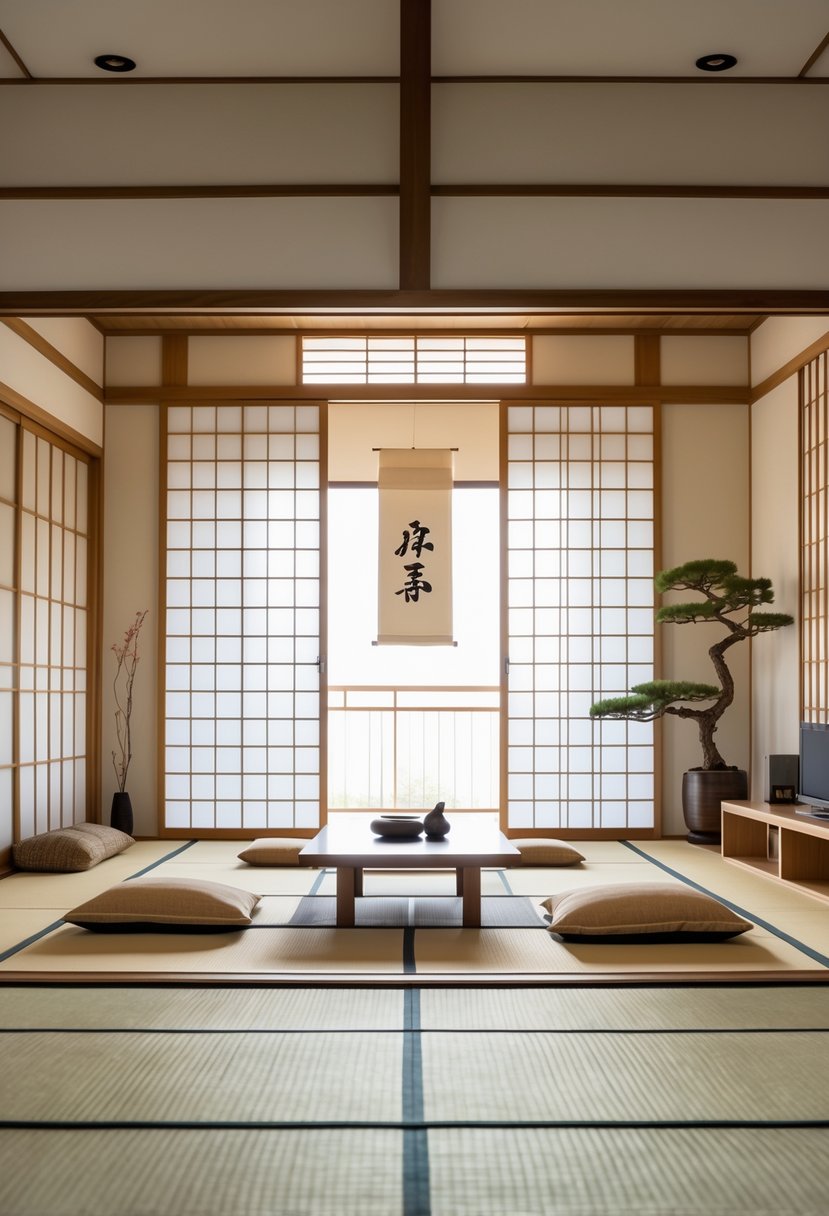
Sliding doors replace swinging doors, which need extra clearance. This makes them practical in small living rooms.
They move along tracks and create flexible layouts. Homeowners can use them as doors, windows, or room dividers.
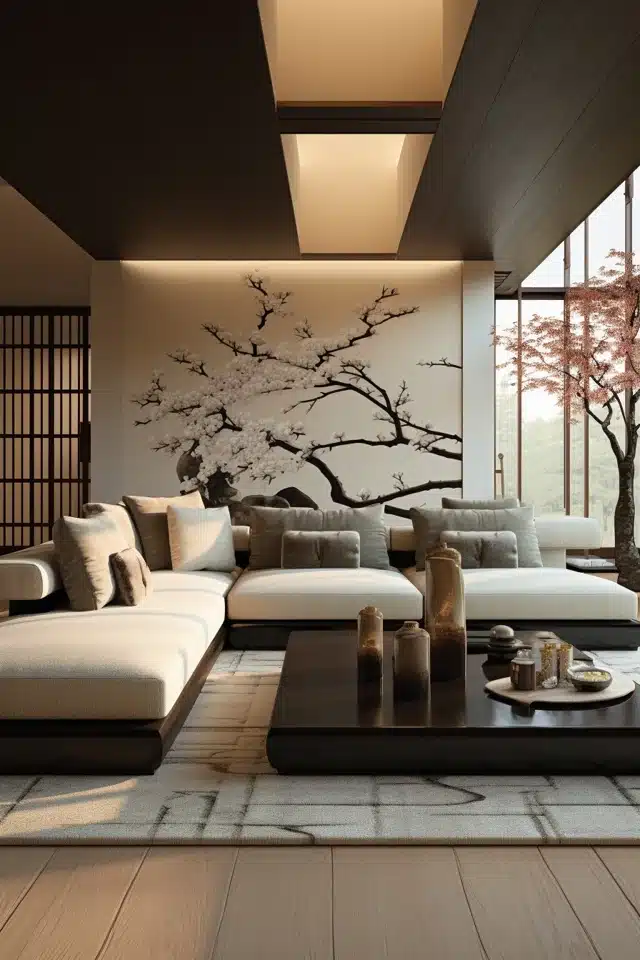
Shoji screens, often made with wood and paper, keep the space light while maintaining privacy.
Add a tokonoma alcove for art display
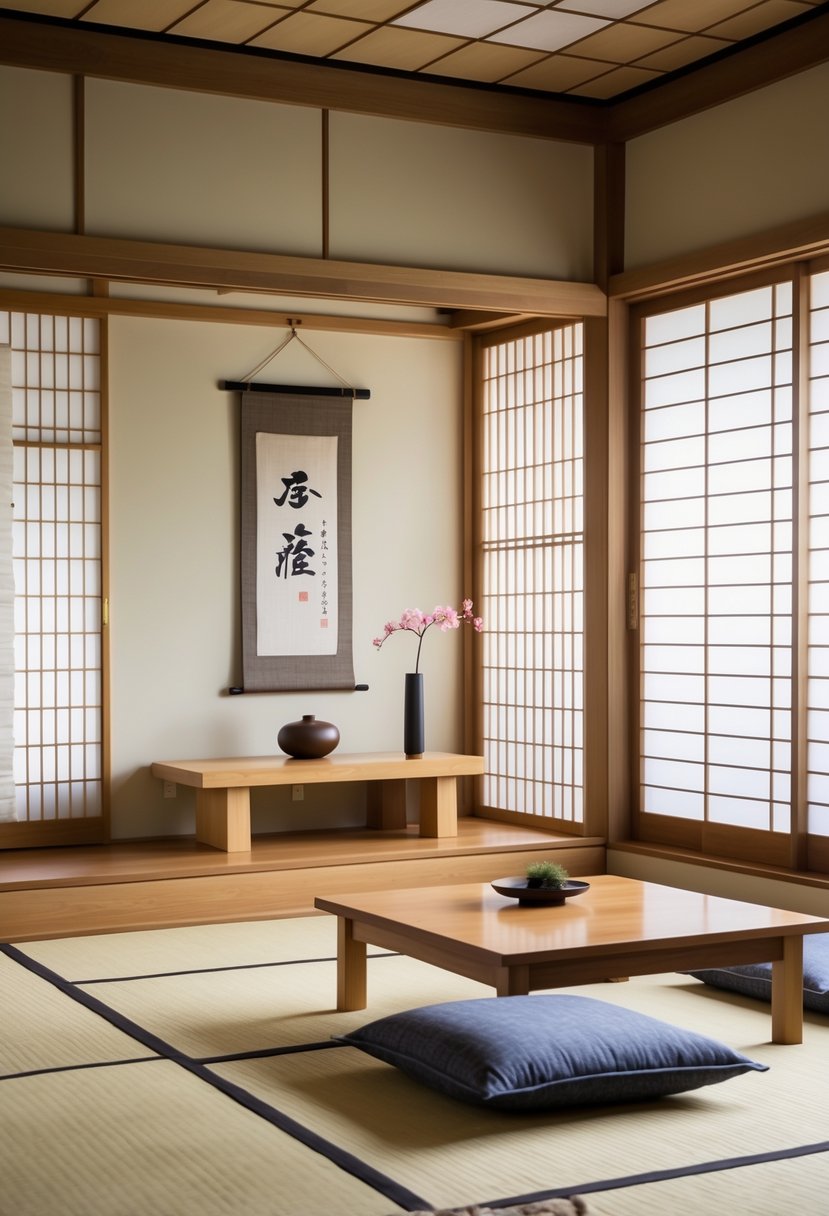
A tokonoma is a recessed alcove found in traditional Japanese rooms. It serves as a focal point where art, calligraphy, or flower arrangements are displayed.
This space reflects balance and simplicity. People often use it to highlight seasonal items or a single piece of art, keeping the room uncluttered.
Use washi paper lamps for soft lighting
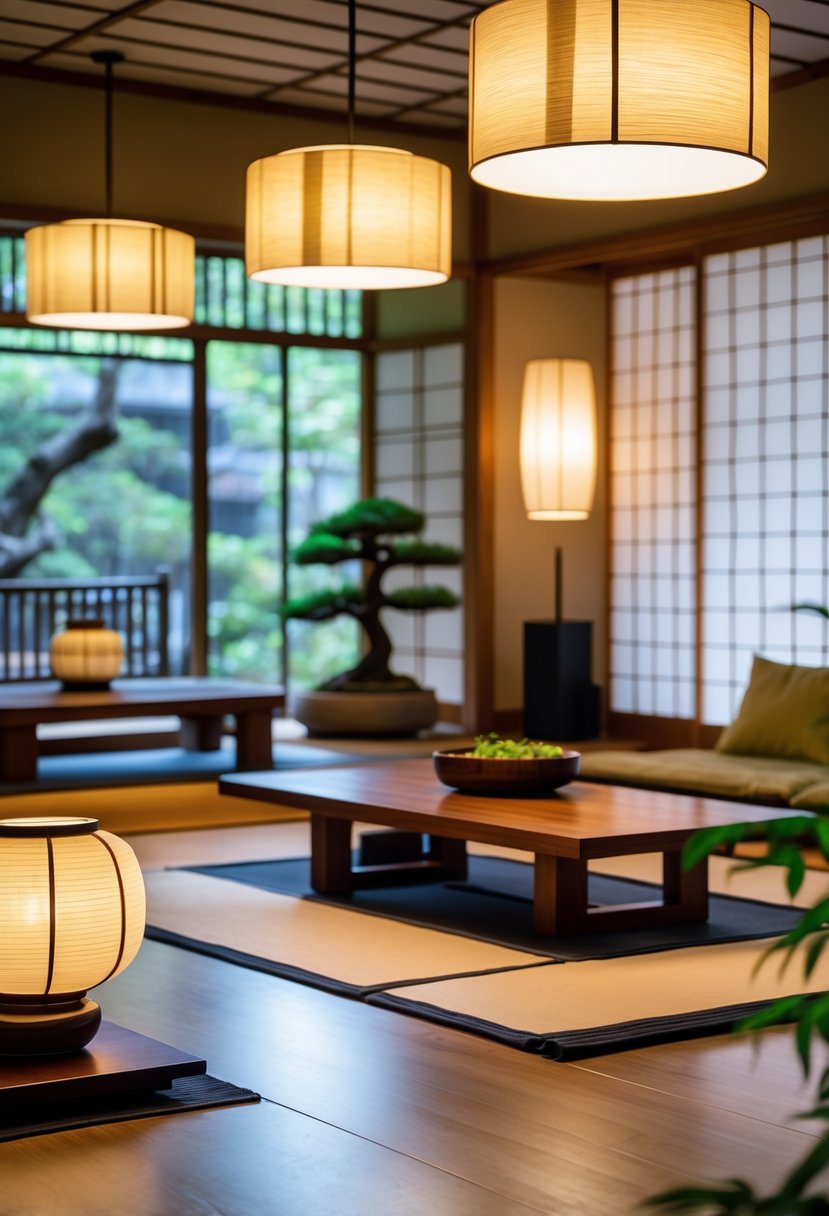
Washi paper lamps create a gentle glow that reduces harsh shadows and bright spots. Their light feels calm and balanced, making them suitable for living rooms.
Made with thin paper stretched over bamboo or metal frames, they provide both function and visual warmth without overwhelming the space.
Include simple ceramic pottery as decor
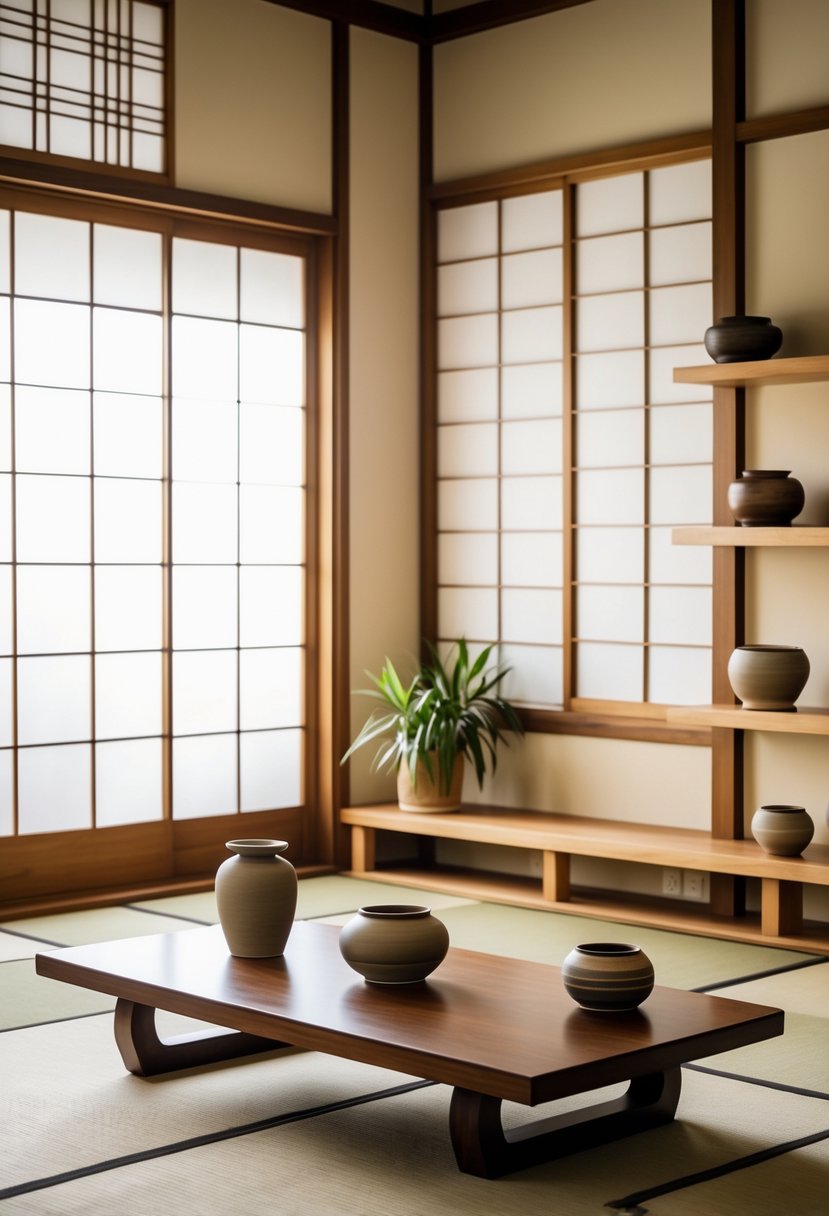
Simple ceramic pottery adds texture and warmth to a Japanese living room.
Bowls, vases, or cups with muted glazes highlight natural materials and craftsmanship.
These pieces work well with wood, stone, or fabric, creating balance without overwhelming the space.
Incorporate natural light as much as possible
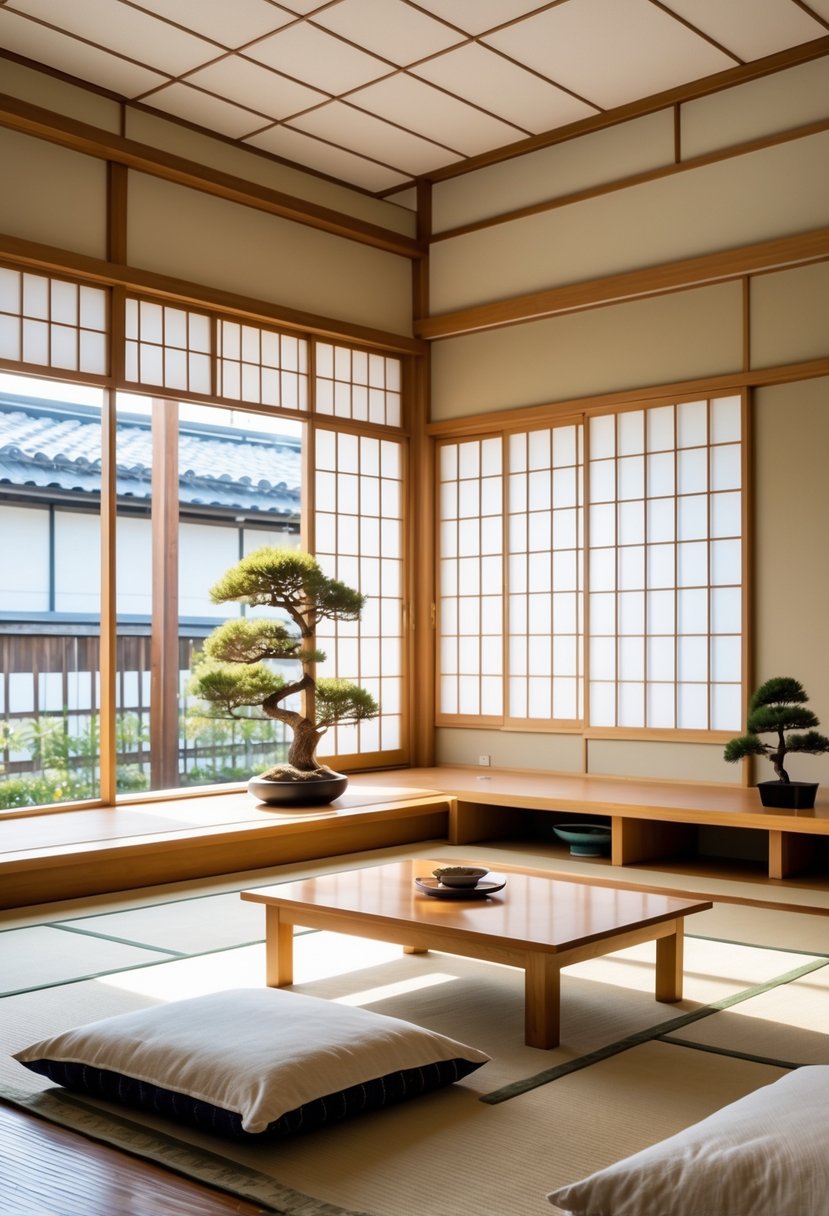
Japanese living rooms often use large windows or sliding shoji screens to let in daylight. This reduces the need for artificial lighting during the day.
They also keep window coverings light and minimal so natural light can spread evenly across the room.
Open layouts help sunlight move freely, creating a calm and balanced atmosphere.
Use minimalistic wall art with Japanese motifs
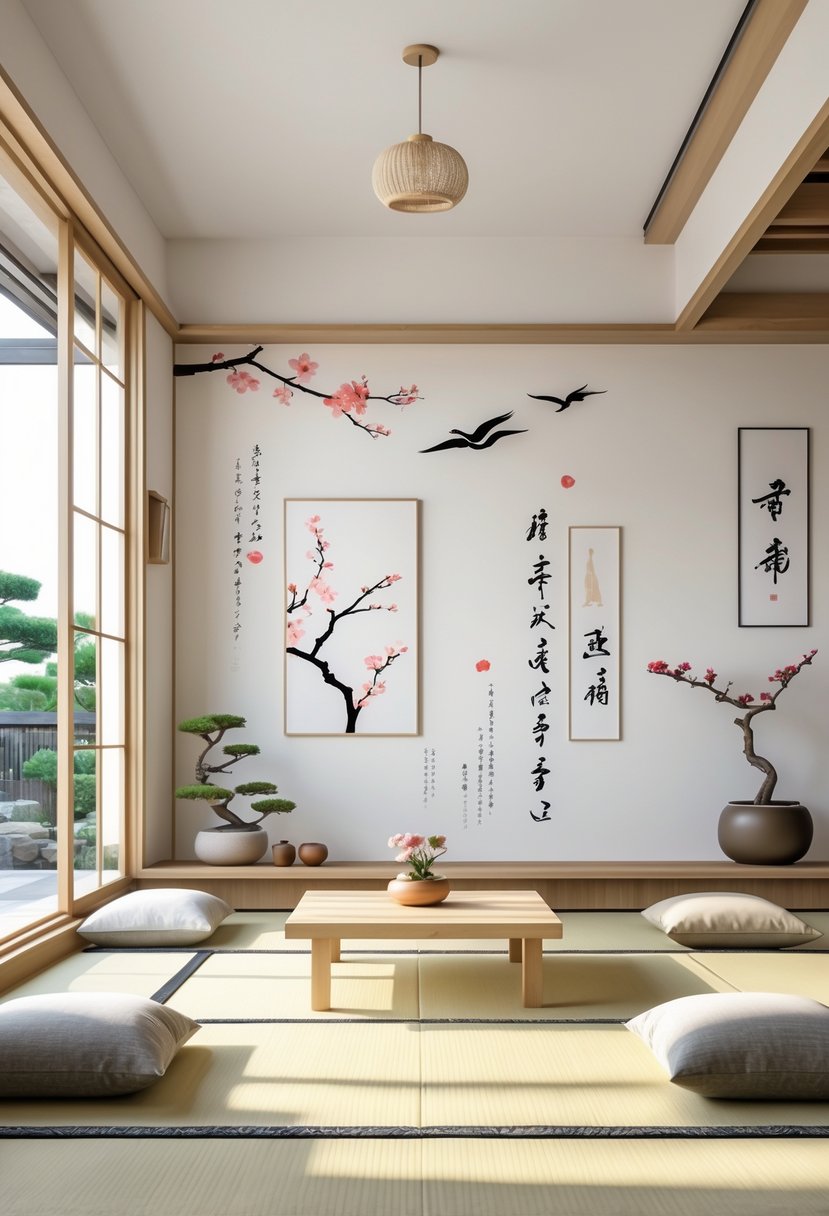
They can use simple ink brush paintings or calligraphy to keep the space calm and uncluttered.
These artworks often feature nature scenes, abstract forms, or traditional symbols that reflect Japanese aesthetics.
Placing one or two pieces on a neutral wall helps maintain balance without overwhelming the room.
Add a small indoor water feature for tranquility
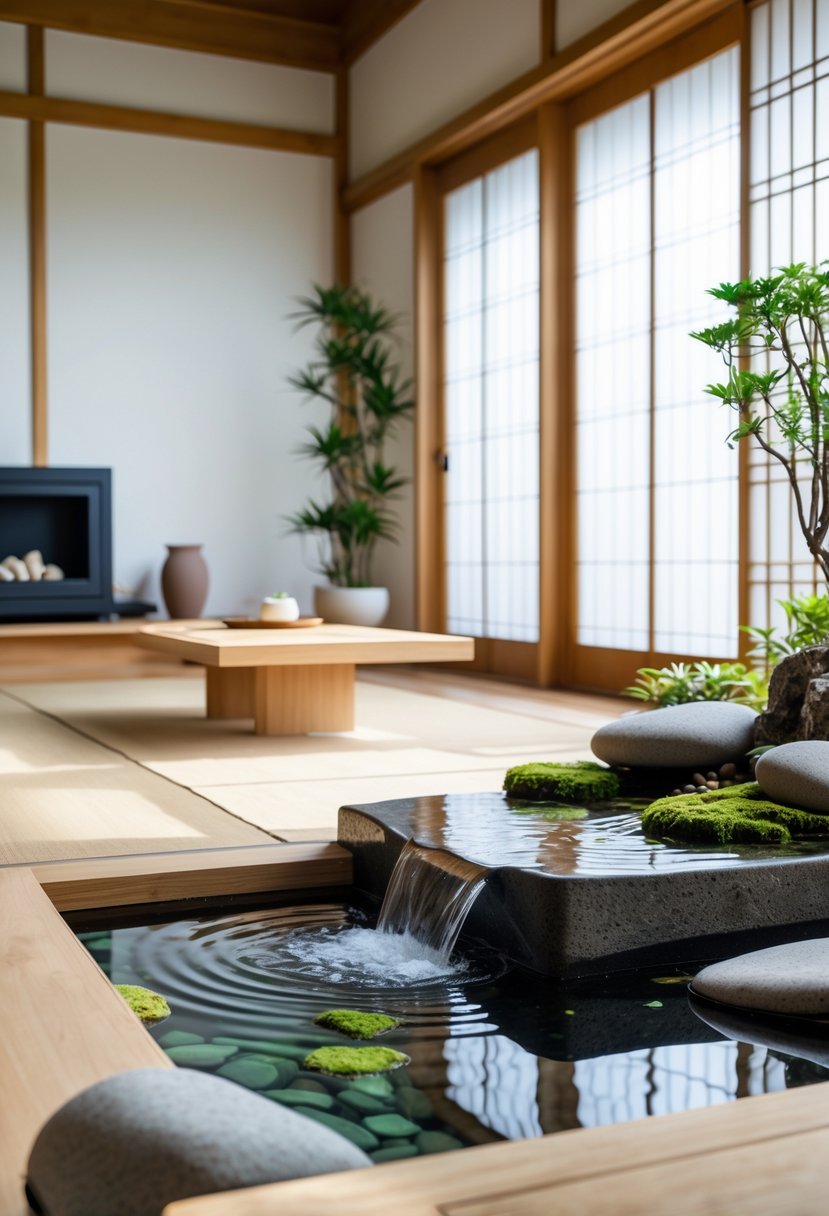
A small indoor fountain introduces gentle water sounds that create a calm atmosphere.
This feature reflects the Japanese focus on nature and simplicity.
Placed in a living room, it adds a subtle focal point while promoting relaxation.
Use dark wood accents for contrast
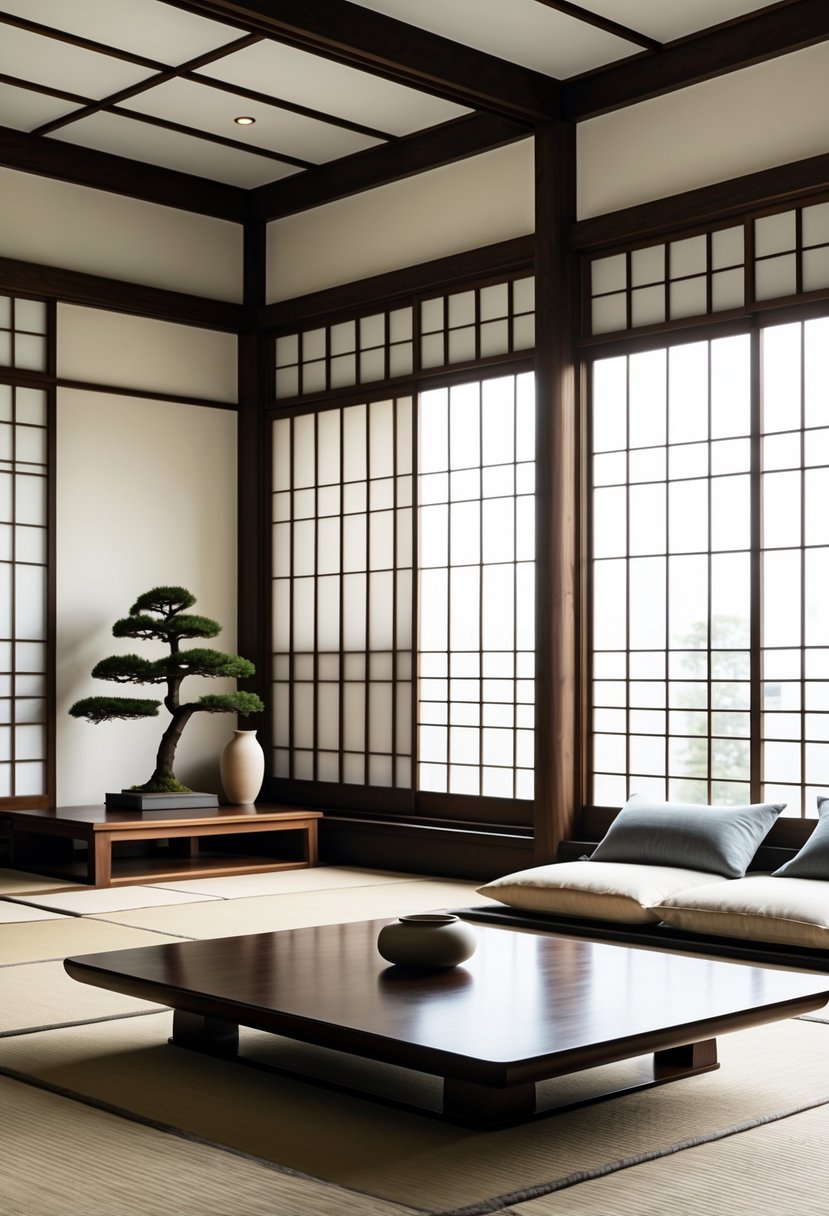
Dark wood accents add depth to a Japanese living room by balancing light walls and furniture.
They create visual contrast without overwhelming the space.
Simple pieces like a coffee table, shelving, or picture frames in dark wood highlight the clean lines of the design.
Include a small Zen garden or rock arrangement
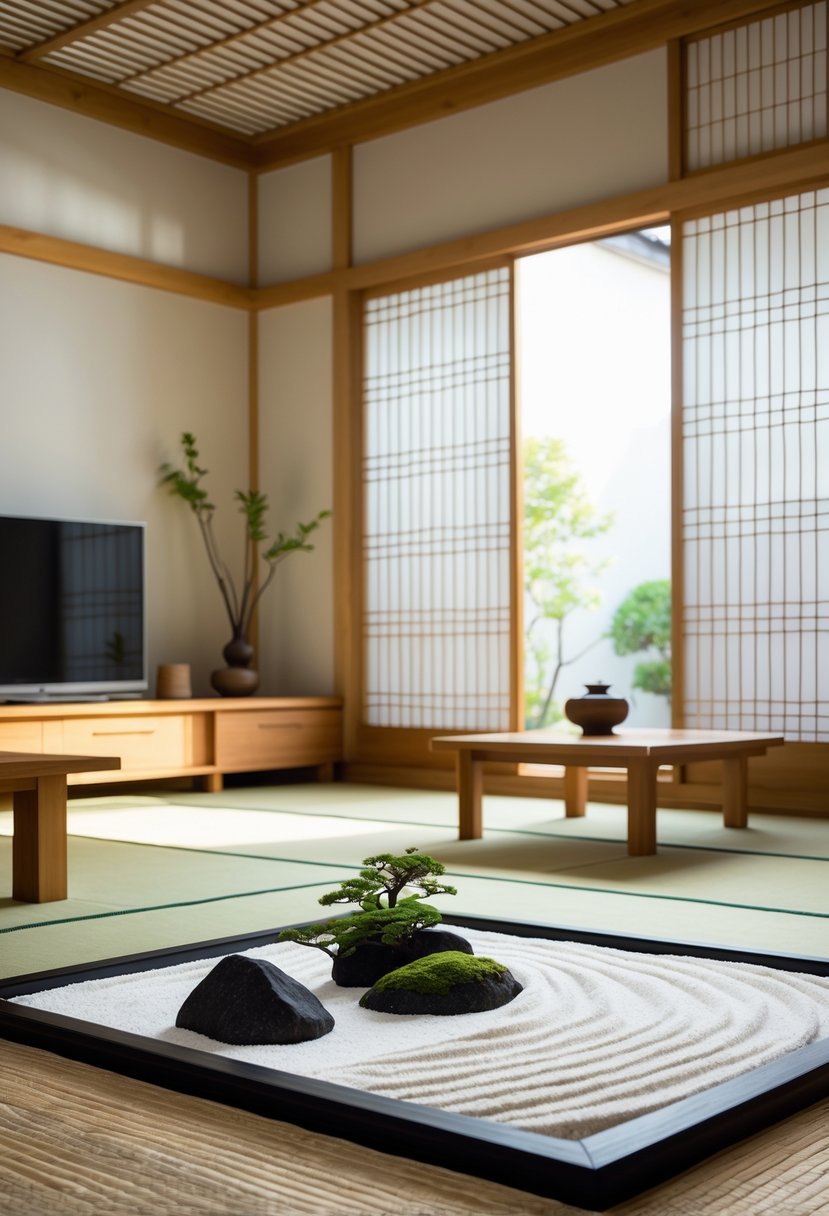
A small Zen garden or rock arrangement can bring calm and balance to a living room.
They often use sand, gravel, and stones placed with care to create a simple design.
Even a tabletop version can add a quiet, natural element to the space.
Choose linen or cotton fabrics for textiles
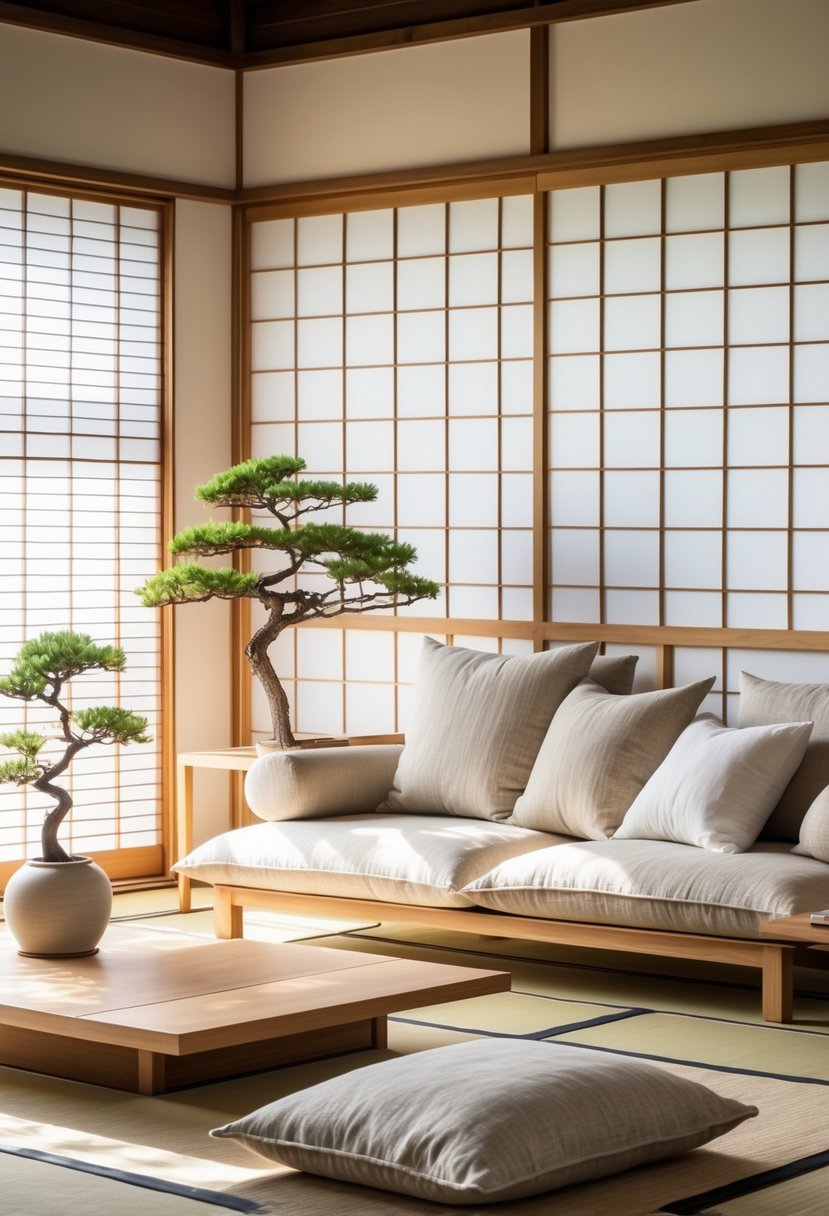
Linen and cotton both work well in a Japanese living room because they are natural and breathable. These fabrics keep the space simple and comfortable.
Linen offers a slightly textured look that adds depth without clutter. Cotton provides softness and is easy to maintain.
Both fabrics allow light to filter gently, supporting a calm and balanced atmosphere.
Keep electronics discreet or hidden
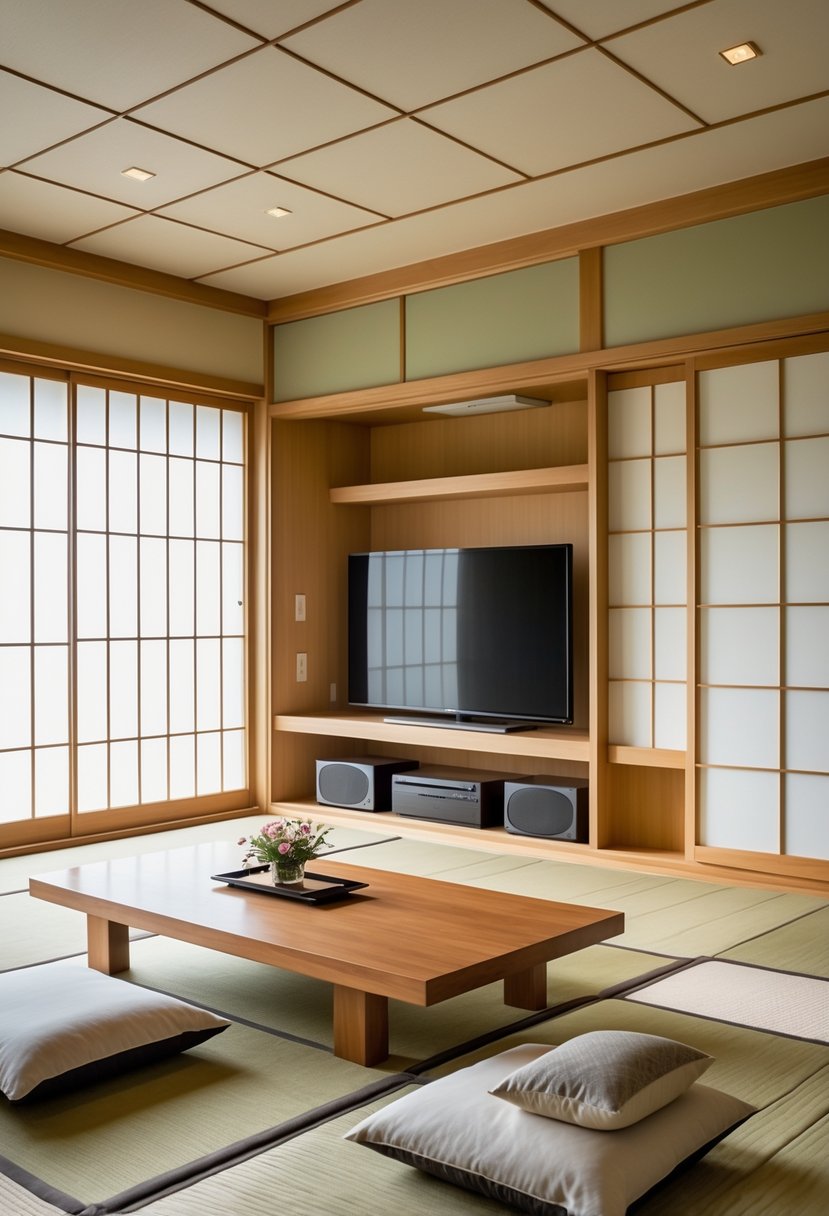
Japanese living rooms often limit visual clutter, so electronics stay out of sight.
They may place televisions in cabinets, use sliding panels, or choose low-profile units.
Hiding wires and devices helps maintain a calm, balanced space that matches the minimalist style.
Use clean lines and geometric shapes in furniture
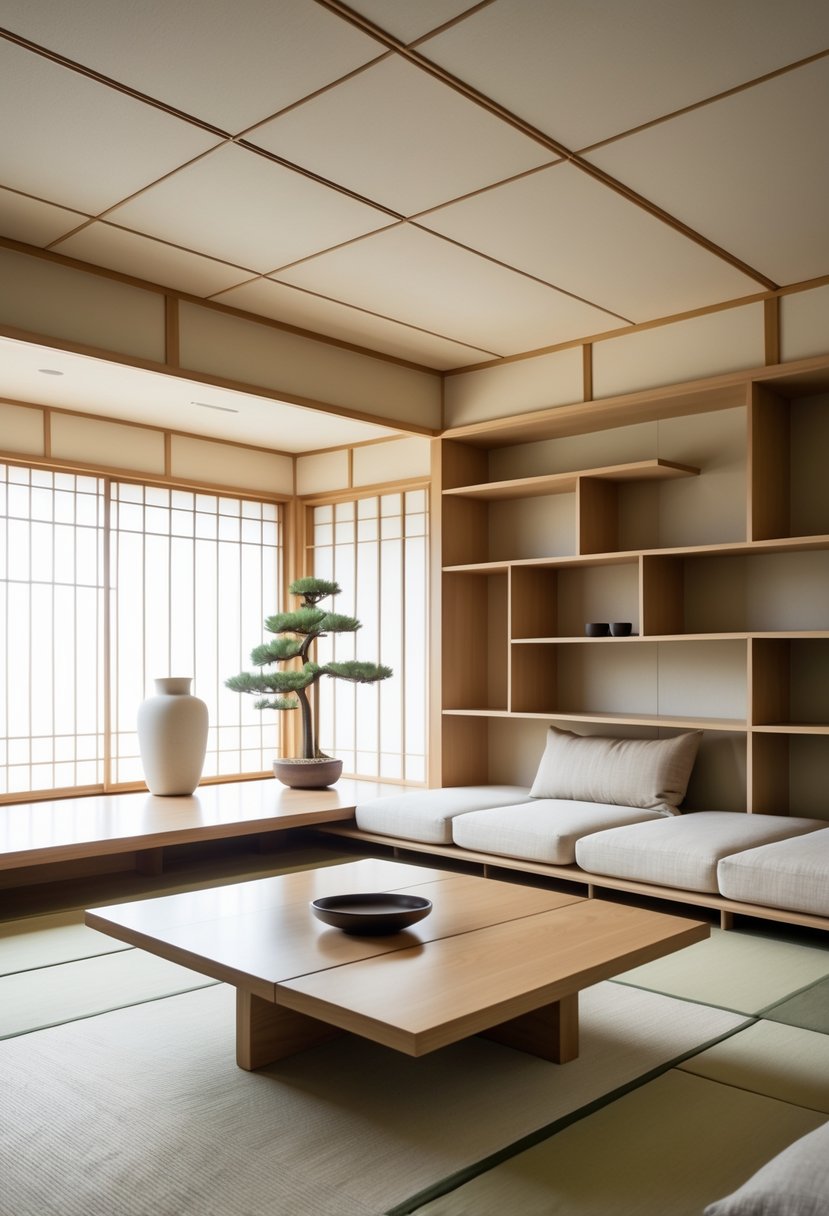
Japanese living rooms often feature furniture with straight edges and simple forms. These clean lines help create a balanced and uncluttered look.
Low tables, square cushions, and rectangular shelves fit well with this style. The geometric shapes provide order while keeping the space functional and calm.
Incorporate ikebana flower arrangements
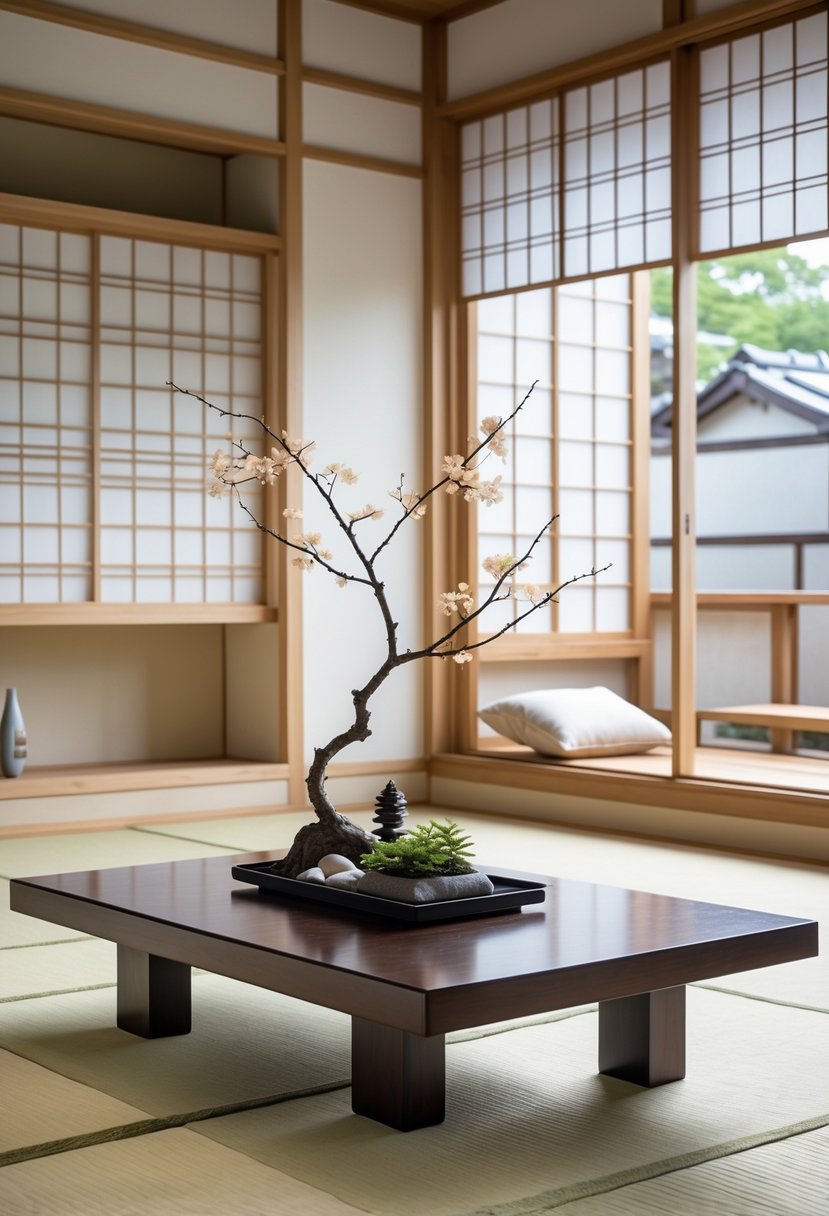
Ikebana adds a simple and balanced touch to a Japanese living room. It highlights natural shapes and seasonal plants.
Arrangements often use few elements, focusing on space and proportion. This creates a calm and uncluttered atmosphere.
Placing ikebana near natural light helps connect the room with the outdoors.
Use subtle fragrance diffusers with green tea or cedar scents
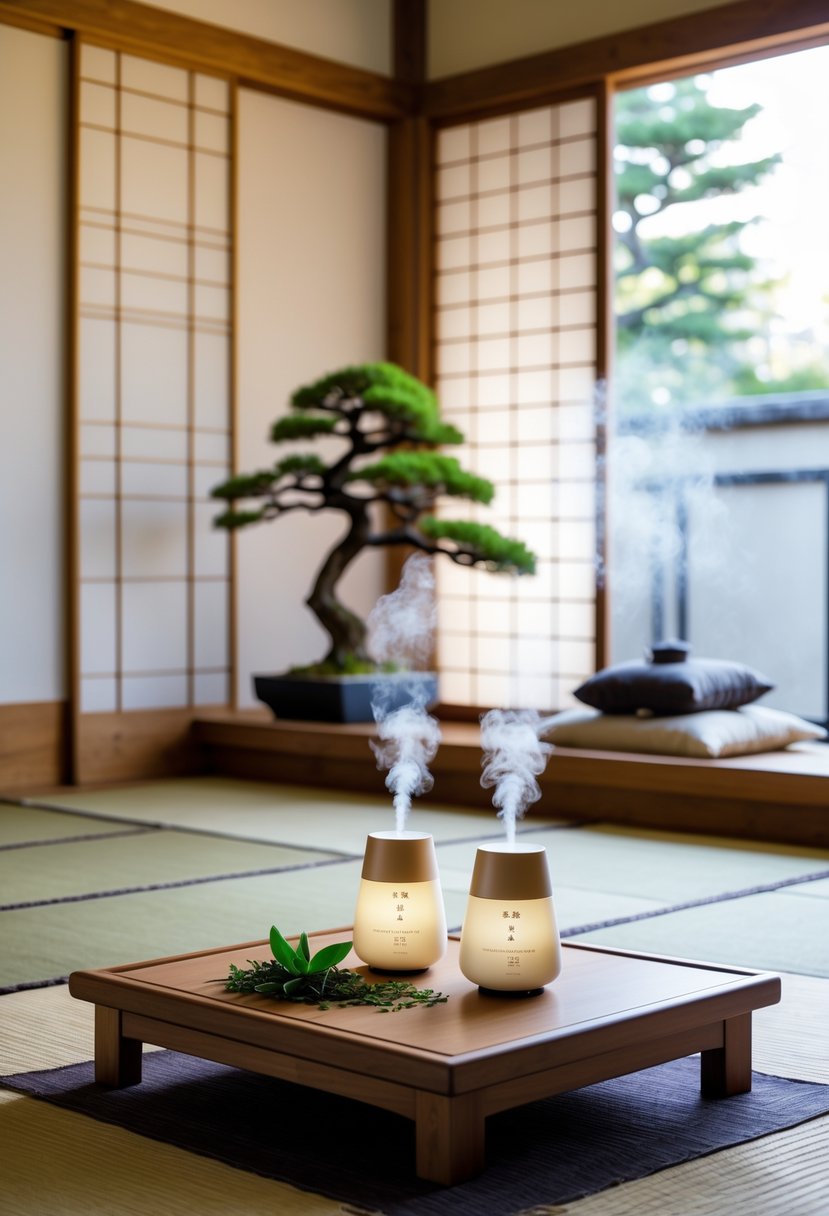
They can place a small reed diffuser in the living room to create a calm atmosphere.
Green tea scents add a light, fresh note that feels clean and simple.
Cedar offers a warm, woody aroma that pairs well with natural materials often used in Japanese design.
Core Principles of Japanese Living Room Design
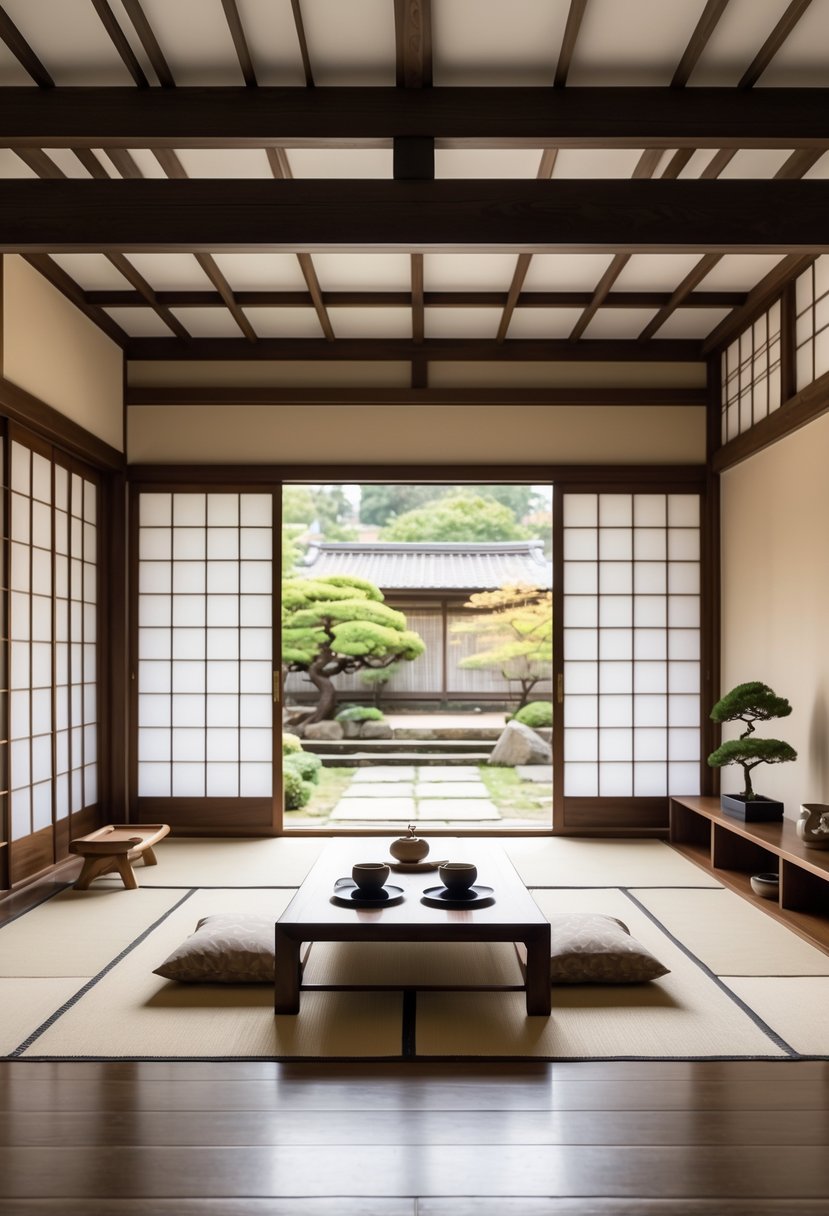
Japanese living rooms emphasize uncluttered layouts, natural elements, and a sense of calm. They rely on purposeful design choices that create spaces where every detail supports comfort, function, and visual balance.
Minimalism and Simplicity
Minimalism defines Japanese interiors by removing unnecessary items and focusing only on what serves a clear purpose. Furniture often stays low to the ground, such as a zaisu chair or chabudai table, which encourages a closer connection to the space.
Clean lines and open layouts prevent the room from feeling crowded. Instead of filling the space with objects, homeowners select a few functional pieces that serve daily needs. This approach reduces distraction and creates a calm environment.
Decor tends to be subtle and restrained. A single wall scroll, a small bonsai, or a ceramic vase may serve as focal points. By limiting decoration, the room feels intentional rather than empty.
Natural Materials and Textures
Japanese design often uses wood, bamboo, paper, and stone to create a link with nature. Tatami mats, Shoji screens, and wooden beams are common features that add texture and warmth while keeping the look simple.
Natural light plays a central role. Large windows, sliding doors, or translucent paper screens allow soft light to filter into the room. This reduces reliance on artificial lighting and highlights the natural tones of the materials.
The use of earthy colors—beige, brown, cream, and muted greens—supports the natural theme. These tones blend well with wood and stone, making the room feel grounded and calm.
Balance and Harmony
Balance in Japanese living rooms comes from careful arrangement and spacing, known as Ma. This principle values the empty space as much as the objects within it. Furniture and decor are placed with intention, leaving room for movement and visual rest.
Harmony is achieved by blending different elements without letting one dominate. For example, a low wooden table may sit beside a soft tatami mat and a paper screen, each complementing the other.
This balance extends to the relationship between indoors and outdoors. Many designs incorporate gardens, courtyards, or views of nature, reinforcing a sense of continuity and peace.
Integrating Nature Indoors
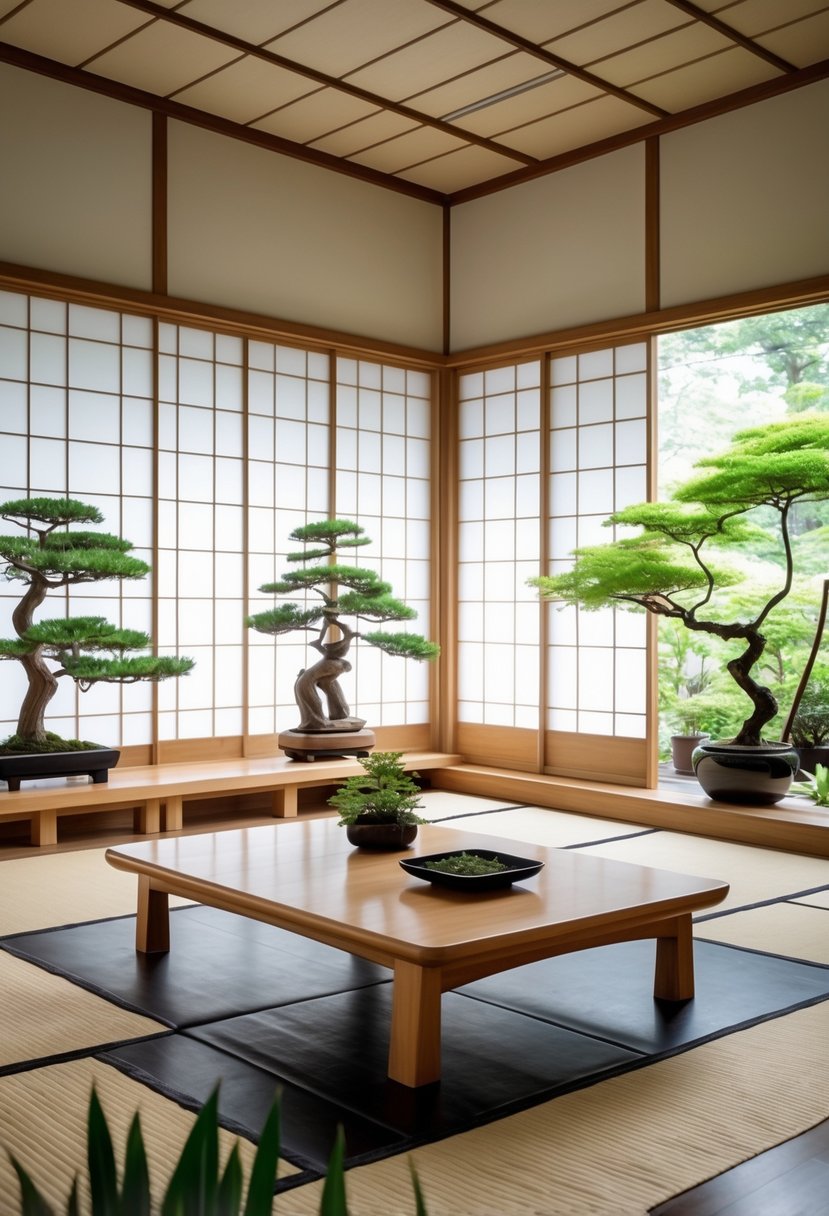
Japanese living room design often uses natural elements to create balance and calm. Materials like wood, paper, and stone combine with greenery and open views to establish a space that feels connected to the outdoors.
Shoji Screens and Sliding Doors
Shoji screens are lightweight panels made with wooden frames and translucent rice paper. They allow soft, filtered light into the room, reducing harsh glare and creating a calm atmosphere. Unlike heavy curtains or solid walls, shoji screens give privacy while still keeping a sense of openness.
Sliding doors, or fusuma, serve both functional and aesthetic purposes. They save space since they slide rather than swing open, making them ideal for smaller living rooms. Their simple surfaces often feature neutral colors or traditional patterns that blend well with minimalist interiors.
Together, shoji screens and sliding doors help connect indoor and outdoor spaces. When opened, they provide wide views of gardens, patios, or courtyards. This design encourages natural airflow and light, which reduces the need for artificial lighting during the day.
Key benefits:
- Space-saving design
- Soft natural lighting
- Strong indoor-outdoor connection
Indoor Plants and Zen Gardens
Plants play a central role in Japanese interiors. Common choices include bonsai, bamboo, and ferns, which bring texture and life into the living room. These plants require little space and can be displayed on low tables, shelves, or window ledges.
A Zen garden, even in a small form, adds another layer of calm. Miniature sand gardens with stones and raked patterns are often placed on side tables or shelves. They provide a visual reminder of simplicity and order.
Larger living rooms may include indoor water features or stone arrangements. These elements reflect the natural world and create a sense of balance. Combined with greenery, they make the space feel fresh and grounded.
Popular natural elements:
- Bonsai trees
- Bamboo stalks
- Mini Zen sand gardens
- Stone or water accents
Learn about Japandi style, the blend of Japanese and Scandinavian design, from Apartment Therapy.