
Earth-Tone Living Room Ideas: 22 Stylish Ways to Create a Warm and Inviting Space
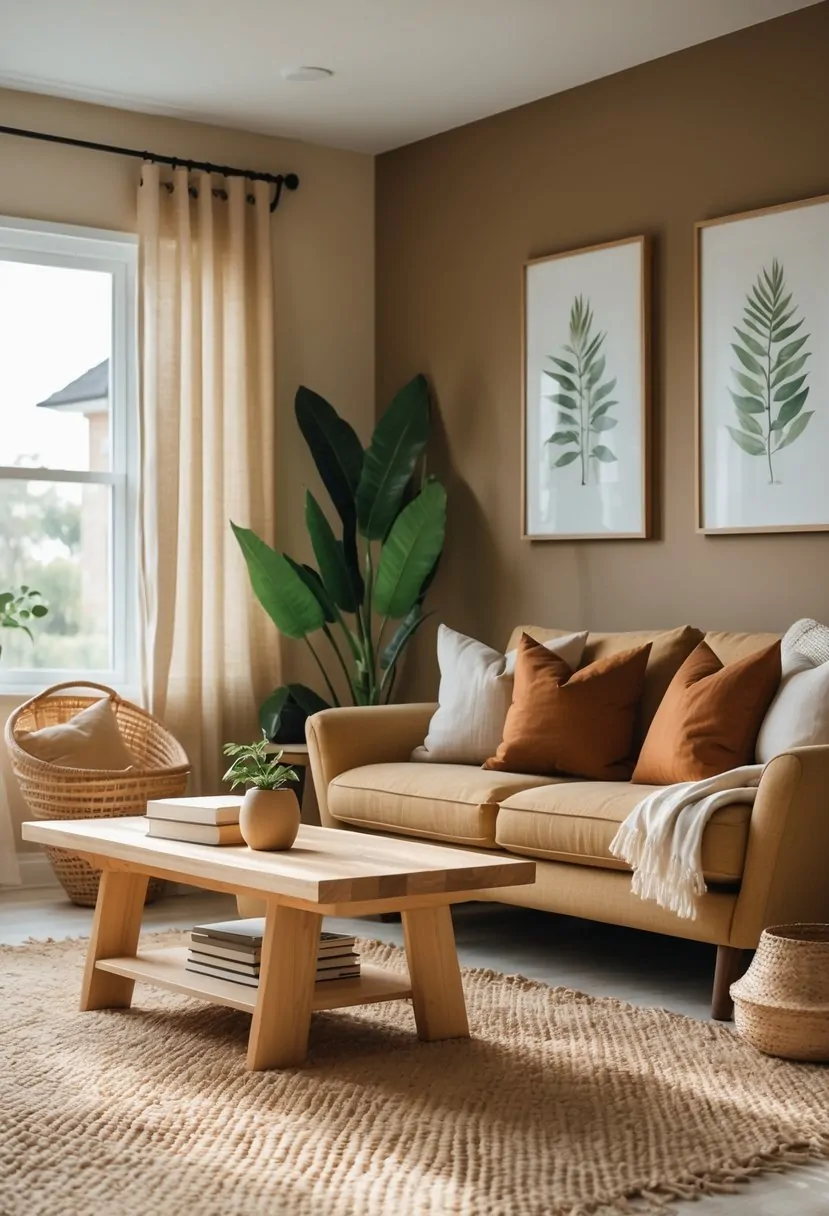
Earth-tone living rooms create a calm and welcoming atmosphere by using colors and textures inspired by nature. These spaces often feel timeless because they rely on natural hues that never go out of style. An earth-tone palette helps any living room feel warm, balanced, and inviting without overwhelming the space.
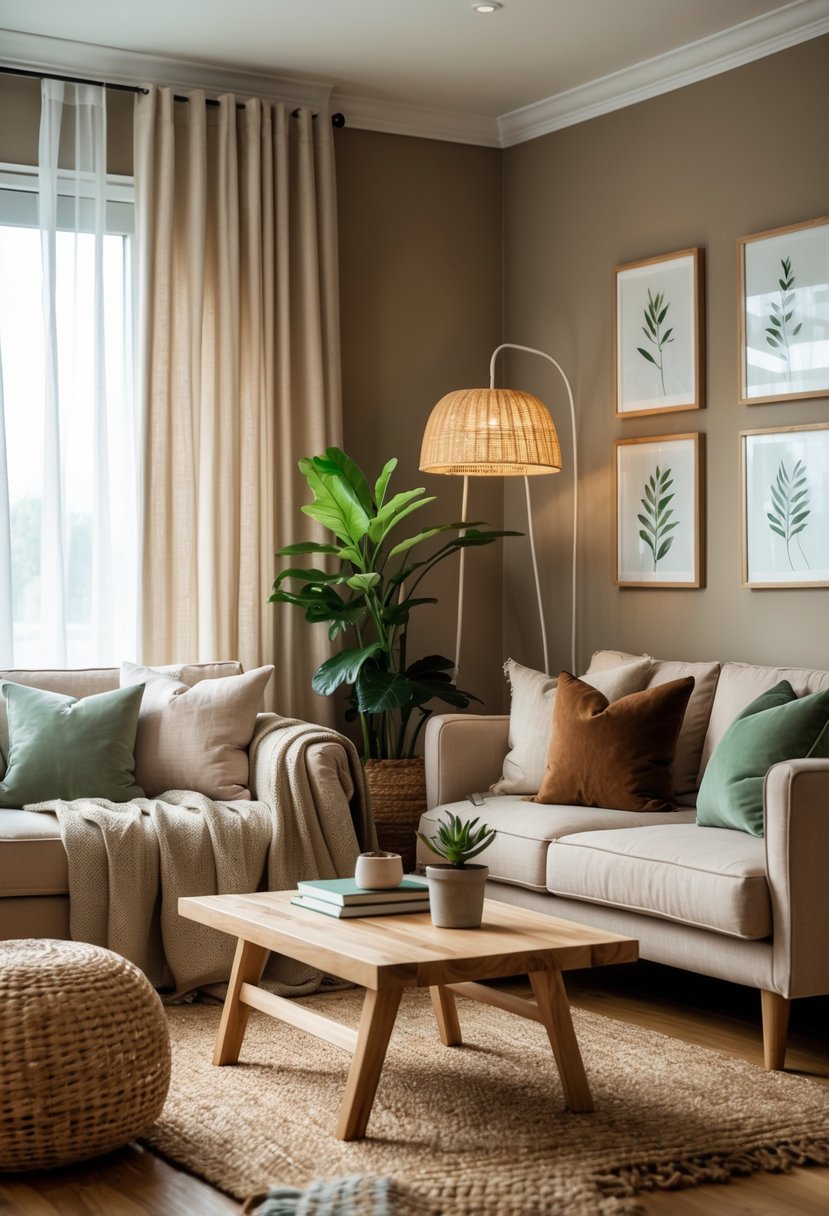
This approach to design works with many styles, from modern to rustic. By focusing on natural shades, layered textures, and thoughtful accents, a living room can feel both comfortable and refined. Each element plays a role in shaping a space that feels grounded and easy to enjoy every day.
Use warm terracotta walls to create a cozy backdrop
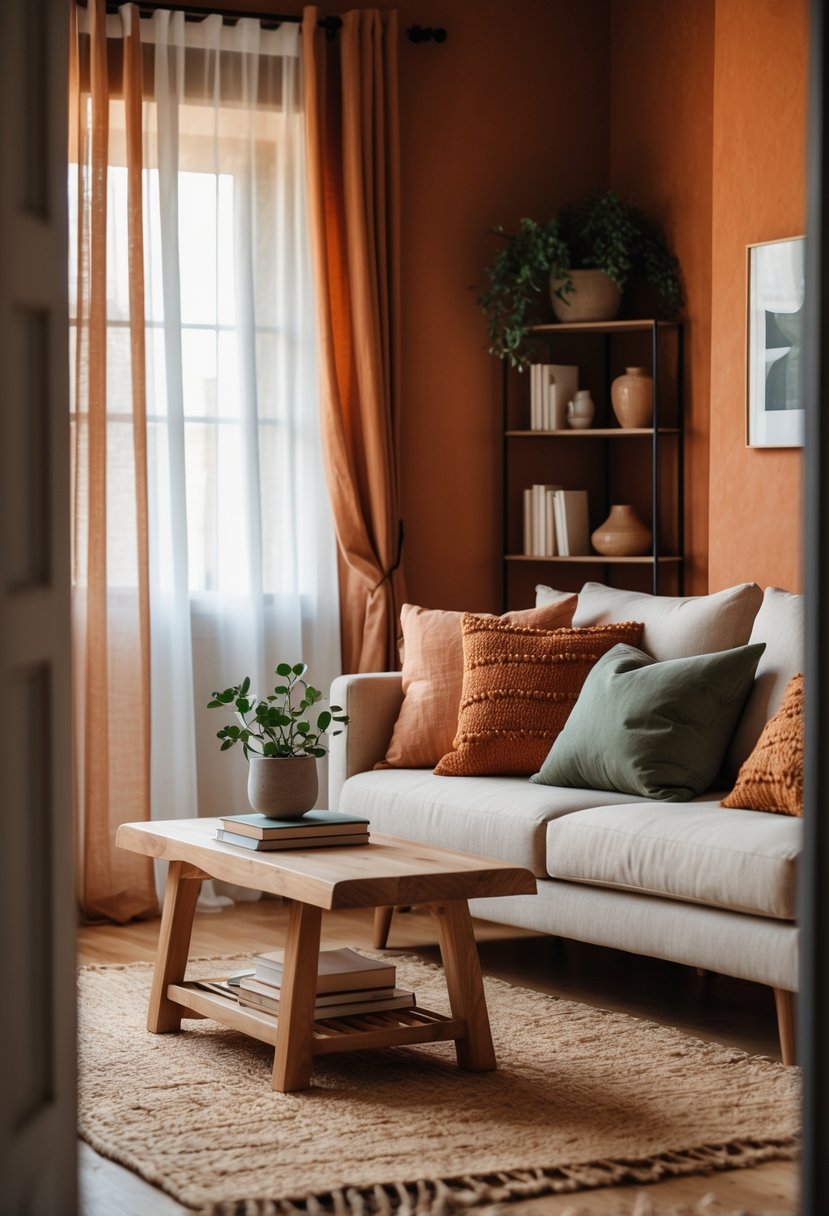
Warm terracotta walls add natural depth and comfort to a living room. The earthy tone creates a grounded backdrop that works well with both modern and traditional styles.
They pair easily with soft neutrals, wood accents, and natural textures, making the space feel calm and inviting without overwhelming the room.
Incorporate sage green accent pillows for a natural touch
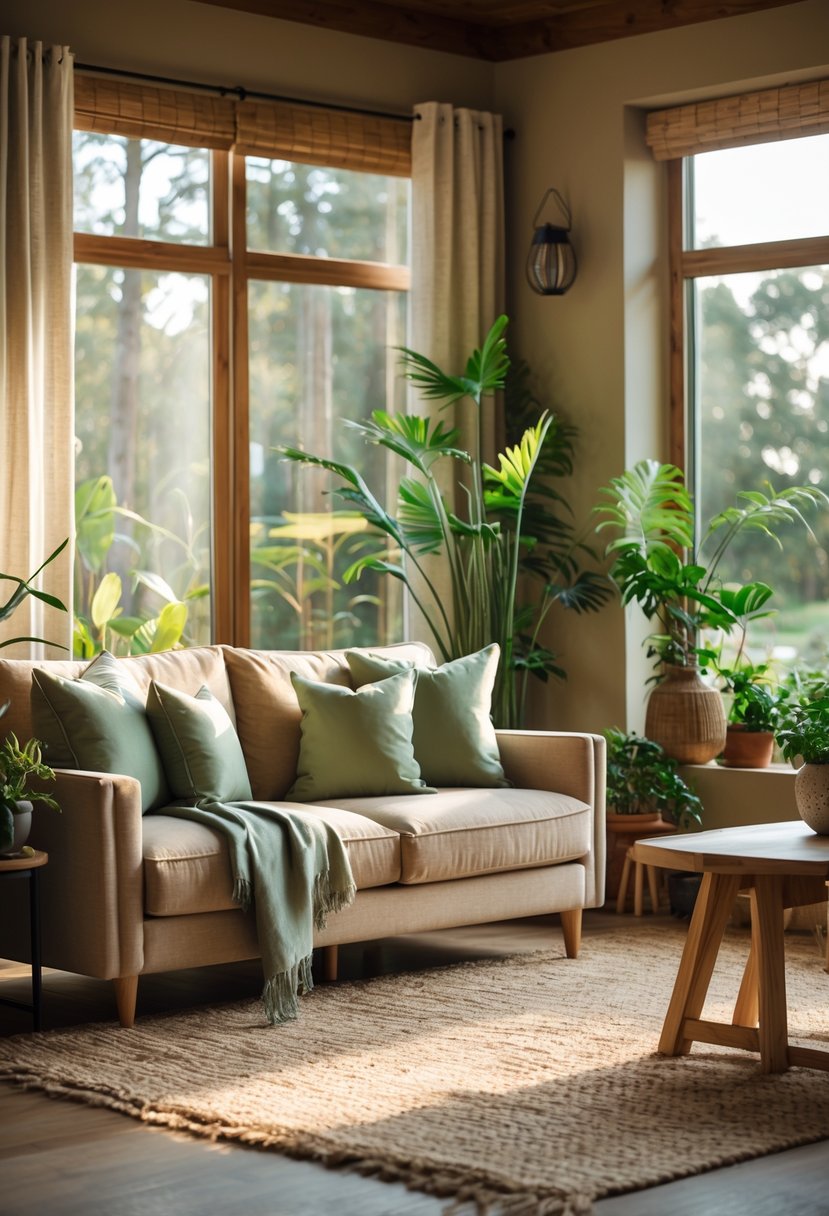
Sage green accent pillows add subtle color without overwhelming a space. They blend well with earth tones like beige, tan, and terracotta.
Placing them on a sofa or chair creates a calm, balanced look. The soft green tone pairs easily with natural textures such as wood, linen, or jute.
Add a rattan light fixture to enhance texture
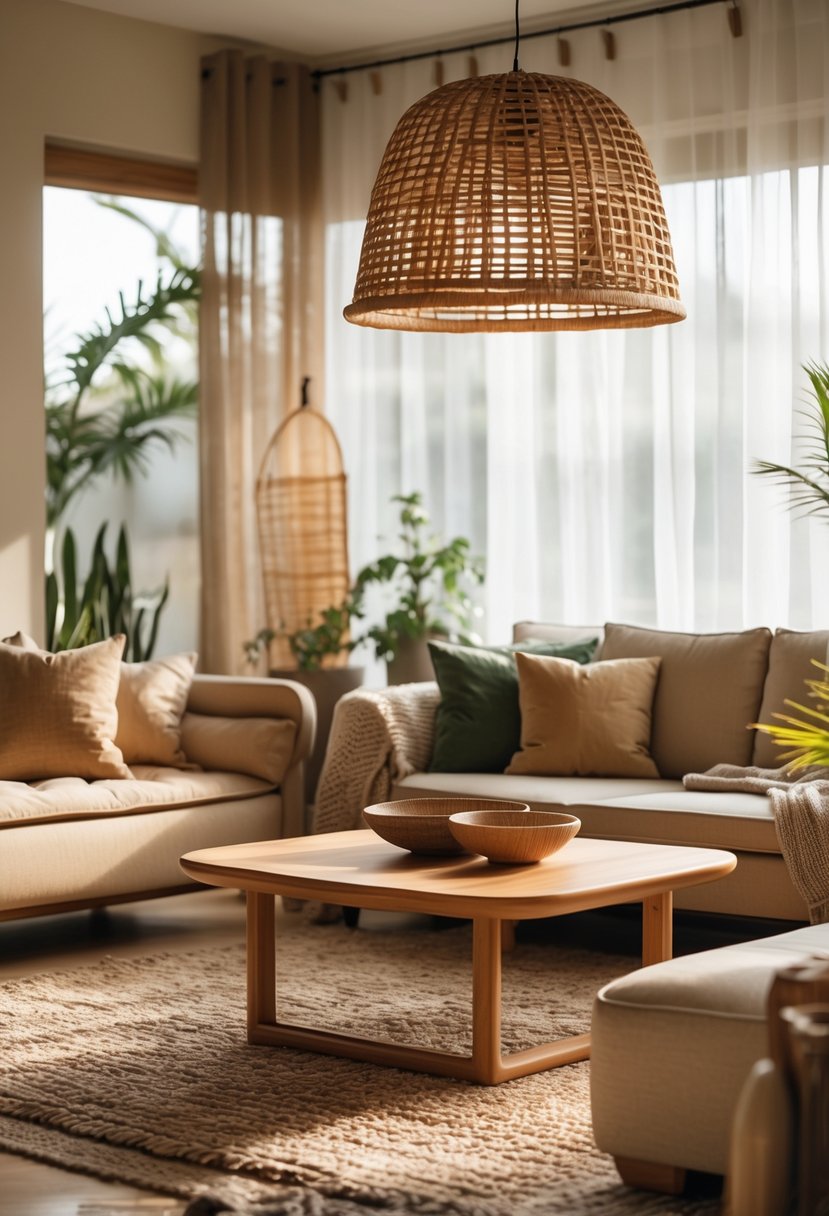
A rattan light fixture introduces natural texture that pairs well with earth-tone palettes. Its woven design adds depth without overwhelming the room.
They can choose from pendant lights, floor lamps, or chandeliers to match their layout. Each option provides soft lighting that complements warm, neutral shades.
Choose sandy beige upholstery for versatility
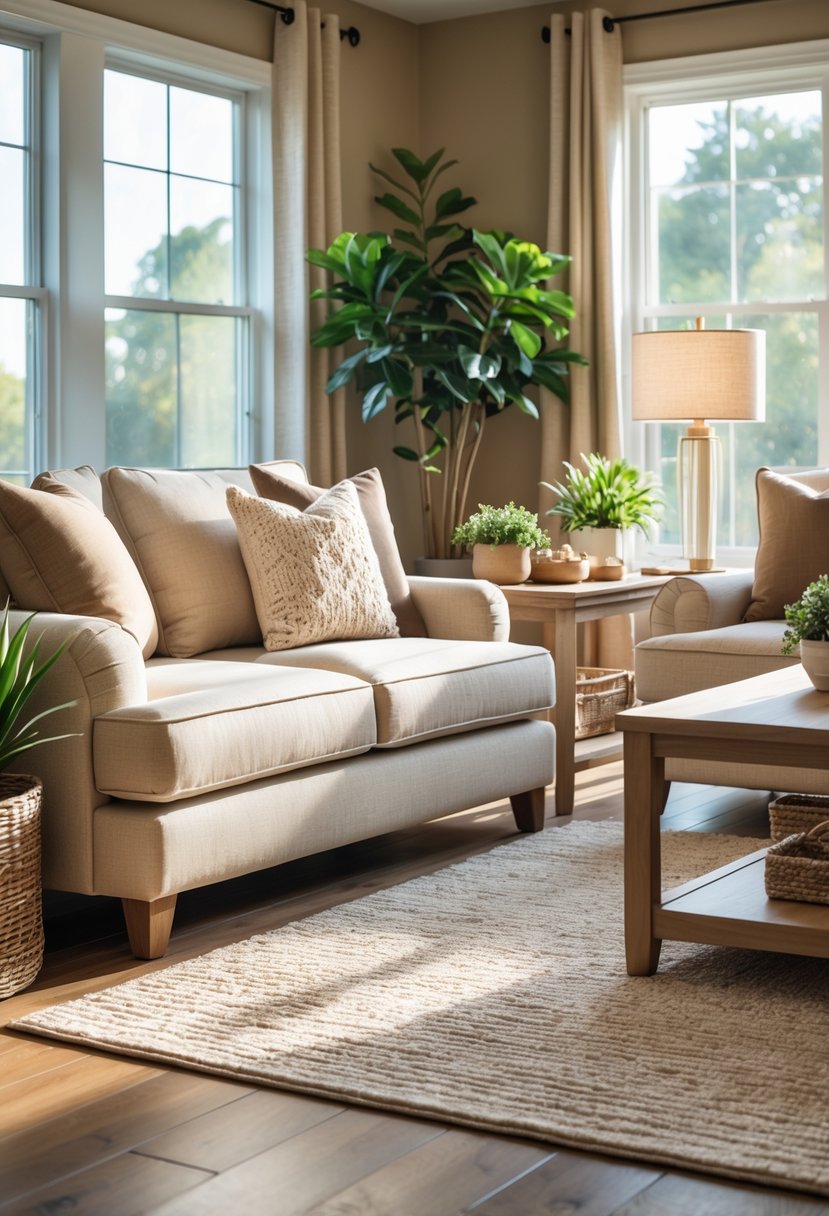
Sandy beige upholstery works well with many color schemes, making it a practical choice for living rooms.
It pairs easily with warm earth tones like terracotta, olive, and soft brown, while also blending with lighter neutrals.
This flexibility allows furniture to adapt to different styles without needing frequent changes.
Place dark wood furniture for depth and contrast
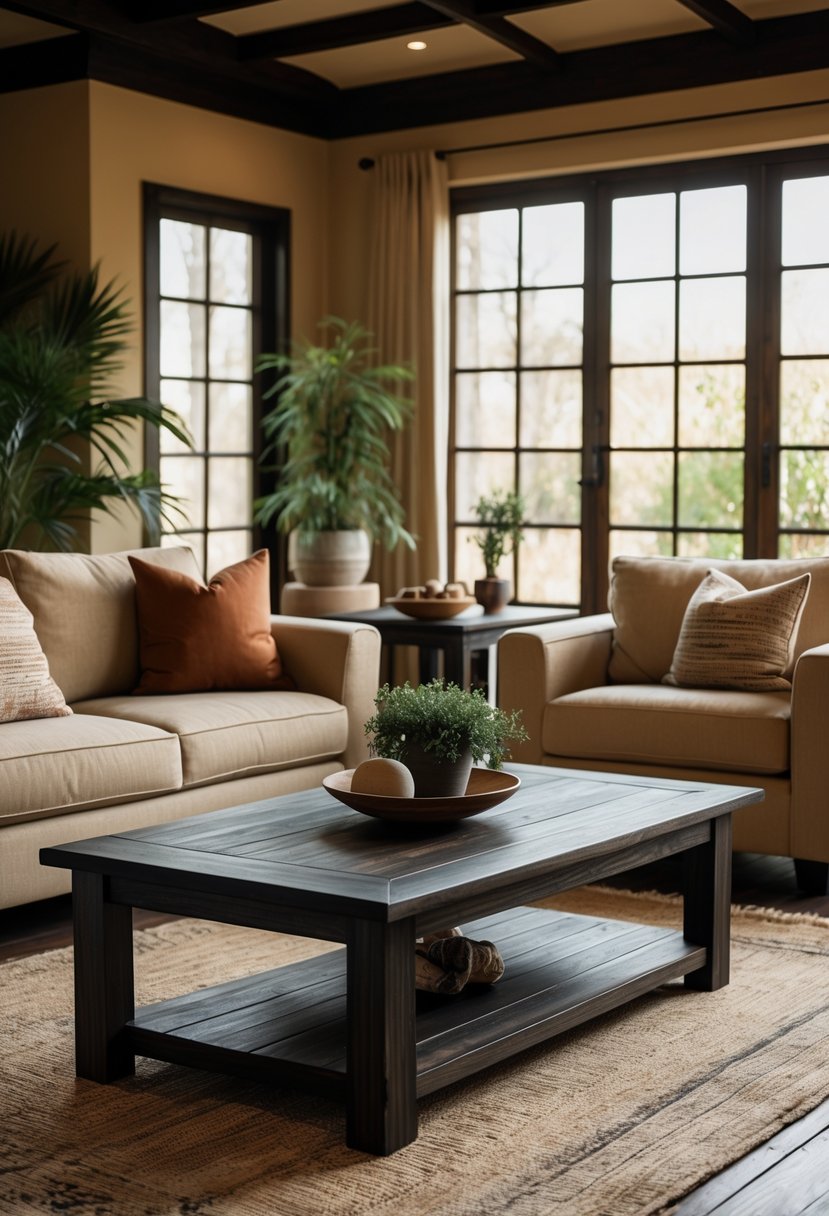
Dark wood furniture adds weight and balance to an earth-tone living room. Its rich tones ground lighter colors like beige, cream, or soft green.
A dark wood coffee table or sideboard can create contrast against neutral walls. This simple choice helps the space feel more layered and defined.
Use burnt orange textiles to inject warmth
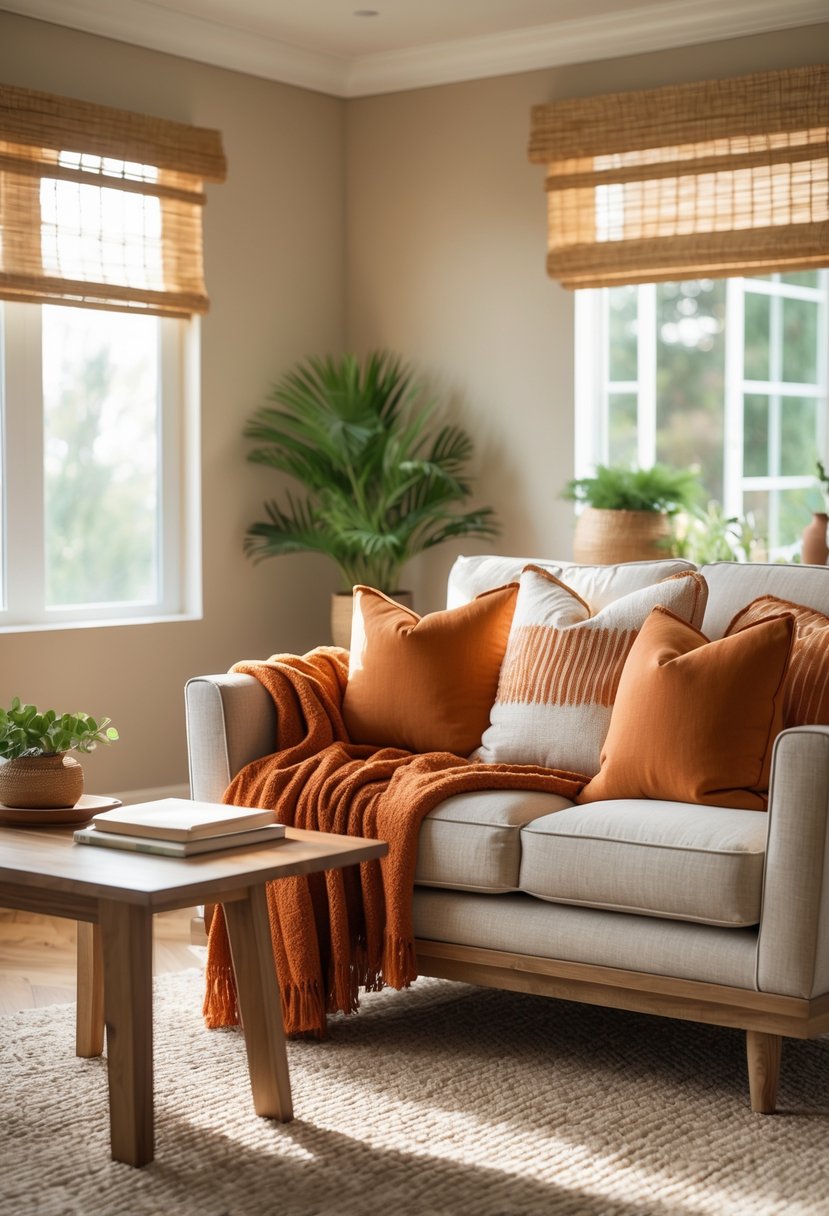
They can add burnt orange through throw pillows, blankets, or rugs. These pieces bring color without overwhelming the room.
Layering different fabrics creates depth and comfort. Mixing textures like cotton, wool, or linen makes the space feel balanced and inviting.
Curtains or cushions in this shade tie neutral furniture together.
Layer soft brown throw blankets for comfort
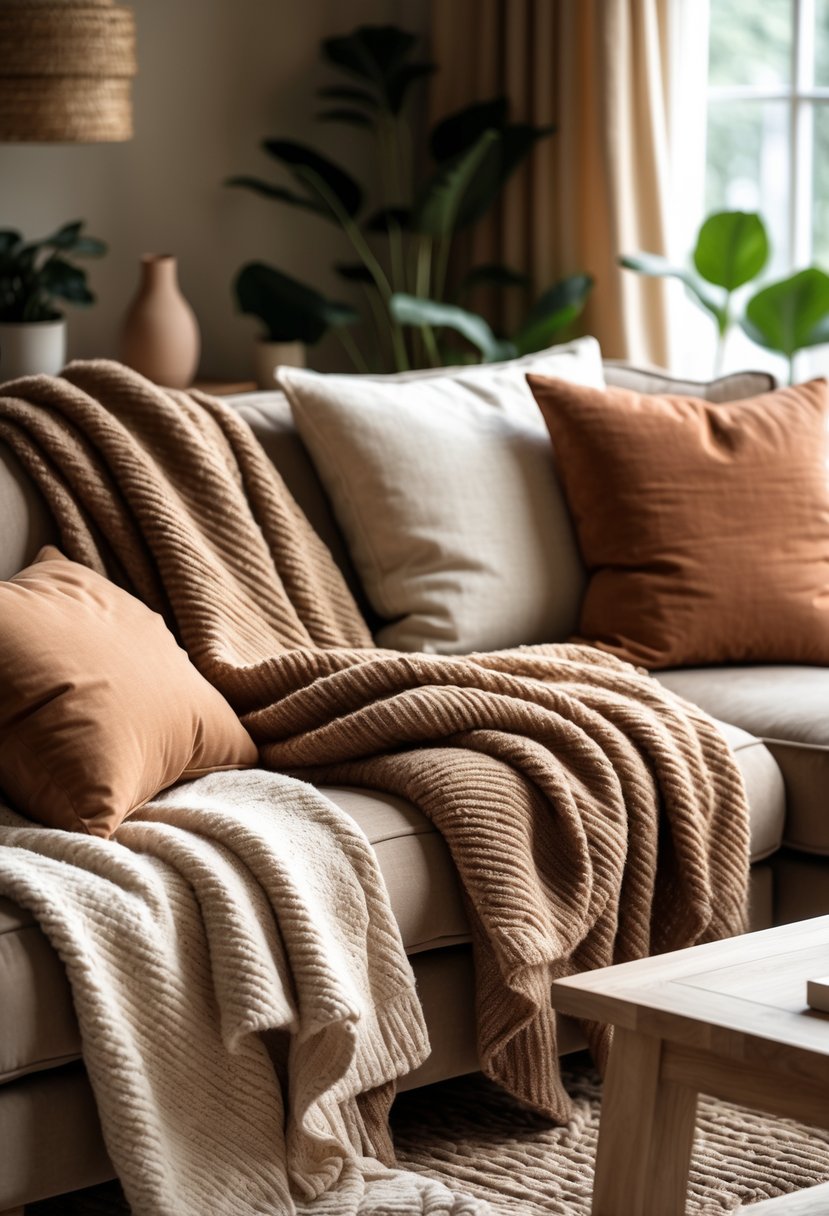
Soft brown throw blankets add warmth and texture to a living room. They create a relaxed and inviting look when draped over a sofa or chair.
Layering different shades of brown can bring depth to the space. A mix of light and dark tones keeps the room balanced and comfortable.
Display clay pottery as natural decor
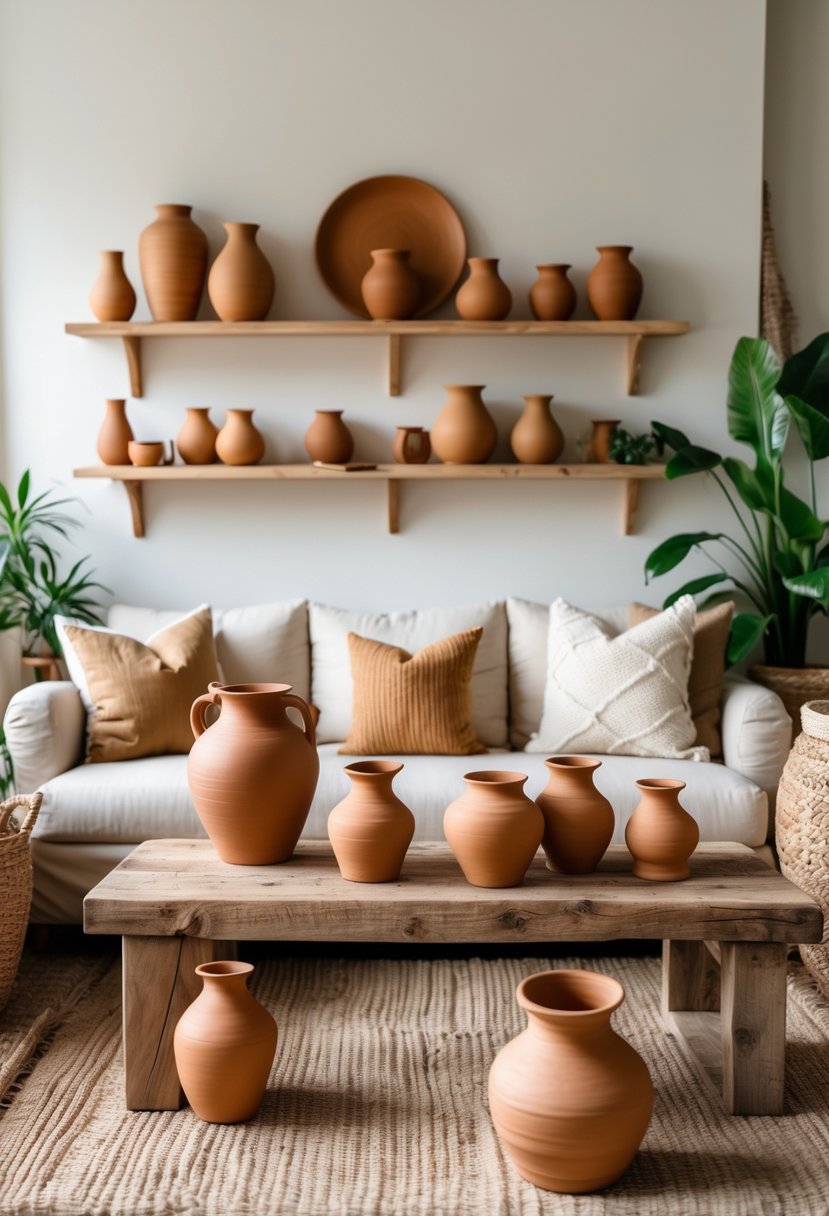
Clay pottery adds texture and warmth to an earthy living room. Its natural tones blend well with wood, stone, and other organic materials.
They can use vases, bowls, or candle holders to bring subtle detail to shelves or tables. Simple shapes keep the space calm and balanced.
Integrate muted olive green rugs for grounding
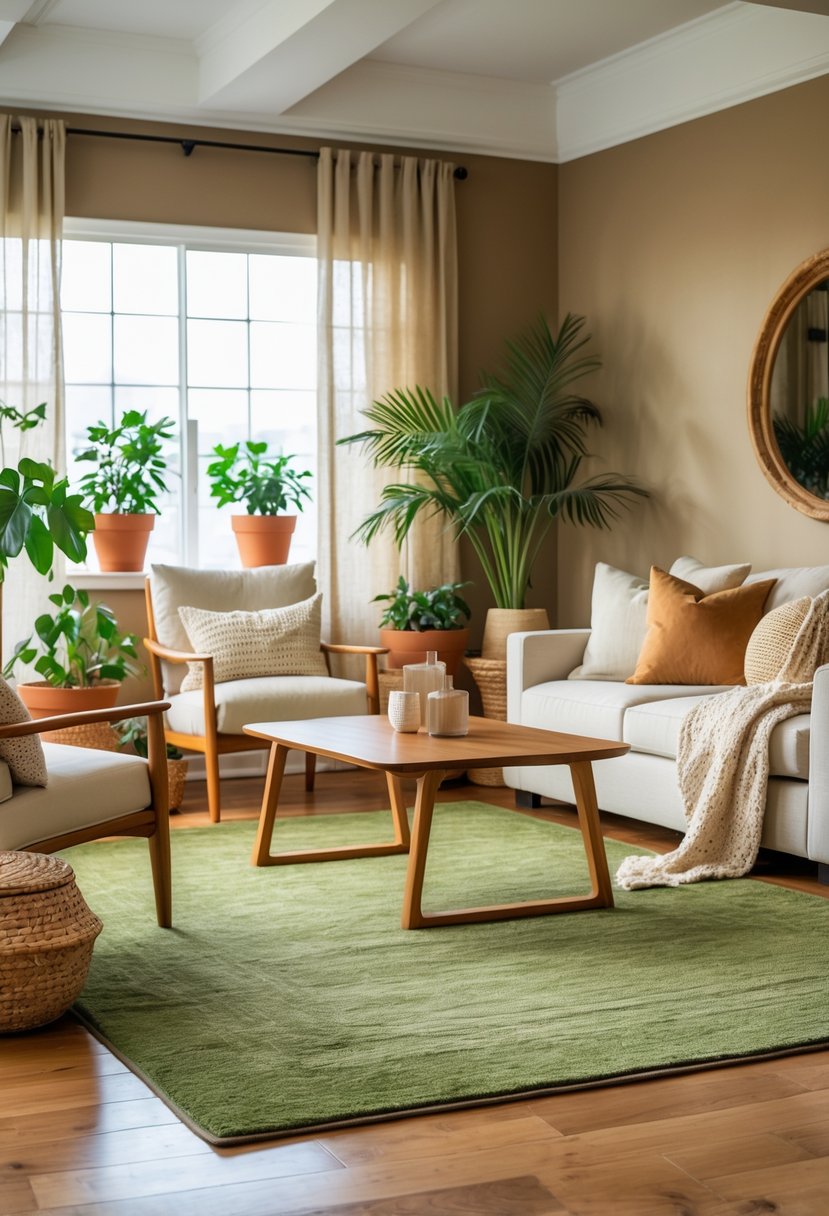
Muted olive green rugs add a steady base to a living room. Their soft tone blends well with earth colors like beige, cream, and brown.
They create balance without overpowering the space. The shade works in both modern and traditional interiors, offering a calm backdrop for furniture and decor.
Mix creamy neutral curtains to soften light
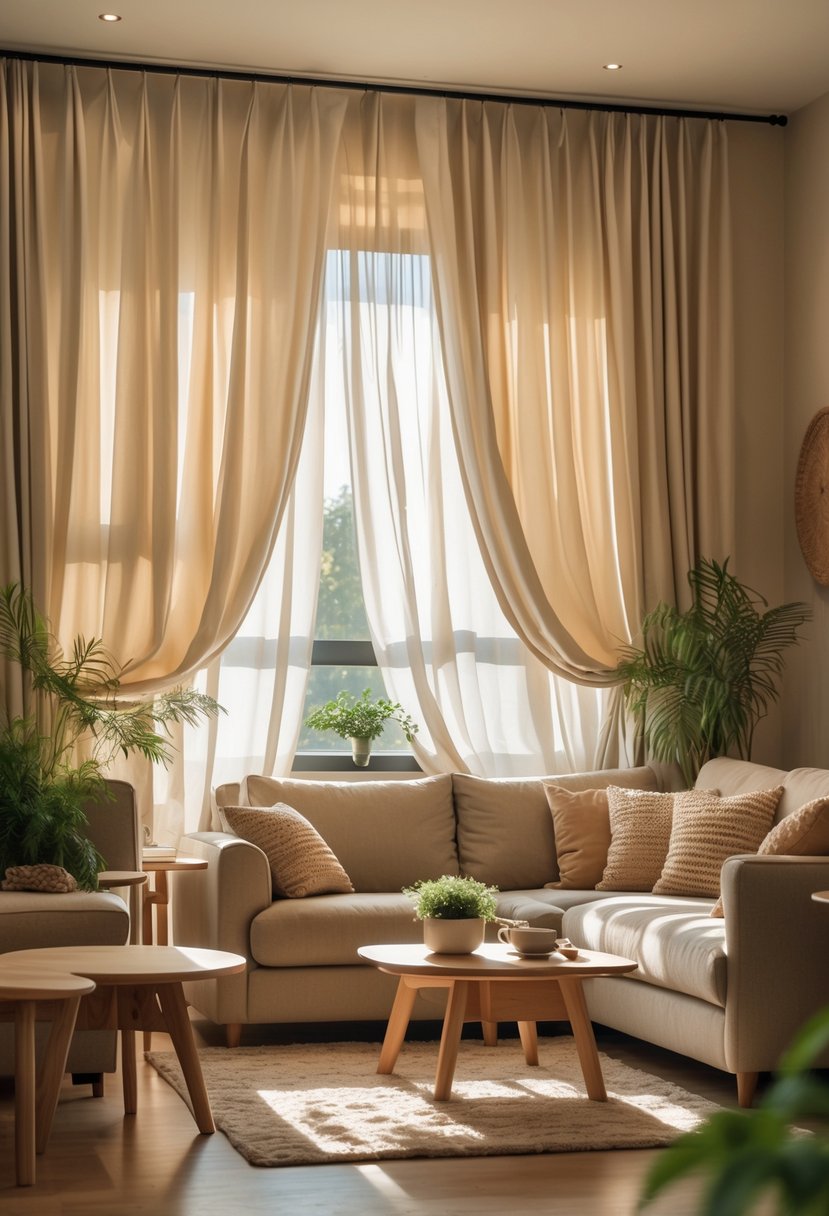
Creamy neutral curtains filter sunlight in a gentle way, reducing glare while keeping the room bright.
They pair well with earth-tone walls and furniture, adding a soft layer that balances warm and cool shades.
Light fabrics like linen or cotton work best for maintaining an airy, natural look.
Include woven baskets for organic storage
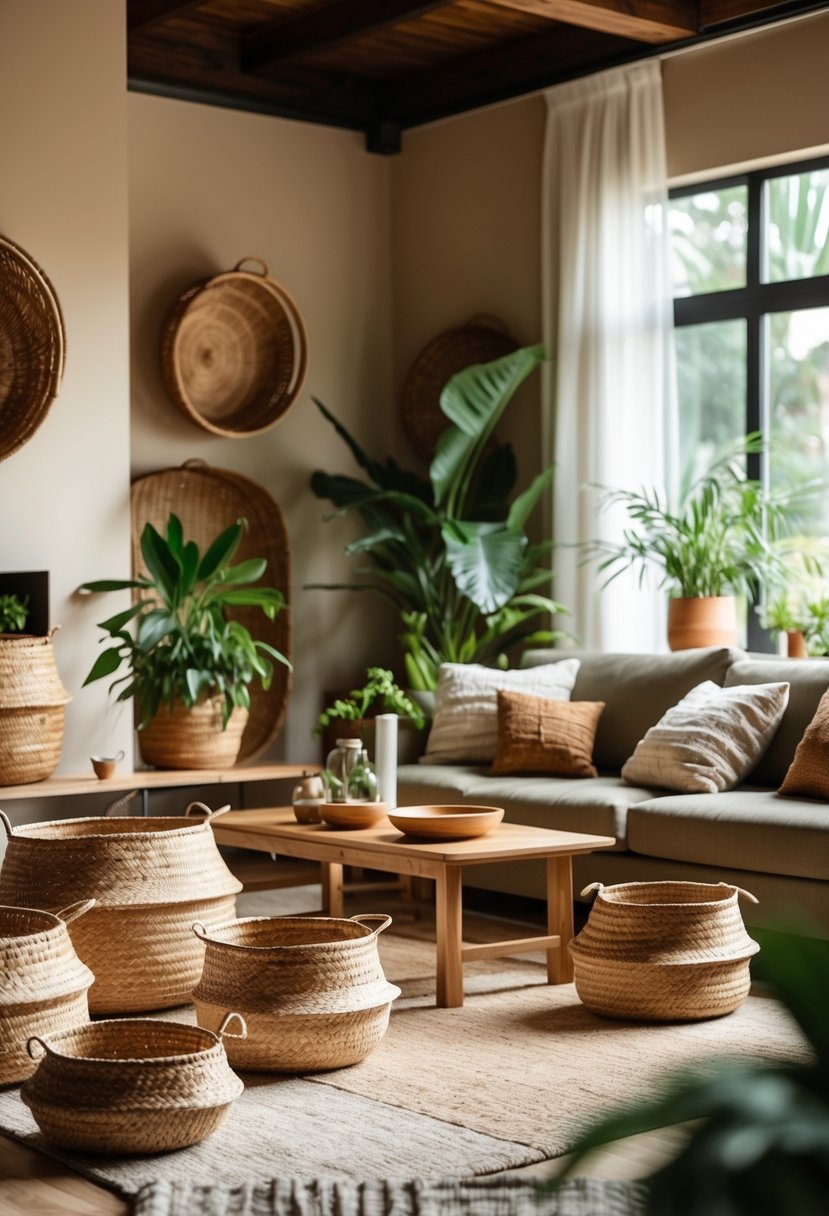
Woven baskets add natural texture while keeping items organized. They work well for storing blankets, magazines, or small accessories.
Placing baskets under benches or next to sofas creates easy storage without clutter. Their neutral tones blend with earth-tone palettes and enhance a relaxed, organic look.
Add textured jute area rugs for earthiness
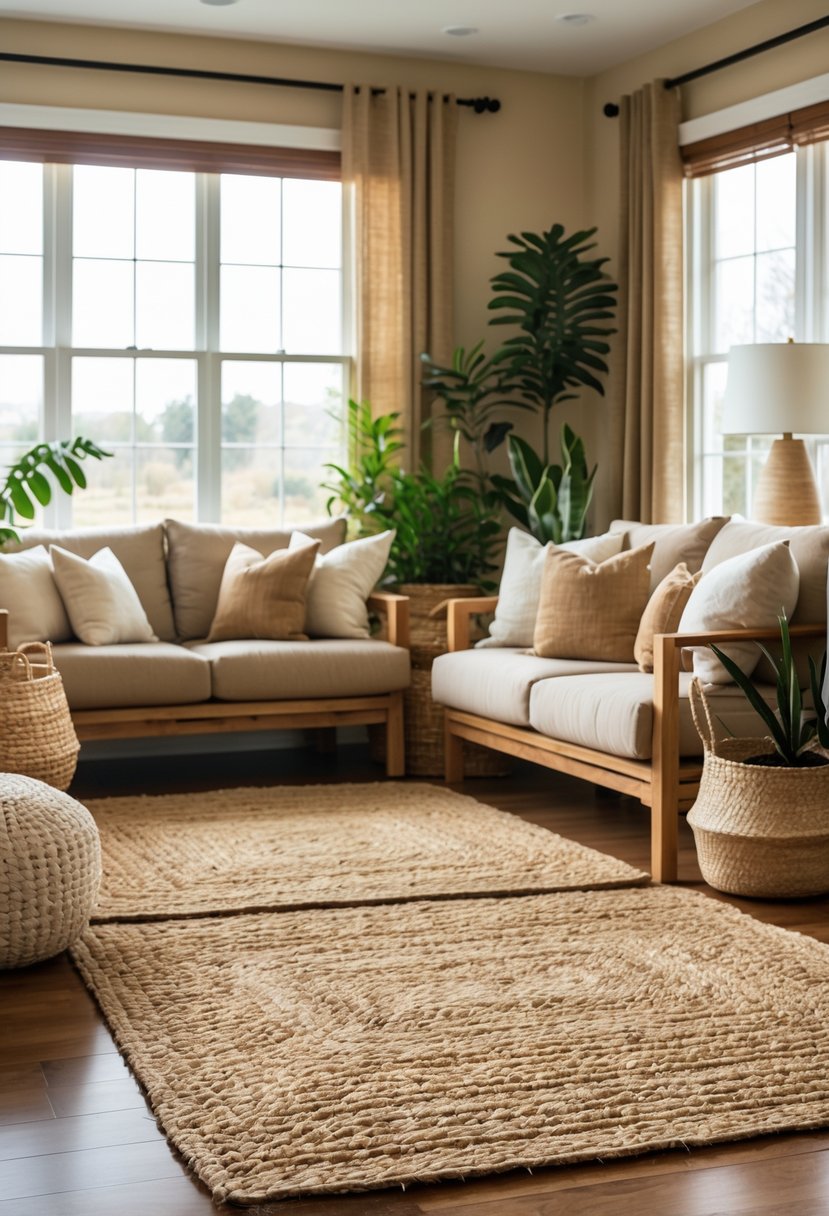
Jute rugs bring natural texture that fits well with an earth-tone palette. Their neutral shades blend easily with warm browns, soft beiges, and muted greens.
They also add a grounded look to living rooms by pairing well with wood furniture, woven baskets, or simple cotton throws.
Use camel leather chairs for sophistication
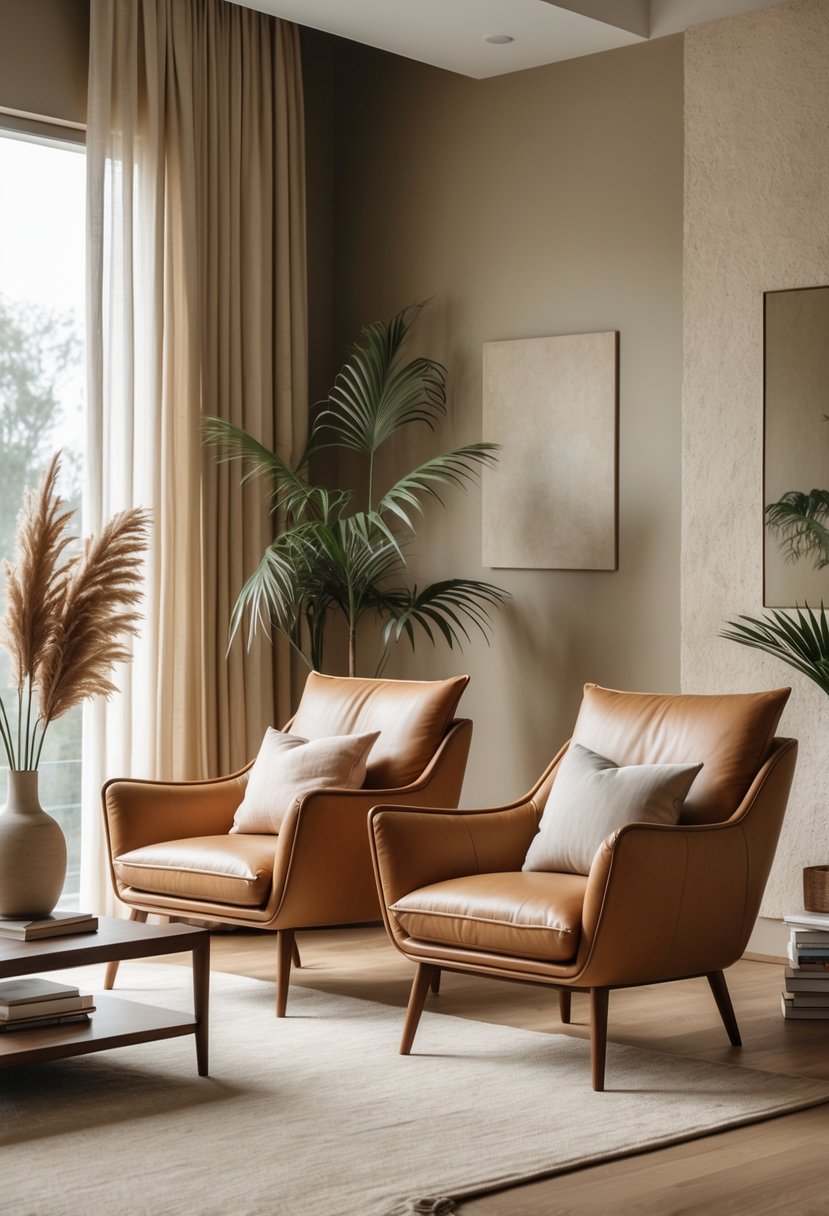
Camel leather chairs add warmth while keeping a neutral base that works with many color schemes.
Their smooth texture pairs well with natural materials like wood, stone, and linen.
Placing them near soft rugs or light walls creates balance and highlights their rich, timeless tone.
Incorporate stone or concrete coffee tables for raw appeal
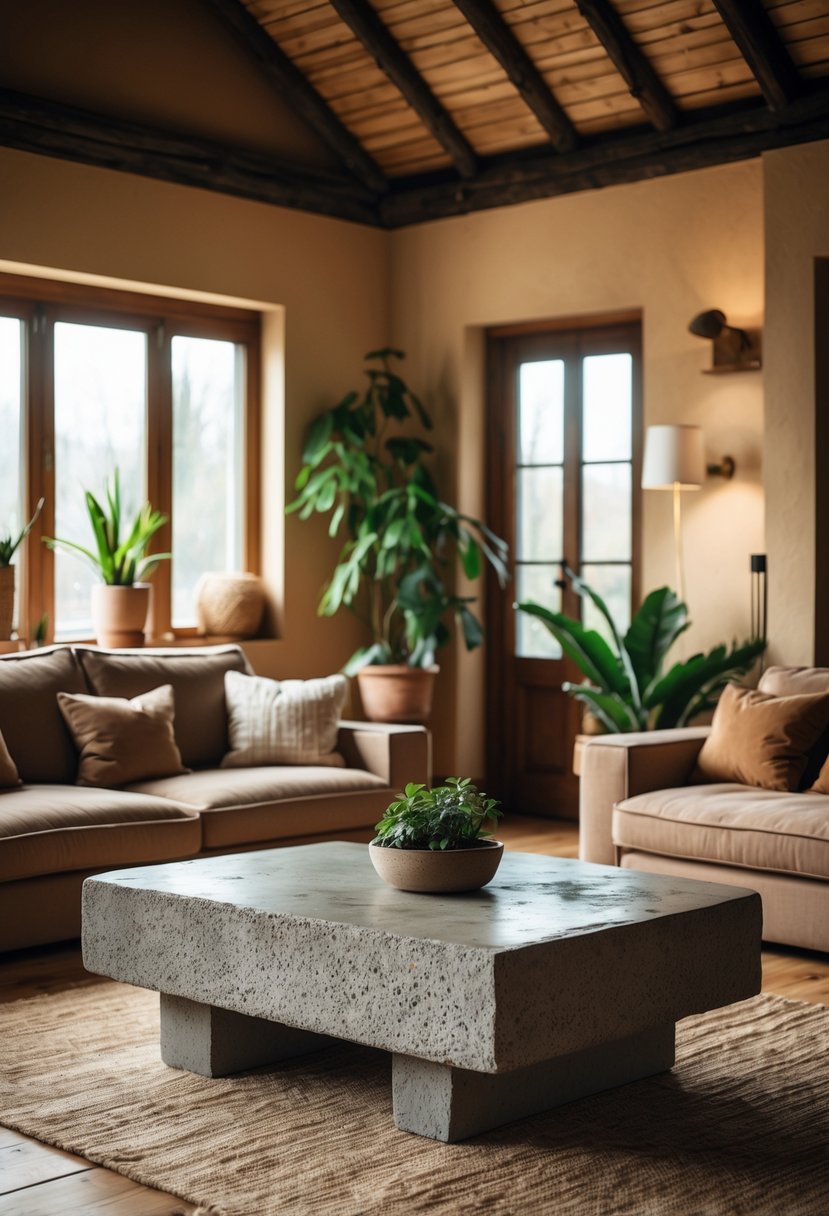
Stone and concrete coffee tables bring natural texture into an earth-tone living room. Their solid surfaces pair well with warm browns, soft greens, and muted grays.
These materials add weight and structure without overpowering the space. Their neutral tones blend easily with organic fabrics and wood accents.
Place indoor plants to bring nature inside
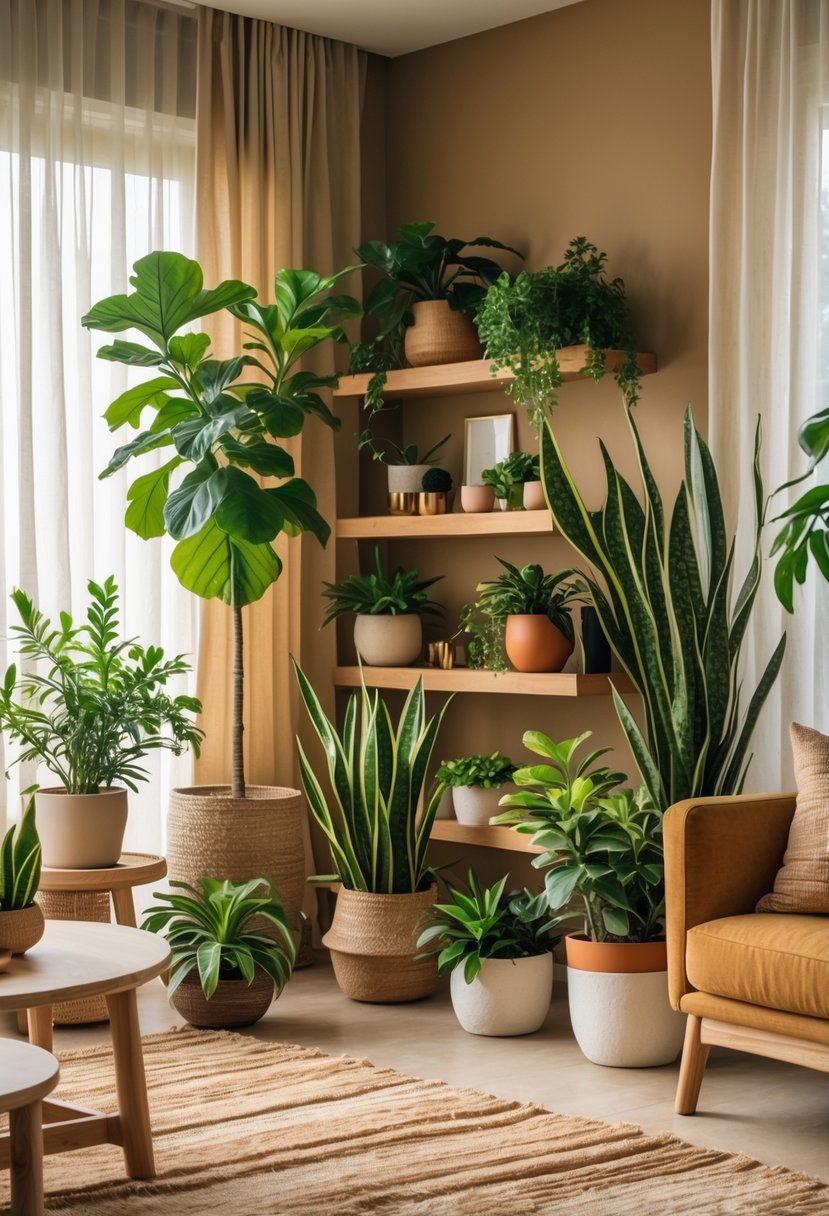
They can place potted plants in corners or near windows to add greenery and soften the space.
Small plants on shelves or coffee tables bring subtle color without overwhelming the room.
Larger leafy plants, like fiddle leaf figs or palms, create a natural focal point and connect the room to the outdoors.
Use linen curtains in warm beige tones
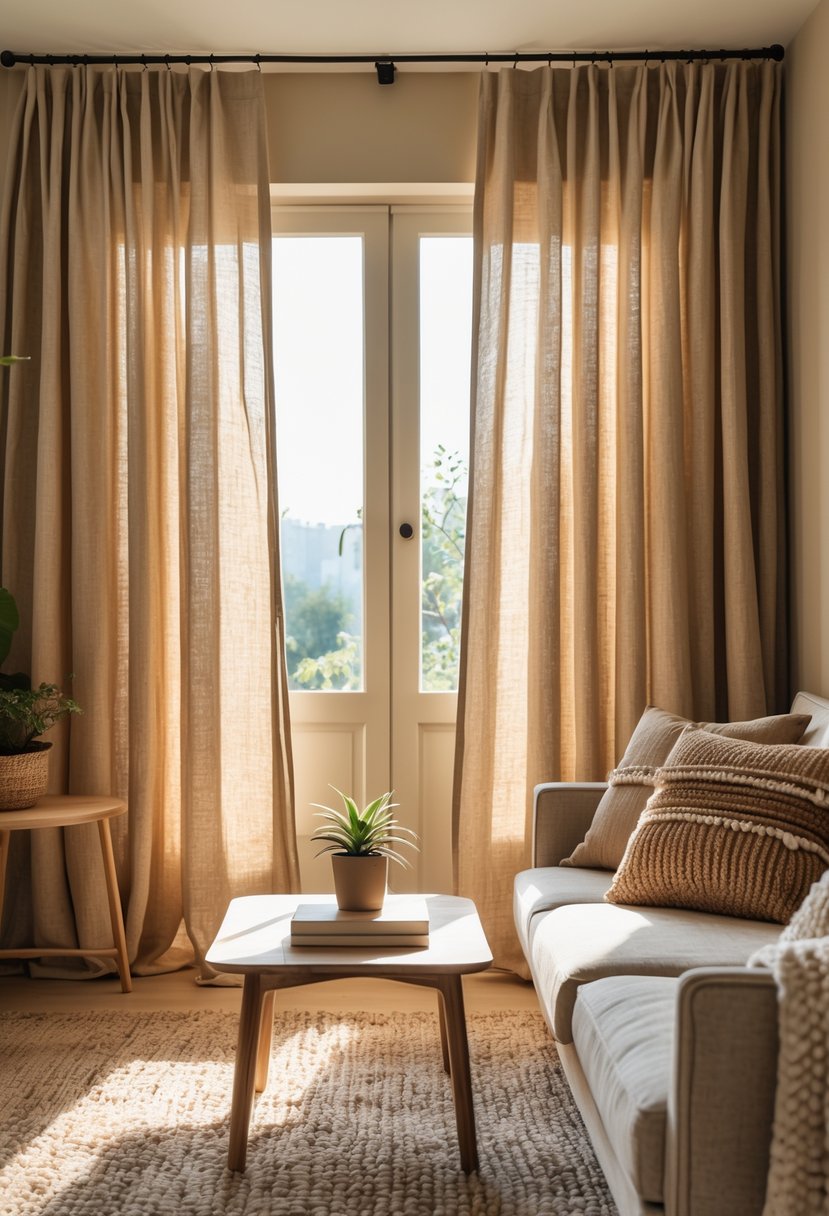
Linen curtains in warm beige tones create a soft, natural backdrop in the living room. Their neutral shade blends easily with wood, stone, and other earthy materials.
The light texture of linen allows natural light to filter through, keeping the space bright while adding subtle warmth.
Add terracotta floor tiles for authenticity
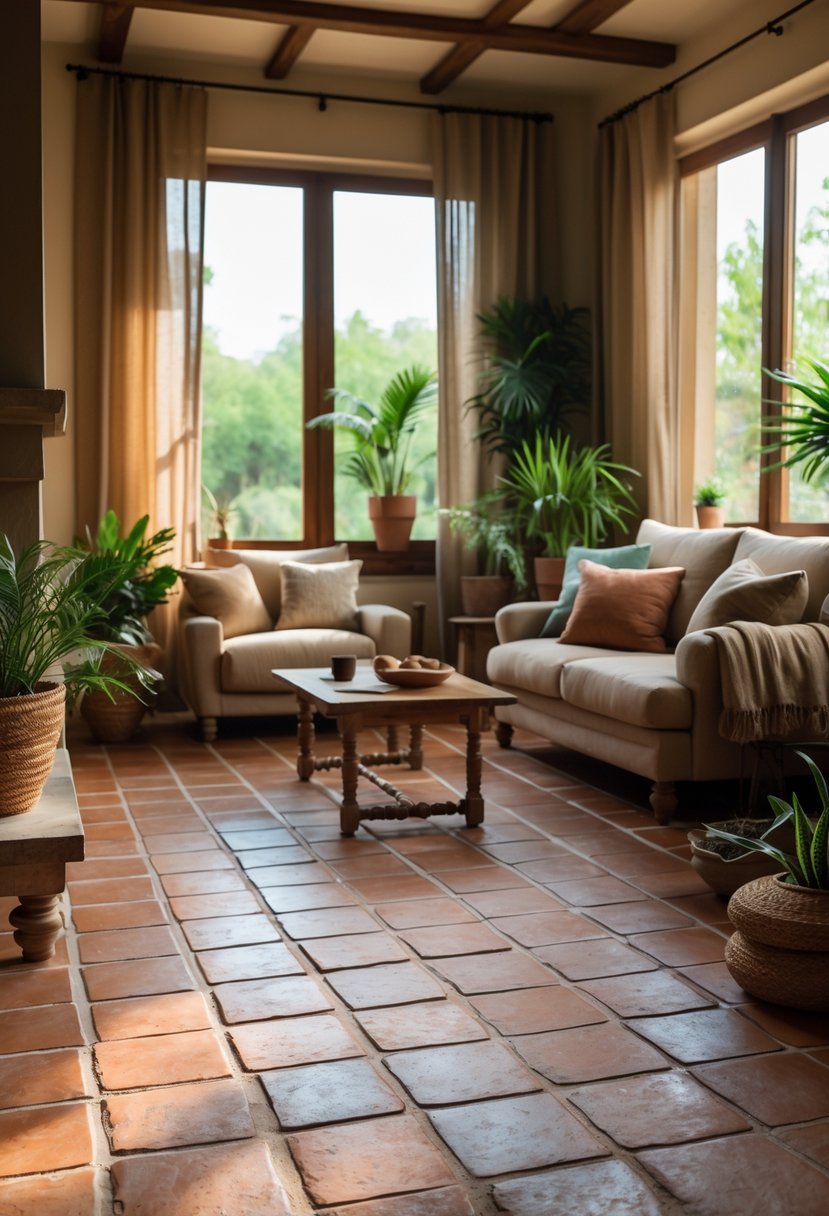
Terracotta floor tiles bring a natural, earthy tone that fits well with an earth-inspired living room. Their warm color adds depth without overwhelming the space.
Each tile often shows slight variations, which creates a more authentic look. This subtle detail helps the room feel grounded and connected to natural materials.
Include natural fiber cushions for tactile interest
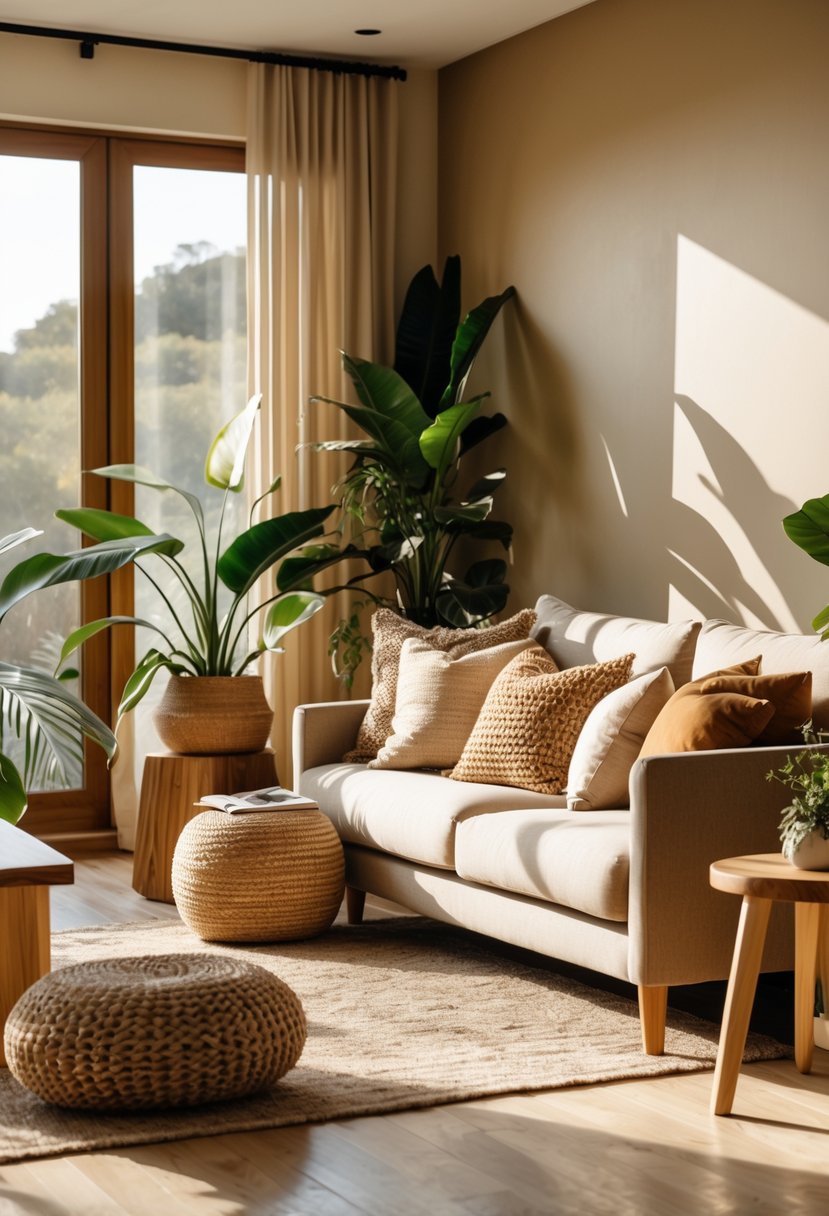
Natural fiber cushions add subtle texture and comfort to an earthy living room. Materials like cotton, linen, wool, or jute create a grounded and relaxed feel.
They pair well with neutral tones and natural finishes, making the space look cohesive while providing a soft, tactile layer.
Use warm gray walls as a subtle neutral base
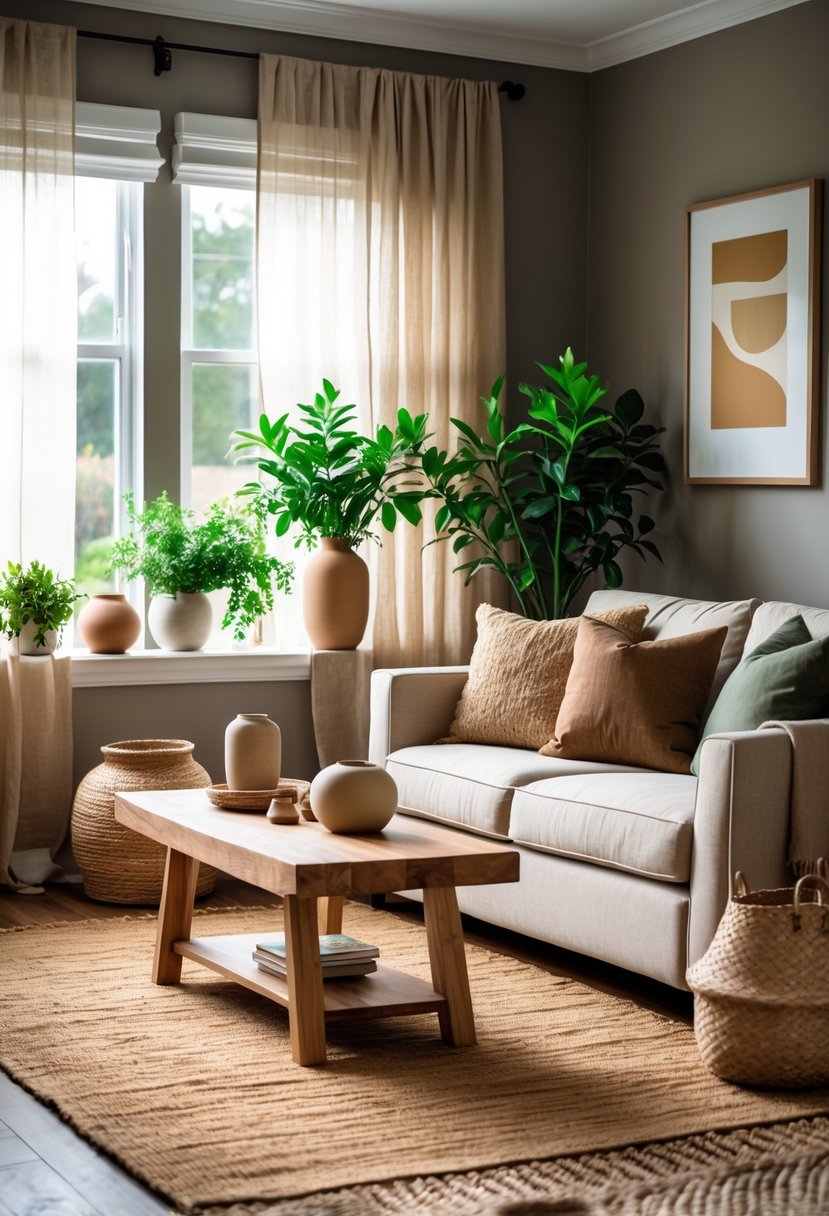
Warm gray walls provide a balanced backdrop that works well with earth tones.
They soften the space without making it feel cold, allowing natural textures and colors to stand out.
This neutral base pairs easily with wood, stone, and muted fabrics, creating a calm and cohesive look.
Incorporate amber glass vases for color accents
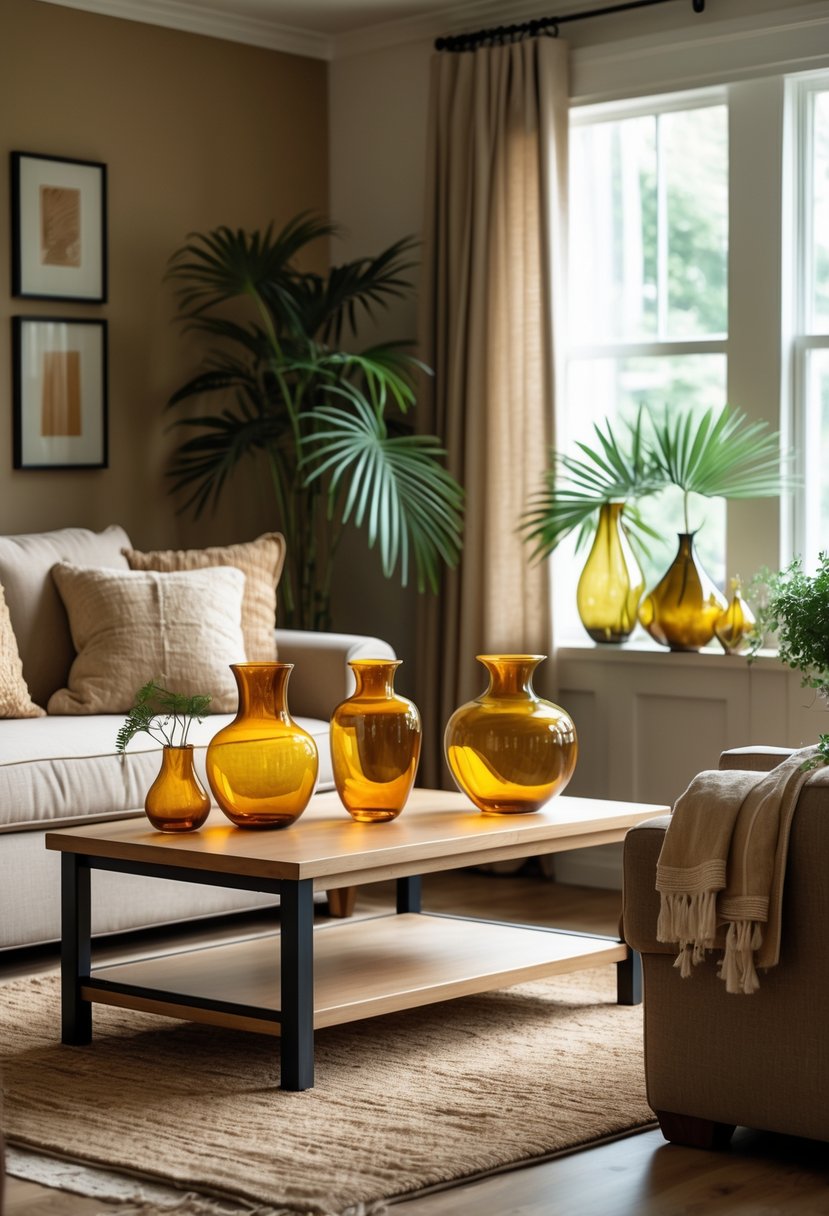
Amber glass vases add warm tones that blend well with earth-inspired palettes. Their soft brown and golden shades complement natural materials like wood and stone.
They work as subtle accents on shelves, coffee tables, or mantels. Paired with dried stems or greenery, they bring texture without overwhelming the room.
Add a sunlit boho charm with layered textiles
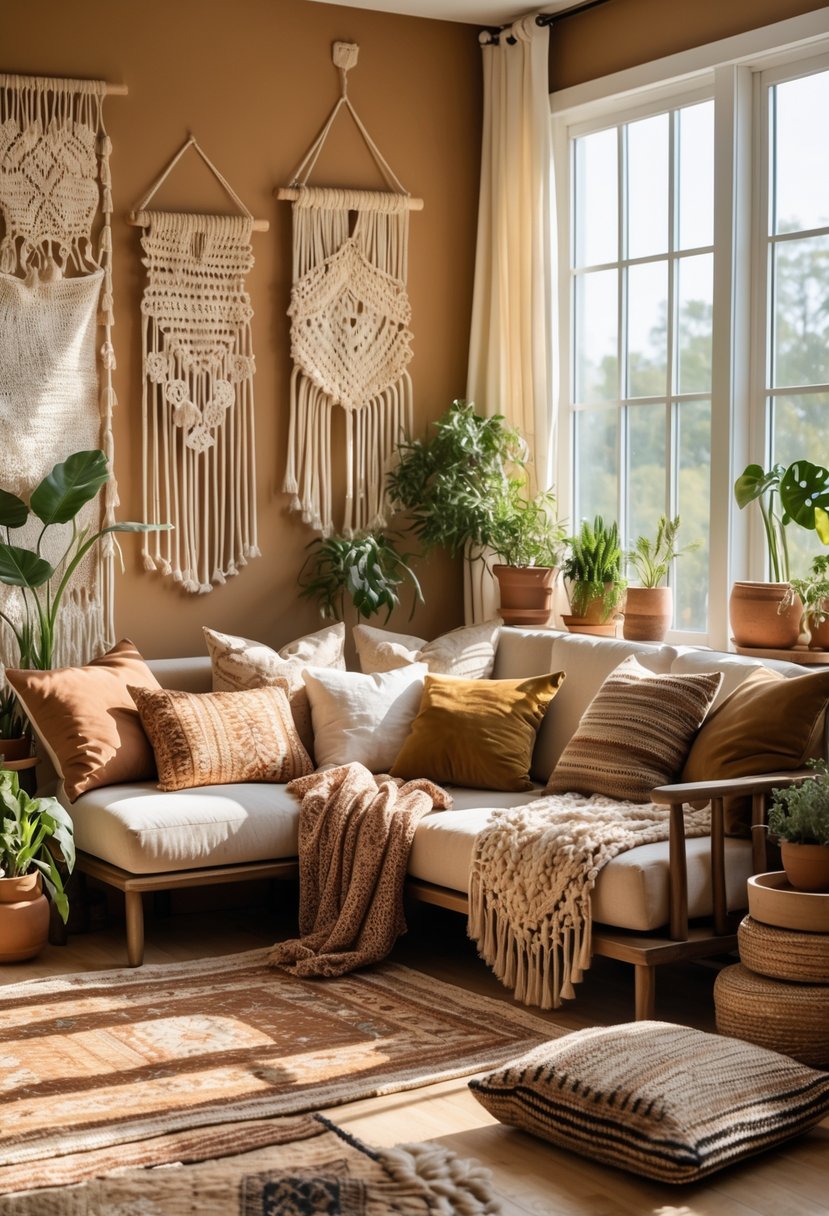
They can use layered textiles like rugs, throws, and cushions to bring warmth and texture into the room.
Natural light highlights earthy colors such as burnt orange, sandy beige, and clay tones, making the space feel inviting.
Mixing patterns and fabrics adds depth while keeping the boho style relaxed and comfortable.
Use matte black metal frames to modernize earth tones
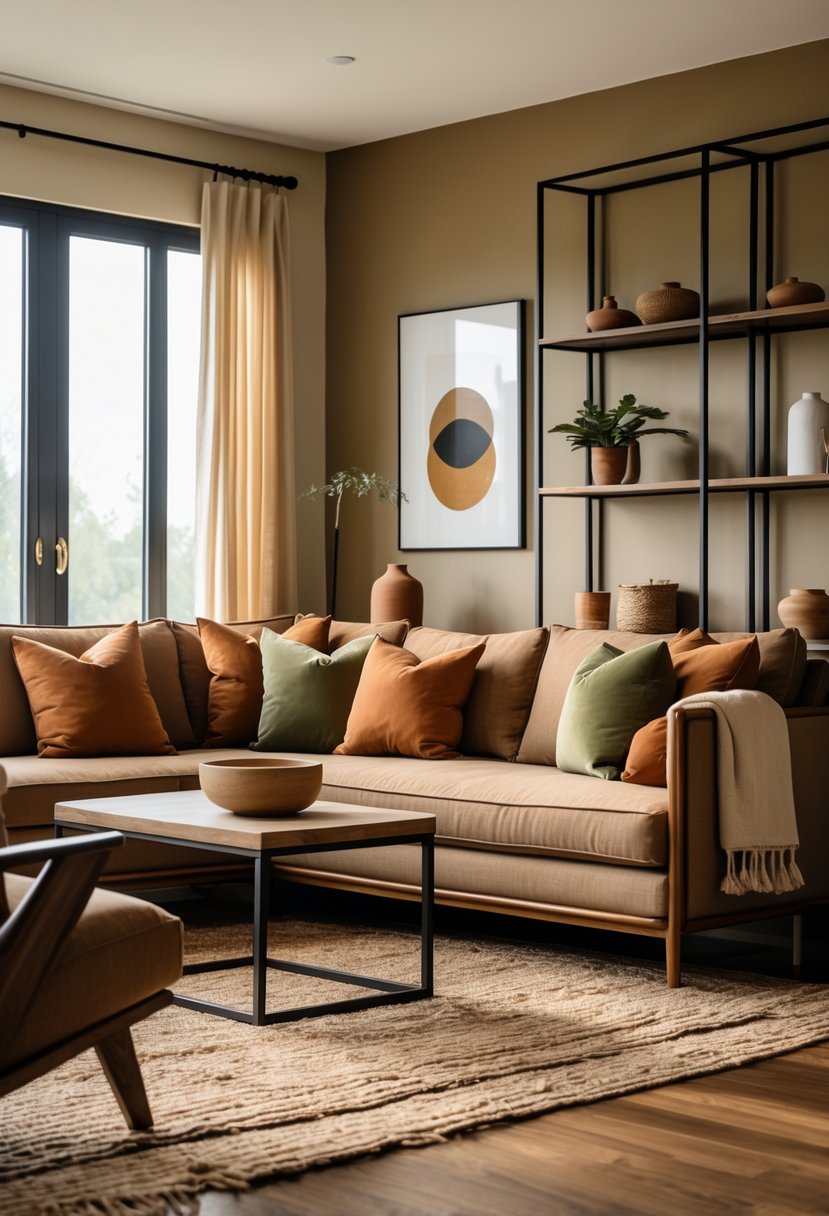
Matte black frames add clean lines that balance the warmth of browns, tans, and taupes.
They create contrast without overwhelming natural textures like wood or stone.
Using them on light fixtures, furniture legs, or wall art helps the room feel current while keeping its grounded look.
Understanding Earth-Tone Color Palettes
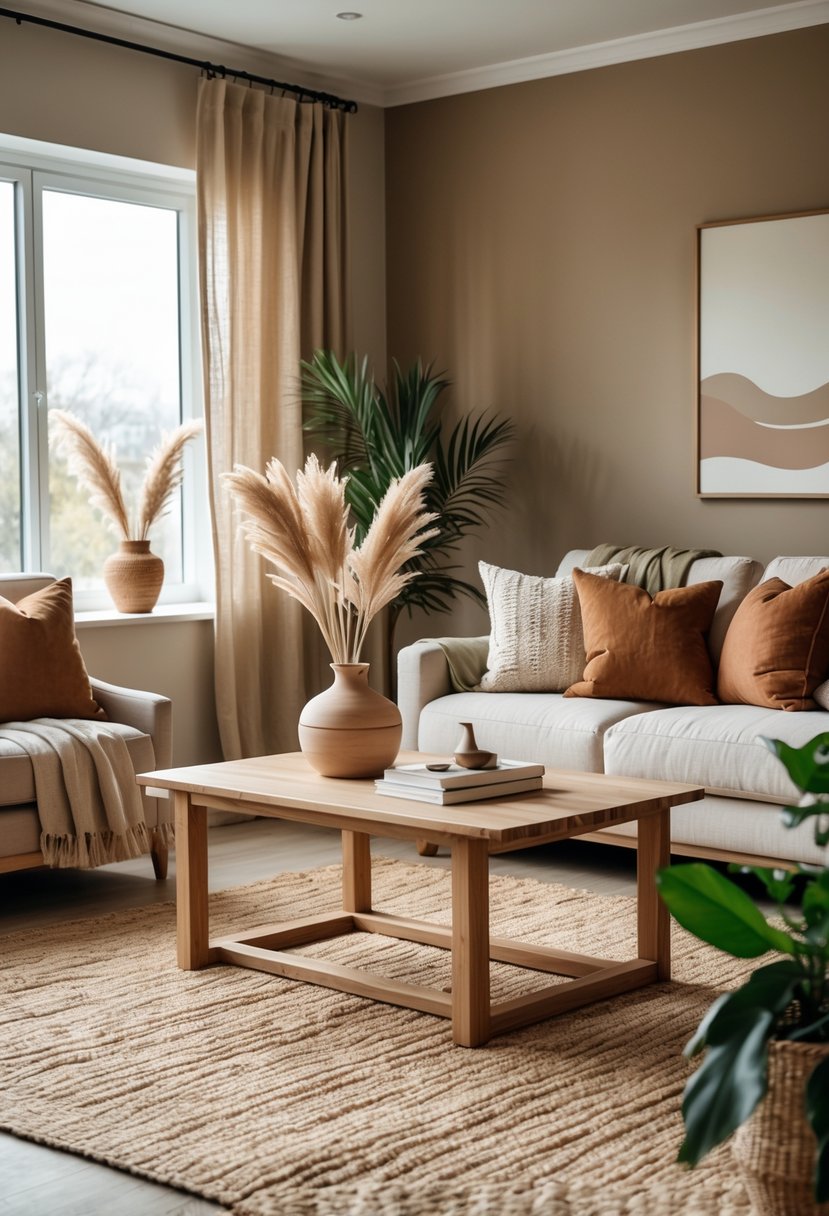
Earth-tone palettes draw from natural elements like soil, stone, wood, and foliage. These colors create a grounded foundation for interiors while also shaping how people feel and interact in a space.
Core Colors and Their Meanings
Earth tones include a wide range of neutrals and muted shades. Common examples are brown, beige, cream, gray, terracotta, and green. Each color has subtle associations that influence how a room feels.
- Brown suggests stability and comfort.
- Beige and cream provide a soft, neutral backdrop.
- Gray adds balance without overwhelming other tones.
- Terracotta brings warmth with a natural clay-like richness.
- Green connects to nature and renewal.
Designers often layer these shades to create depth. For example, a beige sofa can pair with olive green accents and wooden furniture to form a cohesive scheme. The palette works best when tones are combined in varied textures—such as linen, leather, or natural wood—so the room feels inviting rather than flat.
How Earth Tones Influence Mood
Earth tones affect mood by promoting calmness and a sense of connection to nature. Warm shades like tan and rust make a space feel cozy, while cooler tones such as sage green or soft gray encourage relaxation.
These colors avoid harsh contrasts, which helps reduce visual stress. A room with layered neutrals often feels more open and less distracting.
Research in design psychology shows that natural-inspired palettes can improve comfort and focus. For example, green tones may reduce stress, while warm browns can make a space feel more secure. By using these shades thoughtfully, a living room can support both social interaction and quiet rest.
Design Principles for Earth-Tone Living Rooms
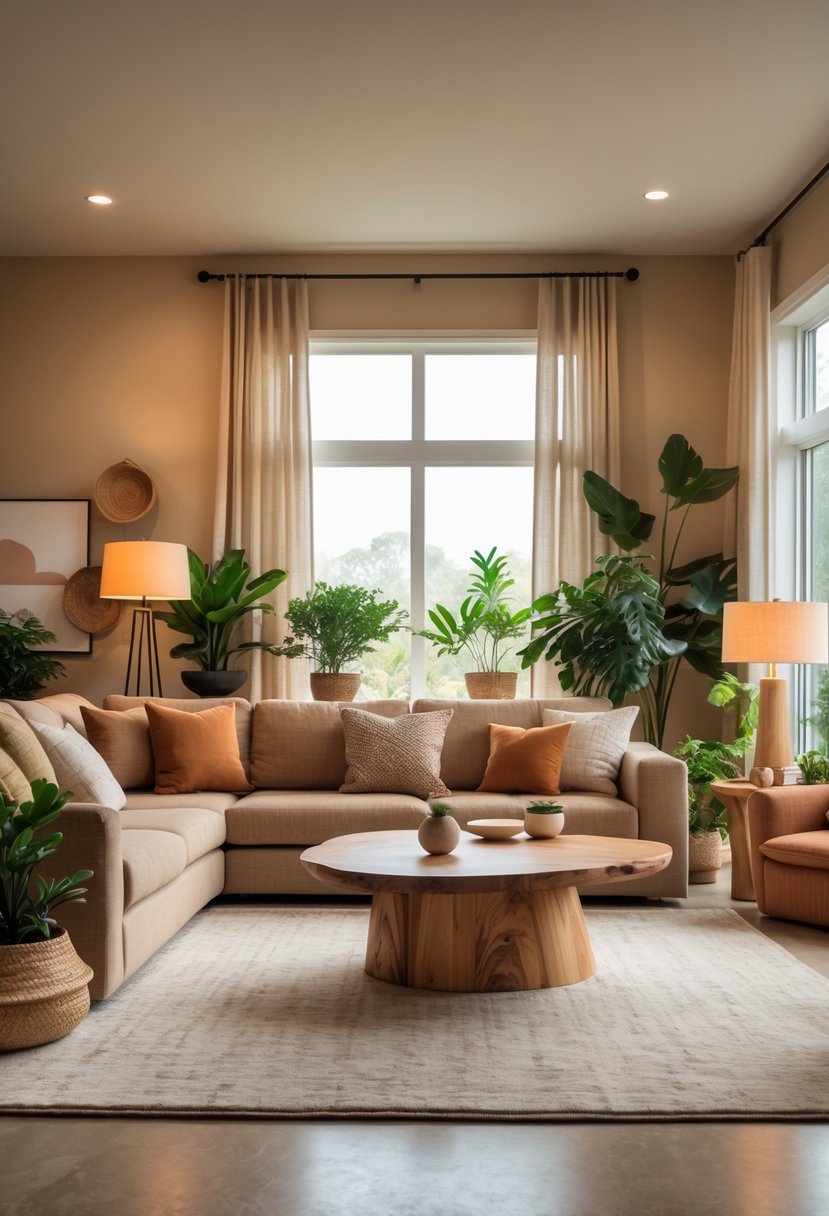
A well-designed earth-tone living room depends on choosing the right mix of colors and pairing them with natural textures. Careful use of warm and cool tones, along with layered materials, creates a balanced space that feels both comfortable and visually interesting.
Balancing Warm and Cool Shades
Earth tones include a wide range of colors such as browns, beiges, grays, greens, and terracottas. To avoid a flat look, designers often combine warm shades like camel or rust with cooler tones such as sage or slate. This balance prevents the room from feeling too heavy or too pale.
One simple approach is to use warm tones for larger surfaces like walls or sofas and cooler accents for smaller items such as pillows, throws, or artwork. This method helps anchor the space while still adding variety.
Another method is to follow a 60-30-10 color ratio:
- 60% dominant shade (walls, large furniture)
- 30% secondary shade (rugs, curtains, side chairs)
- 10% accent shade (decor, cushions, lamps)
This structure ensures no single color overwhelms the room. Neutral shades like beige or taupe can serve as a bridge between warm and cool tones, tying the palette together.
Layering Textures and Materials
Color alone does not define an earth-tone living room. Texture plays an equally important role in making the space feel inviting. Natural materials such as wood, linen, wool, and stone add depth and prevent the design from looking flat.
For seating, a linen sofa paired with leather chairs creates contrast while staying within the earth-tone palette. Adding a jute rug or woven baskets introduces organic texture that reinforces the natural theme.
Mixing smooth and rough finishes also enhances balance. For example, a polished wood coffee table can sit well with a chunky knit throw or a clay vase. This mix of surfaces keeps the eye moving and adds subtle detail without clutter.
Layering multiple textures in similar tones allows the room to feel cohesive while still offering variety. The result is a space that feels grounded yet visually dynamic.
For more ideas in this style, see these exciting neutral color palette ideas for expert inspiration.


