
Modern Hallway Design With Natural Materials: 22 Inspiring Ideas for a Stylish Entryway
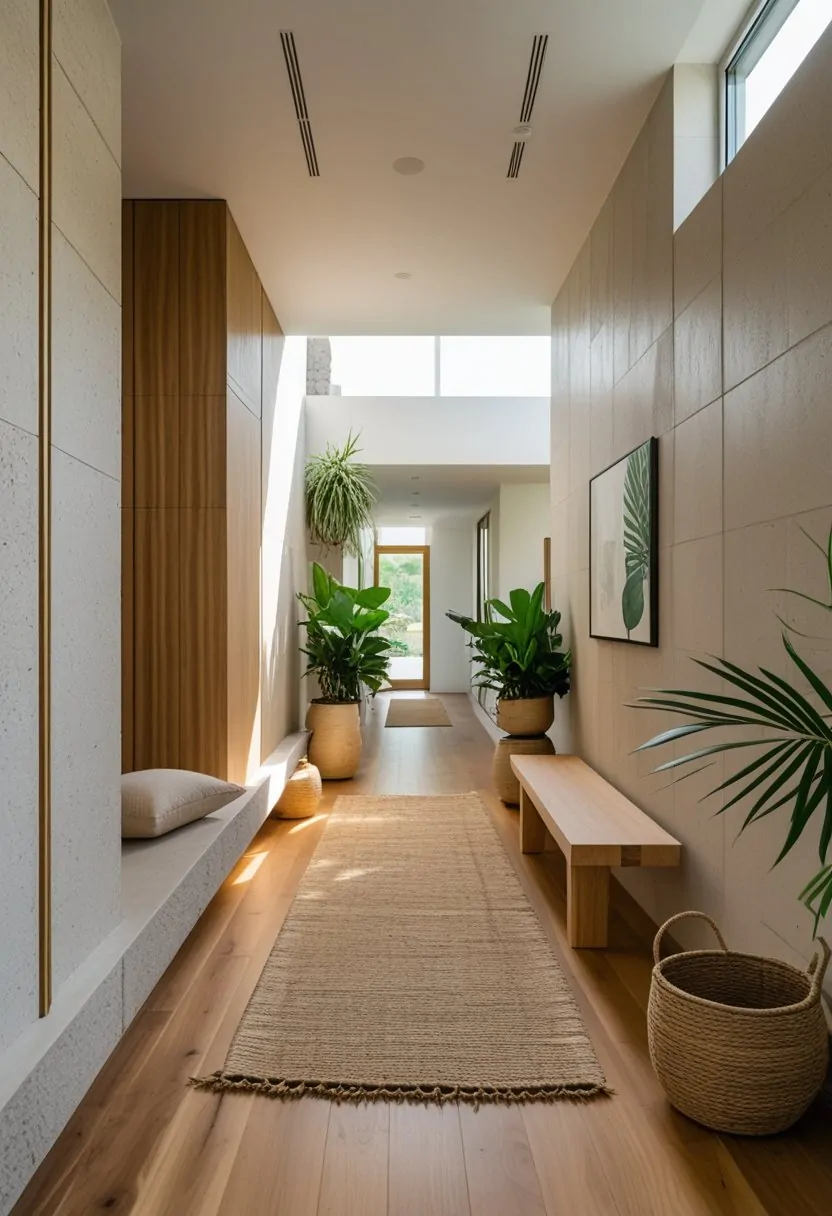
Modern hallway design has shifted toward using natural materials that create a warm and welcoming atmosphere. This approach focuses on simple, timeless elements that bring comfort while keeping the space functional and stylish. It shows how natural textures and finishes can transform a hallway into a space that feels both modern and inviting.
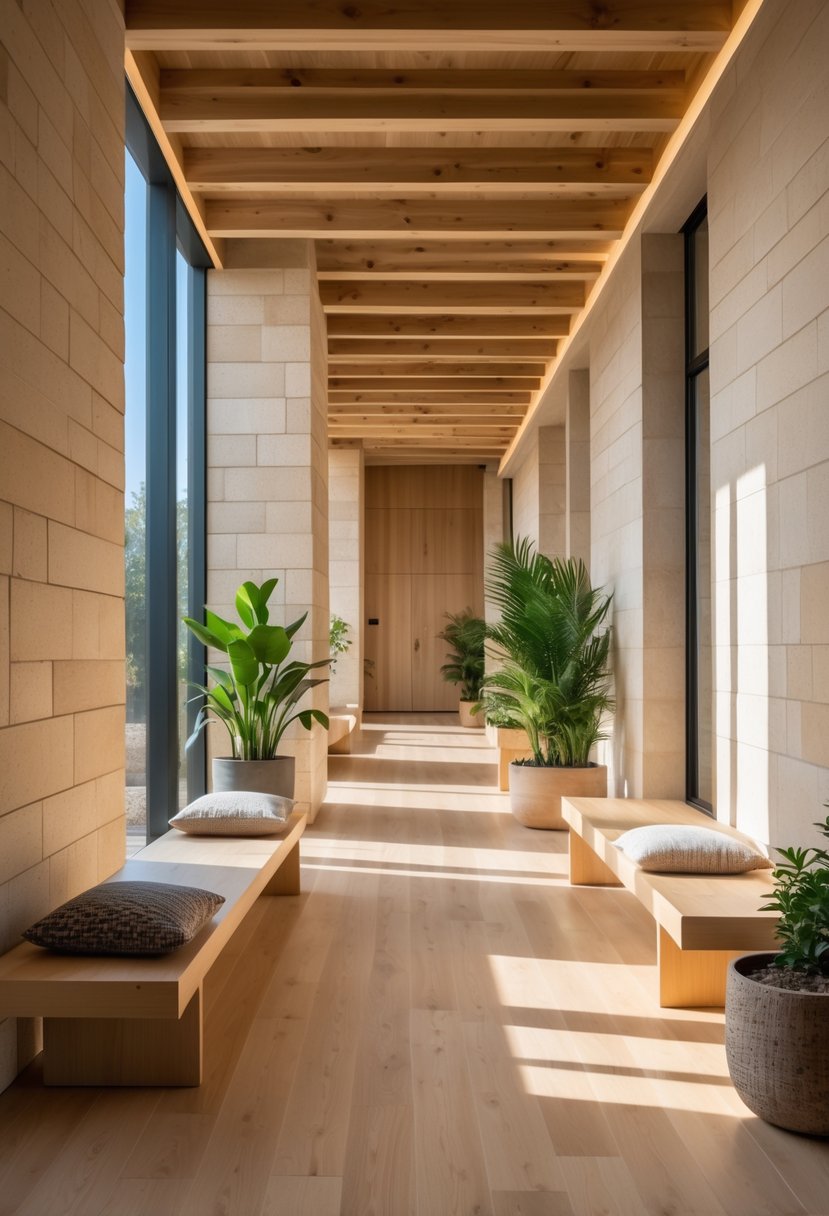
By blending wood, stone, bamboo, and other organic details, the design balances beauty with practicality. Each material adds depth and character, while thoughtful choices in color, light, and texture help the hallway connect seamlessly with the rest of the home.
Reclaimed wood flooring for warmth and sustainability
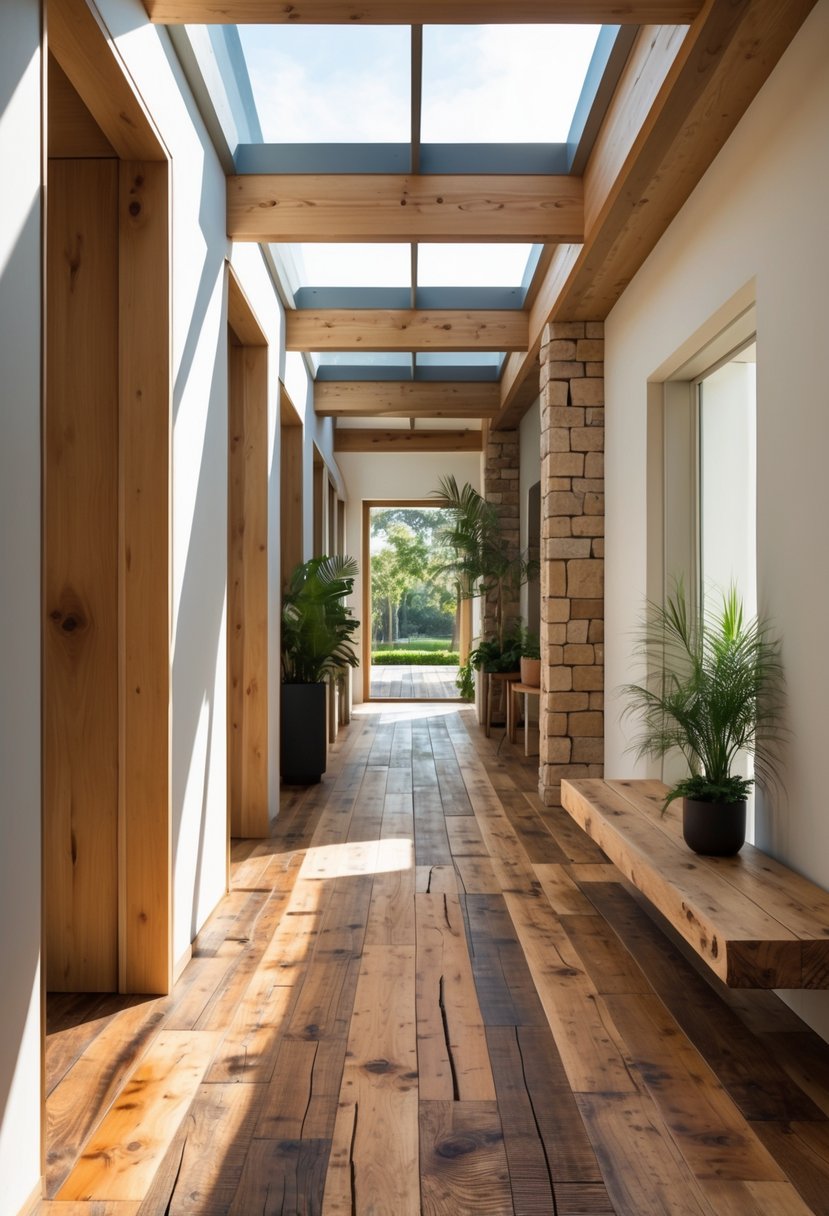
Reclaimed wood flooring adds natural warmth to a hallway while reducing the need for new timber. It often comes from old barns, factories, or homes, giving each piece distinct character.
Using reclaimed wood supports sustainable design by reusing existing materials. It also provides durability and a timeless look that fits modern interiors.
Stone accent walls for natural texture
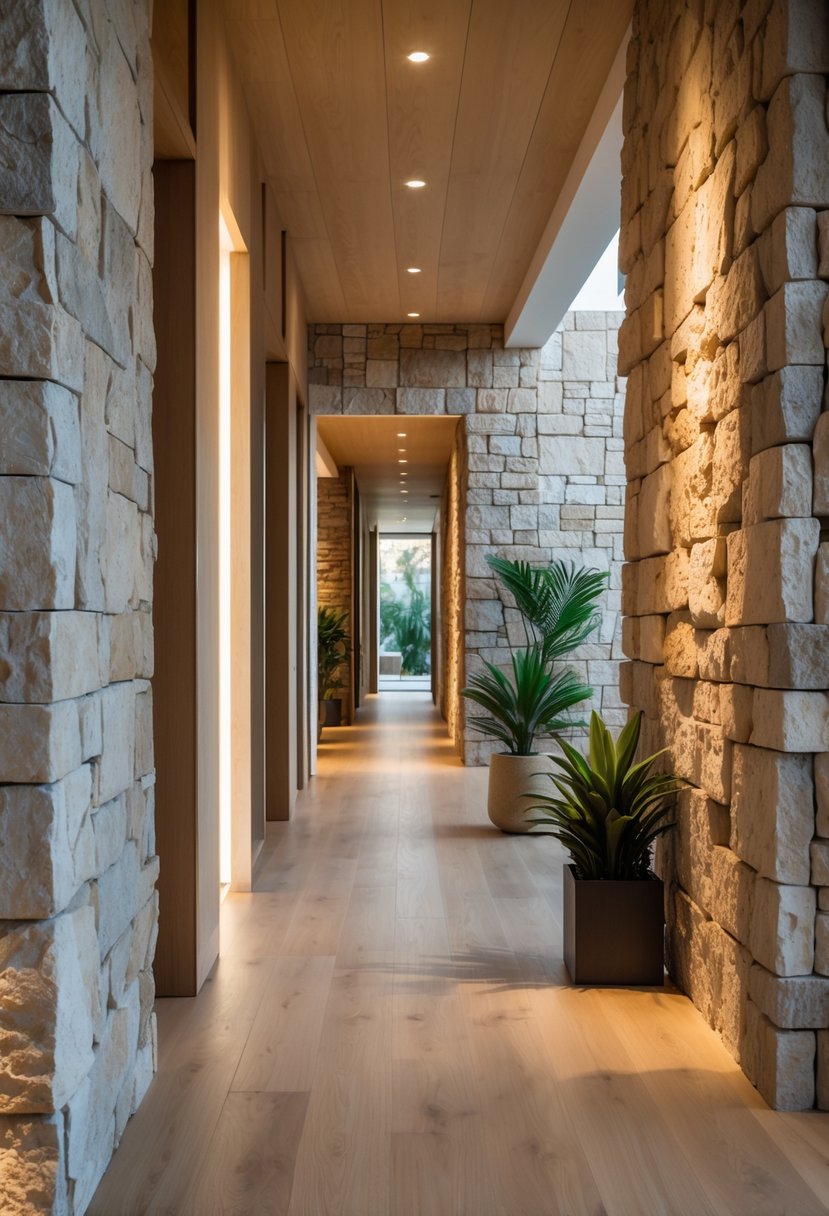
Stone accent walls add depth and texture to a hallway without overwhelming the space.
They create a natural focal point and pair well with wood, metal, or neutral paint tones.
Different stone types, such as limestone or stacked stone, offer varied patterns and colors that fit both modern and rustic styles.
Bamboo paneling to add eco-friendly style
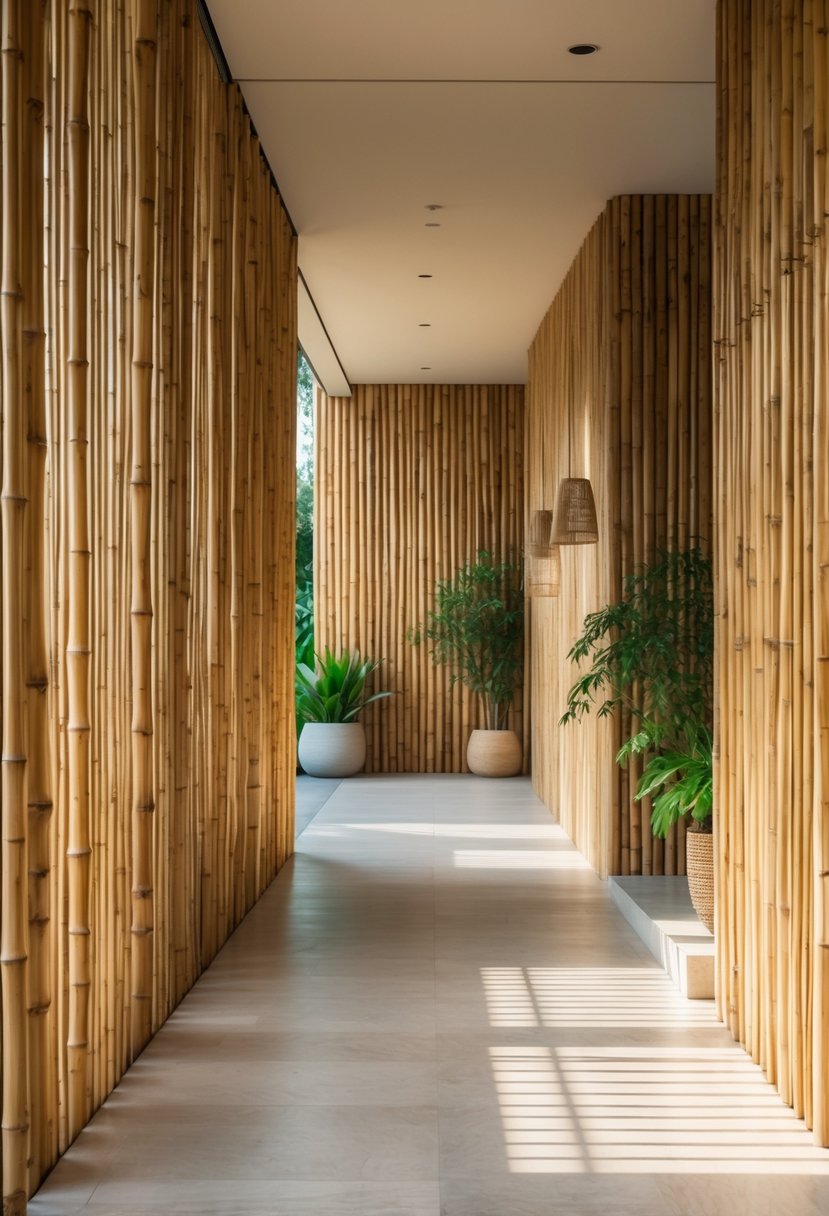
Bamboo paneling gives hallways a natural look while keeping the design simple and modern. Its clean lines and warm tones work well in both small and large spaces.
The material is renewable and durable, making it a practical choice for long-term use. It also pairs easily with wood, stone, or neutral paint.
Natural light maximization with skylights
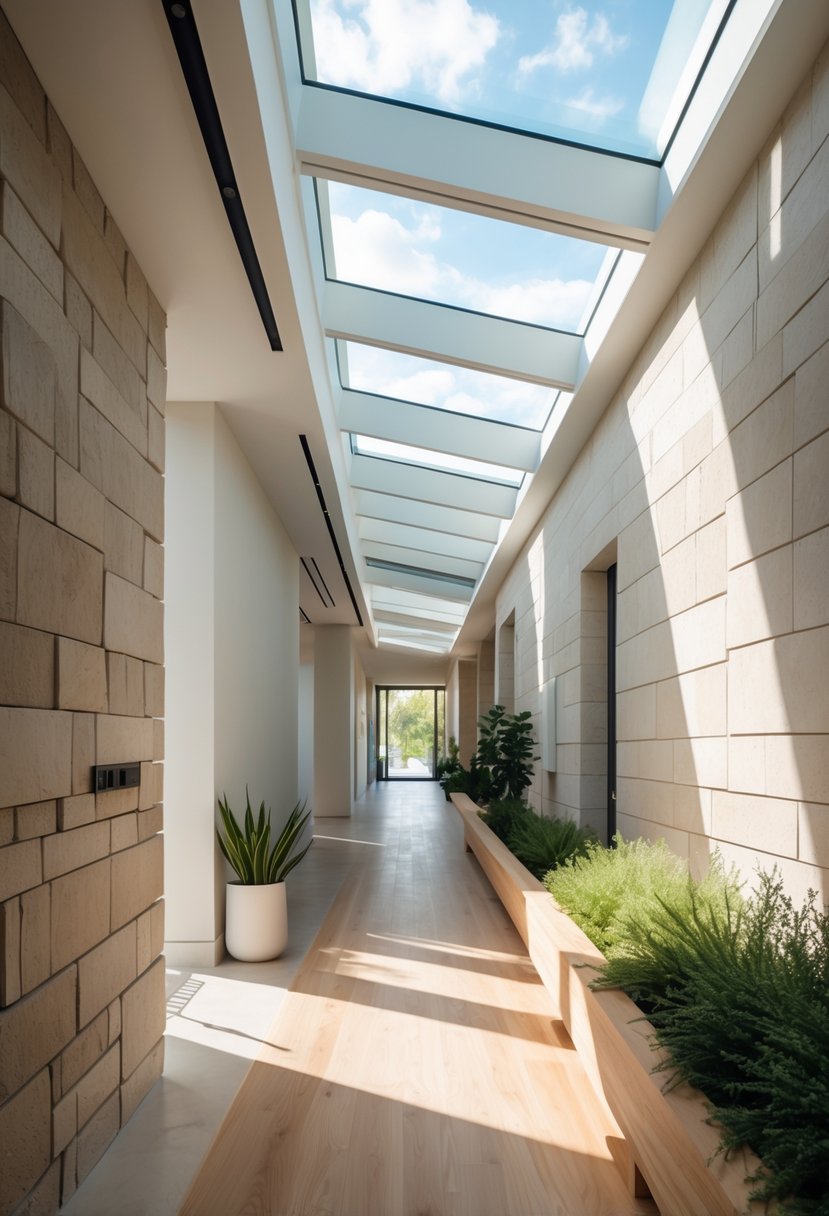
Skylights bring daylight into hallways where windows are limited. They help brighten long or narrow spaces and reduce the need for artificial lighting.
Different skylight types, such as tubular or flat designs, can fit various layouts. Placement and size determine how much light enters and how evenly it spreads.
Modern skylights often include insulation and UV protection. These features improve energy efficiency and protect interior finishes from sun damage.
Glass doors to enhance openness
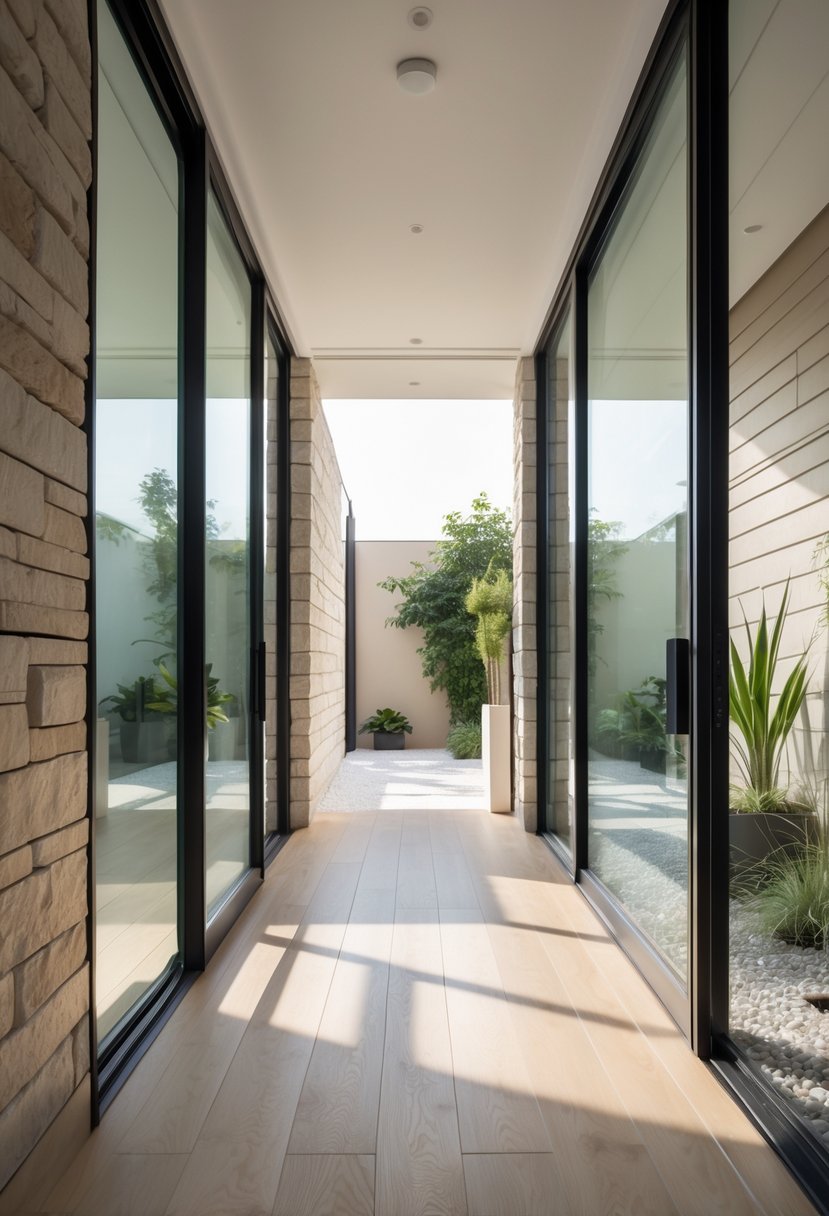
Glass doors allow more natural light to pass through hallways, making the space feel brighter.
They create a visual connection between rooms while still acting as functional barriers.
Frosted or tinted options provide privacy while keeping a sense of openness.
Marble tiles for a sleek, organic look
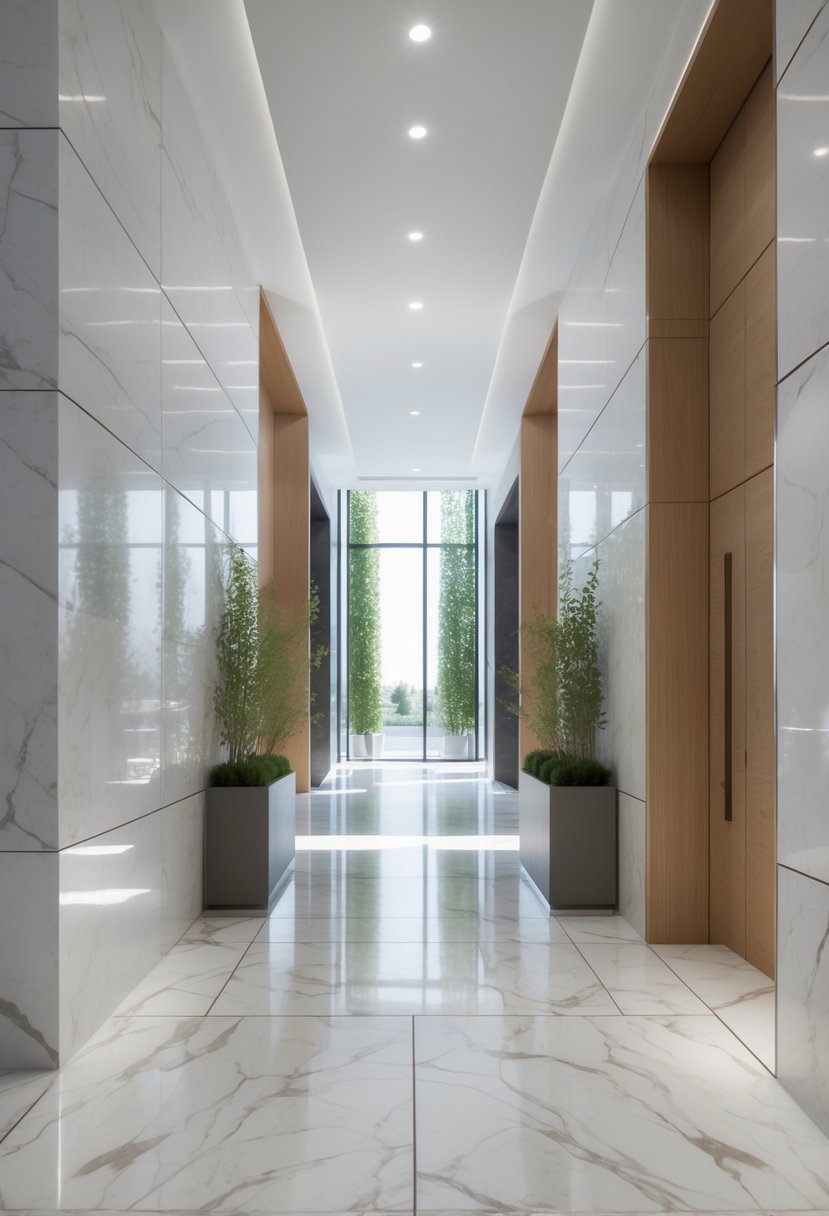
Marble tiles bring a clean and refined surface to hallways. Their natural veining adds visual interest without overwhelming the space.
They work well with both light and dark color schemes, making them versatile for modern interiors.
Polished finishes reflect light, while matte options create a softer, more natural feel.
Cane webbing furniture for vintage charm
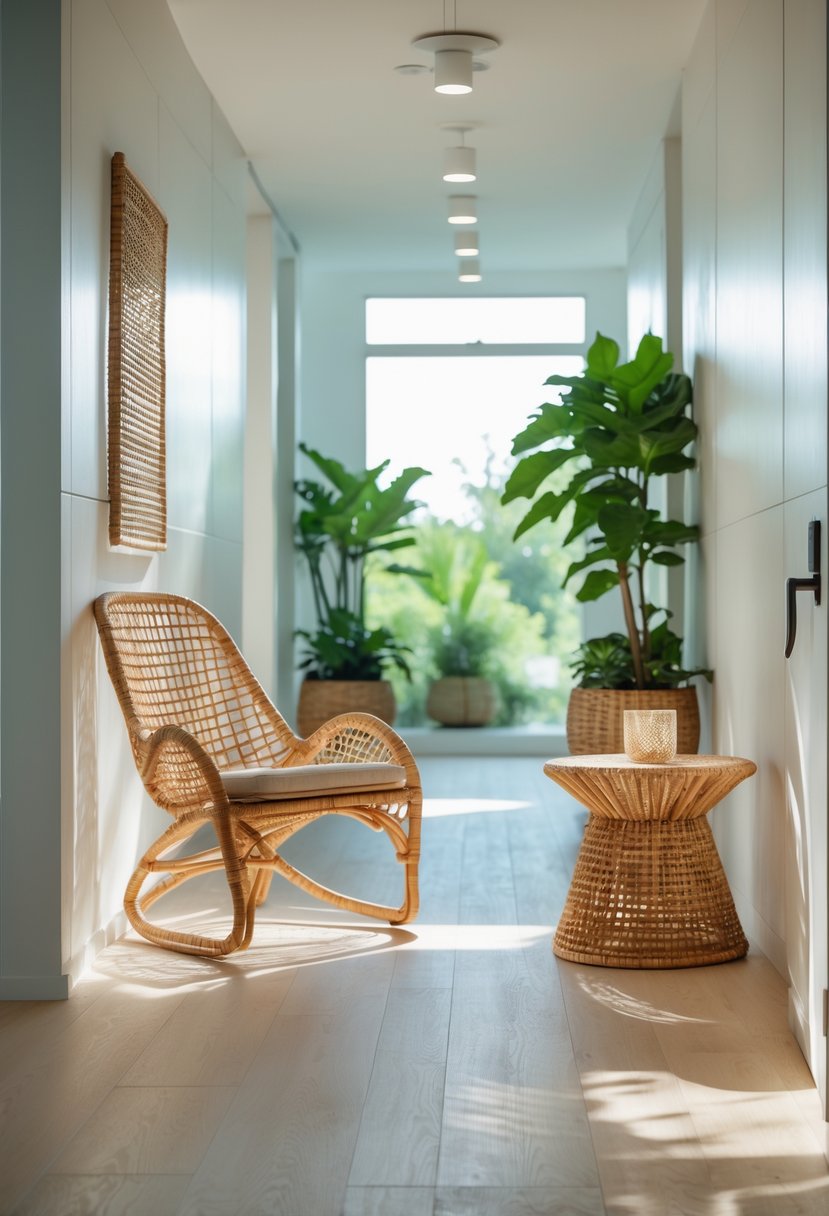
Cane webbing furniture adds texture and warmth to a hallway. Its woven surface creates a light, airy look that pairs well with natural wood and neutral tones.
They can use cane benches, chairs, or cabinets to introduce subtle vintage character without overwhelming the space.
Vintage brass lighting fixtures
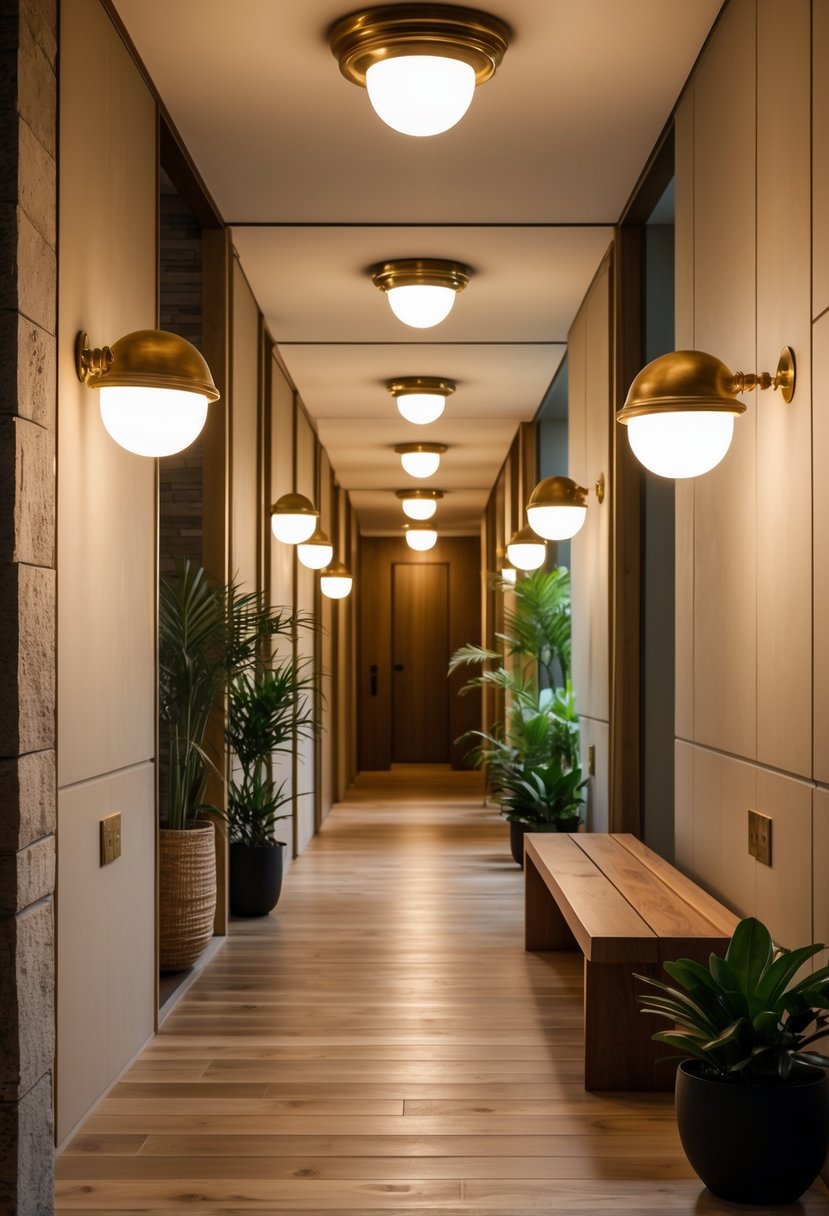
Vintage brass lighting fixtures bring warmth and character to a hallway. Their aged finish pairs well with natural wood and stone surfaces.
Many designs include simple sconces, lanterns, or pendants that fit both traditional and modern spaces. They provide soft light while adding subtle detail.
Shiplap walls in reclaimed wood
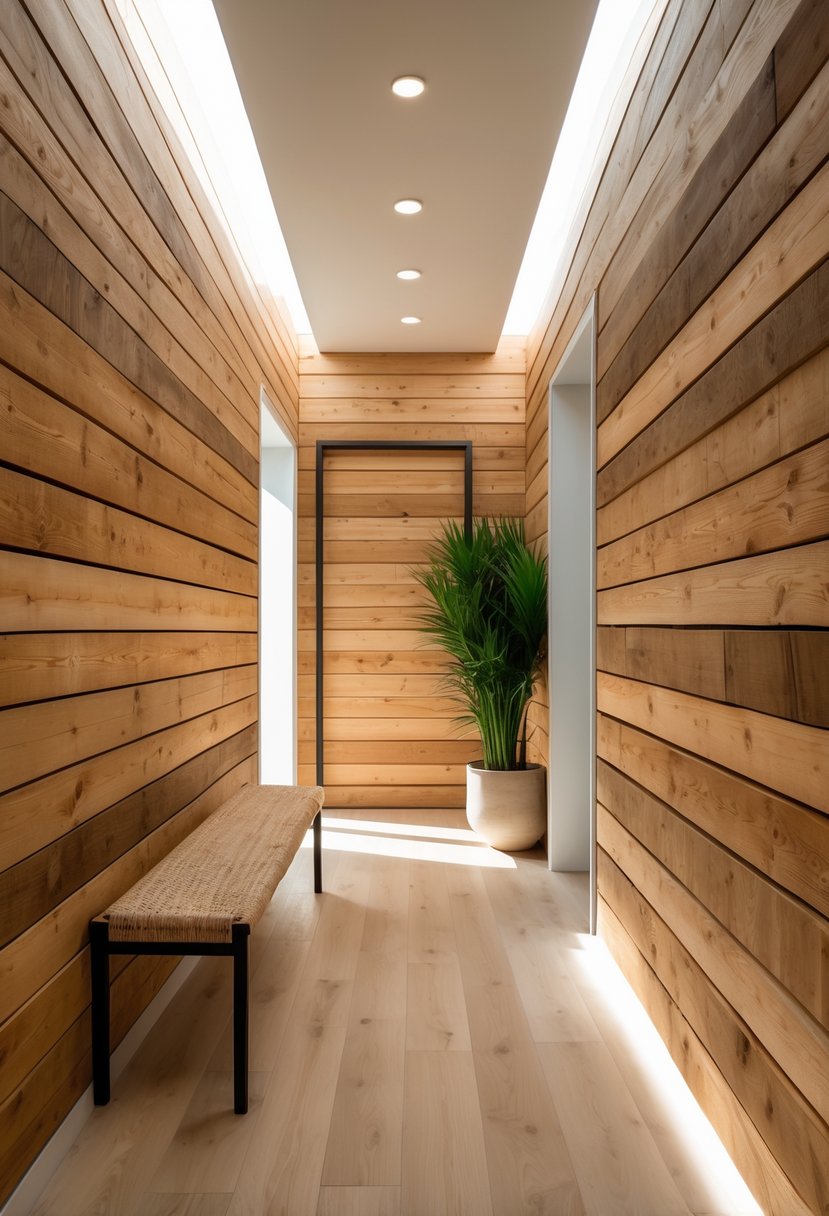
Reclaimed wood shiplap adds texture and character to a hallway. Each board shows natural marks, grain, and color variations.
This material pairs well with stone, brick, or simple painted surfaces. It creates a balanced design that feels warm and grounded.
Earthy color palette with terracotta and olive
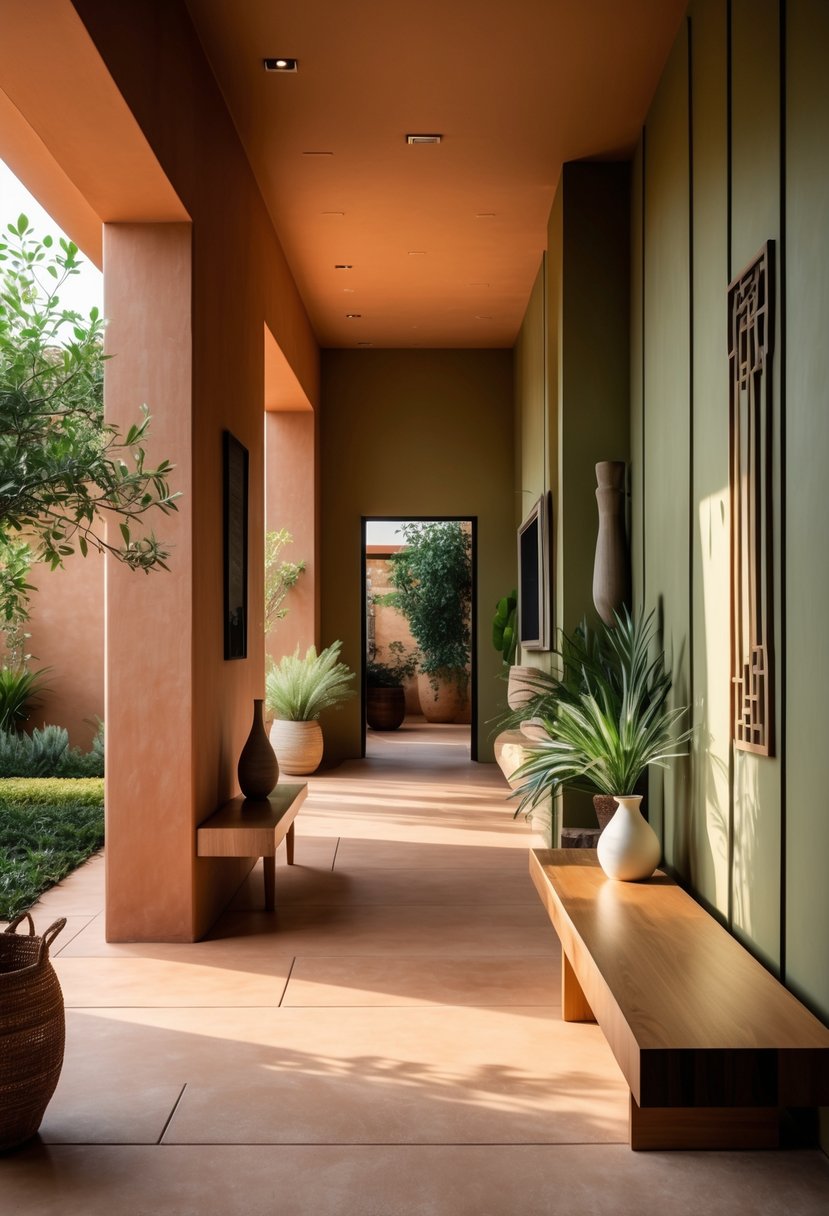
Terracotta and olive create a grounded look that works well in modern hallways. These colors reflect natural elements and bring warmth without feeling heavy.
Terracotta tones add depth, while olive green introduces a calm balance. Together, they pair well with wood, stone, or woven textures for a cohesive design.
Woven natural fiber rugs
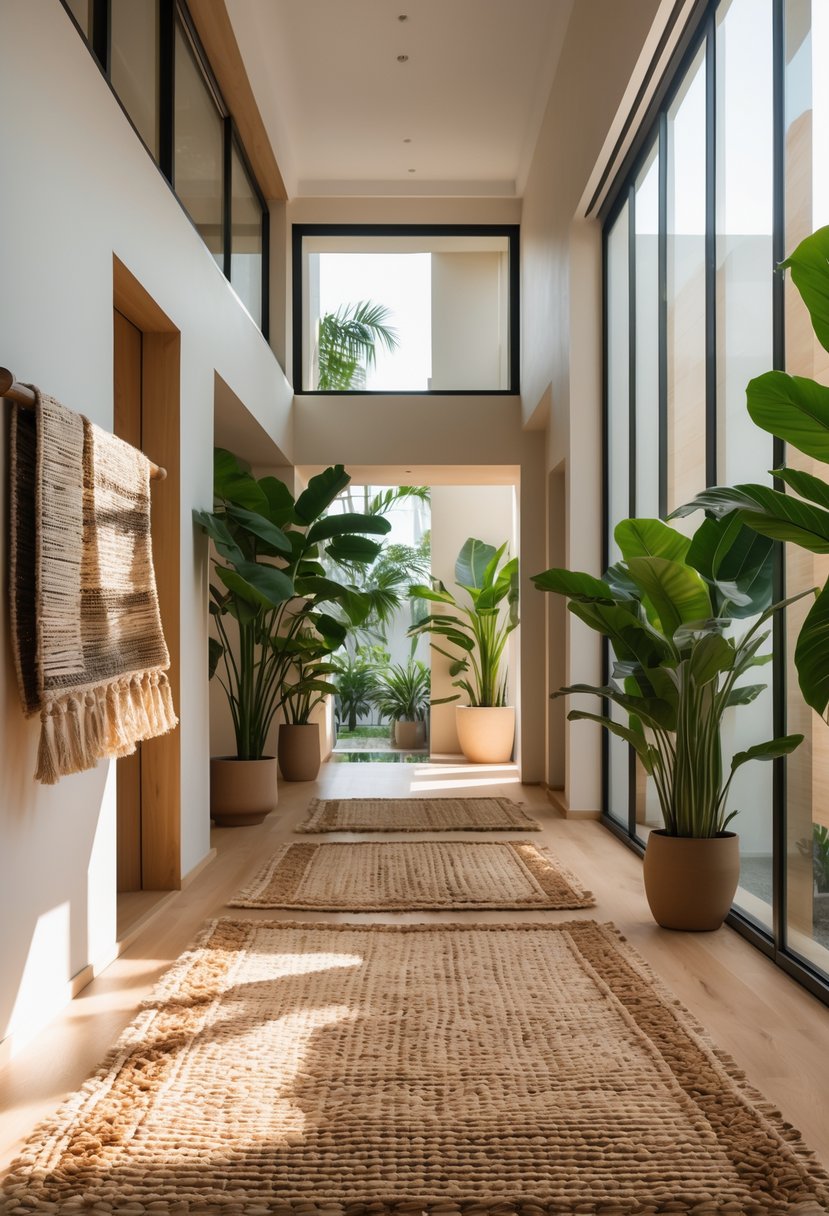
Woven natural fiber rugs use materials like jute, sisal, and seagrass. These fibers create a textured surface that works well in hallways.
They add a natural look while staying durable for areas with frequent foot traffic. Their neutral tones also make them easy to pair with different styles.
Indoor plants to bring greenery inside
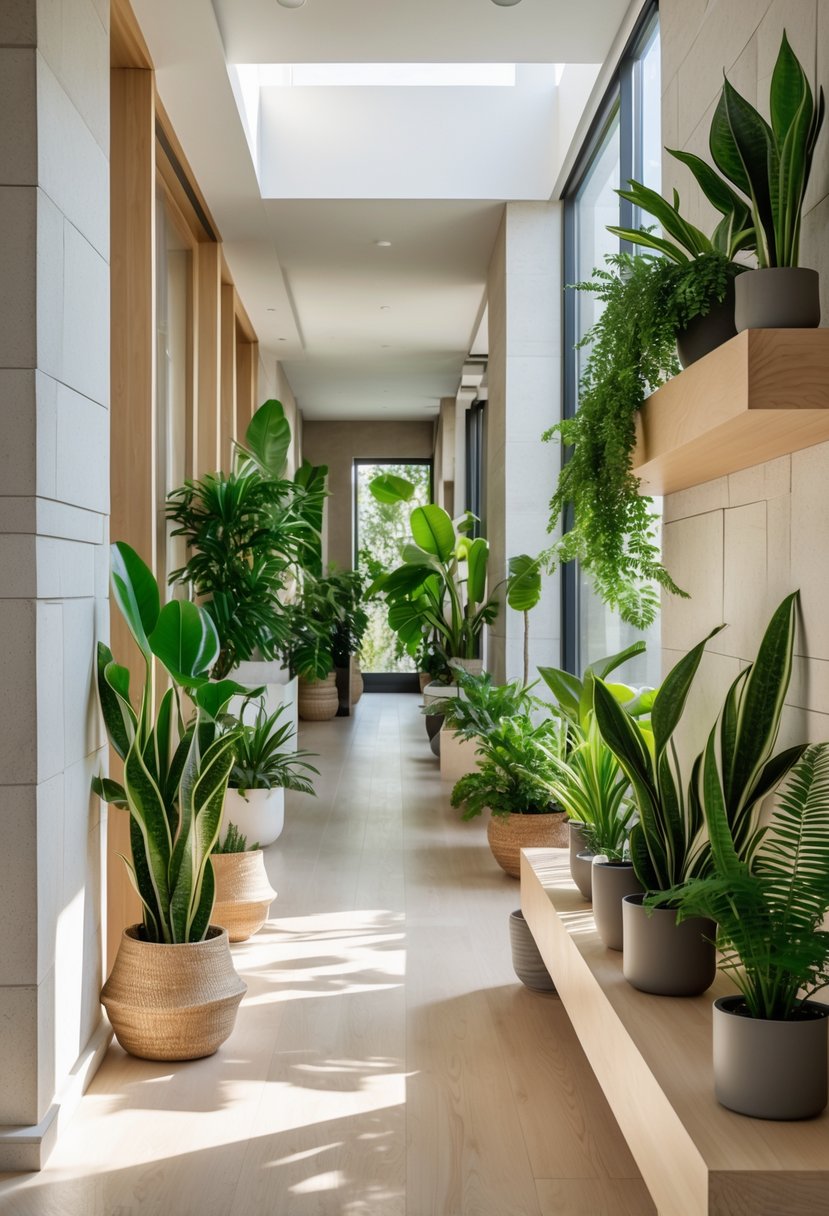
They can place small potted plants on shelves or consoles to add color without taking up much space.
Hanging planters or wall-mounted pots work well in narrow hallways and keep the floor clear.
Larger plants, such as fiddle leaf figs or bamboo, create a simple focal point near the entry.
Organic cotton curtains
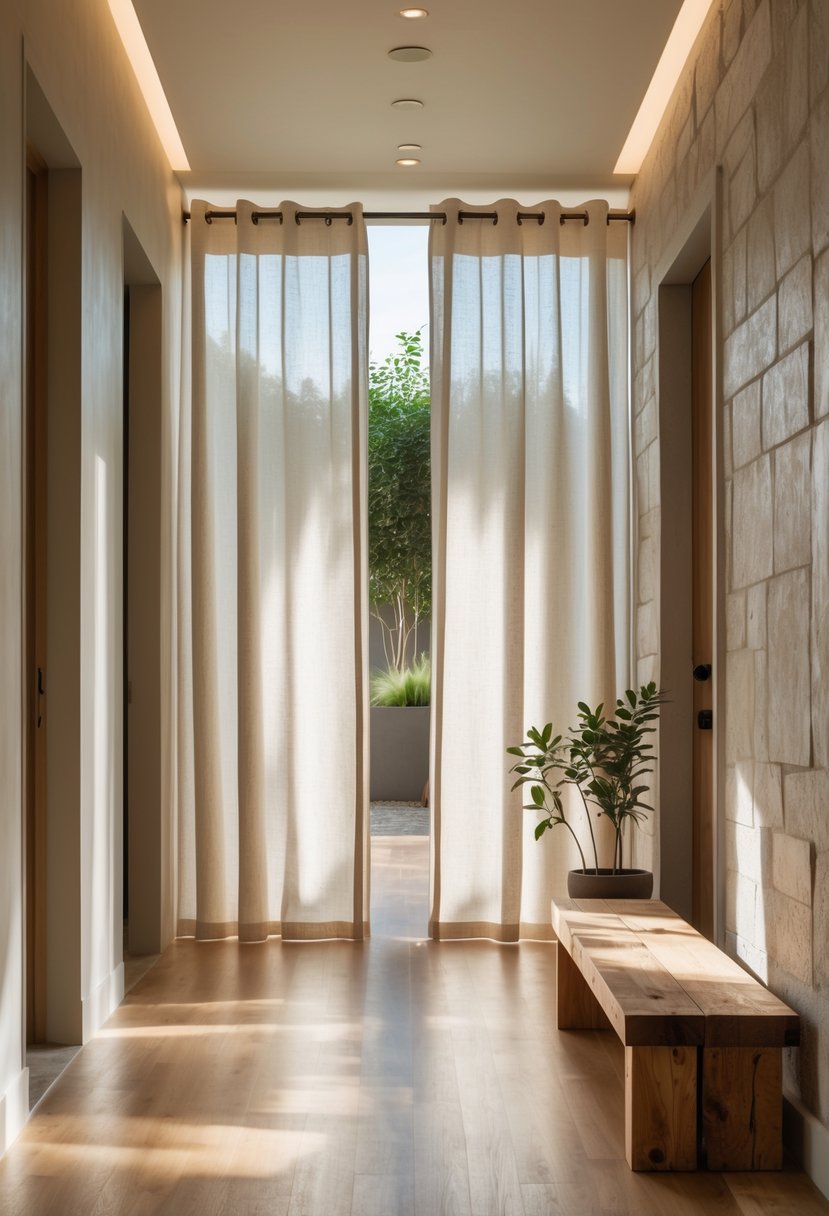
Organic cotton curtains add a natural touch to a hallway while keeping the space free from harsh chemicals.
They come in simple weaves and neutral tones, which pair well with wood, stone, or other natural materials.
These curtains also filter light gently, helping the hallway feel bright without being harsh.
Minimalist wooden benches
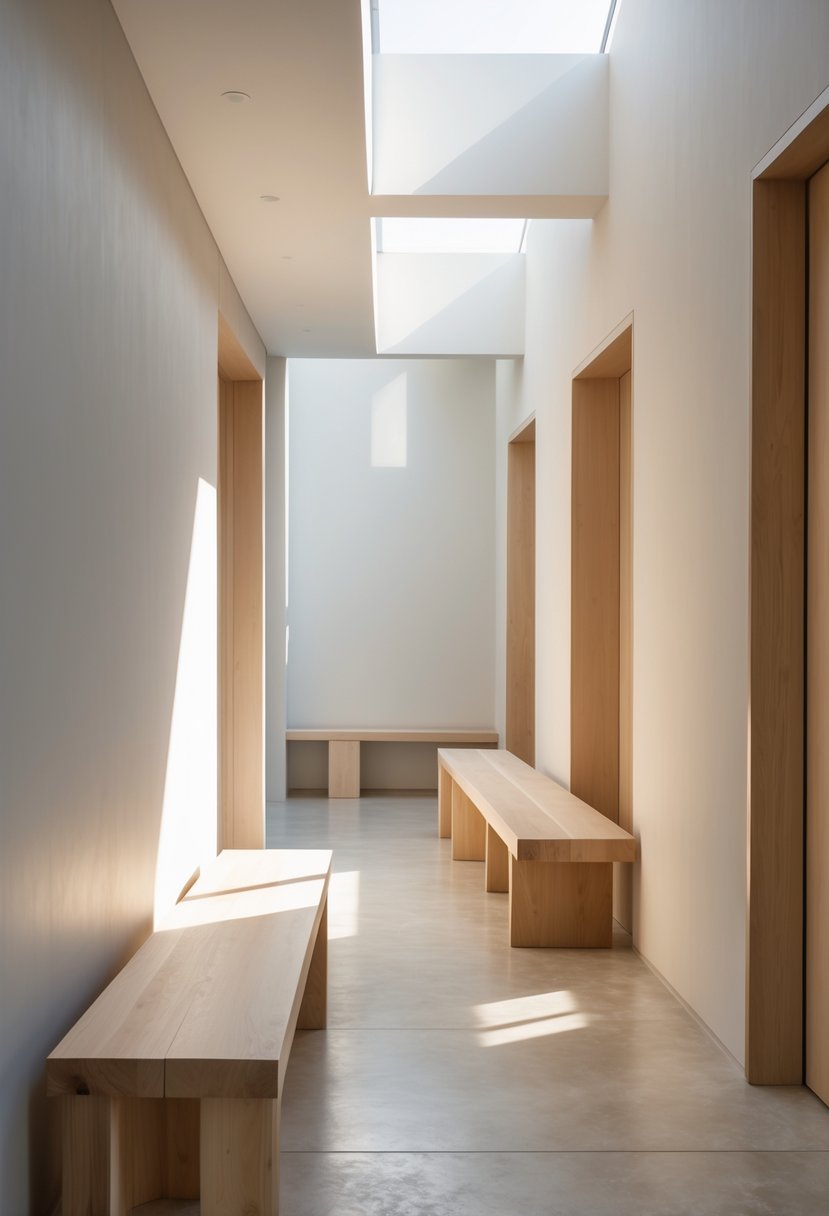
Minimalist wooden benches give hallways a clean and practical look. Their simple lines make them easy to fit into different design styles.
Natural finishes highlight the wood grain and bring warmth to the space. These benches often use oak, birch, or other solid woods for durability.
They work well as seating or as a surface for bags and shoes.
Textured stone planters
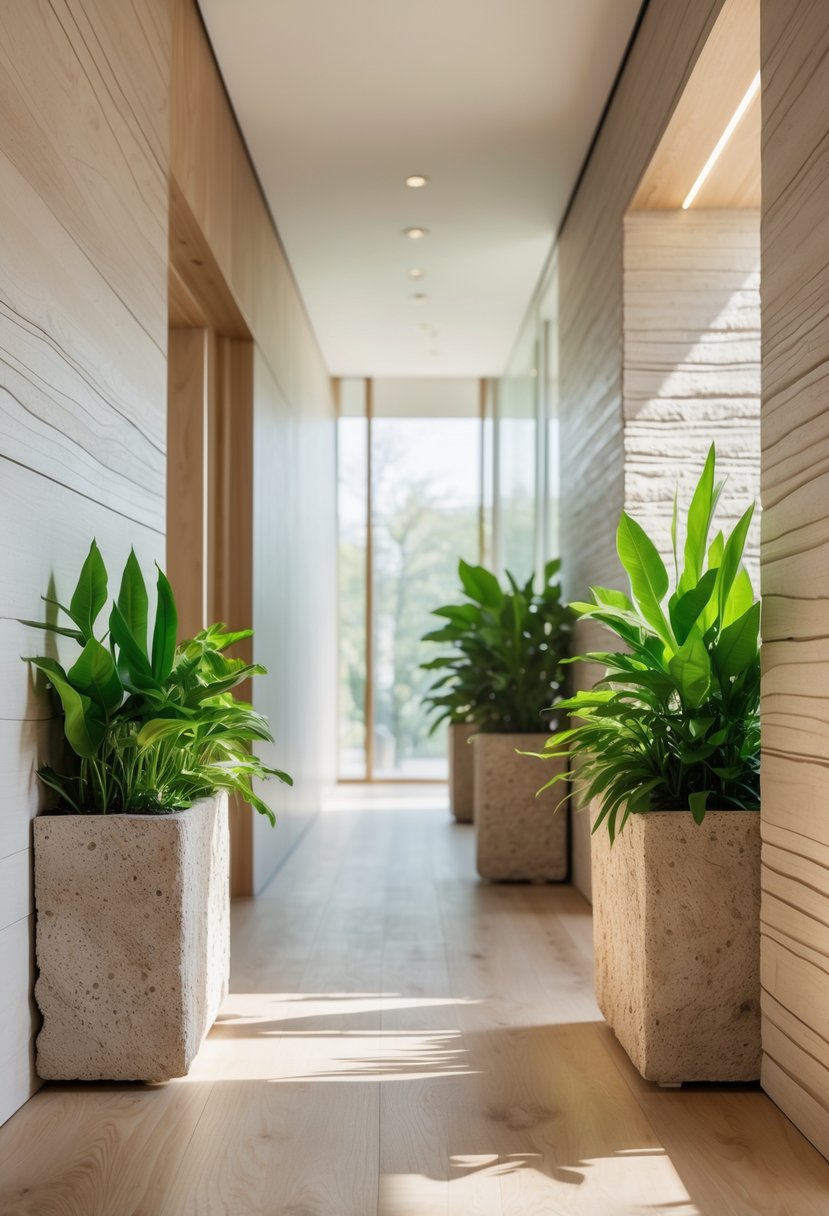
Textured stone planters add natural detail to a hallway. Their rough surfaces contrast with smooth walls and floors, creating balance.
They work well with plants like ferns or succulents, which soften the look. The neutral tones of stone blend easily with wood, metal, or glass elements.
Rustic wooden coat racks
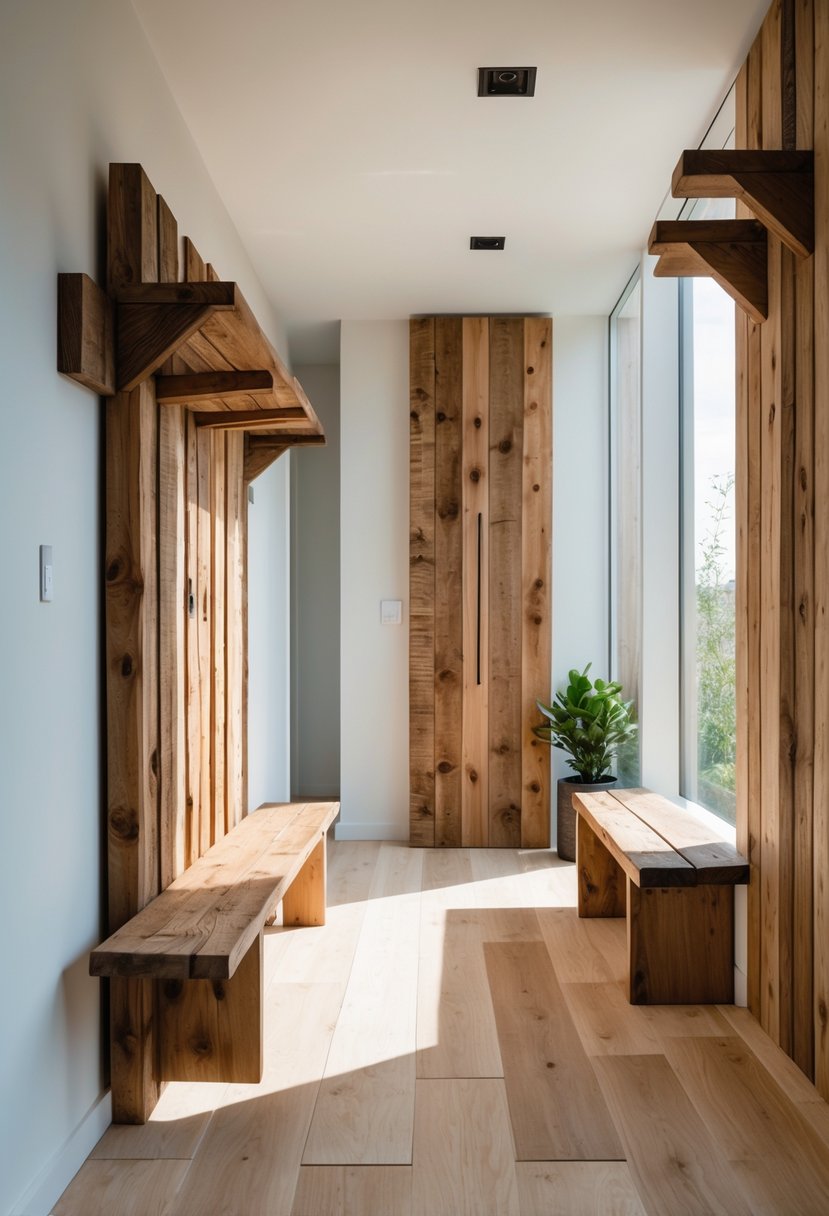
Rustic wooden coat racks use natural wood to bring warmth and texture into a hallway. They fit well with both modern and traditional spaces.
Many designs feature reclaimed wood, which adds character and reduces waste. Wall-mounted and freestanding options provide flexibility for different layouts.
Simple hooks or shelves make them practical for storing coats, hats, and bags.
Handwoven baskets for storage
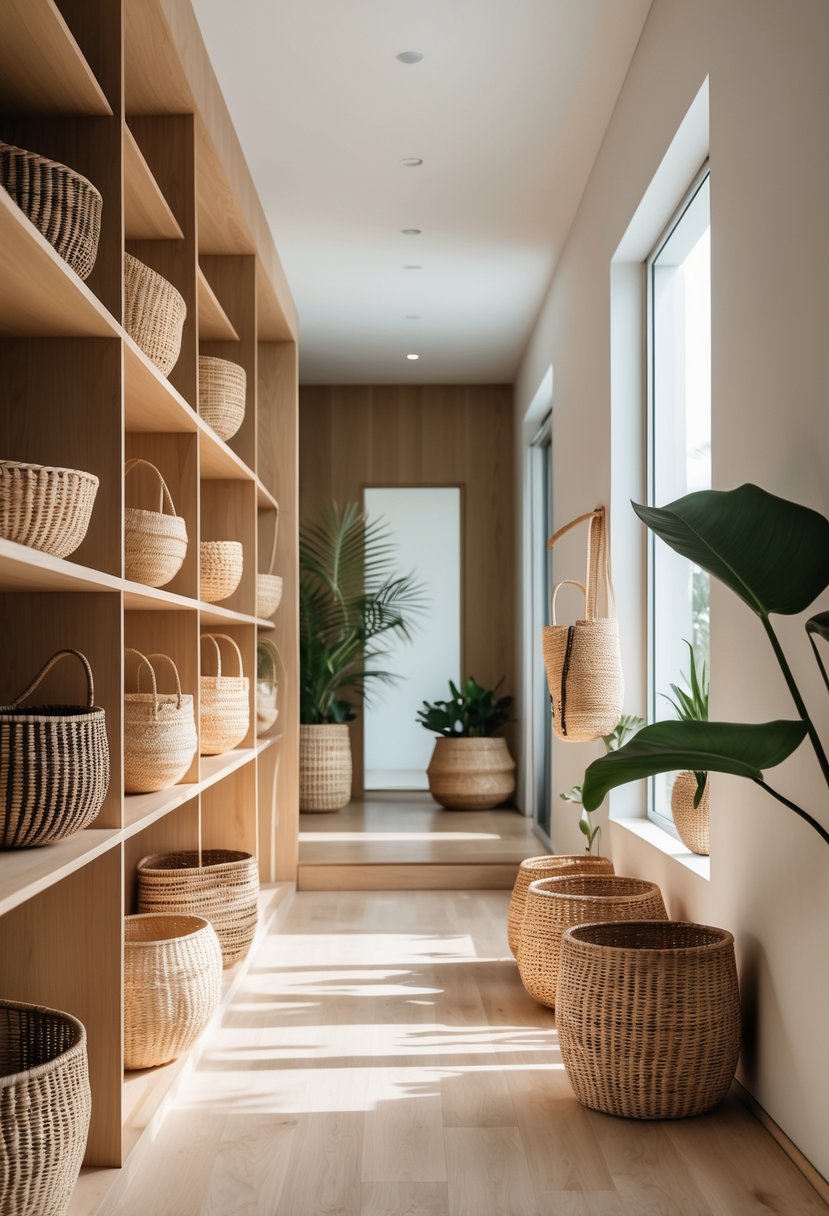
Handwoven baskets add practical storage while keeping a natural look in the hallway. Their neutral tones blend with many design styles.
They work well for holding shoes, mail, or small items that often clutter entry spaces. Using natural fibers also brings warmth and texture to the area.
Natural jute runner rugs
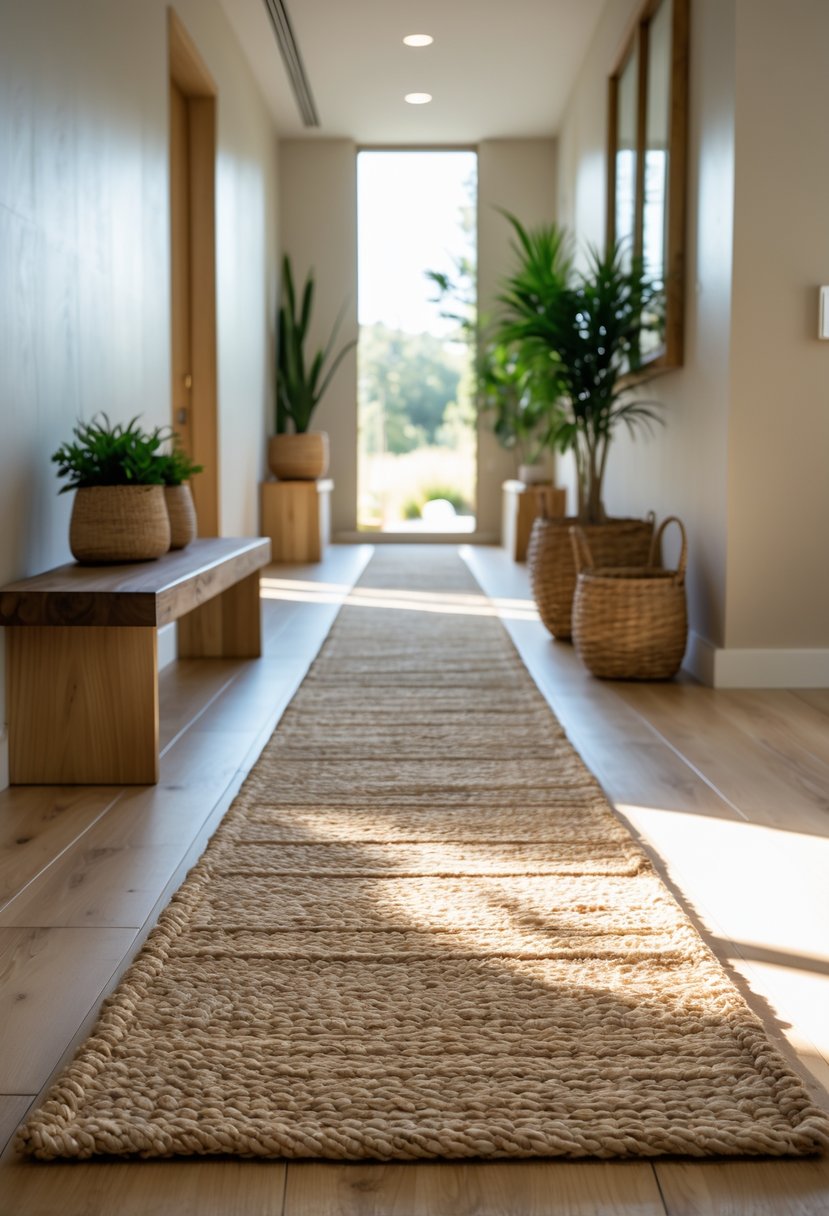
Natural jute runner rugs add texture and warmth to narrow spaces like hallways and entryways. Their neutral tones blend easily with modern and minimalist interiors.
They are handwoven from durable plant fibers, making them practical for high-traffic areas. Many designs feature flat weaves or simple patterns that complement natural materials.
Clay or ceramic decorative pots
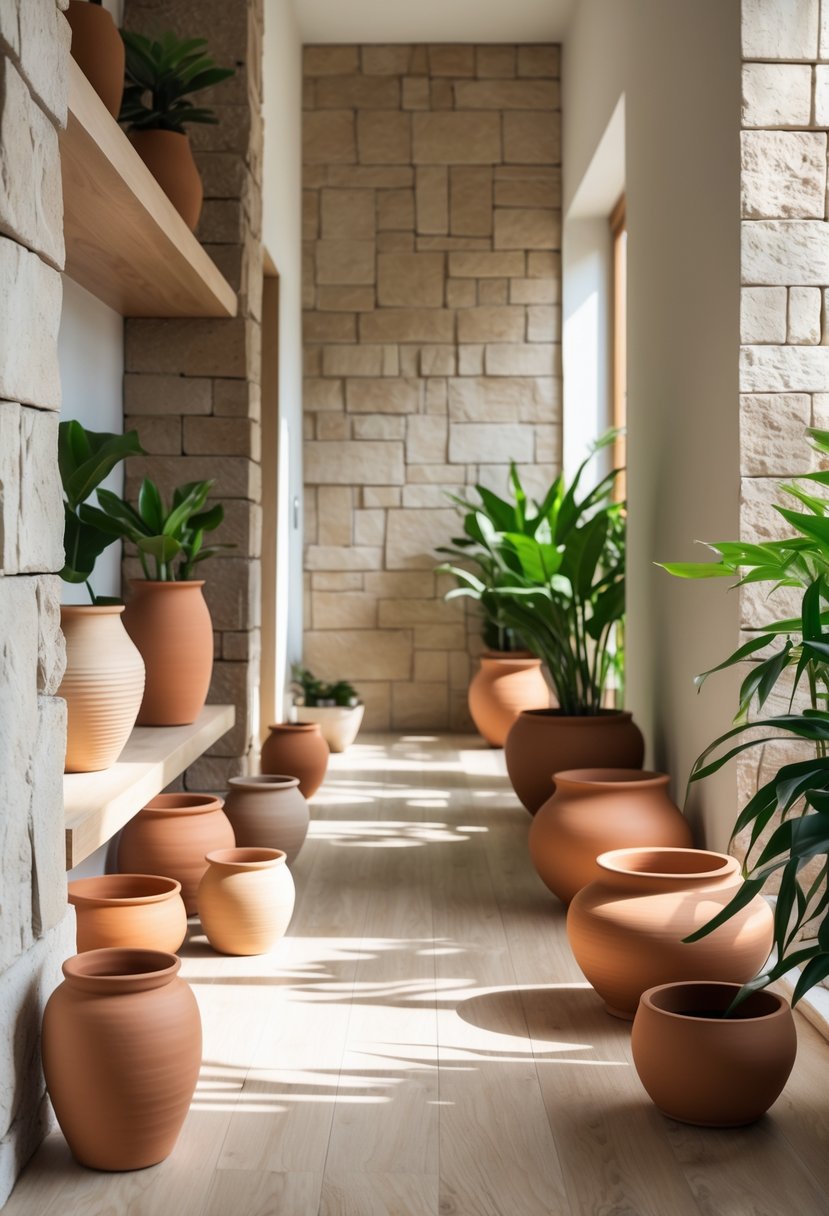
Clay or ceramic pots add texture and warmth to a hallway. Their natural tones blend well with wood, stone, and other organic materials.
They work as planters for greenery or as standalone accents. Simple shapes and matte finishes keep the look modern and uncluttered.
Open shelving made from raw wood
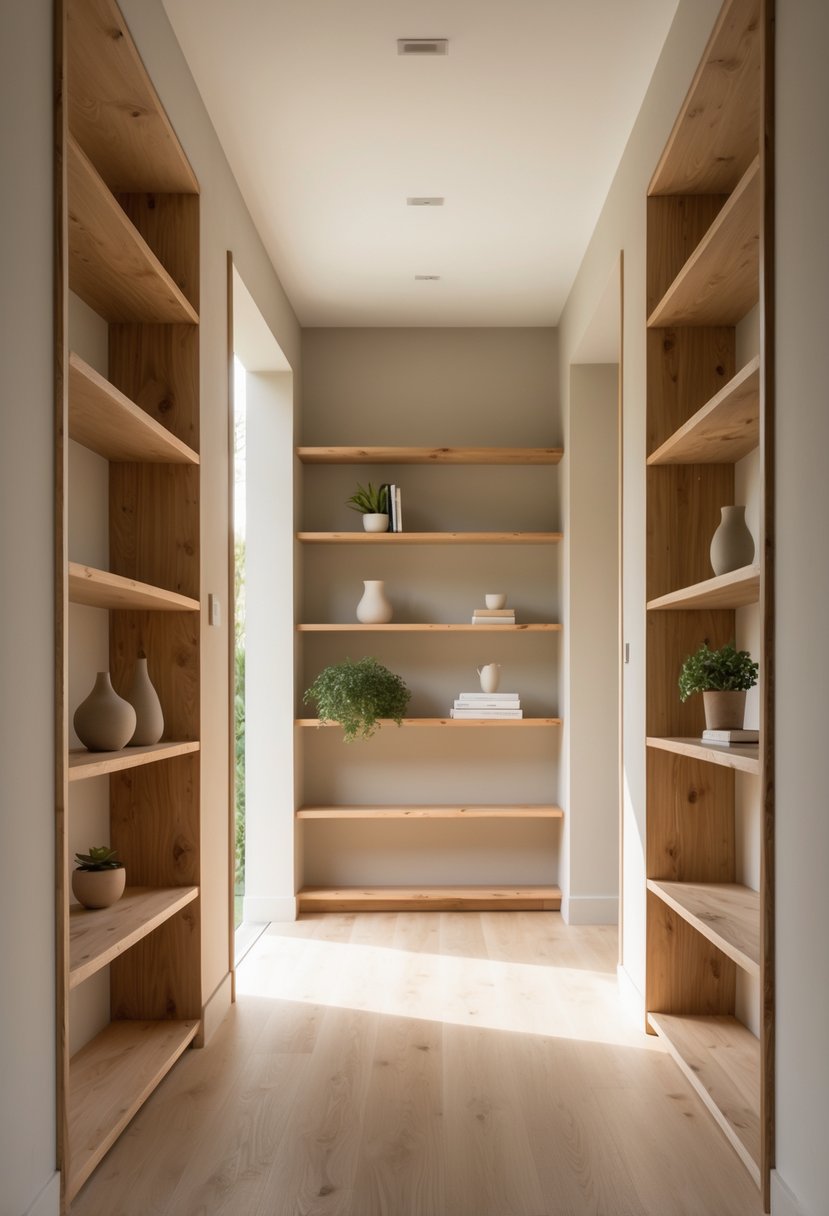
Open shelving made from raw wood adds texture and warmth to a hallway. The natural grain highlights the material’s character without heavy finishes.
These shelves provide simple storage and display space while keeping the design light. They work well with modern styles that favor clean lines and natural details.
Soft linen cushions in neutral tones
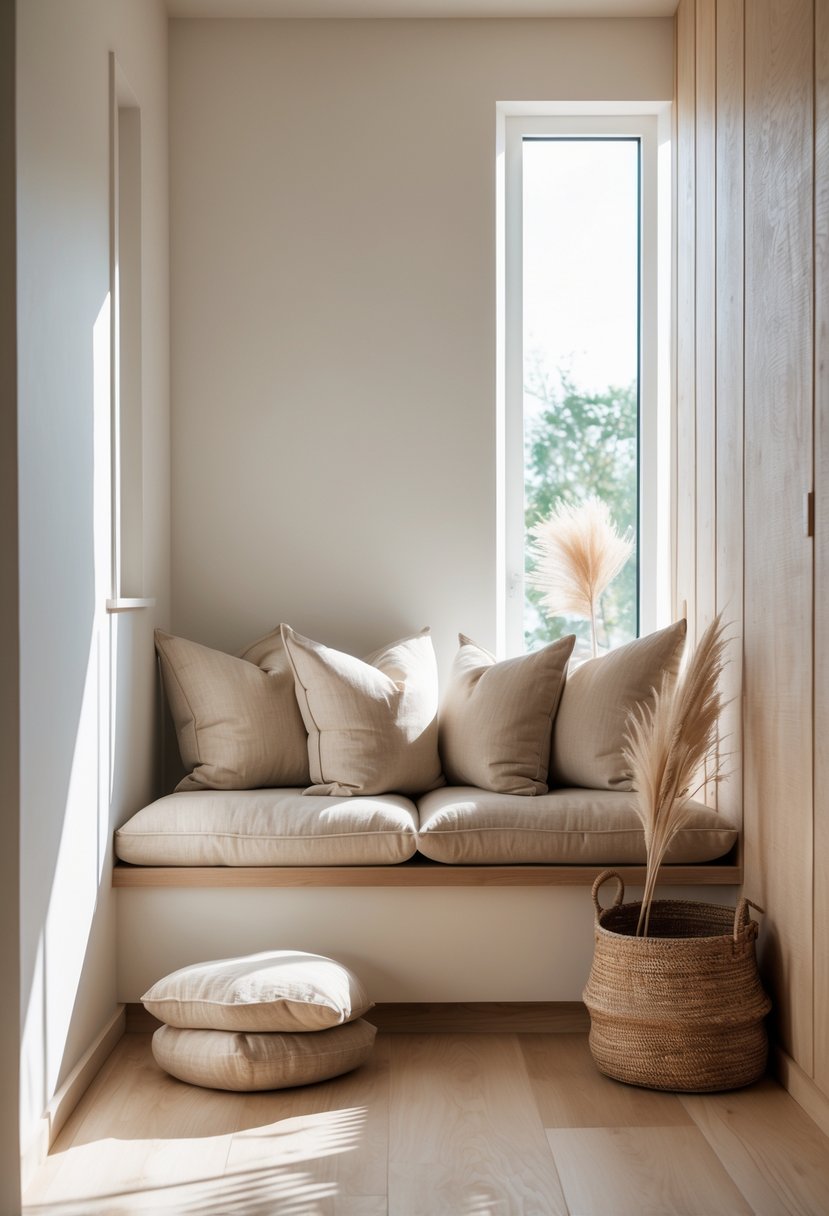
Soft linen cushions in beige, taupe, or gray add comfort without distracting from the natural materials in the hallway.
Their muted colors blend well with wood, stone, or woven accents, creating a balanced look.
The breathable fabric also keeps the space feeling light and inviting.
Cork wall panels for sound absorption
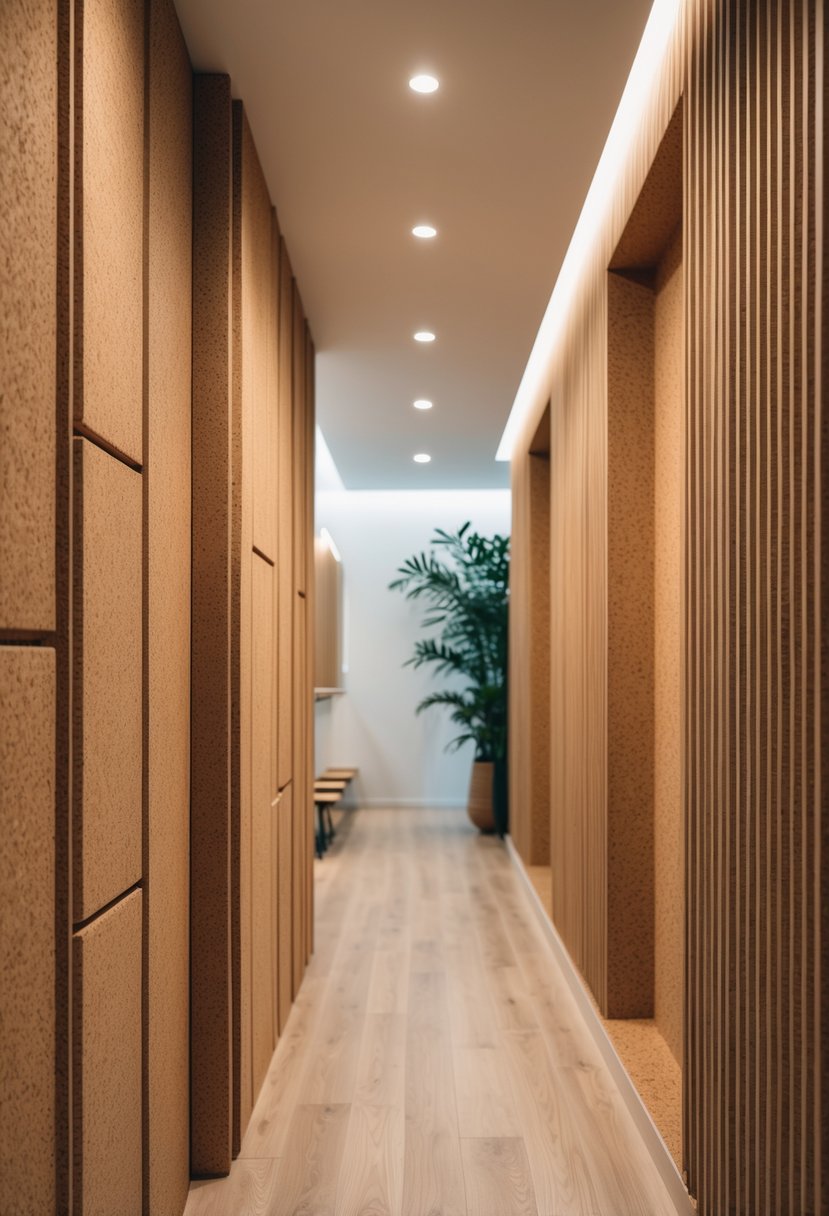
Cork wall panels reduce noise by trapping sound waves in their natural cellular structure. This makes them useful in busy hallways where sound often carries.
They also help limit echoes, creating a calmer and more comfortable atmosphere. Their lightweight design allows easy installation without heavy construction work.
Benefits of Natural Materials in Modern Hallway Design
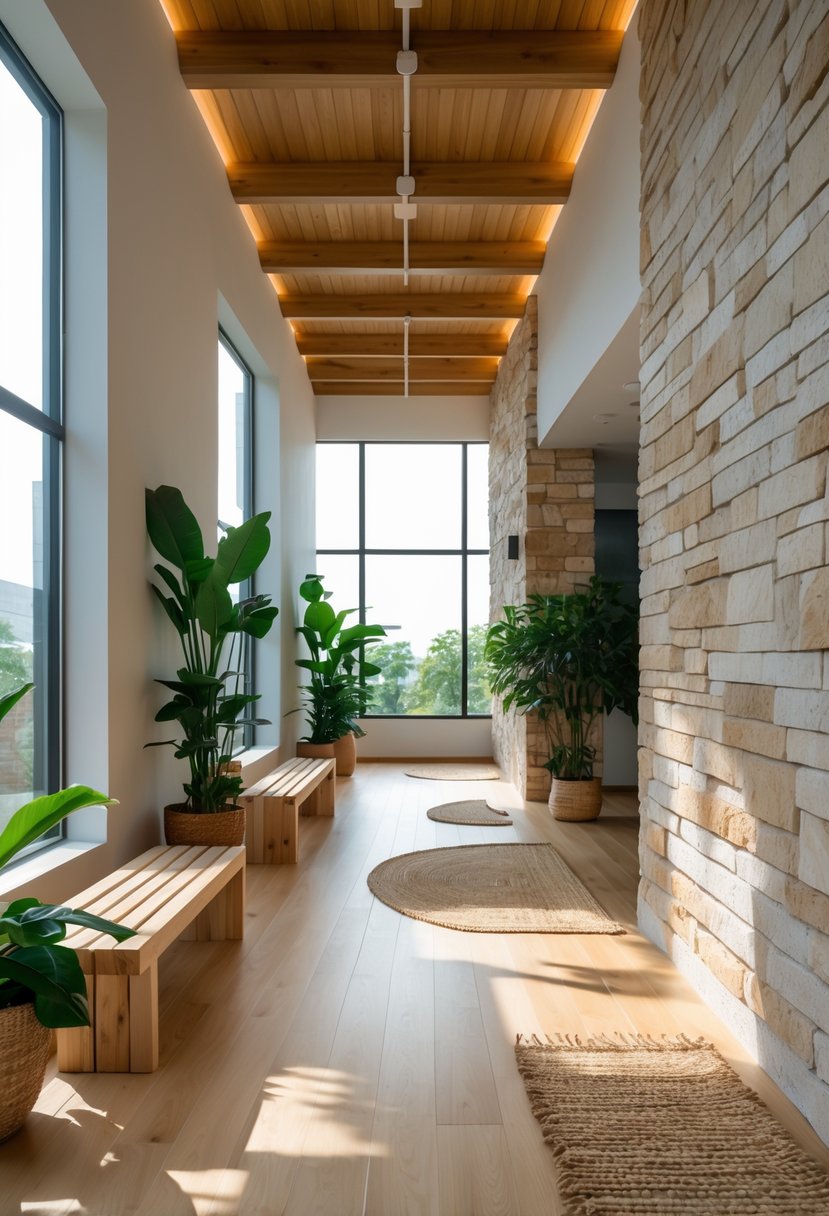
Natural materials in hallways can improve indoor air quality, reduce environmental impact, and make spaces feel more welcoming. Wood, stone, bamboo, and natural fibers not only serve a functional role but also influence the comfort and health of the home.
Enhancing Indoor Air Quality
Natural materials often release fewer harmful chemicals compared to synthetic products. For example, solid wood flooring or bamboo panels avoid the volatile organic compounds (VOCs) found in many manufactured materials. This helps reduce indoor air pollution, which is especially important in narrow spaces like hallways where airflow may be limited.
Stone, clay, and lime-based finishes also support healthier air. These materials are non-toxic and can absorb excess moisture, which helps regulate humidity. By preventing dampness, they reduce the risk of mold growth, a common concern in enclosed passageways.
Adding plants to a hallway design can further improve air quality. Even small potted greenery can filter pollutants and increase oxygen levels. This combination of breathable materials and living elements creates a cleaner and more comfortable environment.
Promoting Sustainability
Using natural materials supports sustainable building practices. Many of these resources, such as bamboo, cork, and reclaimed wood, are renewable and can be harvested with less environmental damage than synthetic alternatives. Choosing these options reduces reliance on plastics and non-renewable composites.
Stone and brick are long-lasting and require little maintenance, which lowers replacement needs over time. This durability reduces waste while offering a cost-effective solution for homeowners who want both style and longevity.
Sourcing materials locally also cuts down on transportation emissions. For example, selecting regional stone or reclaimed timber not only supports local economies but also limits the carbon footprint of the project. These choices make hallways both eco-friendly and practical.
Creating a Warm Ambiance
Natural textures and colors bring warmth to a hallway. Wood surfaces, whether polished or left raw, add visual depth and a sense of comfort. Stone and clay finishes provide tactile variety, while woven fibers like jute or sisal create a soft, grounded feel underfoot.
Light interacts differently with natural materials than with synthetic ones. Sunlight reflecting off wood grains or stone surfaces creates subtle shifts in tone throughout the day, making the space feel more dynamic and inviting.
Even small details, such as a wooden bench, a bamboo runner, or linen wall hangings, can soften an otherwise plain hallway. These elements help transform a transitional space into a welcoming part of the home.
Integrating Natural Materials With Contemporary Aesthetics
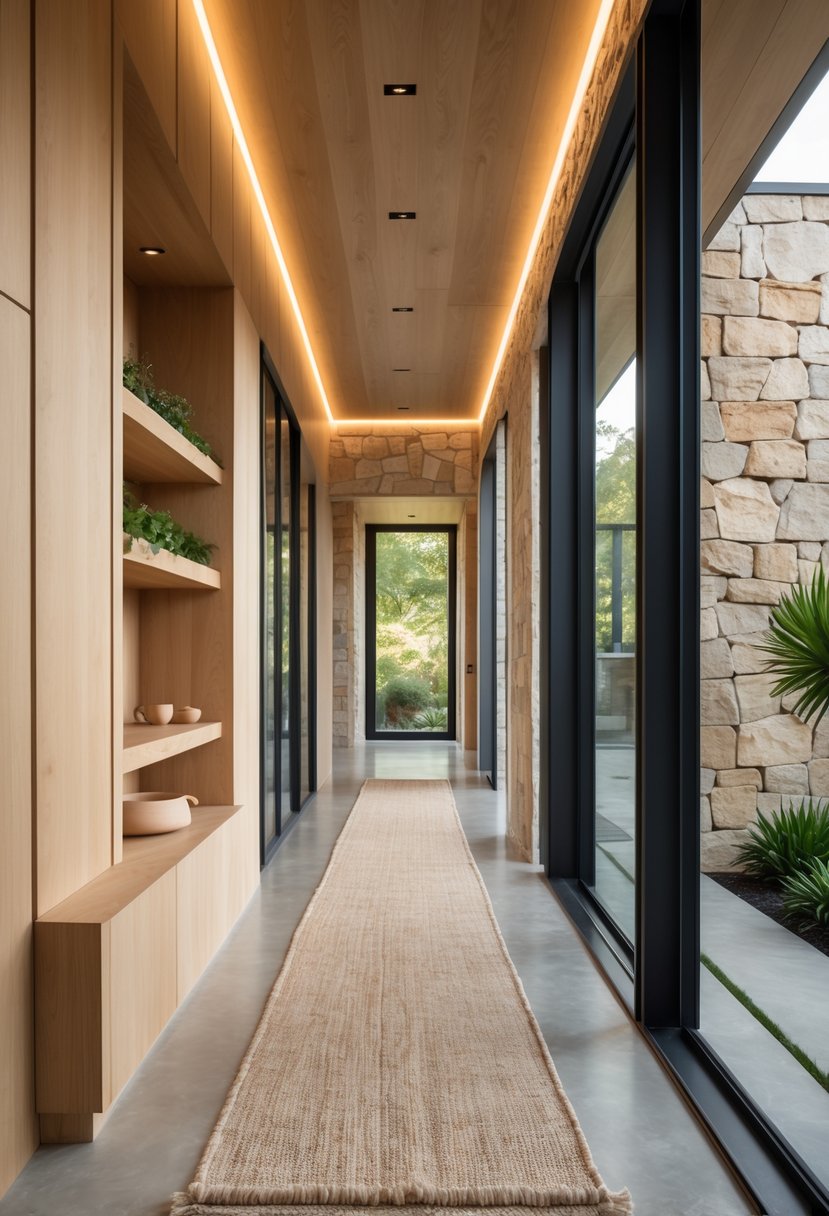
Modern hallway design often relies on clean lines and simple layouts, but natural materials add warmth, depth, and texture. Using wood, stone, and light together creates balance between sleek design and organic character. Color choices also play a role in tying these elements into a cohesive and modern look.
Blending Textures and Finishes
Combining different textures helps a hallway avoid looking flat or sterile. Smooth surfaces like polished stone or glass contrast well with rougher finishes such as raw wood or woven fibers. This balance makes the space feel modern yet inviting.
Layering materials works best when each finish has its own purpose. For example:
- Wood flooring adds warmth.
- Stone accents provide durability.
- Metal details highlight structure.
Using matte and glossy finishes together can also create subtle variation. A matte oak door paired with a glossy marble console gives the hallway a sense of depth without clutter. The key is to keep the number of materials limited so the design feels intentional.
Maximizing Natural Light
Natural light plays a major role in highlighting organic surfaces. Wide doorways, glass panels, or skylights allow sunlight to reflect off stone and wood, showing their natural patterns. This creates a brighter and more open atmosphere.
Mirrors are another tool that help distribute light. A mirror opposite a window not only expands the sense of space but also emphasizes the textures of natural finishes.
When direct sunlight is limited, light-colored materials can help. Pale wood or limestone reflects more light than darker finishes, making narrow hallways feel larger. Combining these with soft LED lighting ensures the space remains balanced throughout the day and evening.
Complementary Color Palettes
Colors influence how natural materials fit into modern design. Neutral tones such as beige, gray, and white allow wood and stone to stand out without overwhelming the space. These shades create a calm backdrop that highlights natural textures.
Accent colors can add interest when used sparingly. A muted green wall or deep navy runner pairs well with wood tones and stone surfaces.
The most effective palettes usually follow a simple structure:
| Base | Accent | Material Highlight |
|---|---|---|
| Light gray | Olive green | Oak flooring |
| Warm beige | Deep blue | Stone wall |
| Soft white | Charcoal | Bamboo paneling |
This approach keeps the hallway cohesive while allowing natural materials to remain the main feature.
Discover more narrow hallway ideas from The Spruce.


