
Surreal Hallway Styling Ideas: 21 Creative Ways to Transform Your Space
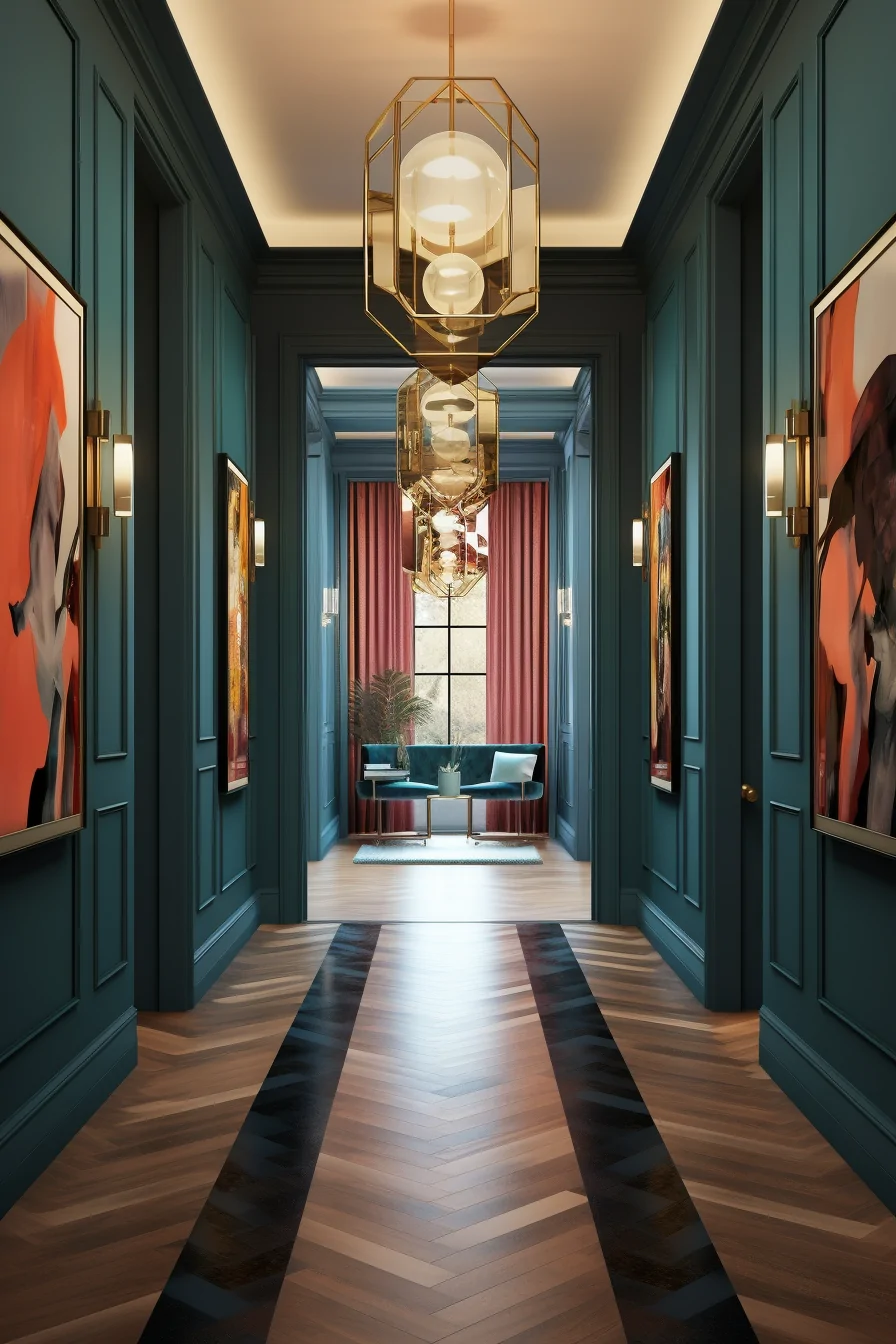
A hallway does not have to stay as a plain passage from one room to another. It can shift into a space that sparks curiosity and sets the tone for the rest of a home. Surreal styling ideas allow a hallway to become more than functional—it becomes an experience.

By blending unusual shapes, bold surfaces, and inventive lighting, a hallway can feel immersive and unexpected. These design choices open the door to creative expression, showing how even the most overlooked part of a home can carry personality and impact.
Wavy Wall Murals for Optical Illusions
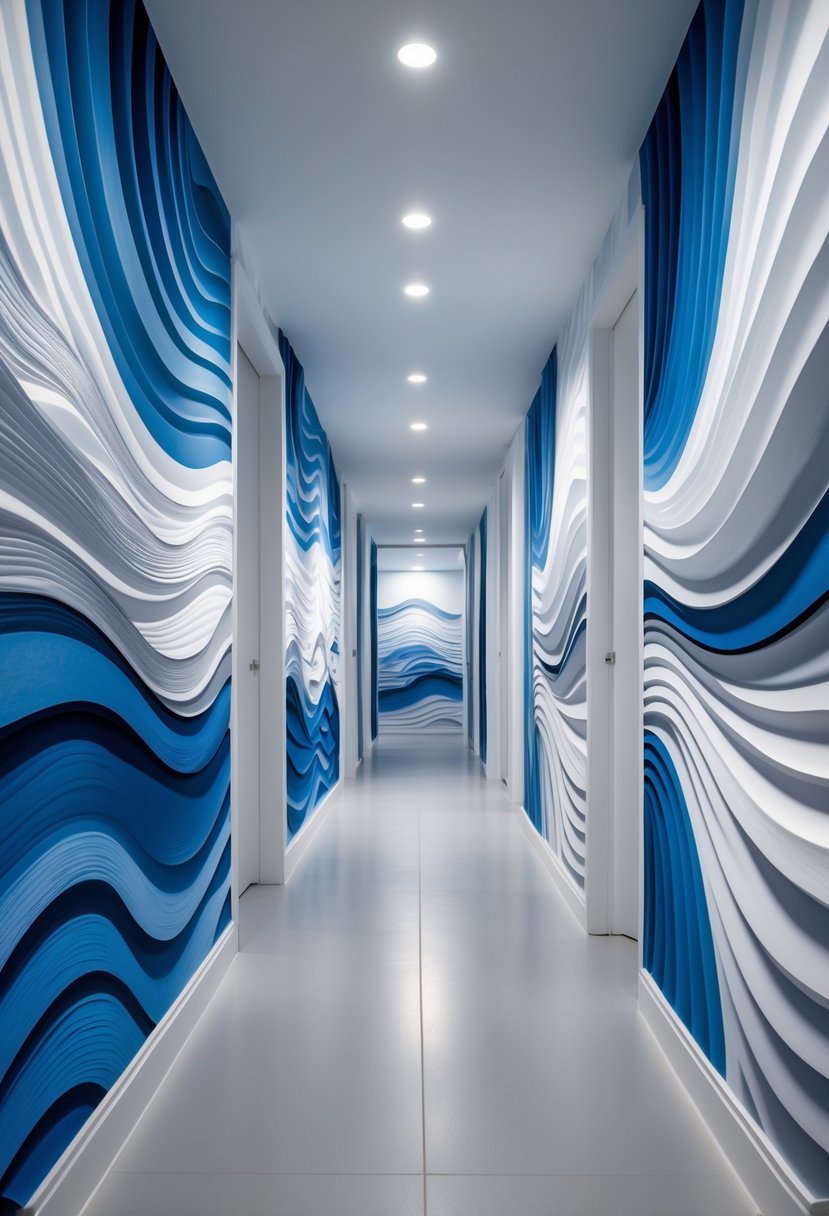
Wavy wall murals create movement across flat surfaces, making hallways feel more dynamic. The flowing lines guide the eye and shift how the space is perceived.
These designs often use curves, gradients, or layered patterns to produce subtle optical illusions. They can make narrow halls appear wider or add depth to plain walls.
Gradient Color Shifts on Walls

They can use gradient color shifts to add depth and movement to a hallway. Smooth transitions between shades create a soft flow that guides the eye forward.
A gradient wall can move from light to dark or from one color family to another. This approach makes the space feel more dynamic without clutter.
Mirrored Ceiling Panels

Mirrored ceiling panels reflect light and make a hallway appear larger. They create a brighter and more open atmosphere without adding extra fixtures.
When placed along the length of the hallway, the panels emphasize clean lines and symmetry. This simple design choice can highlight architectural details and add visual interest.
Floating Staircase with Hidden Supports
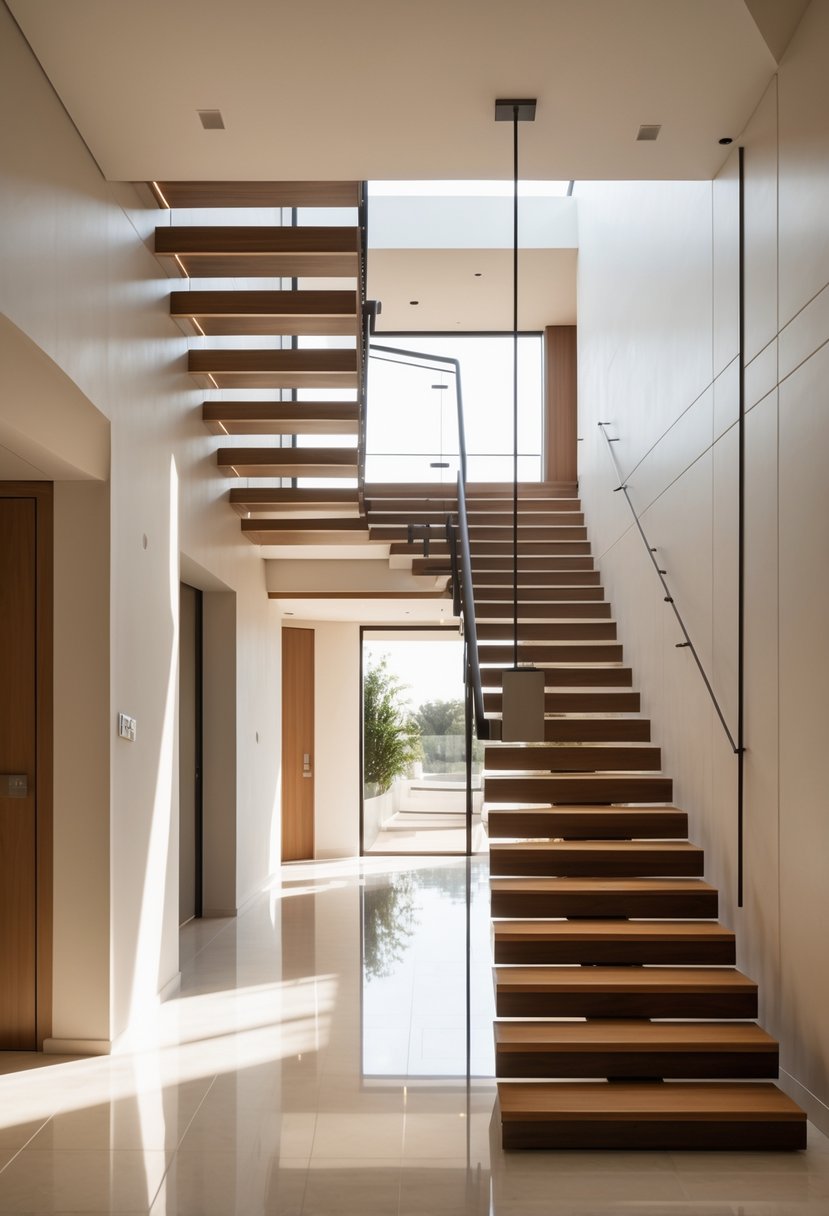
A floating staircase with hidden supports creates a clean, modern look in a hallway. The steps appear to hover, giving the space a light and open feel.
Designers often use steel brackets or concealed frames within the wall to hold each tread. This keeps the structure strong while maintaining a seamless appearance.
3D Geometric Wall Panels

3D geometric wall panels add depth and structure to a hallway. Their raised patterns create a sense of movement and visual interest.
They work well in modern spaces, offering clean lines and bold shapes. Simple lighting highlights the textures and makes the panels stand out.
Surrealist Salvador Dalí-Inspired Dripping Walls

Dripping wall designs take cues from Salvador Dalí’s surrealist style, where forms appear to melt and shift. These effects add movement and depth to a hallway.
Soft curves, fluid paint finishes, or textured wall panels can create this look. The result makes the space feel imaginative without overwhelming its function.
Curved Corridor Designs

Curved corridors soften the flow of a hallway and create a natural sense of movement. They break away from rigid, straight lines and introduce a subtle architectural detail.
Designers often use curved walls with smooth finishes or gentle lighting to highlight the shape. This approach adds interest without overwhelming the space.
LED Strip Lighting with Color Transitions
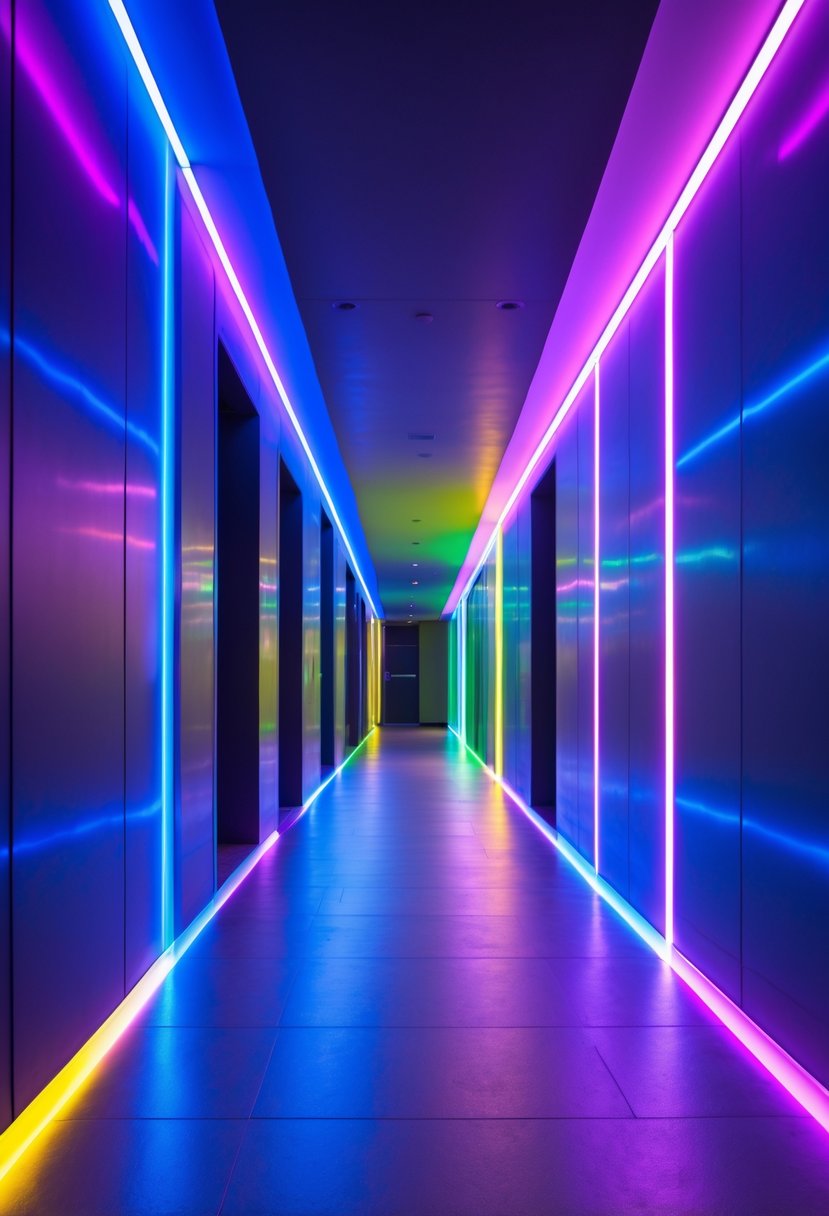
LED strip lights with color transitions add depth and variation to a hallway. They shift smoothly between shades, creating a subtle sense of movement.
When placed along walls, ceilings, or baseboards, the changing colors highlight the hallway’s shape. This approach works well in both narrow and wide spaces.
Oversized Abstract Art Installations

Oversized abstract art can change the scale of a hallway and make it feel more intentional. Large pieces draw attention and create a clear focal point.
They work well in narrow spaces by adding depth and dimension without clutter. Placement and color choice guide how the hallway feels and flows.
Translucent Floor Panels with Embedded Objects

Translucent floor panels can create a striking visual effect by allowing light to pass through while revealing objects inside.
Designers often embed natural materials like stones, shells, or leaves to add texture and depth.
When lit from below, these panels highlight the embedded objects and give the hallway a subtle, layered appearance.
Suspended Sculptural Light Fixtures
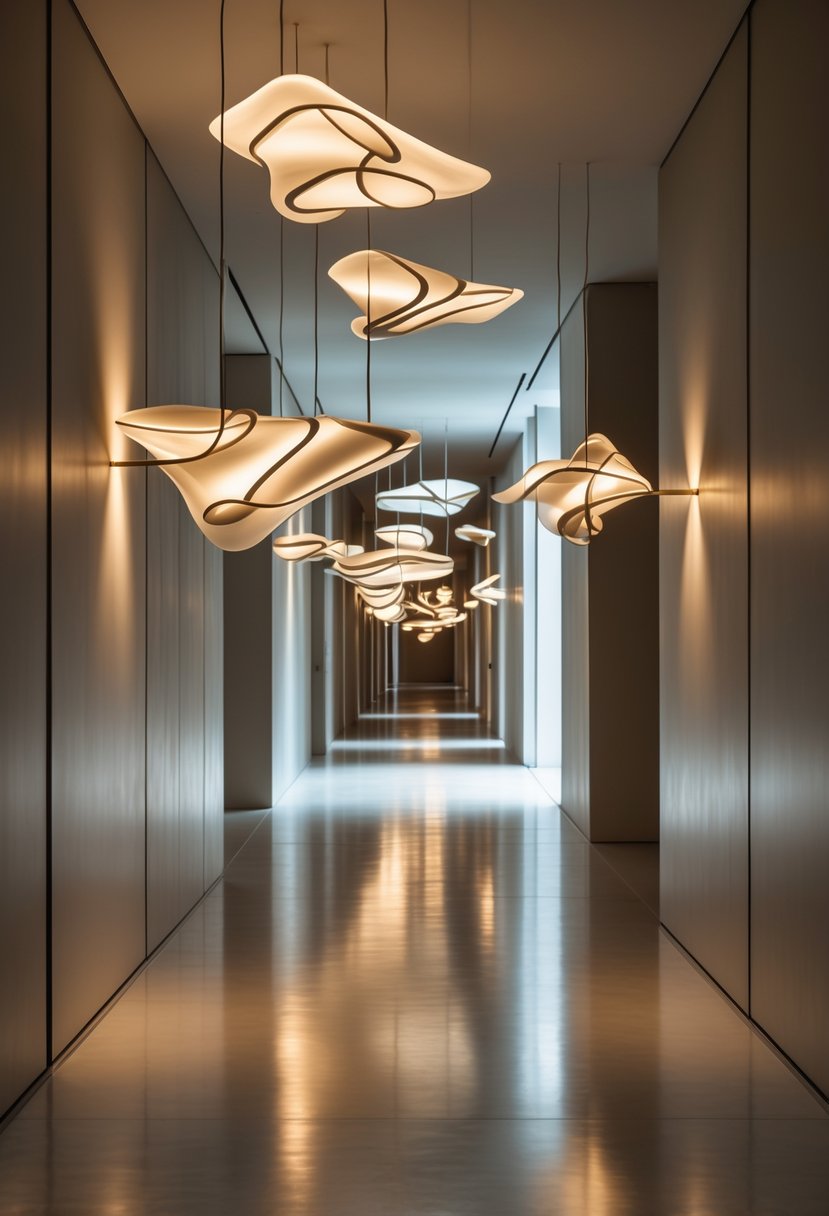
Suspended sculptural light fixtures add form and function to a hallway. They hang as focal points while providing balanced illumination.
Designers often choose pendant or chandelier styles that double as artwork. Shapes, materials, and finishes vary, allowing the fixture to complement both modern and classic interiors.
Distorted Perspective Floor Patterns
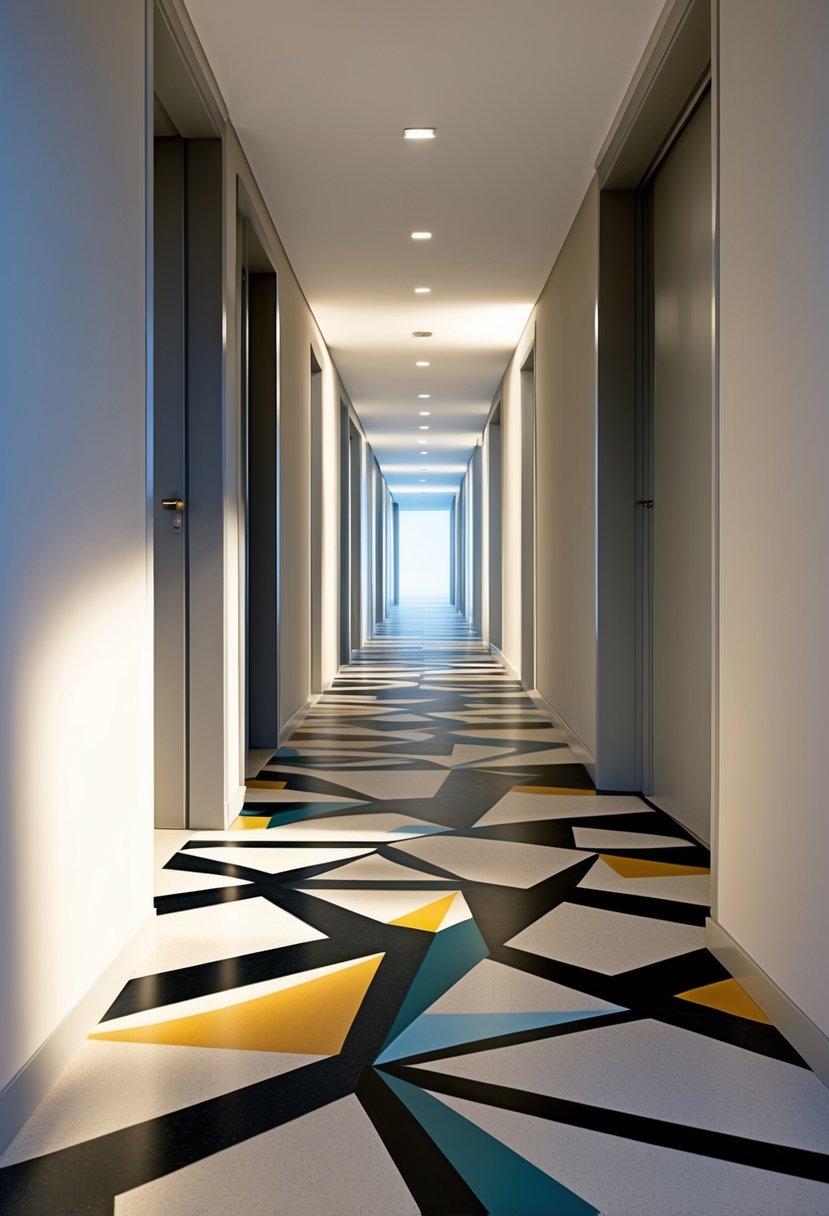
Distorted floor patterns can make a hallway appear longer, wider, or even tilted.
Designs like warped checkerboards or angled stripes create a sense of movement underfoot.
These patterns work well in narrow spaces, where visual tricks help break up uniform lines and add interest.
Invisible Doorways with Hidden Handles
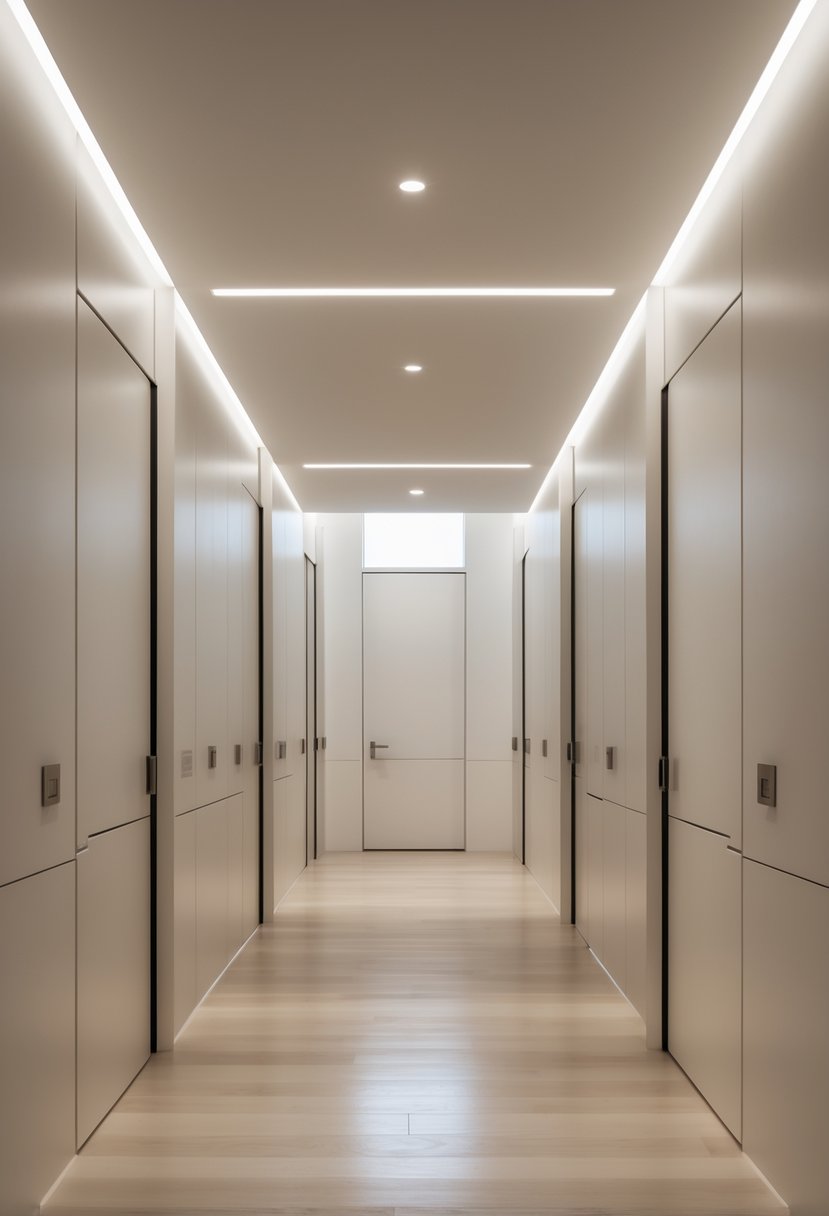
Invisible doorways with hidden handles create a smooth, uninterrupted wall surface. They blend into the hallway design and reduce visual clutter.
Handleless systems often use push-to-open mechanisms or concealed hardware. This makes the doorway functional while keeping the appearance minimal.
These designs work well in modern spaces where clean lines and subtle details matter.
Holographic Wall Projections

Holographic wall projections add depth and movement to a hallway without taking up physical space.
They can display shifting patterns, abstract shapes, or subtle light effects that change as someone walks by.
This approach creates a modern, surreal atmosphere while keeping the hallway uncluttered and functional.
Reflective Metallic Wall Finishes
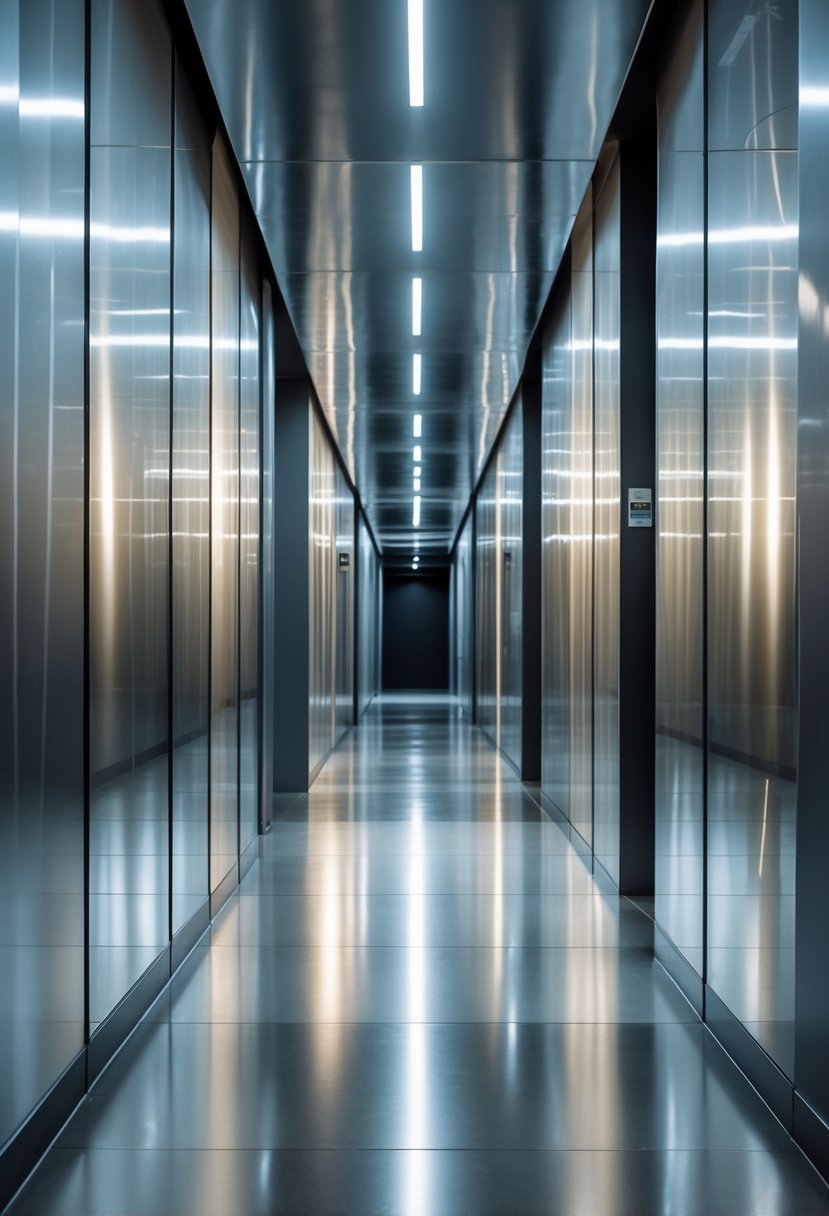
Metallic wall finishes add light and depth to a hallway. Their reflective surfaces can make narrow spaces feel more open.
Gold, silver, or bronze tones work well with both modern and traditional styles. Subtle metallic accents on trim or panels create interest without overwhelming the space.
Asymmetrical Archways
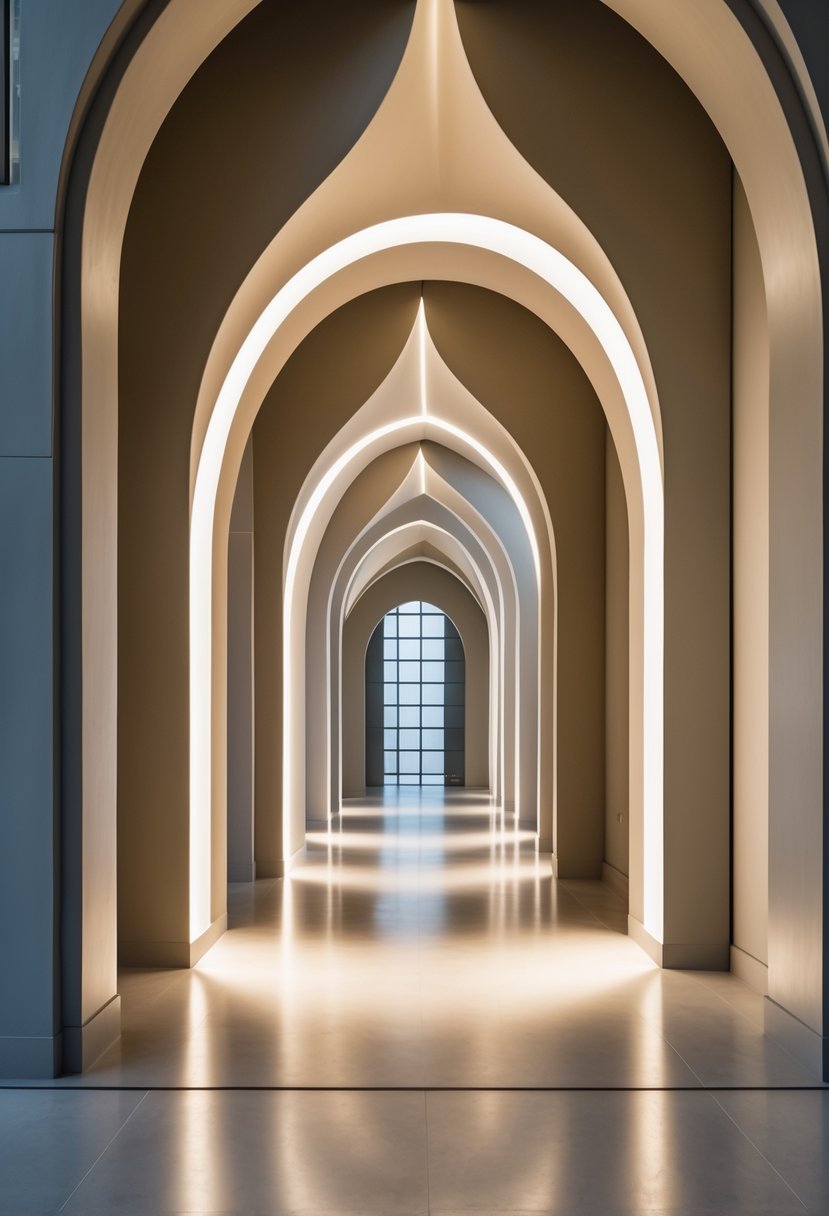
Asymmetrical archways add visual interest by breaking away from uniform shapes. They guide movement through a hallway while keeping the design unexpected.
Designers often use uneven curves or angled frames to create balance without symmetry. This approach makes the space feel dynamic and modern.
These archways work well in both small and large halls, offering subtle variety without overwhelming the space.
Furniture with Fluid, Organic Shapes

Furniture with curved and flowing lines softens the look of a hallway. These shapes echo natural forms and create a calm, balanced atmosphere.
Chairs, benches, or tables with rounded edges work well in narrow spaces. Their smooth design reduces visual clutter and makes the hallway feel more open.
Black and White Checkerboard Floors with Warped Tiles
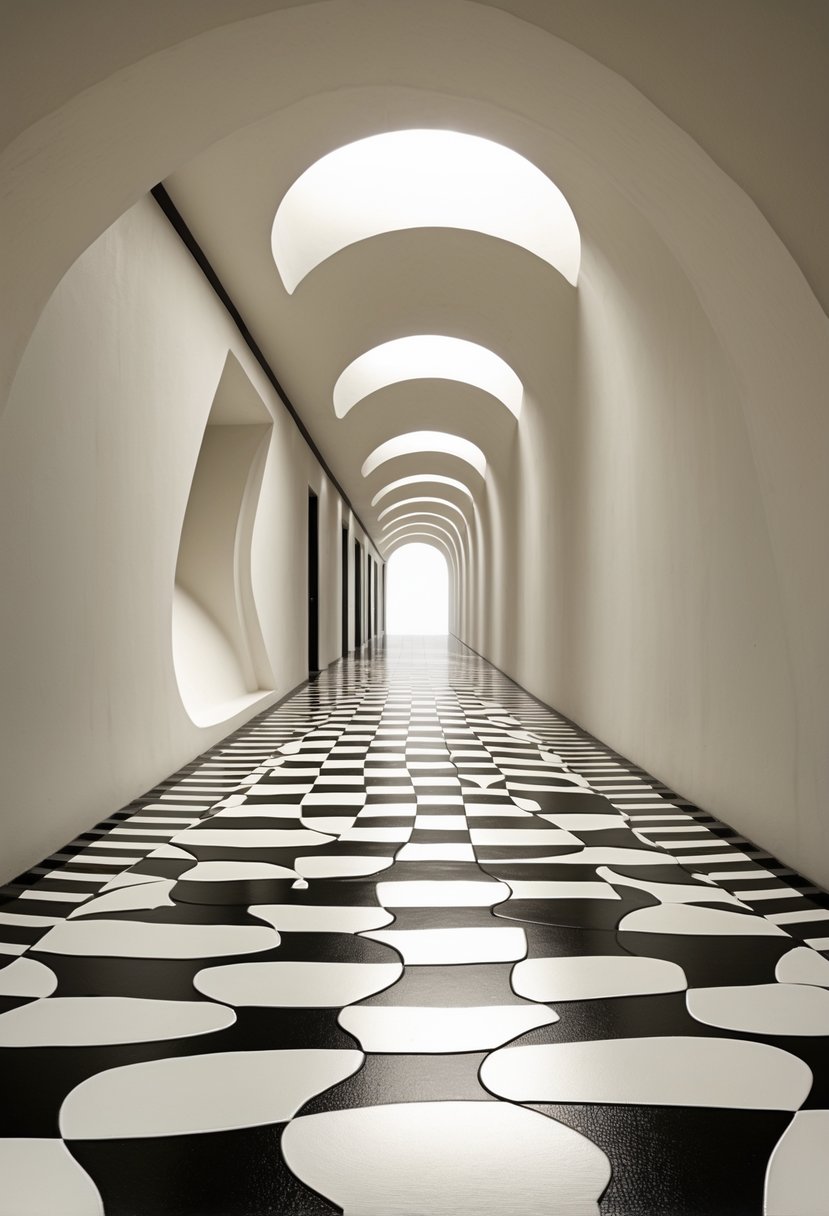
A classic checkerboard floor can shift into a surreal look when tiles appear slightly bent or stretched.
This effect changes straight lines into curves, making the hallway feel less rigid and more dreamlike.
The warped pattern keeps the black and white contrast but adds movement that alters how people experience the space.
Soft, Glowing Neon Signs
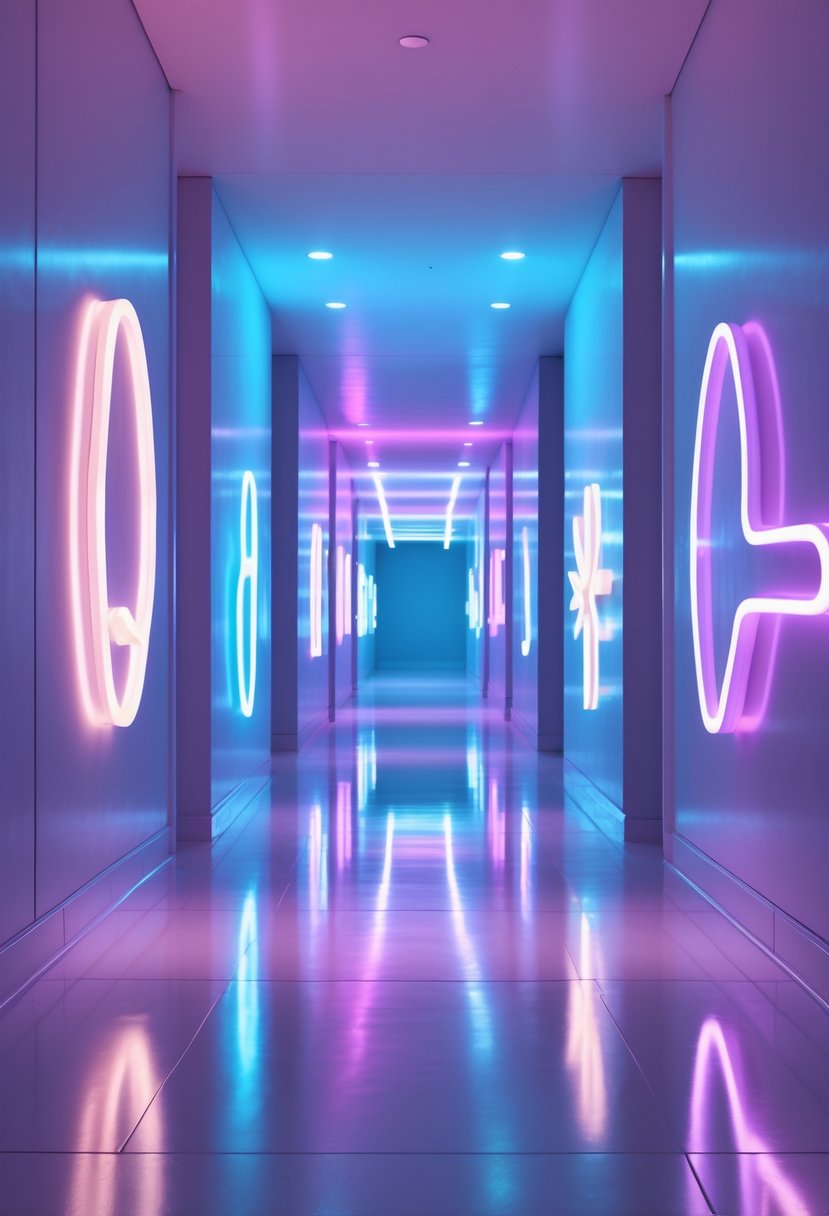
Soft neon signs add gentle light that guides movement through a hallway.
They create a calm atmosphere without overwhelming the space.
Placed along walls or above doorways, they highlight key areas while keeping the design subtle.
Oversized Plant Installations in Unexpected Shapes

They can place oversized plants in hallways to create striking focal points. Large leaves or sculptural branches add form and texture without needing extra decoration.
Unusual shapes, like twisted trunks or broad fan-like foliage, introduce variety. These installations work best when spaced to avoid crowding and maintain clear movement.
Floating Furniture Illusions
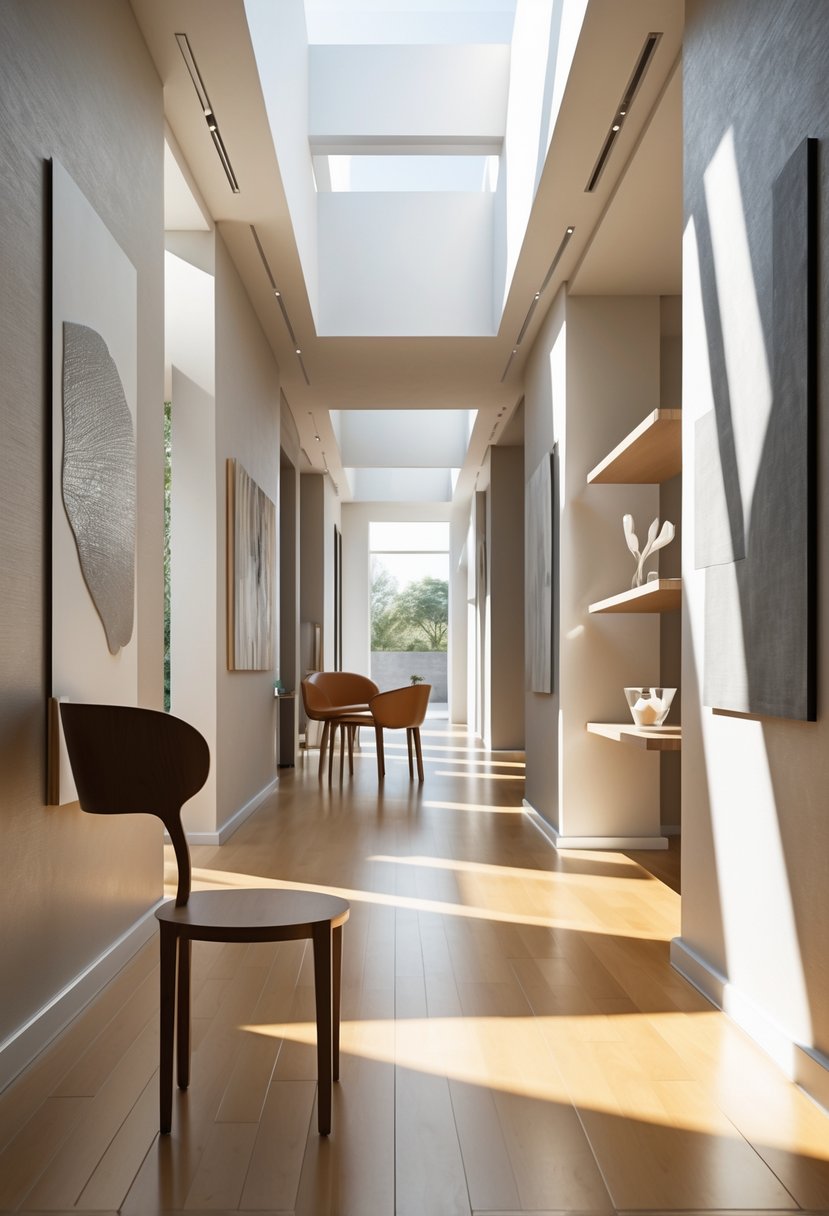
Floating furniture creates the look of weightlessness in a hallway. Wall-mounted shelves, benches, or cabinets keep the floor clear and make the space feel more open.
Lighting under or around these pieces enhances the effect. The glow highlights clean lines and adds a subtle surreal quality without overwhelming the design.
Key Design Principles for Surreal Hallways

Surreal hallways rely on a mix of imaginative design and practical choices. They use playful visual elements while still keeping the space comfortable, safe, and easy to move through.
Balancing Whimsy and Functionality
A surreal hallway should spark curiosity without making the space difficult to use. Bright colors, unusual wall textures, or sculptural furniture can create a striking effect, but each choice must allow for clear walking paths and proper lighting.
Furniture placement matters. A narrow hallway benefits from slim benches or floating shelves instead of bulky pieces. This keeps the hallway functional while still leaving room for creative design features.
Lighting also plays a central role. Soft LED strips, recessed spotlights, or color-changing bulbs can highlight artwork or textured walls. At the same time, they must provide enough brightness for safe navigation.
A simple way to balance whimsy and practicality is to pair one bold design element with neutral surroundings. For example:
| Bold Element | Neutral Counterpart |
|---|---|
| Wavy wall mural | Plain flooring |
| Sculptural light fixture | Minimalist ceiling |
| Gradient paint | Simple trim |
This approach ensures the hallway feels imaginative but never overwhelming.
Incorporating Optical Illusions
Optical illusions can make a hallway feel longer, wider, or more dynamic. Designers often use gradient paint, mirrored panels, or patterned flooring to create depth and movement. These illusions add intrigue without requiring major structural changes.
Mirrors are especially effective. A mirrored wall can double the sense of space, while angled panels can create shifting reflections as people walk by. Careful placement prevents confusion or disorientation.
Flooring patterns also change perception. Stripes running lengthwise can stretch a short hallway, while geometric tiles can create a sense of rhythm. These effects work best when paired with simple wall colors to avoid visual clutter.
Lighting enhances illusions further. Spotlights directed at textured walls or recessed lights that fade into shadows can create the impression of shifting surfaces. Used carefully, these details turn a plain passage into an engaging visual experience.
Materials and Color Palettes for a Surreal Aesthetic
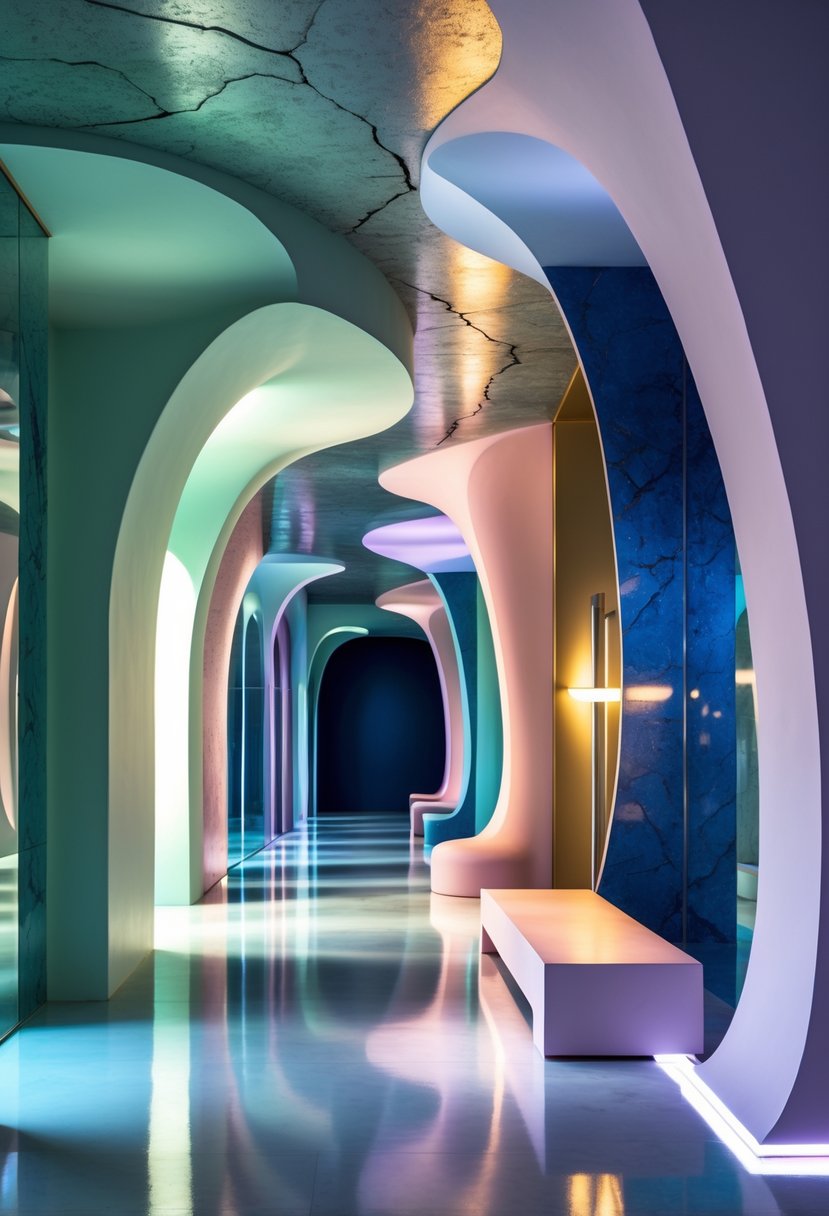
Surreal hallways often rely on contrasts that feel slightly unexpected yet balanced. Materials with unusual textures and colors with sharp or soft transitions work together to create a setting that feels imaginative but still livable.
Unexpected Material Combinations
Surreal interiors often use contrasting textures to create visual tension. Smooth glass paired with rough stone, or polished metal next to soft velvet, can shift how people experience a hallway. These juxtapositions keep the space from feeling predictable.
Reflective surfaces such as mirrors, lacquered wood, or metallic tiles can distort light and make the hallway appear larger or more dreamlike. When paired with matte finishes like raw plaster or unpolished concrete, the effect becomes more striking.
Unusual pairings also include organic with synthetic. For example:
- Natural wood combined with acrylic panels
- Wool rugs layered against epoxy resin floors
- Handmade ceramics displayed on chrome shelving
These mixes encourage curiosity while maintaining function. The goal is not excess but balance, so each material has space to stand out.
Color Theory in Surreal Spaces
Color plays a central role in shaping a surreal atmosphere. Designers often use unexpected palettes that move beyond traditional neutrals. A hallway might feature soft pastels fading into bold jewel tones, or walls that shift from one gradient to another.
Contrasting hues can create strong focal points. For instance, teal against coral or mustard beside violet generates energy without overwhelming the eye. Pairing these with muted tones helps ground the space.
Lighting also changes how colors behave. Warm bulbs can soften sharp contrasts, while cool LED strips highlight edges and create sharper illusions. Dimmers allow the hallway to shift from calm to vibrant, supporting different moods.
Patterns such as surreal wallpapers or painted gradients extend the palette further. They add depth and movement, making the hallway feel like it bends or stretches beyond its actual size.
Learn more about eclectic interior design from Apartment Therapy.


