Hallway Makeover Ideas 2026: 22 Stylish Ways To Refresh Your Space
A hallway often sets the tone for the rest of a home, yet it is one of the most overlooked spaces. In 2026, design trends highlight how even small updates can transform this area into something stylish and practical. A well-planned hallway makeover can improve both function and atmosphere, turning a simple passage into a space with real purpose.
This article explores fresh ideas that balance design and usability, from lighting and color choices to storage and layout updates. By focusing on simple changes and modern touches, it shows how hallways can become inviting, organized, and visually striking parts of the home.
Install statement pendant lighting
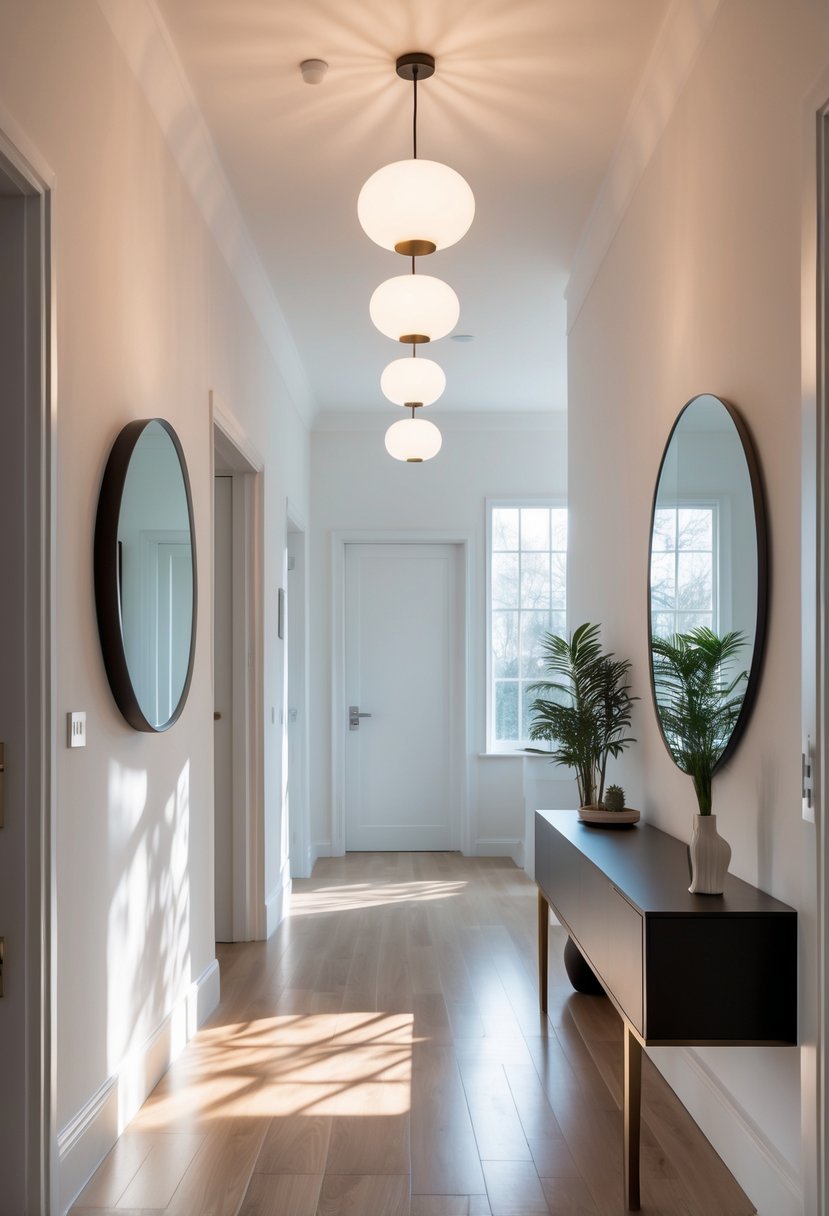
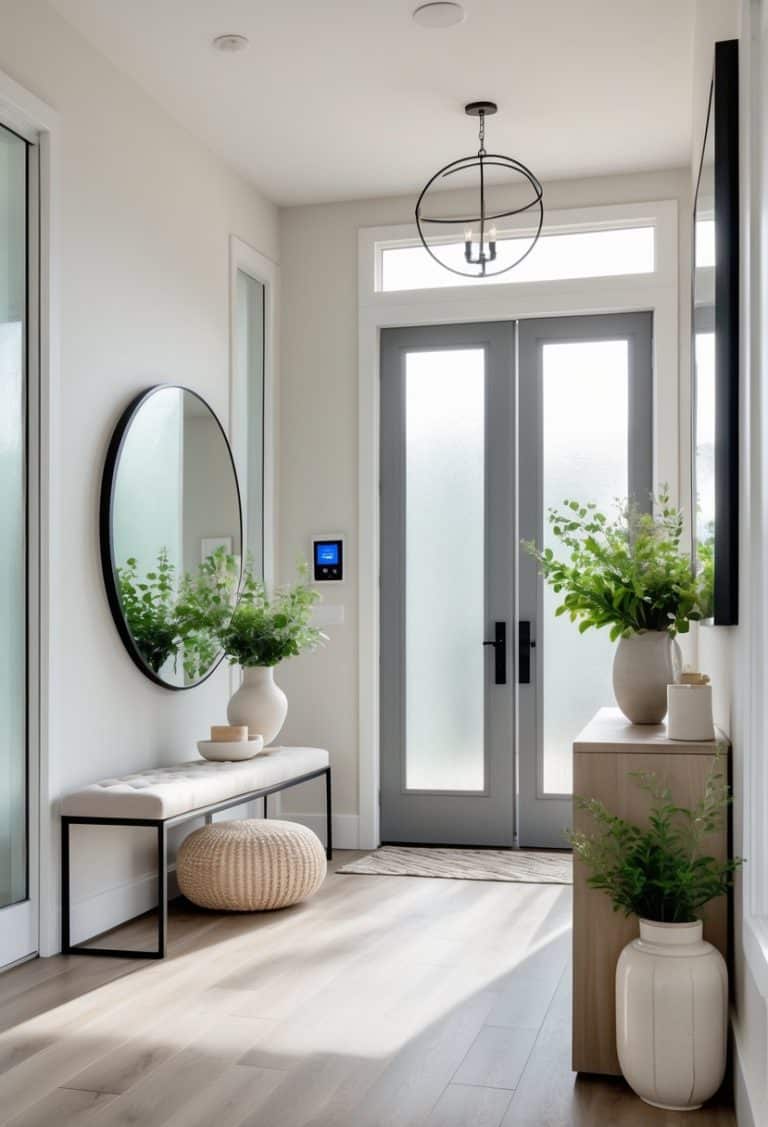
Pendant lights add both function and style to a hallway. They create focused illumination while acting as a design feature.
In 2026, homeowners often choose bold shapes, glass finishes, or metal details to make the fixture stand out. Adjustable heights help match different hallway sizes.
Using pendant lighting can define the space and make it feel more welcoming.
Use bold wallpaper with geometric patterns
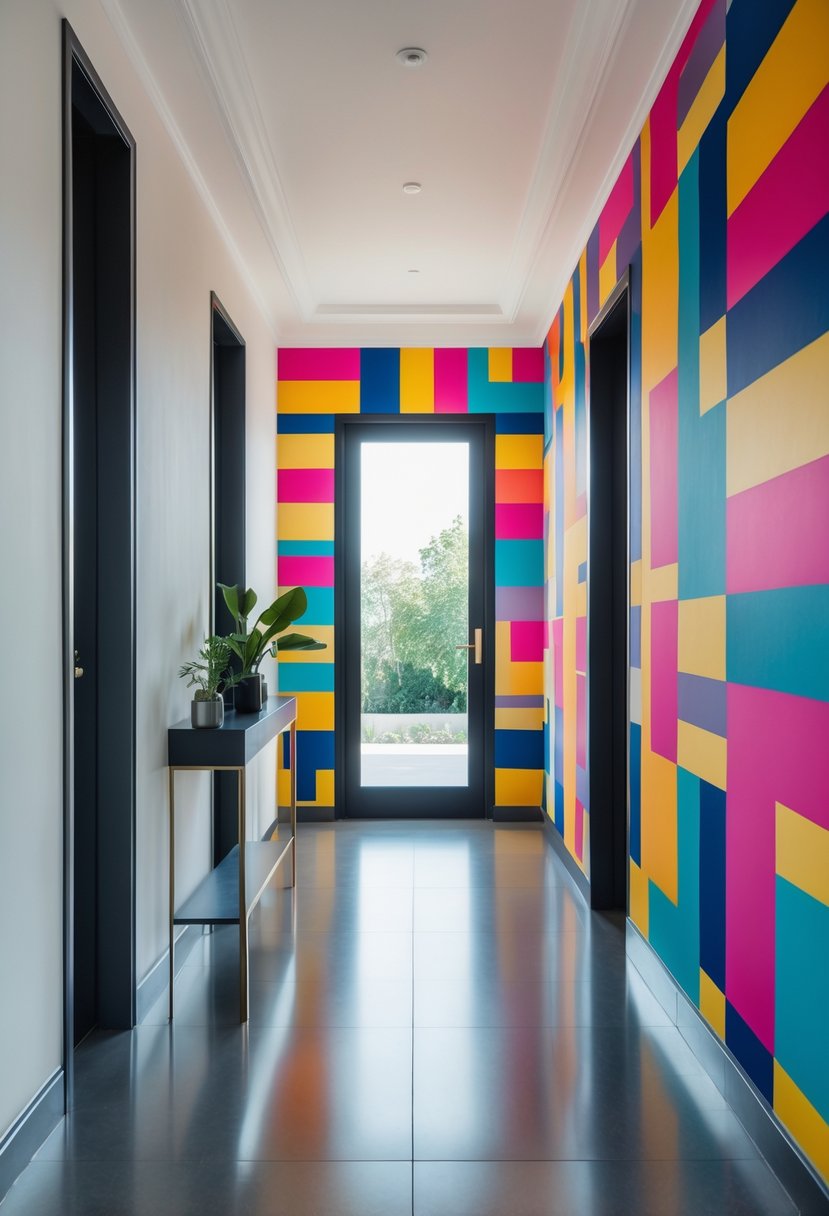
Geometric wallpaper can bring structure and interest to a hallway. Patterns like hexagons, stripes, or diamonds add clear lines that guide the eye through the space.
Large-scale designs in contrasting colors create depth and make narrow areas feel more open. Smaller patterns work well for subtle texture without overwhelming the hallway.
Add a long runner rug with vibrant colors
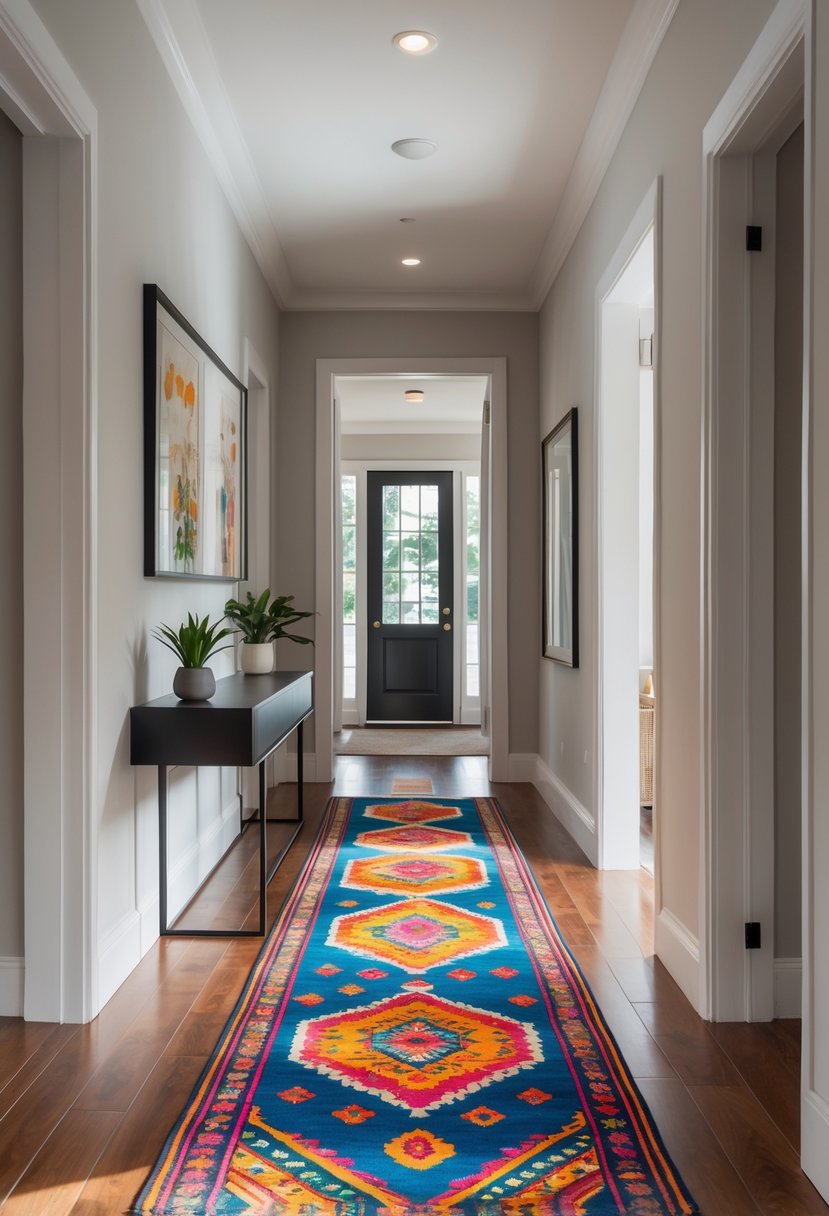
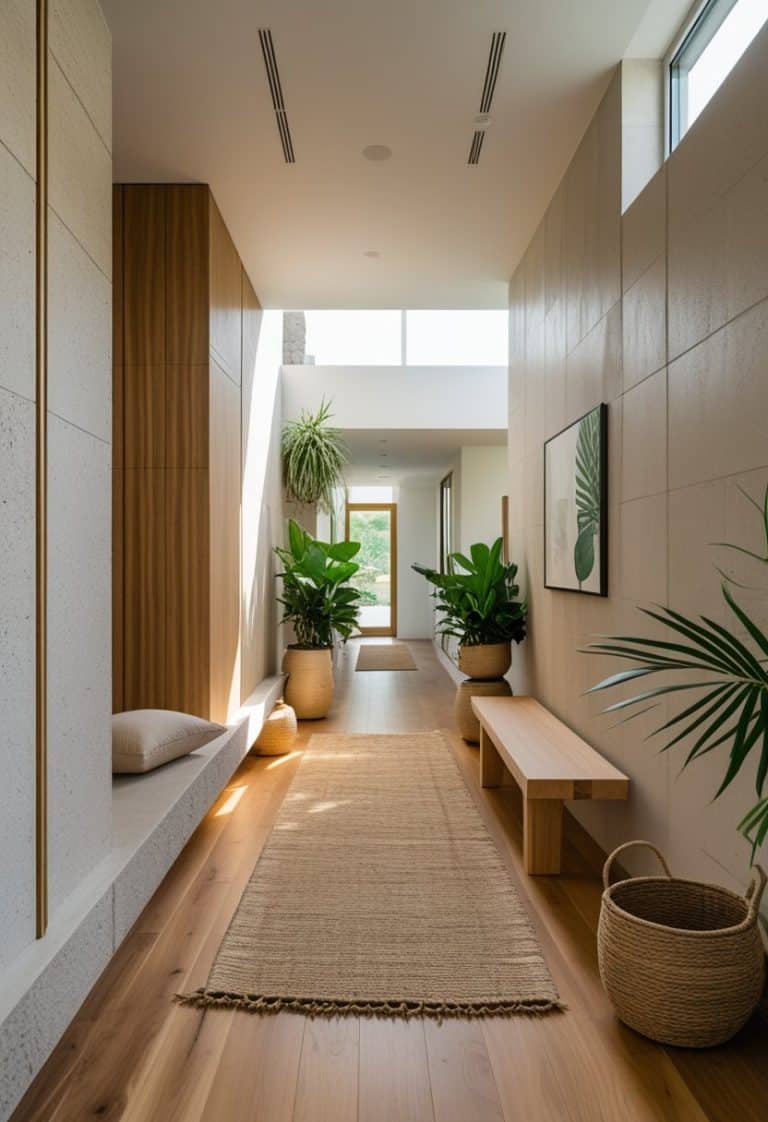
A long runner rug adds color and texture to a hallway while protecting the floor.
Vibrant patterns can make narrow spaces feel more inviting and visually balanced.
They also help soften footsteps, reduce noise, and create a finished look along the hallway.
Create a gallery wall with framed art
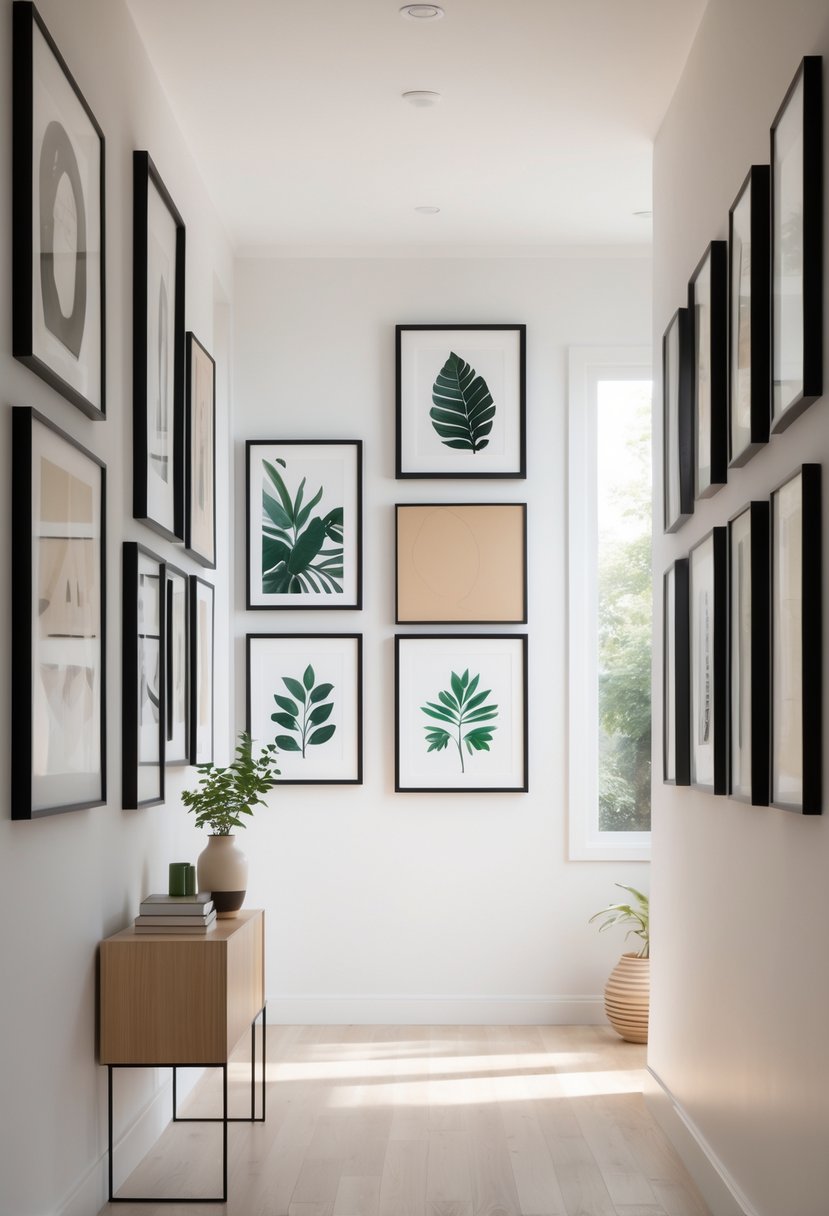
A gallery wall adds interest to a hallway by displaying framed art, photos, or prints in a planned arrangement.
They can mix frame sizes and finishes, but keeping a consistent theme or color palette helps the display feel balanced.
This approach personalizes the space while making use of otherwise plain walls.
Paint the hallway in a deep, moody hue
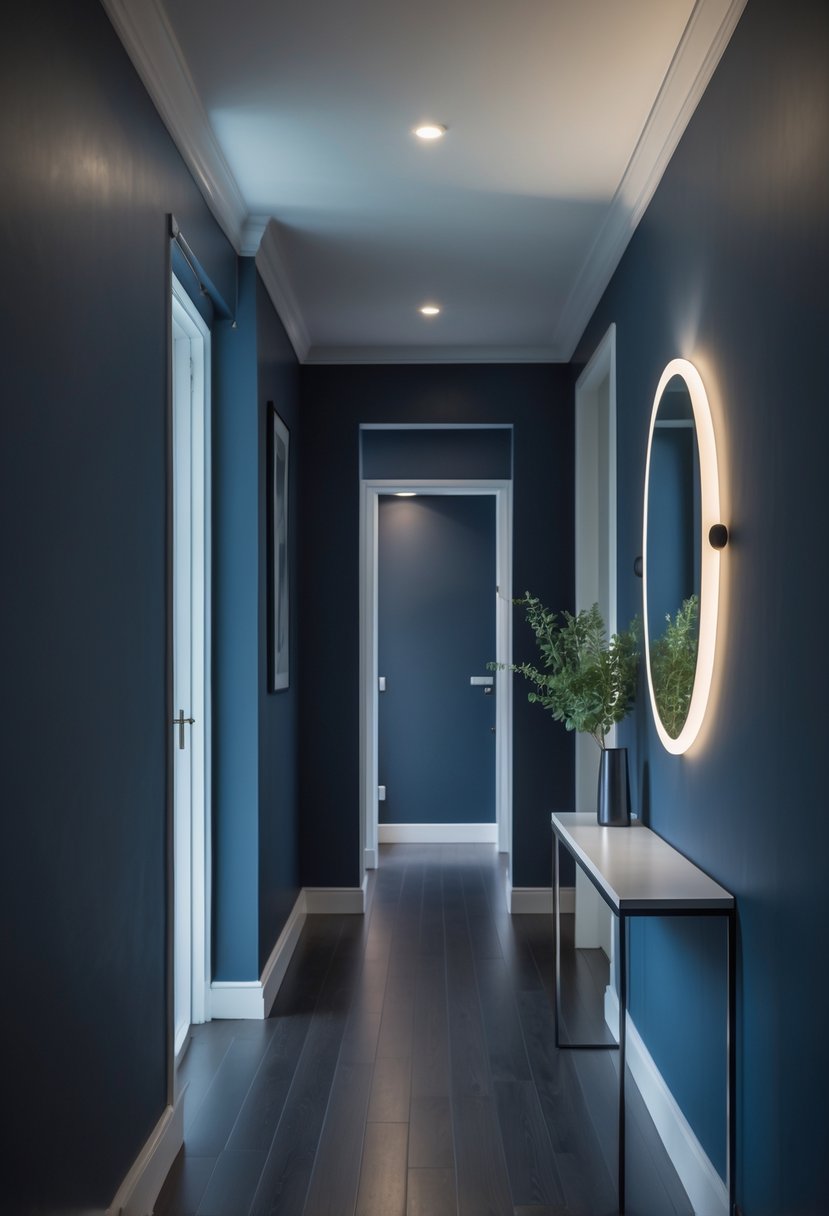
Choosing a dark color like navy, charcoal, or forest green can give the hallway a grounded and stylish look.
These shades work well with white trim, wood accents, or metallic finishes, creating contrast and balance.
Moody tones also help smaller spaces feel more intimate and defined.
Incorporate built-in shelves for decor and storage
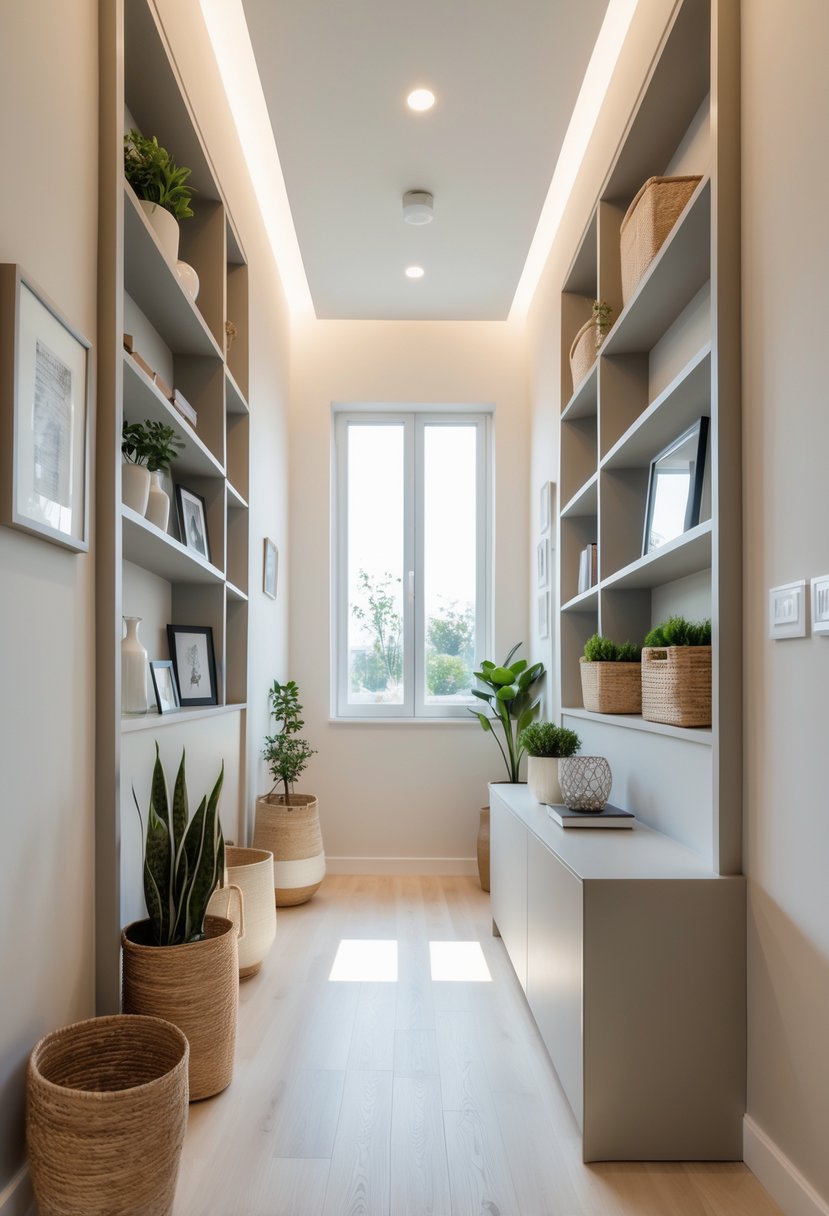
Built-in shelves make use of hallway walls without taking up extra floor space. They provide a clean and streamlined look.
Homeowners can use them to store books, baskets, or seasonal items. Decorative objects can also be displayed to add character.
Custom designs allow shelves to fit narrow or wide hallways, keeping the space functional and organized.
Hang a large decorative mirror to open the space
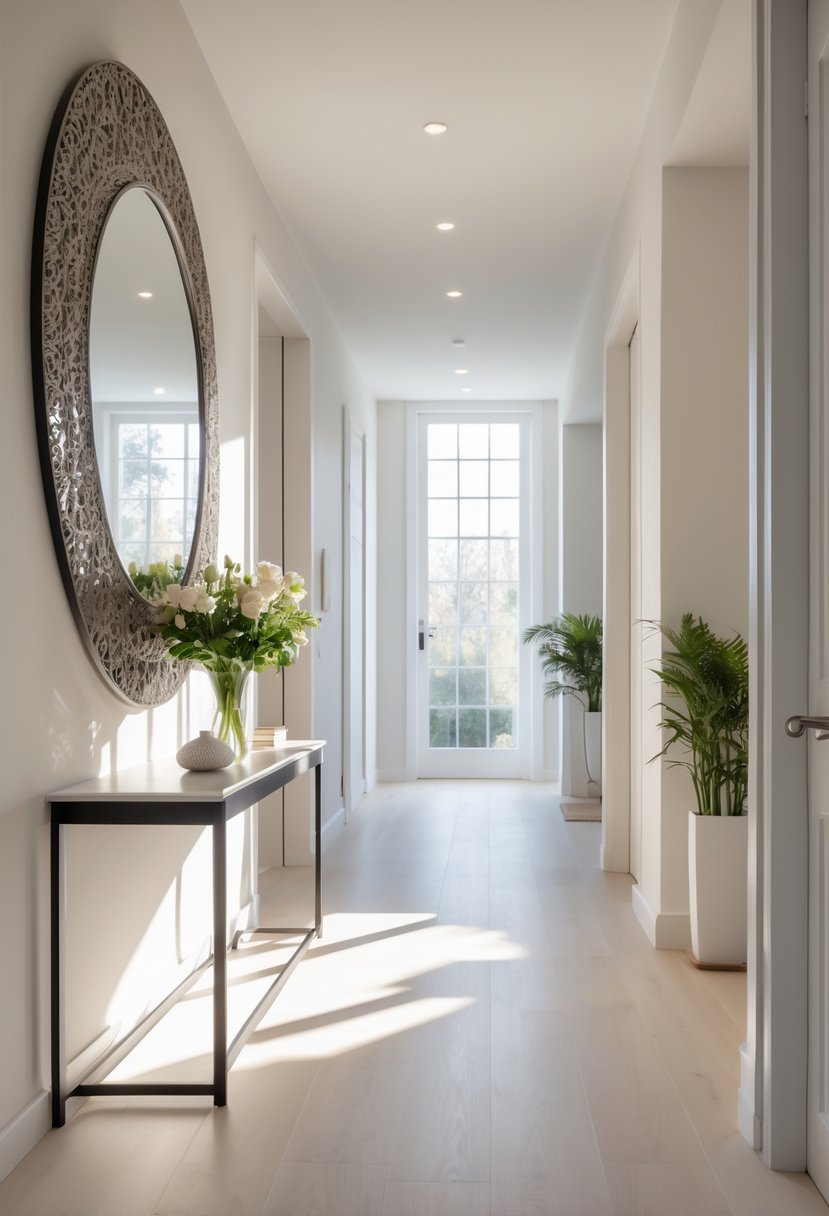
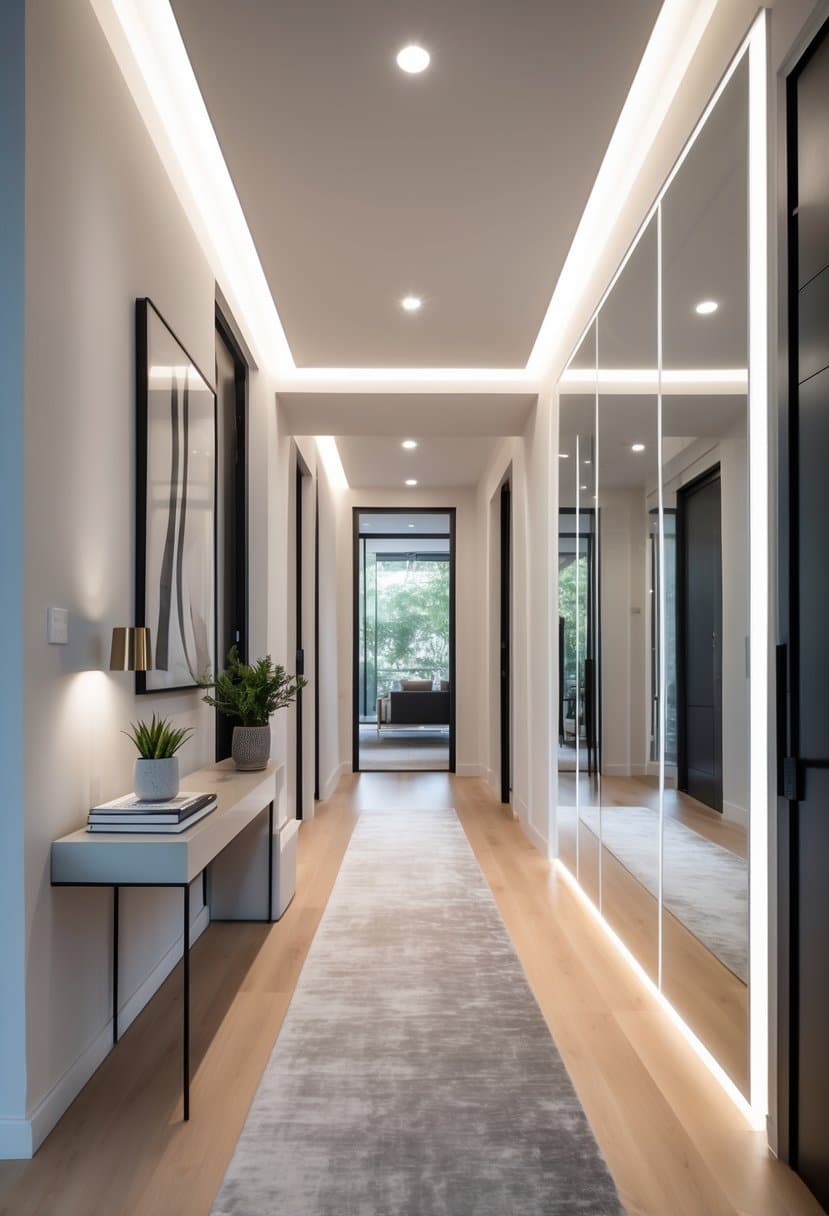
A large mirror makes a hallway feel wider by reflecting light and creating depth.
Placing it across from a window or light source helps brighten the area.
Choosing a decorative frame adds style while keeping the mirror functional.
Use eco-friendly bamboo flooring
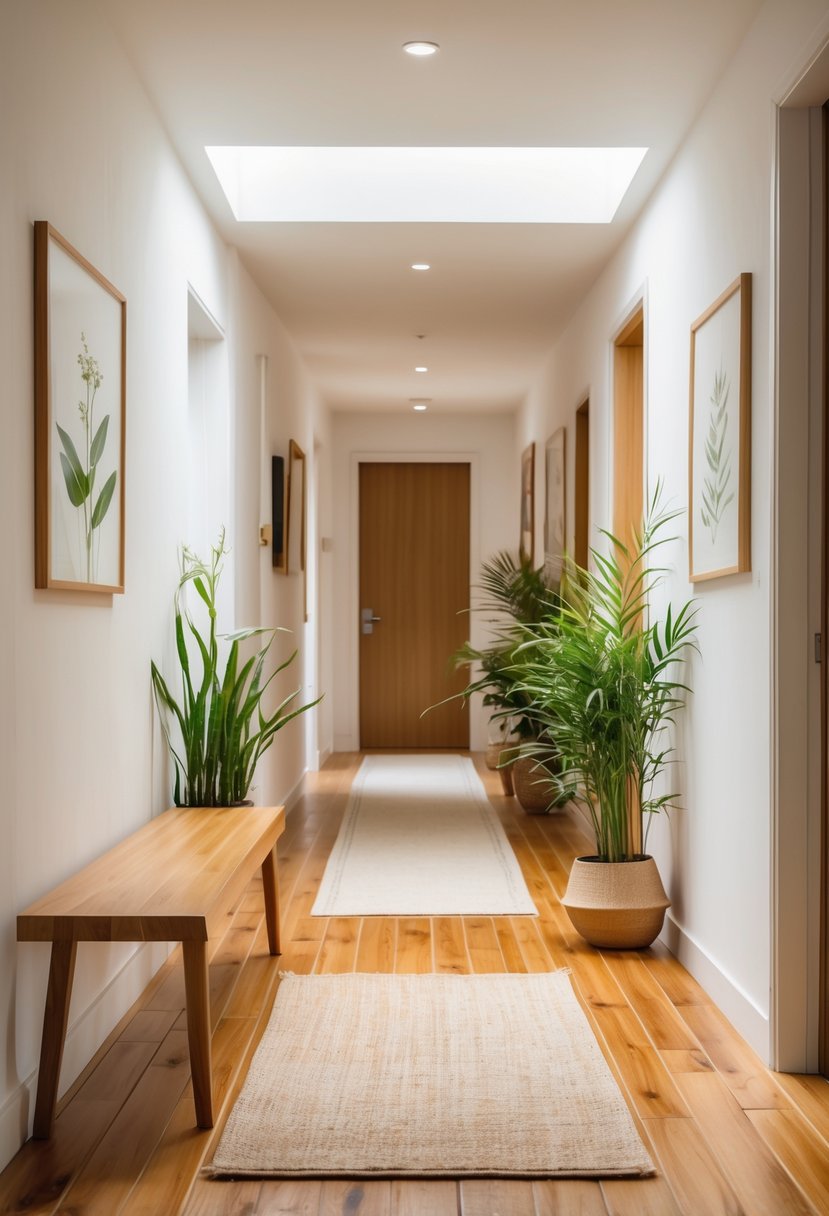
Bamboo flooring gives hallways a clean, modern look while using a renewable material. It is durable enough for high-traffic areas.
Many homeowners choose bamboo because it is easy to maintain and comes in various finishes. It blends well with both minimalist and traditional design styles.
Add a console table with sleek design
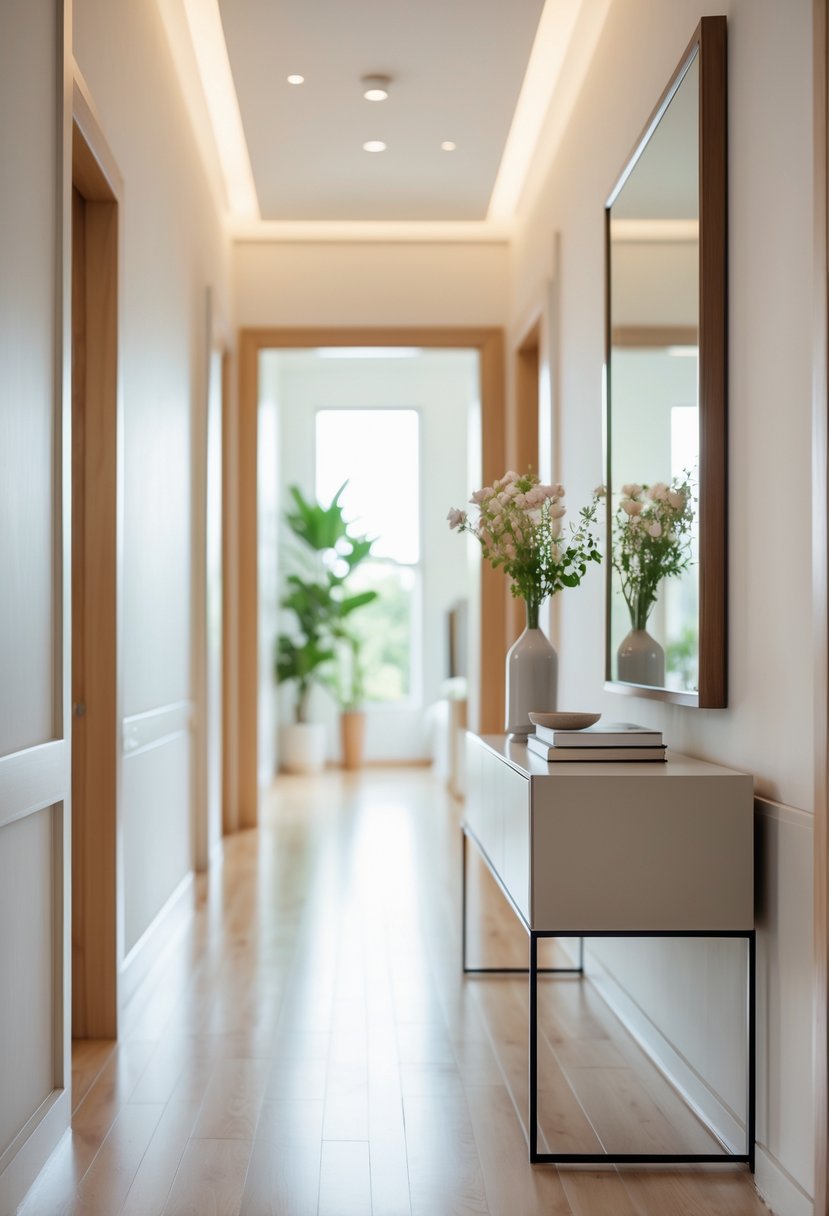
A slim console table fits well in narrow hallways without taking up much space.
They can use it to hold keys, mail, or small decorative items like a vase or lamp.
Clean lines and simple finishes give the hallway a modern and uncluttered look.
Install recessed LED lighting for subtle brightness
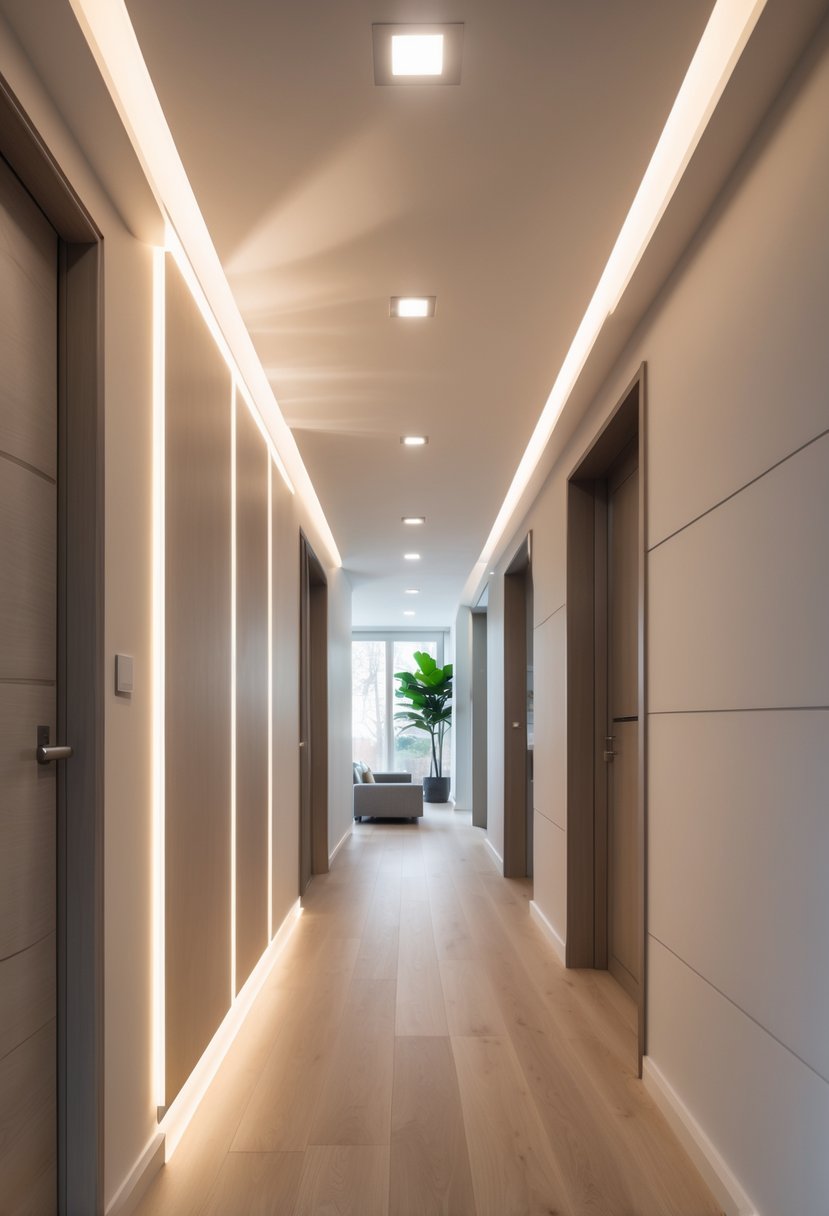
Recessed LED lights give hallways a clean look by sitting flush with the ceiling.
They provide steady brightness without taking up space or drawing attention.
Dimmable options let homeowners adjust the light level for either safe navigation at night or brighter use during the day.
Use floating shelves to display plants
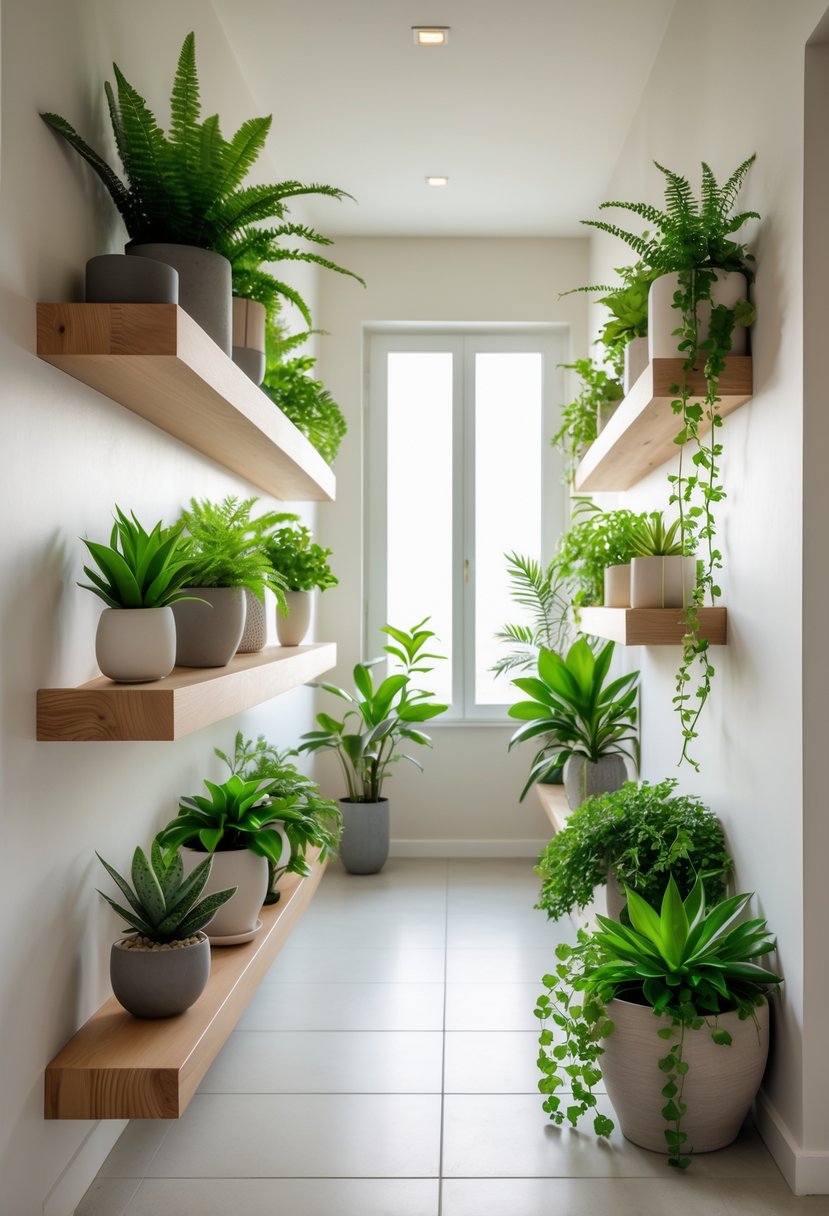
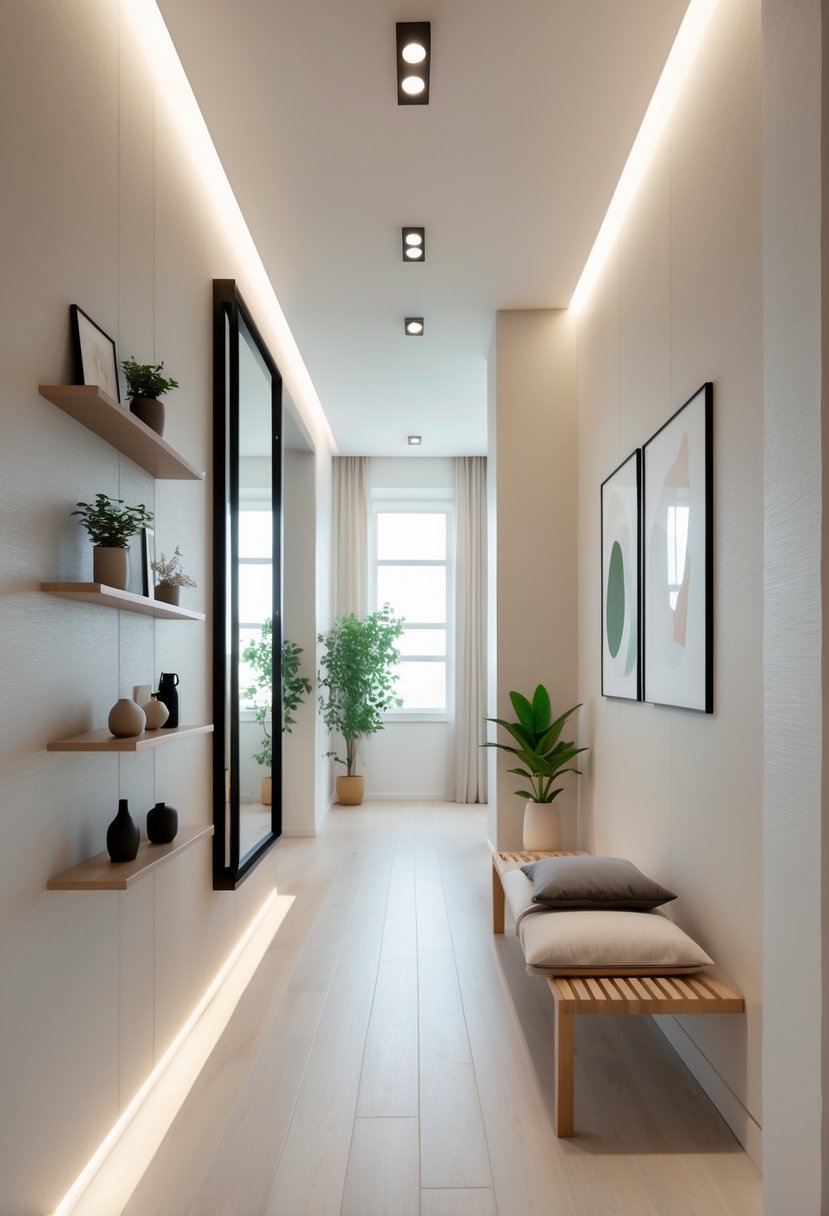
Floating shelves let homeowners add greenery without taking up floor space. They work well in narrow hallways where space is limited.
Placing small potted plants on these shelves creates a clean and organized display. Using plants of different heights adds variety and visual interest.
Simple wood or white shelves blend easily with most hallway designs.
Incorporate smart storage solutions like cubbies
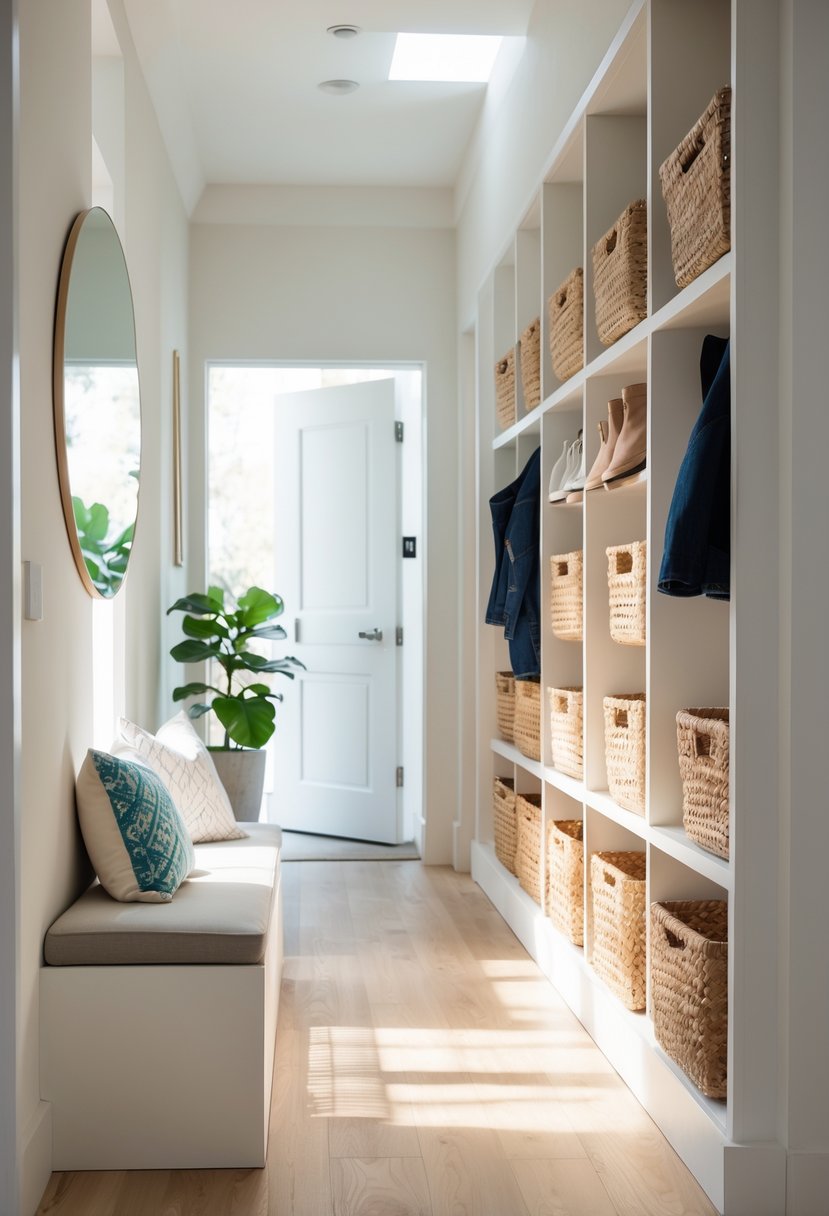
Cubbies help keep hallways organized by giving shoes, bags, and small items a clear place to go.
They can be built into walls, placed under stairs, or mounted as floating units to save floor space.
Using bins or baskets inside cubbies adds flexibility and keeps clutter hidden.
Paint doors in contrasting colors
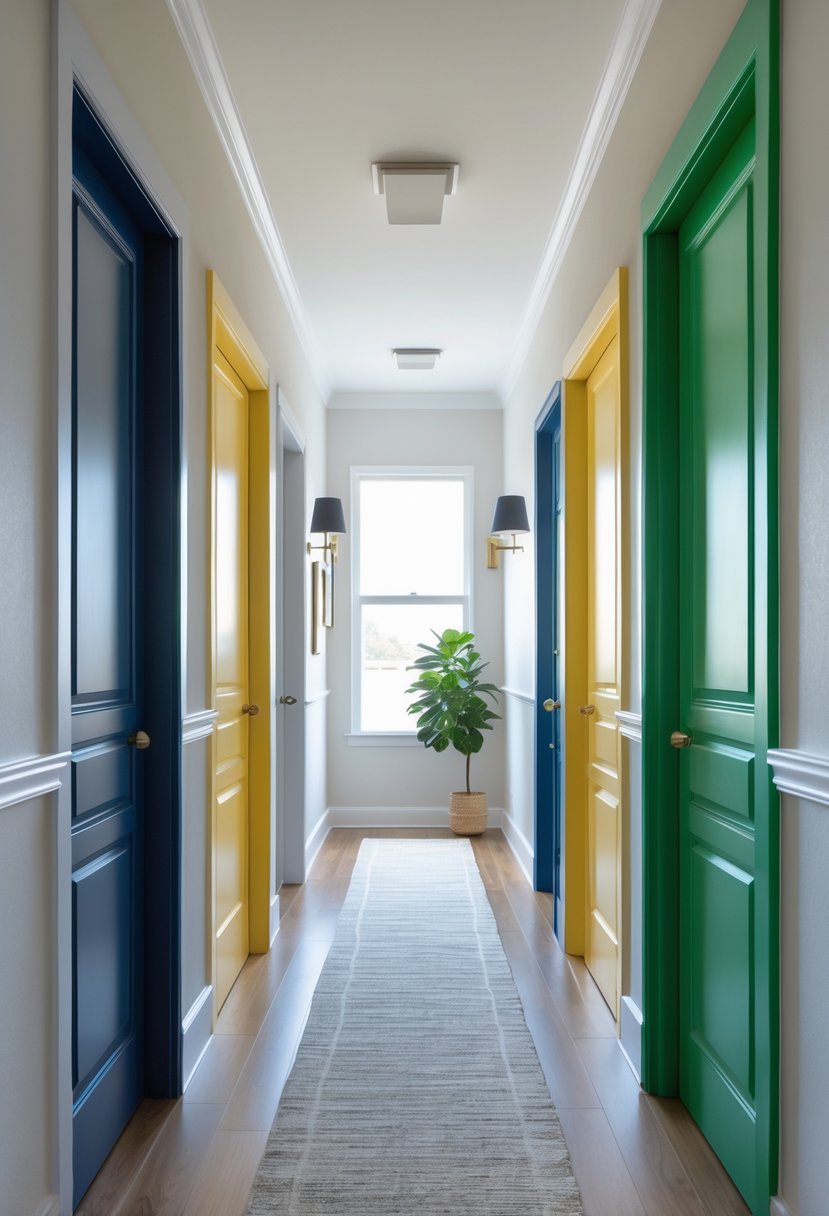
Painting doors in contrasting colors helps define the hallway and adds visual interest. It separates the doors from the walls, making the space feel more intentional.
They can choose bold shades for doors against neutral walls, or lighter tones against darker walls. This approach highlights architectural details without overwhelming the hallway.
Add wainscoting or beadboard paneling
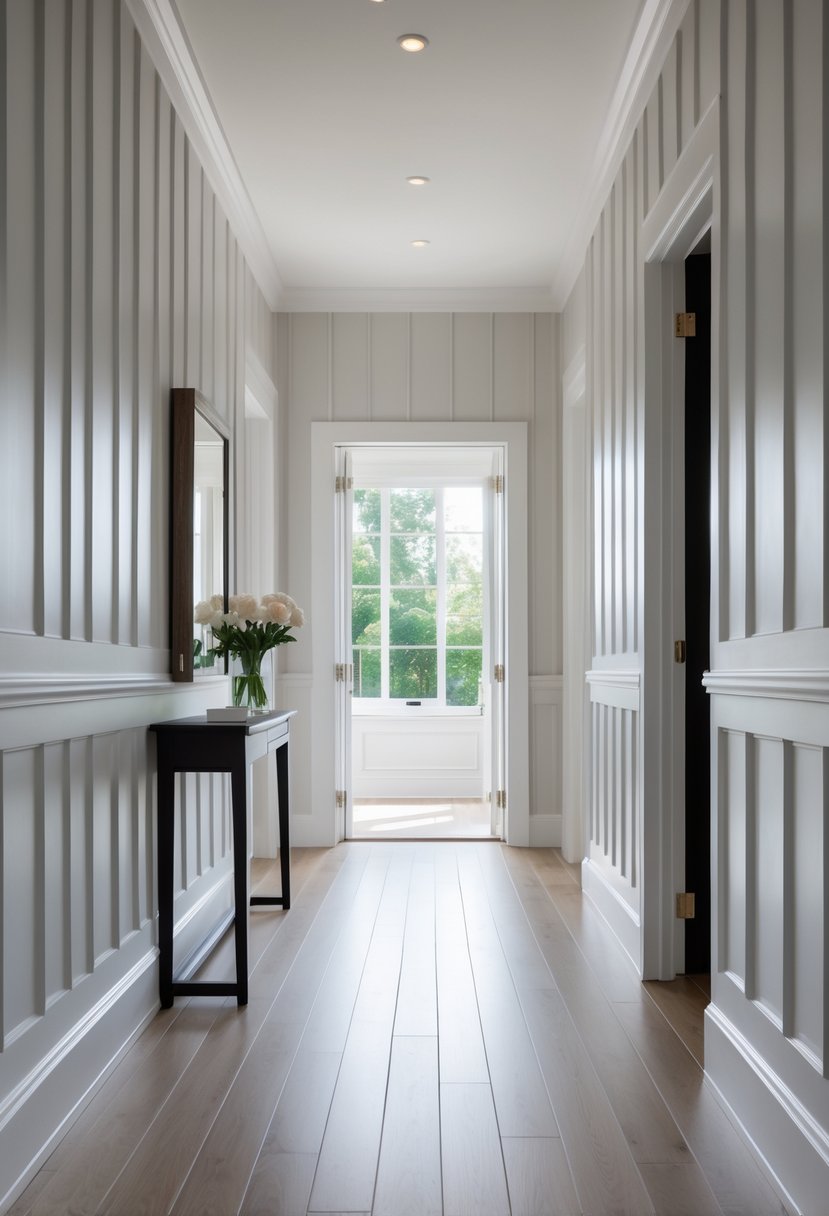
Wainscoting or beadboard paneling gives hallways a clean, structured look. These wall treatments usually cover the lower half of the wall, adding both style and protection.
Beadboard features narrow vertical panels with grooves, while wainscoting can include flat, raised, or decorative panels. Both options add texture without overwhelming small spaces.
Painting the panels in white or neutral tones helps brighten narrow hallways. For a more modern look, darker shades can create contrast and depth.
Use textured paint finishes for depth
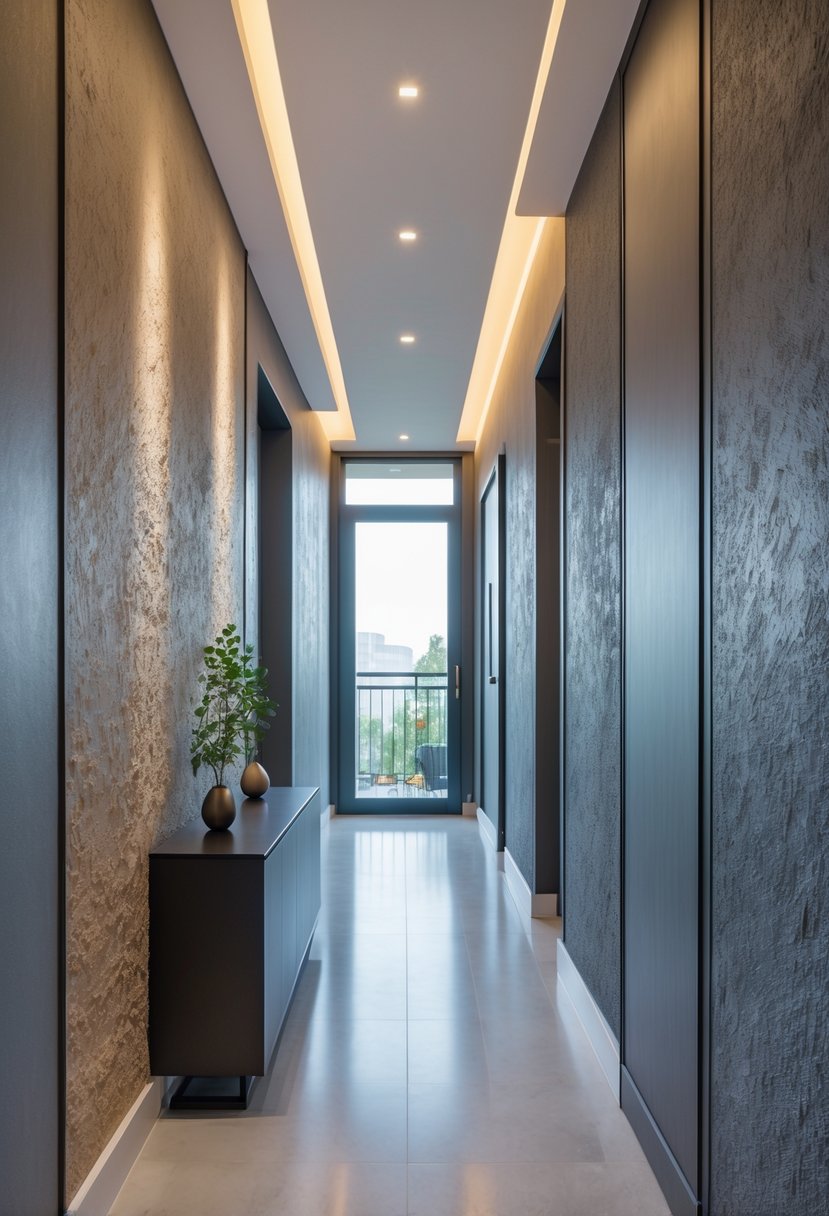
Textured paint can make a hallway feel more layered and visually interesting. It adds subtle variation that flat paint cannot achieve.
Techniques like sponge dabbing, rag rolling, or using stencils create patterns that bring depth to the walls. These finishes work well in both modern and traditional spaces.
Even simple textures, such as orange peel or light stucco, can soften plain walls and make the hallway look more inviting.
Hang a large statement clock
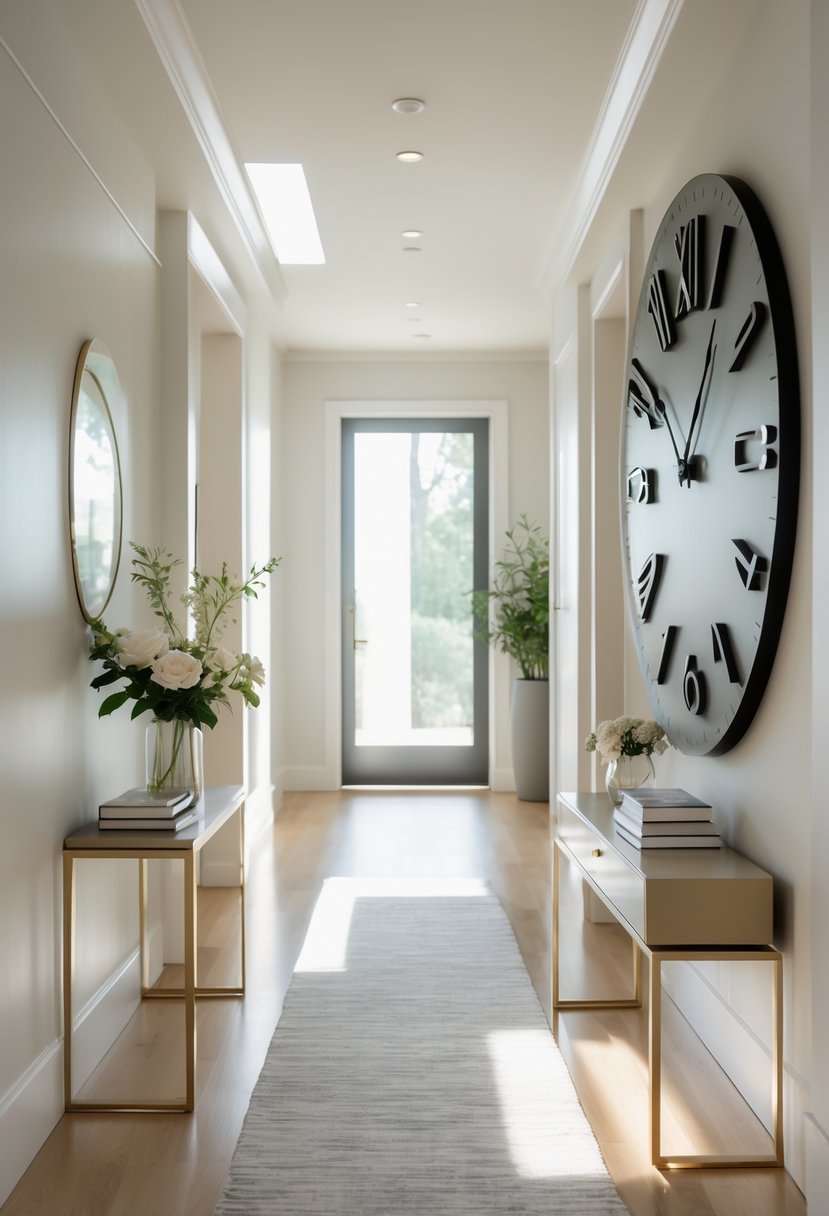
A large wall clock can act as both décor and function in a hallway. It fills empty wall space while providing a clear focal point.
They can choose a modern, rustic, or classic design to match the hallway style. Placement at eye level keeps it practical and visually balanced.
Incorporate vintage hooks for coats and bags
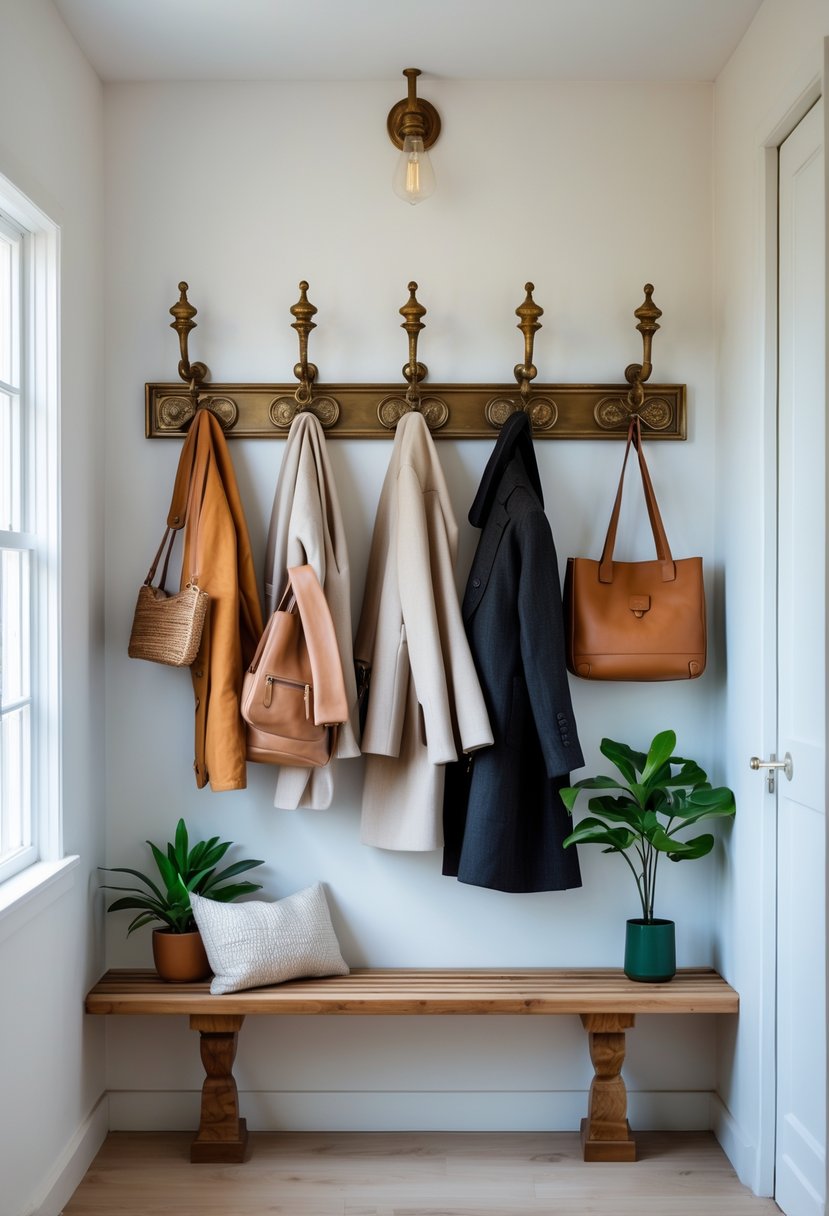
Vintage hooks add character while serving a practical purpose. They work well in hallways where style and function need to blend.
People often repurpose old wood, metal pieces, or even branches to create unique hooks. These small details can make the entryway feel warm and organized.
Add a small bench with hidden storage
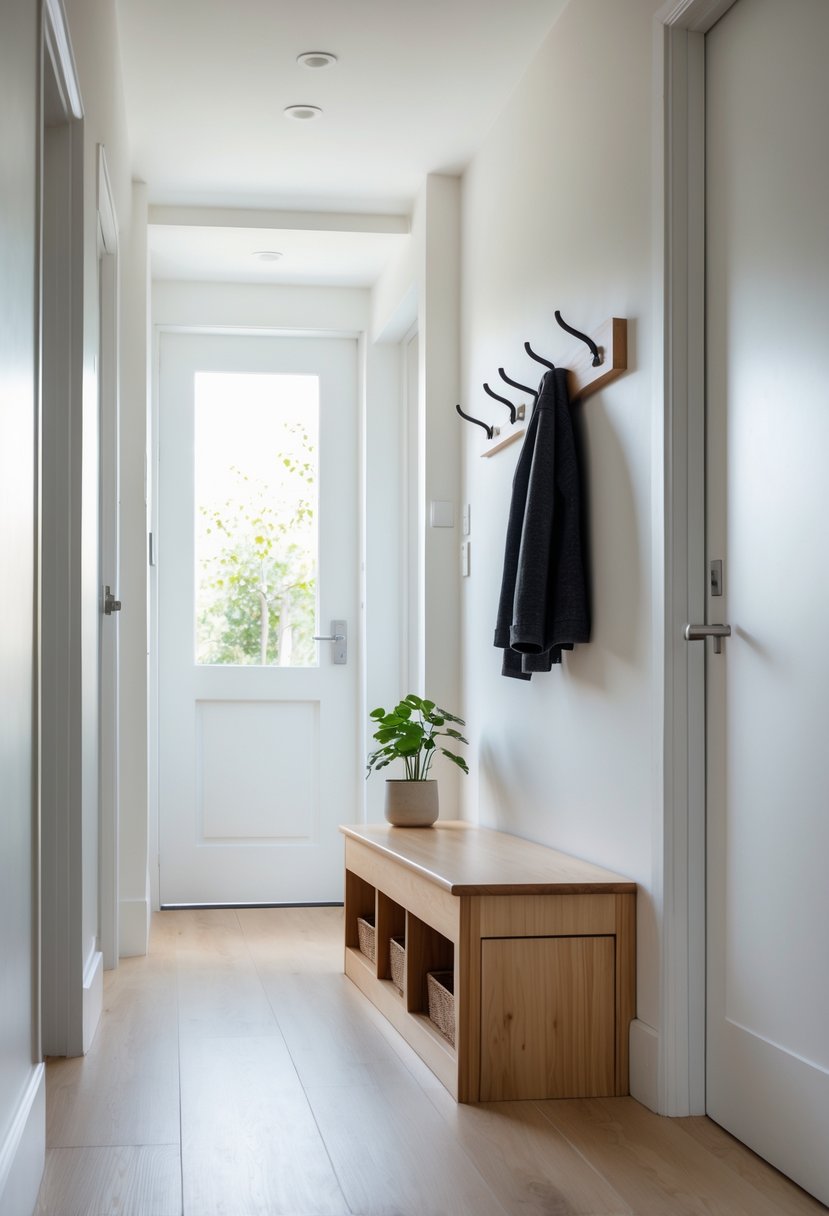
A compact bench with hidden storage helps keep hallways neat and functional.
Many designs include lift-up seats or drawers that hold shoes, bags, or seasonal items.
This option adds seating while reducing visible clutter, making the hallway more practical and organized.
Use brass or matte black hardware accents
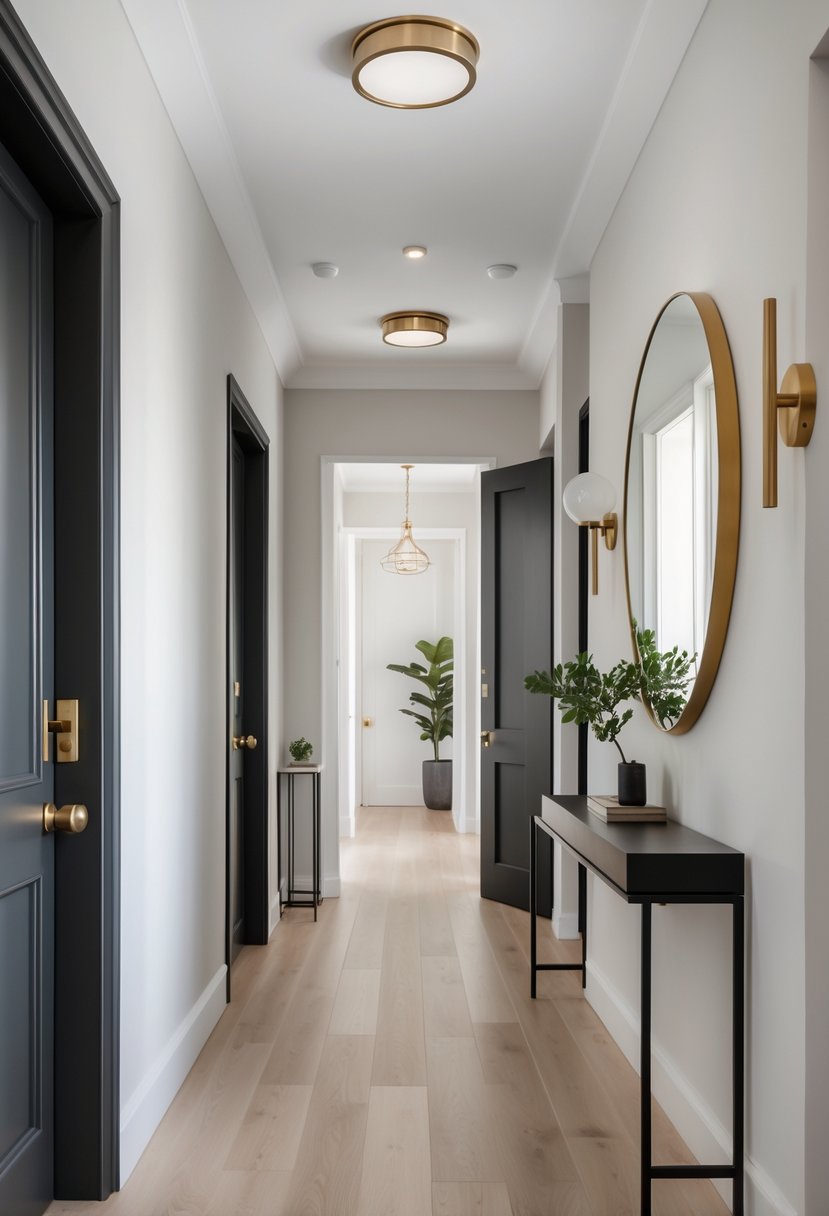
Brass and matte black hardware add simple but effective detail to a hallway. Door handles, drawer pulls, and light switch plates in these finishes create a clean, modern look.
Brass offers warmth and a timeless touch, while matte black provides contrast and a sleek, contemporary edge.
Install wall sconces with dimmer switches
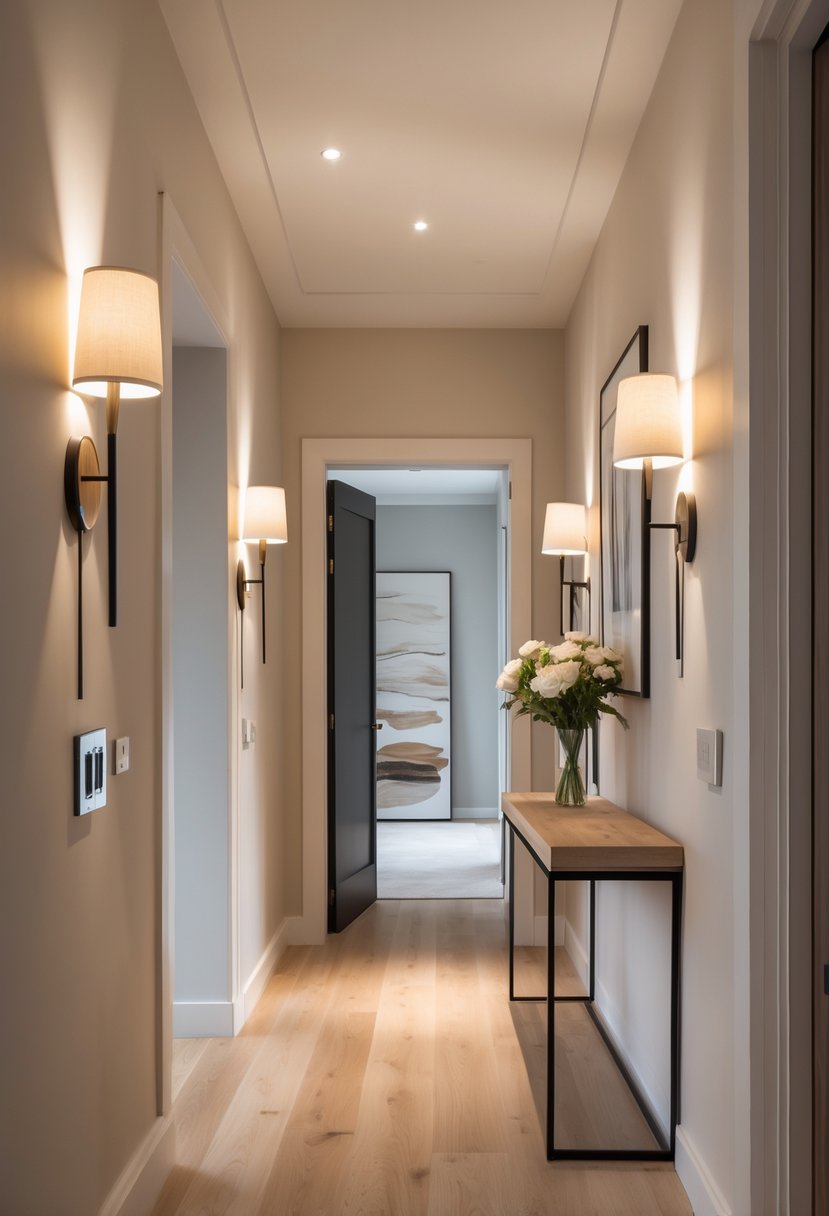
Wall sconces with dimmer switches let homeowners adjust brightness to fit the time of day or activity.
They provide soft light for relaxing evenings or brighter light for safe movement through the hallway.
This option also helps save energy by reducing unnecessary full-power lighting.
Add a colorful mosaic tile border
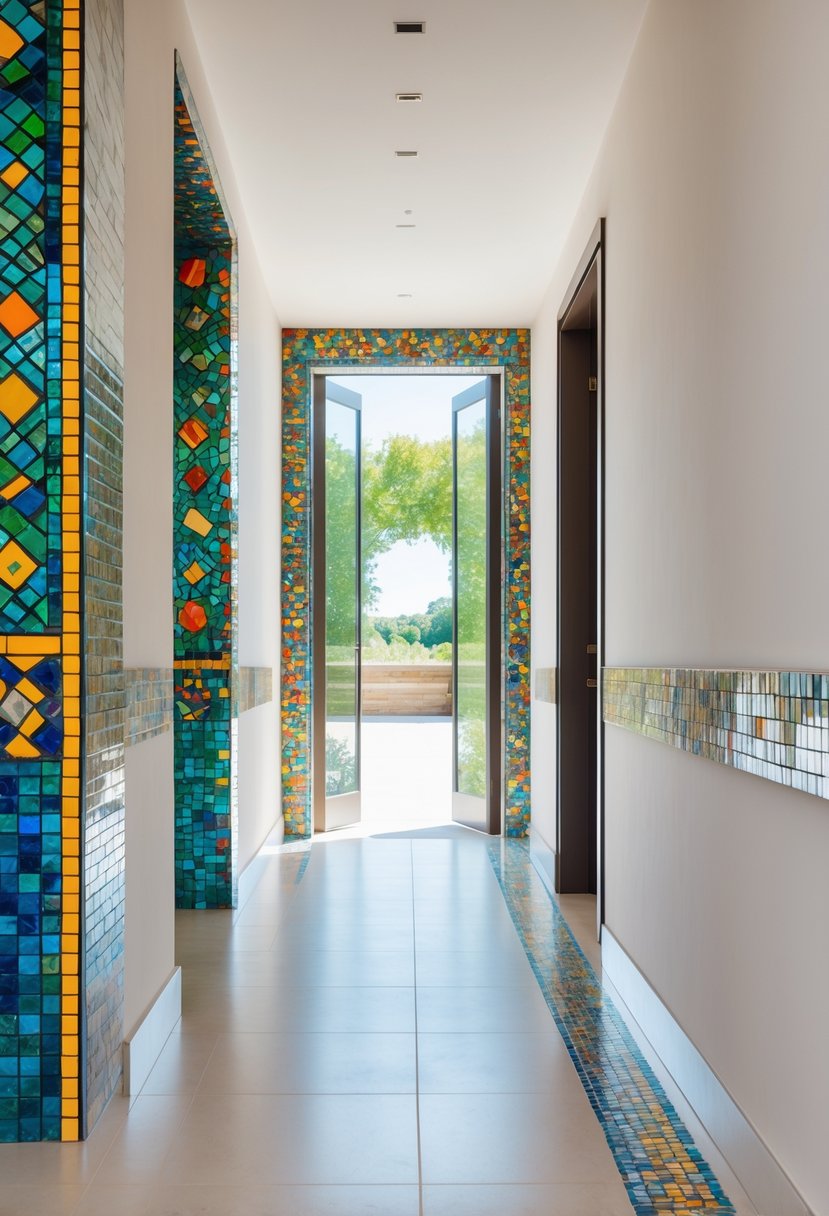
A mosaic tile border can bring subtle color and texture to a hallway. It works well along the base of the wall or around door frames.
Glass or ceramic tiles in simple patterns add interest without overwhelming the space. Small sections can highlight entry points or transitions between rooms.
Use minimalist Scandinavian-style furniture
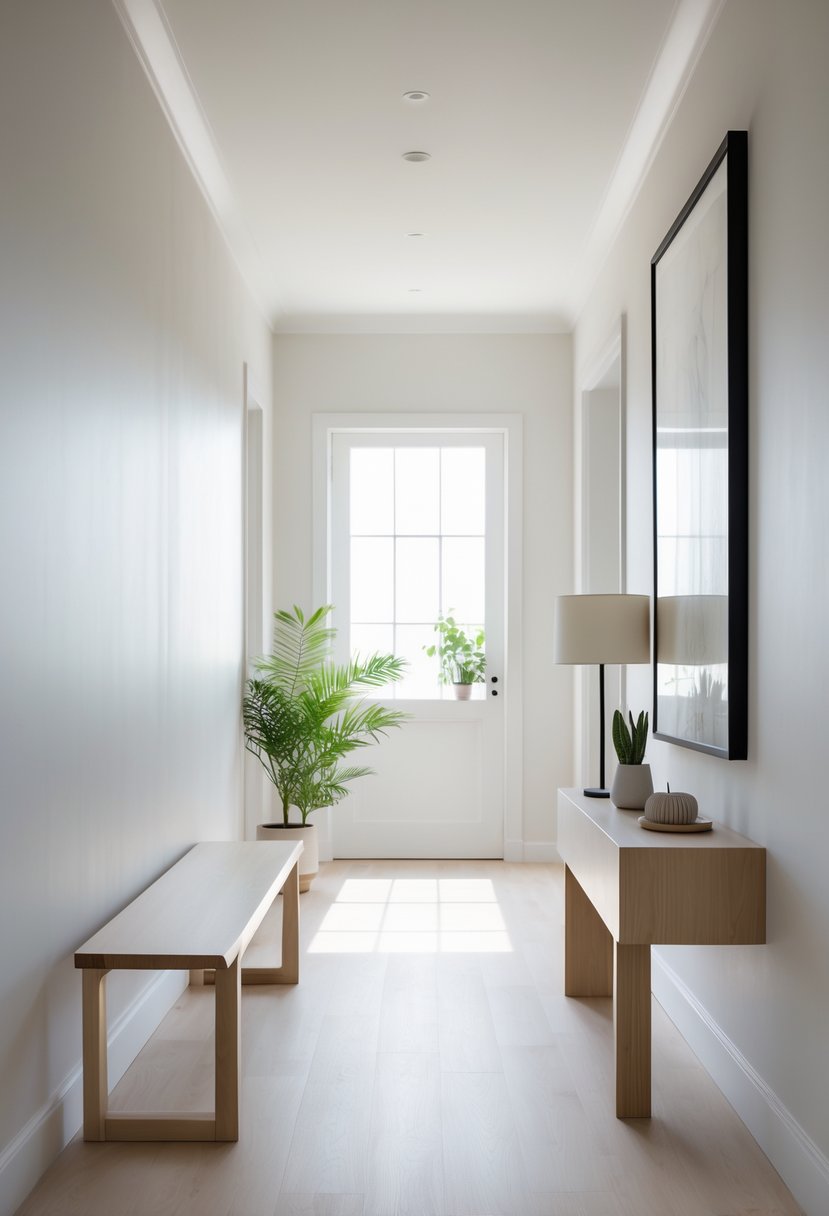
They can choose slim benches, narrow consoles, or wall-mounted shelves to keep the hallway open and uncluttered.
Light wood tones and neutral colors help the space feel calm and balanced.
Simple mirrors or small storage pieces add function without overwhelming the design.
Key Design Principles for Hallway Makeovers
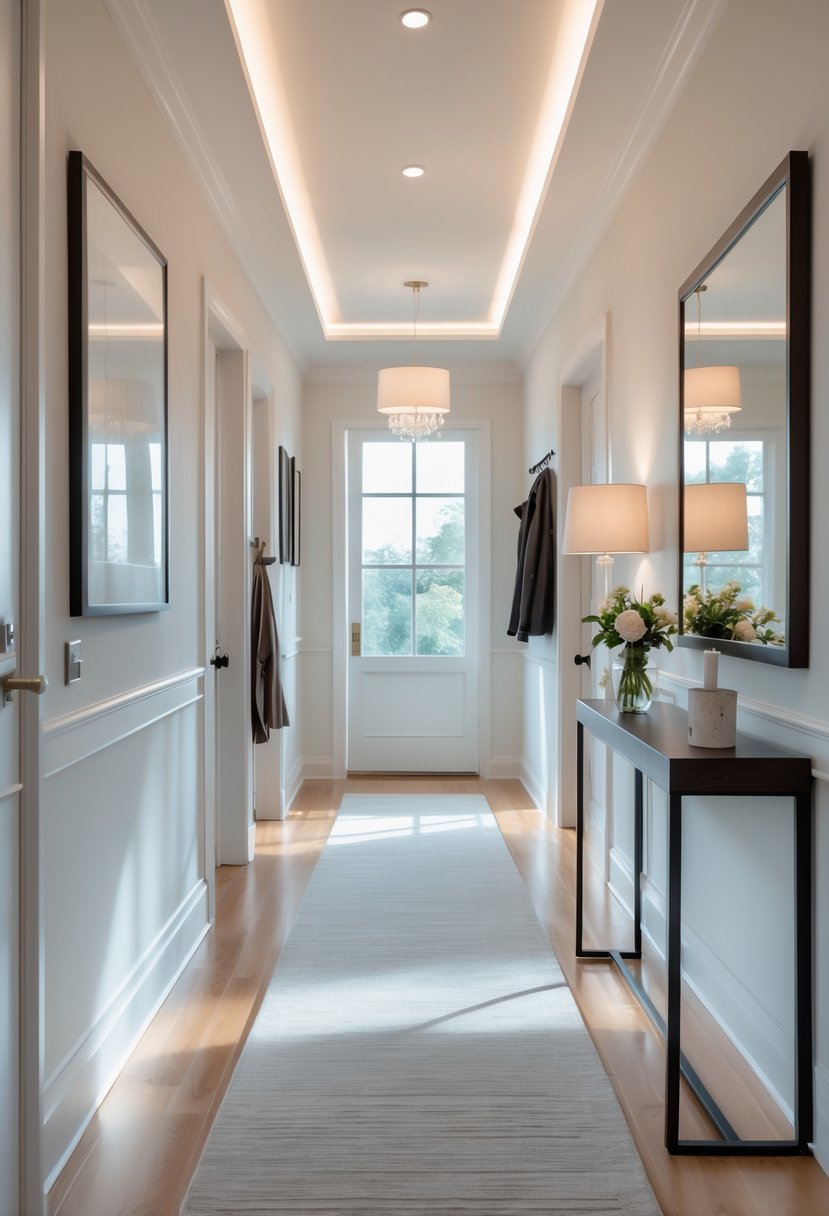
A hallway benefits most from smart use of light, balanced color choices, and storage that reduces clutter. These elements help the space feel open, organized, and visually connected to the rest of the home.
Maximizing Space and Light
Hallways often feel narrow, so using light effectively is essential. Natural light should be emphasized with clear glass doors, sidelights, or mirrors that reflect brightness. Where natural light is limited, recessed ceiling lights or slim wall sconces create even illumination without crowding the space.
Glossy or light-colored flooring can also reflect light, making the hallway appear larger. Wide plank wood or pale tiles work well for this purpose. Adding a runner in a neutral tone keeps the look clean while softening the floor.
Mirrors placed opposite doorways or windows extend the sense of depth. A single large mirror is often more effective than several small ones, as it avoids visual clutter. Together, these choices make the hallway feel open and welcoming.
Choosing the Right Color Palette
Color sets the mood of a hallway and influences how spacious it feels. Light shades such as soft gray, beige, or off-white brighten narrow corridors and pair well with most flooring. For a bolder look, darker tones like navy or forest green add depth, but they work best with good lighting.
Accent colors can highlight architectural features. A painted door frame, baseboard, or ceiling in a contrasting shade adds subtle interest without overwhelming the space. Wallpaper with small-scale patterns can also introduce texture while keeping the hallway cohesive.
Consistency with nearby rooms matters. Carrying similar tones from the living room or entryway into the hallway helps maintain flow. This avoids the hallway feeling disconnected from the rest of the home.
Incorporating Functional Storage
Storage keeps hallways practical, especially in smaller homes. Slim console tables provide a surface for keys or mail without blocking pathways. Wall-mounted hooks or rails handle coats and bags while saving floor space.
Built-in cabinets or benches with hidden compartments add more capacity. These options suit families who need everyday items close at hand but out of sight. Using vertical space with shelving above eye level also helps maximize storage without crowding the walkway.
To keep the area uncluttered, storage should blend with the design. Matching finishes, such as wood tones or painted surfaces, ensure that storage feels intentional rather than an afterthought. This balance of function and style keeps the hallway efficient and visually calm.
Emerging Trends in Hallway Design for 2026
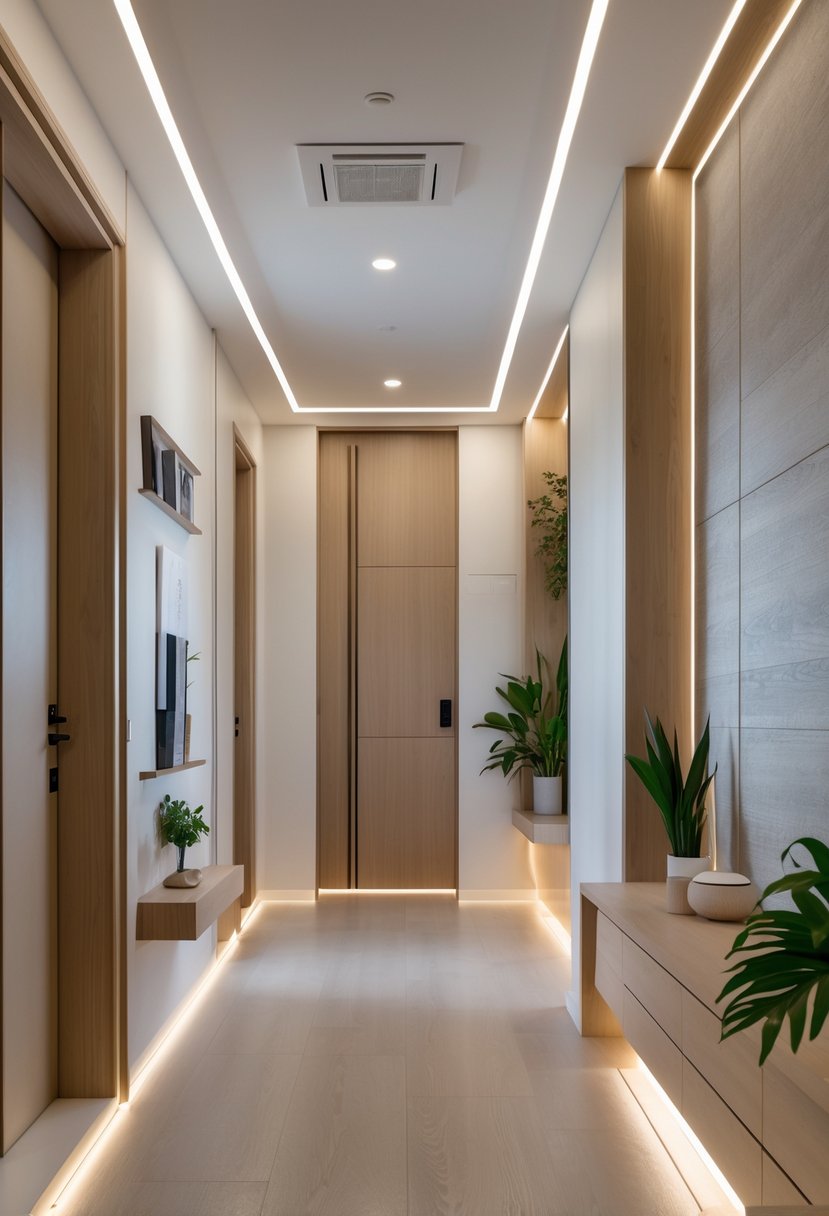
Hallway updates in 2026 highlight the use of eco-friendly surfaces, advanced lighting systems, and decor that reflects personal style. These changes focus on making hallways both practical and visually appealing while keeping them aligned with modern living standards.
Sustainable Materials and Finishes
Designers are moving toward renewable and recyclable materials for hallway floors and walls. Bamboo, cork, and reclaimed wood are popular because they are durable and reduce environmental impact. Homeowners also lean toward low-VOC paints and natural finishes that improve indoor air quality.
Stone tiles and clay-based wall coatings are also gaining attention. These materials last longer and require less maintenance compared to synthetic options. This shift supports both sustainability goals and long-term cost savings.
A simple comparison shows the trend clearly:
| Material | Benefit | Common Use |
|---|---|---|
| Bamboo | Renewable, durable | Flooring |
| Cork | Insulating, soft underfoot | Walls, floors |
| Reclaimed wood | Unique look, eco-friendly | Accent walls |
The goal is not just a stylish finish but also a healthier and more responsible home environment.
Smart Lighting Solutions
Lighting plays a bigger role in hallways than before. Motion-sensor fixtures reduce wasted energy by turning on only when needed. Homeowners also install LED strips under baseboards or along ceilings to create subtle, even illumination.
Smart systems now allow users to adjust brightness and color temperature. A cooler tone can make a hallway feel open, while a warmer tone adds comfort. This flexibility helps match the lighting to different times of day.
Another growing feature is programmable lighting schedules. For example, lights can dim automatically in the evening to support a calm atmosphere. These systems combine efficiency with convenience, making them a practical upgrade.
Personalized Decor Accents
Hallways are no longer treated as empty transition spaces. People now add artwork, framed photos, or custom shelving to give them character. This approach makes the hallway feel like a part of the home rather than just a passage.
Color is also a key factor. Bold accent walls, patterned wallpaper, or painted trim allow for personal expression without overwhelming the space. Even small updates, like unique door handles or decorative runners, can make a noticeable difference.
Storage solutions also play into personalization. Narrow benches with hidden compartments or slim wall-mounted hooks provide both function and style. These details let homeowners tailor the hallway to fit their daily routines while reflecting their taste.