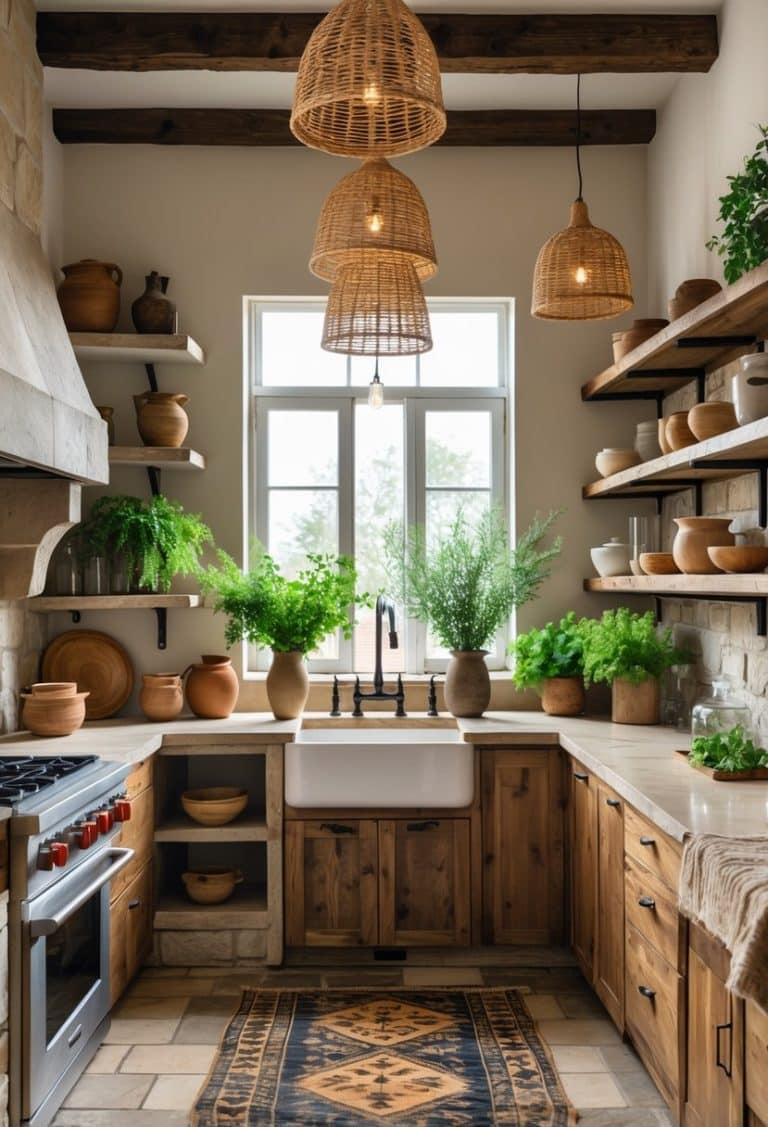
Small Kitchen Ideas 2026: 21 Smart Ways To Maximize Space And Style
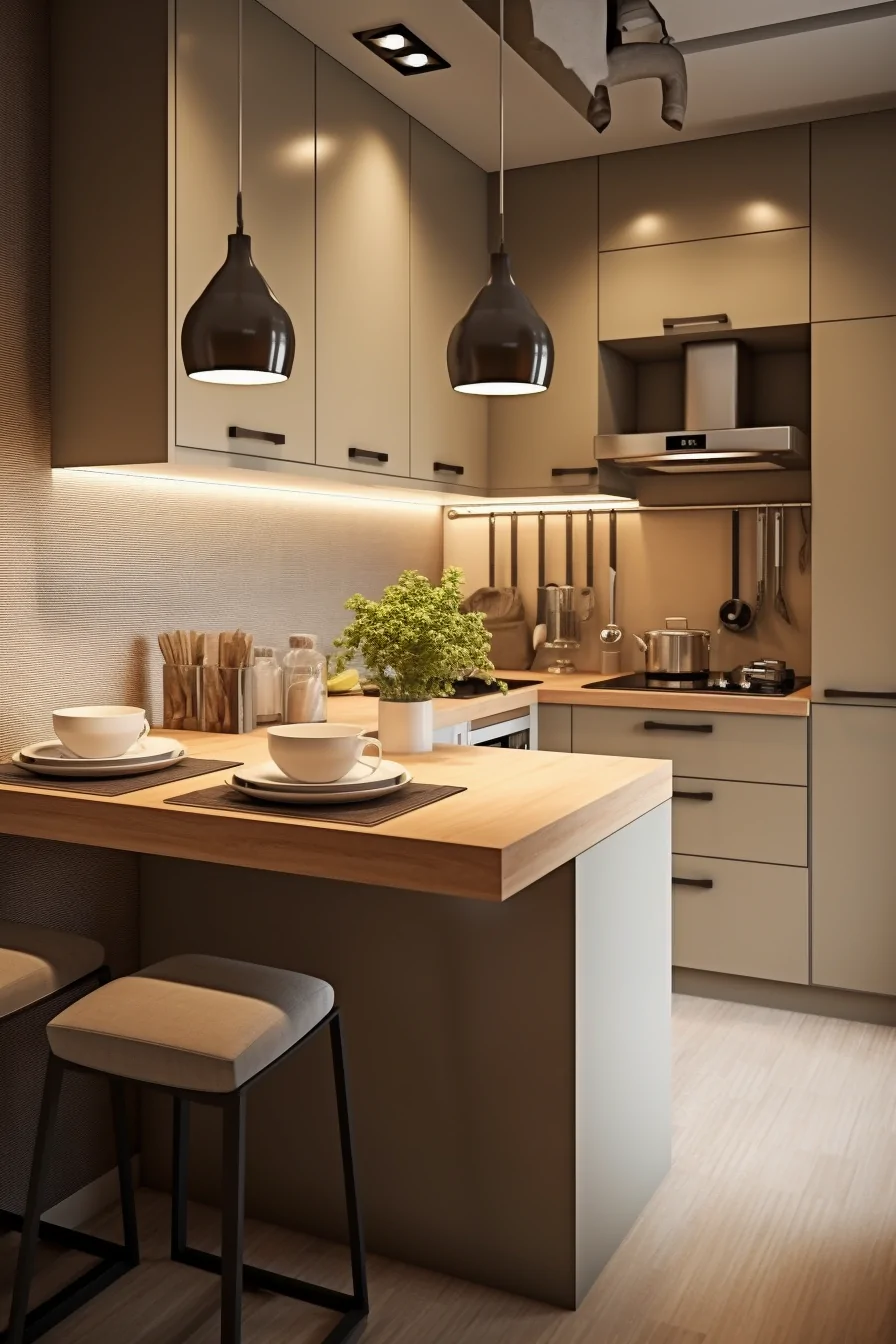
Small kitchens continue to evolve with fresh ideas that make the most of every inch. In 2026, design trends focus on functionality, comfort, and clean layouts that support daily life. The goal is to help anyone create a small kitchen that feels open, efficient, and easy to use without sacrificing style.
This article explores practical ways to make compact spaces work better. It covers smart storage choices, lighting improvements, and design details that enhance both form and function. Each idea builds on simple, effective principles that turn limited space into a well-planned and inviting kitchen.
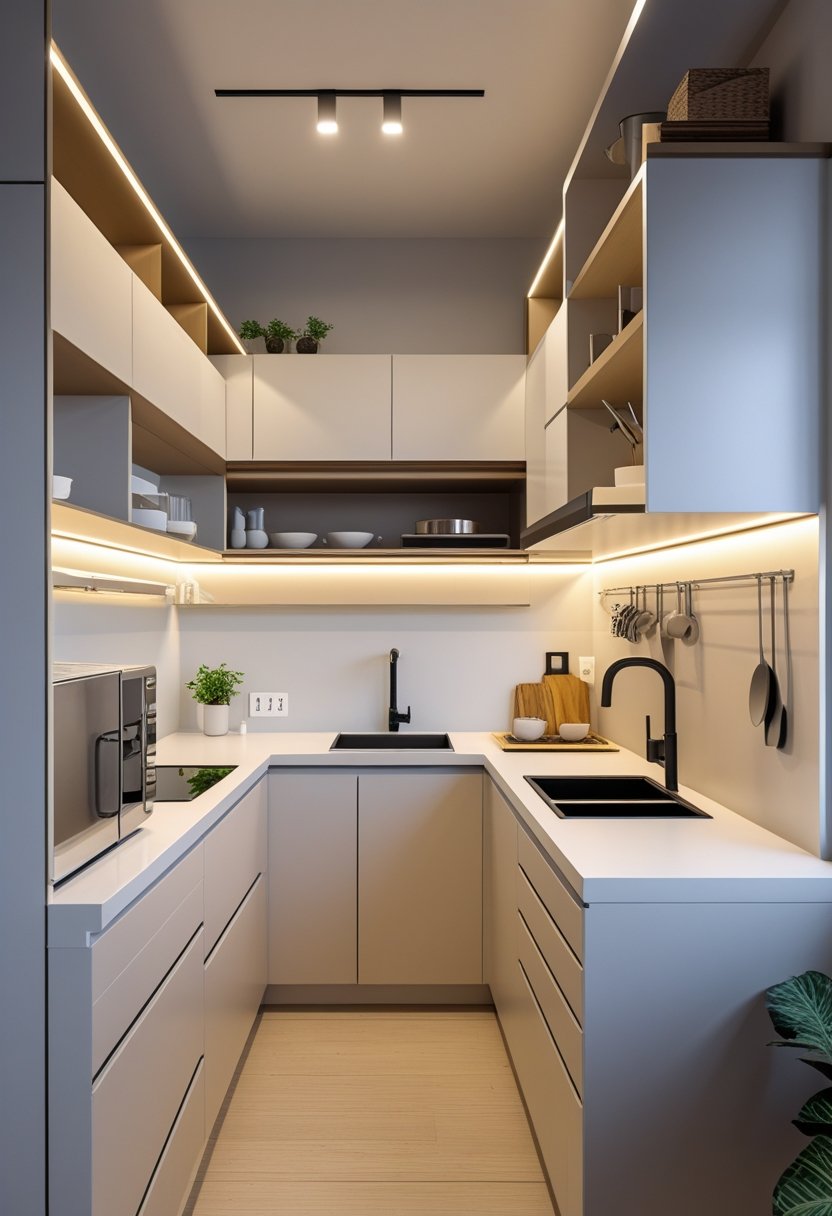
Install floating shelves for open storage
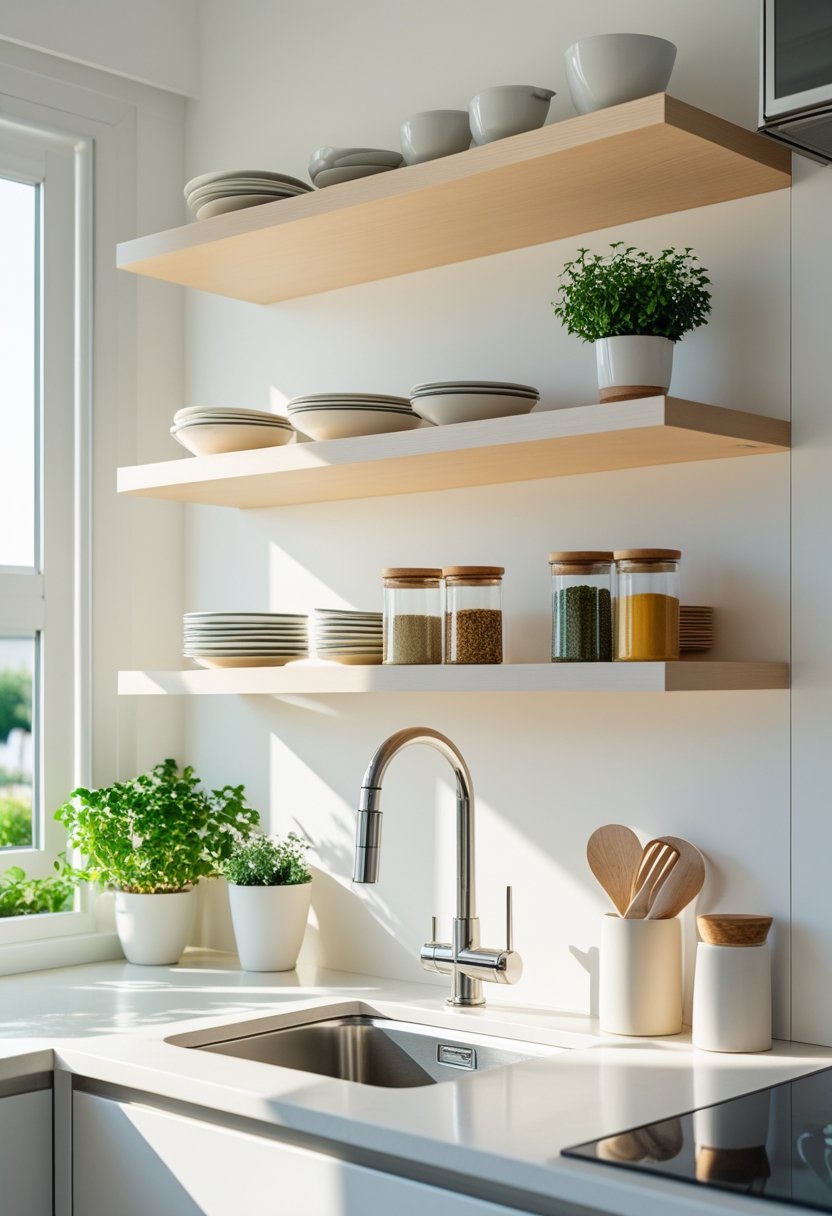
Floating shelves help small kitchens feel more open and organized. They reduce the need for bulky cabinets that can make a space look crowded.
Homeowners can use them to store dishes, spices, or small decor items. The shelves’ clean lines and simple design fit both modern and traditional kitchens.
Use pull-out pantry organizers
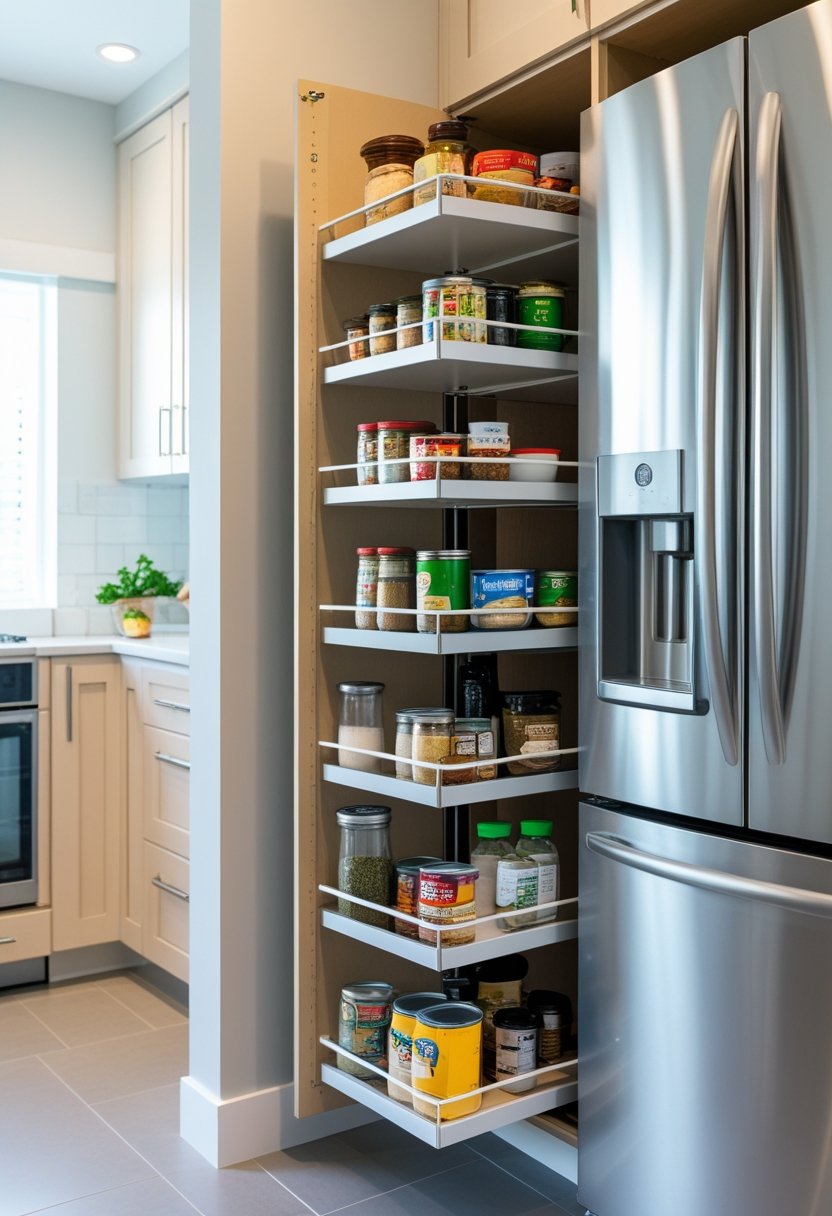
Pull-out pantry organizers help make small kitchens more efficient. They fit into narrow spaces beside the fridge or inside cabinets.
These vertical drawers slide out smoothly, keeping items visible and easy to reach. They reduce clutter and make better use of tight areas without needing major remodeling.
Incorporate under-cabinet lighting
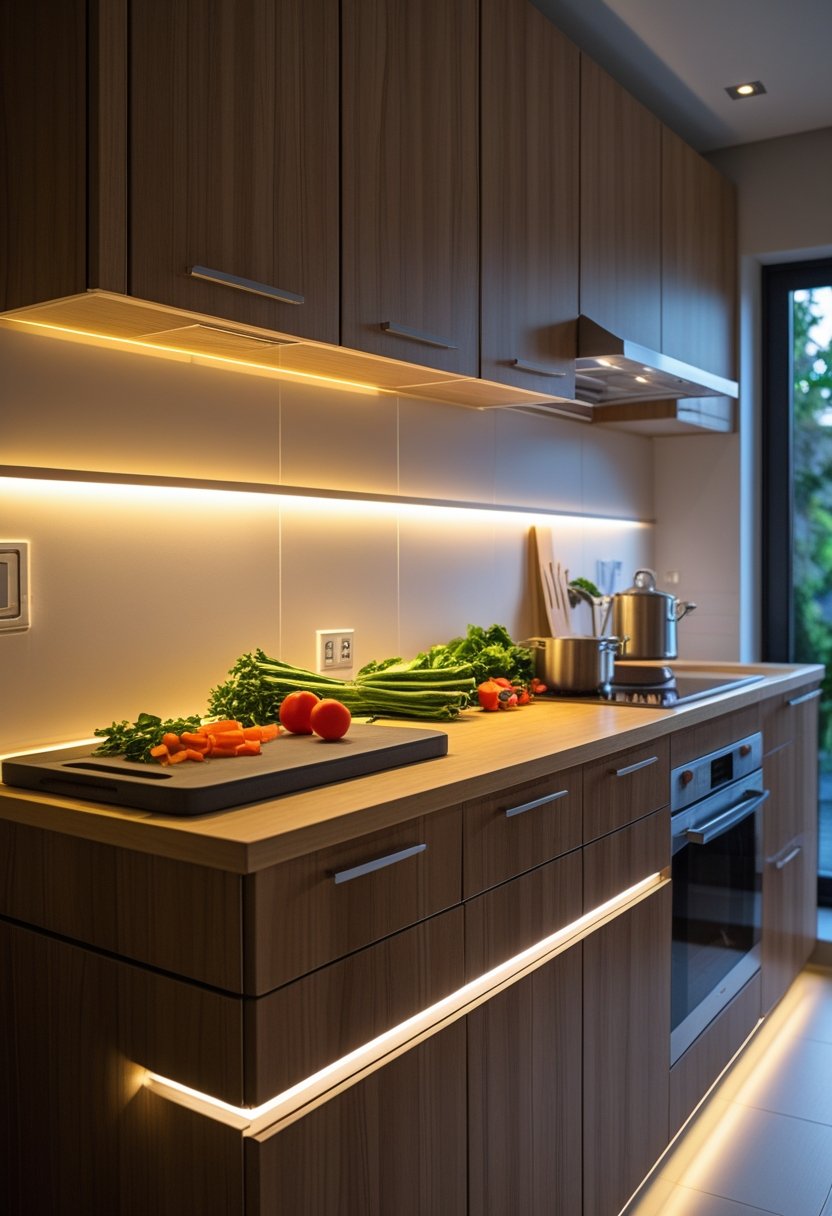
Under-cabinet lighting helps brighten work areas and adds depth to small kitchens. It reduces shadows and makes food preparation easier.
LED strips or puck lights fit well under cabinets and use little energy. Motion-sensor options add convenience by turning on automatically when someone enters the space.
Choose compact appliances
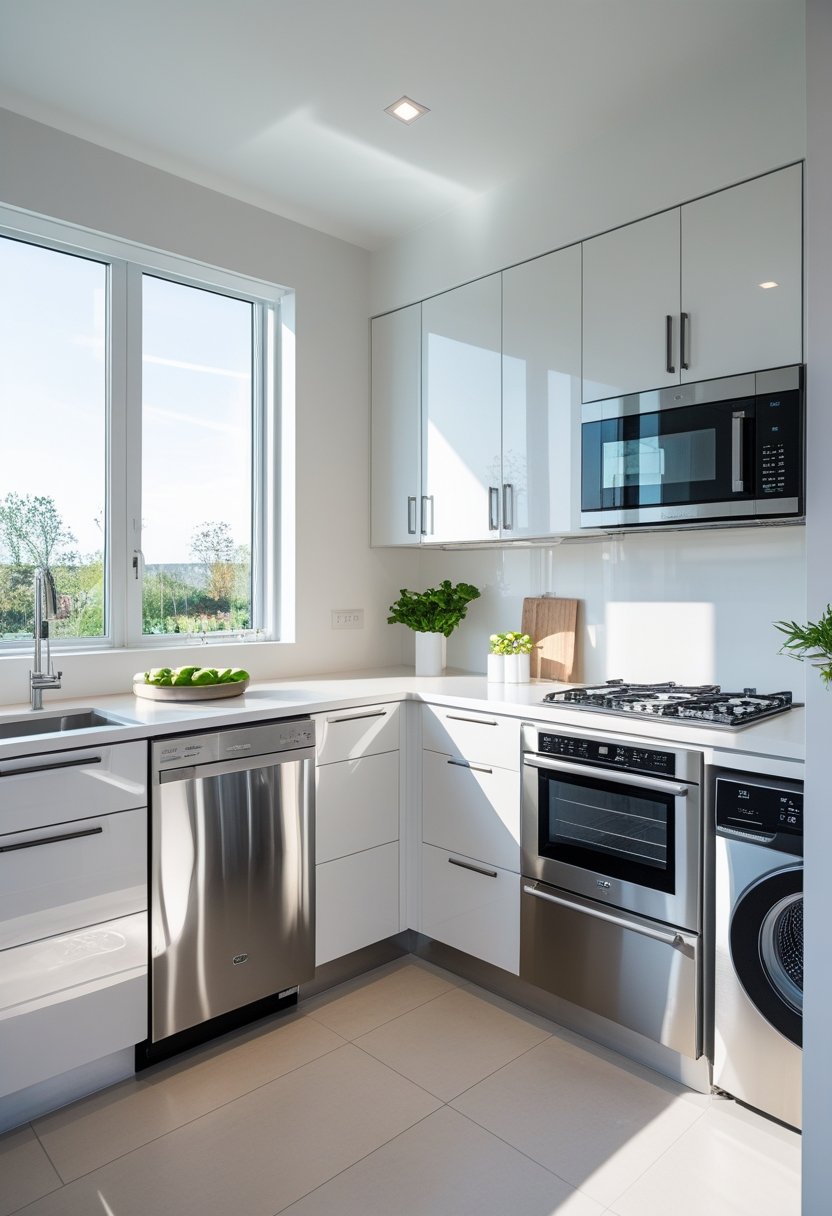
They should select appliances that fit their kitchen’s size and needs. Compact models like slim dishwashers, narrow refrigerators, and single-drawer ovens save space without reducing performance.
Many 2026 designs focus on multi-function appliances, such as combination microwave-ovens or washer-dryer units, which help keep countertops clear and kitchens efficient.
Add a fold-down breakfast bar
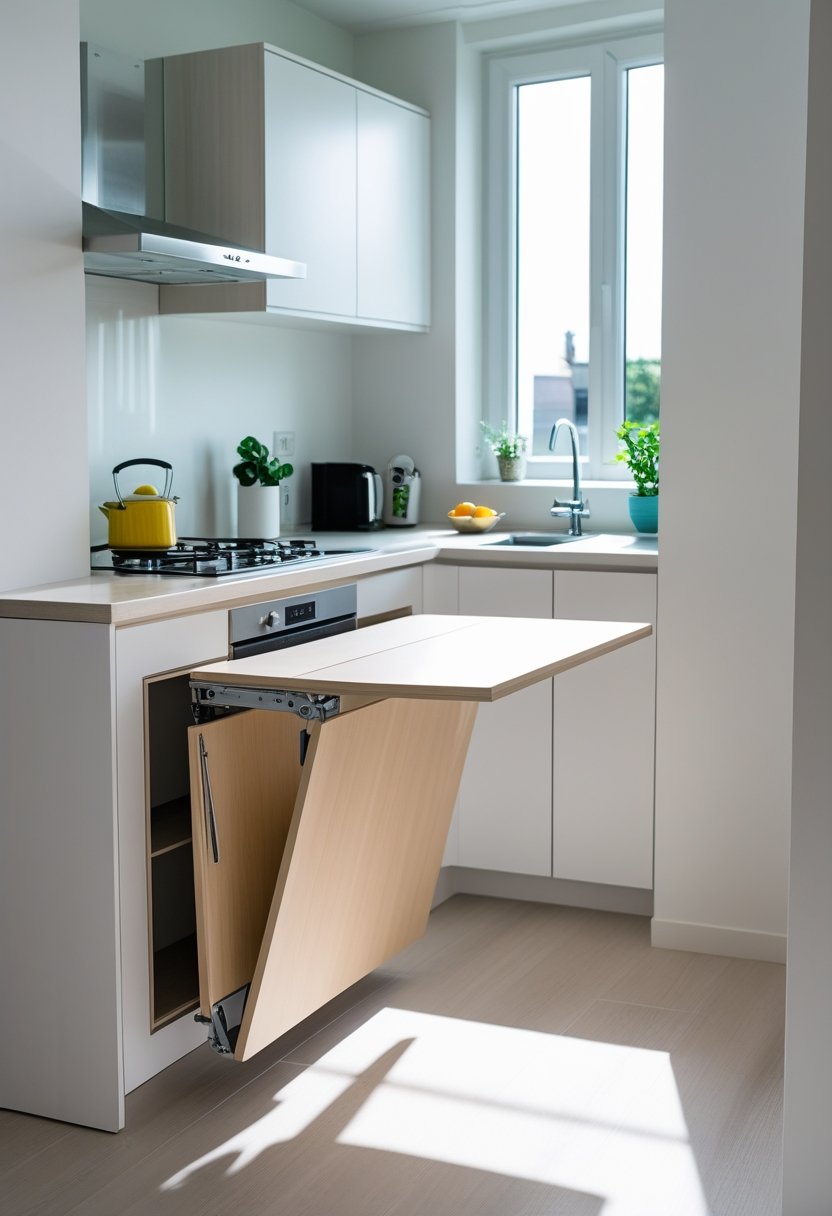
A fold-down breakfast bar helps save space in a small kitchen. It attaches to the wall and folds flat when not in use.
This design provides a quick dining or prep area without taking up floor space. It suits apartments or compact homes where flexibility matters.
Use magnetic knife strips
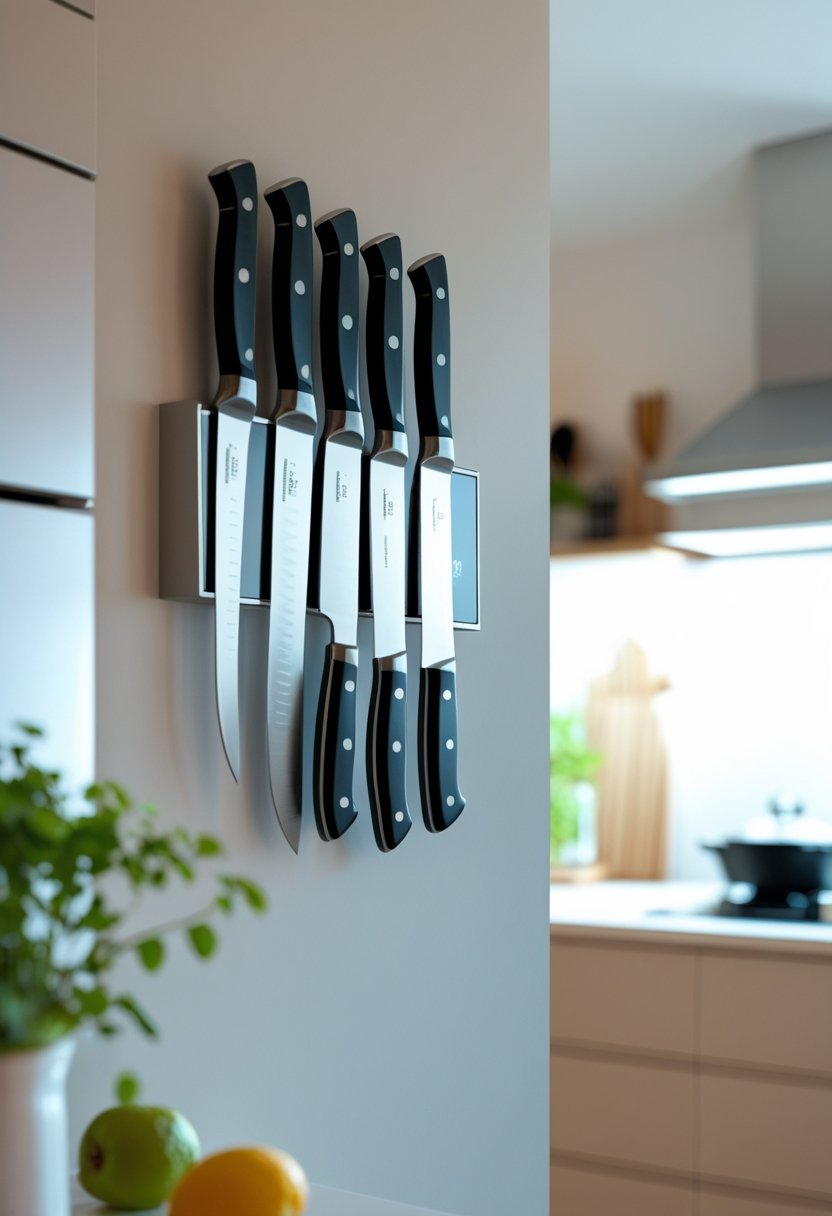
Magnetic knife strips help save counter and drawer space in small kitchens.
They keep knives visible, easy to reach, and safely stored away from crowded areas.
People can mount them on walls or under cabinets to reduce clutter and improve organization.
Install a pot rack overhead
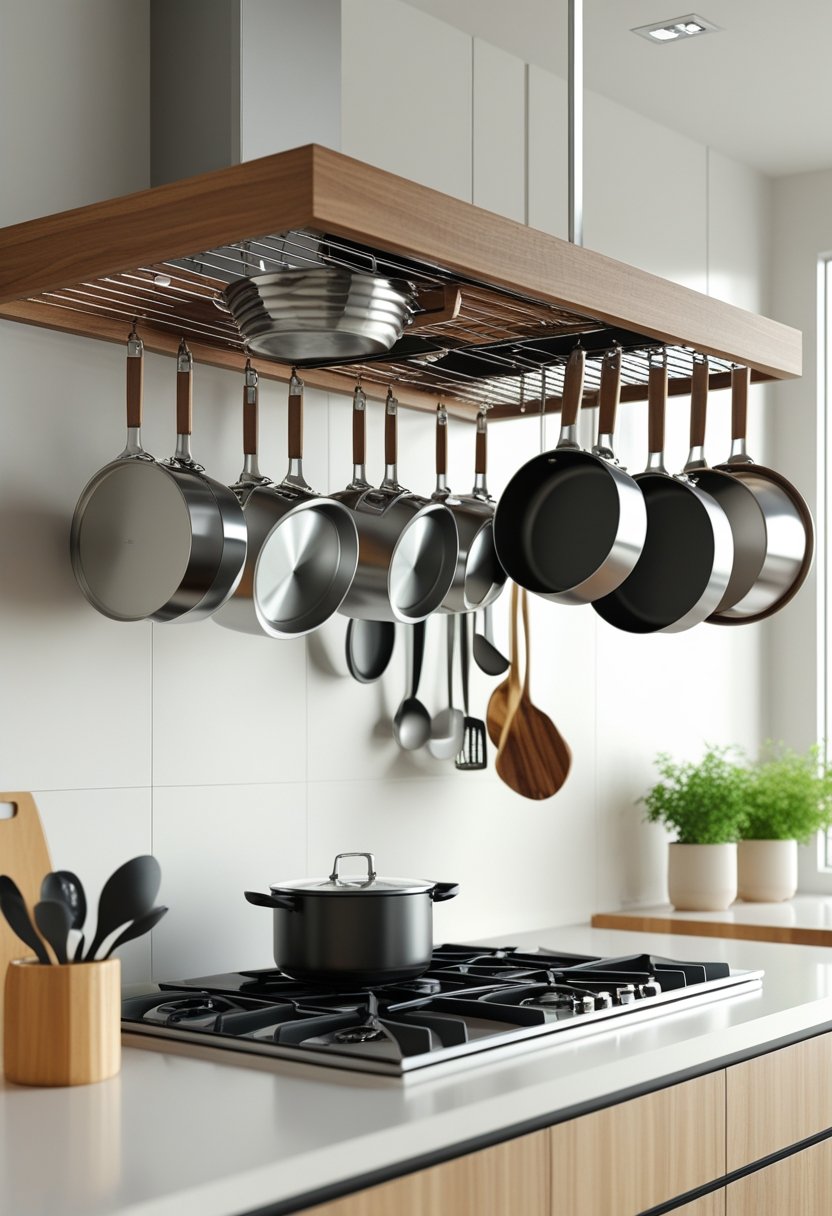
A pot rack helps free up cabinet space by keeping cookware within easy reach.
They can hang above an island or along a wall, depending on the kitchen layout.
Metal grids or wooden frames offer sturdy options that fit both modern and traditional designs.
Opt for a slim dishwasher
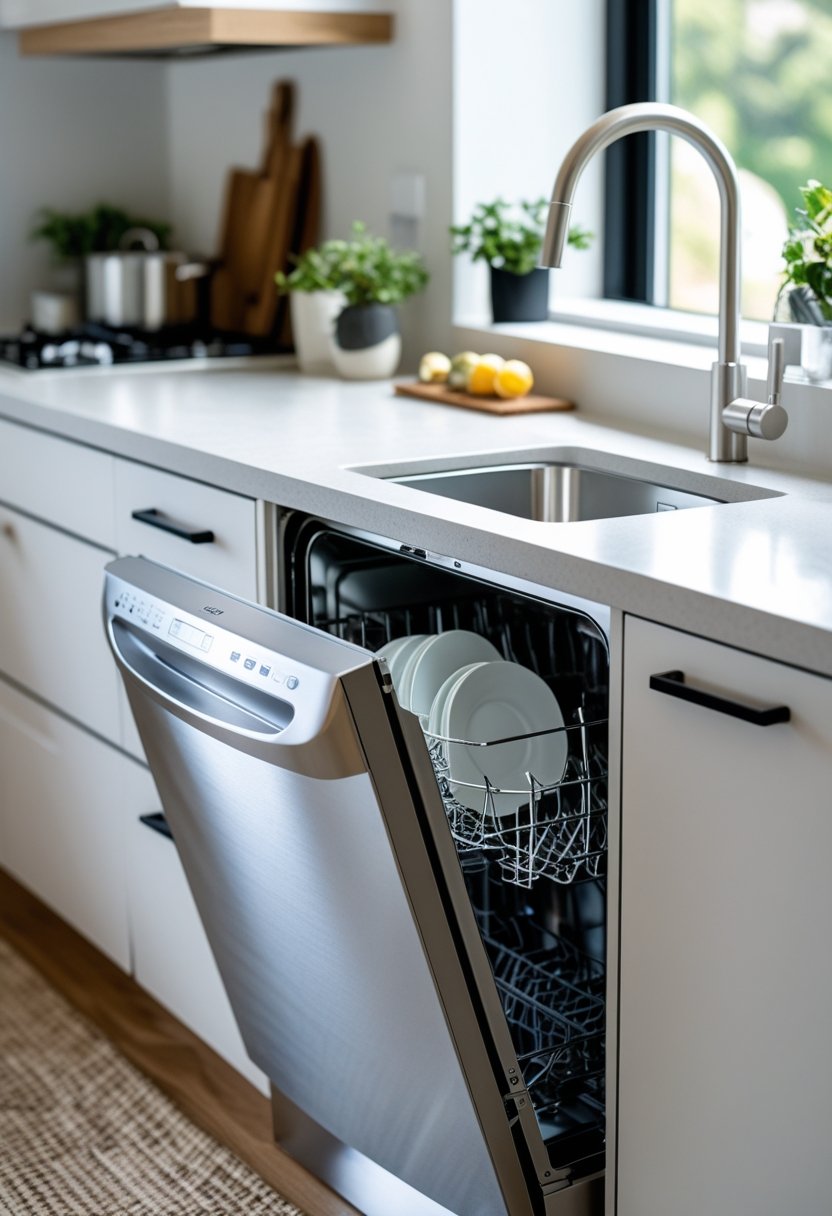
A slim dishwasher fits well in small kitchens where every inch matters. It provides the same cleaning power as standard models but takes up less space.
They can install it under the counter or in a corner to free up workspace. This choice helps maintain both function and style in compact layouts.
Use clear glass cabinet doors
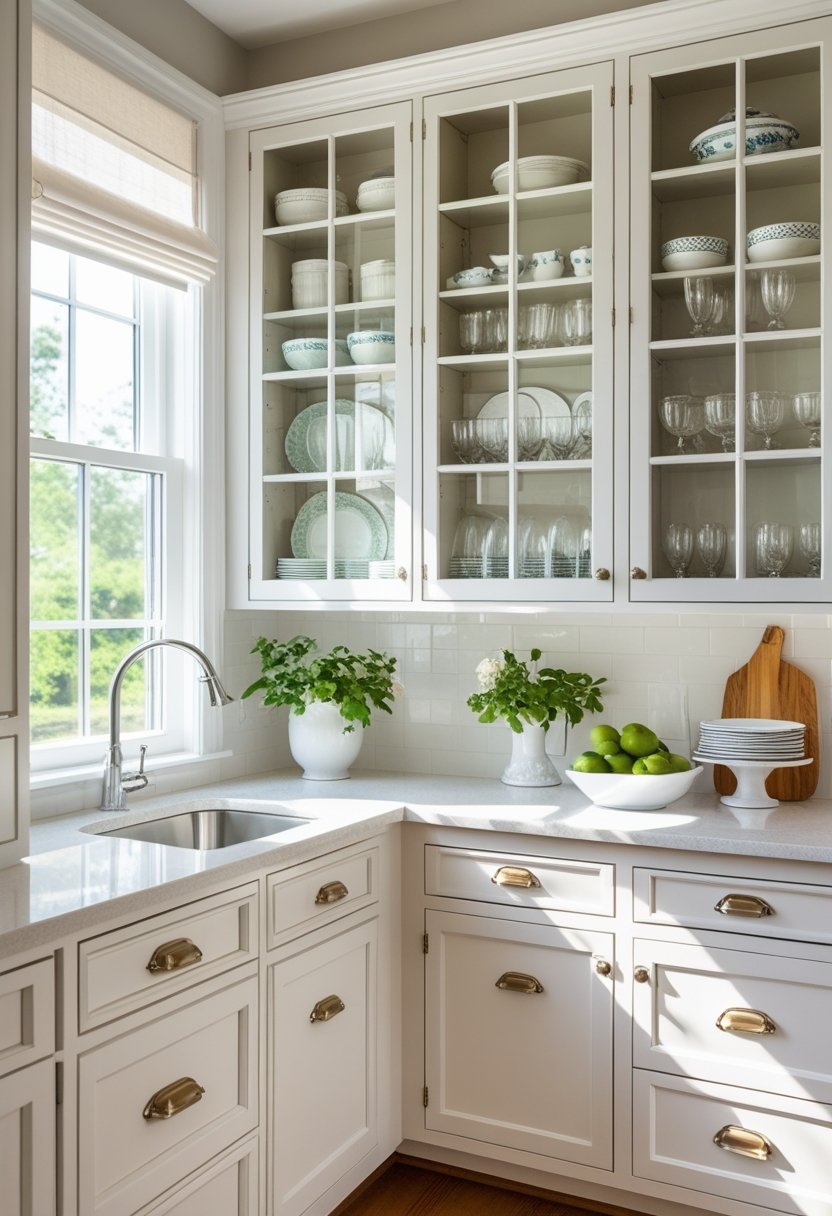
Clear glass cabinet doors help small kitchens look brighter and more open. They reflect light and reduce the feeling of tight space.
They also let homeowners display dishes or glassware neatly, adding personality without clutter.
This design works well with both modern and traditional kitchen styles.
Paint cabinets in light colors
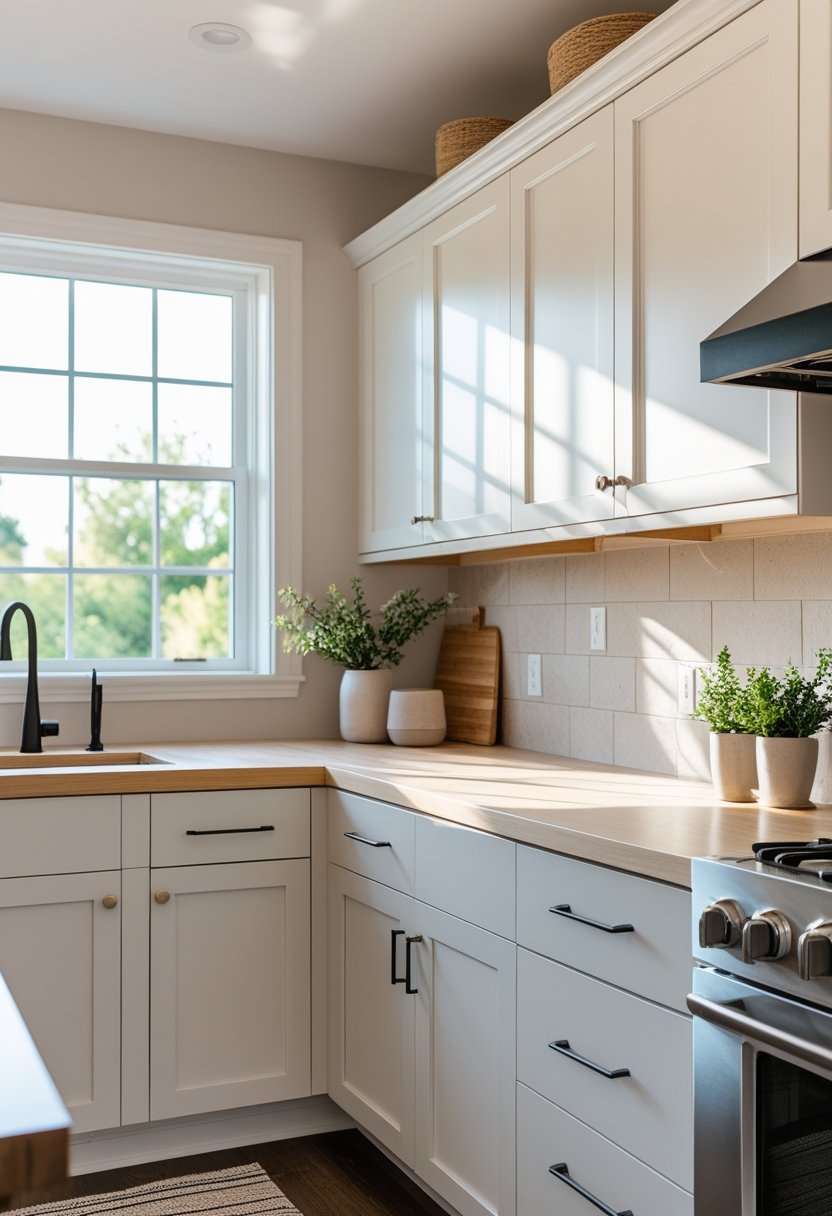
Light cabinet colors make small kitchens feel more open and bright. Shades like soft white, pale gray, or light beige reflect natural light and reduce visual clutter.
These tones pair well with simple hardware and natural materials, creating a balanced, comfortable space that feels larger and more inviting.
Install a skylight for natural light
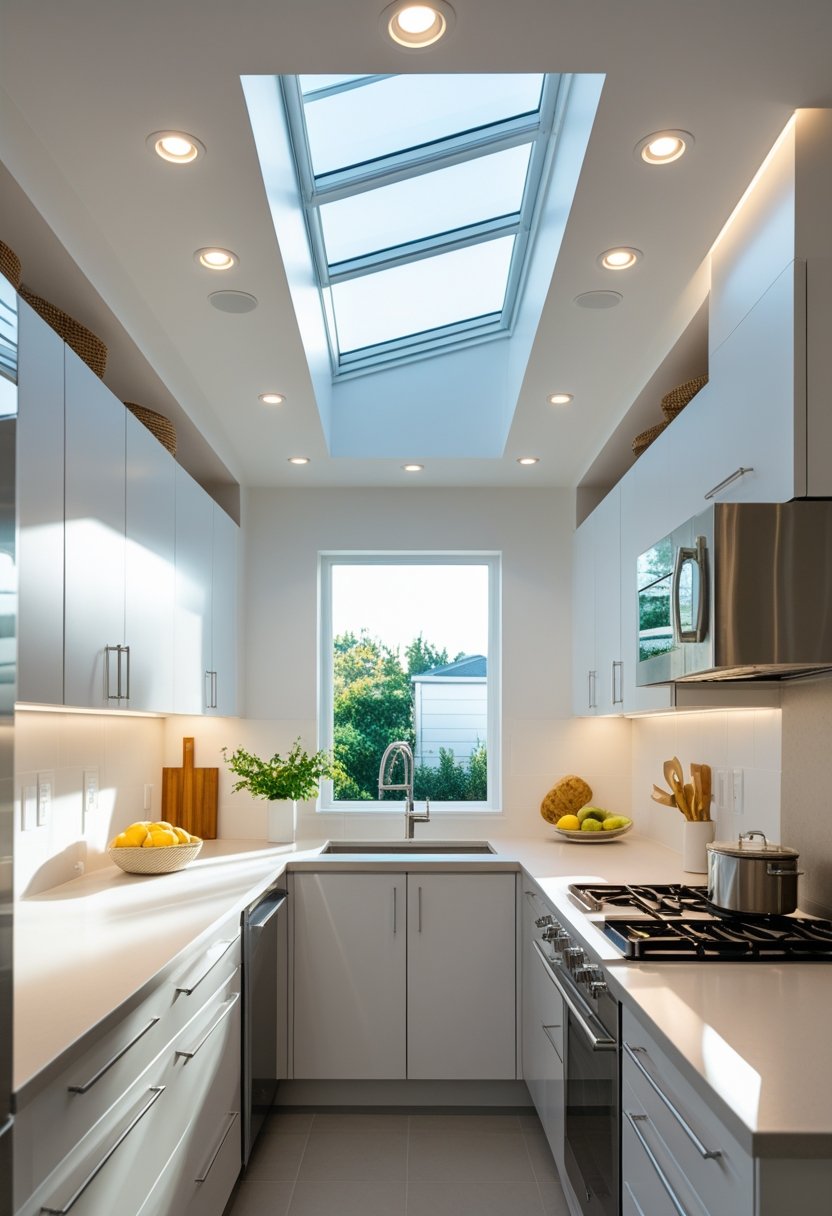
A skylight helps small kitchens feel brighter and more open. It brings in daylight from above, reducing the need for artificial lighting during the day.
By placing the skylight near the cooking or prep area, homeowners can improve visibility and create a more comfortable, inviting space without taking up wall space.
Use multi-functional furniture
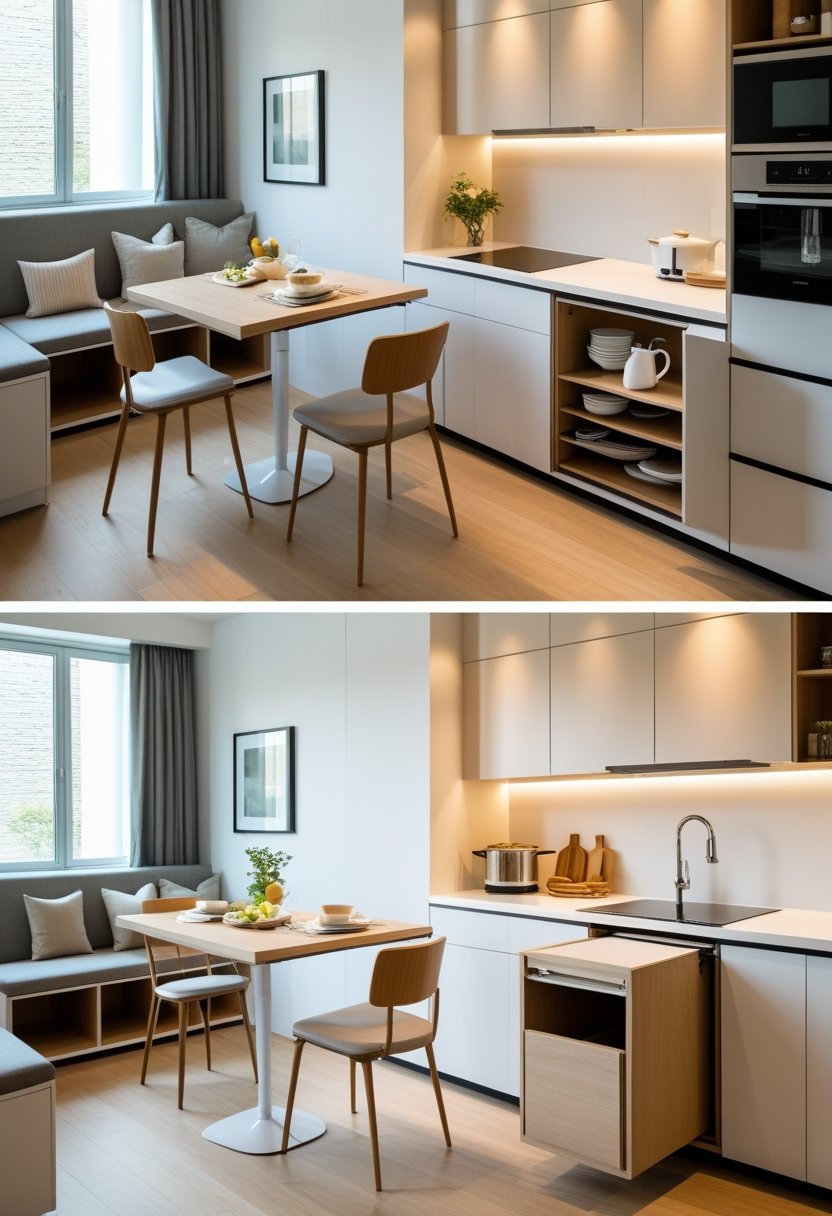
Multi-functional furniture helps small kitchens stay organized and efficient.
A fold-down table can serve as both a prep surface and a dining spot.
Storage benches, pull-out counters, and convertible islands let homeowners use limited space more effectively without sacrificing comfort or style.
Add a rolling kitchen island
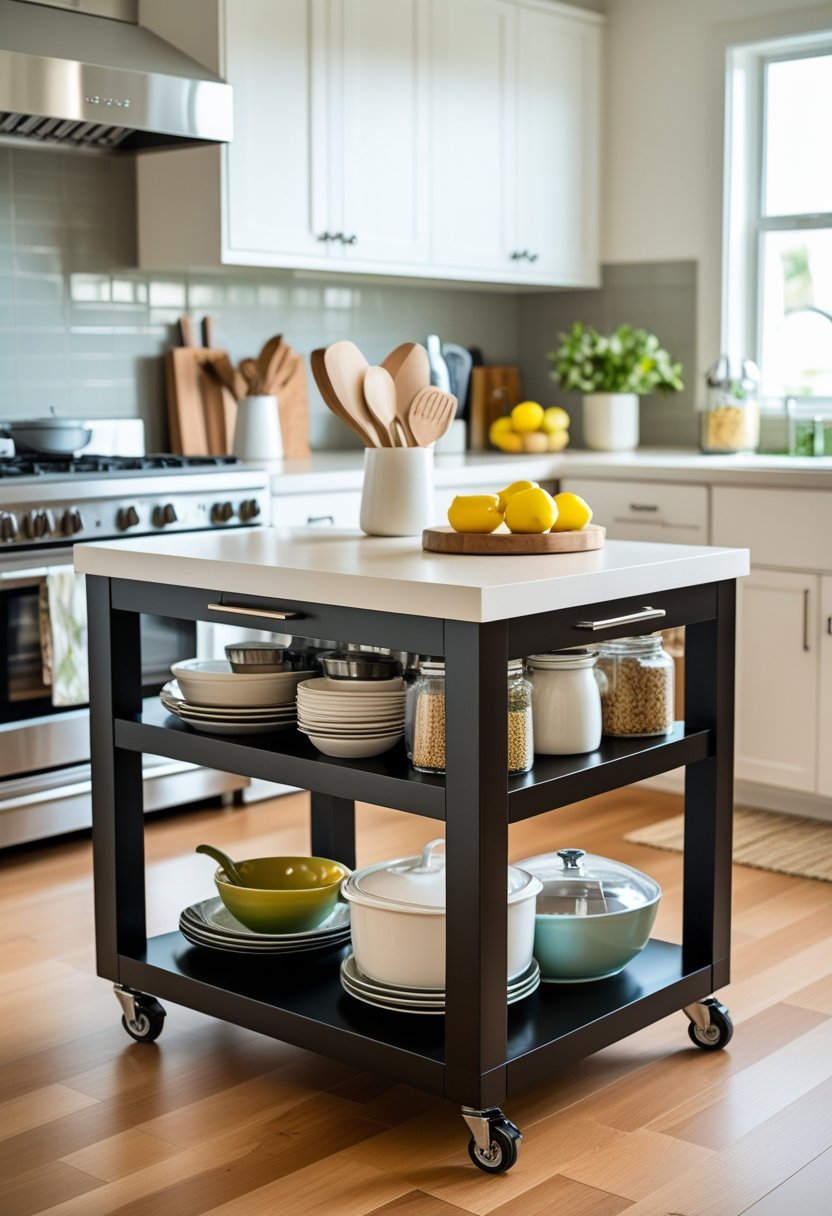
A rolling kitchen island gives small kitchens extra workspace and storage without taking up permanent space.
They can move easily to open the area for cooking or dining.
Many models include shelves or drawers, making them practical for organizing utensils, cookware, or pantry items.
Incorporate vertical storage solutions
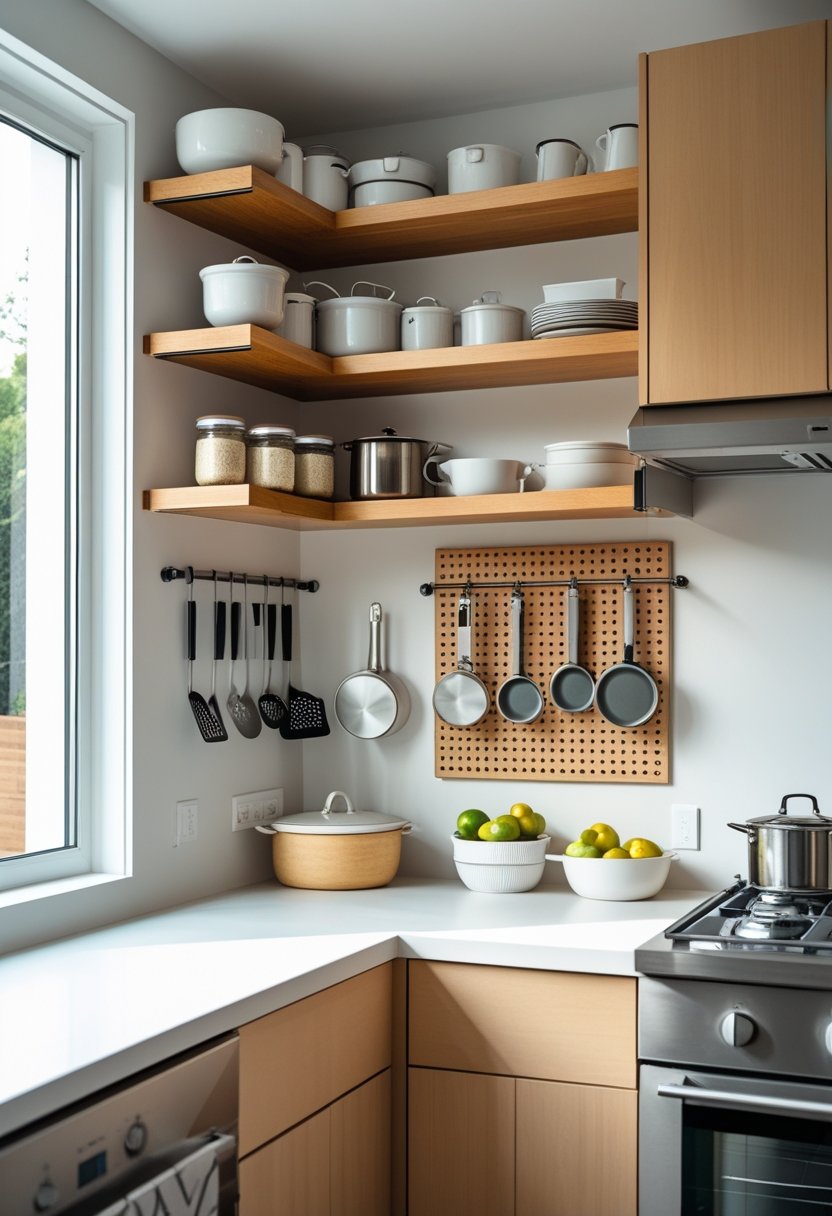
Vertical storage helps small kitchens use wall and ceiling space efficiently. Installing open shelves, pegboards, or wall-mounted racks keeps items within reach and frees up counters.
They can also add tall cabinets or hanging rails for cookware and utensils. This approach increases storage capacity without expanding the kitchen’s footprint.
Use corner carousel cabinets
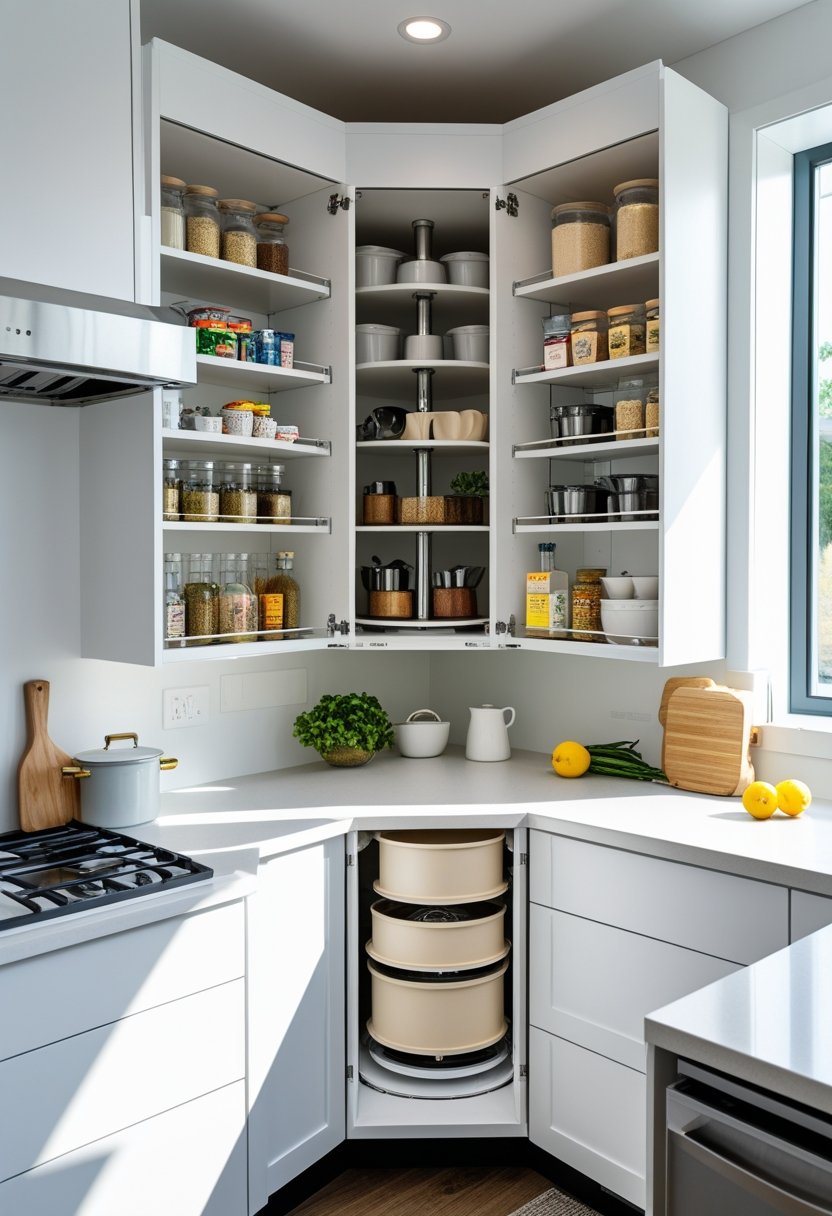
Corner carousel cabinets help make use of space that often goes unused. They rotate smoothly, allowing easy access to items stored in the back.
This design works well in small kitchens where every inch counts. It keeps cookware and pantry items organized while maintaining a clean, efficient layout.
Install a deep single-basin sink
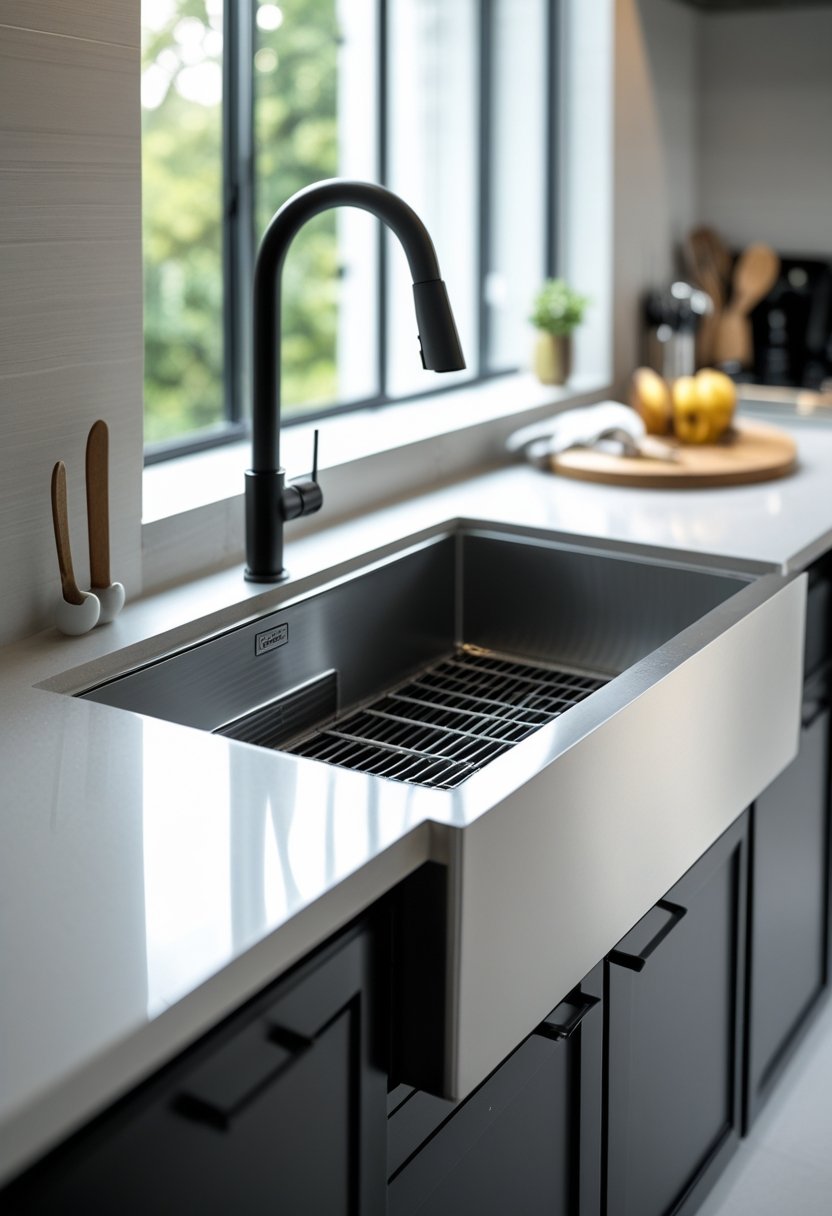
A deep single-basin sink gives small kitchens more usable space for washing large pots and pans.
It offers a clean, modern look that helps make the countertop feel less crowded.
Choosing stainless steel or composite materials keeps maintenance simple and complements most kitchen styles.
Use drawer dividers for utensils
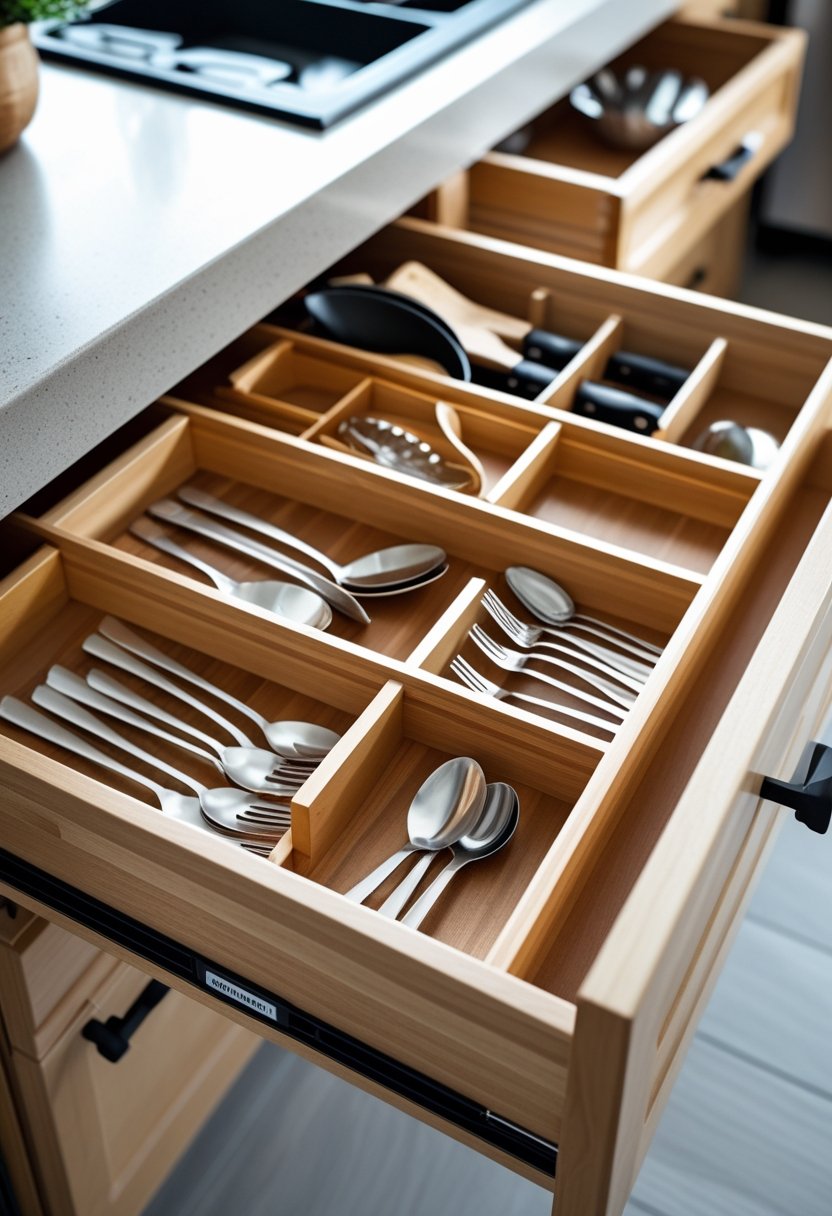
Drawer dividers help keep utensils sorted and easy to find.
They let people group items like forks, spoons, and cooking tools in separate sections.
Using adjustable or wooden dividers makes better use of small drawers and prevents clutter.
This simple setup keeps the kitchen tidy and saves time during meal prep.
Add hooks for mugs and tools
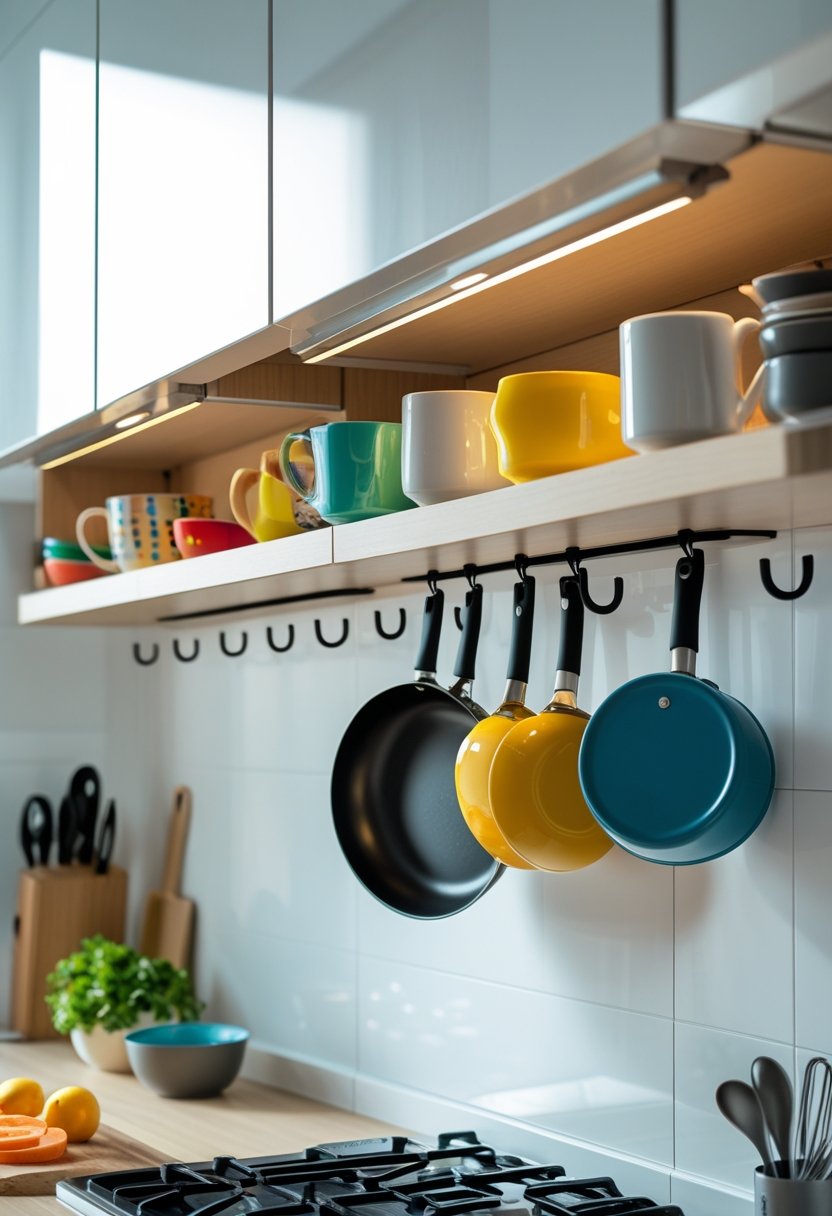
They can free up counter and cabinet space by adding small hooks under shelves or inside cabinets.
Hooks hold mugs, utensils, or small pans, keeping items easy to reach.
Adhesive or screw-in hooks work well, but sturdy hardware prevents slipping or damage.
Choose a backsplash with reflective tiles
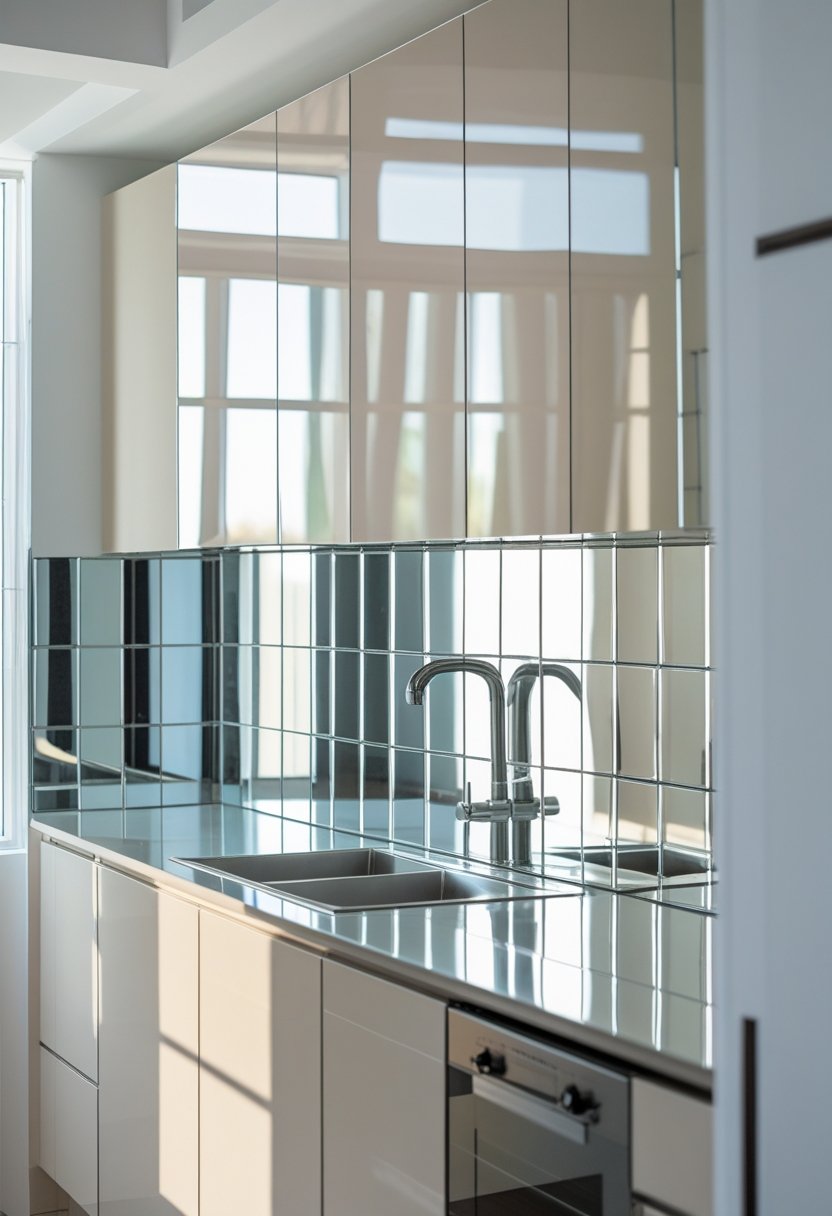
Reflective tiles can make a small kitchen feel brighter and more open.
Glass, mirrored, or glossy ceramic tiles bounce light around the room, reducing shadows and adding depth.
They pair well with neutral cabinets or modern finishes, helping the space appear clean and visually larger without major renovation.
Use open shelving for frequently used items
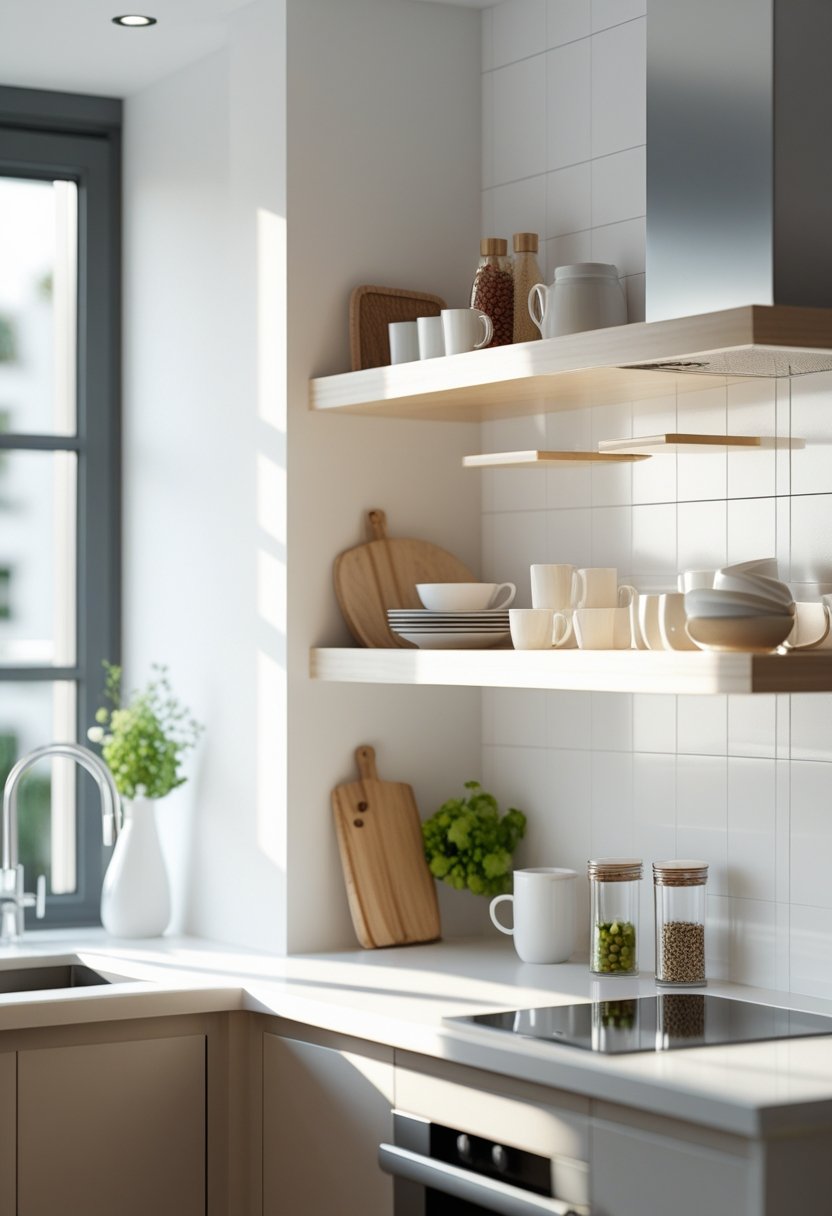
Open shelving helps small kitchens feel more spacious and organized. It keeps everyday dishes, cups, and spices within easy reach.
Floating shelves or simple wall-mounted designs reduce clutter and make the space look open. They also encourage neat arrangement since items remain visible.
Install sliding cabinet doors
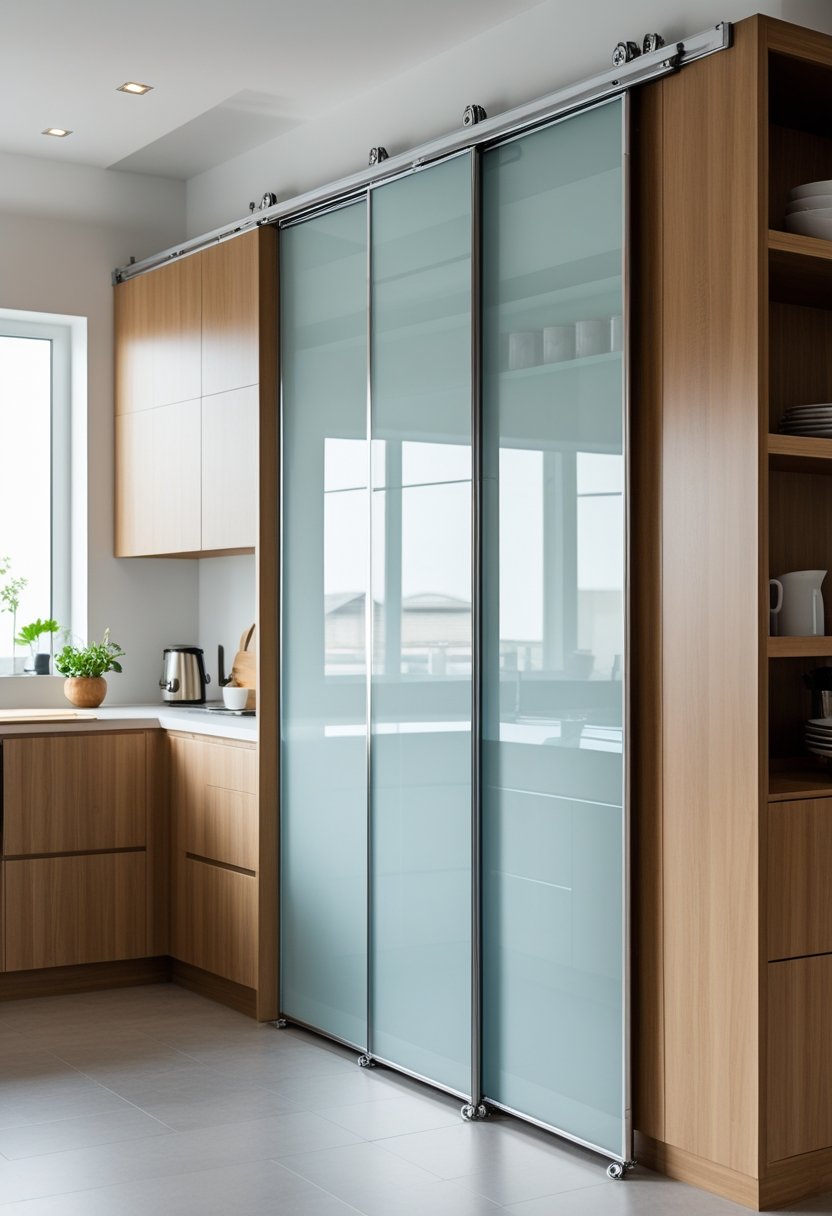
Sliding cabinet doors help save space in small kitchens. They move side to side instead of swinging out, making them practical in tight areas.
Homeowners can install them using basic tracks and rollers. Materials like wood, glass, or laminate fit most modern kitchen styles.
Proper alignment ensures smooth movement and long-lasting function.
Design Principles for Small Kitchens
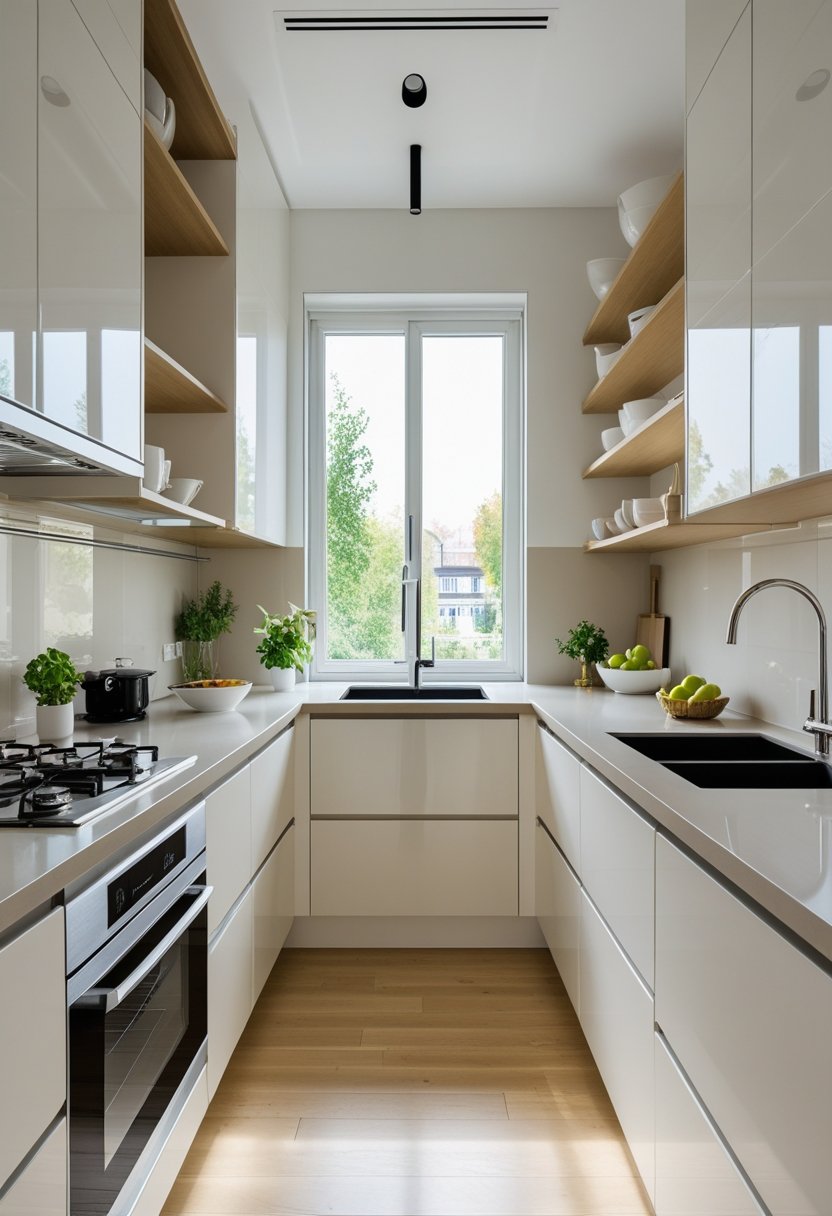
A well-designed small kitchen uses space efficiently, improves workflow, and keeps the room feeling open. Smart use of height, light, and layout helps create a kitchen that functions smoothly without feeling crowded.
Maximizing Vertical Space
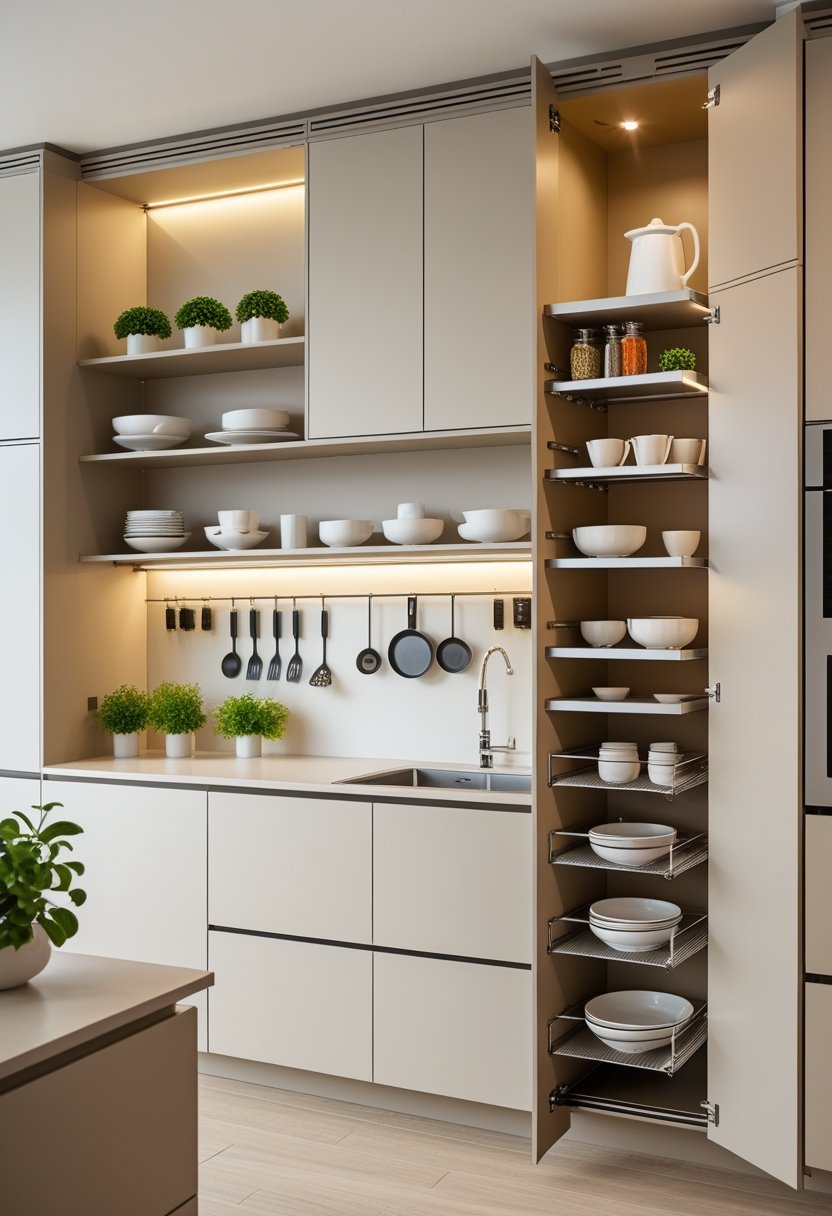
Using the full height of a kitchen helps free up counter and floor space. Tall cabinets, open shelving, and hanging storage make use of otherwise wasted areas. Homeowners can store less-used items on higher shelves and keep daily items within easy reach.
Ideas for vertical storage:
- Install ceiling-high cabinets with adjustable shelves.
- Add a rail system for utensils or small pans.
- Use magnetic strips for knives or spice jars.
A mix of closed and open storage keeps the kitchen organized and visually balanced. Open shelves can display dishes or plants, while closed cabinets hide clutter. In 2026 designs, slim pull-out pantries and built-in wall organizers are popular for small kitchens.
Optimizing Lighting Solutions
Proper lighting makes a compact kitchen feel larger and more comfortable. Layered lighting—combining ambient, task, and accent sources—creates both function and warmth.
Lighting types to consider:
| Type | Purpose | Example |
|---|---|---|
| Ambient | General illumination | Recessed ceiling lights |
| Task | Focused work light | Under-cabinet LED strips |
| Accent | Visual interest | Pendant lights over counters |
Light colors and reflective finishes also help bounce light around the room. In 2026, many small kitchens use LED lighting integrated into cabinets or shelves for even illumination. Dimmable lights let users adjust brightness for cooking or dining.
Choosing Functional Layouts
A good layout ensures smooth movement between cooking, cleaning, and storage zones. The work triangle—the path between the sink, stove, and refrigerator—remains a key design concept, even in small spaces.
Popular small-kitchen layouts include:
- Galley: Efficient for narrow spaces.
- L-shaped: Opens one side for dining or social areas.
- U-shaped: Maximizes counter space in compact rooms.
Designers often recommend multifunctional furniture, such as fold-down tables or movable islands, to add flexibility. In modern 2026 designs, compact appliances and built-in storage help maintain a clean, uncluttered look while keeping every area functional.
Color Schemes and Materials
Small kitchens in 2026 use light, natural tones and sleek materials to make compact spaces feel open and functional. Designers favor earthy neutrals, muted blues, and warm wood textures that balance brightness with comfort. Surfaces now combine reflective finishes and durable modern materials to enhance both style and performance.
Selecting Light and Reflective Surfaces
Light colors play a key role in visually expanding small kitchens. Soft neutrals such as warm white, sand beige, and pale gray reflect light and reduce visual clutter. Many homeowners also choose matte finishes for walls and glossy surfaces for cabinets or backsplashes to create depth.
Reflective materials like glass tiles, polished quartz, and lacquered cabinetry help bounce light around the room. This approach makes even narrow layouts appear larger and more open.
A simple combination might include:
| Surface | Recommended Finish | Benefit |
|---|---|---|
| Cabinets | Gloss or satin | Reflects light, easy to clean |
| Backsplash | Glass tile | Adds brightness and color variation |
| Countertop | Light quartz | Durable and low maintenance |
Using consistent tones across materials keeps the design cohesive and prevents the space from feeling crowded.
Incorporating Modern Finishes
Modern finishes in 2026 focus on sustainability, texture, and subtle contrast. Homeowners prefer natural wood grains, matte metals, and stone-inspired composites that offer both style and durability.
Warm wood islands or shelves pair well with brushed nickel or black hardware, giving a balanced mix of natural and industrial looks. These finishes also hide fingerprints and wear better than high-gloss options.
Designers often combine eco-friendly laminates, ceramic surfaces, and powder-coated metals to maintain a clean, modern aesthetic. This mix supports long-lasting design while keeping the space low-maintenance and visually calm.