
Dining Room Accent Wall in a Surreal-Style: 22 Creative Ideas for Bold Interiors
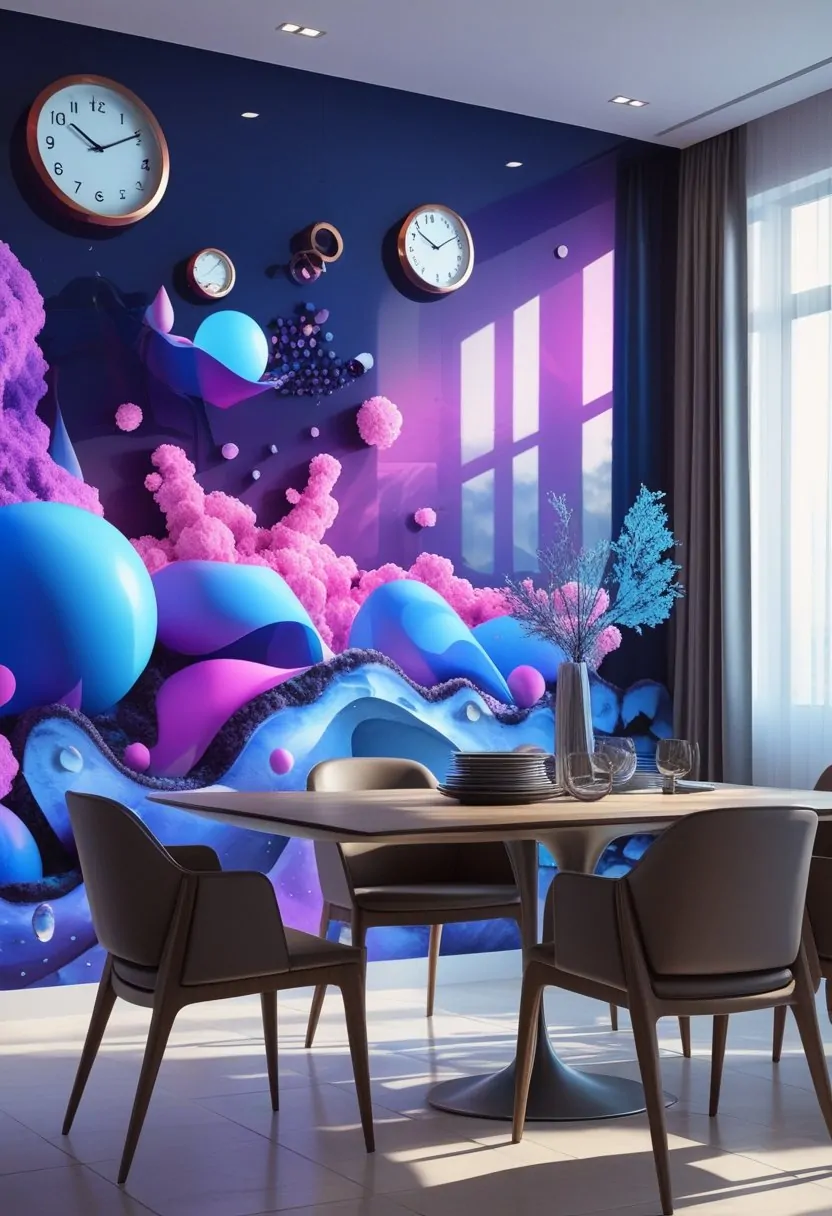
A dining room accent wall in a surreal style introduces a sense of intrigue and creativity into an everyday space. Instead of relying on traditional design choices, this approach uses unexpected elements that shift the way a room feels and functions. It allows a dining area to move beyond simple decoration and become a focal point that sparks curiosity and conversation.

By blending unusual colors, shapes, and textures, a surreal-style accent wall creates a setting that feels imaginative yet intentional. This design direction opens the door to exploring bold artistic choices that balance function with visual impact, giving any dining room a distinctive and memorable atmosphere.
Dreamlike Color Gradients
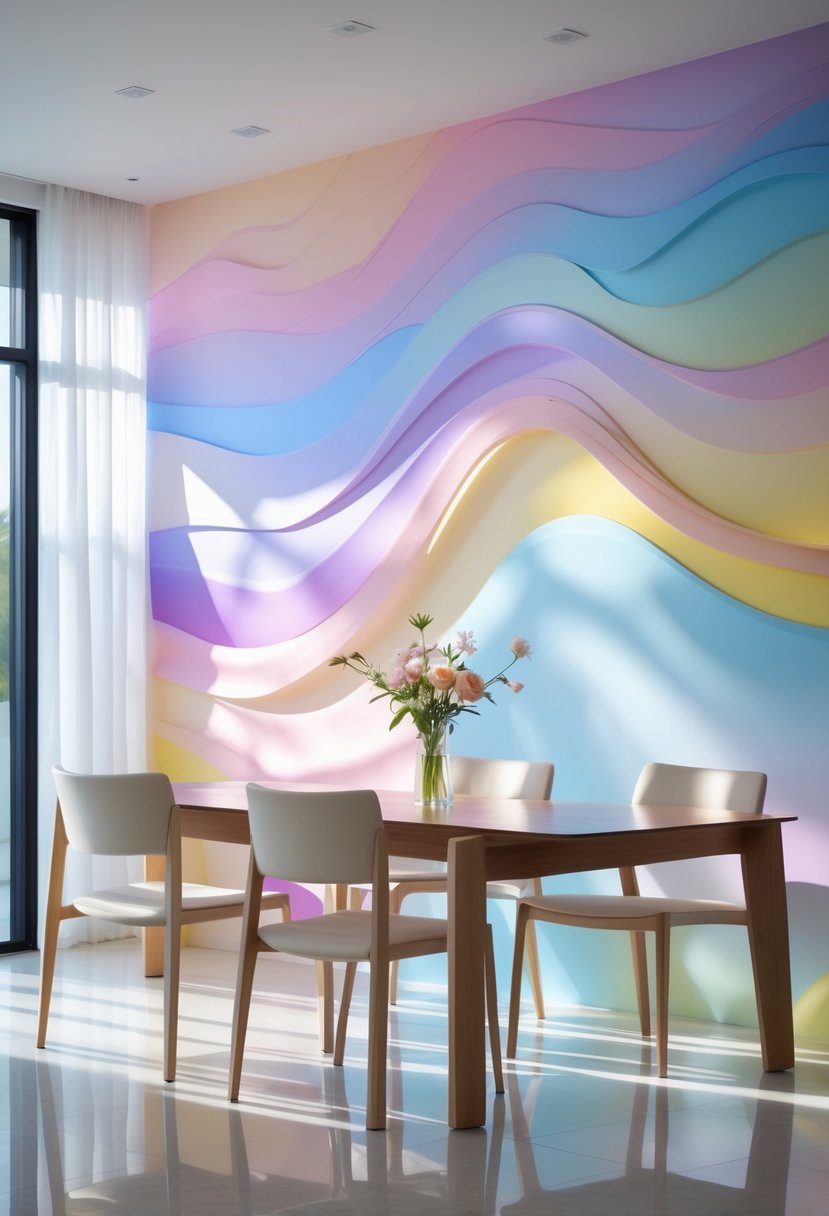
They can use soft gradients to create a smooth flow of color across the wall. This approach adds depth without overwhelming the space.
Shifts from light to dark tones can make the dining area feel more dynamic. Gradients in muted blues, pinks, or greens often work well.
A gradient wall pairs easily with simple furniture. This balance keeps the surreal effect subtle yet noticeable.
Optical Illusion Patterns

Optical illusion patterns add depth and movement to a dining room accent wall. They guide the eye and make the space feel more dynamic.
Geometric shapes, repeating lines, or fractal-inspired designs create subtle shifts in perception. These patterns can make walls appear larger or add visual interest without extra decoration.
Abstract Geometric Shapes

Abstract geometric shapes bring structure to a surreal dining room accent wall. They use lines, circles, triangles, and other forms to create visual rhythm.
When arranged with contrasting or muted colors, these shapes add depth without overwhelming the space. They can connect with furniture details and lighting for a balanced look.
3D Wall Murals
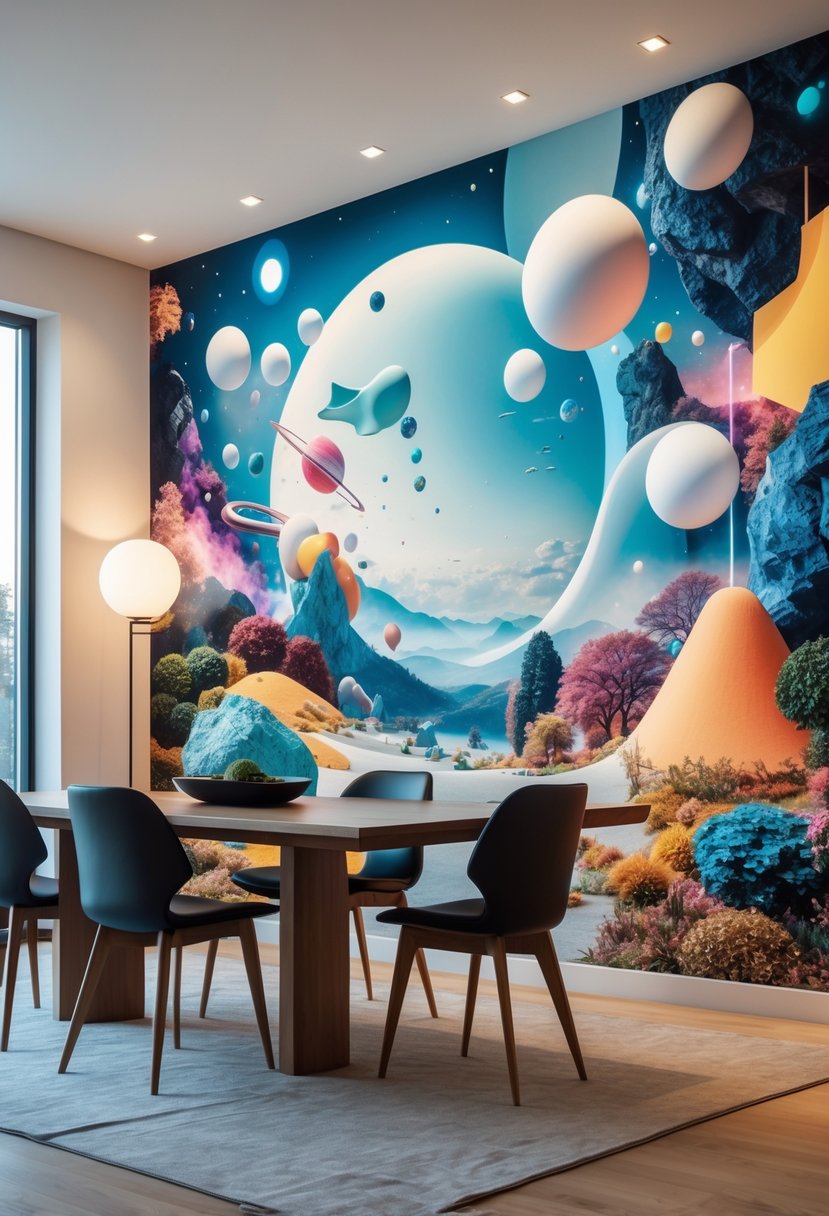
3D wall murals add depth and dimension to a dining room accent wall. They create the effect of space extending beyond the flat surface.
Designs range from abstract patterns to realistic landscapes. These options allow homeowners to choose a style that fits their dining room atmosphere.
Many murals use perspective and shading to achieve the illusion. This technique makes walls appear more dynamic and visually engaging.
Floating Object Motifs

Floating object motifs add a surreal touch by placing familiar items in unexpected positions.
They may include shapes like clocks, chairs, or abstract forms that seem to hover on the wall.
This approach creates visual interest and makes the accent wall stand out without overwhelming the dining space.
Surreal Landscape Paintings
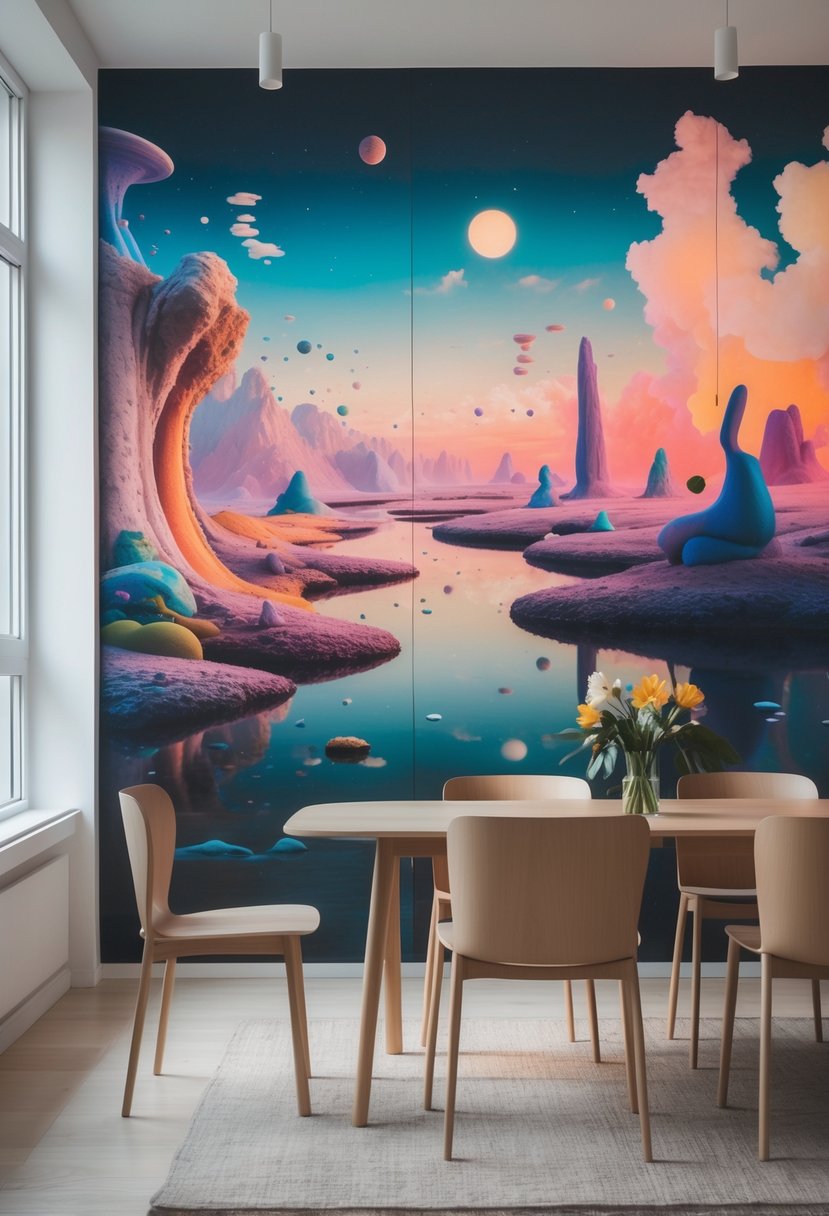
Surreal landscape paintings can add depth and intrigue to a dining room accent wall. They often mix familiar scenery with unexpected elements, creating a unique focal point.
These artworks work well in both large and small spaces, offering visual interest without overwhelming the room.
Color choices in surreal landscapes can also complement existing décor, tying the wall design to the rest of the dining area.
Mirrored Wall Panels
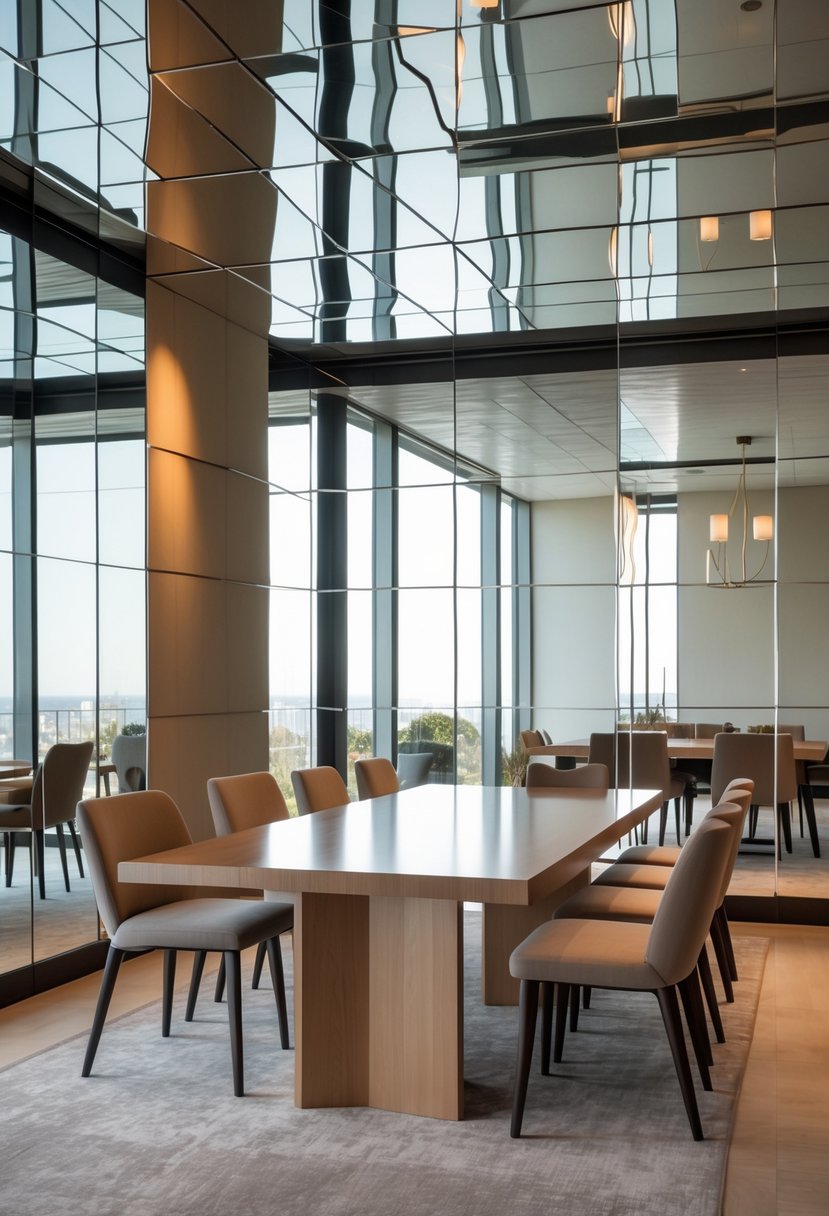
Mirrored wall panels add depth to a dining room by reflecting light and surrounding details. They can make the space feel brighter and more open.
Using panels on a full wall creates a strong focal point, while smaller sections provide a subtle accent. Both options support a clean, modern style.
Unexpected Texture Combinations
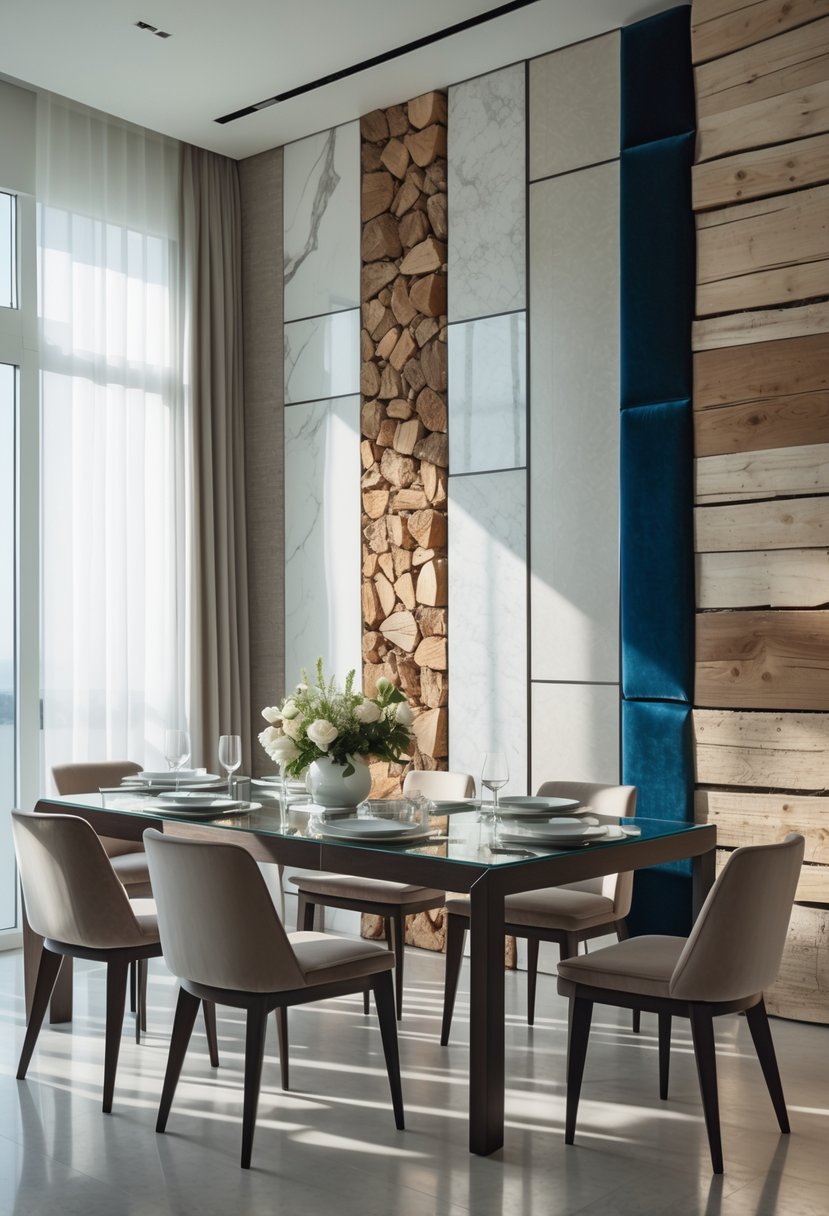
They can pair smooth plaster with rough stone to create contrast.
She might use glossy tiles beside matte wood panels for balance.
They often mix fabric wall coverings with metallic finishes to add depth.
Soft Pastel Hues with Bold Accents

Soft pastel tones create a calm backdrop that works well in dining rooms. Colors like pale blue, mint green, or blush pink add lightness without overwhelming the space.
To prevent the room from feeling flat, designers often pair these gentle hues with bold accents. Dark chairs, metallic lighting, or patterned artwork provide balance and visual interest.
Dali-Inspired Melting Clocks
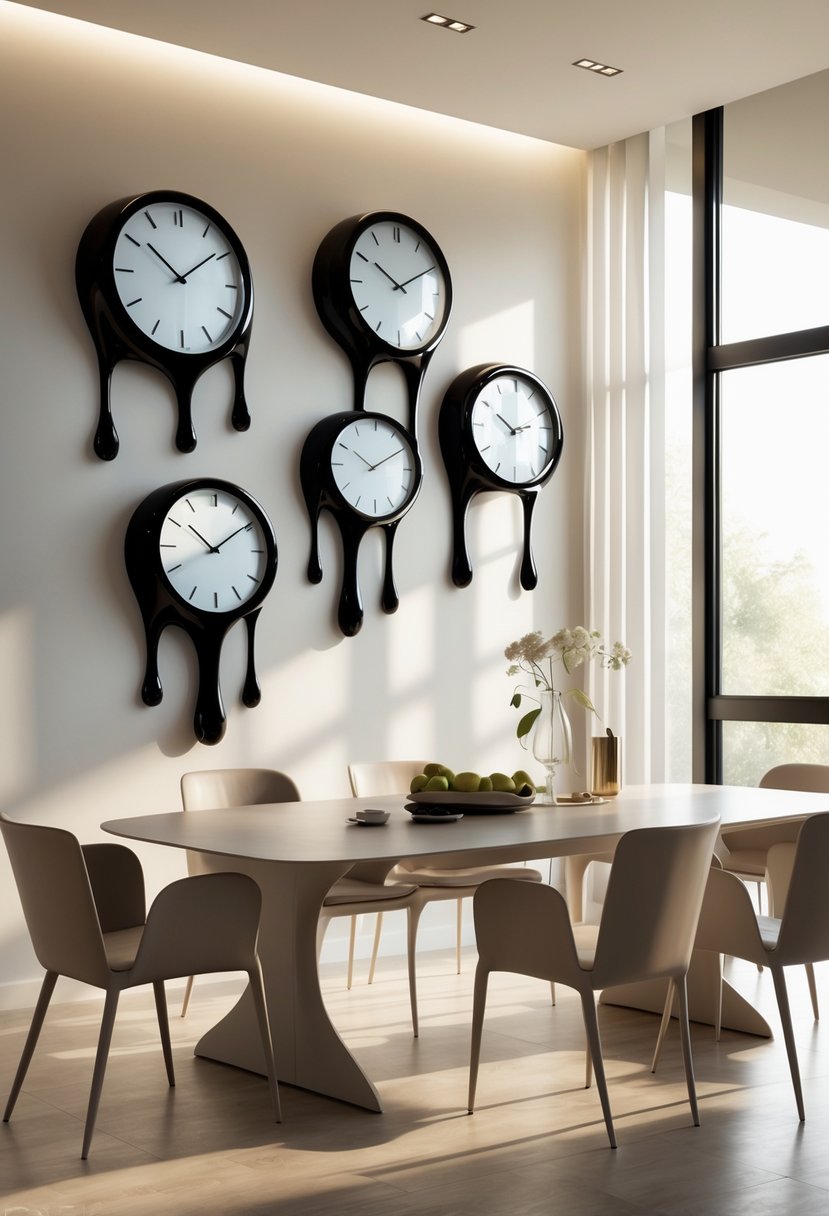
A melting clock adds a surreal focal point to a dining room accent wall. Its warped shape recalls Salvador Dalí’s famous imagery from The Persistence of Memory.
These clocks come in different materials like resin, metal, or plastic. They function as timepieces while also serving as decorative art.
Placed on a shelf or hung on the wall, the distorted design creates visual interest. It introduces a subtle artistic reference without overwhelming the space.
Floating Staircase Wall Art

Floating staircase wall art uses surreal imagery to create depth and movement on a flat surface.
These designs often feature stairs that appear to rise into the sky or vanish into abstract shapes.
They work well as a focal point in a dining room accent wall.
Oversized Floral Prints

Oversized floral prints bring scale and presence to a dining room accent wall. Their large patterns create a focal point without overwhelming the space.
They work well in surreal-style designs by blending natural forms with bold, abstract arrangements. This mix adds visual interest and supports a dreamlike atmosphere.
These prints also pair easily with neutral furniture and simple table settings. The balance keeps the room cohesive while allowing the wall art to stand out.
Shadow Play with Lighting
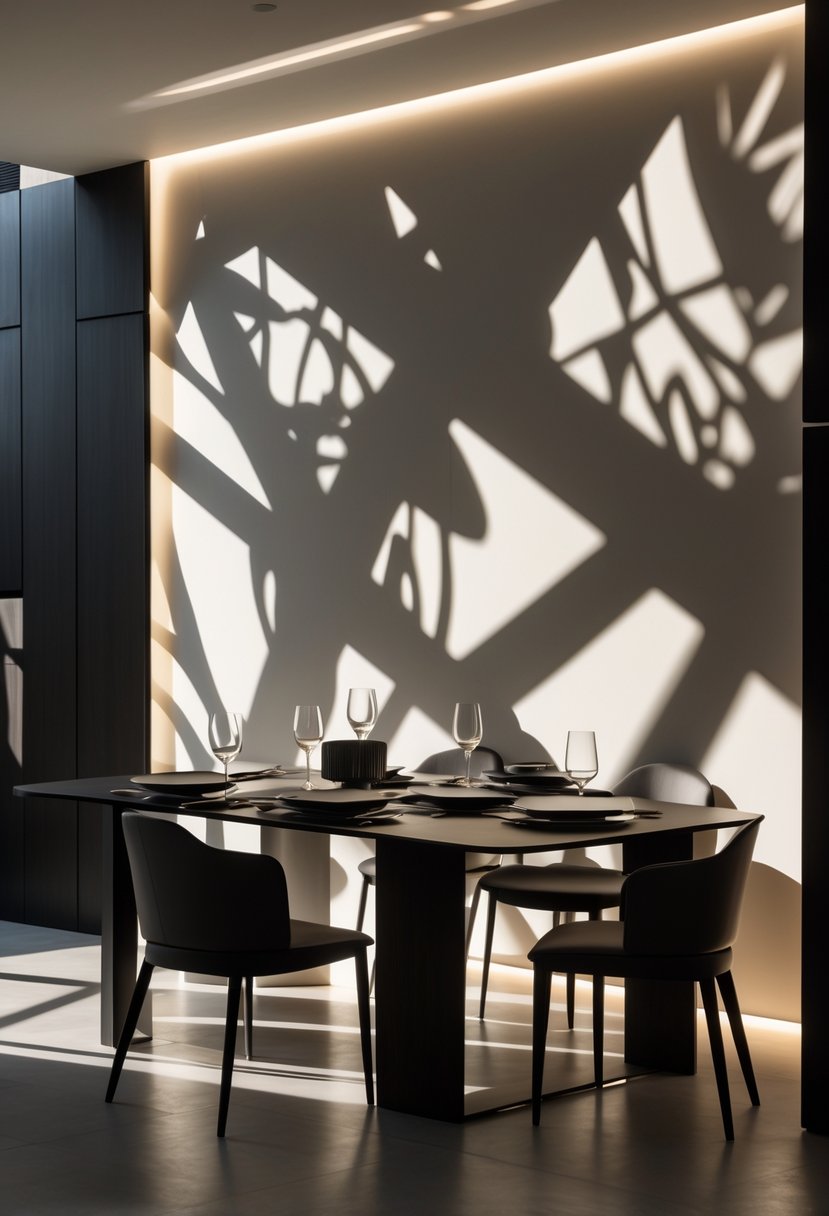
Lighting shapes how an accent wall looks throughout the day. Shadows highlight textures, patterns, and edges, giving the wall more depth.
Different fixtures, such as pendants or sconces, can cast unique shapes. These shifting forms create subtle changes that keep the space visually engaging.
Metallic Paint Effects
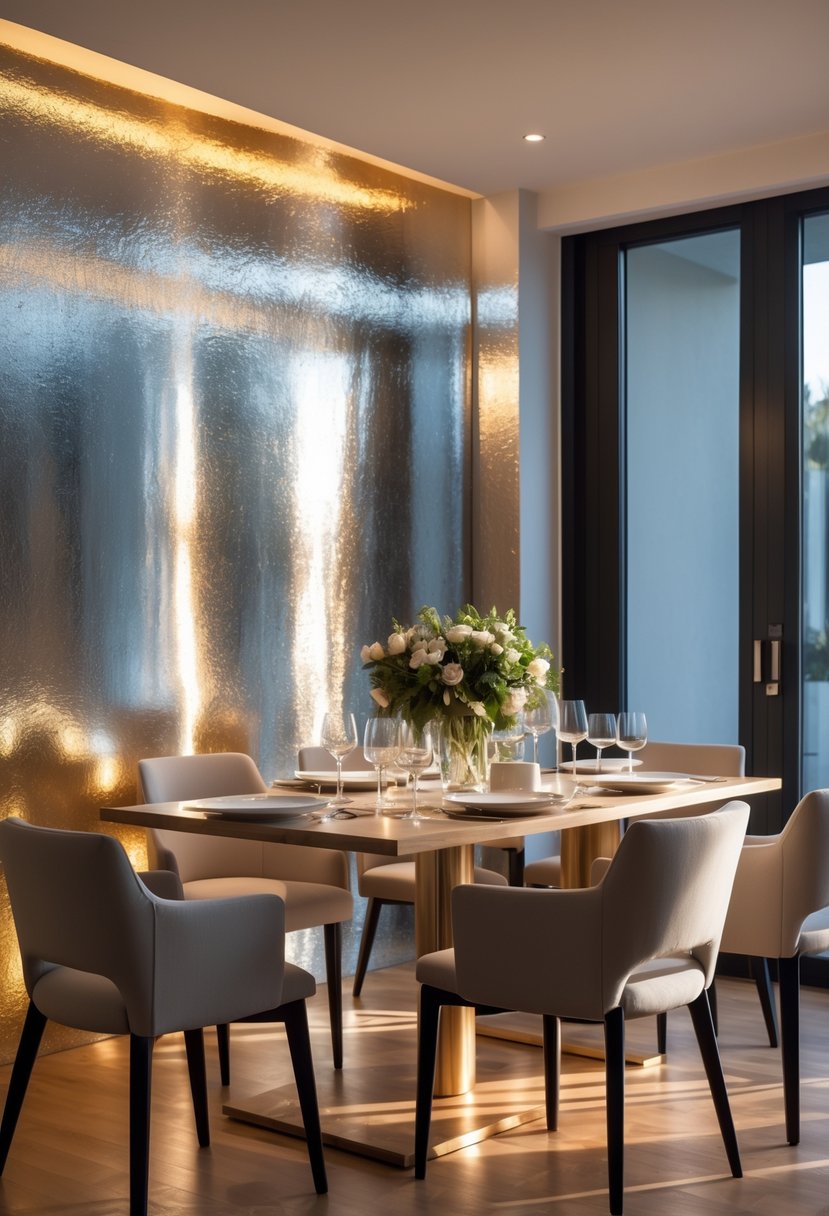
Metallic paint can add depth and texture to a dining room accent wall. It reflects light and creates subtle shifts in tone throughout the day.
Gold, silver, and bronze finishes work well with both modern and classic interiors. They provide a focal point without overwhelming the space.
Pairing metallic paint with neutral furnishings helps balance the shine. This approach keeps the room cohesive while still highlighting the wall.
Asymmetrical Wall Designs
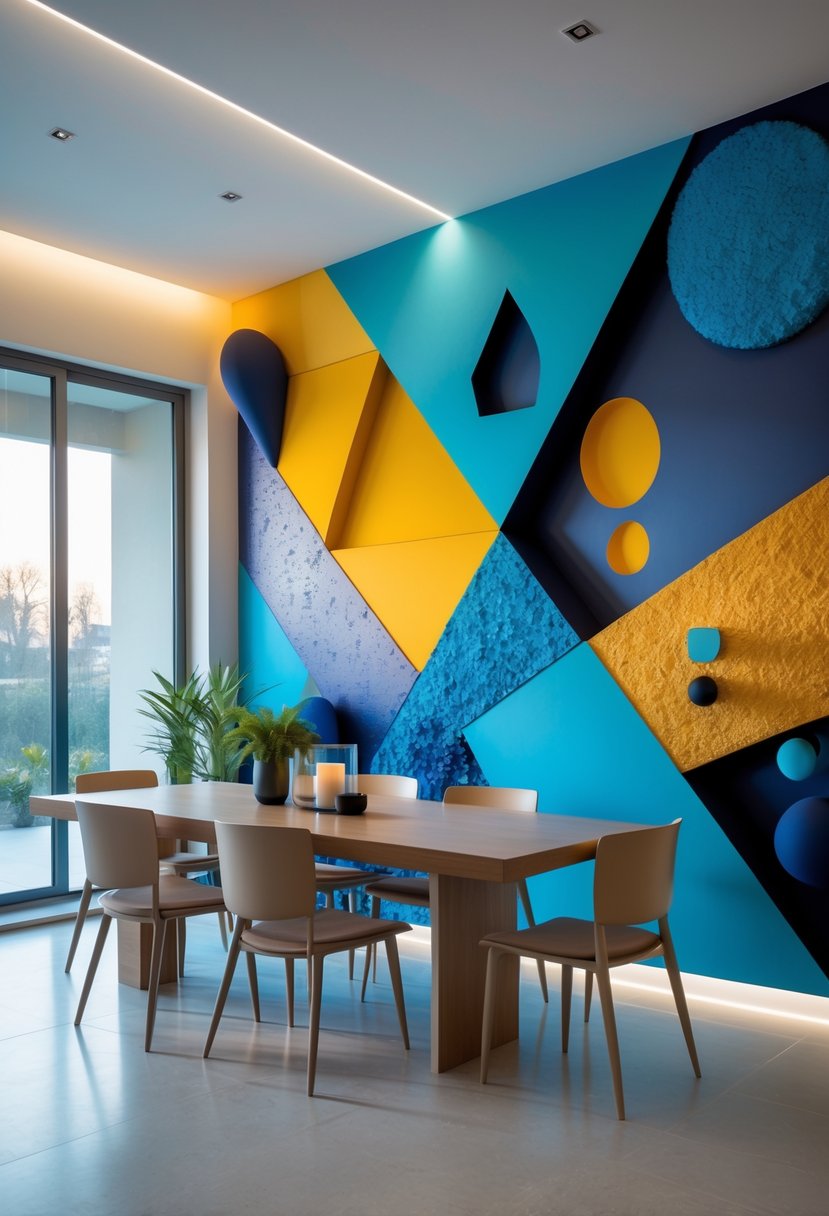
Asymmetrical wall designs use uneven shapes, patterns, or layouts to create visual interest. They break away from traditional balance and bring a modern look to dining spaces.
A gallery wall placed off-center or staggered shelving can make the room feel unique. These choices add movement without overwhelming the space.
Floating Frame Collages
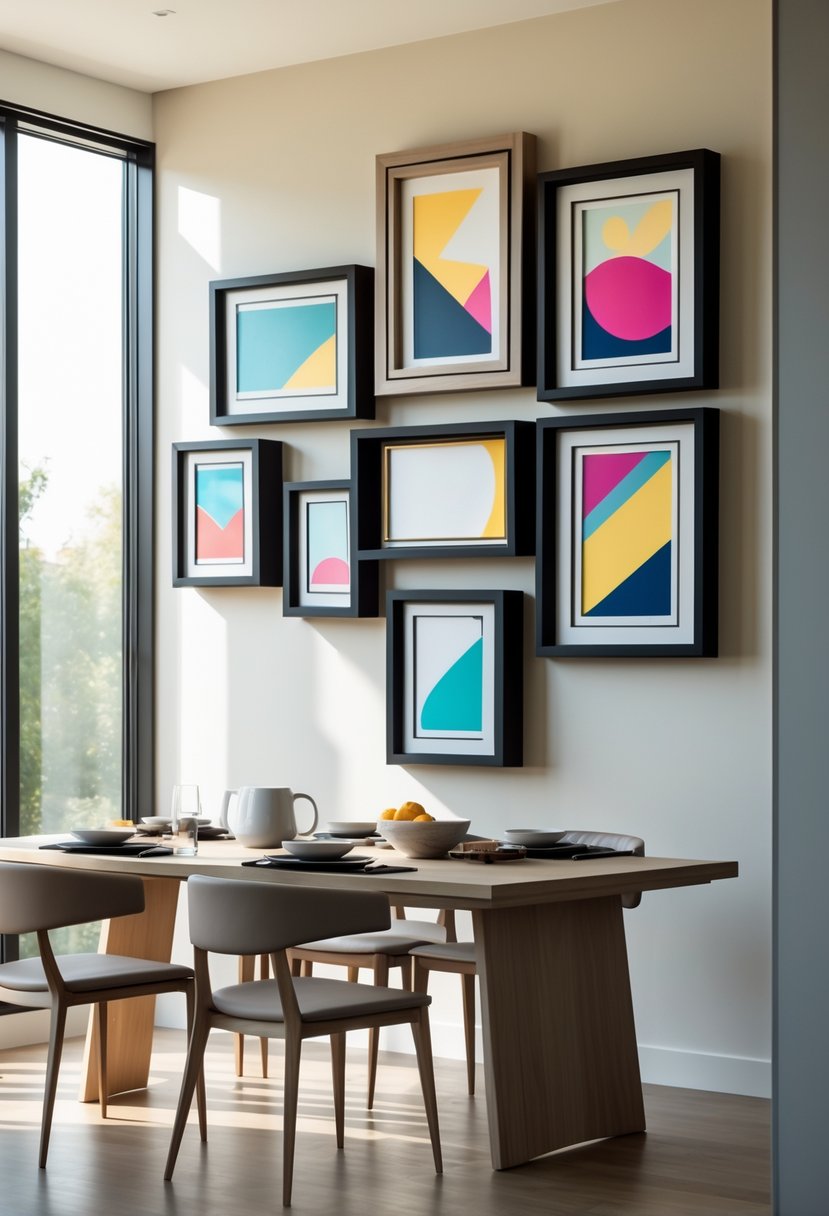
Floating frame collages add depth and structure to a dining room accent wall. They allow artwork or photos to appear suspended, creating clean lines and a modern look.
Using frames of different sizes and finishes can introduce variety without overwhelming the space. This approach works well with surreal-style art, enhancing its visual impact.
Layered Transparent Panels

They can use layered transparent panels to create depth on a dining room wall. The overlapping surfaces allow light to pass through, forming subtle shifts in color and shadow.
This approach works well with glass, acrylic, or resin materials. Each layer adds dimension without overwhelming the space.
Whimsical Creature Illustrations
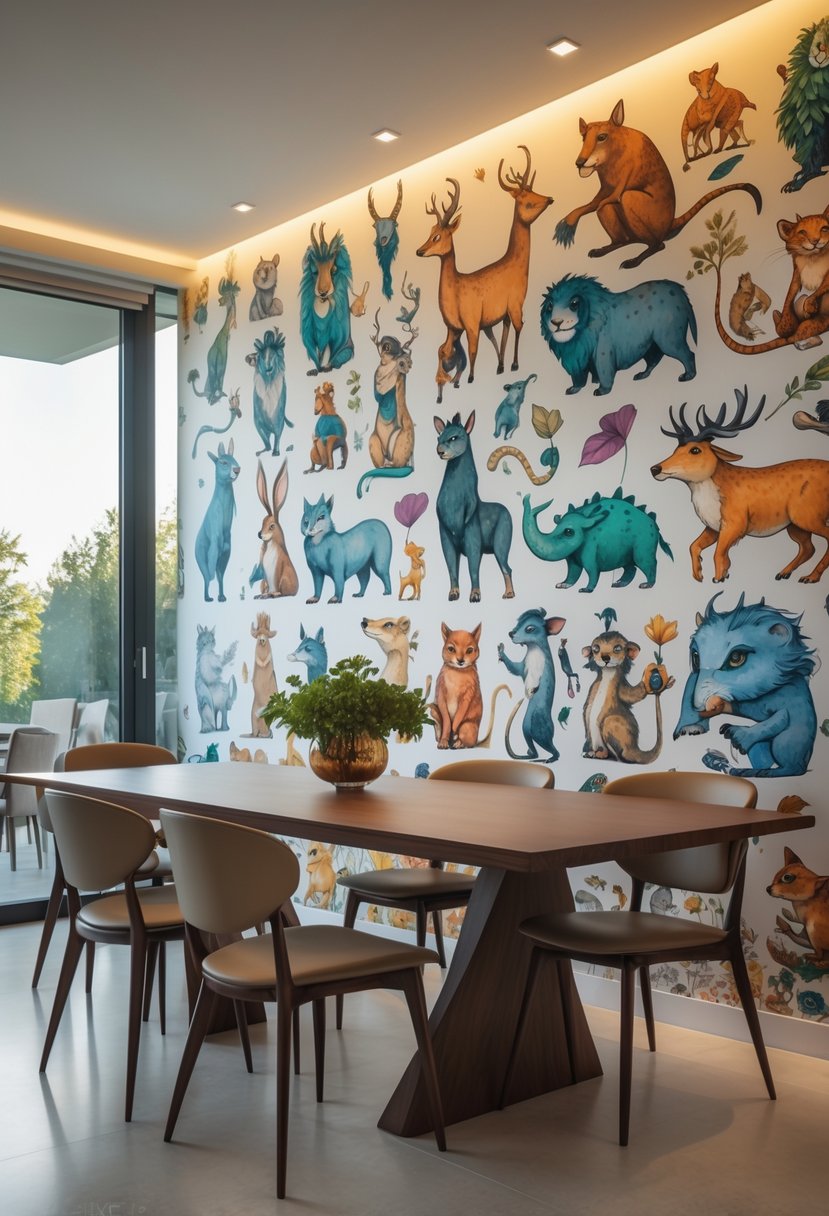
Whimsical creature illustrations bring playful energy to a dining room accent wall. They often feature surreal animals or imaginative forms with bold colors and unusual shapes.
These designs work well in spaces that aim to balance creativity with comfort. They can spark conversation while adding a distinctive visual element to the room.
Surrealist Typography Art

Surrealist typography art uses unusual lettering styles and unexpected word placement to create visual interest.
In a dining room, these designs can act as both art and conversation pieces on an accent wall.
They often combine bold fonts, abstract shapes, and dreamlike layouts to enhance the surreal atmosphere.
Distorted Perspective Murals
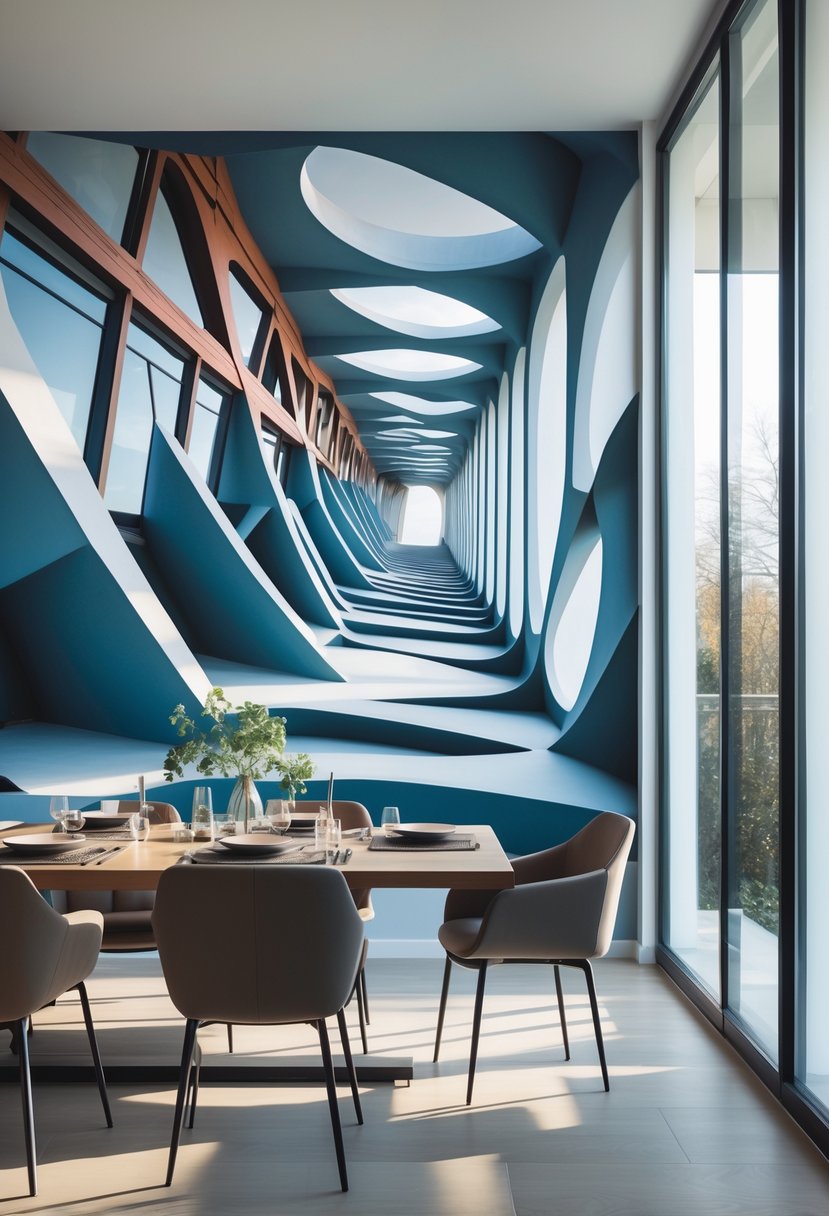
Distorted perspective murals use stretched shapes and shifted angles to change how a space feels. They can make a dining room wall appear deeper or taller than it is.
These murals often feature surreal elements like bending architecture or floating objects. The effect creates a visual focal point without overwhelming the room.
Floating Spheres and Cubes
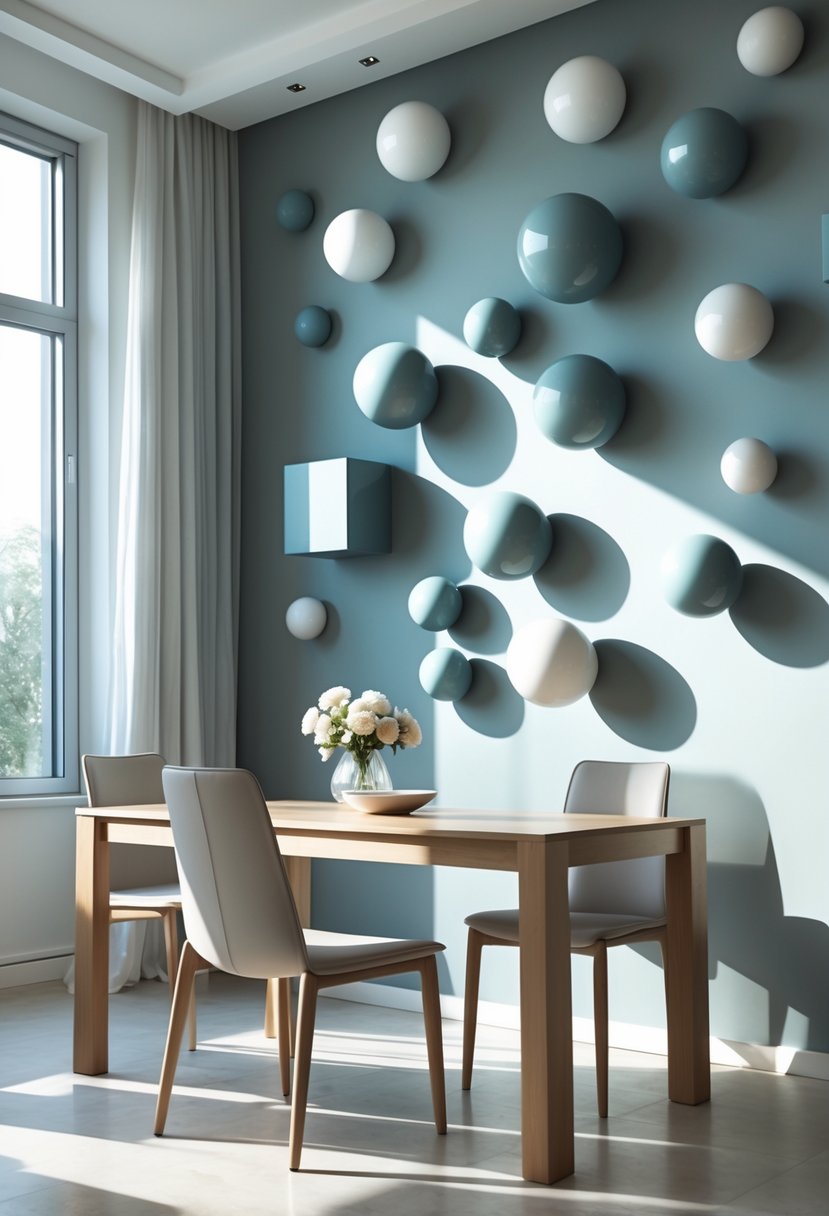
Floating spheres and cubes can create a surreal focal point on a dining room wall. They add depth and dimension without overwhelming the space.
Using simple geometric shapes keeps the design modern and clean. Neutral tones or metallic finishes help them blend with different dining room styles.
Strategic lighting enhances the illusion of floating. Shadows and highlights make the shapes appear more dynamic and three-dimensional.
Gradient Ombre Textures
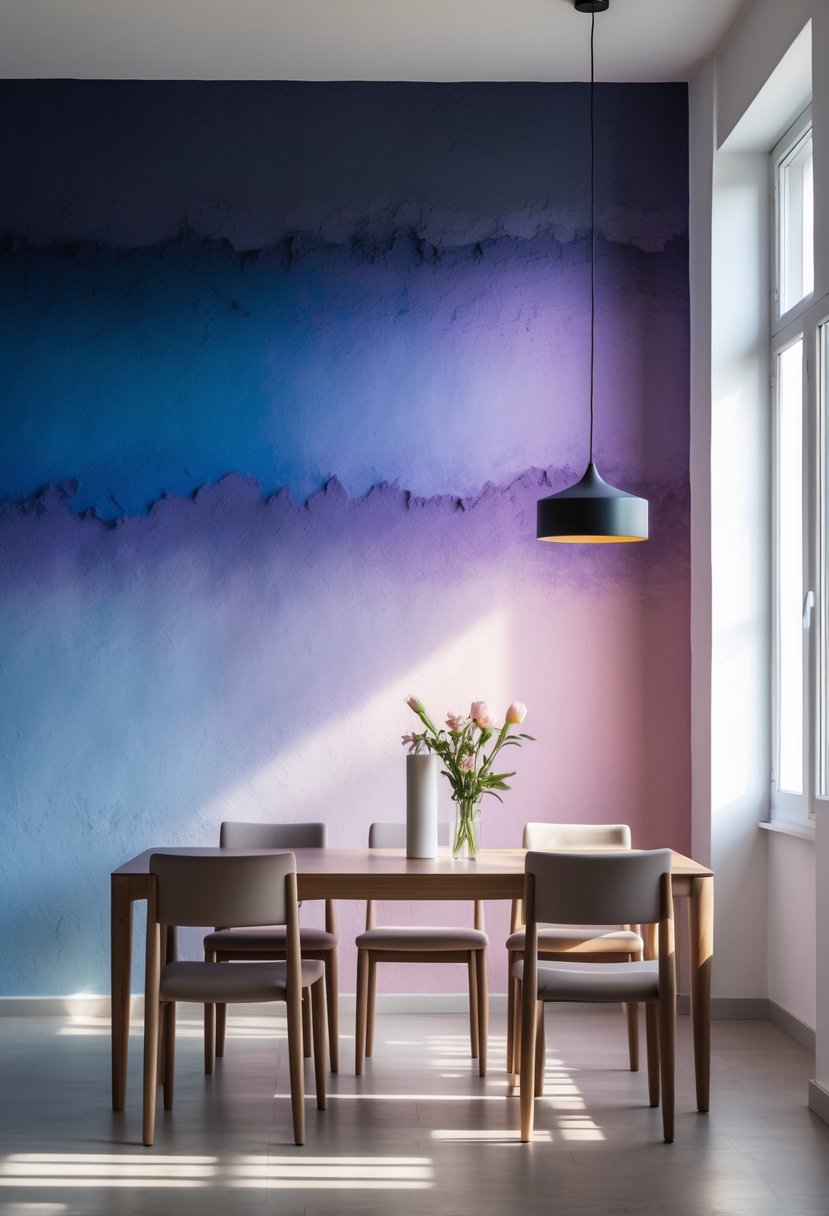
A gradient ombre wall uses smooth color transitions to create depth and balance in the dining room.
Soft shifts from dark to light tones can make the space feel more open while adding visual interest.
This approach works well with both bold and neutral color palettes.
Key Elements of Surreal-Style Dining Room Accent Walls
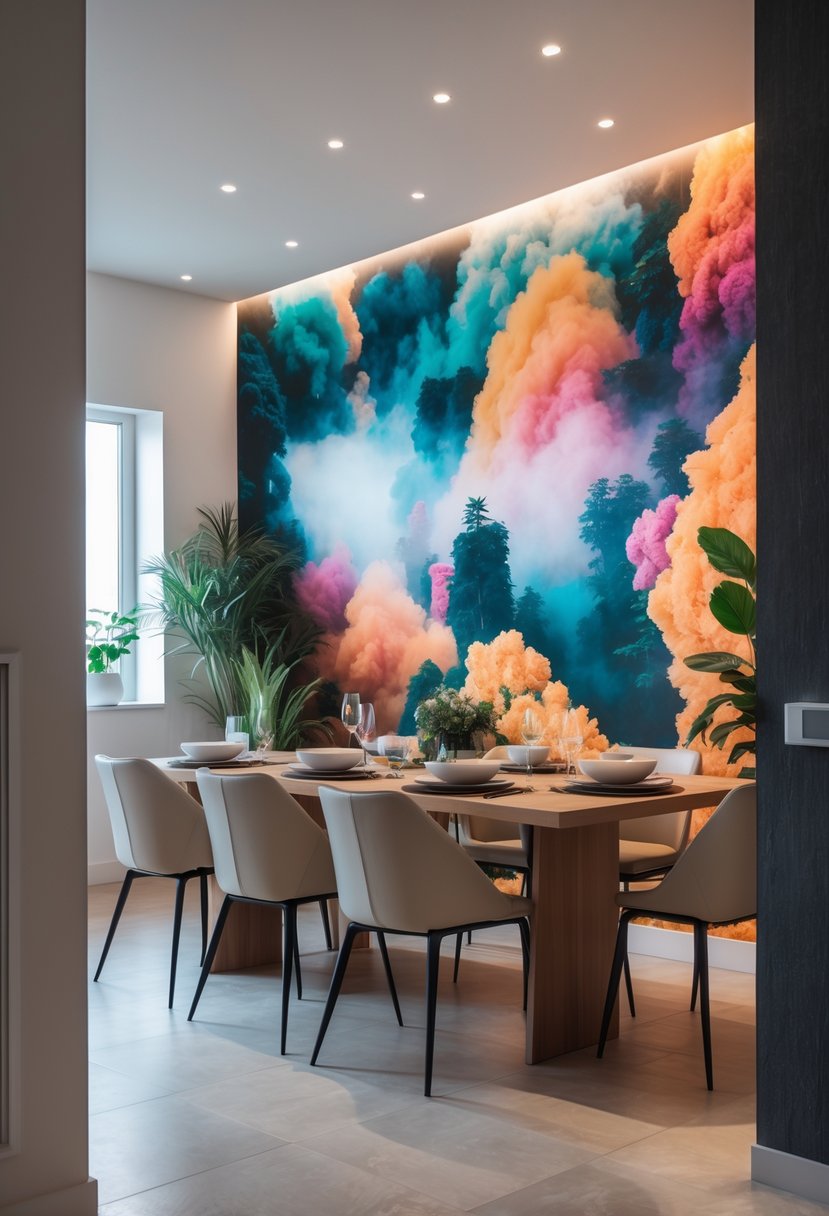
Surreal-style accent walls rely on unusual color choices and striking material combinations to create a sense of the unexpected. Balance comes from blending bold visual elements with subtle details so the room feels imaginative but still livable.
Color Theory and Unconventional Palettes
Surreal design often uses colors in ways that feel unusual but intentional. Instead of sticking to one bold shade, designers may pair contrasting tones like deep indigo with pale peach or emerald green with muted lavender. These combinations create tension and visual interest.
Unexpected gradients also work well. A wall that shifts from one color to another can suggest movement and depth. This technique makes the wall feel more like an artwork than a background surface.
Another approach is color-blocking, where two or three distinct colors meet in sharp divisions. When chosen carefully, the effect feels striking without overwhelming the space. Neutral walls around the accent wall help keep the palette balanced.
| Approach | Effect |
|---|---|
| Contrasting pairs | Creates energy and visual tension |
| Gradients | Adds depth and movement |
| Color-blocking | Defines bold, modern focal points |
Textures and Materials for Visual Impact
Textures play an important role in surreal-style accent walls. Smooth paint finishes can be combined with 3D wall panels, plaster, or wood to create a layered effect. The contrast between flat and raised surfaces makes the wall more engaging.
Materials like metallic finishes, mirrors, or glass tiles can reflect light in unexpected ways. This adds a dreamlike quality without relying only on color. Even subtle shimmer can shift the mood of the dining room.
Natural textures, such as stone or exposed brick, can also work when paired with modern elements. For example, blending raw brick with glossy lacquer or soft fabric panels highlights the surreal mix of opposites.
Using a mix of materials in small sections rather than covering the entire wall helps maintain balance. This approach ensures the wall feels artistic but still supports the overall dining room design.
Incorporating Art and Decor in Surreal Spaces
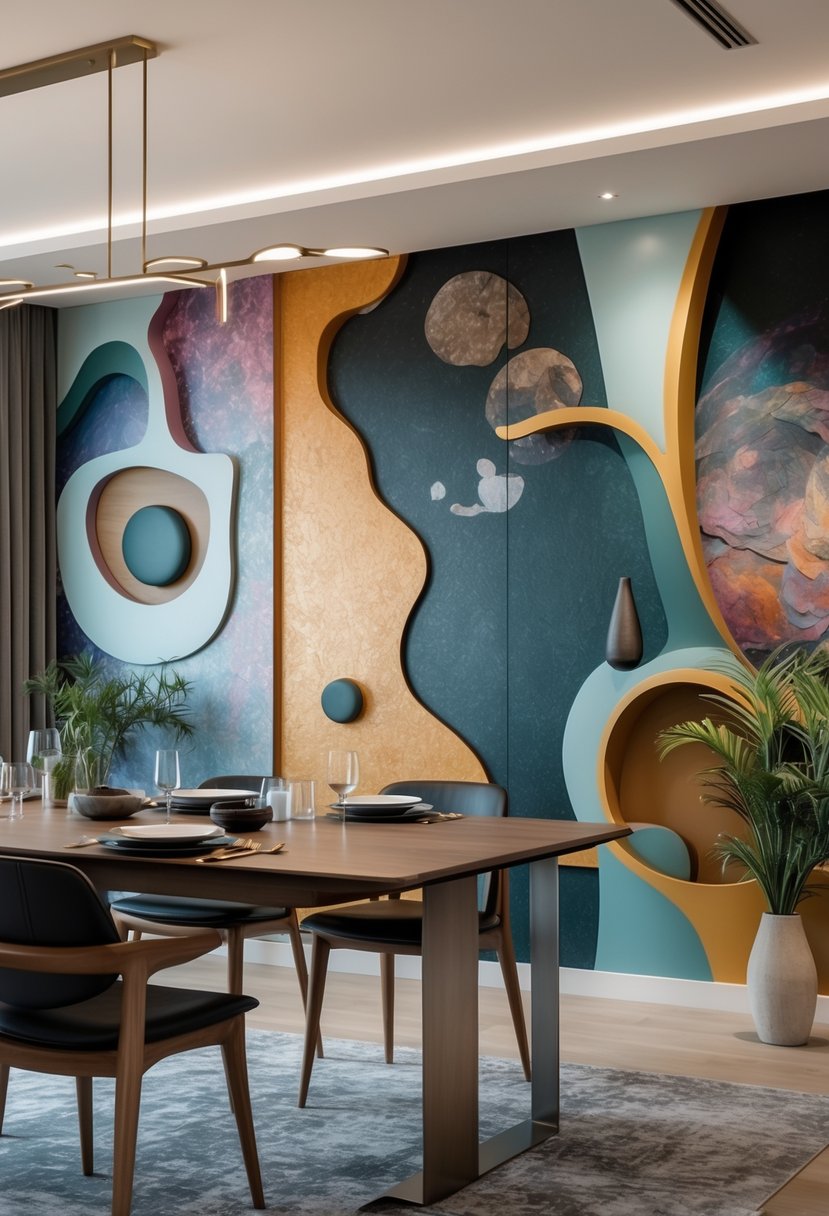
Surreal dining spaces often rely on bold visuals and unusual objects that spark curiosity. Careful choices in artwork and furnishings allow the room to feel imaginative while still serving as a comfortable place to gather.
Selecting Statement Art Pieces
Art plays a central role in surreal design because it anchors the unusual elements of the room. Large-scale paintings, sculptures, or wall installations can introduce dreamlike qualities without overwhelming the space. A dining room accent wall, for example, becomes more striking when paired with a single oversized surrealist print.
Mixing mediums adds more depth. A framed photograph with distorted perspectives can hang beside a textured canvas that uses abstract shapes. This contrast highlights the playful nature of surrealism while keeping the wall visually balanced.
Placement matters as much as the art itself. Hanging pieces slightly off-center or arranging them asymmetrically creates a sense of unpredictability. A simple table of ideas can help guide choices:
| Art Type | Effect in Space | Best Placement |
|---|---|---|
| Oversized painting | Defines focal point | Center of accent wall |
| Abstract sculpture | Adds three-dimensional interest | Corner or side console |
| Surreal print set | Brings rhythm and repetition | Arranged in grid or row |
Balancing Functionality With Imagination
Surreal decor should not make the dining room impractical. Chairs, tables, and lighting still need to function well, even if their shapes or finishes appear unusual. A sculptural chandelier, for instance, can provide proper light while also serving as a surreal focal point above the table.
Furniture with unexpected forms works best when comfort is not sacrificed. A dining chair with curved or exaggerated legs can remain supportive if its seat and backrest are well-designed. This balance ensures the room feels both imaginative and usable.
Decorative objects can also serve dual purposes. A mirrored cabinet with distorted reflections offers storage while adding a surreal effect. Similarly, patterned rugs or tableware with optical illusions can spark conversation without interfering with daily use.
By combining practical features with imaginative details, the dining room maintains its role as a gathering place while still reflecting surrealist creativity.
Explore these statement wall decor ideas from The Spruce.


