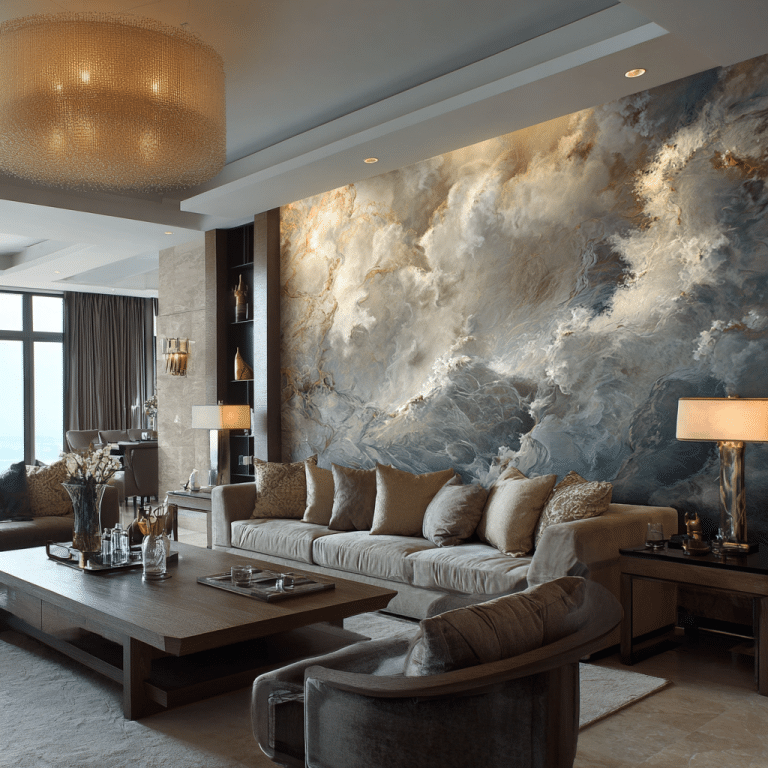
24 Gothic Living Room Arches and Windows for Timeless Architectural Elegance
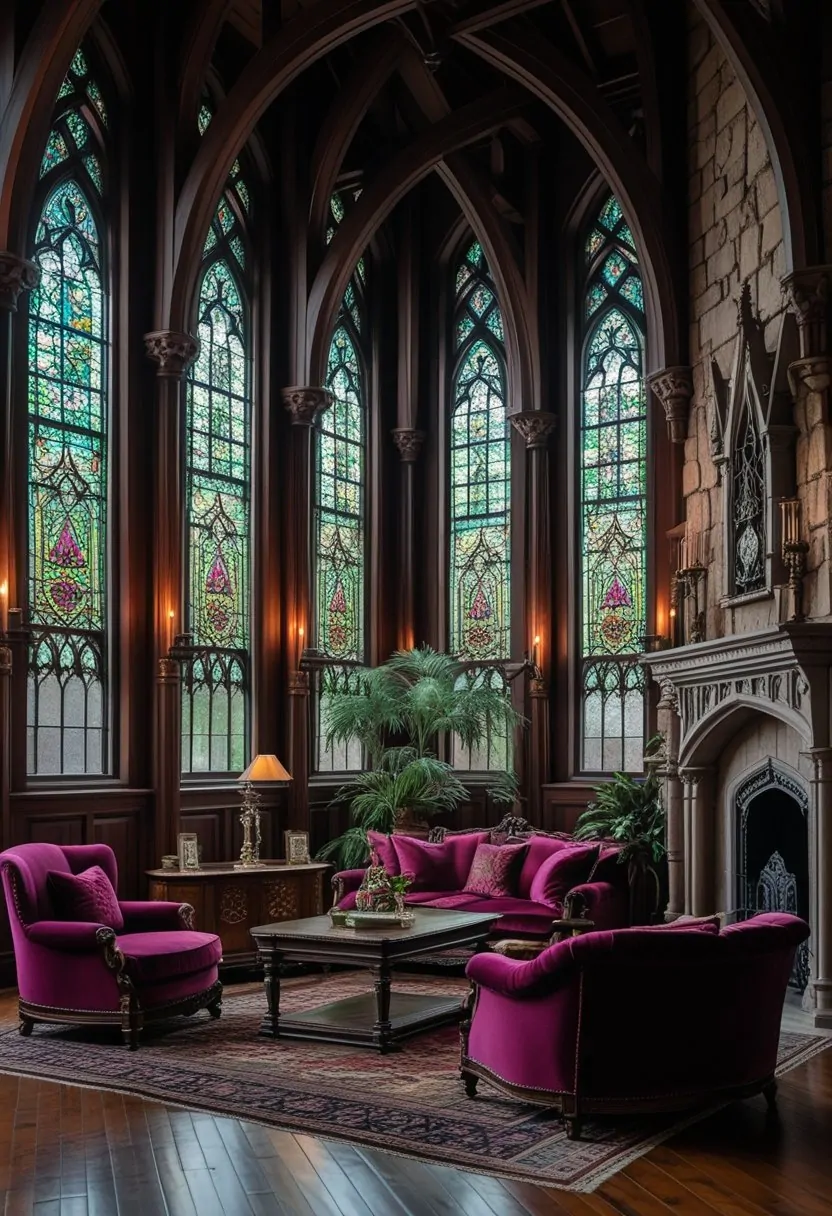
Gothic-inspired living rooms often draw attention through their striking arches and dramatic window designs. These features shape the atmosphere of a space, giving it depth, character, and a sense of timeless style. Understanding how arches and windows influence a Gothic interior helps create a living room that feels both distinctive and cohesive.
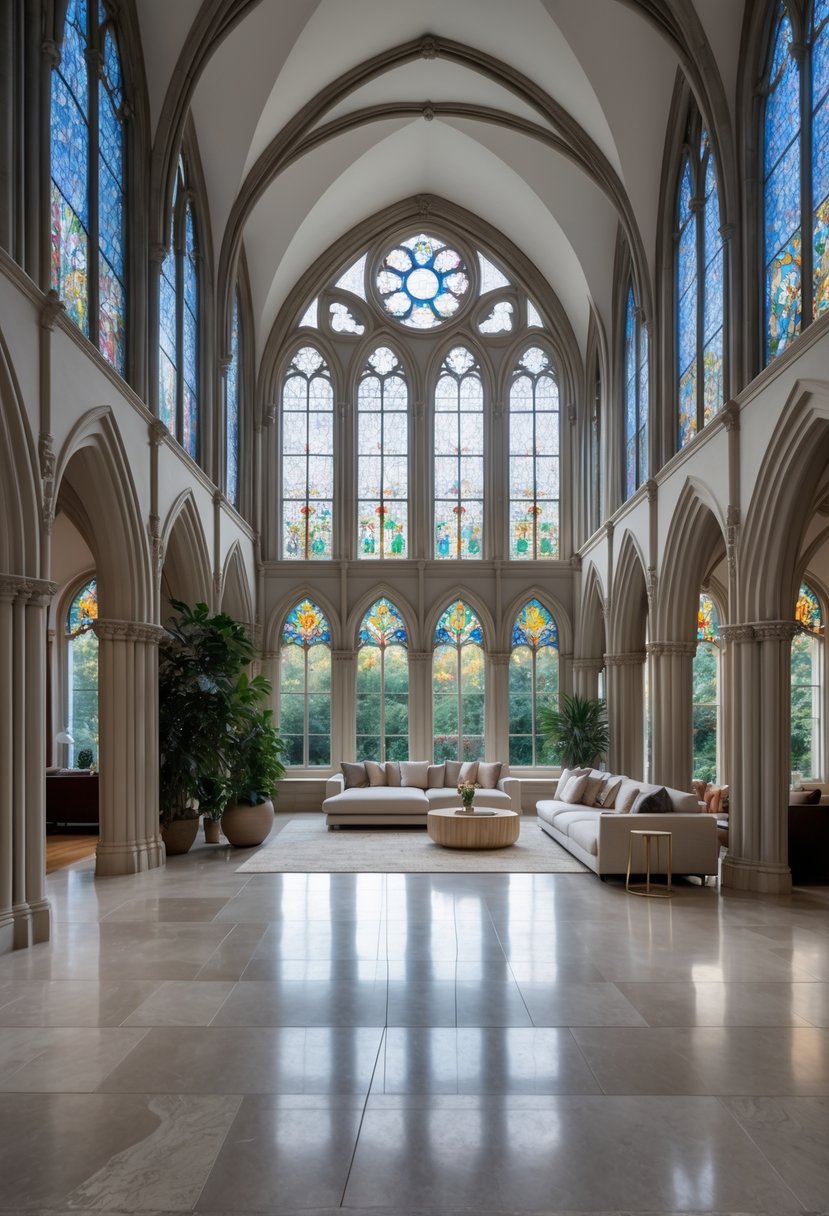
This article explores different ways arches and windows transform a room, from architectural details to decorative accents. It highlights how design elements such as carved wood, stained glass, and ironwork can be used to achieve a balanced Gothic look that feels intentional and refined.
Pointed Gothic Arches for Doorways
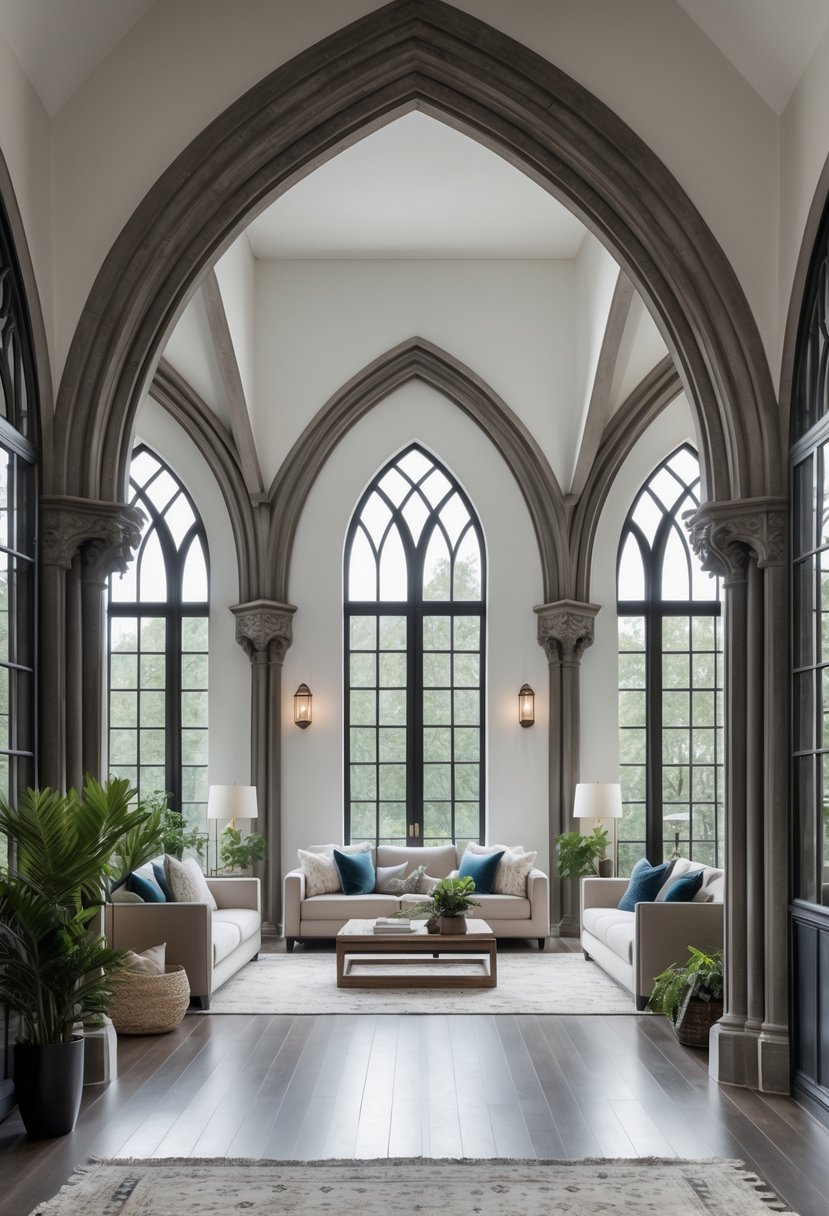
Pointed Gothic arches give doorways a distinct architectural character. Their tall, narrow shape draws the eye upward and creates a sense of structure.
They also serve a practical role by distributing weight more efficiently than rounded arches. This makes them both decorative and functional in interior design.
Stained Glass Windows with Medieval Motifs
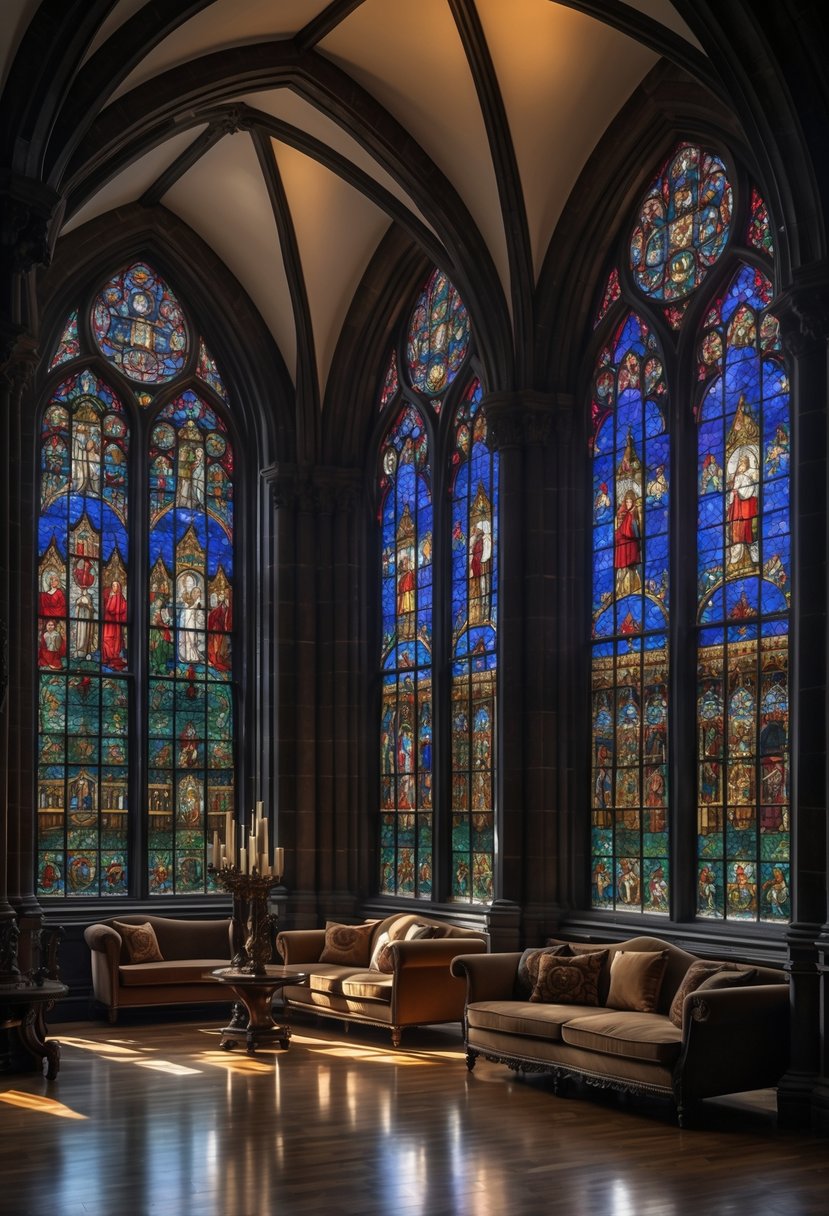
Stained glass windows with medieval motifs often feature pointed arches and geometric tracery. These designs reflect the Gothic style seen in cathedrals.
Floral patterns, religious symbols, and natural elements like leaves or stars were common. They added both decoration and meaning to the space.
Today, similar motifs appear in homes, bringing color and historic character.
Intricately Carved Wooden Window Frames
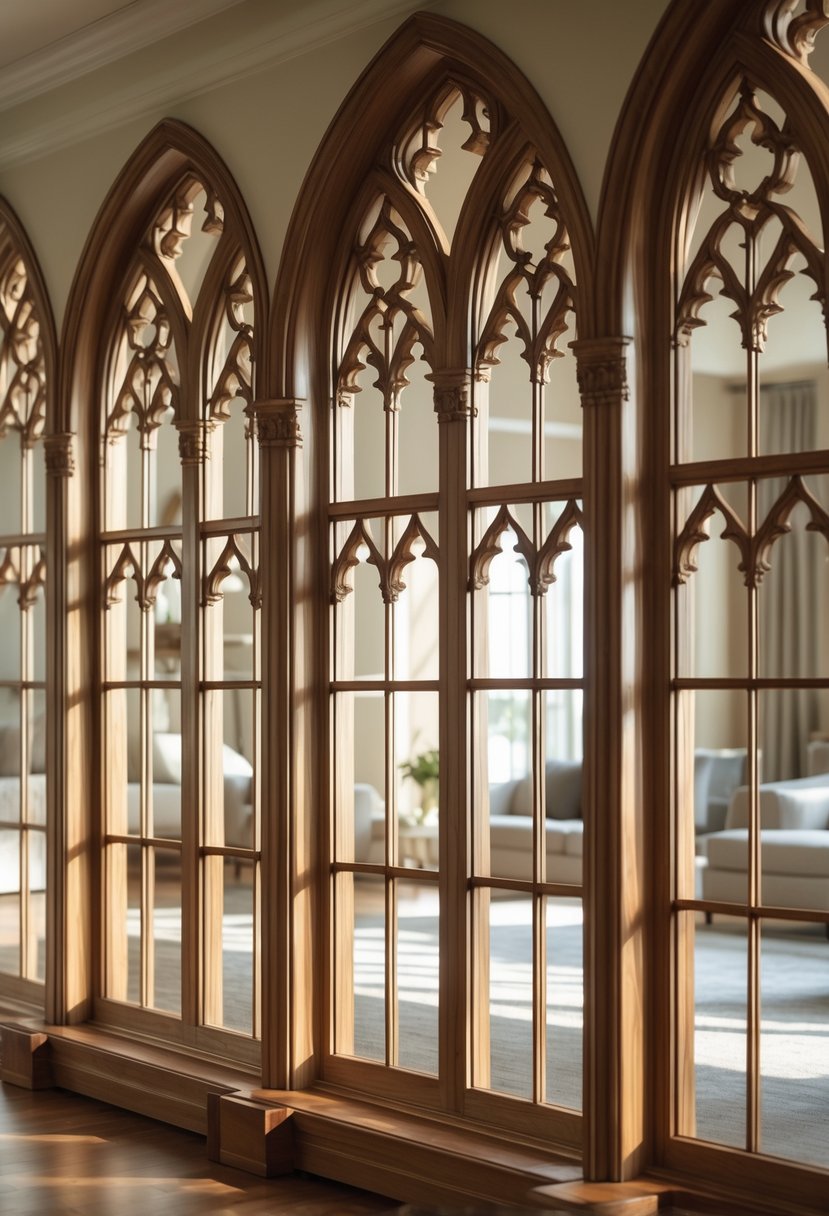
Carved wooden window frames add detail and depth to a gothic living room. Their pointed arches and fine patterns reflect the style’s historic roots.
These frames often use solid wood and distressed finishes to create a timeless look. They work as both functional windows and decorative wall accents.
Exposed Stone Wall Surrounds
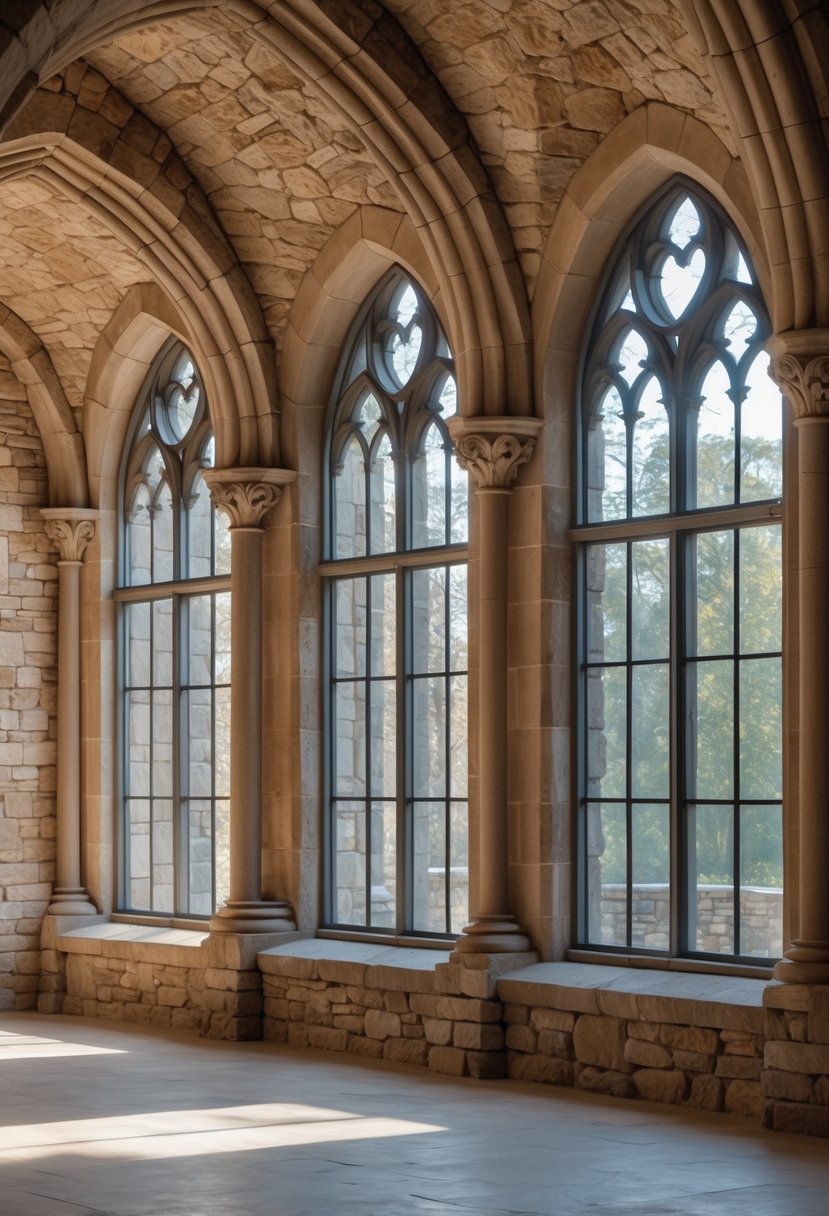
Exposed stone wall surrounds add texture and depth to a gothic living room. They frame arches and windows with a natural, solid look that complements pointed shapes and tall openings.
The stone can highlight architectural details while keeping the design grounded. It pairs well with dark wood, stained glass, and heavy drapery.
Gothic Arched Window Mirrors
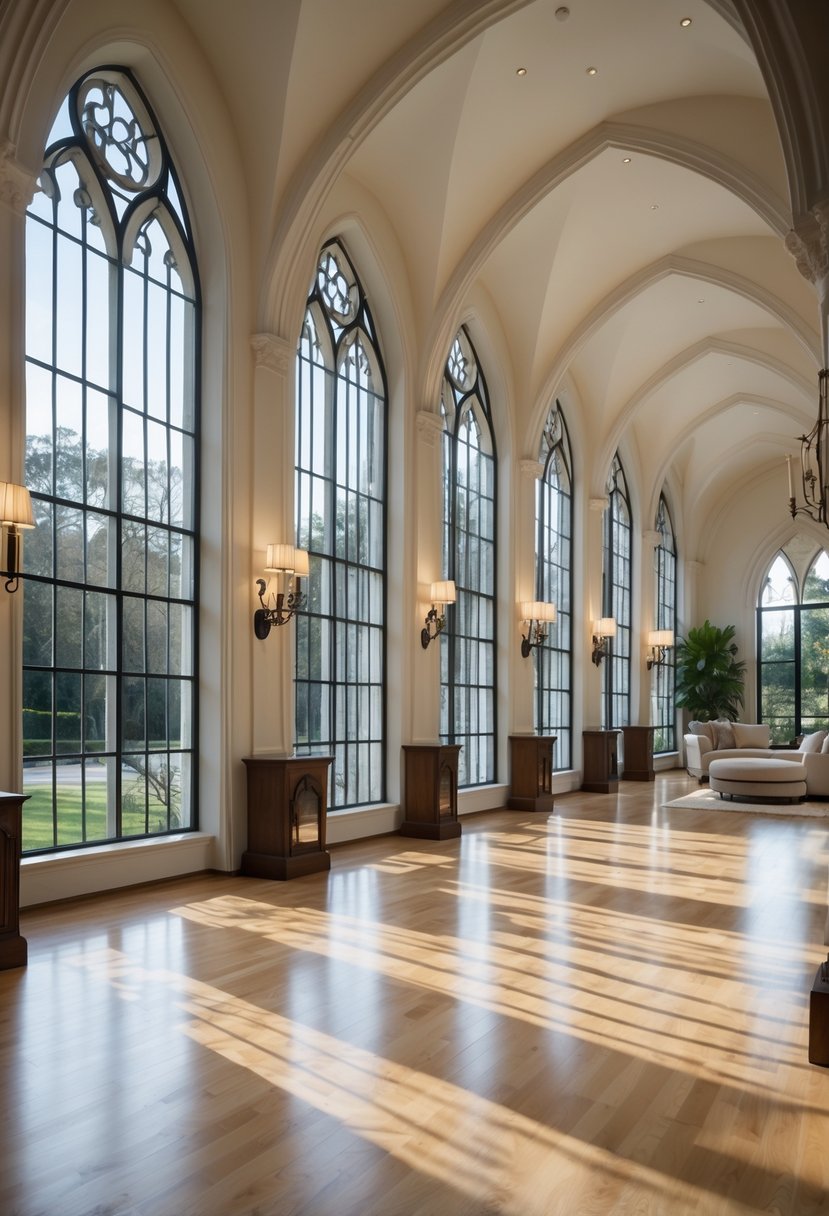
Gothic arched window mirrors bring a classic architectural look into a living room. Their tall, pointed frames echo the style of cathedral windows.
These mirrors often feature metal or wood frames with lattice or pane designs. They add depth to walls and reflect light in a subtle way.
Many designs fit both traditional and modern interiors. Some homeowners also use them in entryways or hallways for added character.
Mixed Gothic and Rectangular Window Styles
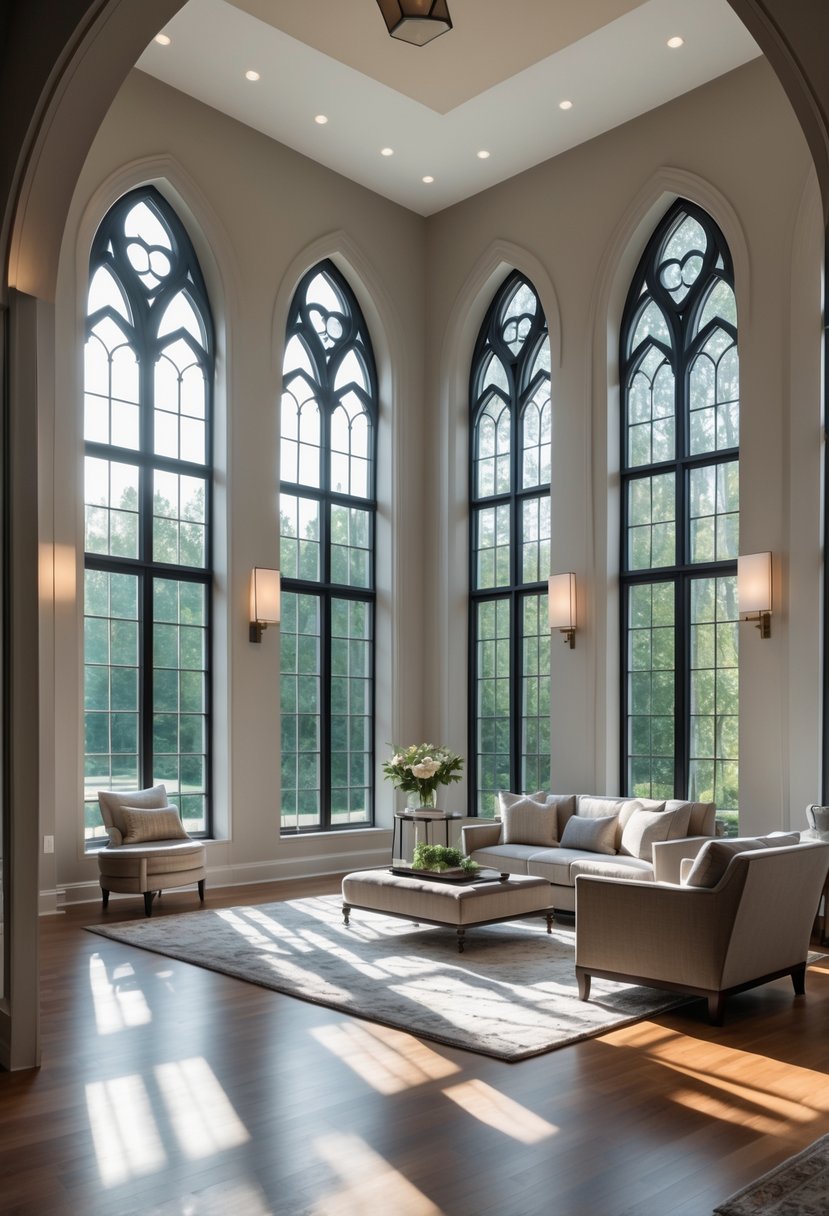
Homeowners often mix Gothic arched windows with rectangular ones to balance design and function.
The pointed arches add character, while rectangular windows provide everyday practicality like ventilation and light control.
Using the same frame material for both shapes helps maintain a consistent and cohesive look throughout the room.
Wrought Iron Curtain Rods with Gothic Detailing
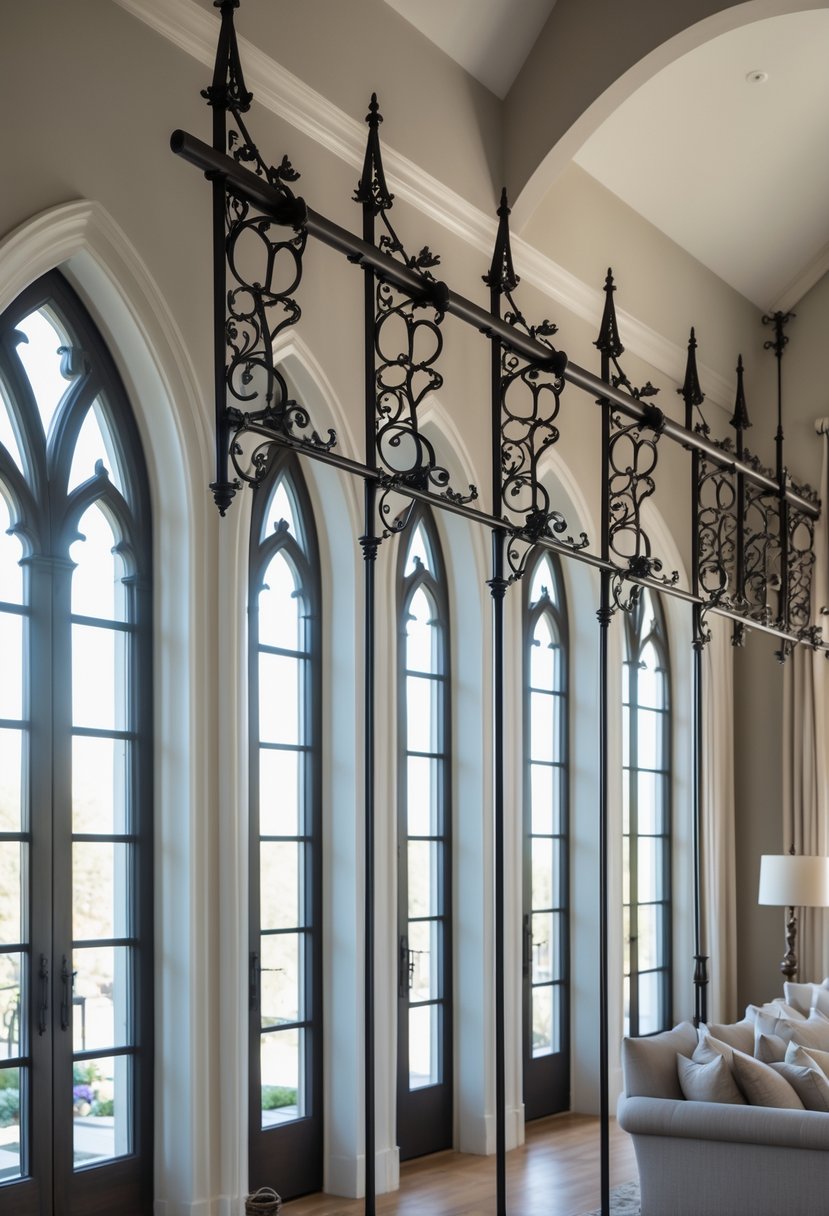
Wrought iron curtain rods often feature pointed finials, scrolls, or Fleur-de-Lis designs that match Gothic style windows.
Their dark finish and sturdy build give structure to tall arches and heavy drapes.
These rods pair well with custom brackets and rings, keeping the design consistent across the window frame.
Lace Curtains Featuring Gothic Arch Patterns
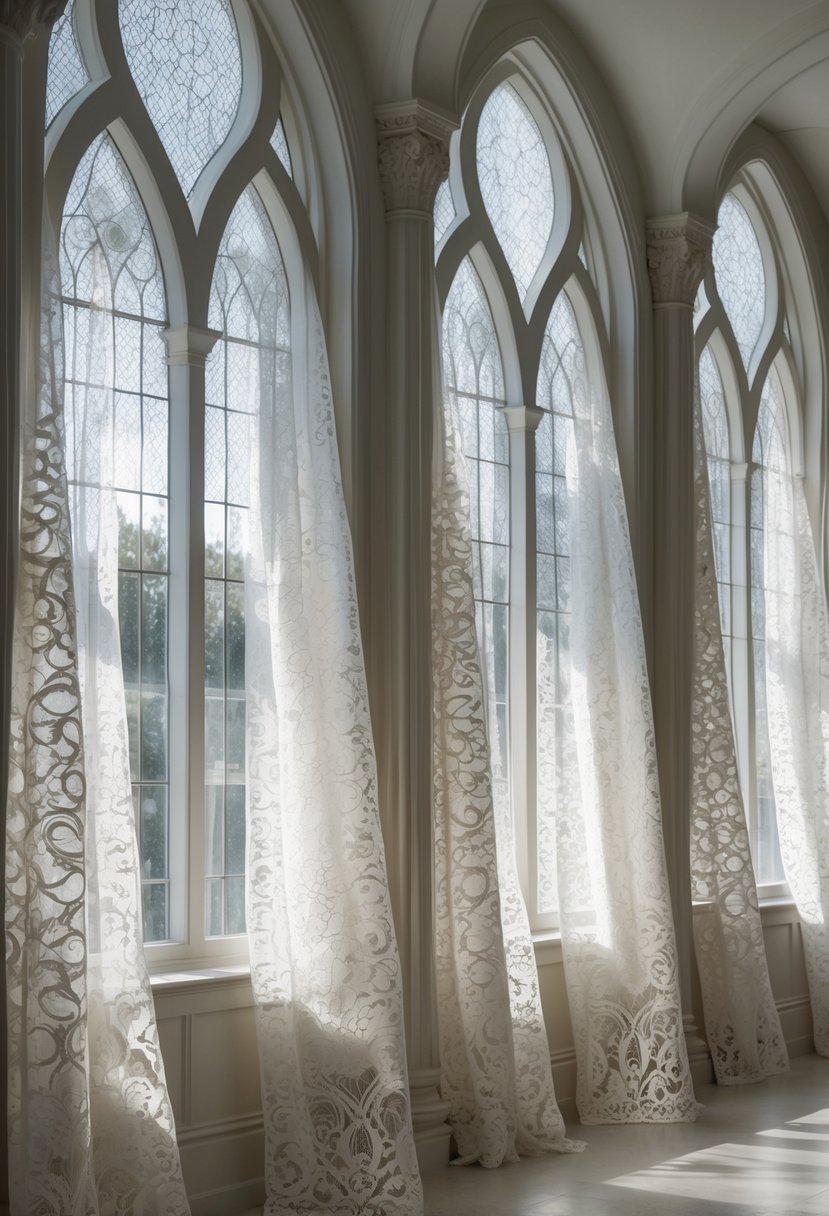
Lace curtains with Gothic arch patterns add subtle detail to windows without blocking light.
They create a structured look that reflects traditional Gothic architecture.
These curtains work well in living rooms where arched windows or decorative frames highlight their design.
Ornate Ceiling Moldings with Gothic Elements
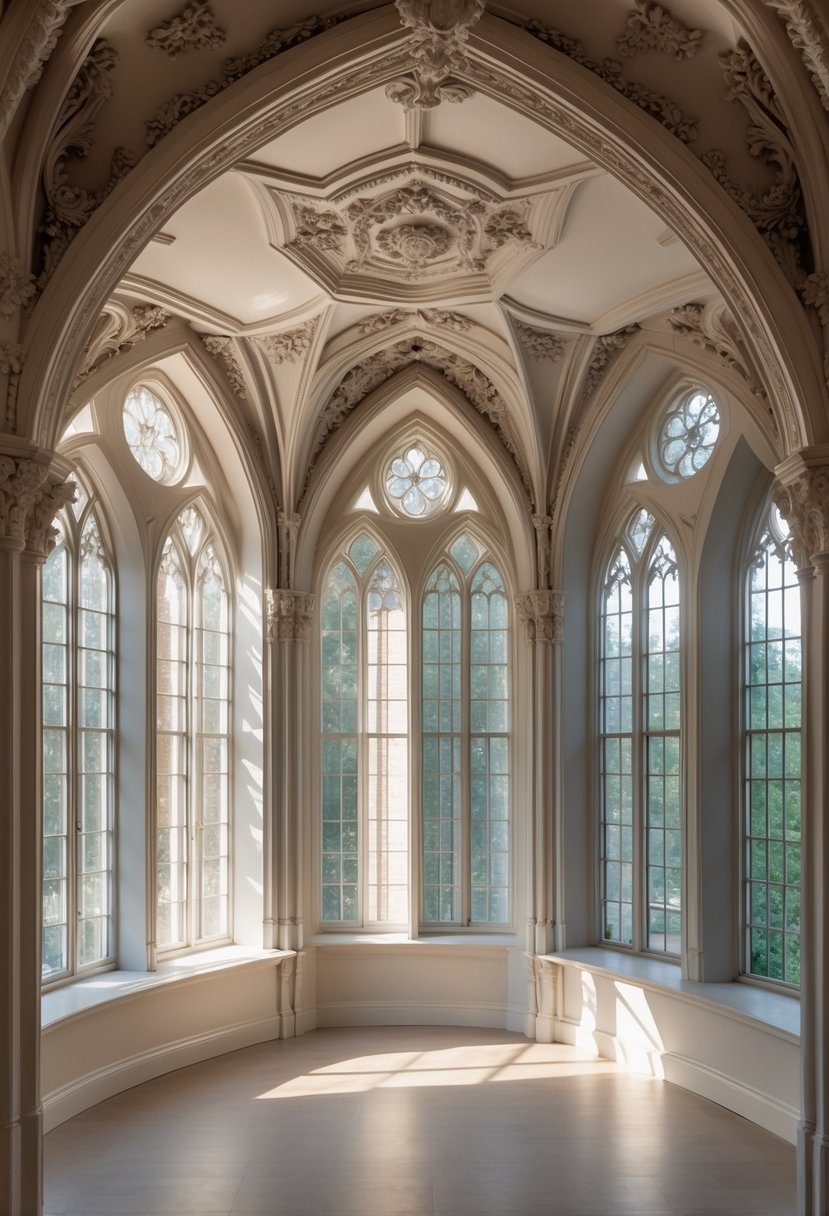
Ceiling moldings with Gothic details often feature pointed arches, tracery, and carved patterns. These designs add structure and visual interest to a room.
Dark finishes or painted accents highlight the depth of the molding. Combined with beams or medallions, they create a refined, cathedral-like atmosphere.
Faux Gothic Window Decals
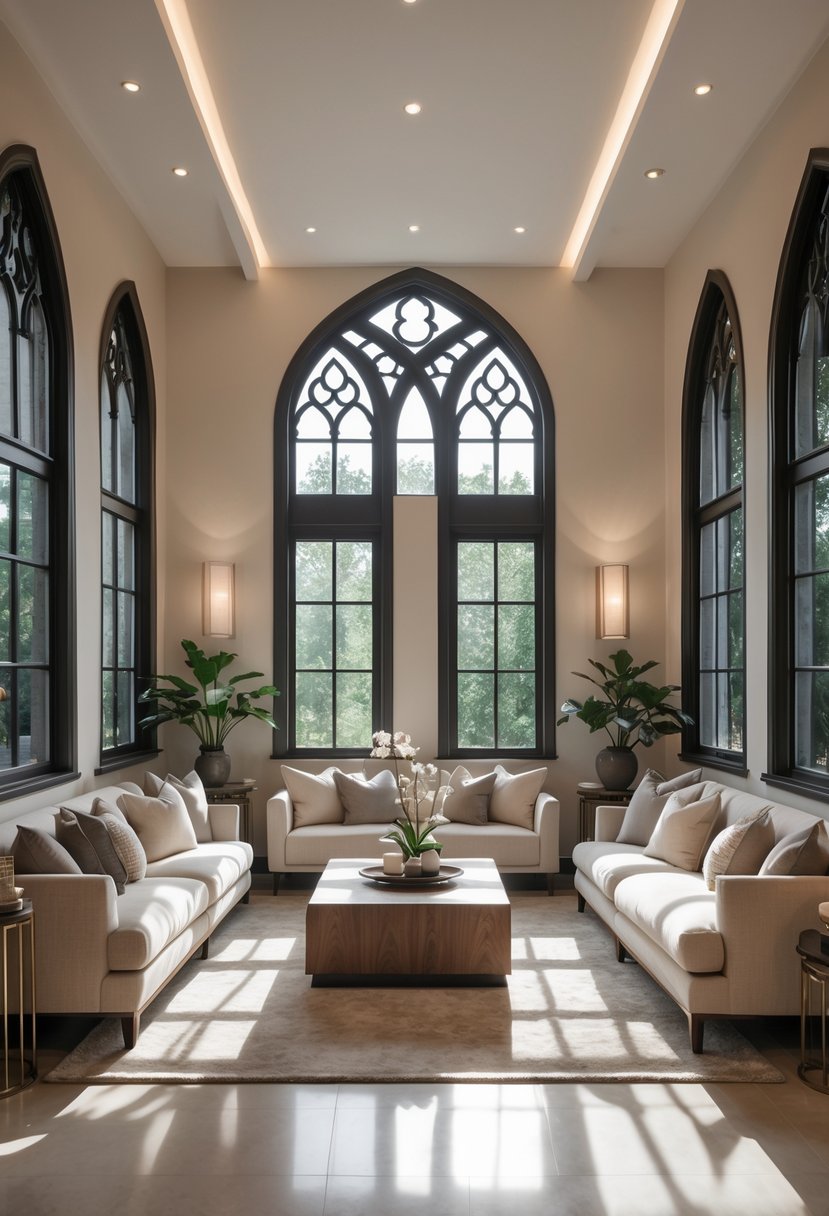
Faux Gothic window decals give the look of arched or stained glass without permanent changes. They work well for renters or anyone who wants a temporary option.
Many designs include arches, vines, or floral patterns that mimic traditional Gothic style. They can be placed on windows, mirrors, or smooth walls.
Double Hung Windows Paired with Gothic Arches
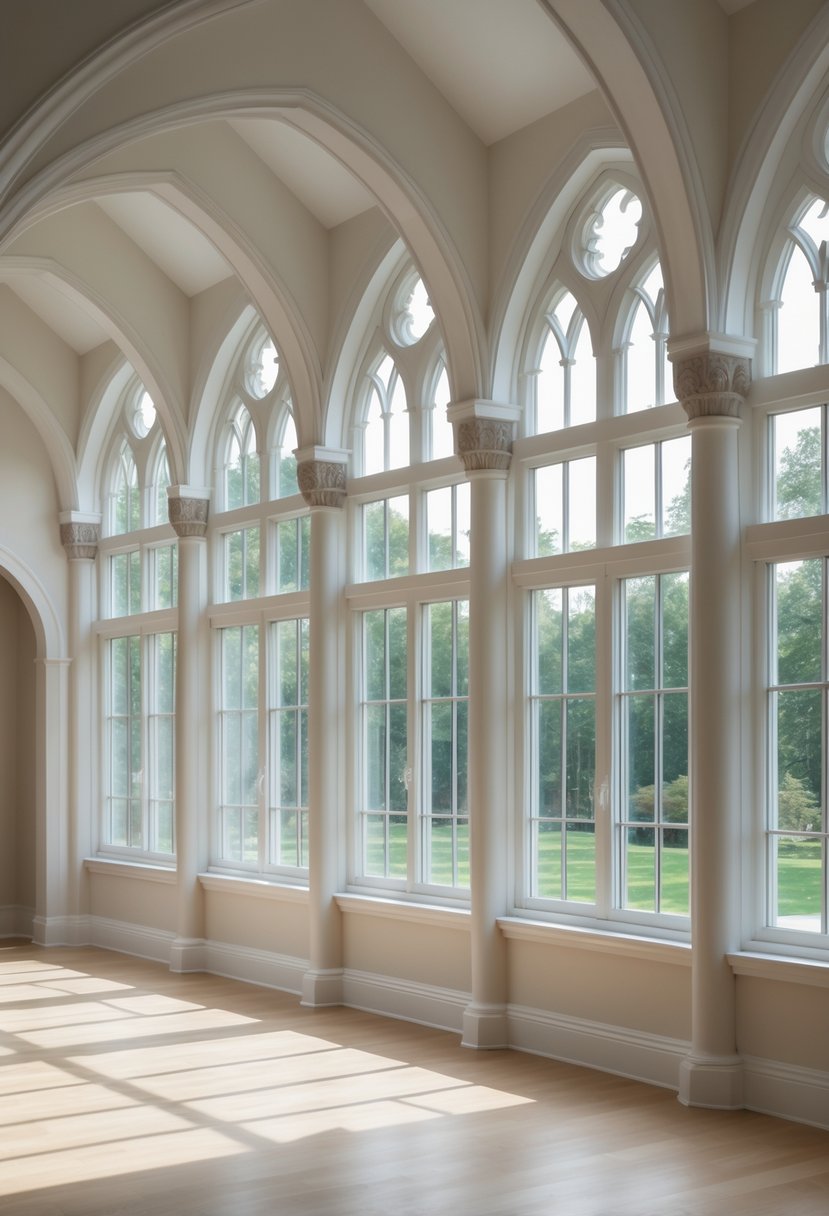
Double hung windows provide everyday function with easy ventilation. When paired with a Gothic arch, they balance utility with style.
The pointed arch above softens the straight lines of the window frame. This mix creates visual interest while letting in more natural light.
Designers often use this pairing in living rooms. It blends traditional Gothic character with practical window operation.
Drapery with Black Lace and Gothic Patterns
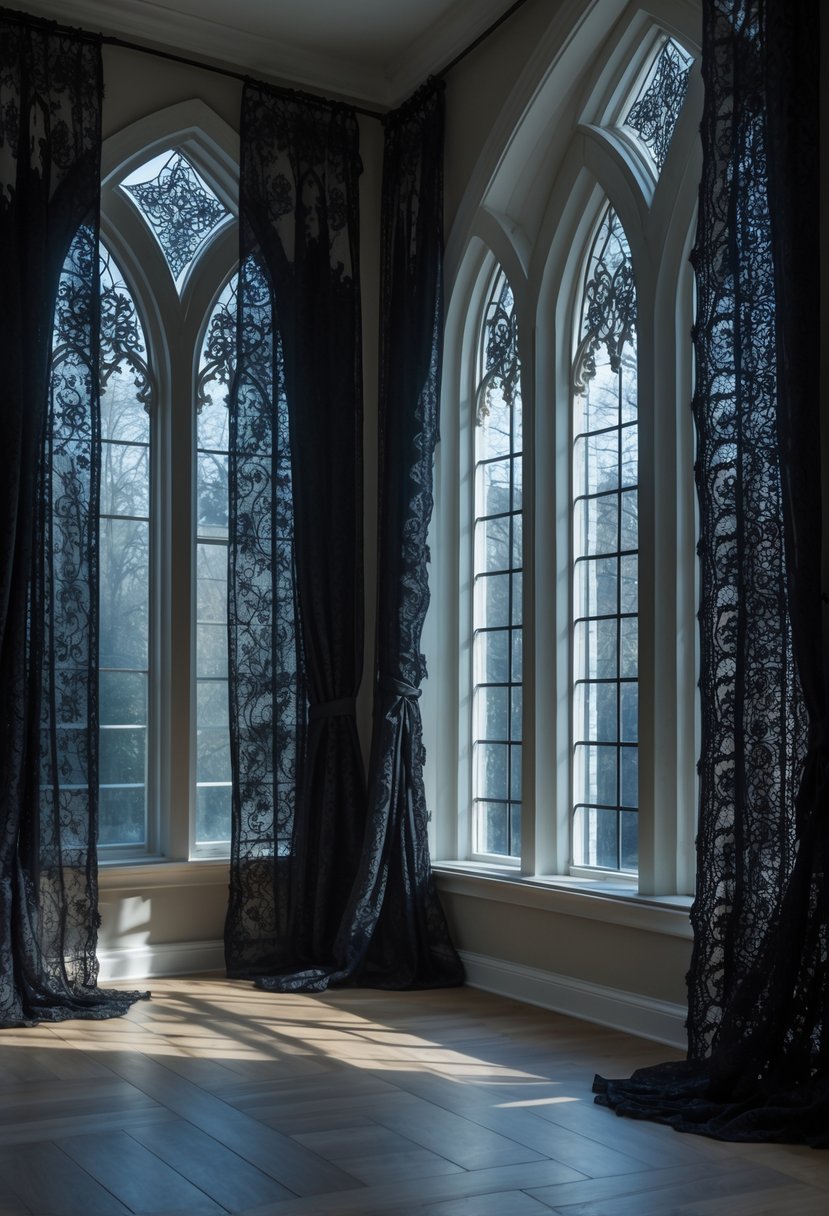
Black lace drapery adds texture and depth to Gothic-style windows. Its sheer quality allows light to filter through while still maintaining privacy.
Patterns such as damask, floral, or geometric lace enhance the architectural lines of arches. These designs create a balanced look that suits both traditional and modern Gothic interiors.
Pointed Arch Doorways with Carved Details
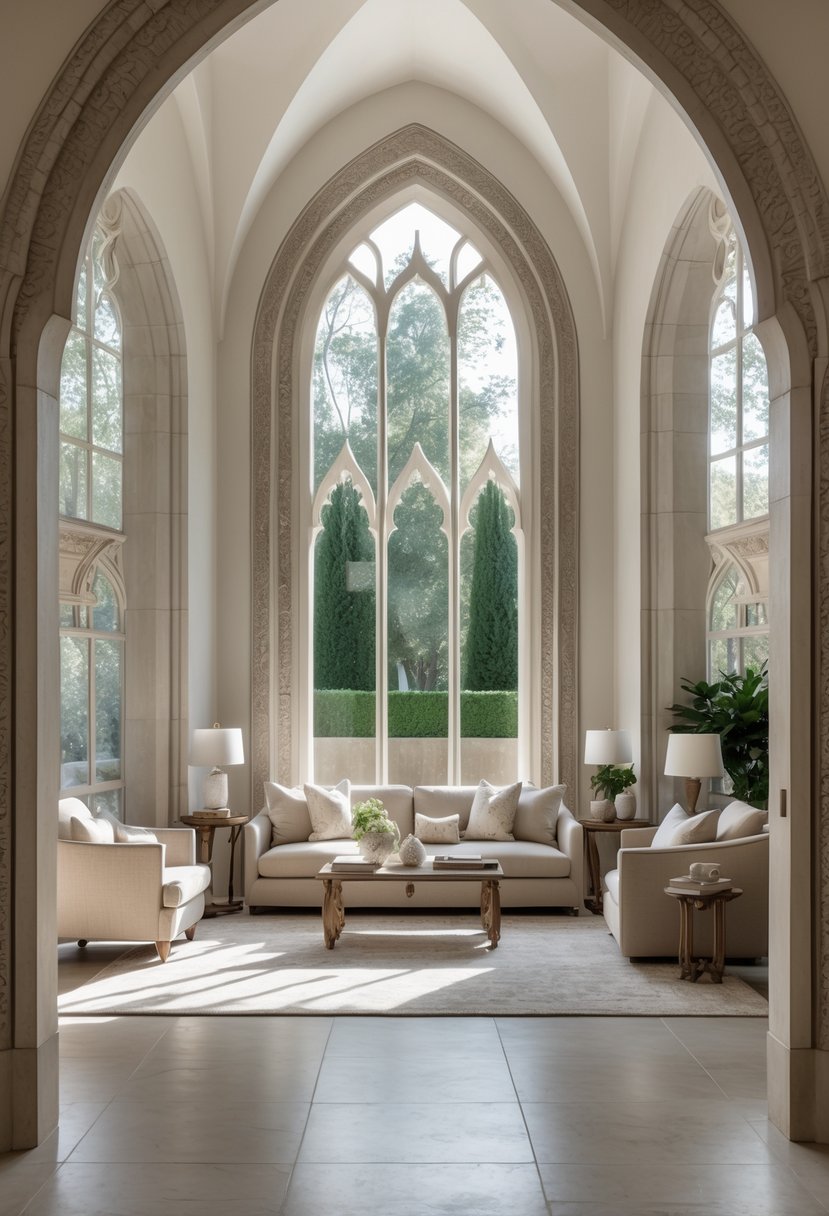
Pointed arch doorways add vertical emphasis and create a distinct Gothic character in a living room. Their sharp curves guide the eye upward, making spaces feel taller.
Carved details often frame these arches, featuring patterns like foliage, tracery, or geometric lines. These elements highlight craftsmanship while reinforcing the Gothic style.
Stained Glass Transom Windows
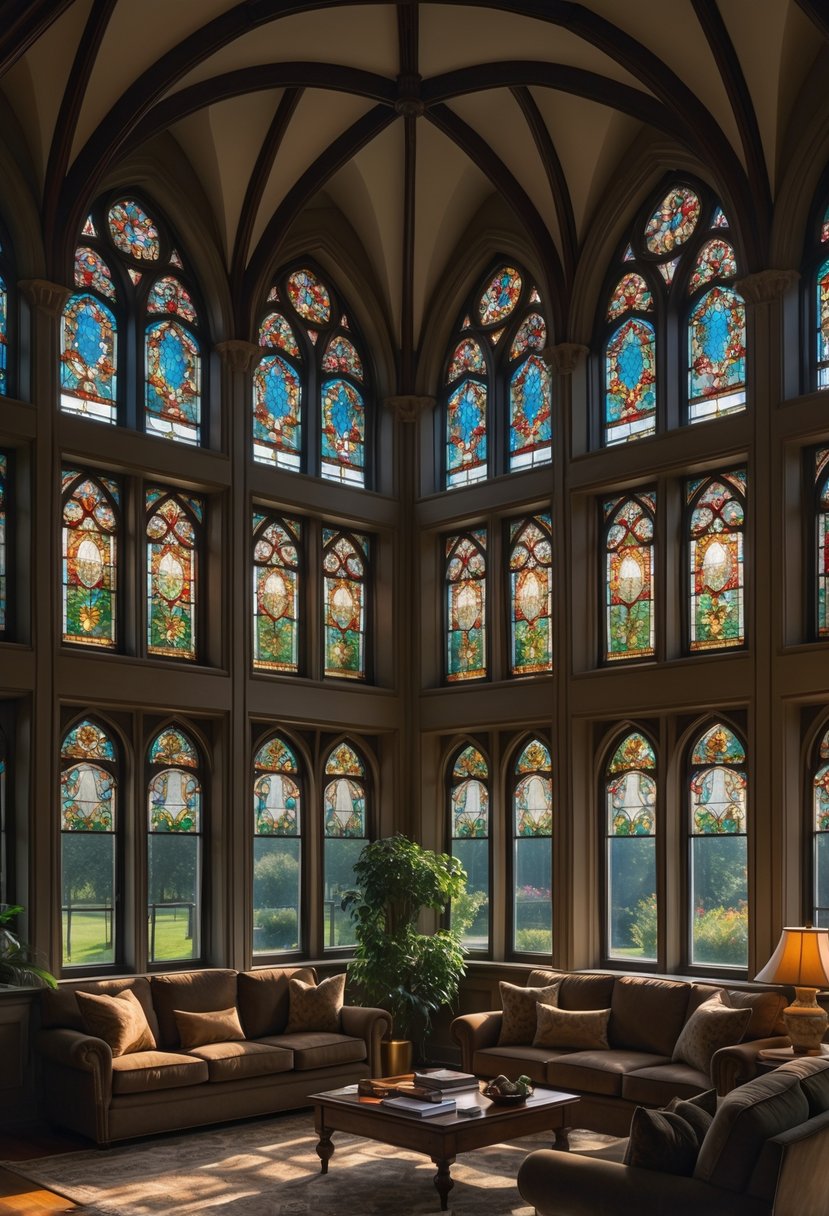
Stained glass transom windows often sit above doors or larger windows, adding both light and decoration to a room.
They can feature simple geometric patterns or more detailed Gothic arches that match the style of the living space.
These windows bring color, texture, and subtle character without overwhelming the overall design.
Intricate Wood Carvings Around Windows
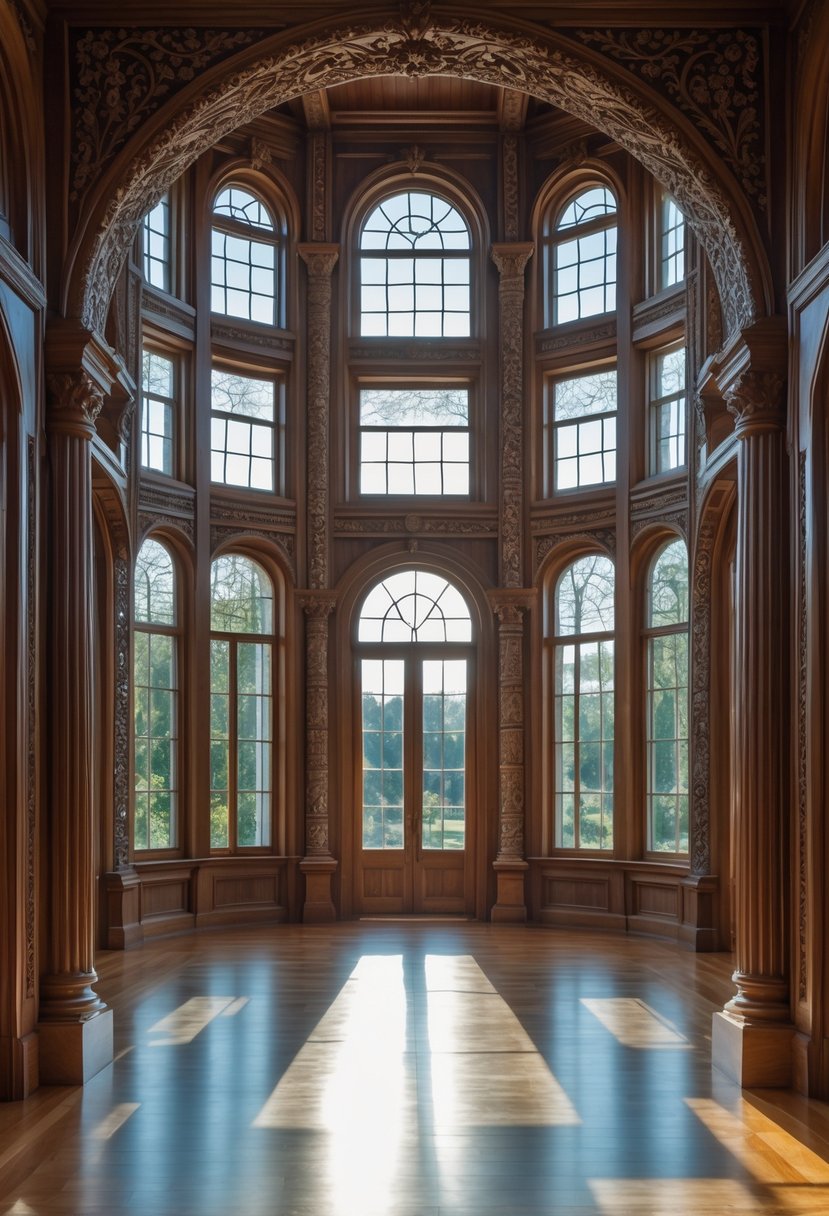
Gothic living rooms often feature wood carvings that frame arched windows. These details highlight craftsmanship and add depth to the space.
Designs may include pointed arches, floral patterns, or geometric motifs. The carvings draw attention to the window while blending with other gothic elements like dark wood furniture or heavy drapery.
Gothic-Inspired Wall Sconces Near Windows
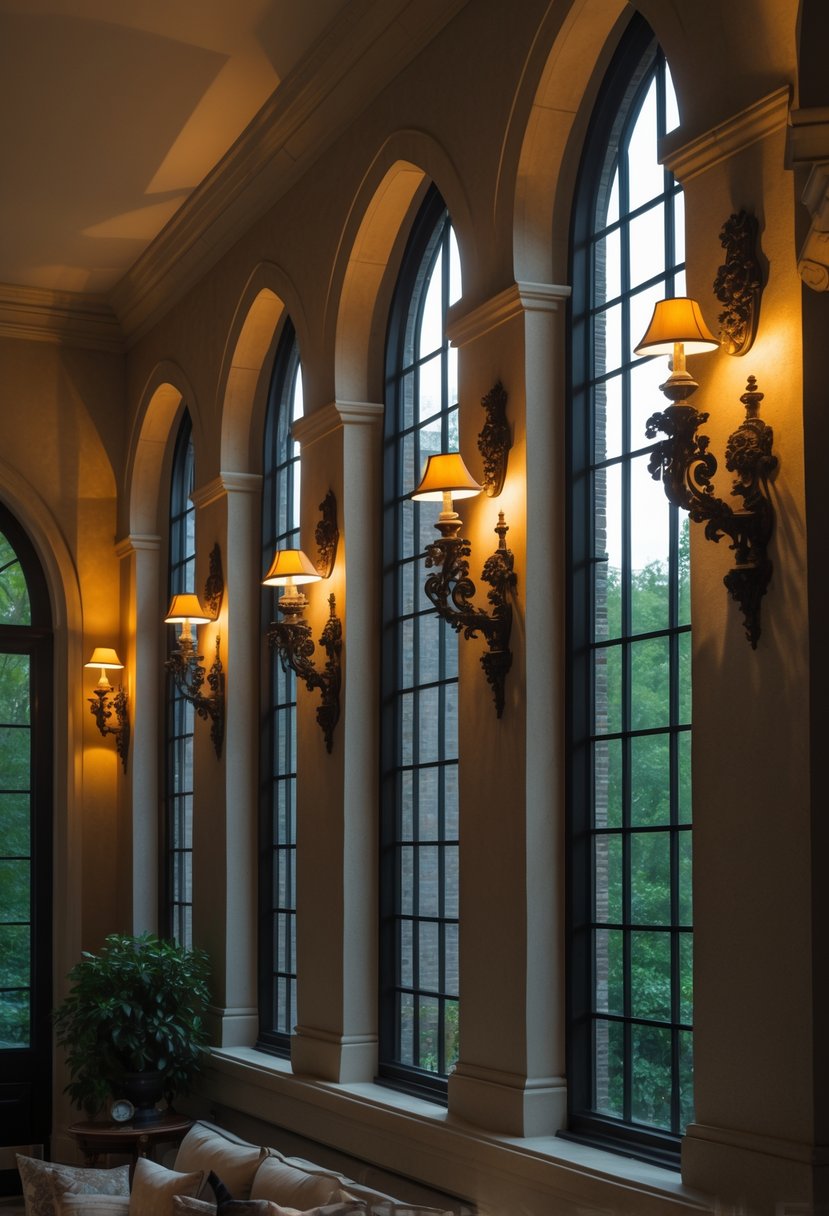
Placing gothic wall sconces near windows adds subtle lighting that highlights the shape of arches and frames.
Many designs feature dark metal, arched details, or stained glass that complement gothic-style windows.
They work well in living rooms, dining areas, or hallways where windows create natural focal points.
Exposed Timber Beams Around Window Frames
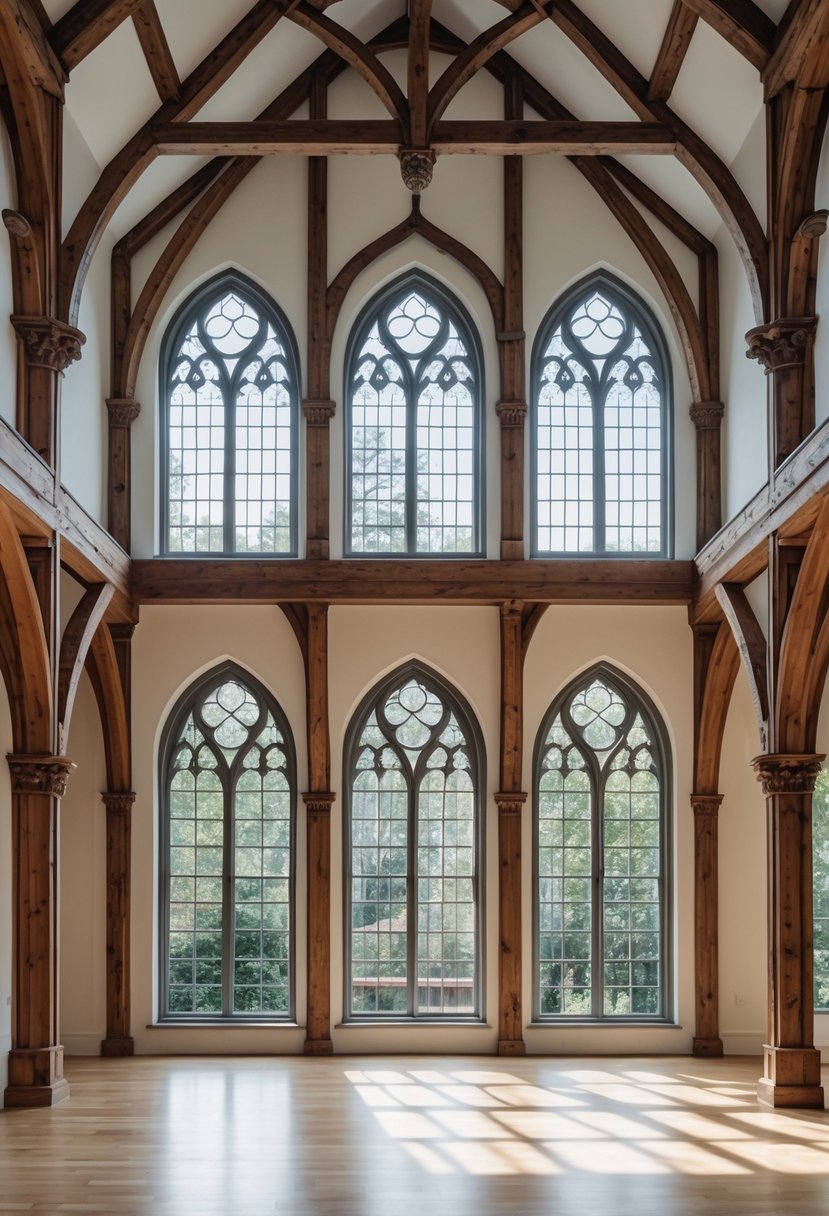
Exposed timber beams can frame windows with a simple, natural look. They highlight the shape of the opening and add subtle depth to the wall.
The wood pairs well with stone or plaster finishes, creating a balanced contrast. This detail works in both rustic and gothic-inspired interiors.
Gothic Archway Bookshelves Adjacent to Windows
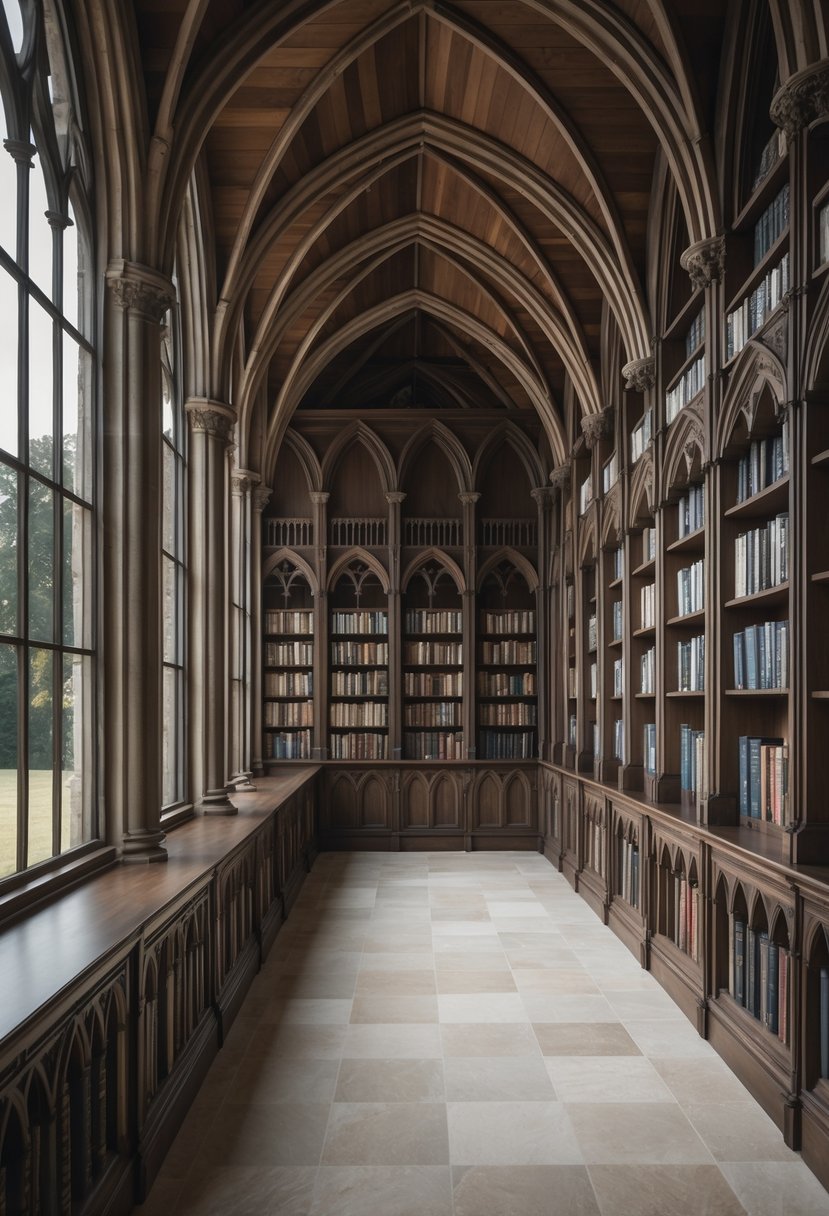
Placing gothic archway bookshelves beside windows adds both storage and symmetry. The arched frames echo nearby window shapes, creating a unified design.
Dark wood or black finishes often highlight the pointed arch detail. When positioned near natural light, the shelves balance function with visual interest.
Dark Velvet Drapes with Gothic Tassels
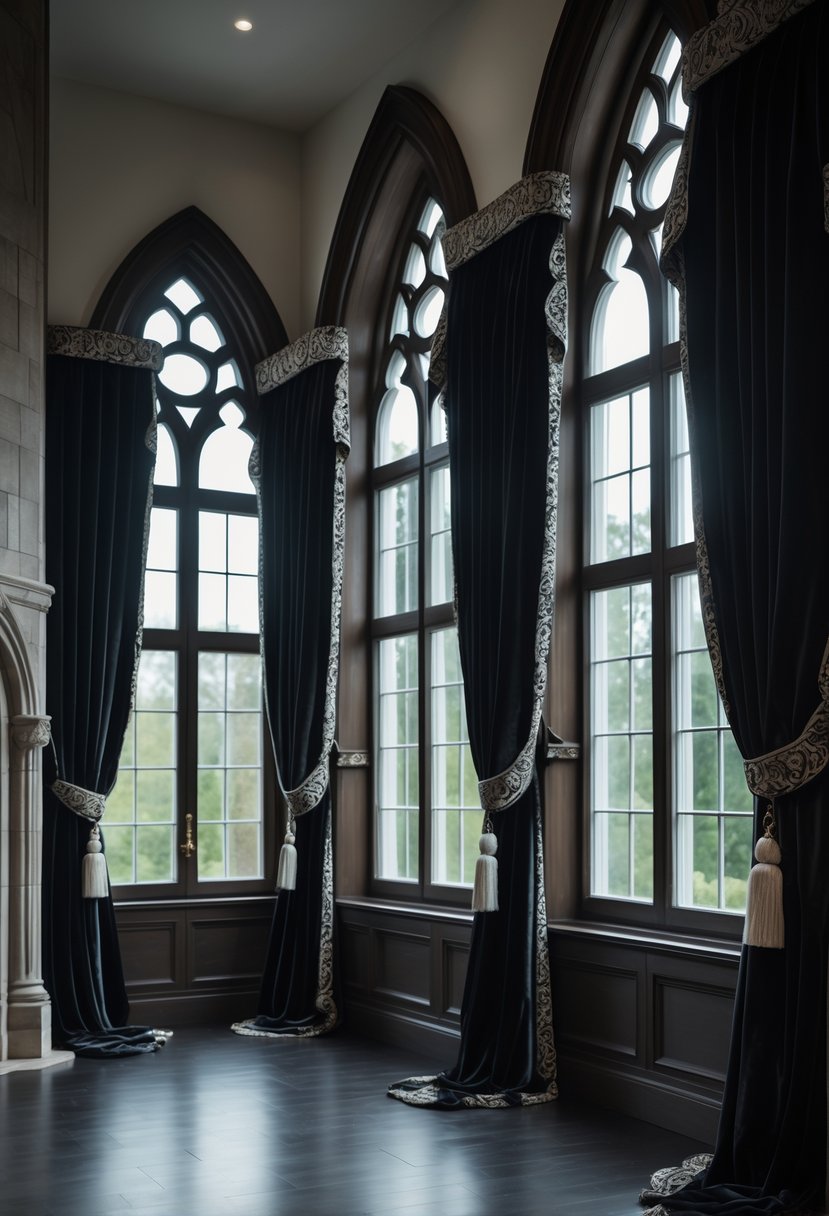
Dark velvet drapes frame Gothic arches with weight and texture. Their heavy fabric softens light while adding depth to tall windows.
Tassels at the edges introduce detail that complements carved wood or stone. Together, the drapes and tassels reinforce the room’s formal and historic character.
Cathedral-Style Large Arched Windows
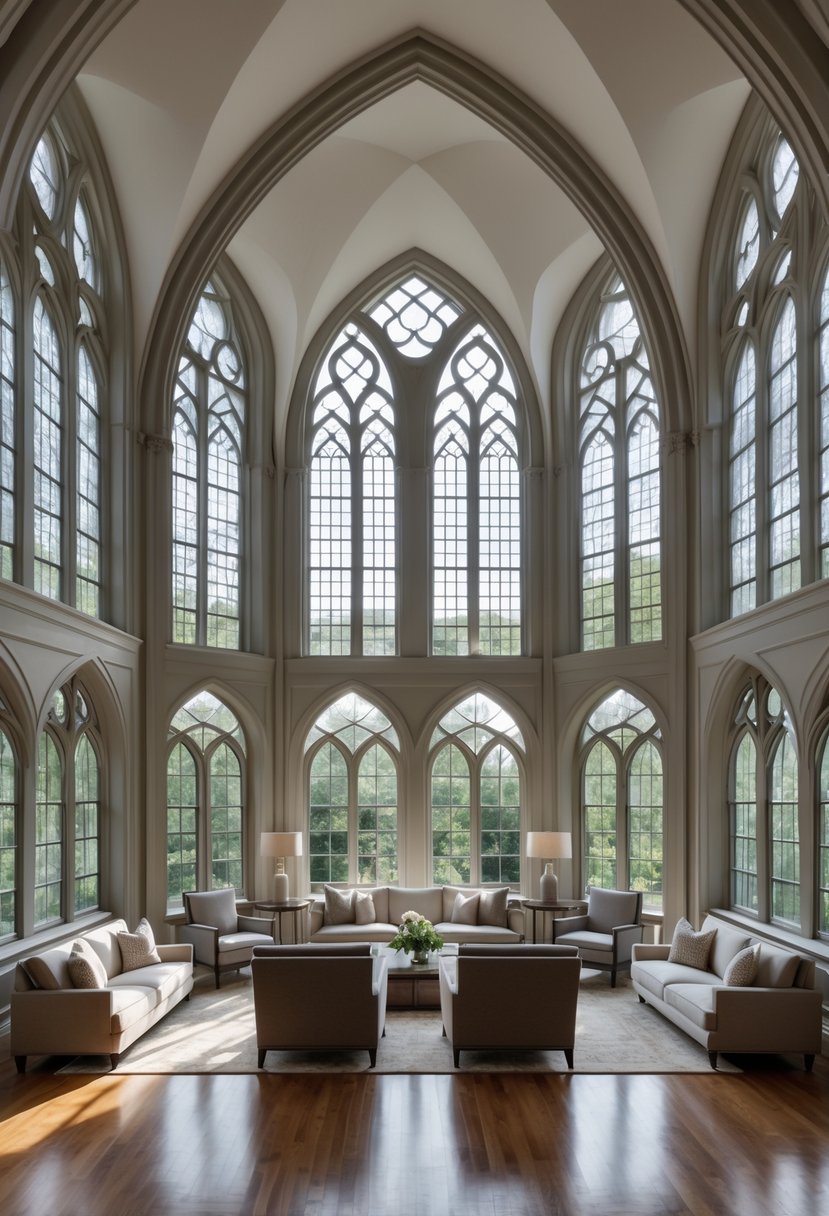
Cathedral-style arched windows feature tall, pointed shapes that draw the eye upward. They often create a sense of height and openness in a living room.
These windows work well with both gothic and traditional interiors. Their large scale allows more natural light to enter, highlighting architectural details and décor.
Decorative Iron Grilles on Windows
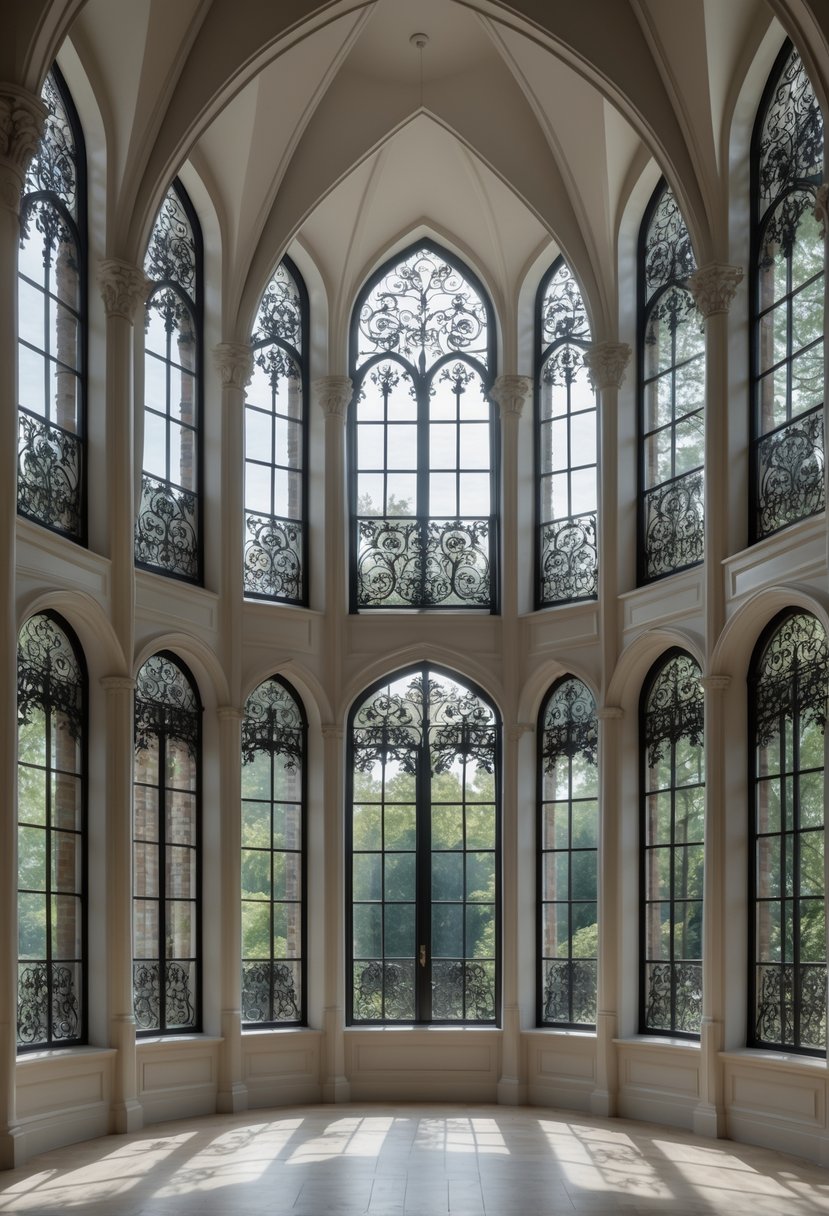
Decorative iron grilles add structure and detail to gothic-style windows. Their patterns often feature arches, scrolls, or geometric shapes that match the architectural style.
They can be made from wrought iron or designed in lighter materials that mimic the look. These grilles provide visual interest while maintaining durability and function.
Gothic Arch Window Seat Nooks
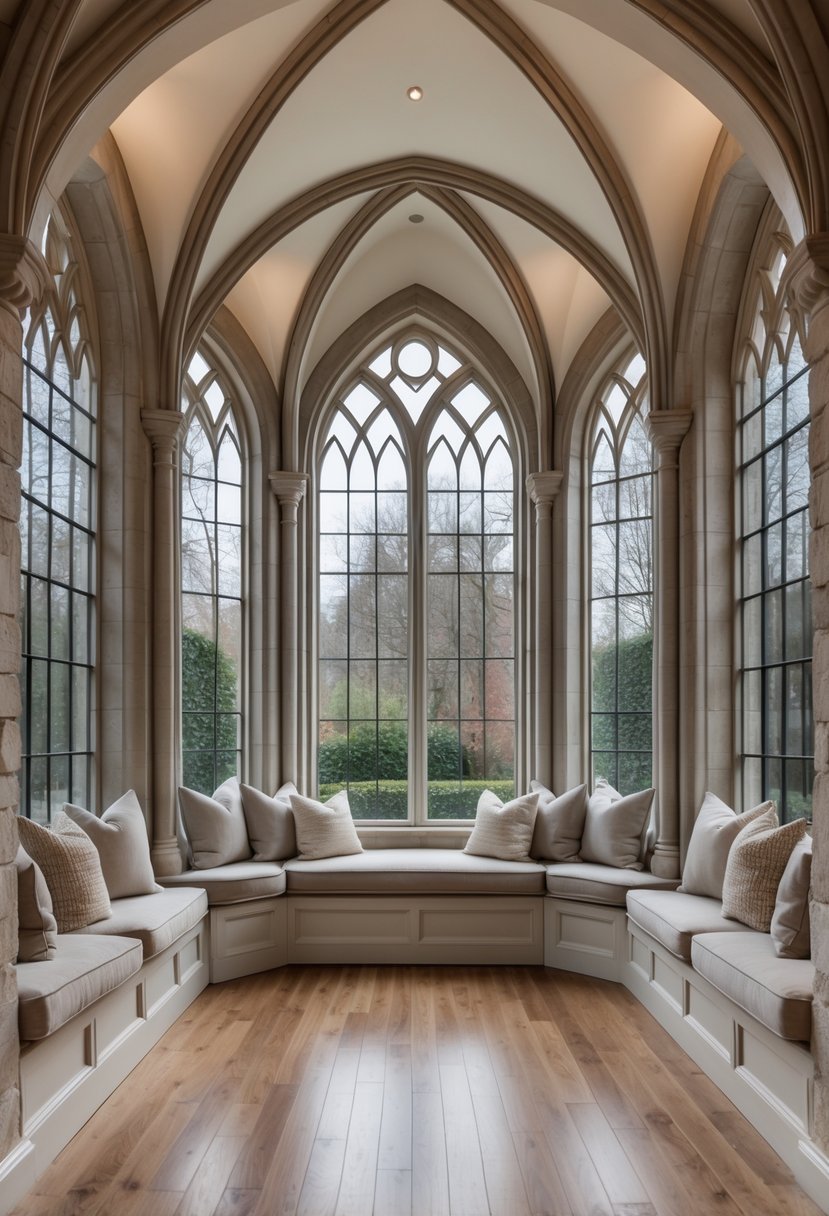
A gothic arch window seat nook adds both function and style to a living room. The pointed arch shape frames the seating area, giving it a defined and architectural look.
These nooks often use built-in benches with cushions, creating a comfortable spot for reading or relaxing while enjoying natural light.
Vintage Gothic Lanterns by Window Areas
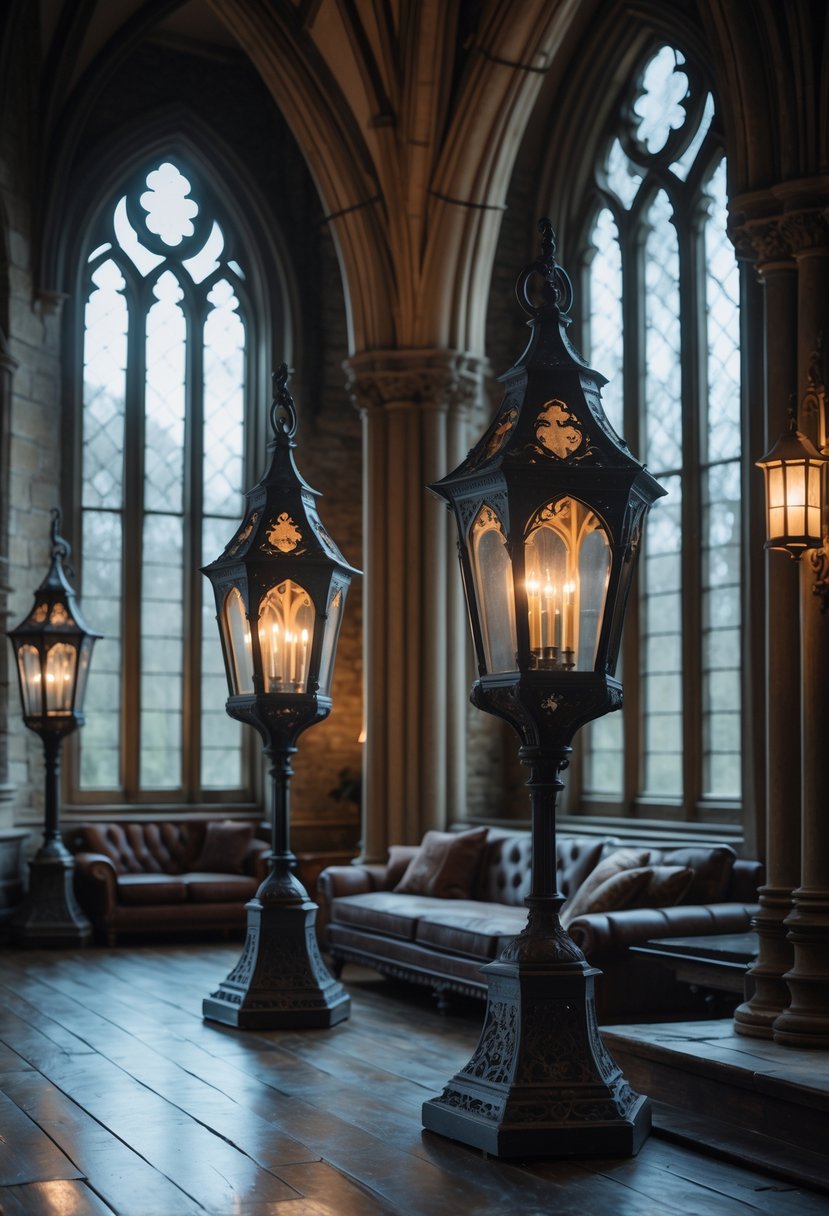
Placing vintage Gothic lanterns near window arches adds a soft, ambient glow that highlights the architectural details.
These lanterns, often crafted from metal and glass, pair well with tall windows and pointed arches.
They create balanced lighting while keeping the room’s Gothic character intact.
Blackened Metal Window Hardware
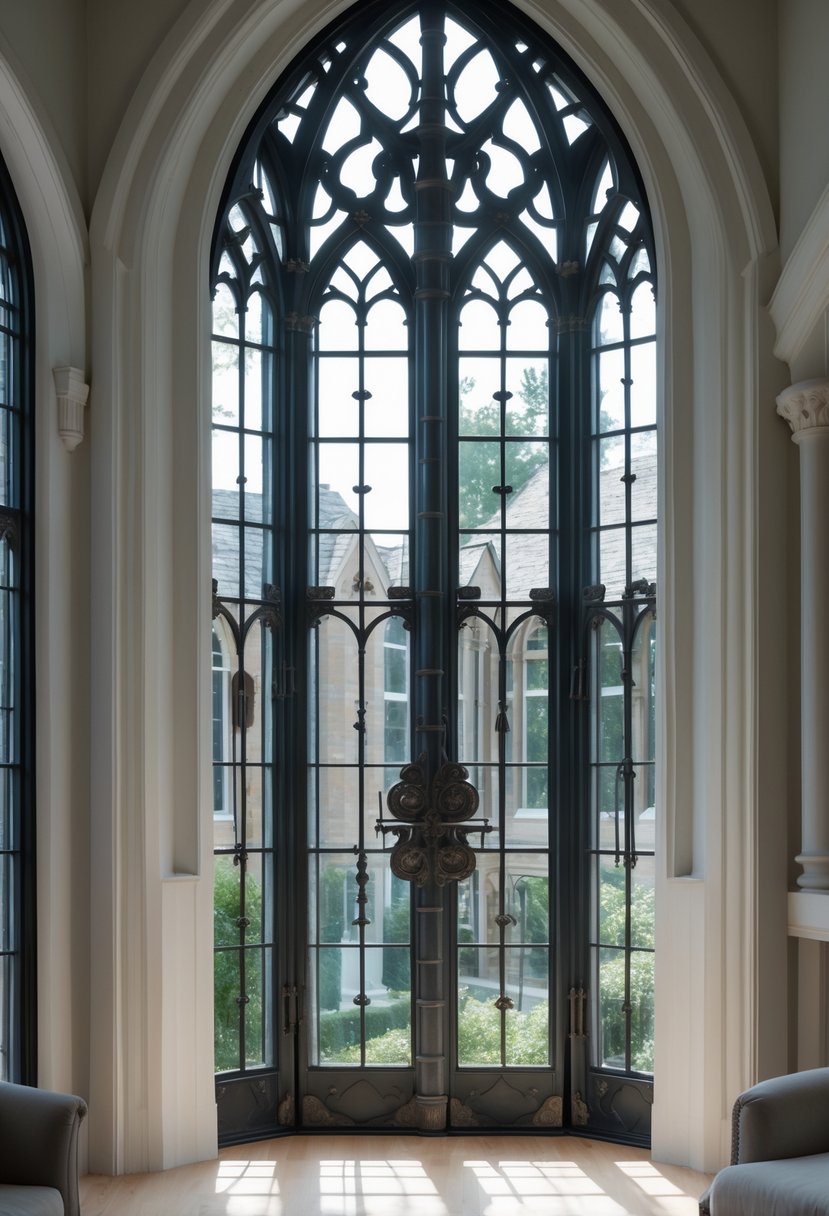
Blackened metal hardware adds a subtle yet strong detail to gothic-style windows. Its dark finish blends well with arched frames and enhances the architectural lines.
Many designs feature iron or steel with matte black coatings. These finishes resist wear and match both decorative and functional window elements.
Architectural Significance of Gothic Arches and Windows
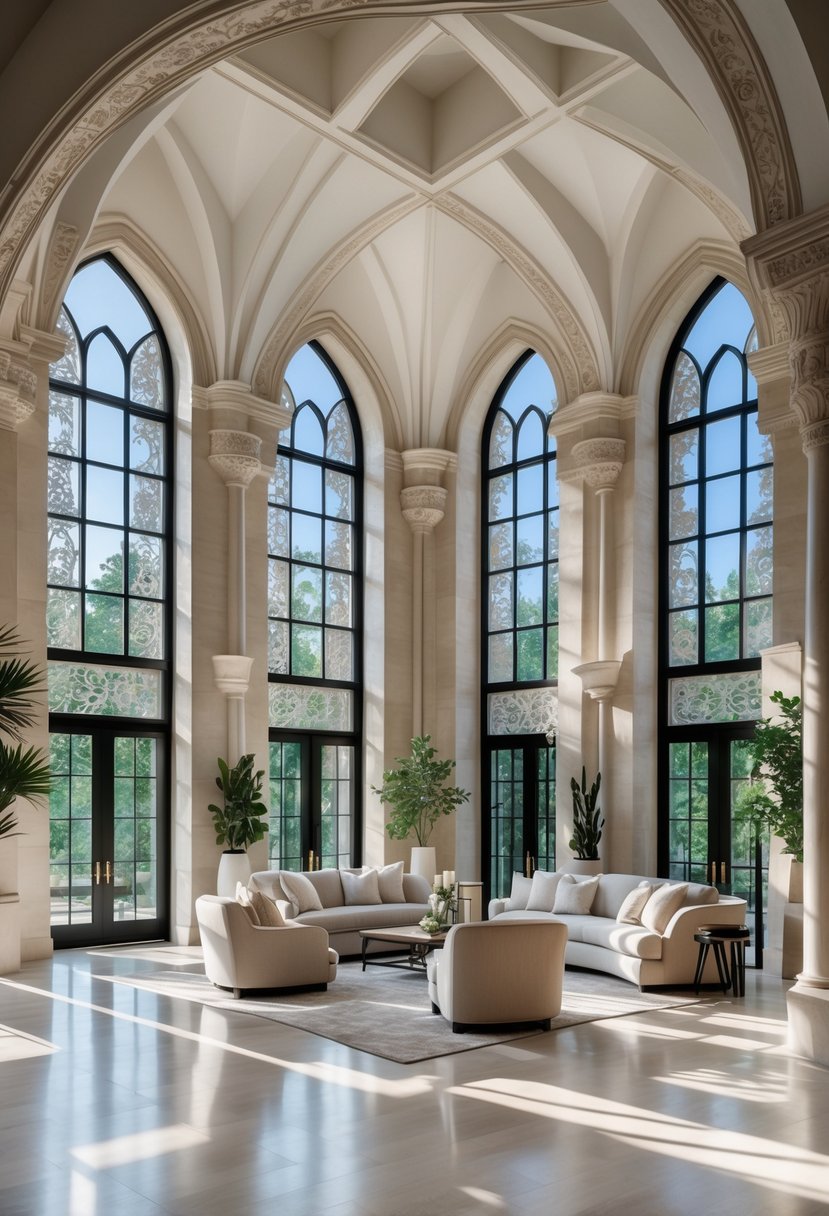
Gothic arches and windows shaped the way buildings carried weight and allowed light inside. Their design balanced structural strength with decorative detail, making them both practical and visually distinct.
Historical Origins
Gothic architecture began in 12th-century France and spread across Europe during the Middle Ages. It developed from Romanesque design, which used heavy walls and small openings. Builders sought new ways to create taller, lighter structures that could hold large stained glass windows.
The pointed arch became the defining feature. Unlike the round Romanesque arch, it directed weight more efficiently downward, reducing pressure on walls. This allowed architects to build higher ceilings and thinner walls.
Flying buttresses supported these thinner walls from the outside. Combined with ribbed vaulting inside, the system made it possible to construct cathedrals with vast interiors filled with light.
Religious and civic buildings adopted these elements to symbolize both faith and progress. The design spread widely, influencing later revivals in the 19th century and even modern adaptations in interior spaces.
Key Design Elements
Several structural and decorative features define Gothic arches and windows. The pointed arch is central, giving both strength and height. This shape allowed for taller openings compared to round arches.
Ribbed vaults and flying buttresses worked with arches to distribute weight. Together, they enabled walls to hold expansive stained glass. These windows often included tracery, or stone patterns, that framed the glass in detailed designs.
Common window types included:
- Lancet windows: tall and narrow with pointed tops
- Rose windows: large circular designs with radial patterns
- Clustered groupings: multiple arches arranged side by side
These elements gave buildings a vertical emphasis and filled interiors with colored light. In modern interiors, designers often adapt the pointed arch shape for windows, doorways, or wall niches to echo the same qualities on a smaller scale.
Incorporating Gothic Arches and Windows Into Modern Living Rooms
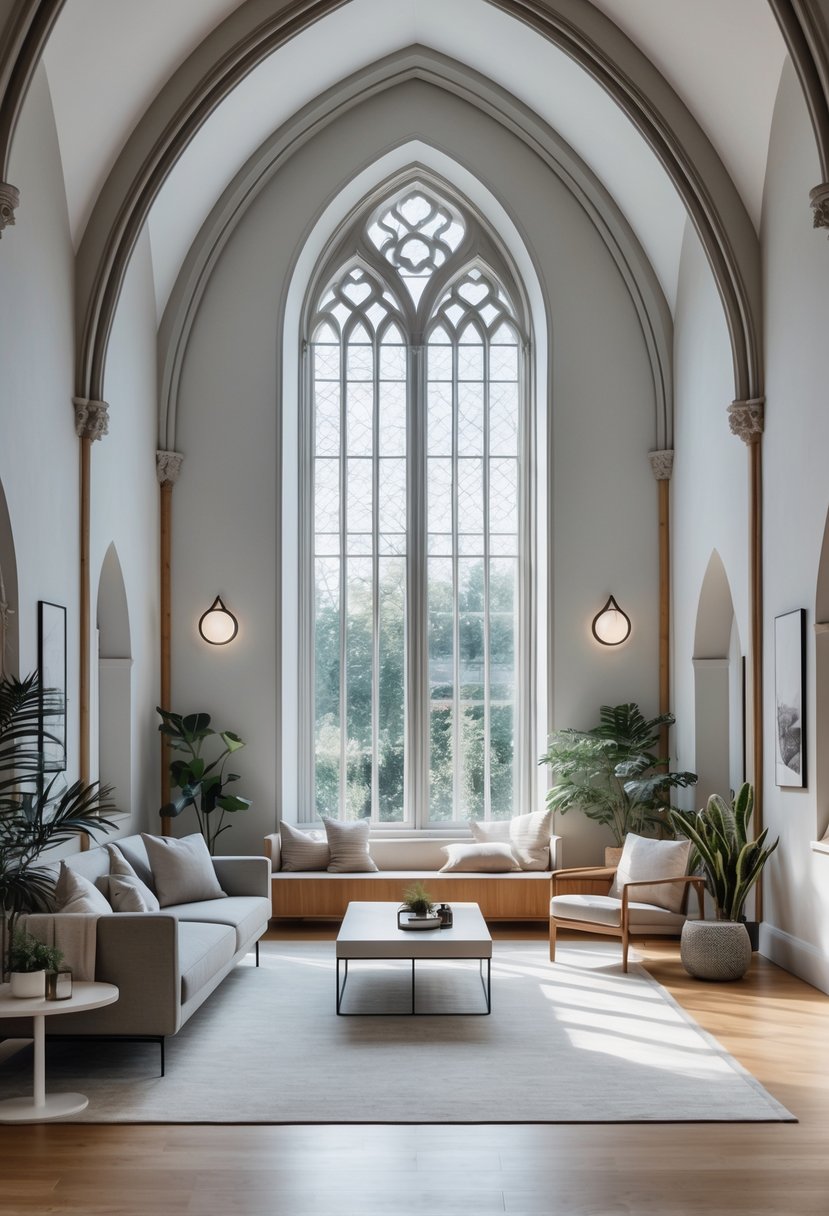
Gothic arches and windows can add structure, depth, and character to a living room. Their pointed shapes and detailed lines work well when paired with modern finishes, creating balance between old-world design and contemporary living.
Blending Traditional and Contemporary Styles
Homeowners often combine Gothic arches with clean-lined furniture to prevent the room from feeling heavy. For example, a pointed archway can frame a modern sofa or open shelving without overwhelming the space.
Materials play a key role. Stone, wood, and metal can highlight the Gothic form, while glass or smooth plaster keeps the room current. Choosing a neutral palette allows the arches and windows to stand out without clashing with modern décor.
Designers sometimes use Gothic-inspired windows with slim black frames. This detail nods to history but fits into modern homes with minimalist layouts. In open-plan spaces, an arched divider or doorway can create definition while still maintaining flow.
Pairing ornate shapes with simple surfaces ensures the room feels intentional. A mix of textures—velvet cushions, sleek flooring, and carved wood accents—helps bridge the gap between eras.
Lighting and Ambiance Considerations
Lighting has a strong effect on Gothic windows and arches. Tall, pointed windows bring in natural light, which softens the darker tones often used in Gothic interiors. When natural light is limited, layered lighting becomes essential.
Options for effective lighting include:
- Wall sconces with iron or brass finishes
- Chandeliers with geometric or Gothic-inspired frames
- Recessed lighting to highlight arch details
Stained or frosted glass can filter light, adding subtle color and pattern. This creates visual interest without overpowering the room.
At night, warm bulbs can reduce sharp contrasts and make the space feel more inviting. Placing accent lights near arches emphasizes their shape and adds depth to the room.
By balancing light sources, the dramatic qualities of Gothic design remain visible while still supporting a comfortable, modern atmosphere.
Explore these dark academia decorating ideas from HGTV, featuring gothic-inspired architecture.