
Small Apartment Living Room Ideas 2026: 22 Smart Ways To Maximize Space
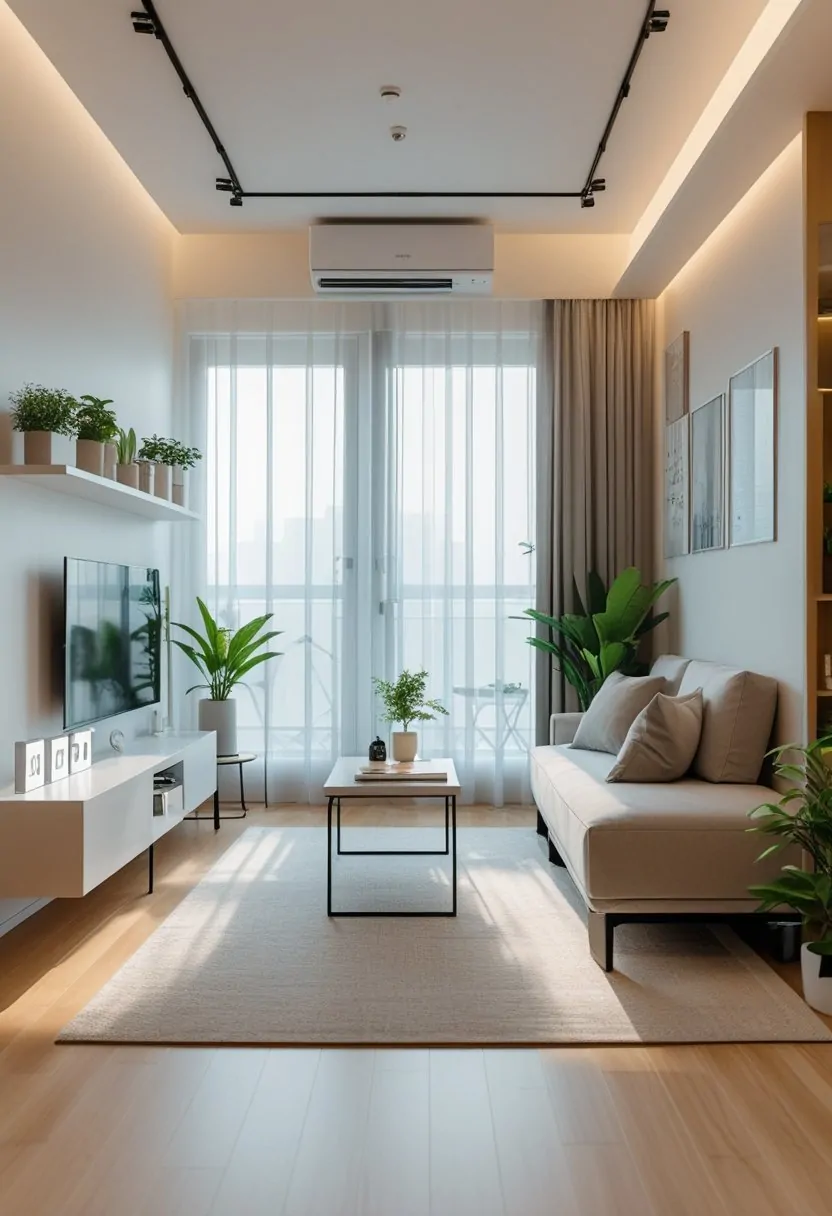
Living in a small apartment often means finding creative ways to make every inch count. As homes continue to shrink and urban living grows, design trends for 2026 focus on comfort, function, and style in compact spaces. Small apartment living room ideas for 2026 show how thoughtful design choices can make limited space feel open, inviting, and practical.
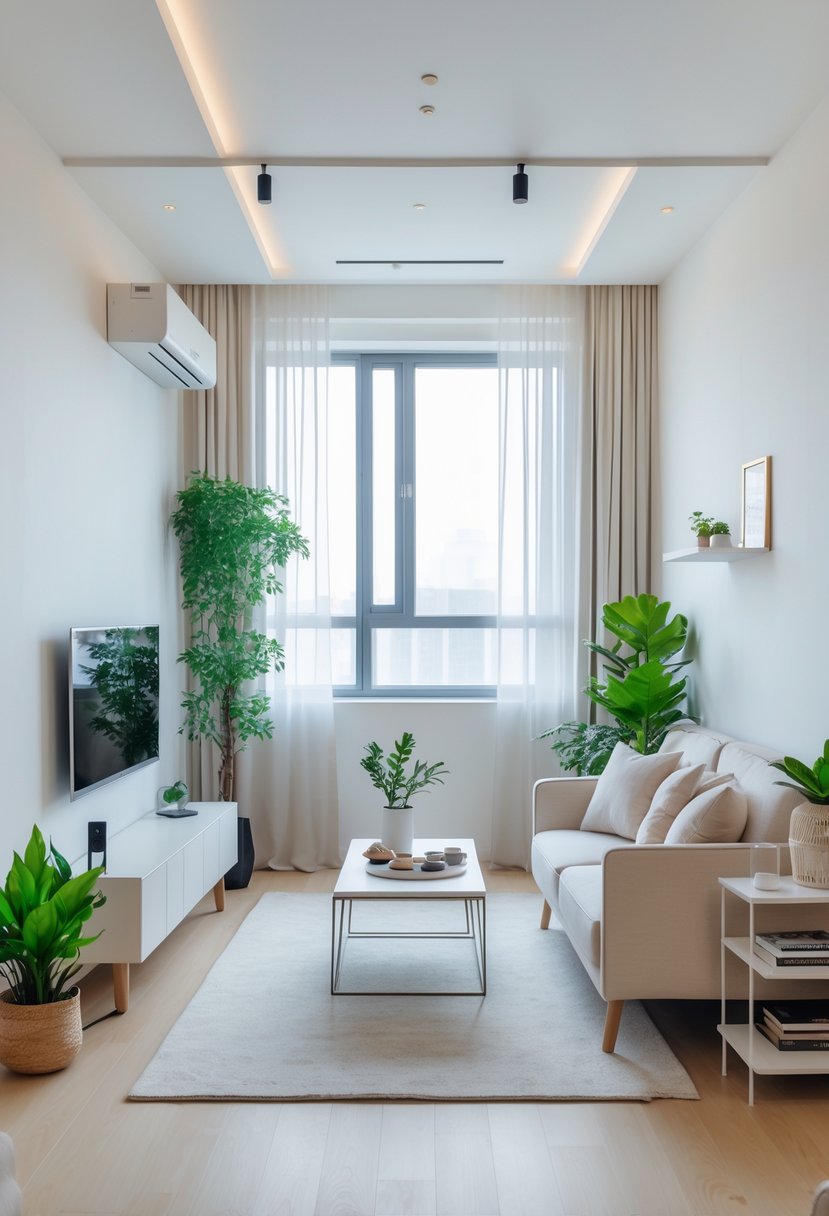
This approach blends smart furniture, light colors, and clever storage to create balance without clutter. Whether someone wants to refresh their layout or completely redesign their space, these ideas help transform small living rooms into modern, efficient, and comfortable areas that fit today’s lifestyles.
Use multi-functional furniture like storage ottomans
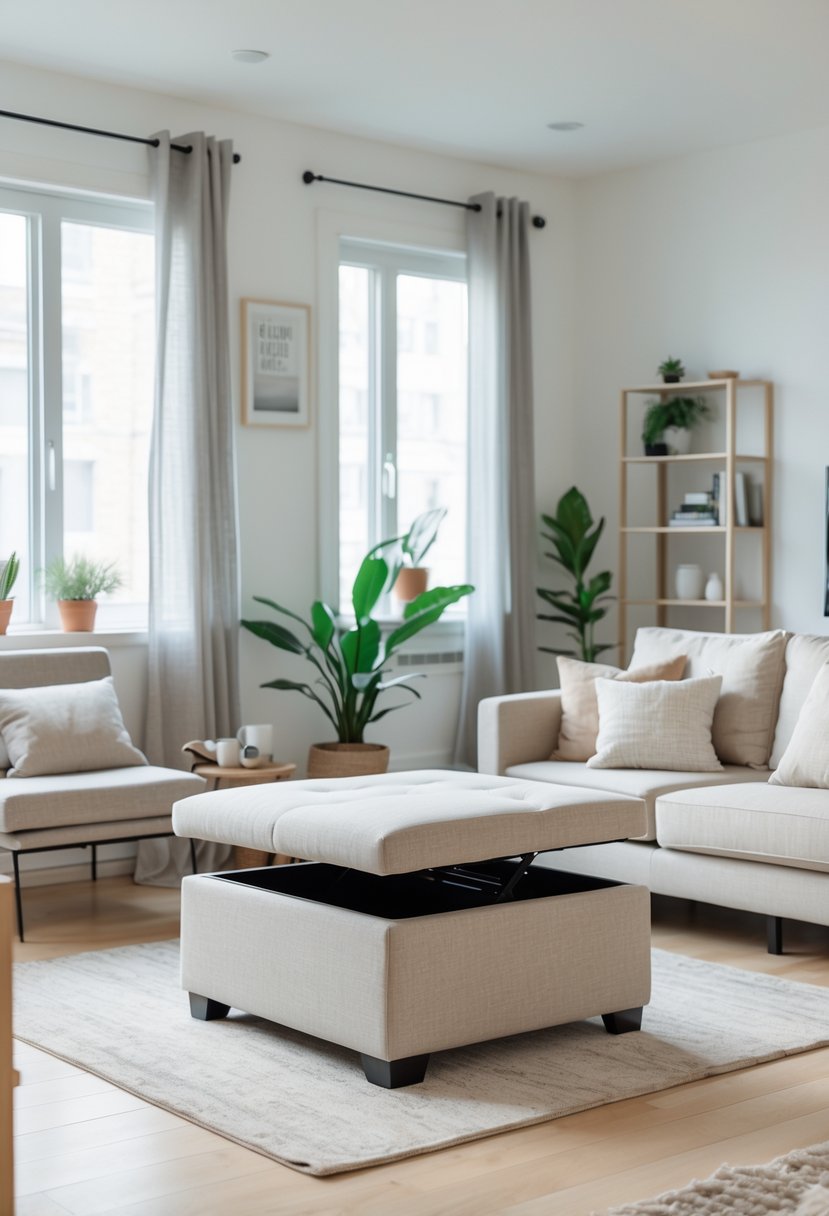
Multi-functional furniture helps small living rooms stay organized and comfortable.
A storage ottoman adds seating, acts as a footrest, and hides items like blankets or magazines.
They can replace bulky coffee tables, creating a clean, open look while keeping essentials close at hand.
Install floating shelves to save floor space
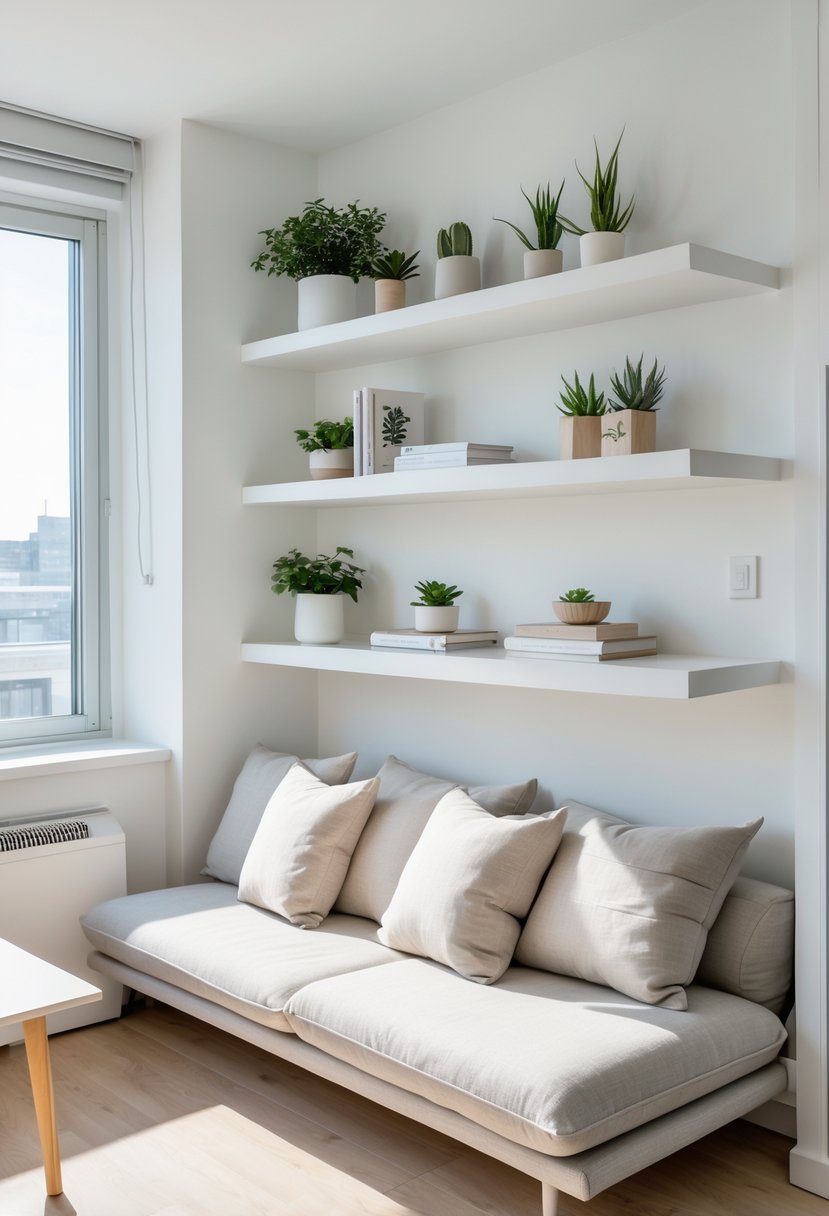
Floating shelves help small living rooms feel open by using wall space instead of the floor.
They provide storage for books, plants, or décor without bulky furniture.
Installing them in corners or above seating areas keeps the room organized and adds a clean, modern look.
Choose a light color palette to brighten the room
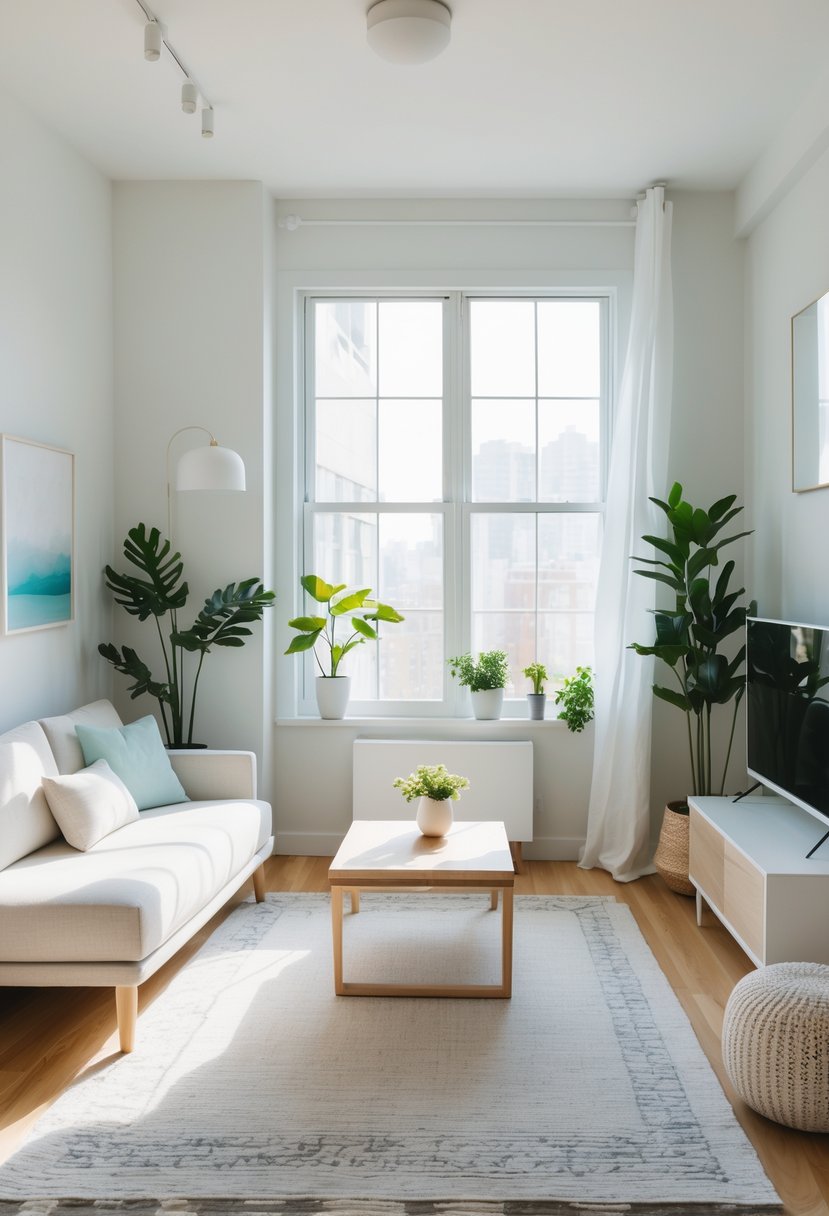
Light colors such as white, pale gray, or soft beige reflect more light and make a small living room feel more open.
They help natural light bounce around the space, creating an airy look.
Using similar light tones on walls, furniture, and decor keeps the room cohesive and uncluttered.
Incorporate mirrors to create an illusion of space
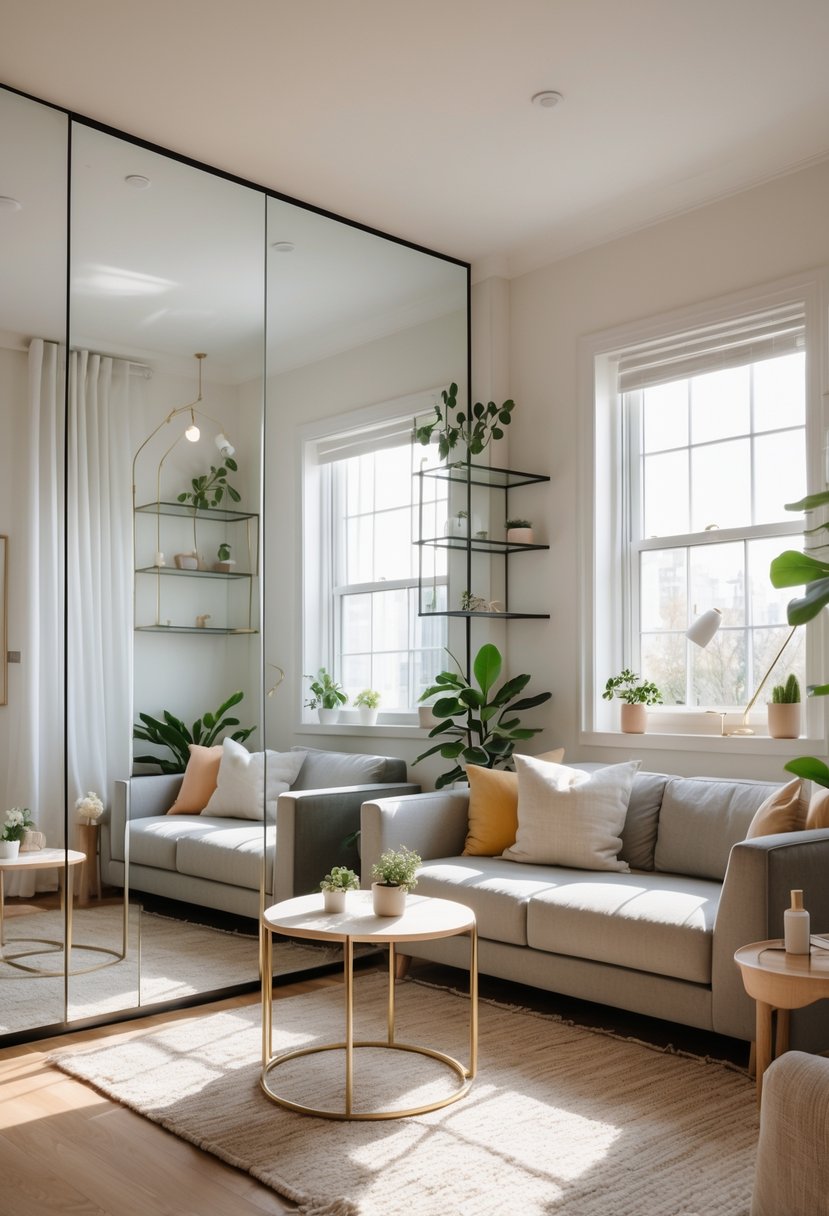
Mirrors help small living rooms feel larger by reflecting light and views.
Placing a large mirror on one wall can make the space appear deeper and brighter.
They can also use mirrored furniture or grouped smaller mirrors to add visual interest without cluttering the room.
Opt for slim, leggy furniture to open up the floor
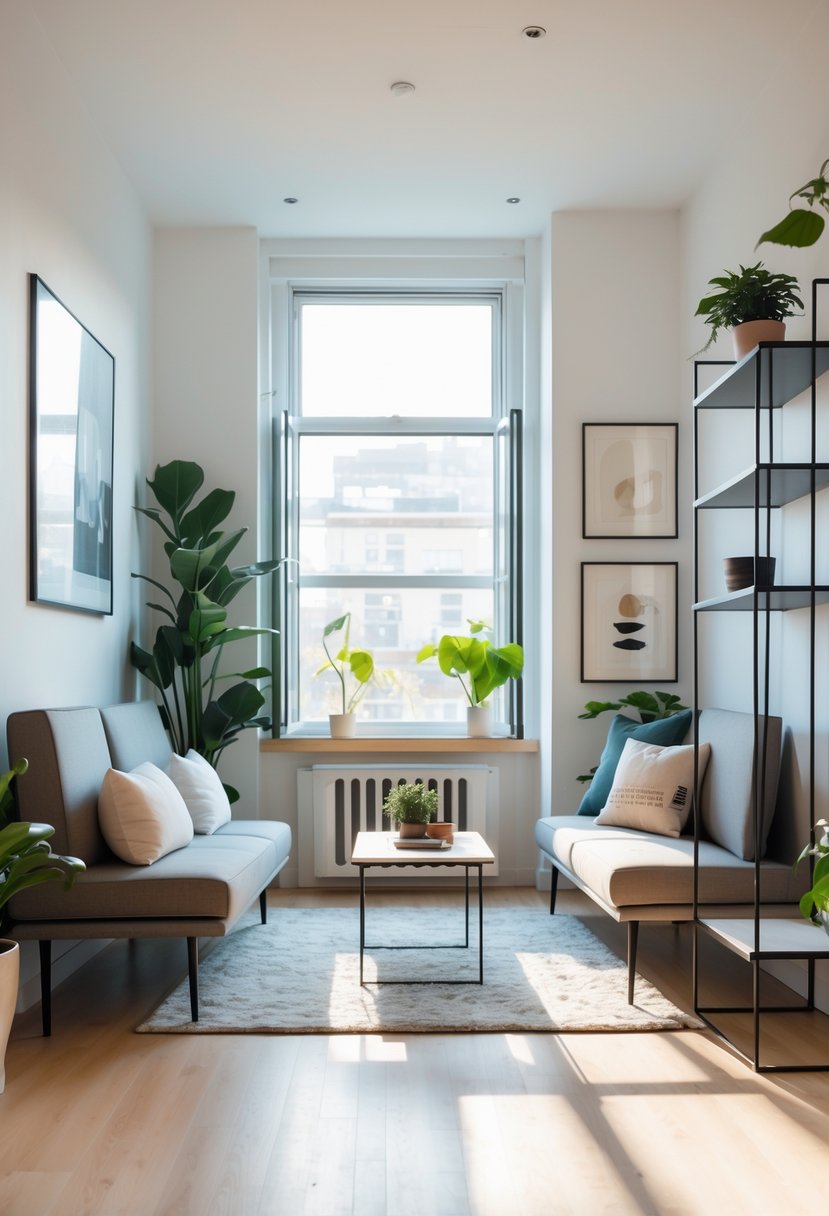
Slim, leggy furniture helps a small living room feel lighter and more open. Pieces with raised legs expose more floor area, creating a sense of space.
They also make cleaning easier and allow light to move freely under and around furniture, keeping the room bright and uncluttered.
Use area rugs to define different zones
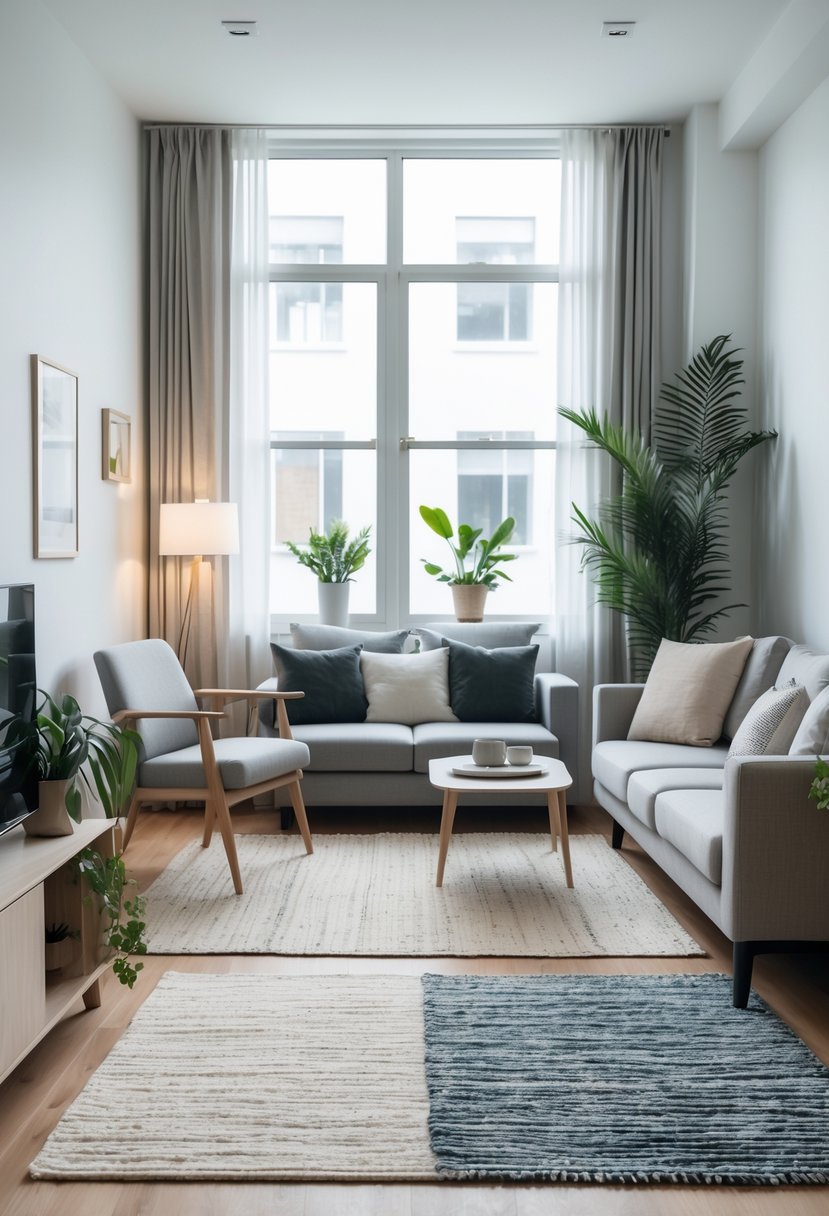
They can use area rugs to separate areas in a small apartment living room.
Different colors or patterns help mark spaces for seating, dining, or reading.
Placing rugs under furniture groups creates visual boundaries and makes each zone feel organized without adding walls.
Add vertical storage units to maximize wall space
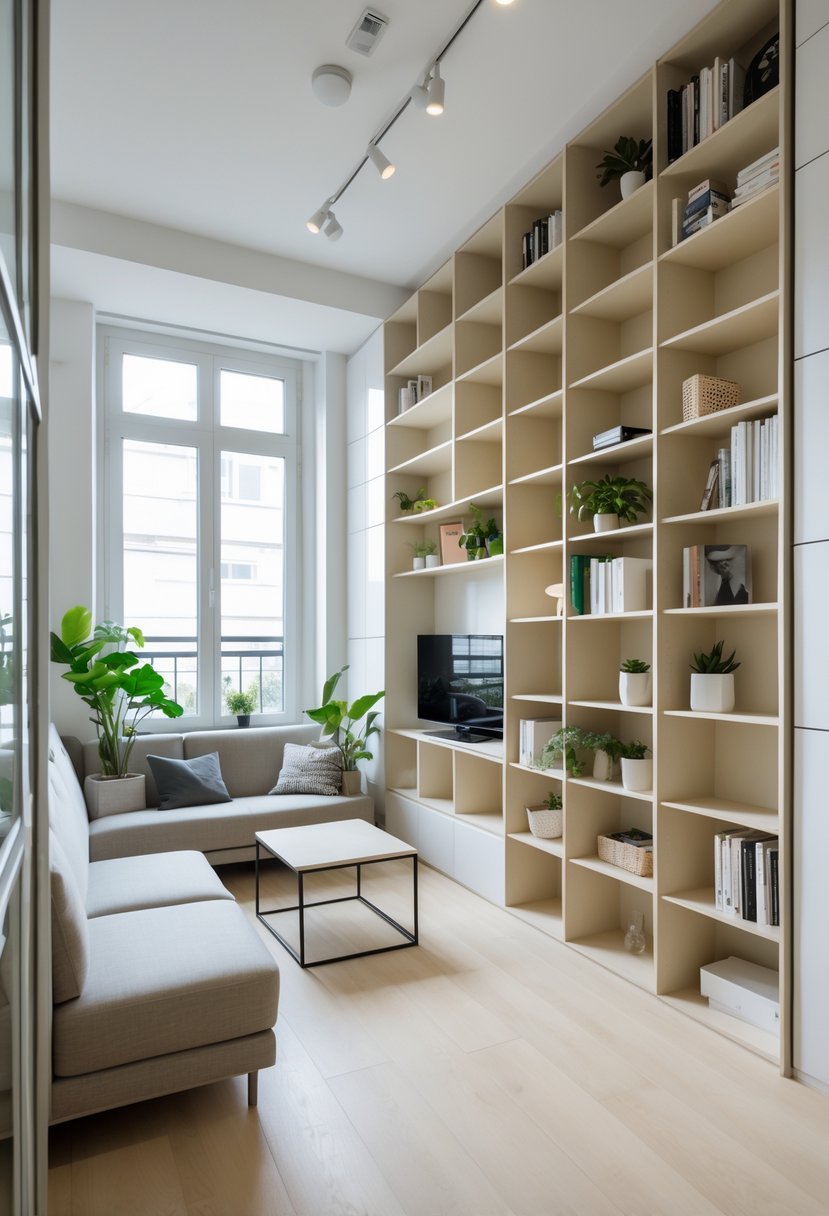
They can make better use of limited space by installing tall shelving or wall-mounted cabinets.
These units keep floors clear and provide room for books, decor, and everyday items.
Using the full height of a wall helps small living rooms stay organized without feeling crowded.
Select a compact, sectional sofa for seating flexibility
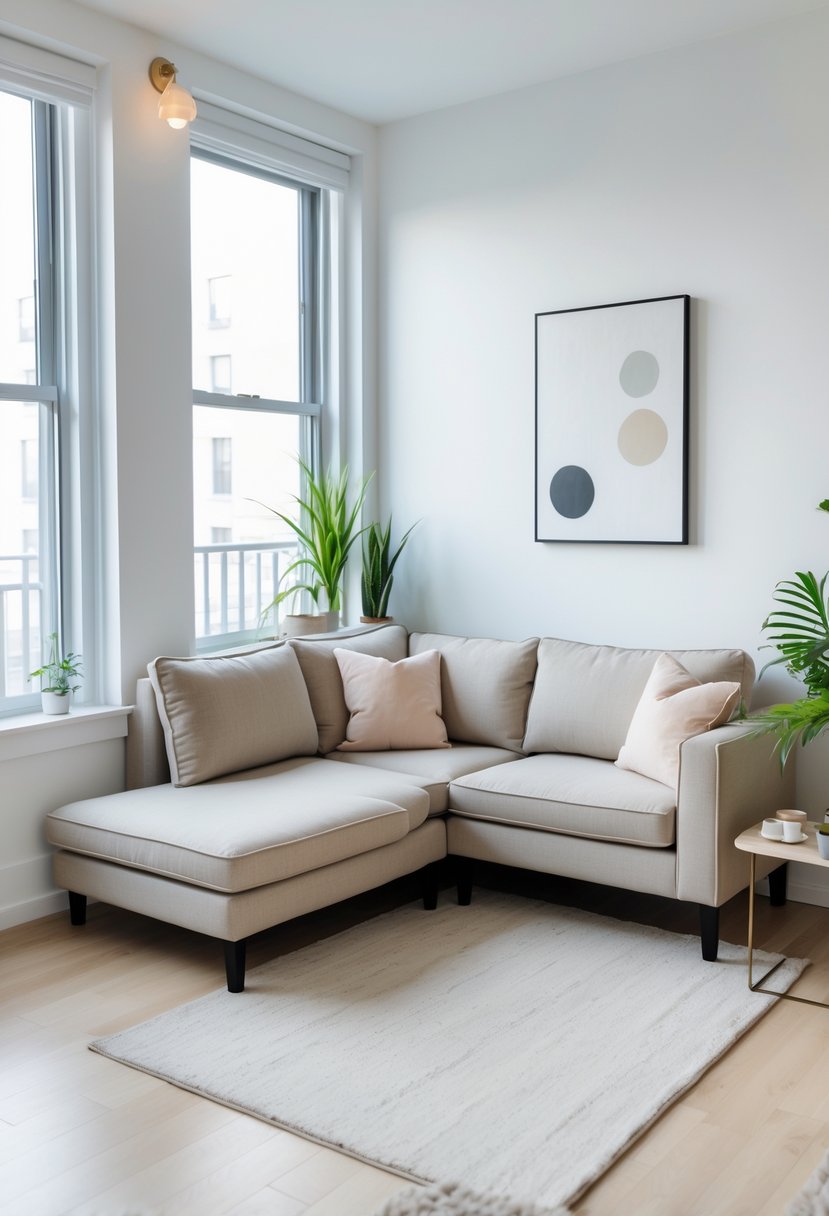
A small sectional sofa helps maximize seating without crowding the room.
Its modular design lets users adjust the layout to fit different spaces or needs.
Many models include storage or reversible chaises, adding function while keeping a clean look.
This makes them practical choices for apartments with limited floor space.
Use nesting tables for versatile surface options
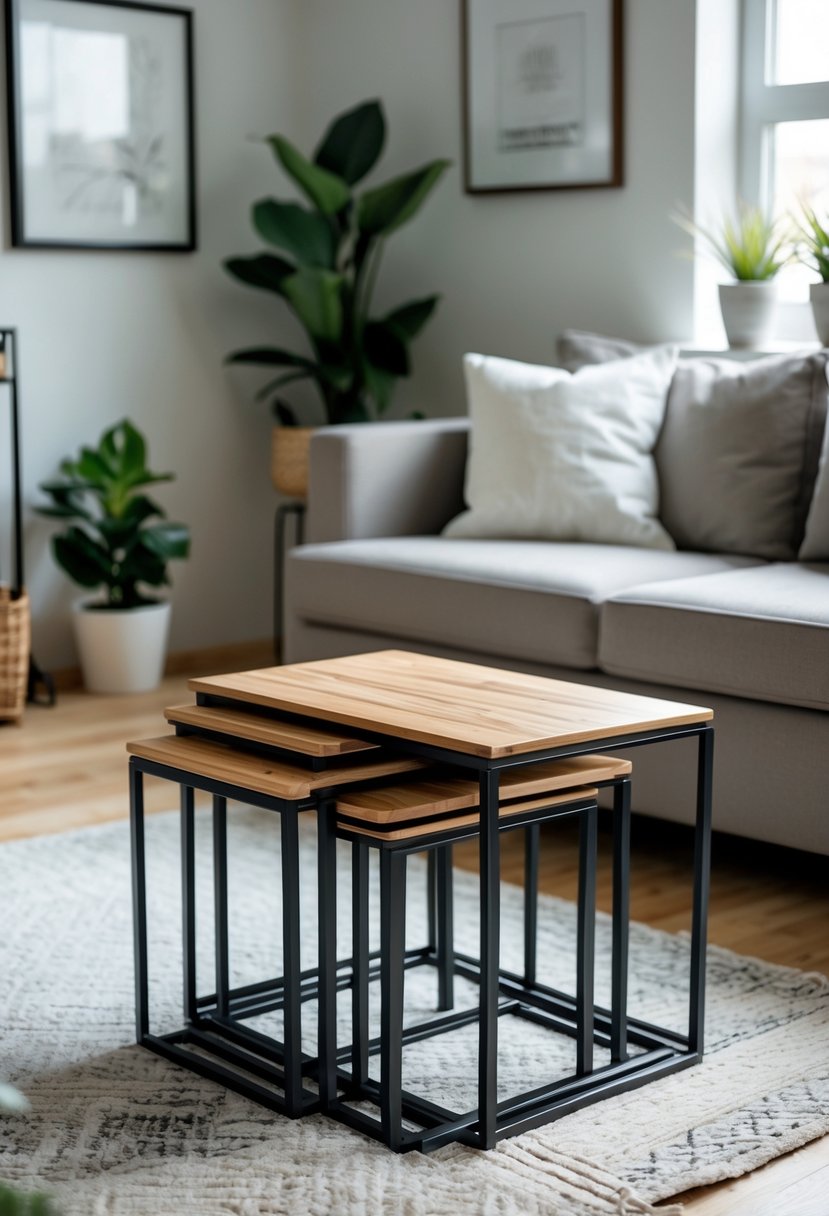
Nesting tables help small living rooms stay flexible and organized.
They fit together to save space when not in use and separate easily when extra surface area is needed.
Their lightweight design makes them simple to move, allowing quick changes for entertaining, reading, or displaying decor.
Incorporate fold-away desks or tables
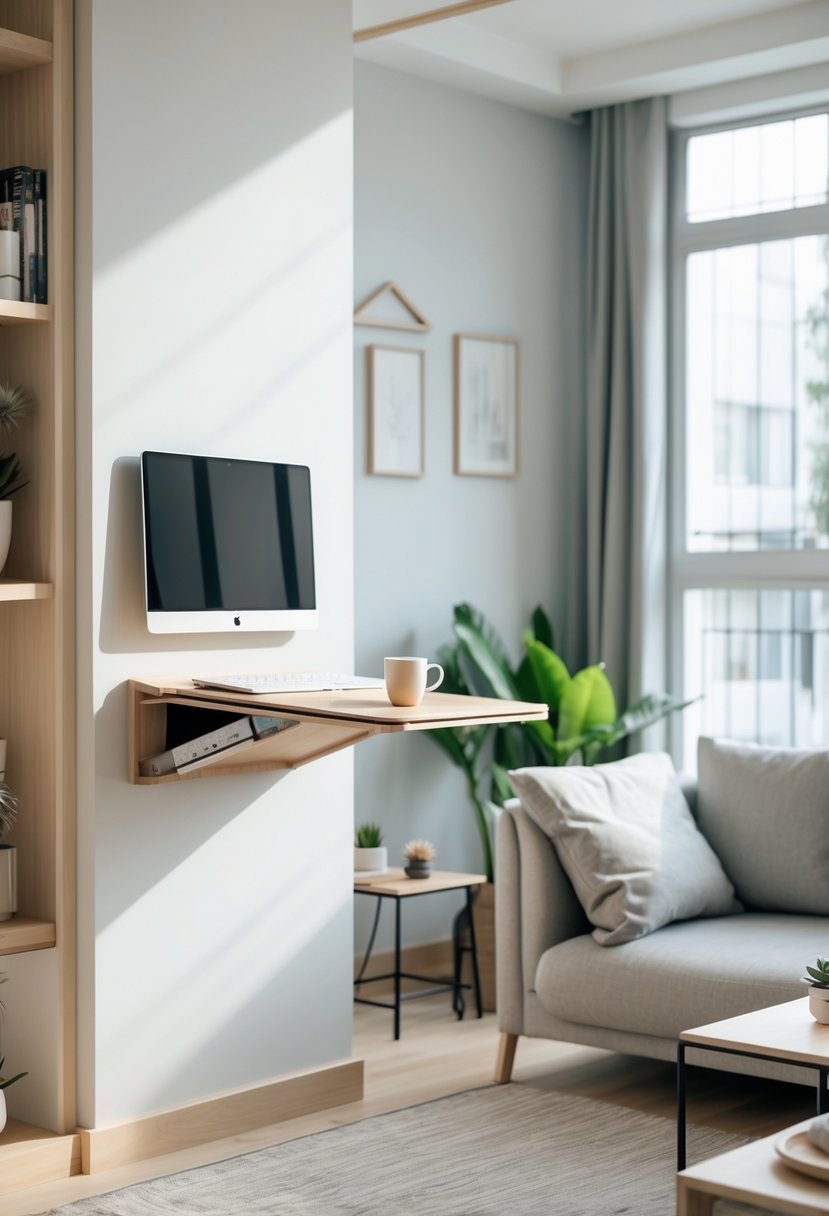
Fold-away desks and tables help small living rooms serve multiple purposes. They provide a workspace or dining area when needed and fold flat to free up floor space.
Modern designs include wall-mounted desks or convertible tables that blend with existing furniture. These options keep the room functional without adding clutter.
Choose sheer curtains to enhance natural light
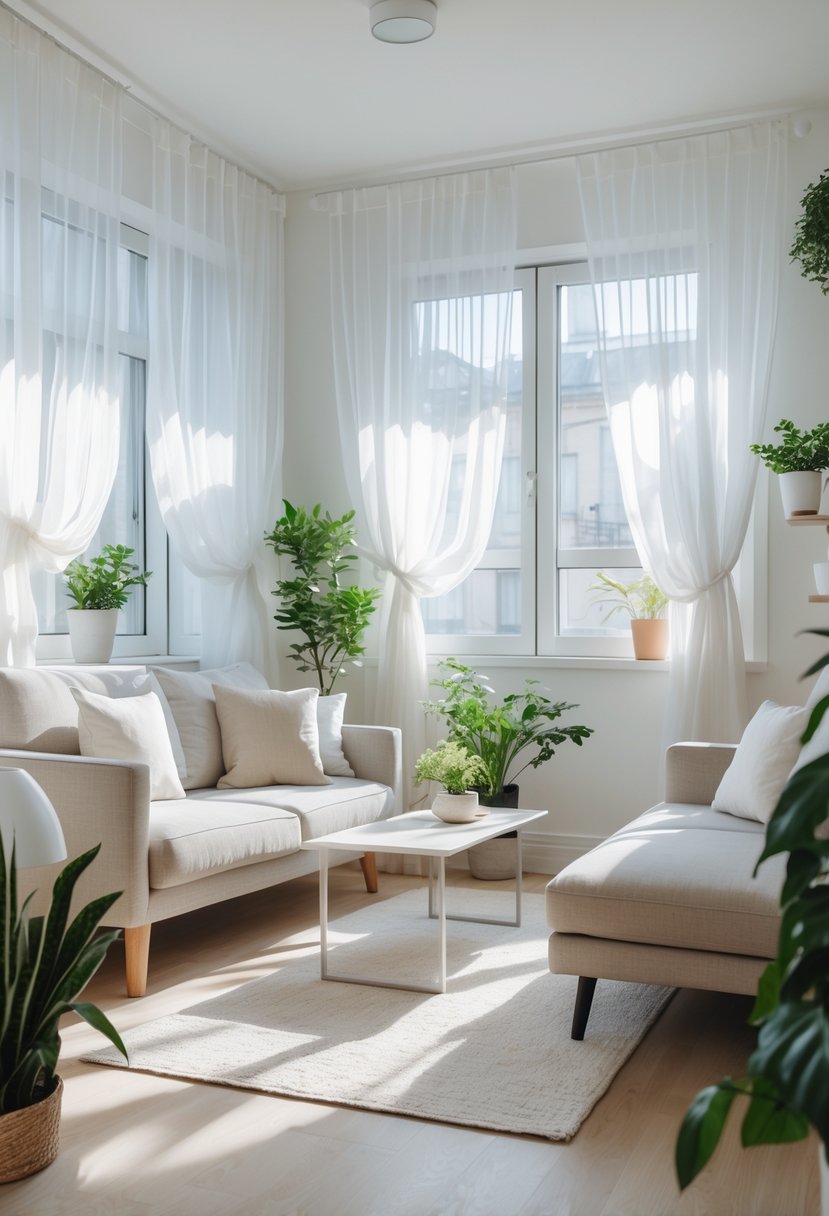
Sheer curtains let sunlight filter through while keeping privacy.
They make small living rooms feel brighter and more open.
Light fabrics in white or soft neutral tones work best for this effect.
Pairing sheers with simple curtain rods keeps the look clean and modern.
Use under-sofa storage bins for hidden organization
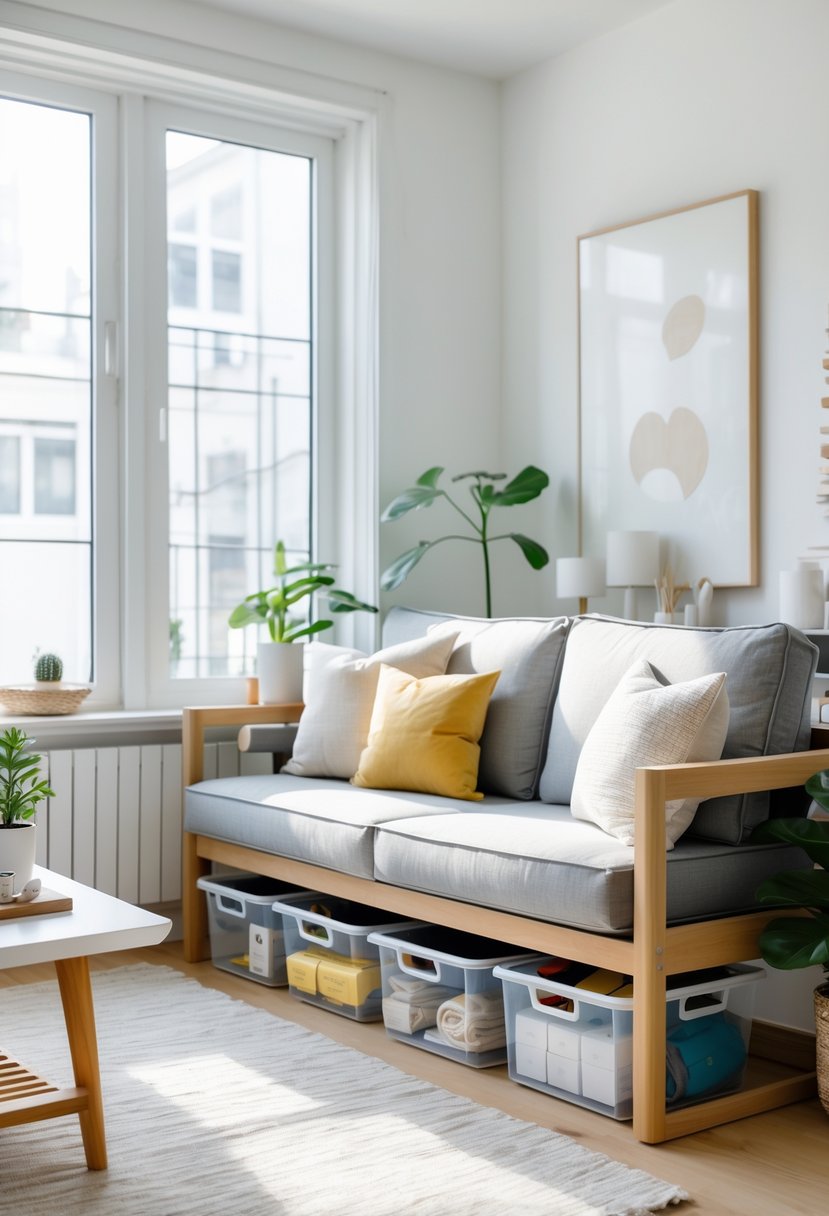
Under-sofa storage bins help make use of space that often goes unused. They slide easily under most couches and keep items out of sight.
People can store books, blankets, or small electronics in these bins to reduce clutter. Choosing low-profile containers ensures they fit neatly and remain easy to access.
Place plants strategically to add life without clutter
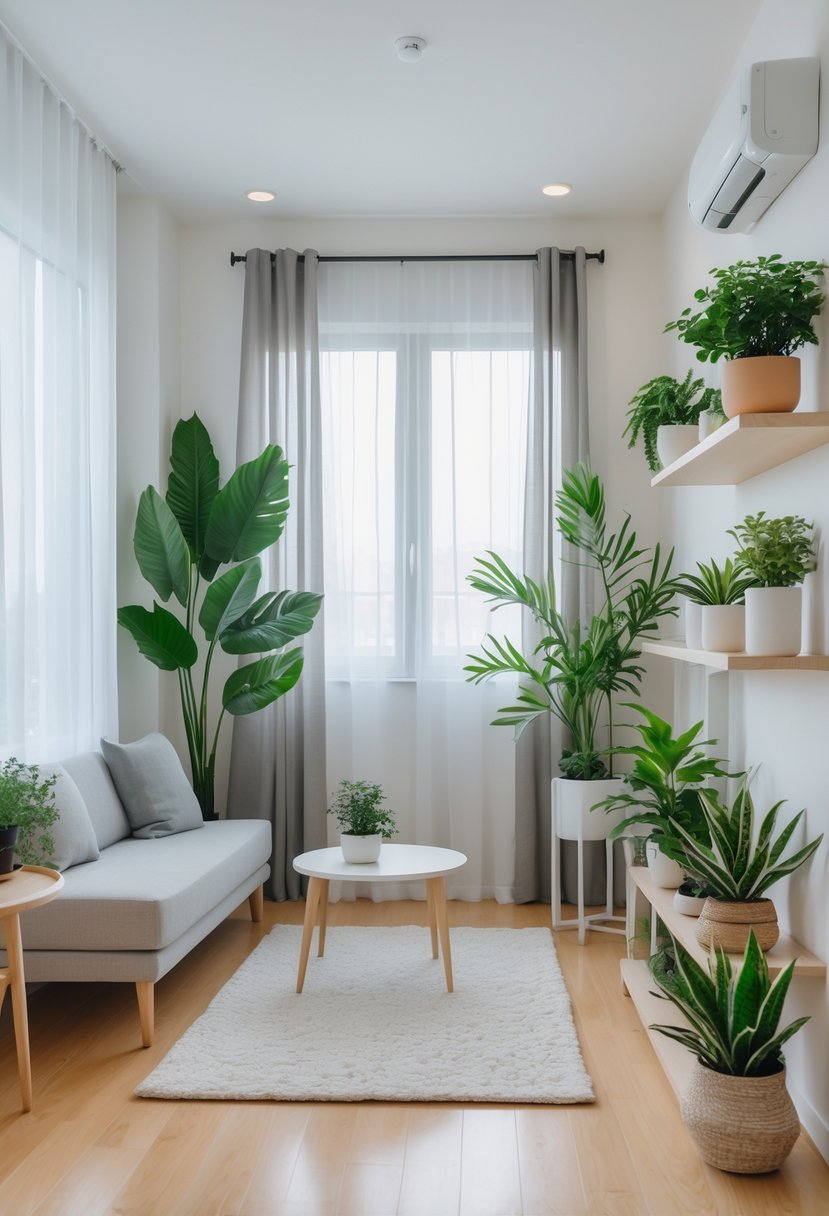
They can use vertical space by hanging planters or wall-mounted shelves.
Small plants like succulents or ferns fit well on side tables or window sills.
Grouping a few plants of different heights in one corner adds greenery without crowding the room.
Use wall-mounted lighting instead of floor lamps
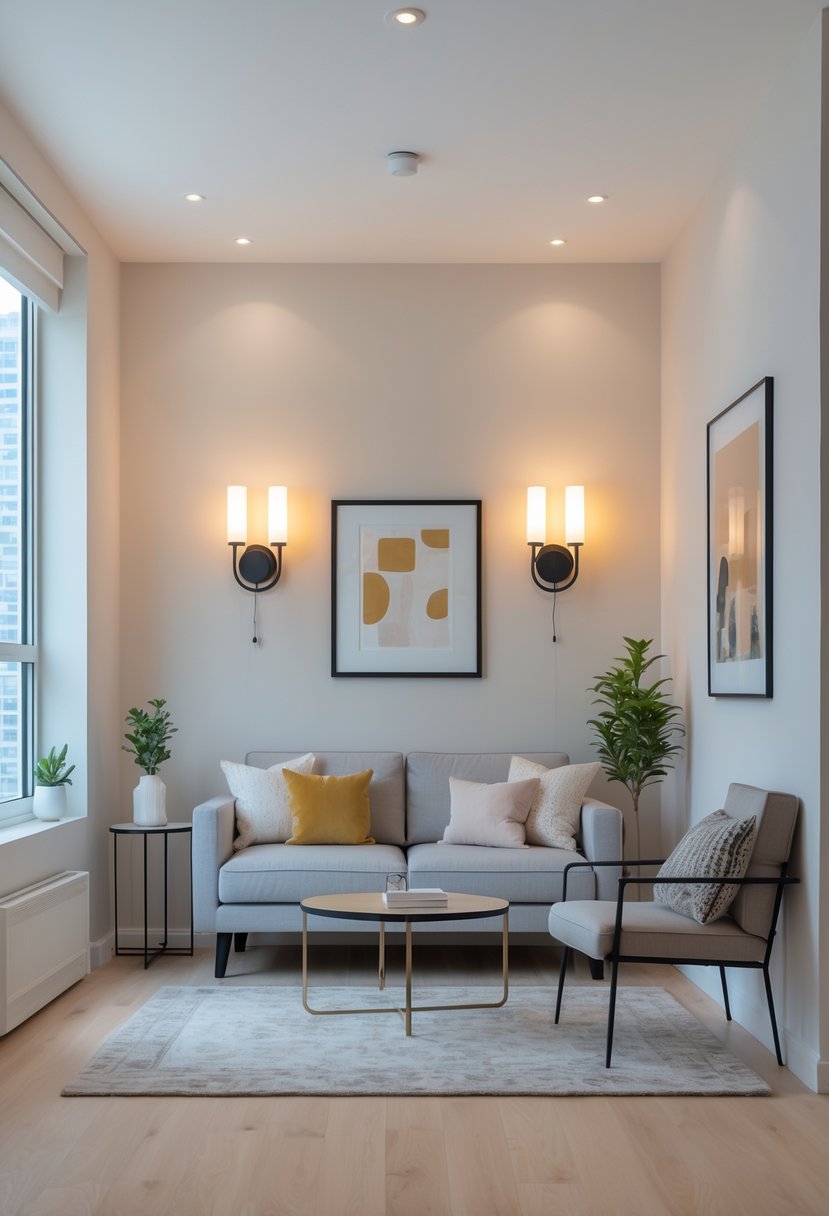
Wall-mounted lights save floor space and keep small living rooms open.
They provide focused light for reading or accenting artwork without adding clutter.
Adjustable swing-arm lamps or sconces offer flexible lighting options that fit neatly above seating or shelves.
Create a gallery wall with small frames for personality
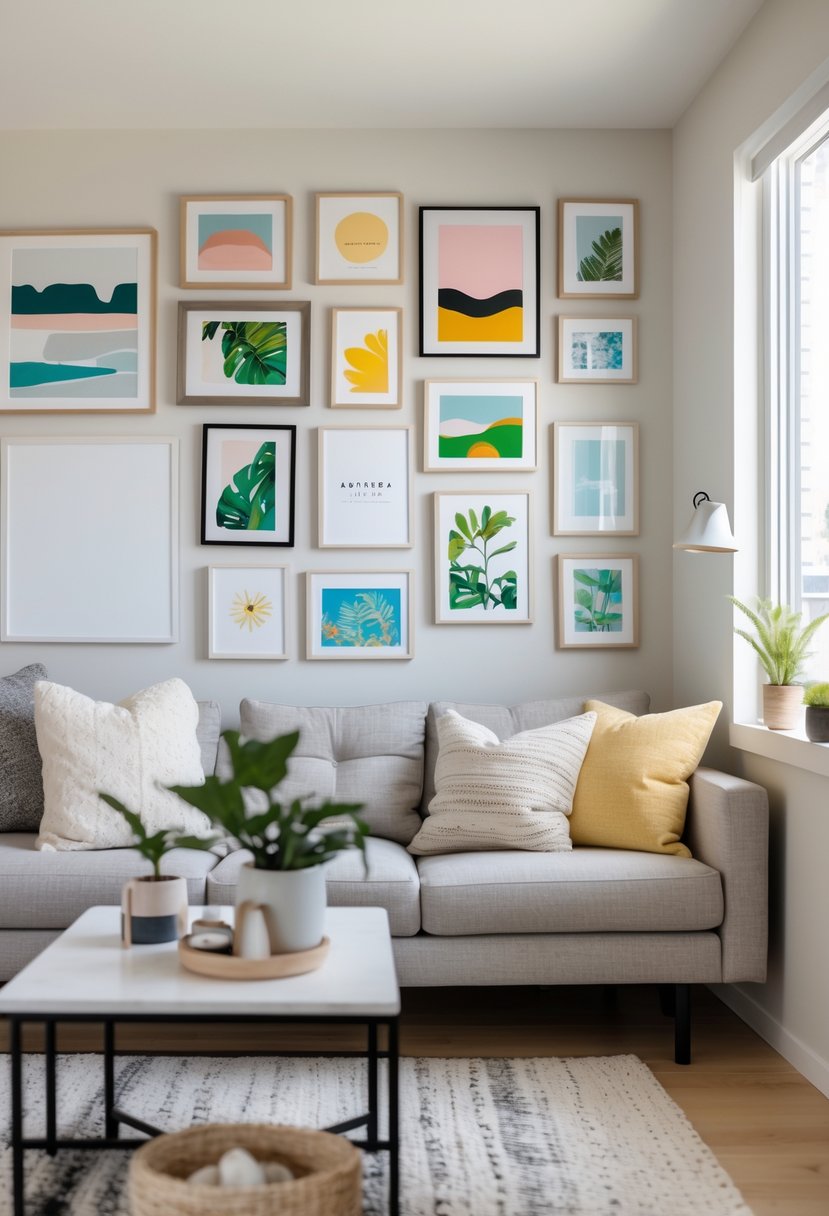
They can use small frames to add interest without crowding the room. A mix of photos, prints, and art keeps the wall visually balanced.
Arranging frames in a simple grid or loose cluster helps the display feel organized. Using similar colors or finishes ties the look together.
Choose furniture with built-in charging ports
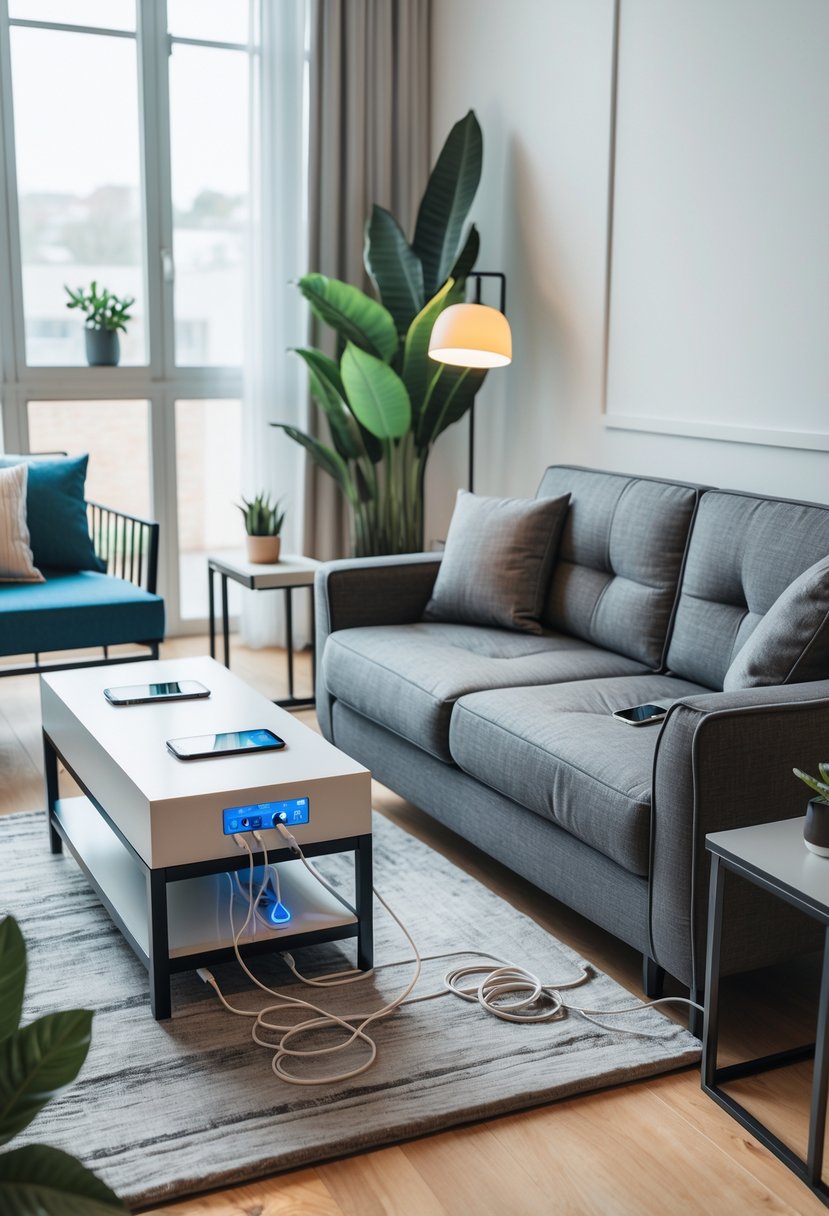
Furniture with built-in charging ports helps keep small living rooms organized and free of tangled cords.
Pieces like sofas, end tables, and headboards often include USB ports or wireless charging pads, making it easy to power devices while relaxing or working.
These designs combine convenience with a clean, modern look.
Use clear acrylic chairs to reduce visual bulk
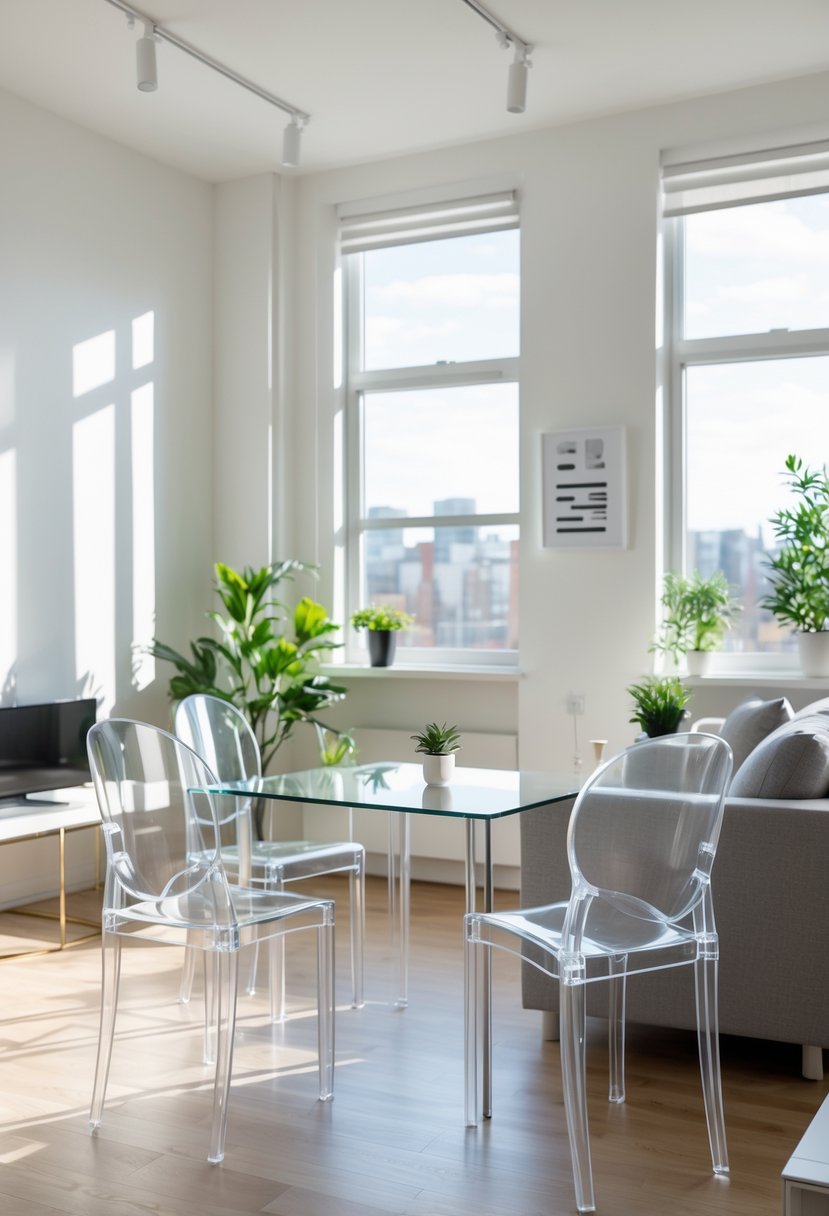
Clear acrylic chairs help small living rooms feel open and light. Their transparency allows light to pass through, minimizing visual clutter.
They blend easily with different styles, from modern to traditional. Because they take up less visual space, they make compact areas appear more spacious and organized.
Add a statement piece like a colorful armchair
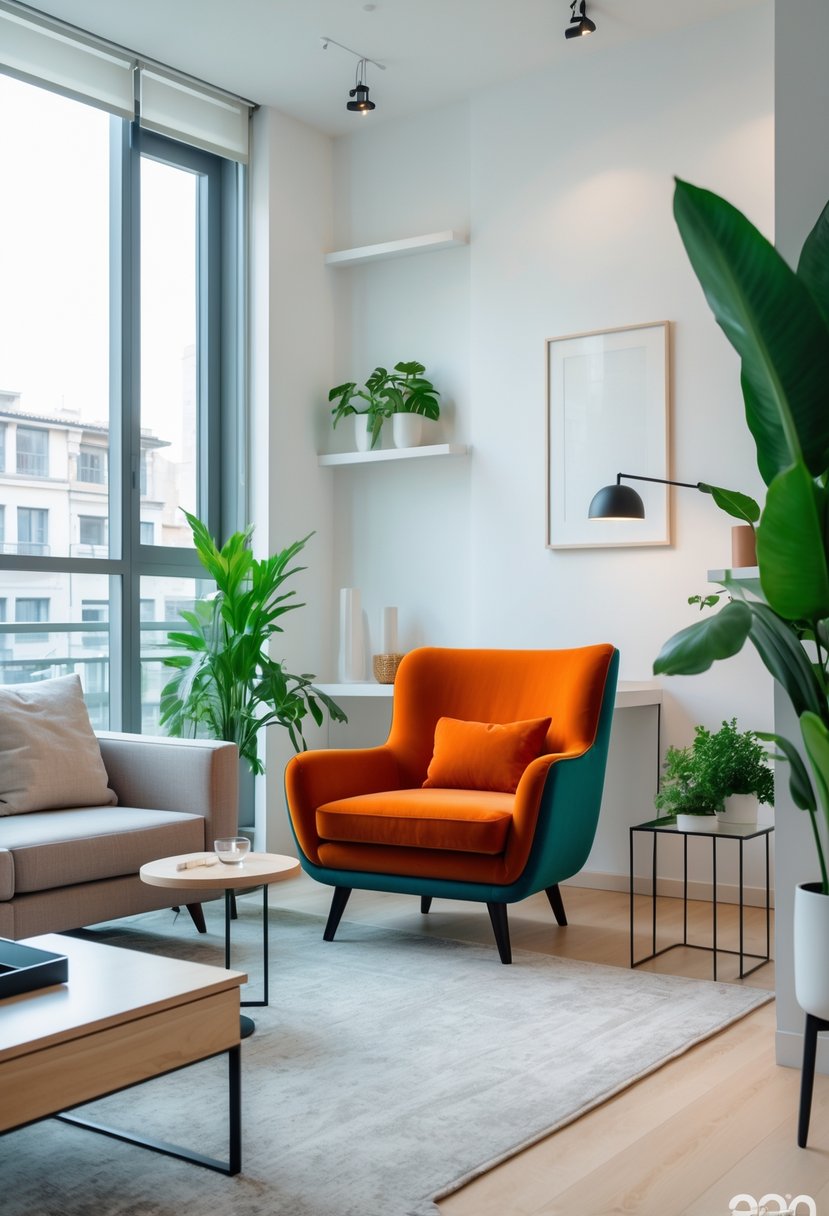
A bold armchair can anchor a small living room and give it personality.
They can choose a bright color or unique pattern to draw attention without overwhelming the space.
Placing it near neutral furniture helps balance the room and keeps the focus on the statement piece.
Incorporate a slim console table behind the sofa
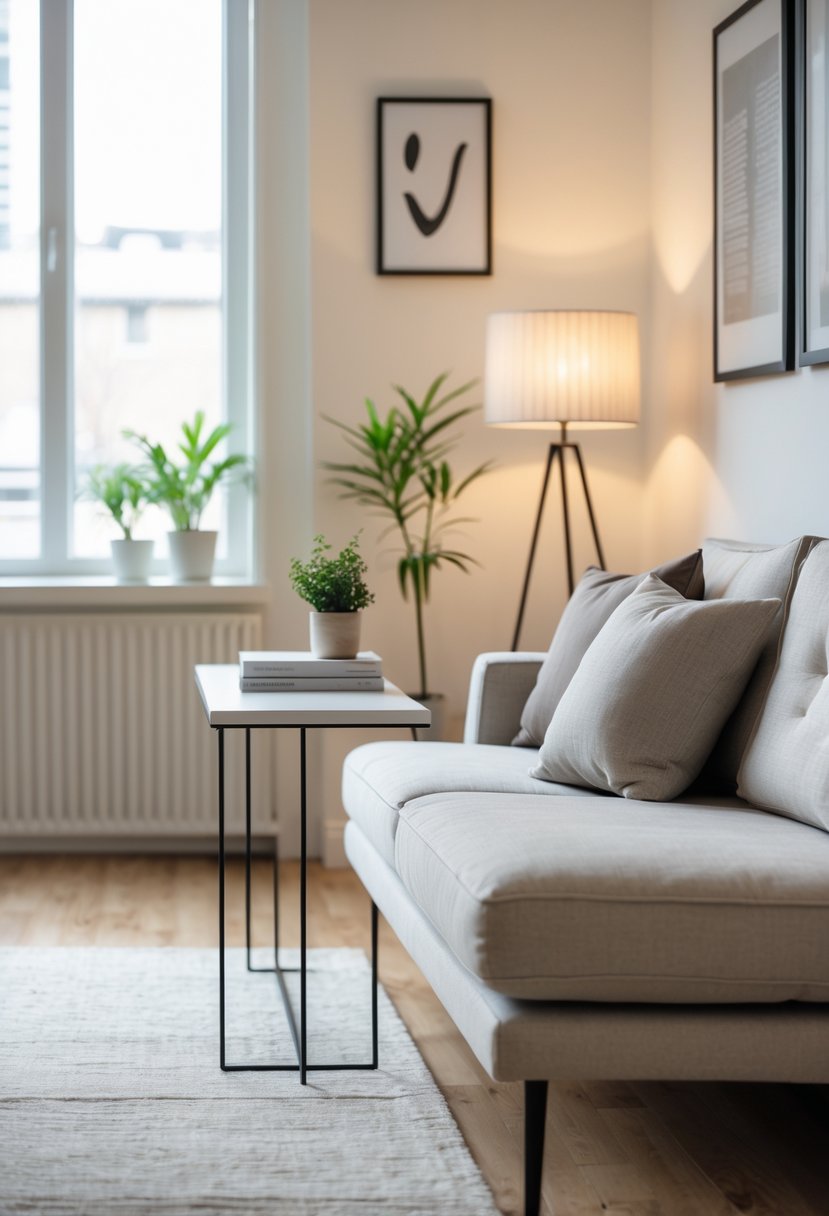
A slim console table fits well behind a sofa in a small apartment. It adds surface space without crowding the room.
They can use it to hold a lamp, books, or small decor. The narrow shape keeps the area open and easy to move through.
Use baskets for stylish, functional storage
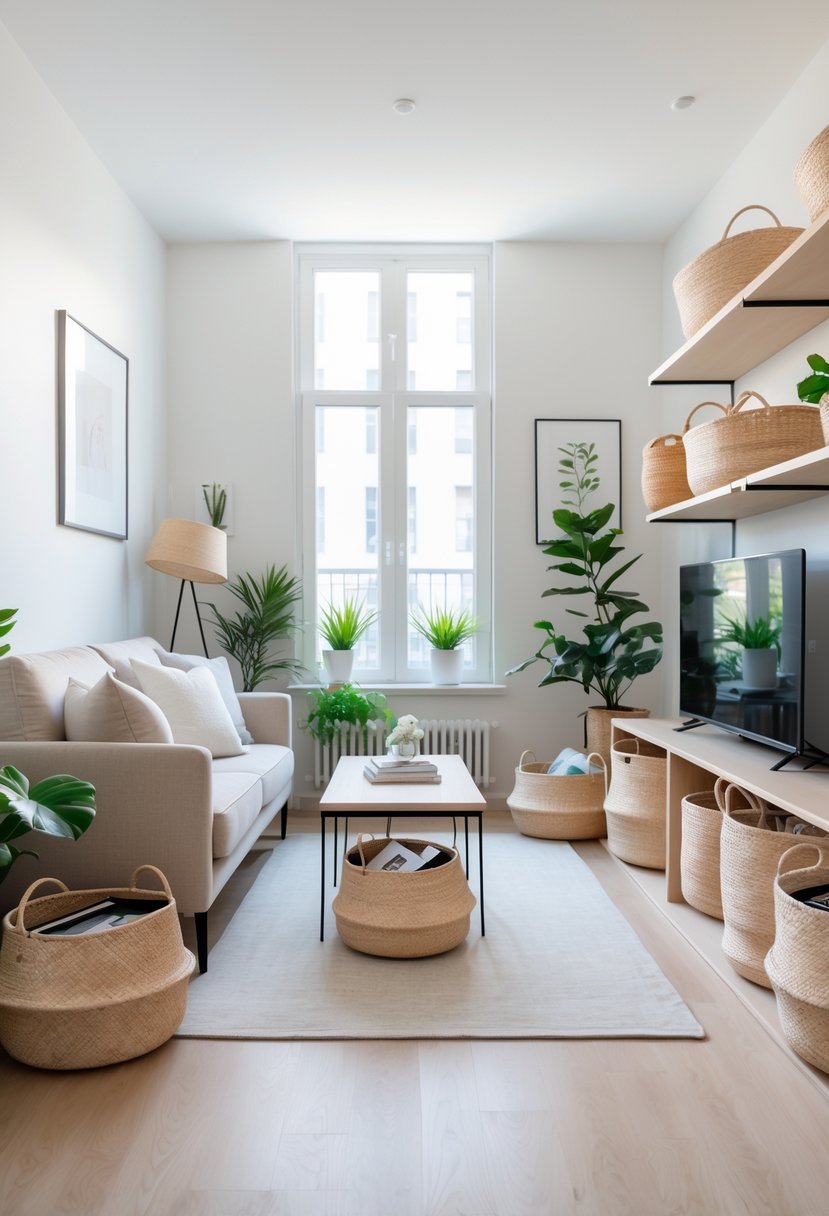
Baskets help keep small living rooms organized without adding bulk.
They fit under tables, inside shelves, or beside seating to store blankets, books, or electronics.
Natural materials like wicker or seagrass add texture, while colored or woven designs bring subtle style to the room.
Opt for a wall-mounted TV to save surface space
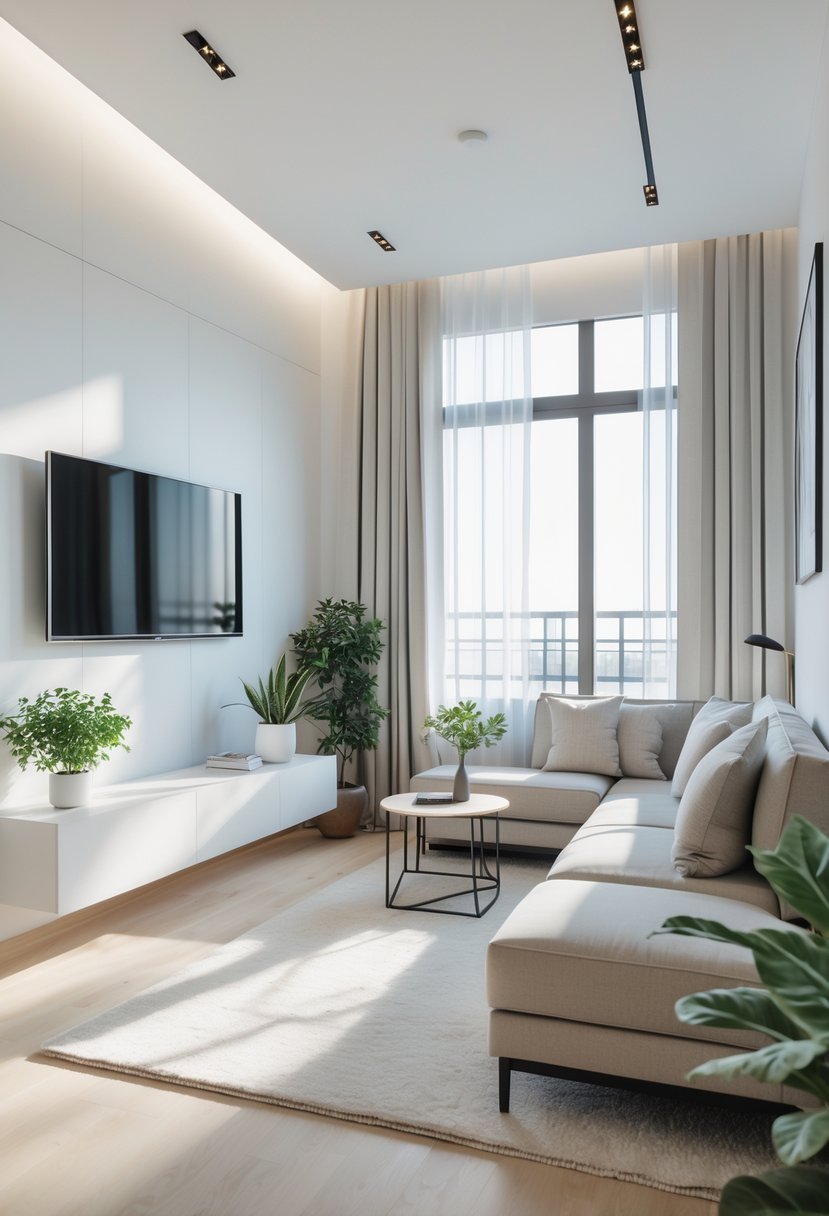
Mounting the TV on the wall frees up tables and shelves for other uses.
This setup helps keep the living room open and easier to clean.
A slim mount or floating shelf below the screen can hold small devices without adding clutter.
Choose low-profile furniture to maintain openness
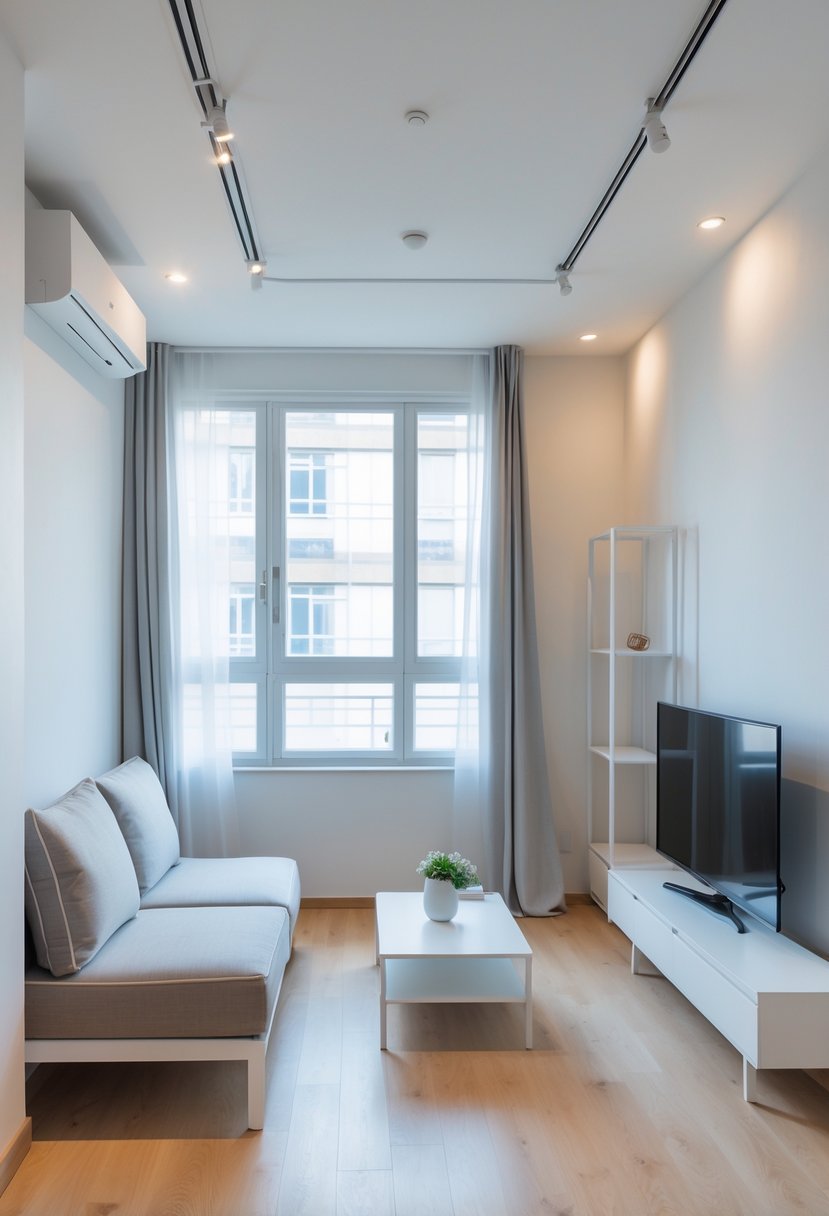
Low-profile furniture helps a small living room feel more open and balanced. Pieces that sit closer to the floor make ceilings appear higher and create a sense of space.
They can choose sleek sofas, short coffee tables, and simple chairs with clean lines to keep the room light and uncluttered.
Maximizing Space in Small Living Rooms
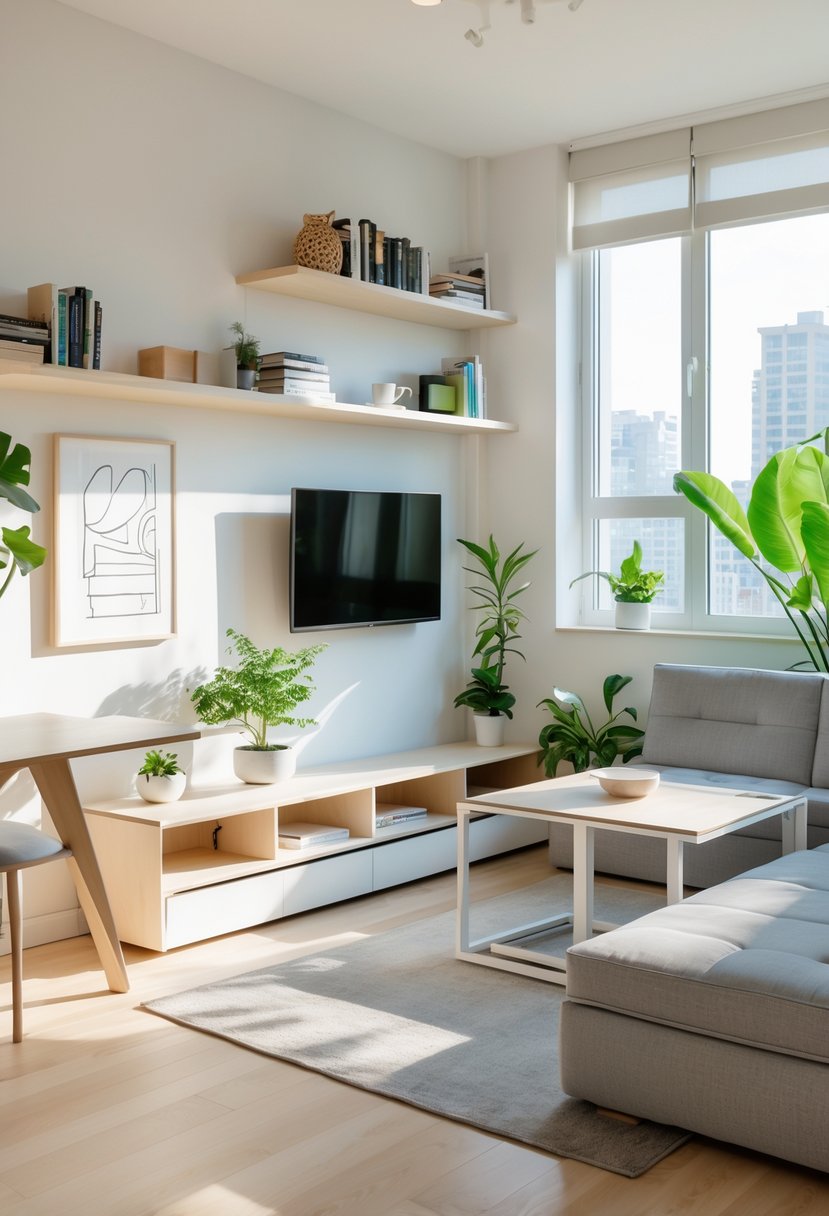
Small living rooms can feel open and functional with the right layout, furniture, and visual design. Choosing pieces that serve multiple purposes, using hidden storage, and applying design techniques that create a sense of airiness help make compact spaces more livable.
Multi-Functional Furniture Strategies
Furniture that performs more than one role saves both space and money. A sofa bed allows seating by day and sleeping by night, ideal for studio apartments. Storage ottomans provide a place to rest feet while hiding blankets or magazines.
Folding or nesting tables work well in limited areas because they can be tucked away when not in use. A drop-leaf dining table can expand for guests or fold down to free floor space.
To maintain balance, it helps to measure furniture before buying. Oversized pieces can crowd the room, while slim, raised-leg designs keep the floor visible and make the space appear lighter. Choosing neutral colors for large furniture also prevents the room from feeling busy.
Smart Storage Solutions
Clever storage keeps clutter out of sight and maintains a tidy look. Built-in shelving above sofas or around doorways uses vertical space that often goes unused. Floating shelves hold books or plants without taking up floor area.
Under-sofa drawers or lift-top coffee tables store remote controls, games, or linens. For renters, modular storage cubes offer flexibility and can be rearranged easily.
A simple table comparing storage types can help:
| Storage Type | Best For | Space Benefit |
|---|---|---|
| Floating shelves | Decor, books | Uses wall space |
| Storage ottoman | Blankets, small items | Hidden storage |
| Modular cubes | Flexible needs | Stackable design |
Labeling bins and keeping items grouped by use helps maintain order. Regular decluttering ensures the space stays open and easy to navigate.
Visual Tricks to Enhance Spaciousness
Design choices can make a small room feel larger. Light wall colors like soft white or pale gray reflect light and open up the area. Mirrors placed across from windows amplify natural light and create depth.
Using one large rug instead of several small ones defines the seating zone and makes the floor look more continuous. Curtains hung close to the ceiling draw the eye upward, increasing the sense of height.
Keeping decorations minimal and choosing furniture with exposed legs adds airiness. Balanced lighting from floor lamps, wall sconces, and ceiling fixtures reduces shadows and helps the room feel bright and unified.
Personalizing Your Small Apartment Living Room
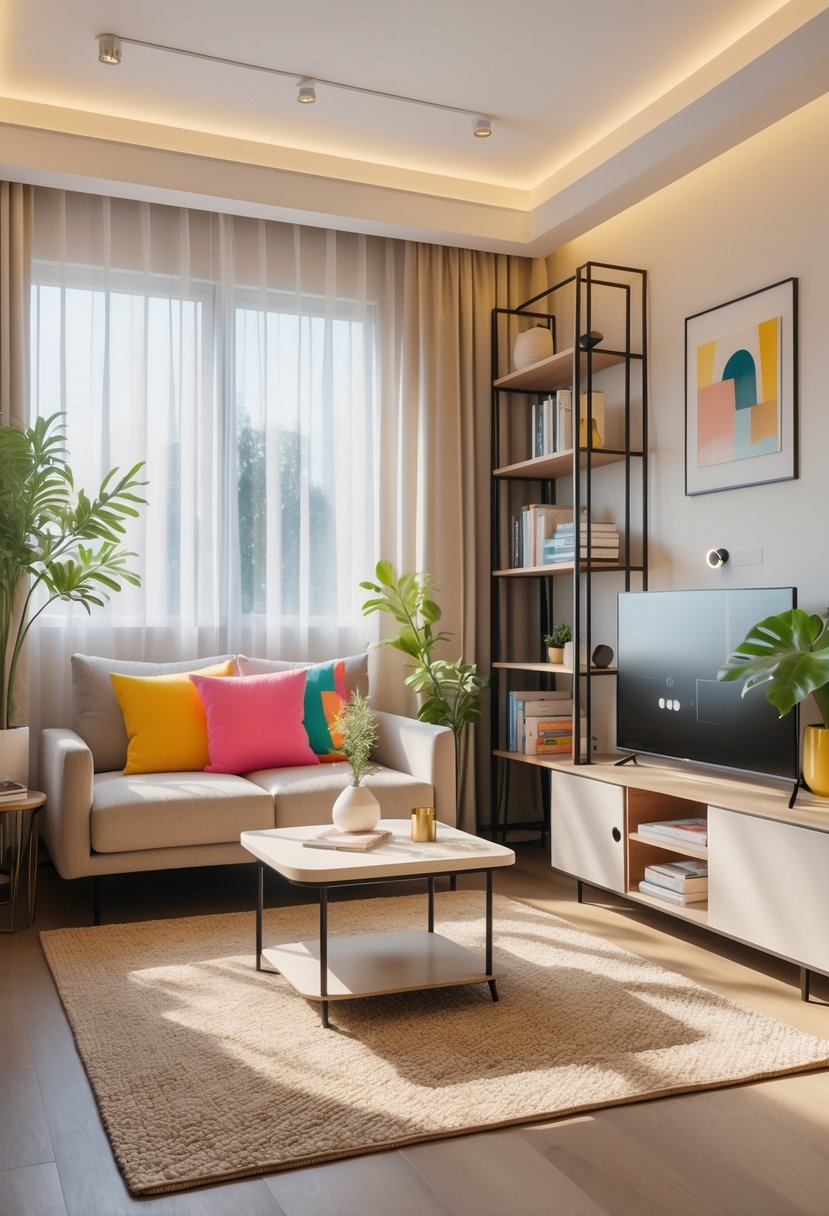
A small living room can still reflect personal taste through smart use of color, texture, and decor. Simple updates like layered fabrics, curated art, and meaningful accents make the space feel comfortable and unique without overwhelming it.
Incorporating Color and Texture
Color and texture shape how a room feels and functions. Light, neutral tones such as beige, soft gray, or off-white help small spaces appear larger. Adding pops of color through pillows, throws, or a single accent wall keeps the room lively without clutter.
Layering different materials adds depth. A mix of smooth, rough, and soft textures—like a linen sofa, woven rug, and velvet cushions—creates balance. Using mirrors or glossy finishes can reflect light and open up the room visually.
Small apartments benefit from furniture in similar tones to the walls, which blends pieces into the background and reduces visual bulk. A simple table can gain character with a textured runner or natural wood grain.
| Design Element | Effect on Space | Example |
|---|---|---|
| Light colors | Expands appearance | Pale gray walls |
| Layered textures | Adds depth | Knit blanket on smooth sofa |
| Reflective surfaces | Increases brightness | Glass coffee table |
Showcasing Art and Decorative Accents
Art and decor personalize a living room by showing personality and interests. A few carefully chosen pieces make more impact than many small items. Hanging one large artwork or a balanced gallery wall helps define the space without crowding it.
Shelves or narrow ledges work well for rotating prints, books, or plants. Decorative accents like ceramics, framed photos, or small sculptures add warmth and texture.
To maintain balance, they should vary in height and material. For example, pairing a matte vase with a glossy frame creates contrast. Lighting also matters—soft spotlights or wall sconces can highlight favorite pieces and add subtle ambiance without taking up floor space.
For additional ideas from design experts, see these small space design tips from Apartment Therapy.


