
Color-Drenched Eclectic Kitchen Ideas: 22 Inspiring Designs to Transform Your Space
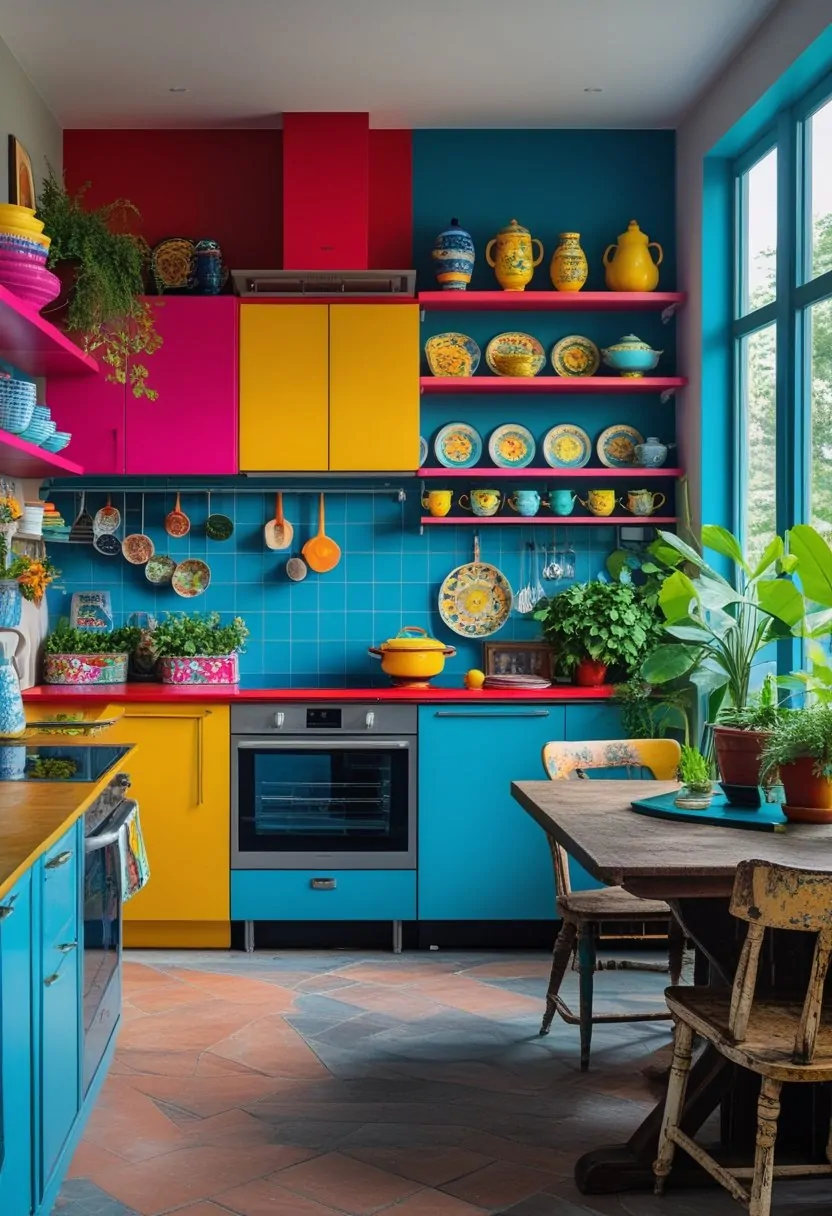
A color-drenched eclectic kitchen combines bold paint choices with a mix of textures, styles, and finishes to create a space full of personality. It moves away from uniform design rules and instead focuses on layering elements that feel both vibrant and cohesive. This approach allows anyone to build a kitchen that feels unique, expressive, and visually engaging.
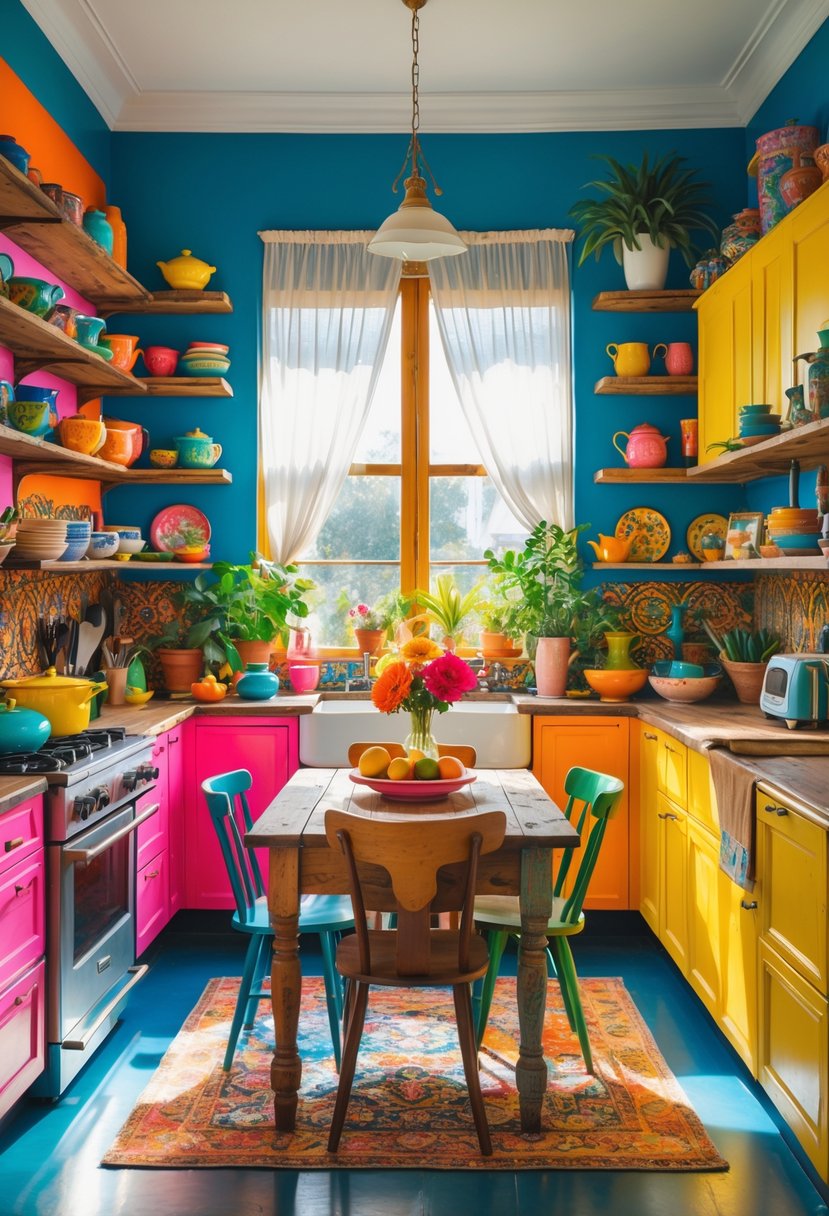
By blending color-blocked walls, patterned tiles, vintage accents, and playful lighting, the style balances creativity with function. Each detail—whether cabinetry, flooring, or decor—adds to the overall character without losing harmony. This article explores how thoughtful combinations of color and design choices can transform an everyday kitchen into a lively, personal space.
Bold blue-green cabinetry with teal peninsula
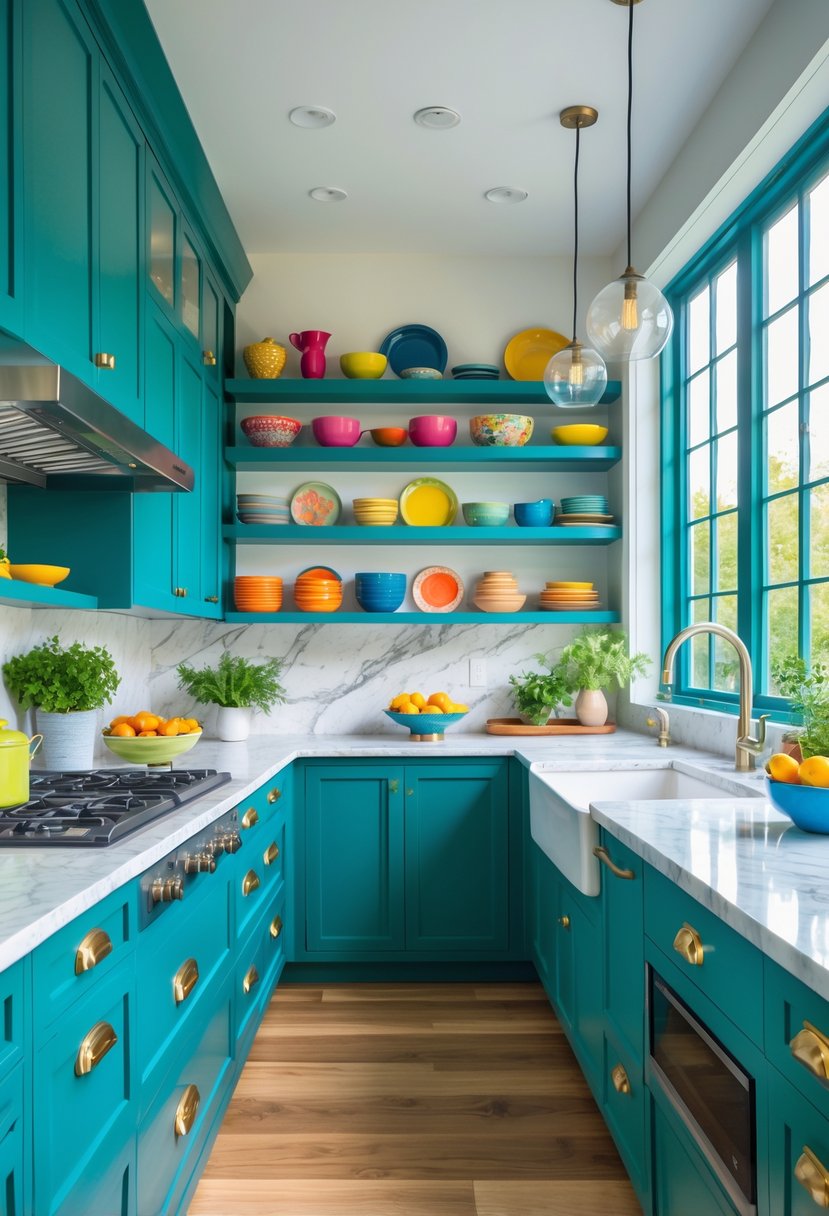
Blue-green cabinets add depth and character to an eclectic kitchen. The mix of tones creates a balanced backdrop that feels both fresh and grounded.
A teal peninsula extends the workspace while introducing a strong focal point. It defines the layout and supports both cooking and gathering.
Color-block walls in pink, yellow, green, and blue
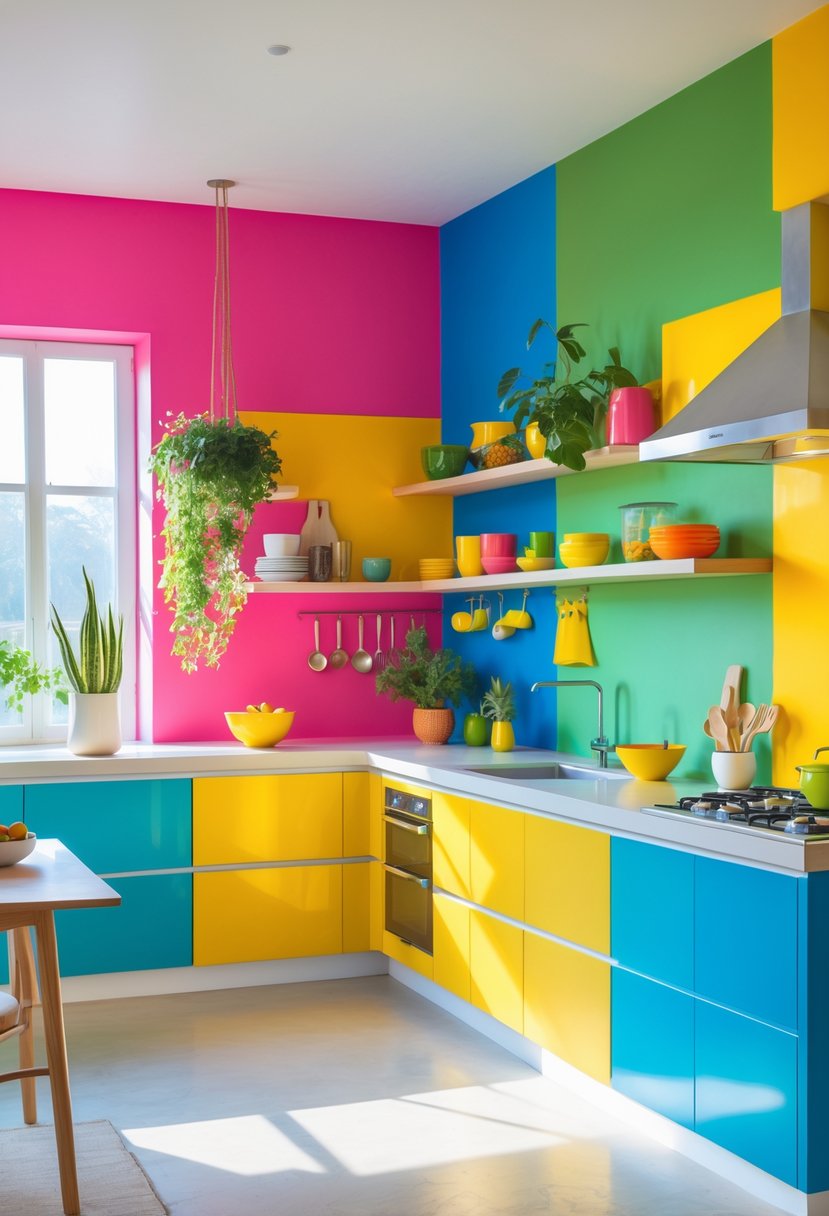
They use pink, yellow, green, and blue blocks to bring structure and energy to the kitchen.
Each color stands out on its own while also balancing the others.
The mix of tones creates a playful backdrop that supports an eclectic style without feeling crowded.
Open shelving with mixed patterned dishware
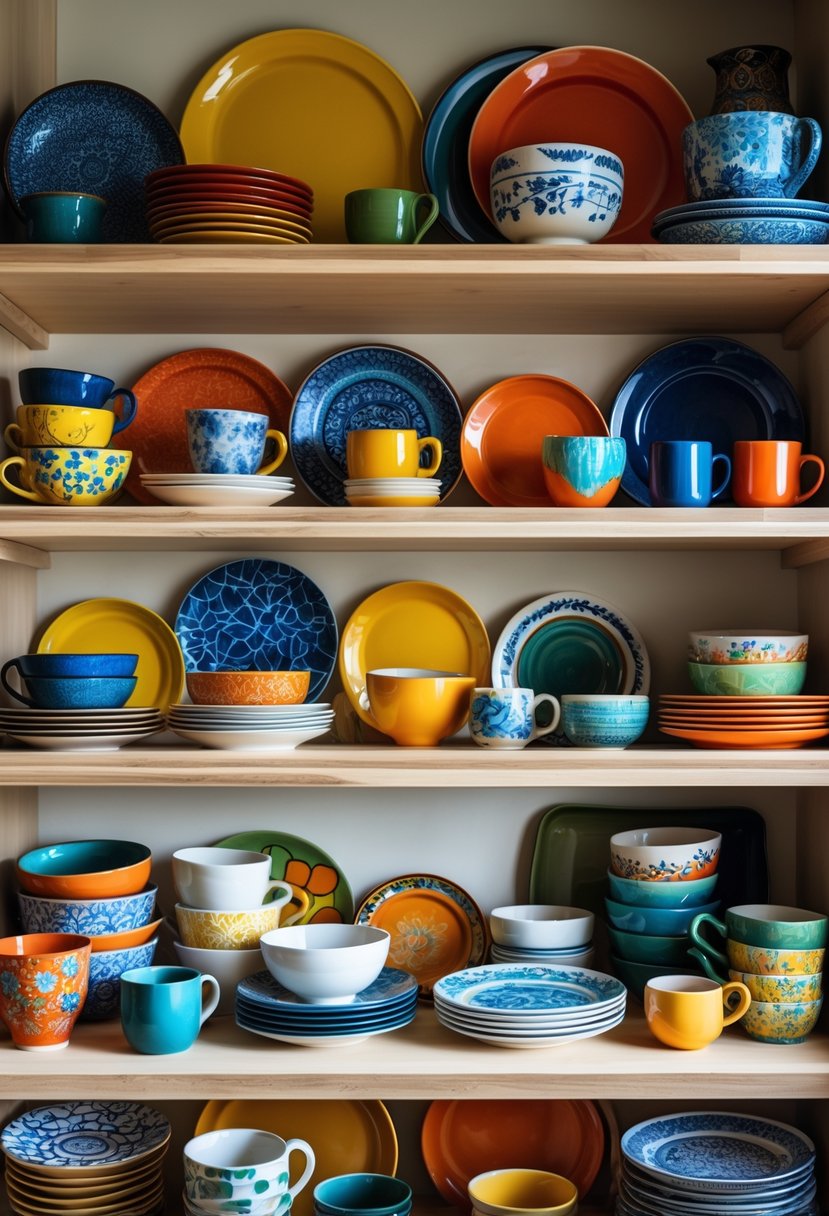
Open shelving lets homeowners display dishware instead of hiding it behind cabinets. It creates a more open and practical layout.
Mixing patterned plates, bowls, and mugs adds personality to the space. Different colors and designs bring variety without overwhelming the kitchen.
Plants or small decorative items can sit between stacks of dishes for balance.
Vintage ceramic backsplash tiles
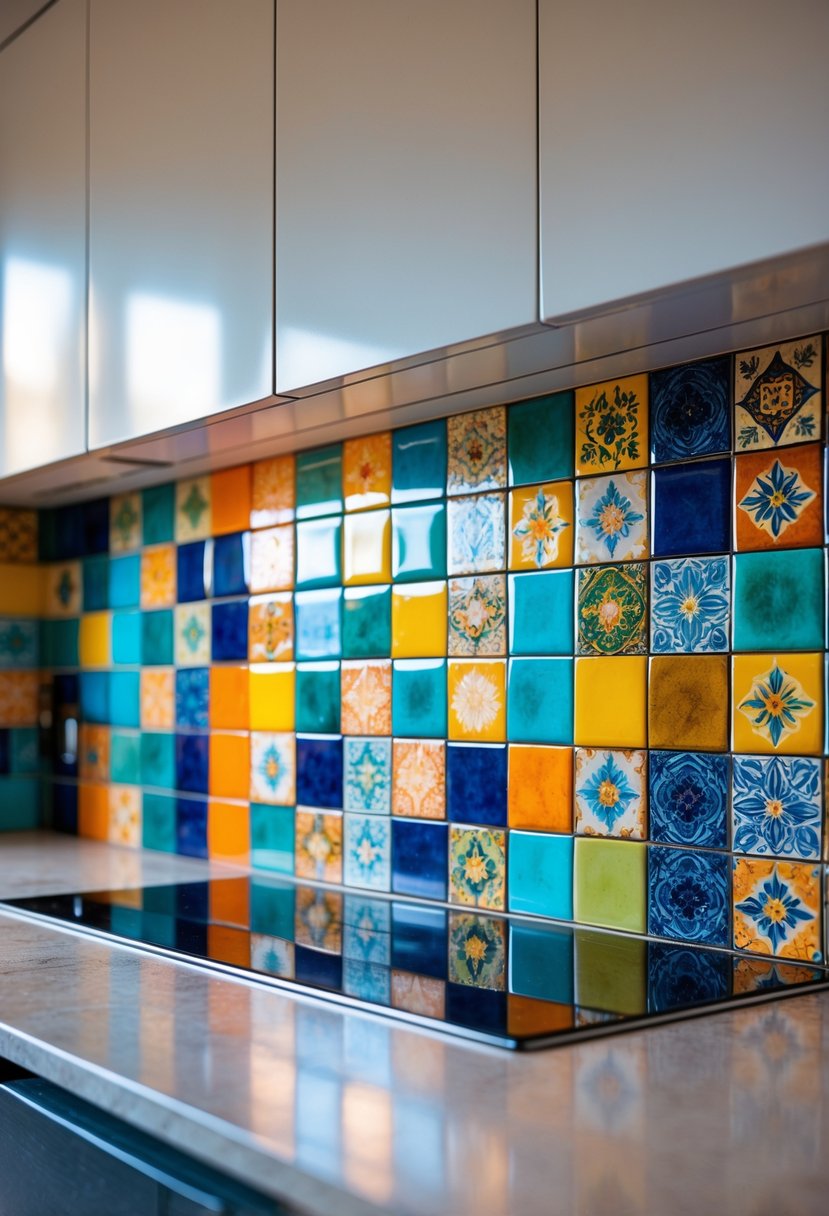
Vintage ceramic tiles bring subtle character to eclectic kitchens. Their muted tones and classic patterns create a backdrop that blends with both bold and neutral color schemes.
They often feature simple shapes like subway or checkerboard layouts. These designs add texture without overwhelming the space.
Many homeowners choose them for durability and timeless appeal.
Whimsical retro light fixtures
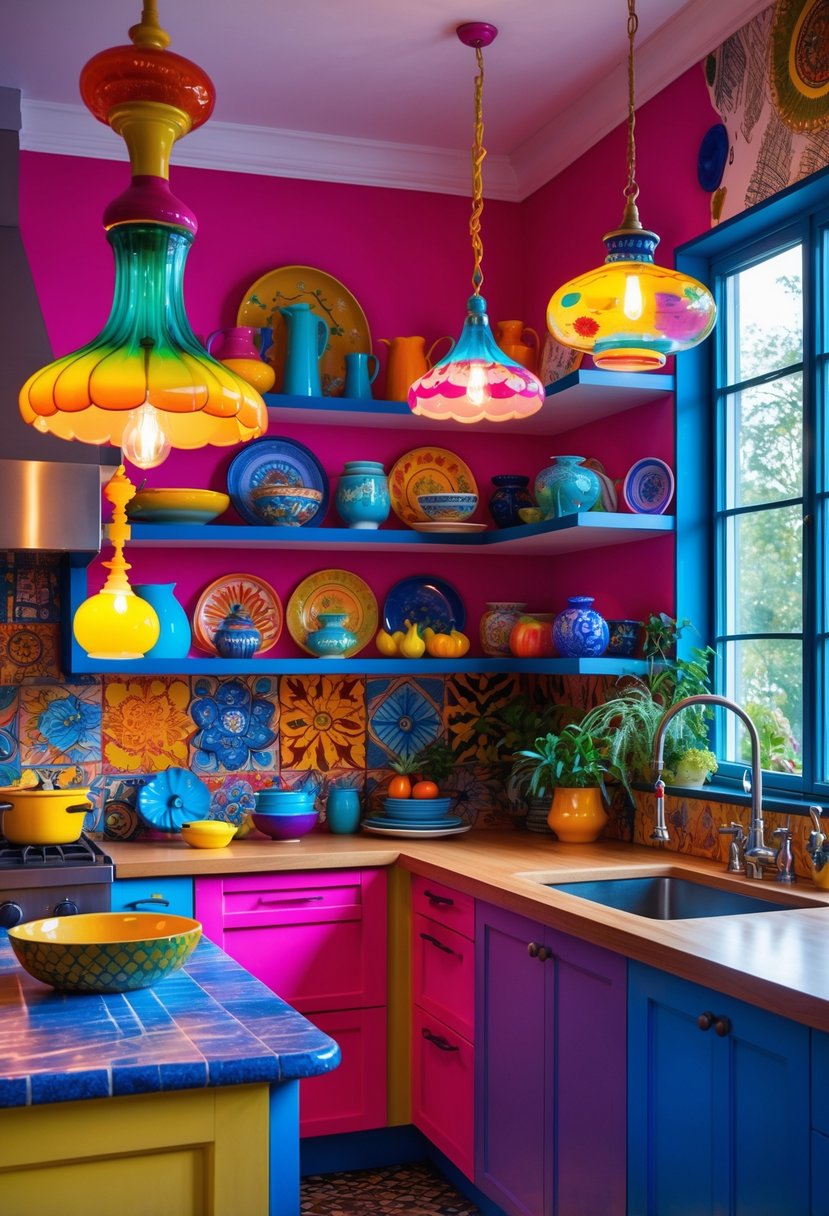
Retro light fixtures add charm and character to an eclectic kitchen. They often feature bold colors, playful shapes, and vintage-inspired details.
Pendant lights, chandeliers, or flush mounts in retro styles can highlight key areas like islands or dining nooks. These pieces blend function with a touch of whimsy.
Mix of matte and glossy paint finishes
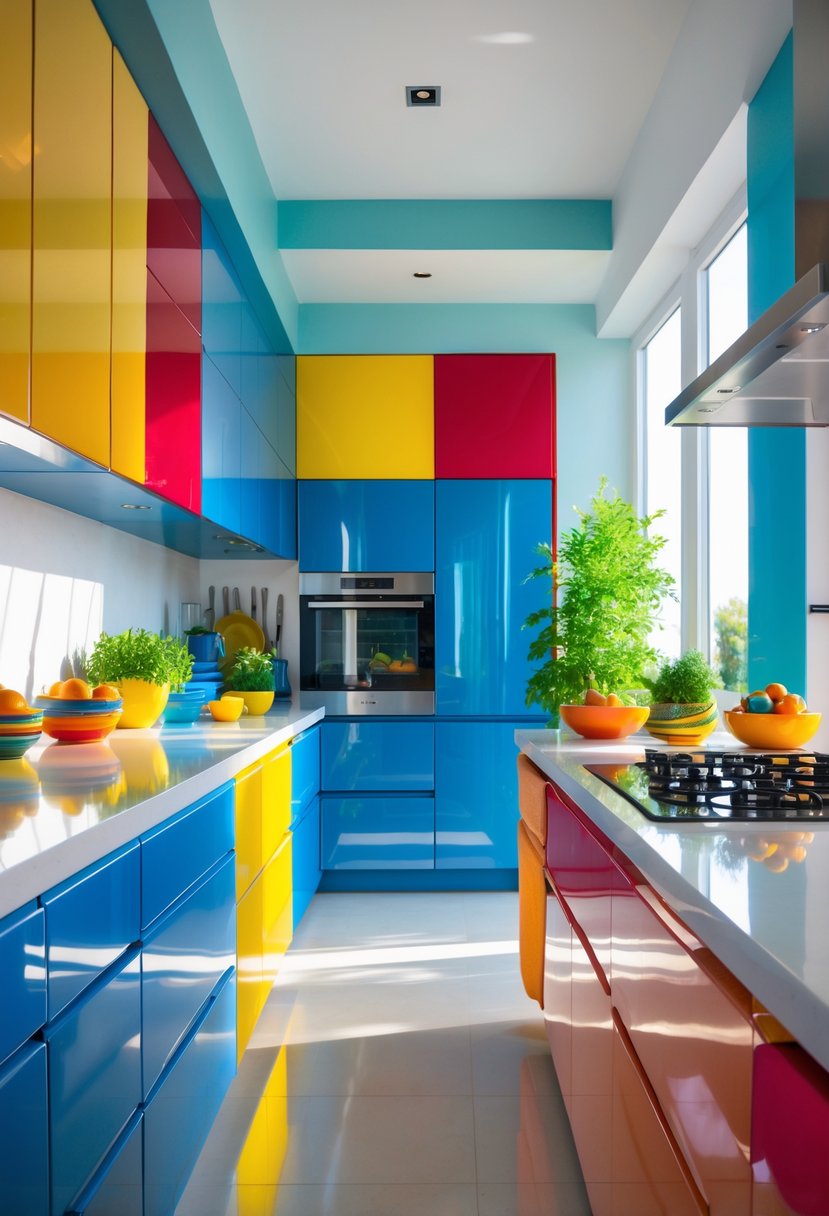
A balance of matte and glossy paint finishes can highlight different areas of a kitchen. Matte surfaces provide a soft, muted look, while glossy finishes reflect light and draw attention.
Designers often use matte on walls or cabinets and add gloss to trim, furniture, or accent pieces for contrast.
Daring cabinetry colors like mustard and coral
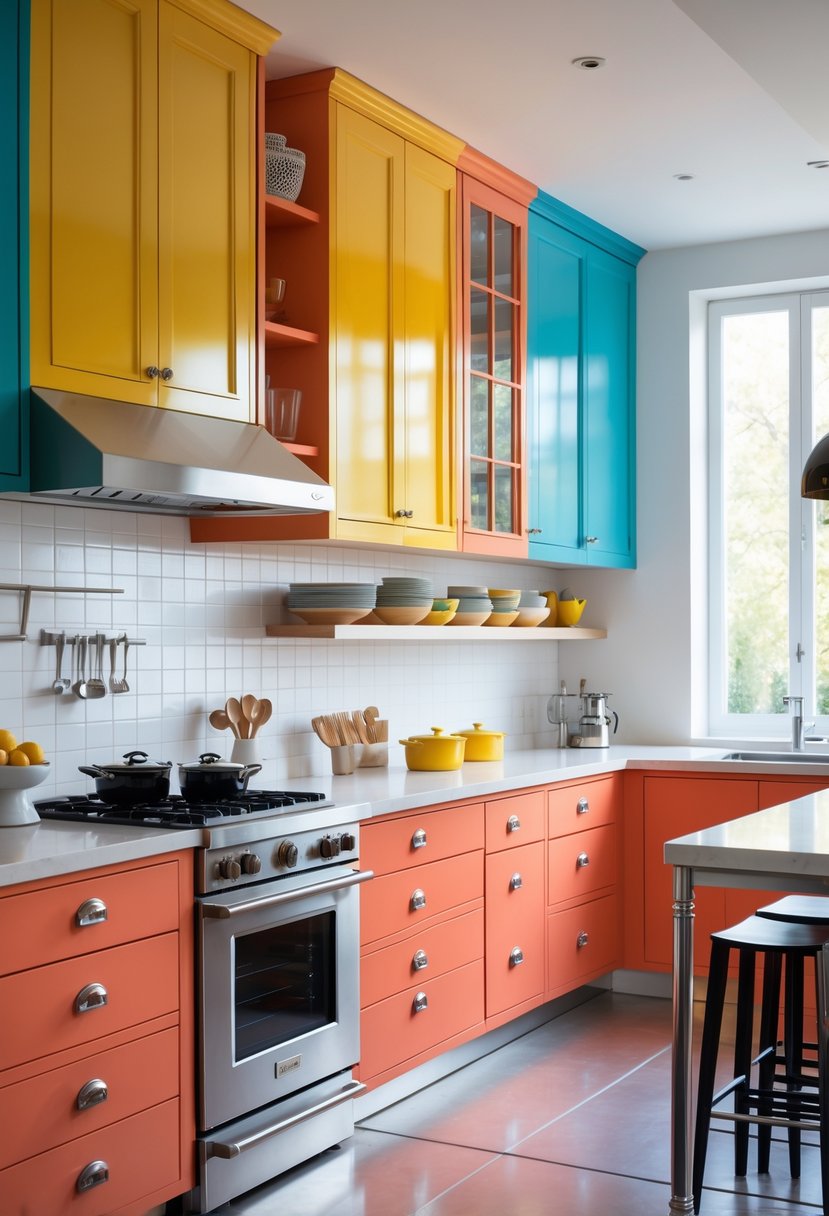
Mustard cabinets bring warmth and depth to a kitchen. The earthy tone pairs well with natural wood or muted neutrals.
Coral adds a lively touch without overwhelming the space. It works well alongside crisp whites or soft grays for balance.
Together, mustard and coral create a bold yet inviting atmosphere. They suit eclectic kitchens that embrace color variety.
Hand-painted tile backsplashes
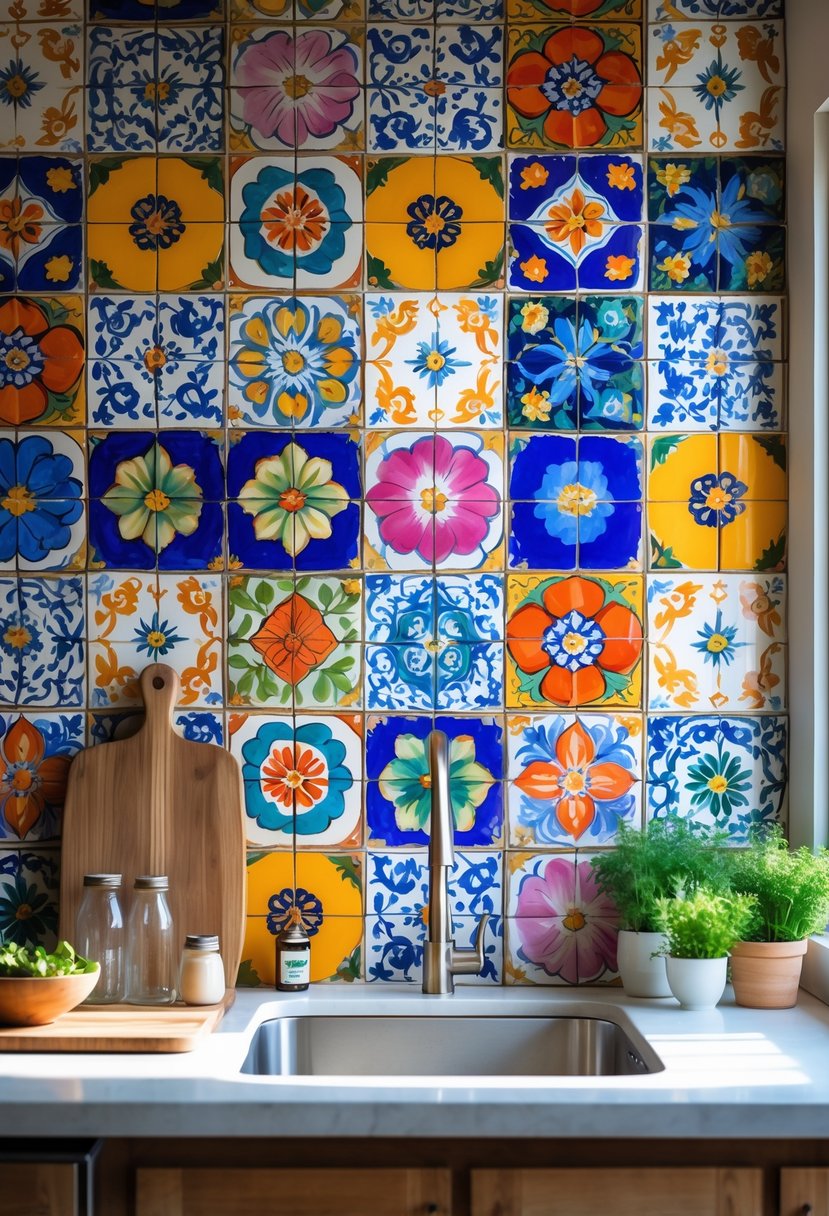
Hand-painted tile backsplashes add color and detail to an eclectic kitchen. Each tile often shows small variations, giving the wall a unique look.
Designs range from bold geometric patterns to soft floral motifs. Many artisans create custom pieces, allowing homeowners to match colors and styles to their space.
Eclectic mix of textures: wood, metal, glass
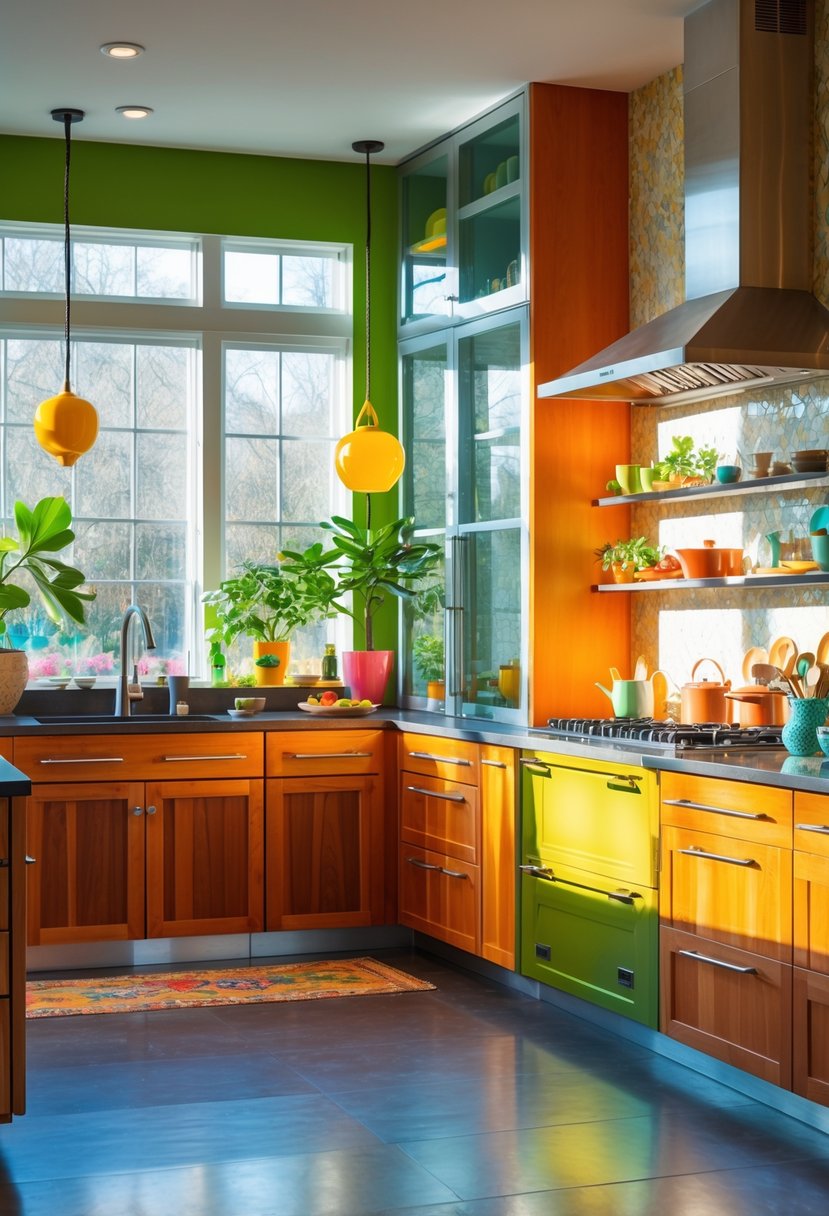
Wood brings warmth and a natural touch, making the kitchen feel inviting. It works well in cabinets, shelving, or flooring.
Metal adds strength and a modern edge. Stainless steel, brass, or iron can appear in hardware, lighting, or accents.
Glass introduces lightness and clarity. Transparent or frosted panels create openness while balancing heavier materials.
Thrifted decor accents and vintage furniture
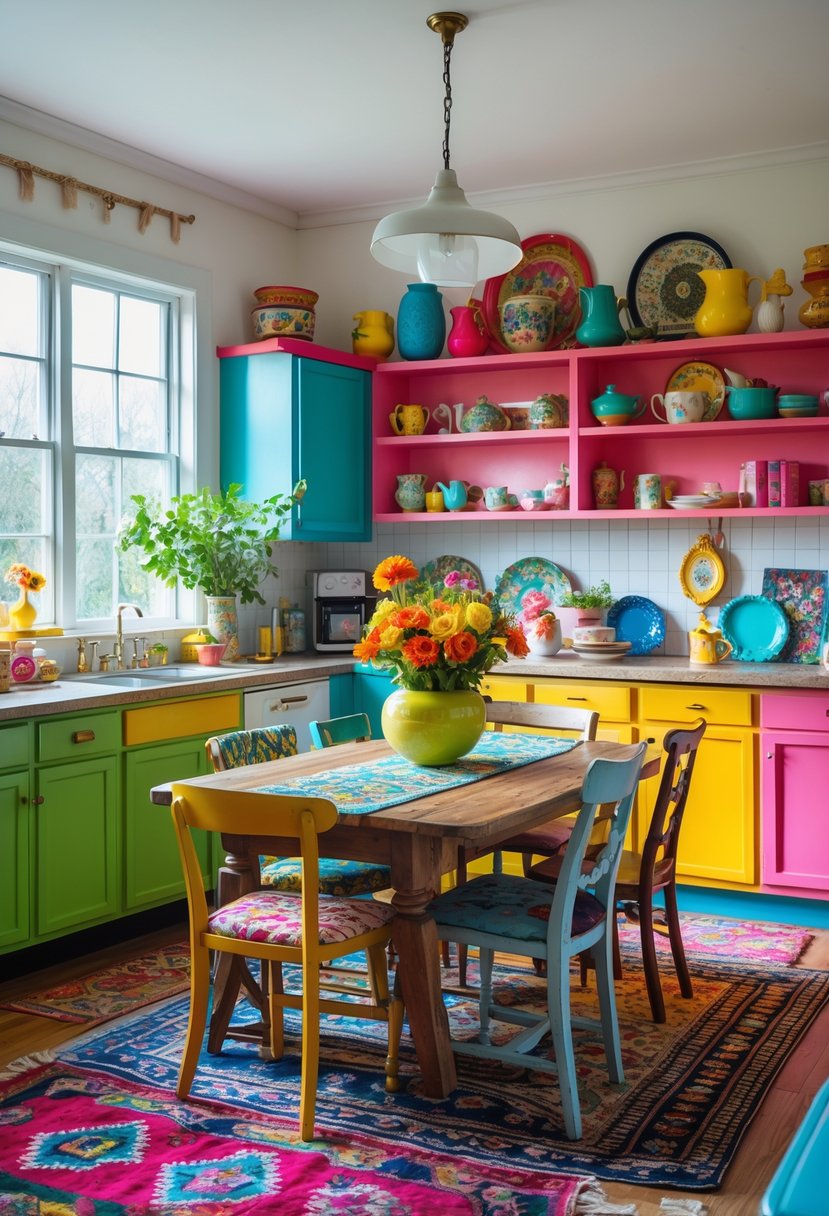
They often use thrifted pieces to bring warmth and individuality into an eclectic kitchen. Small items like ceramic bowls, copper cookware, or patterned glassware add character without overwhelming the space.
Vintage furniture, such as wooden stools or a farmhouse table, blends easily with bold colors and patterned surfaces. These elements create a collected, layered look.
Patterned wallpaper combined with solid colors
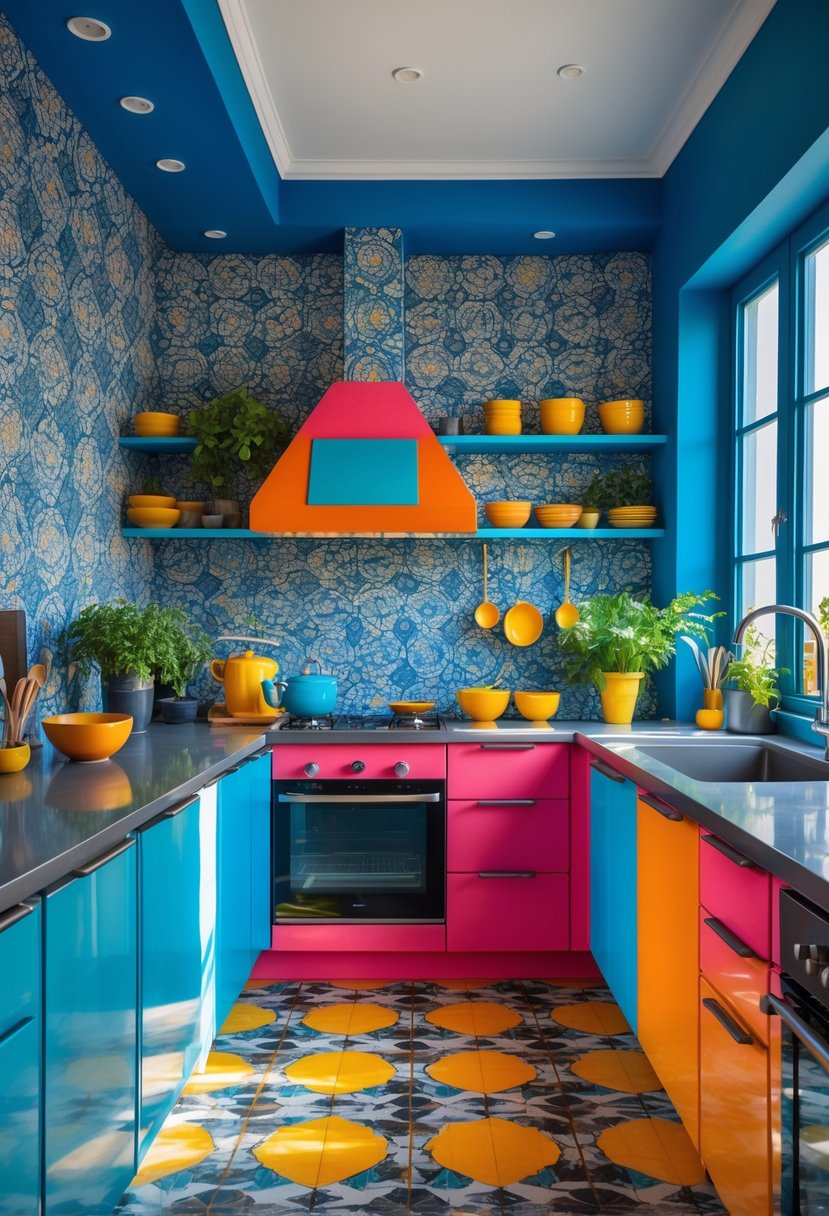
They can pair bold patterned wallpaper with solid-colored walls to create balance.
The solid areas give the eye a place to rest while the patterns add interest.
This approach works well in kitchens where one wall features a print and the others stay simple.
Bright pendant lighting in varied shapes
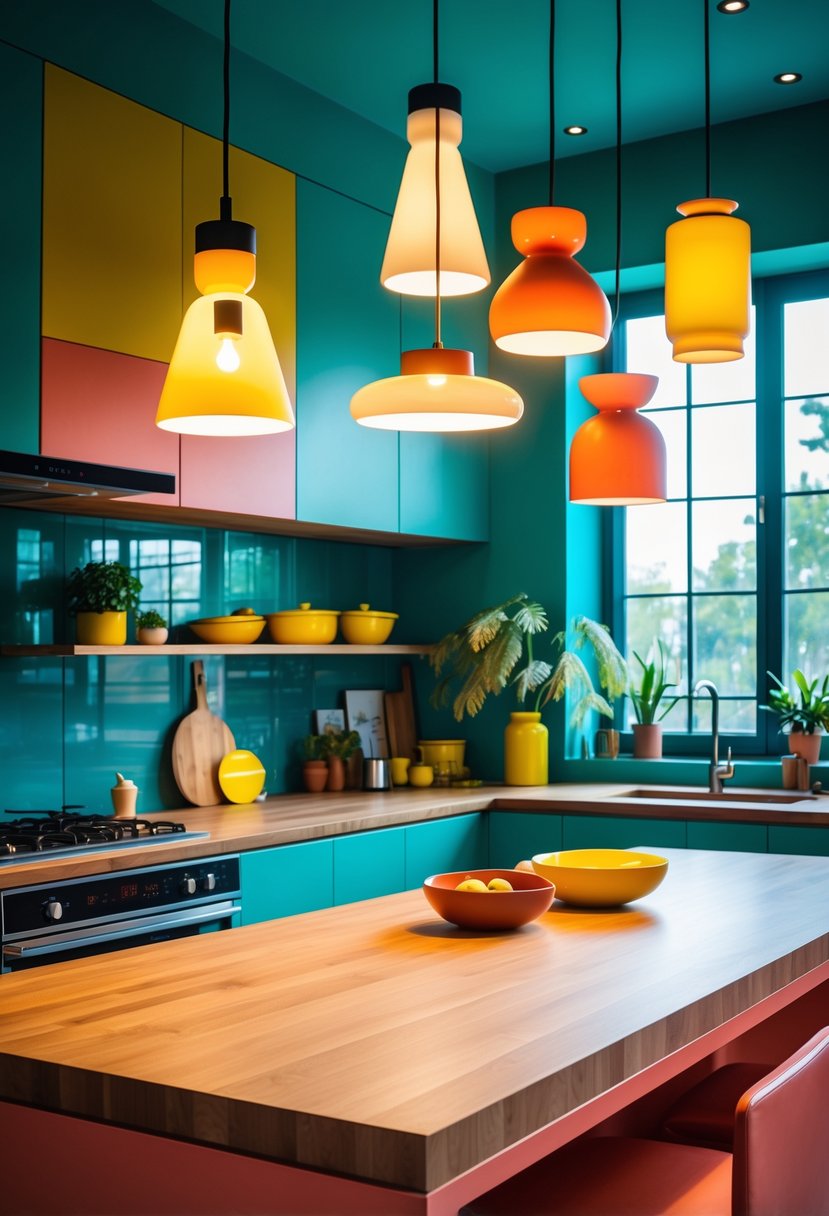
Bright pendant lights in different shapes add visual interest to an eclectic kitchen. Round globes, domes, and clusters create variety while still offering practical task lighting.
Glass, metal, and colorful finishes let each fixture stand out. Mixing shapes and sizes helps the kitchen feel layered and dynamic without overwhelming the space.
Colorful patterned floor tiles
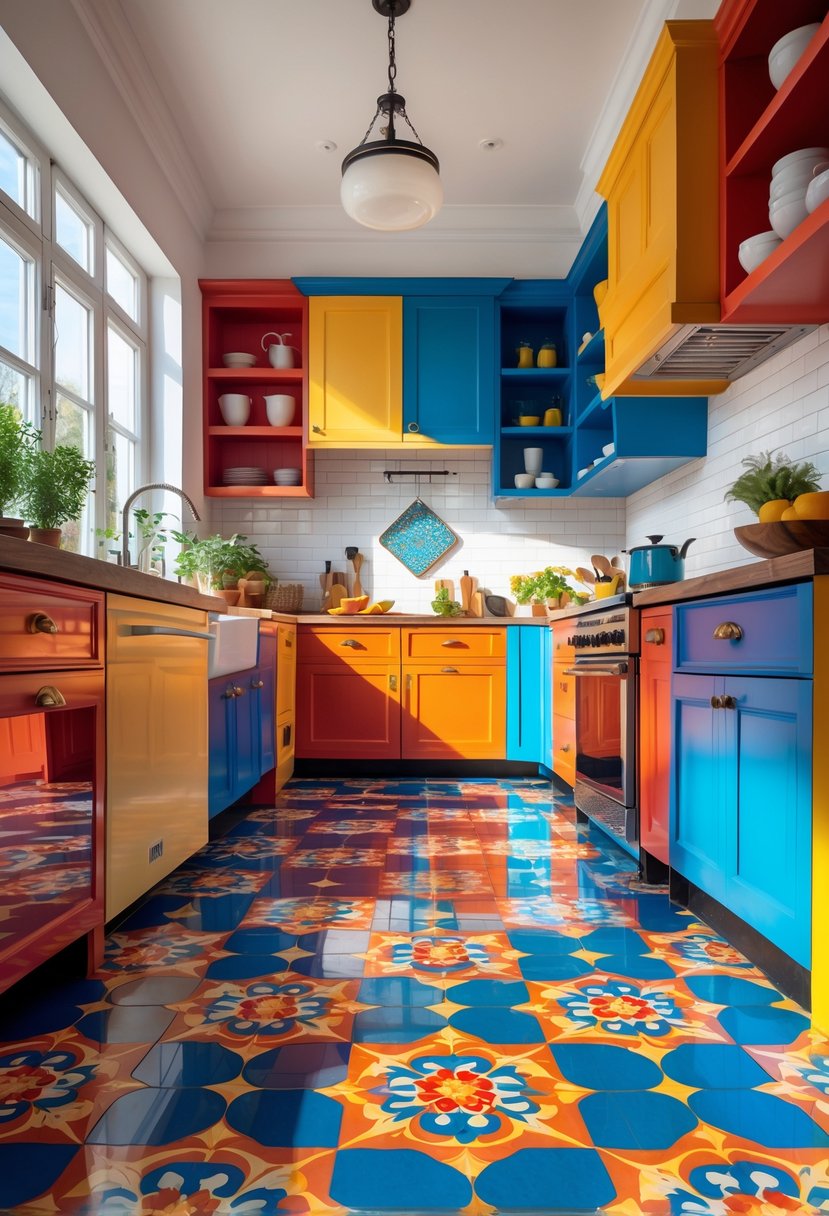
Patterned floor tiles bring structure and visual interest to eclectic kitchens. They can feature geometric shapes, floral motifs, or abstract designs.
These tiles often use porcelain, ceramic, or cement, making them durable for high-traffic areas. Their varied colors and patterns help anchor bold walls and cabinets.
Homeowners often choose them to balance vibrant palettes. The floor then supports the mix of textures and finishes above.
Mix of modern and antique hardware
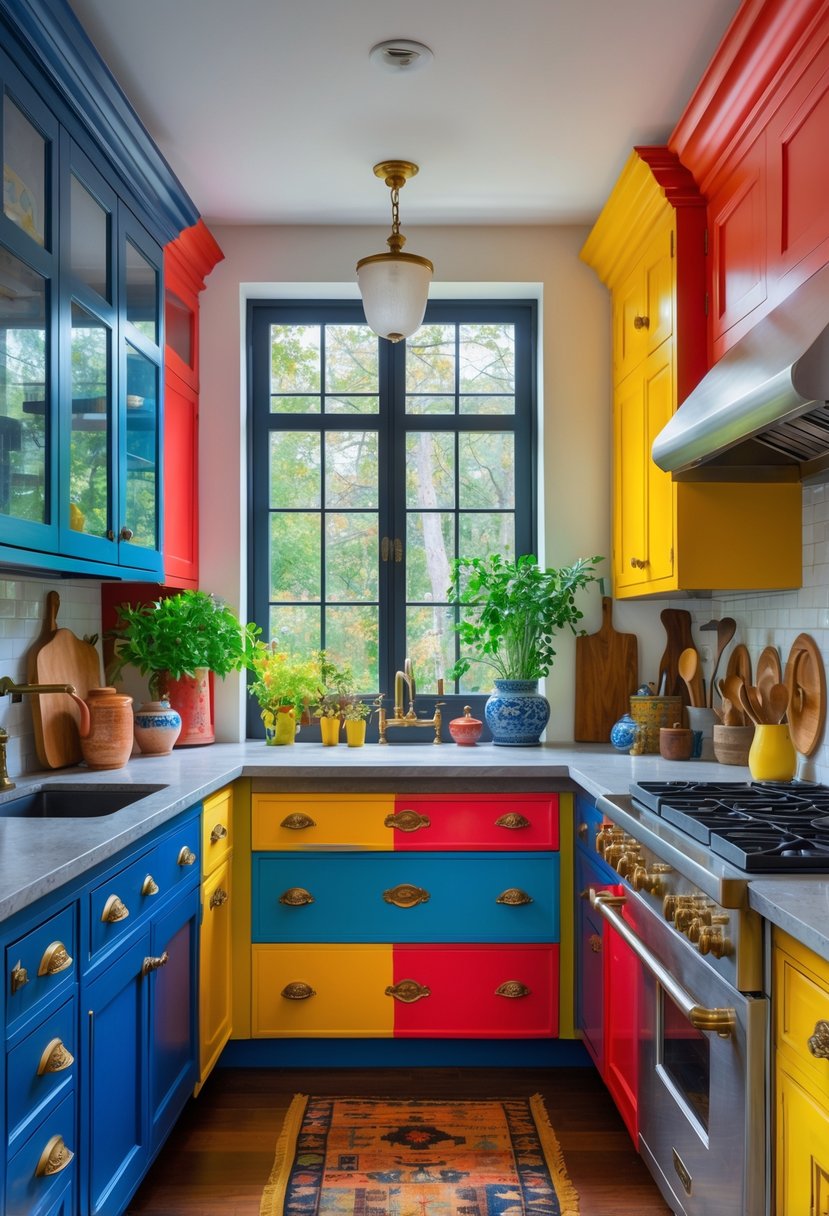
They can use sleek, modern cabinet pulls alongside antique brass knobs to create contrast.
This mix highlights clean lines while keeping a sense of warmth and history.
Pairing stainless steel fixtures with vintage-inspired latches adds subtle detail without overwhelming the space.
Display of colorful glass jars and containers
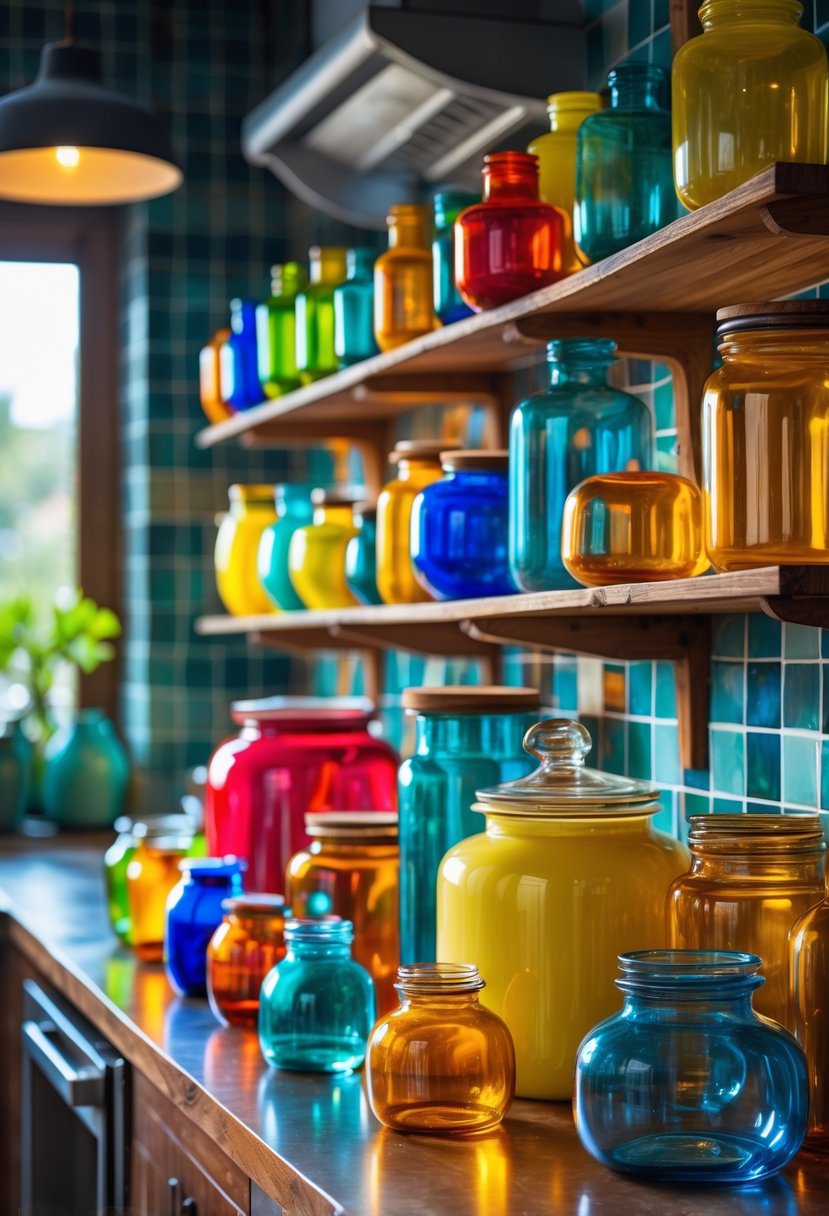
They arrange glass jars in different colors to add visual interest to open shelves. Each jar brings a subtle accent that works well with both modern and vintage pieces.
Some choose bold shades like red or green, while others prefer softer tones such as light blue or amber.
Contrasting countertop materials like marble and concrete
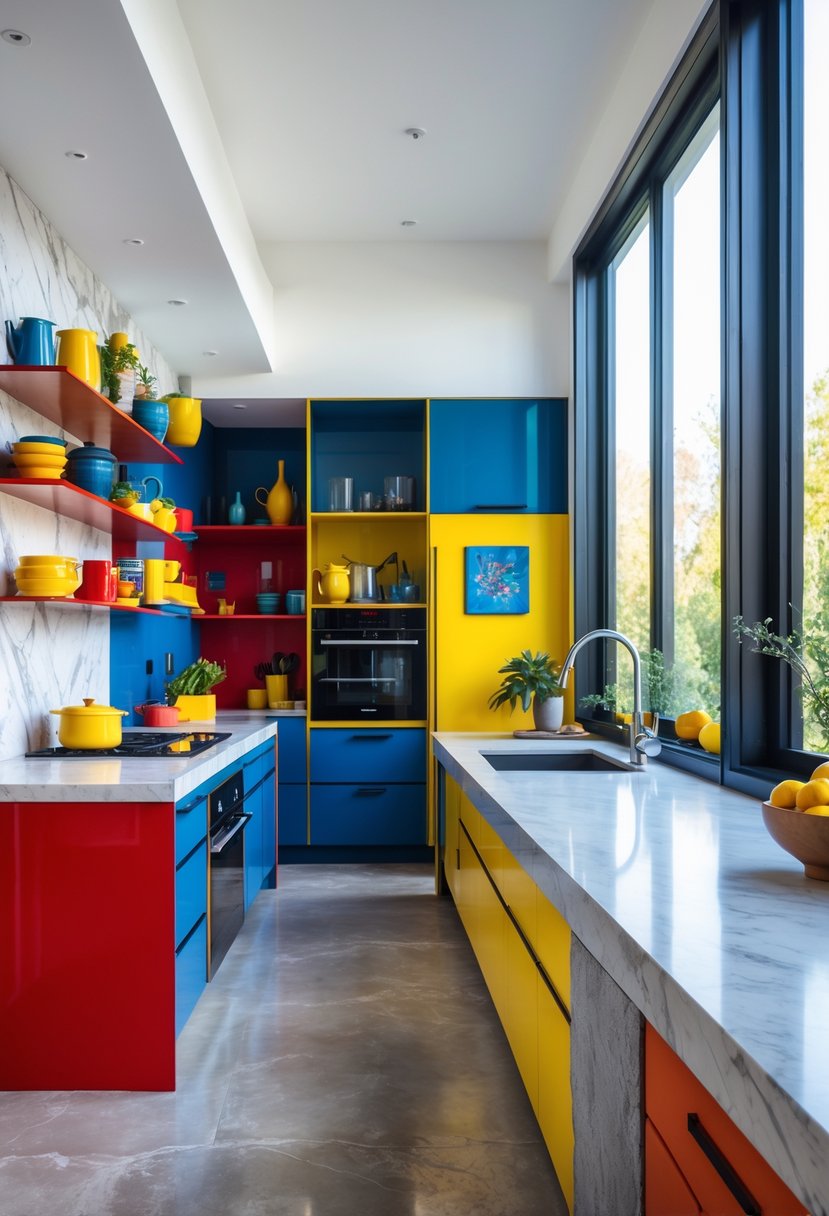
Marble offers a polished, refined surface with natural veining that adds visual depth. Concrete provides a matte, industrial look with subtle texture.
When paired together, the smooth elegance of marble balances the raw, grounded quality of concrete. This mix creates contrast while keeping the kitchen design cohesive.
Bold geometric rugs in vibrant colors
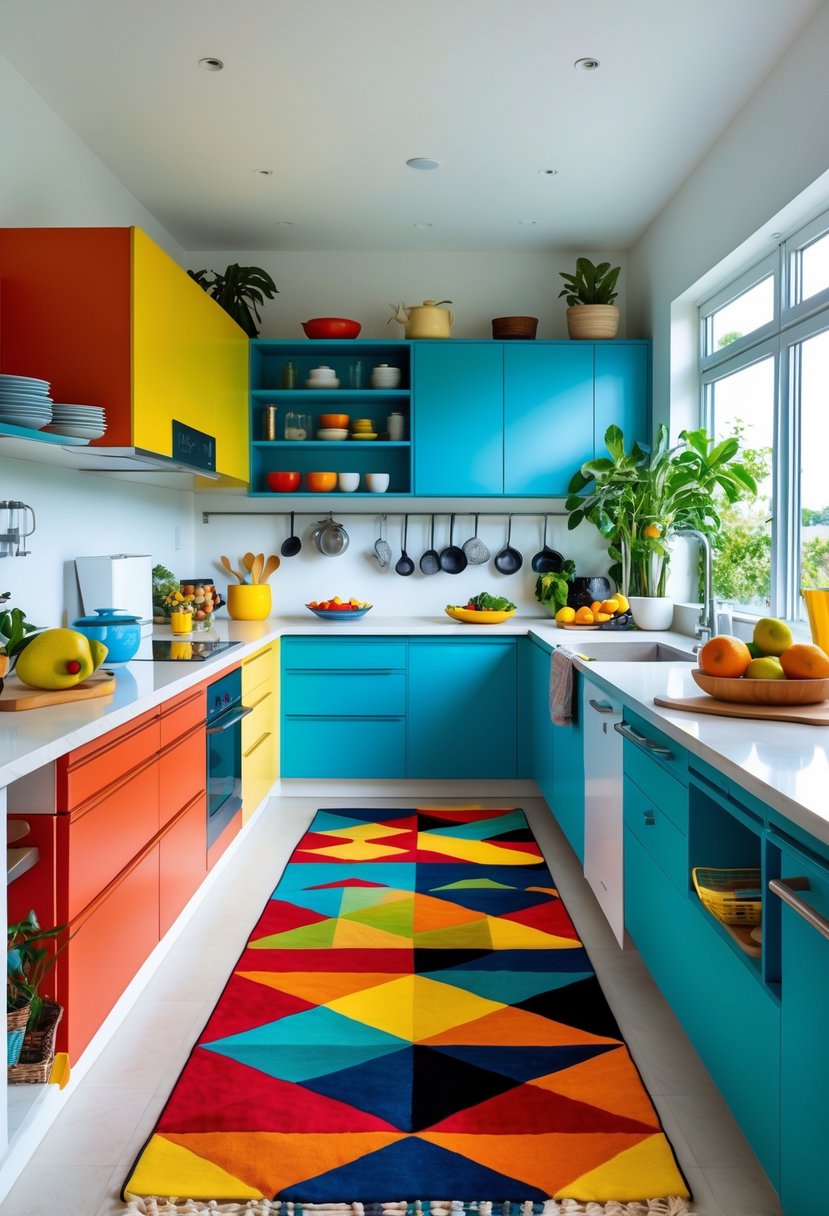
They use bold geometric rugs to introduce structure while keeping the kitchen lively.
The sharp lines and patterns balance eclectic details, preventing the space from feeling chaotic.
Vibrant colors like orange, blue, and yellow add warmth and tie together mixed finishes and materials.
Layered textiles: cushions and curtains in clashing patterns
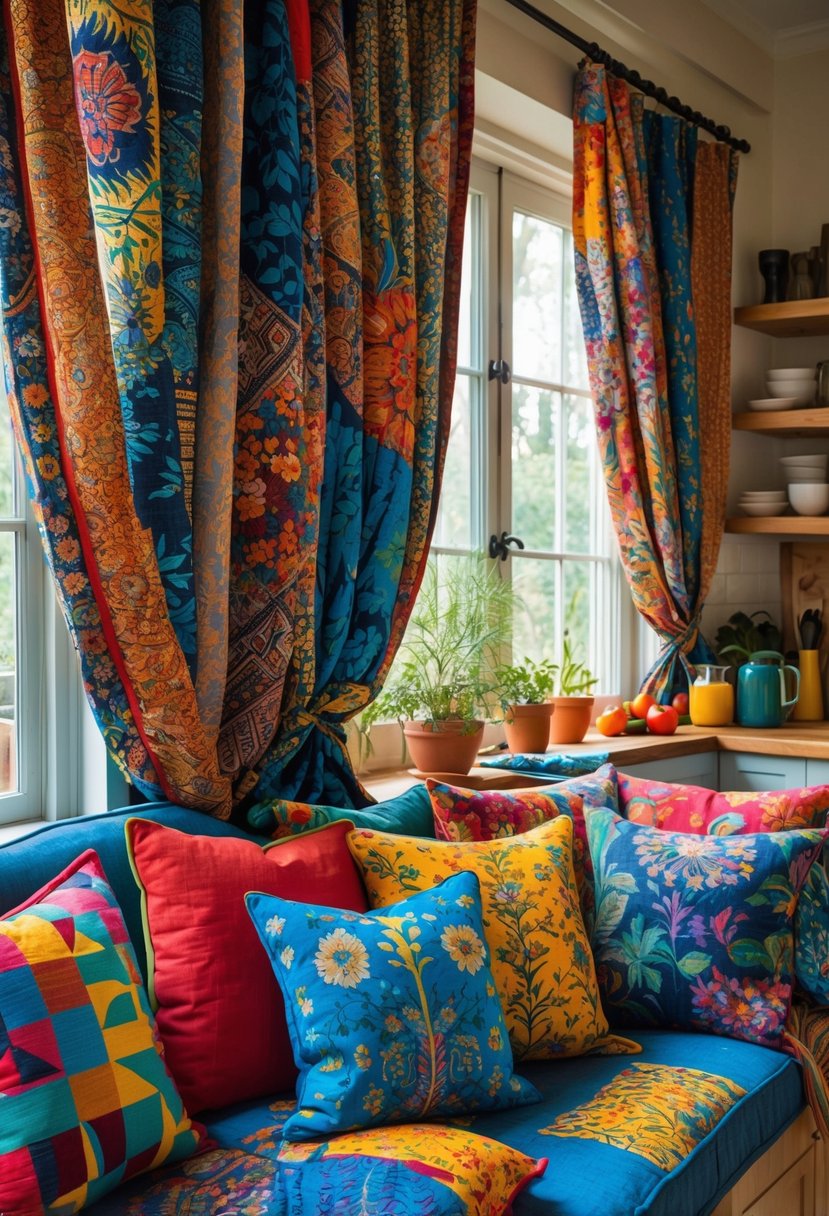
They can introduce contrast by pairing bold cushions with patterned curtains.
Using stripes beside florals or geometrics beside checks creates visual interest.
Grounding these choices with a shared color palette keeps the look cohesive while still playful.
Open concept with colorful kitchen islands
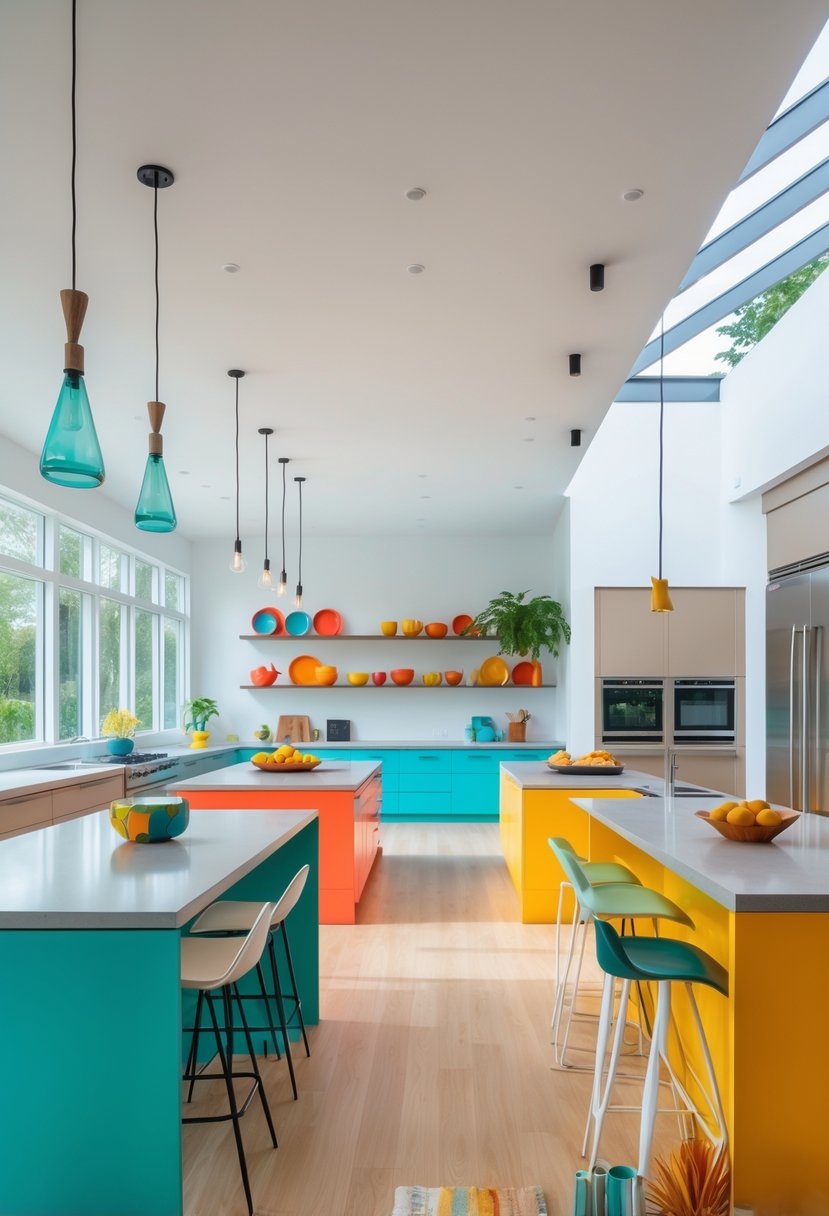
An open concept kitchen often uses an island as the central feature. It creates space for cooking, seating, and storage.
Colorful islands add personality without overwhelming the room. Bright blues, greens, or yellows can stand out against neutral cabinets.
They also help define zones in open layouts, making the kitchen feel organized and inviting.
Eclectic bar stools with mismatched designs
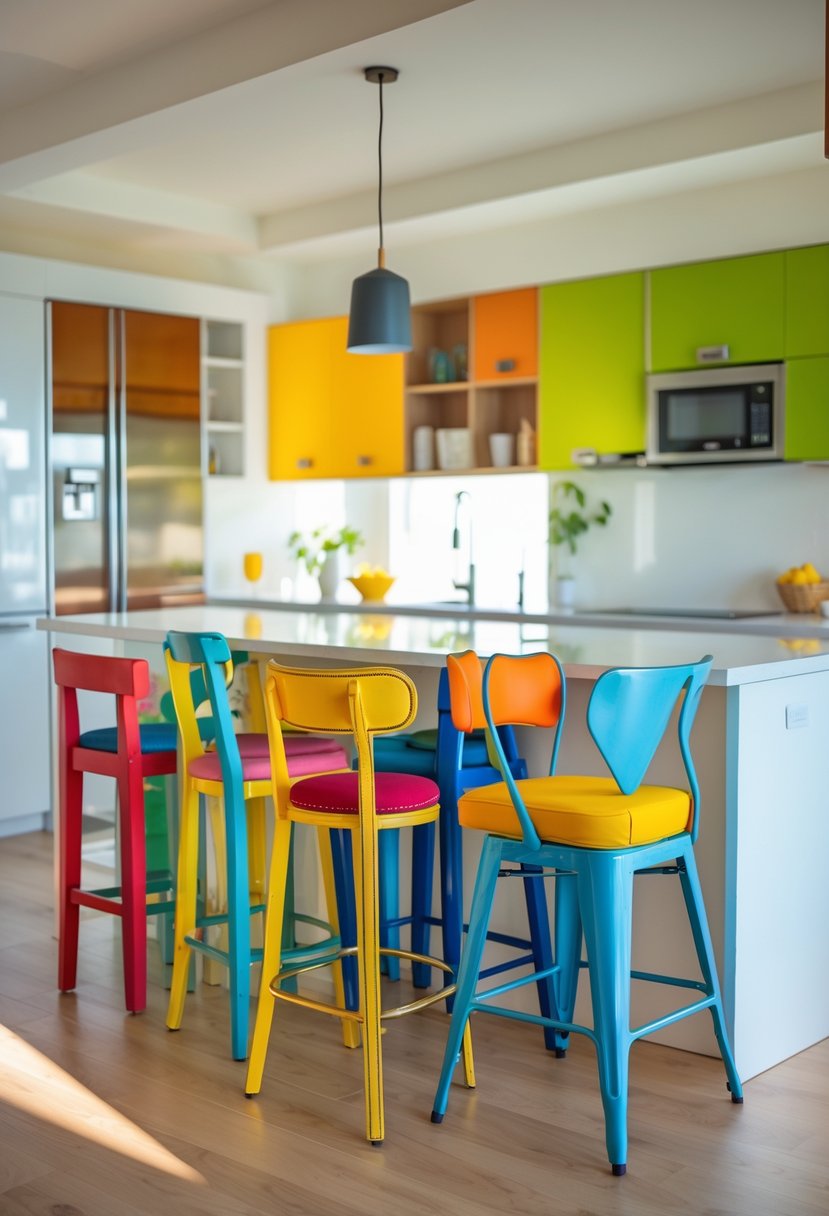
They can mix stools in different colors, shapes, or materials to create a casual and layered look.
Mismatched bar stools work well in eclectic kitchens because they add variety without needing a strict pattern.
Choosing stools with similar height or scale keeps the seating practical while still looking unique.
Accent walls with large-scale murals
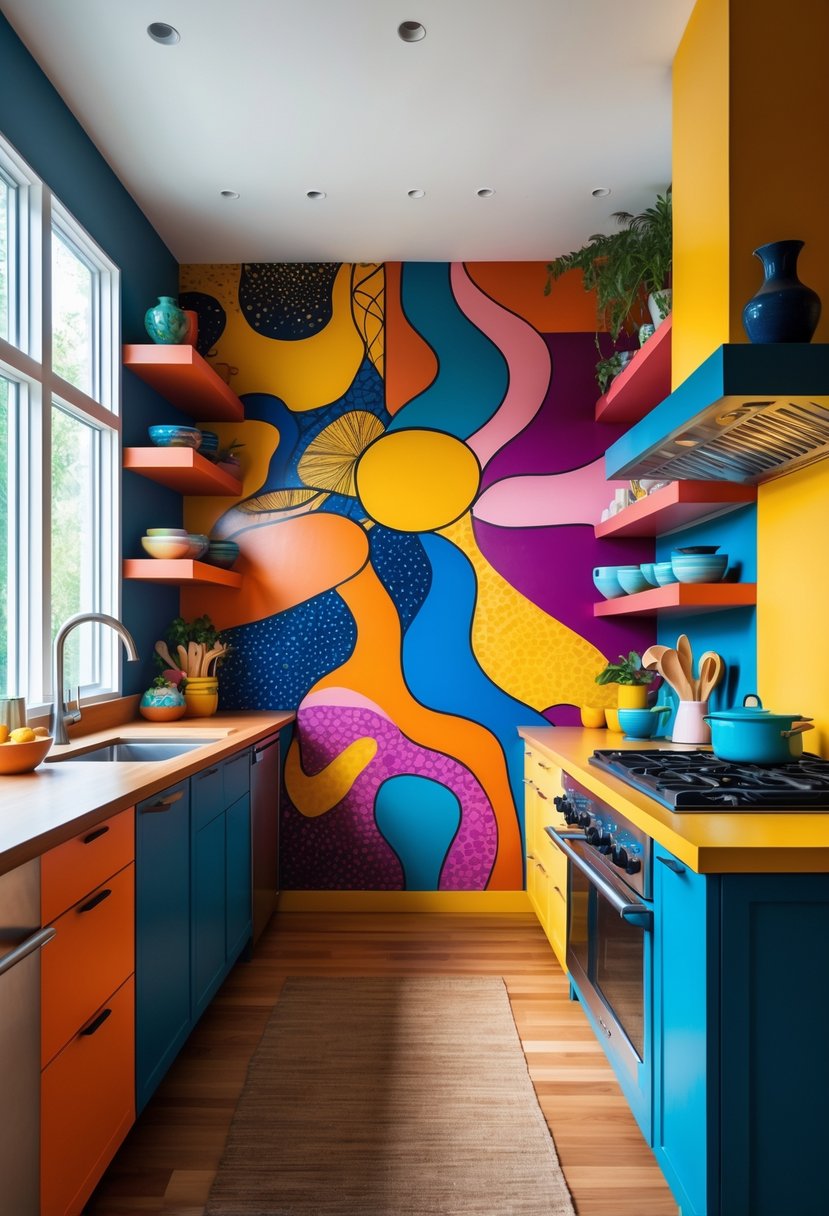
Large-scale murals bring color and pattern to a kitchen without overwhelming every wall.
They work well as a single focal point, especially behind a dining nook or cooking area.
Designs range from bold botanicals to abstract shapes, allowing the wall to reflect the room’s eclectic style.
Use of plants in colorful pots for freshness
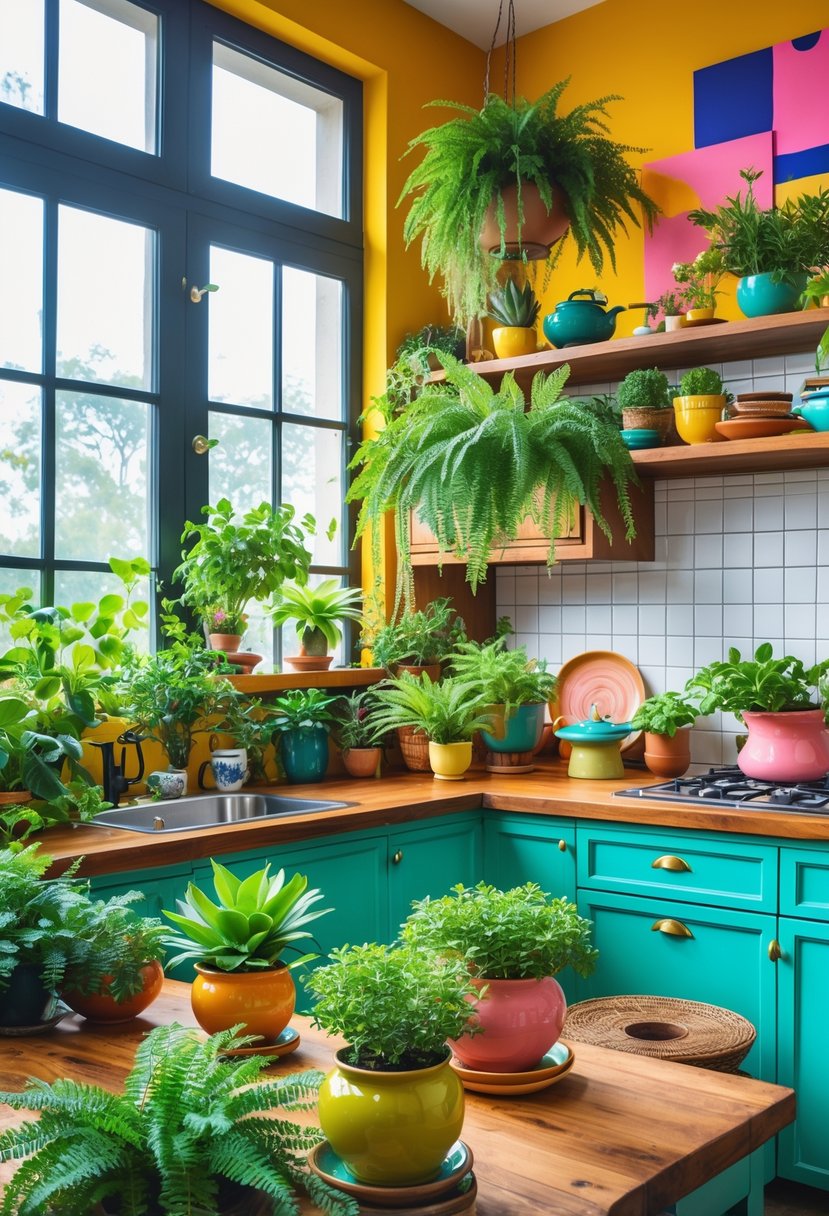
Plants in bright pots bring natural color into the kitchen while softening hard surfaces.
Small herbs or trailing vines in painted containers add freshness and variety.
Different pot shapes and hues create simple accents that make the space feel lively without overwhelming it.
Design Principles of a Color-Drenched Eclectic Kitchen
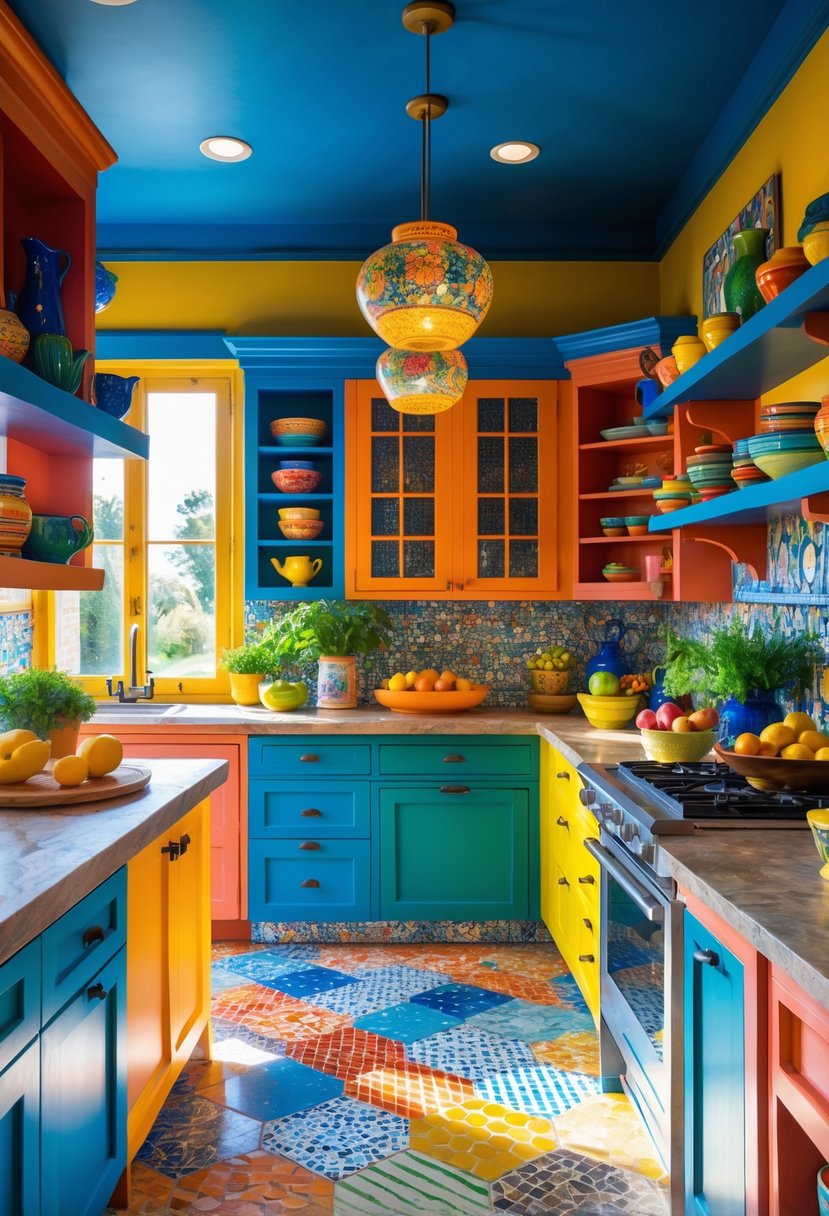
A color-drenched eclectic kitchen depends on the right mix of strong tones, layered surfaces, and varied finishes. It focuses on creating harmony between bold choices while still allowing each element to stand out with purpose.
Balancing Bold Hues and Patterns
Strong color choices define this style, but balance keeps the space from feeling overwhelming. Pairing bright cabinetry with more neutral countertops helps anchor the room. For example, teal cabinets may be softened by white or light gray counters.
Patterns also play a key role. Geometric tiles behind the stove can contrast with striped rugs or patterned dishware. The goal is not to match but to coordinate through repetition of color or shape.
A simple way to manage visual flow is to use a primary color palette supported by one or two accent shades. This avoids clashing and makes the space feel intentional. A table like the one below can guide choices:
| Element | Suggested Approach |
|---|---|
| Cabinets | Bold, saturated color |
| Countertops | Neutral or lightly patterned |
| Backsplash | Graphic tile or textured surface |
| Accessories | Repeated accent tones |
This method allows strong design statements while keeping the kitchen cohesive.
Integrating Diverse Materials and Textures
An eclectic kitchen thrives on mixing different materials. Wood, metal, glass, and stone often appear together in one space. For instance, reclaimed wood shelves can sit above stainless steel appliances, while a stone countertop pairs with ceramic tiles.
Texture adds depth and prevents flatness. Glossy finishes reflect light, while matte surfaces absorb it. Using both makes the kitchen more dynamic. A polished backsplash may contrast with rough brick walls or distressed cabinet doors.
Layering materials works best when each surface has a clear role. Durable stone for prep areas, easy-to-clean tile near sinks, and warm wood for open shelving create both function and style.
By combining finishes with intention, the kitchen feels collected rather than chaotic, even when many elements are present.
Maintaining Cohesion in Eclectic Spaces
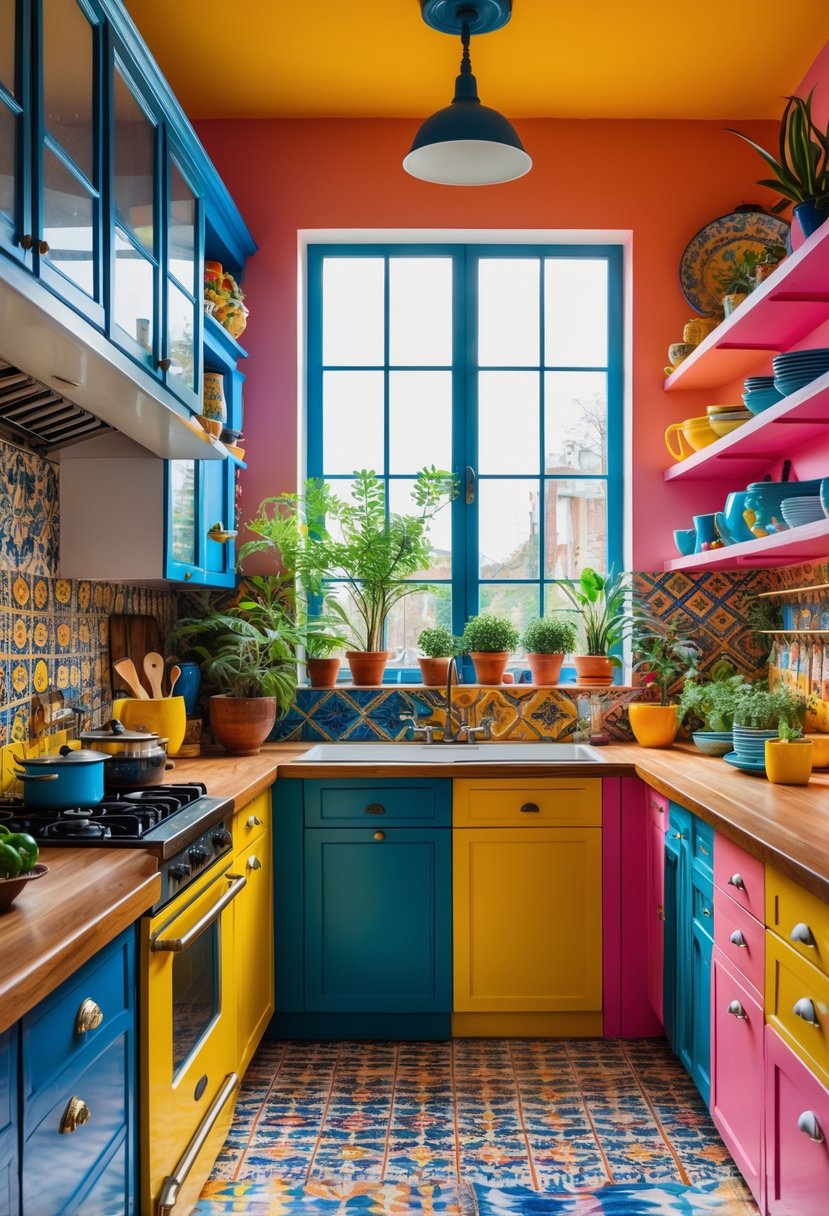
An eclectic kitchen can feel both vibrant and balanced when elements connect through shared themes and controlled use of color. Careful planning helps keep the space intentional rather than cluttered.
Establishing a Unifying Theme
A unifying theme gives direction to the mix of styles, colors, and textures. Without it, the space risks looking random. Themes can come from nature, geometry, cultural influences, or even a single material.
For example, a kitchen inspired by nature might use wood finishes, plant motifs, and earthy tones. A geometric theme could rely on patterned tiles, angular hardware, and bold shapes in lighting.
Ways to define a theme:
- Choose one anchor piece like a rug, backsplash, or large artwork.
- Repeat a specific color or material in different areas.
- Use consistent framing, finishes, or hardware to tie elements together.
By repeating details across the space, the kitchen feels intentional while still allowing for variety.
Tips for Preventing Visual Overload
Eclectic design often uses bold colors and textures, but too much can overwhelm the eye. Limiting the palette helps maintain clarity. Many designers recommend sticking to 3–4 main colors and balancing them with neutral tones like white, beige, or gray.
Textures and patterns should also be layered with care. If the backsplash has a busy design, choose simpler countertops or cabinets to balance it.
Practical guidelines:
- Pair bold walls with neutral flooring.
- Mix no more than two strong patterns in one view.
- Break up saturated color with natural wood or metal accents.
This balance allows the kitchen to feel colorful and eclectic without becoming chaotic. Each element has room to stand out without competing for attention.
Learn more about eclectic interior design from Apartment Therapy.


