
Art Deco Revival Kitchen Décor: 23 Stylish Ideas for a Modern Update
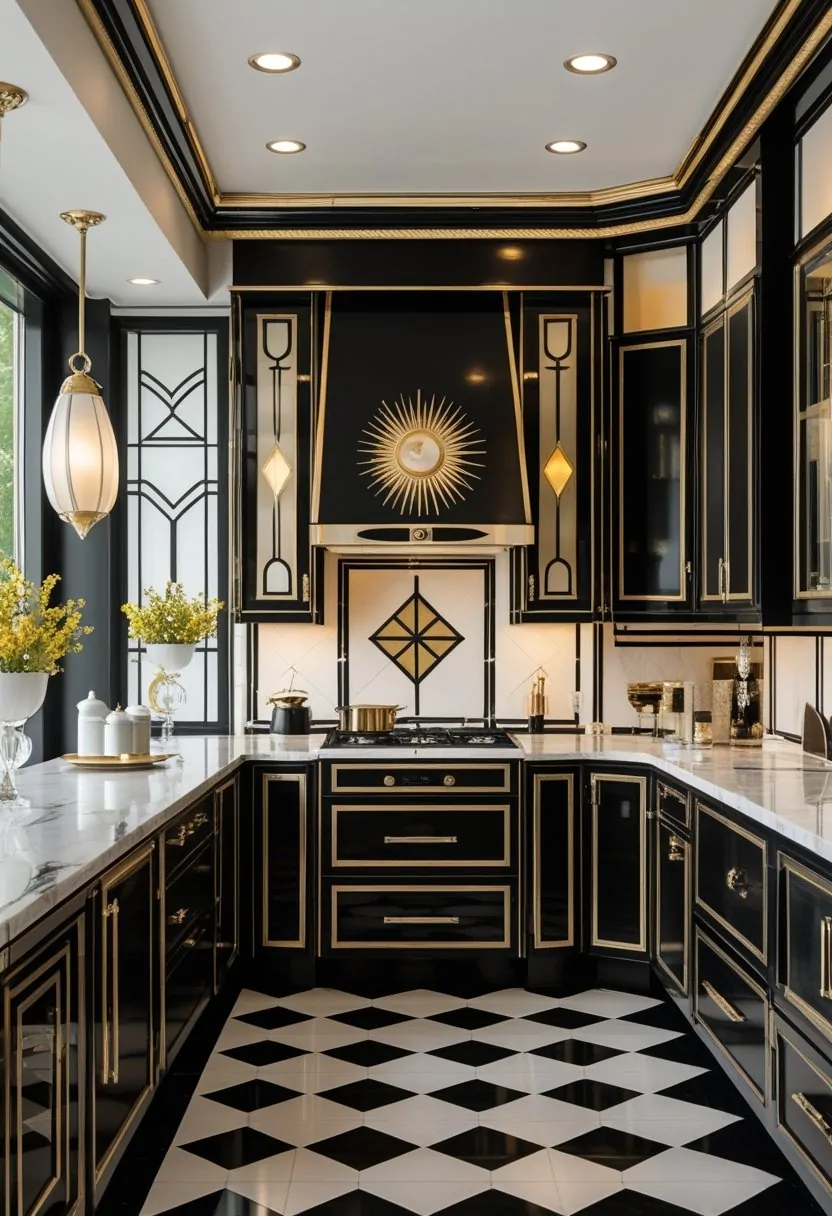
Art Deco revival kitchen décor brings back the bold style of the 1920s and 1930s with a modern touch. This design approach values clean lines, geometric patterns, and luxurious finishes that create a space both stylish and functional. It shows how classic design details can blend with today’s kitchens to form a timeless look.
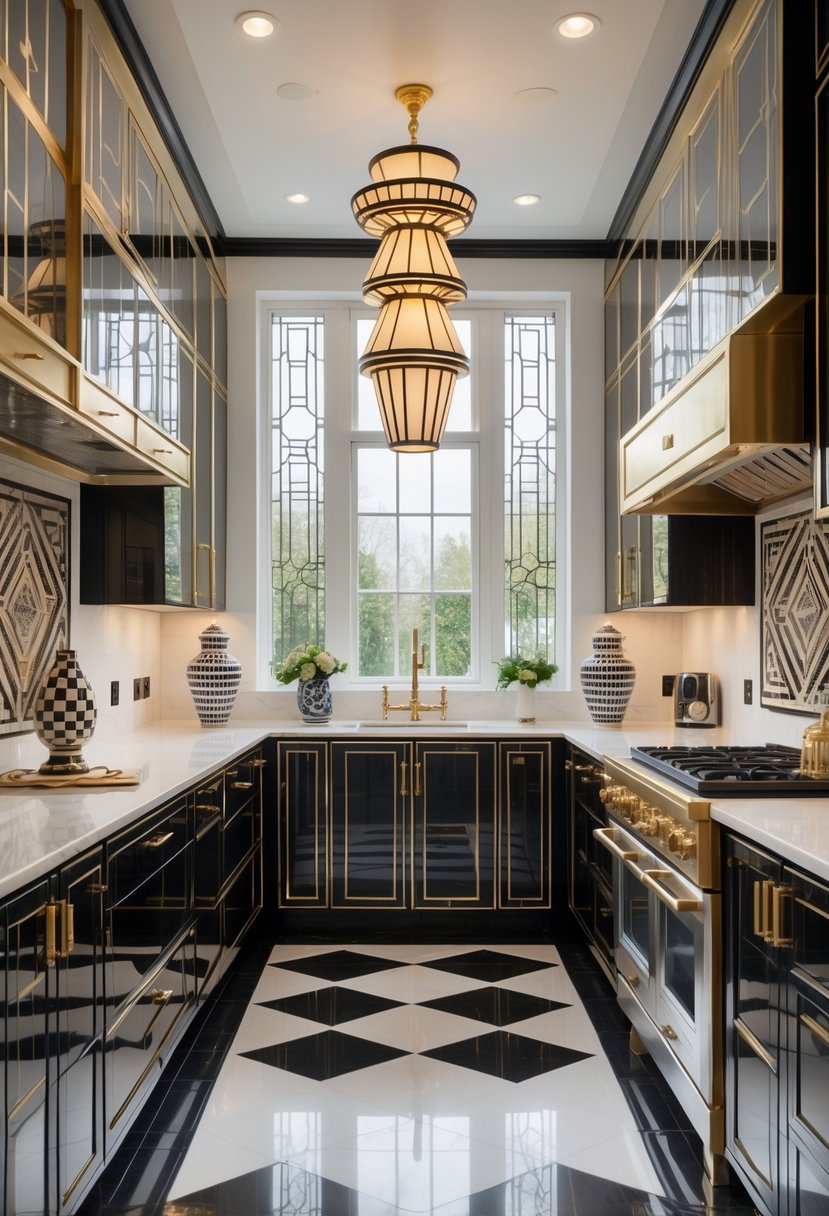
By focusing on striking shapes, rich materials, and subtle glamour, this style transforms everyday cooking areas into elegant spaces. From cabinetry to lighting, every detail works together to highlight the balance between vintage charm and modern practicality.
Glossy black lacquered cabinetry
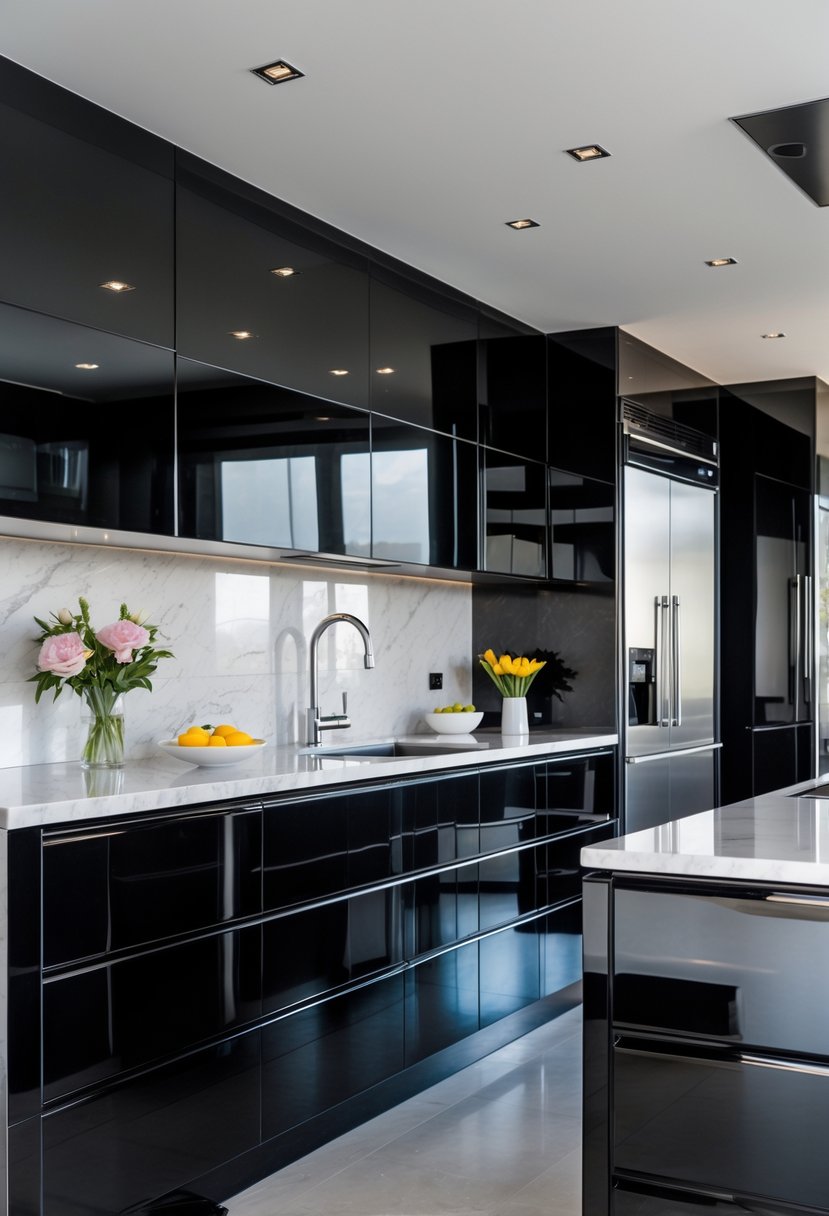
Glossy black lacquered cabinets give an Art Deco kitchen a polished and sleek appearance. The reflective finish helps light bounce around the space, adding depth and contrast.
Paired with brass or chrome hardware, the cabinets create a bold focal point. Their smooth surfaces emphasize clean lines and geometric balance common in Art Deco design.
Brass geometric cabinet handles
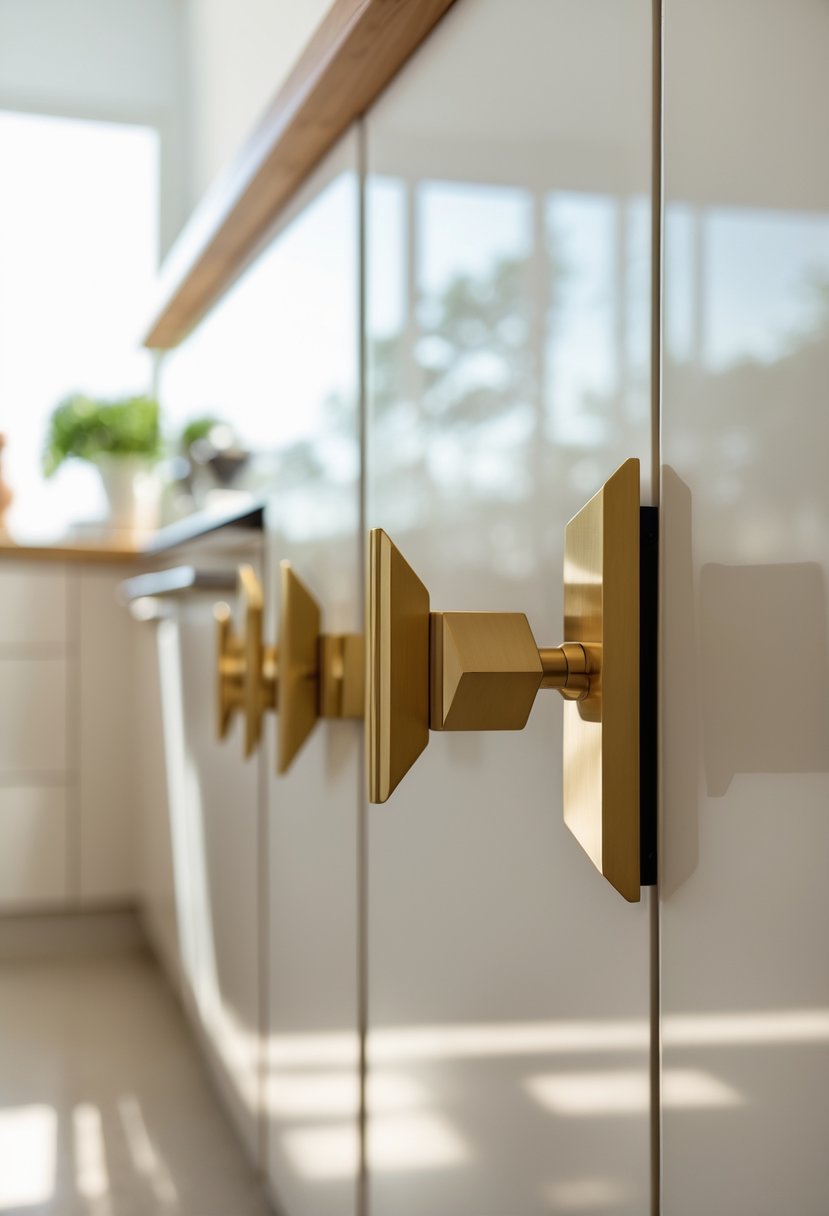
Brass geometric cabinet handles bring clean lines and structured forms into the kitchen. Their shapes often include squares, rectangles, and octagons.
These handles reflect the Art Deco style with a focus on symmetry and detail. The brass finish adds warmth and durability while keeping the look refined.
Mirrored backsplash with etched patterns
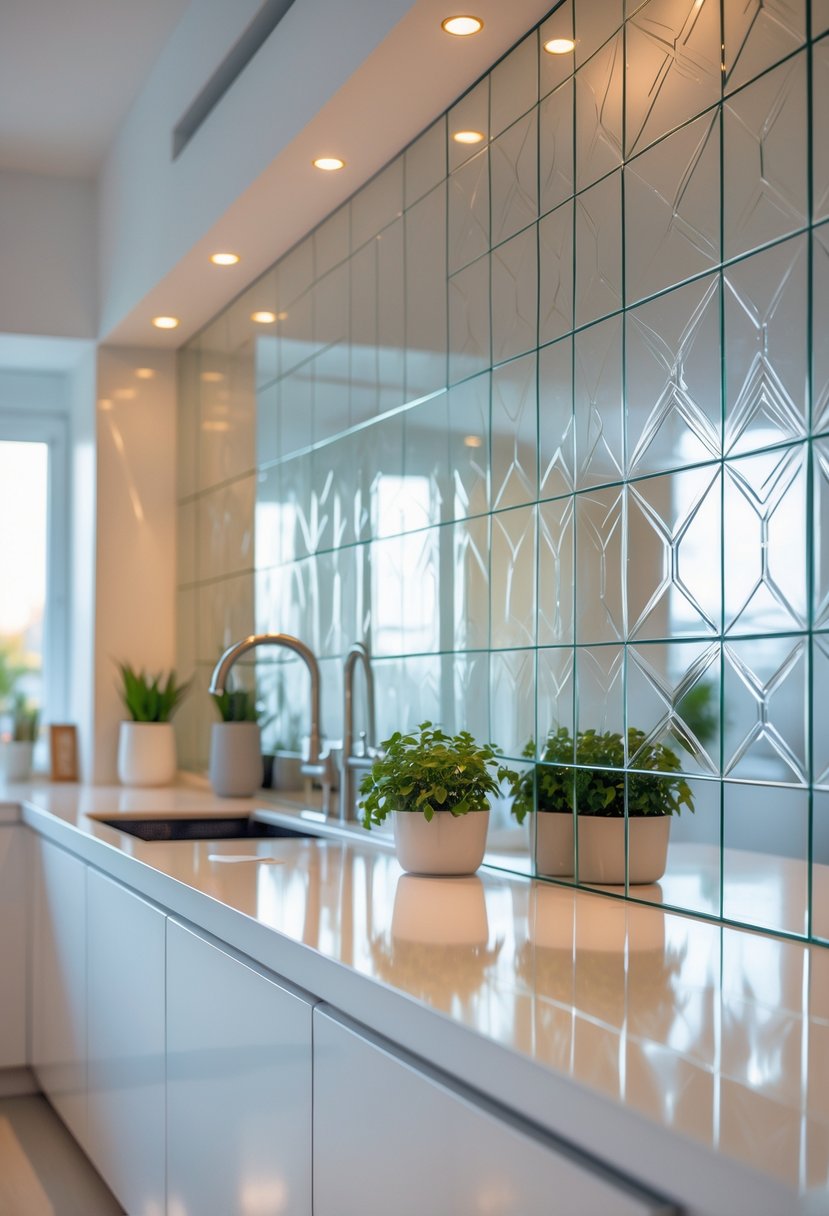
A mirrored backsplash with etched designs adds subtle detail to a kitchen. The reflective surface helps brighten the space while the etched lines introduce texture and pattern.
These backsplashes often feature geometric or decorative motifs that align with Art Deco style. They combine function with a refined, decorative look.
Black and white checkerboard floor tiles
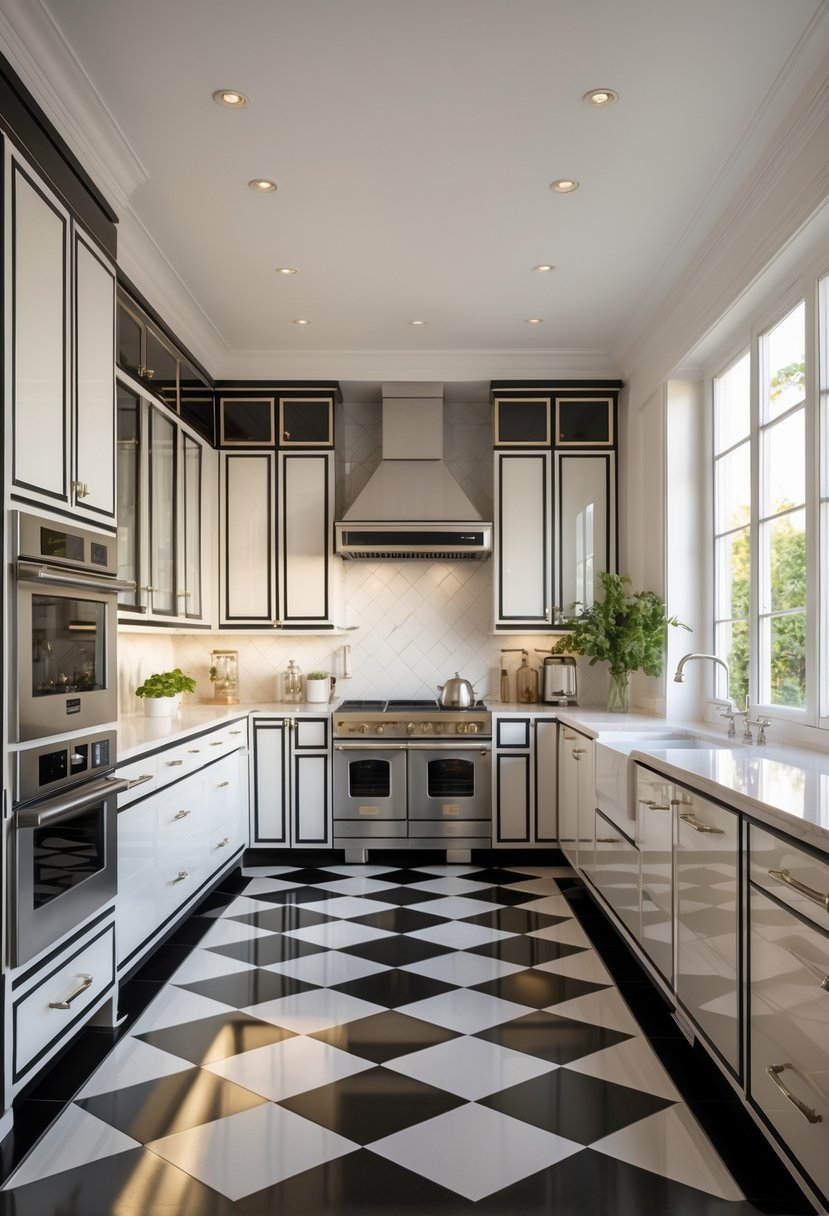
Black and white checkerboard tiles give kitchens a structured and balanced look. The pattern reflects the geometric style often used in Art Deco design.
Larger tiles make the space feel open, while smaller tiles create more detail. A diagonal layout can also add movement and visual interest.
Sunburst wall clock in gold finish
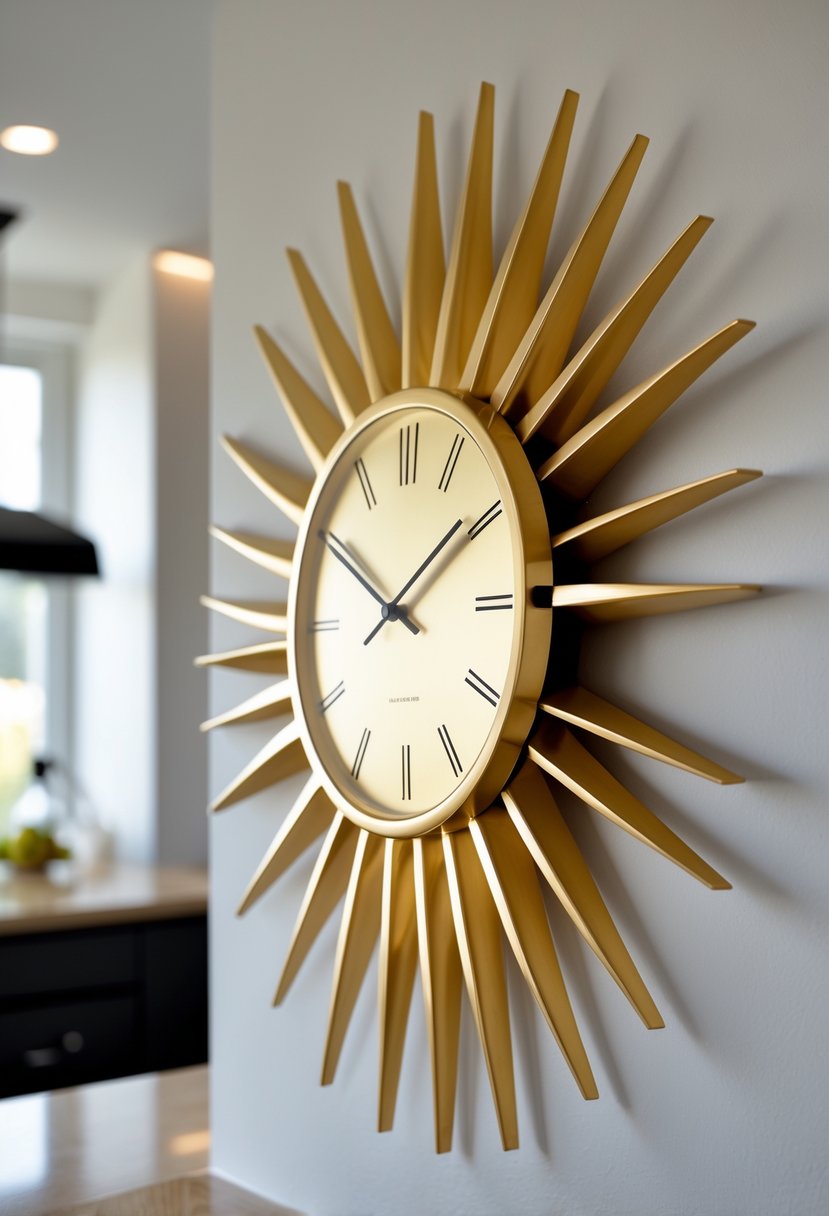
A gold sunburst wall clock adds a touch of Art Deco style to a kitchen. Its radiant design reflects the geometric patterns often seen in the movement.
Many models use durable metal with polished finishes, making them both decorative and practical. They work well as focal points in open wall spaces.
Chrome pendant lighting with stepped design
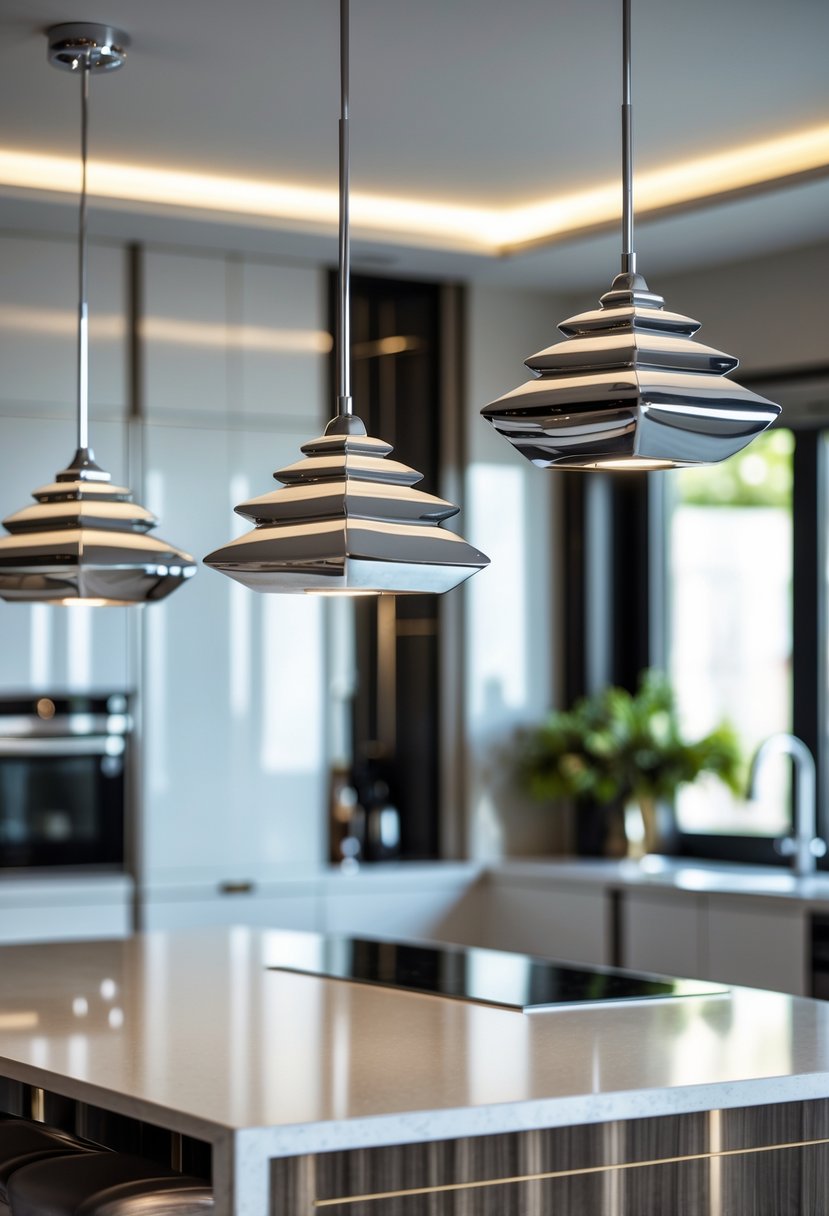
Chrome pendant lights with stepped detailing reflect the geometric patterns common in Art Deco design.
The polished chrome finish adds a sleek surface that pairs well with both light and dark kitchen palettes.
Their structured form provides focused task lighting while contributing to a balanced, symmetrical look above counters or islands.
Velvet emerald green bar stools
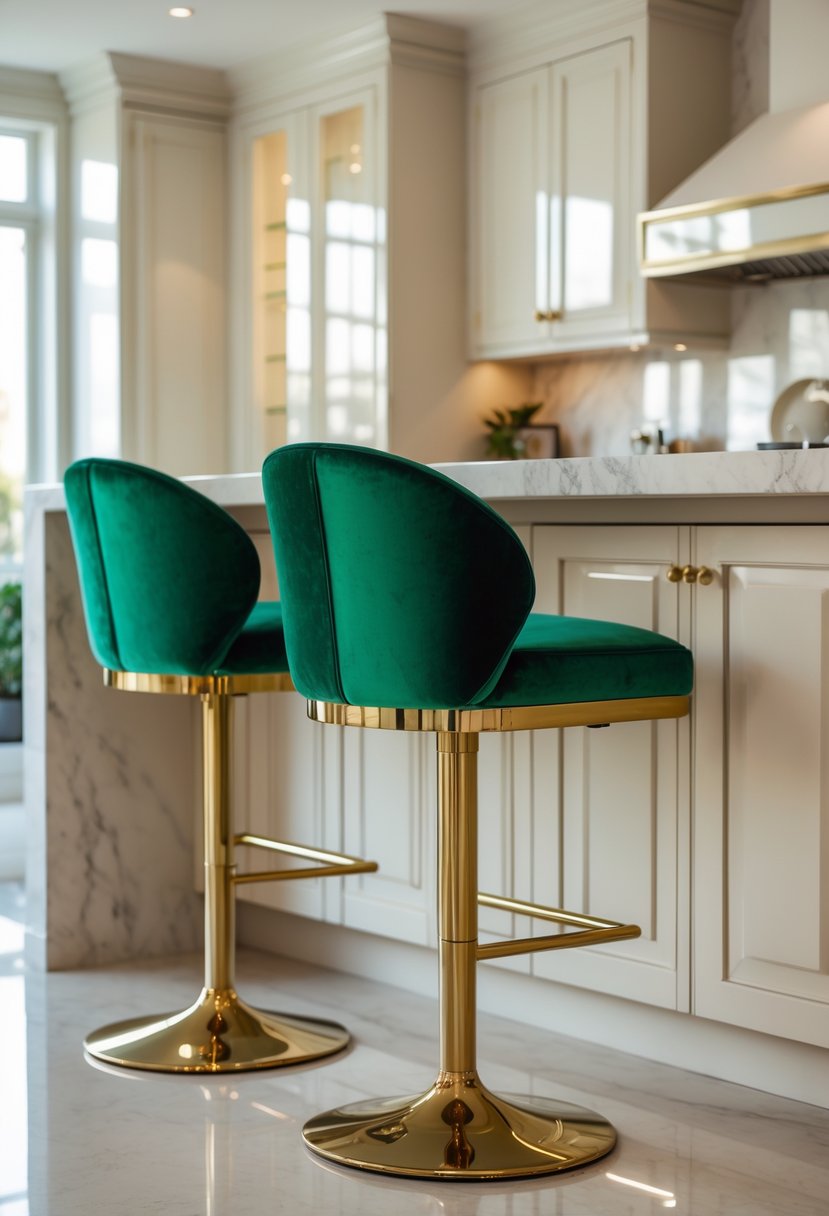
Velvet emerald green bar stools bring rich color and soft texture to a kitchen space. Their deep tone pairs well with metallic finishes often seen in Art Deco design.
They work as both seating and a visual accent. Many modern options include swivel bases or adjustable heights, making them practical as well as stylish.
Marble countertop with gold veining
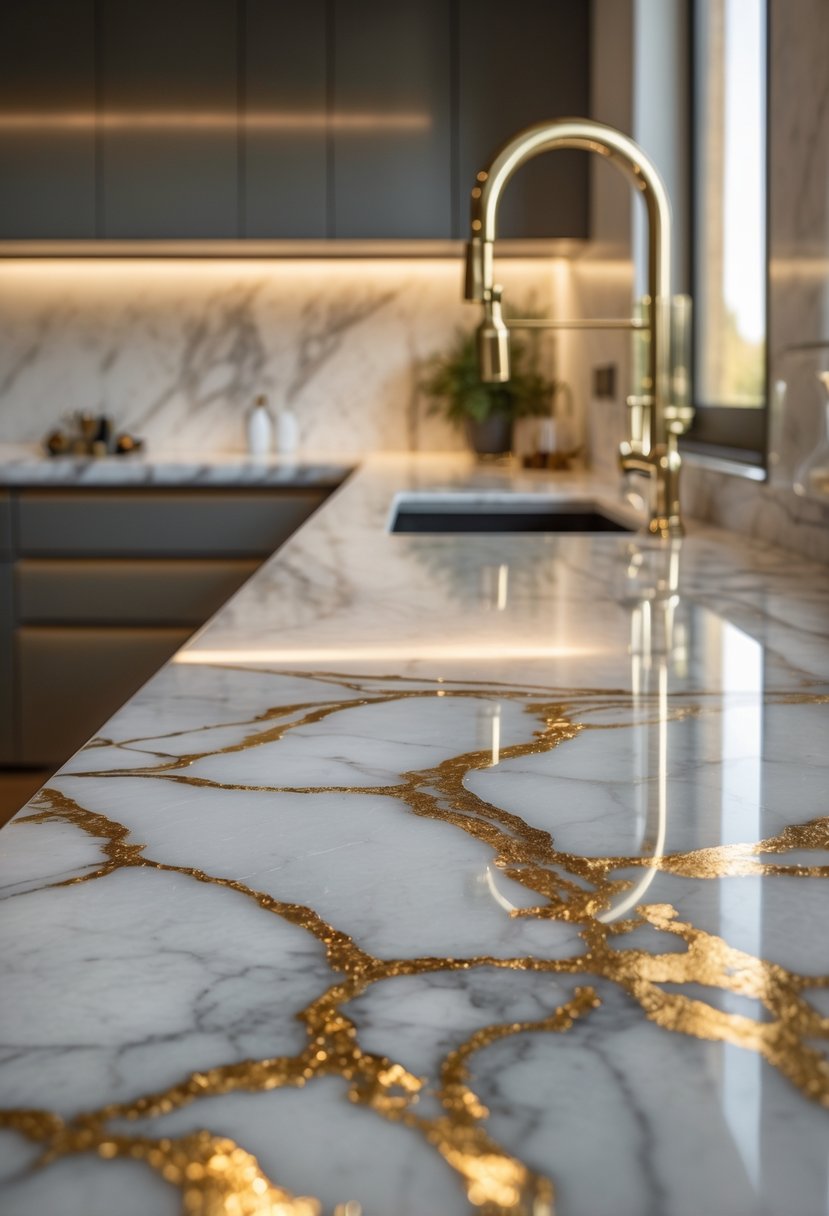
Marble with gold veining adds a refined detail to an Art Deco kitchen. The light surface highlights the metallic lines, creating a subtle but noticeable accent.
This combination pairs well with brass fixtures or gold hardware. It supports the geometric and luxurious qualities often seen in Art Deco design.
Art Deco-inspired glass cabinet doors
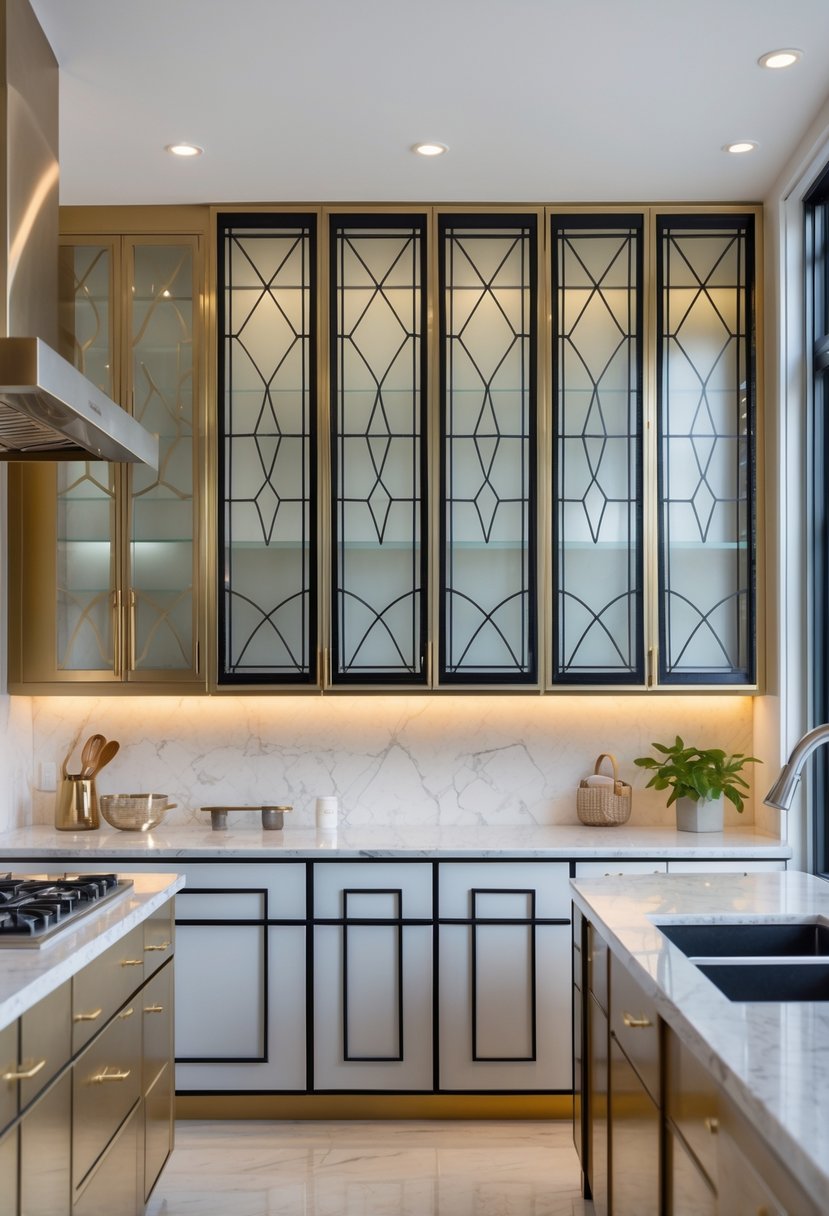
Glass cabinet doors in an Art Deco style often feature geometric patterns or frosted finishes. These details add visual interest without overwhelming the space.
Designers sometimes use fluted or etched glass to highlight the style’s clean lines. Paired with metal accents, the doors create a refined and balanced look.
Geometric patterned area rugs
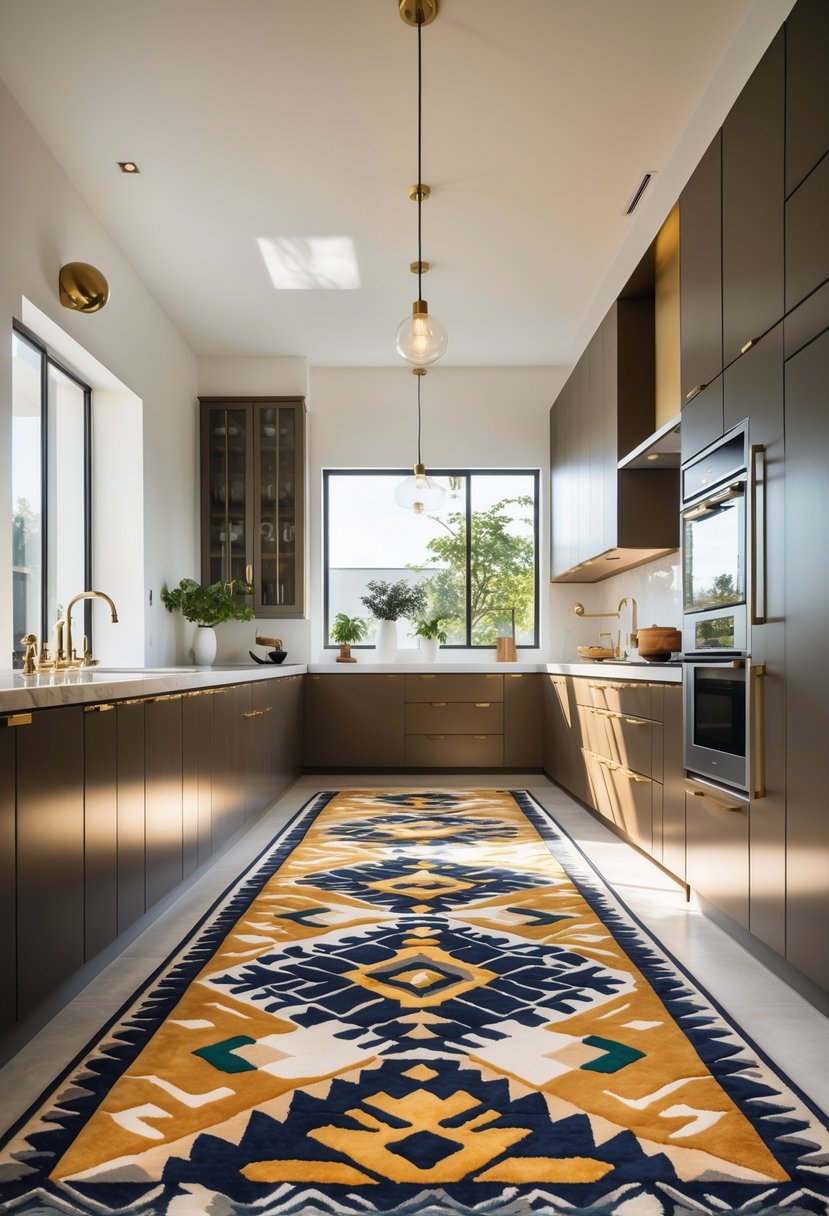
Geometric patterned rugs bring structure and balance to an Art Deco inspired kitchen. Their clean lines and bold shapes reflect the style’s focus on symmetry and order.
Many designs use strong contrasts like black and gold or muted neutrals for a softer look. Washable options add practicality for everyday use.
Frosted glass pendant lamps
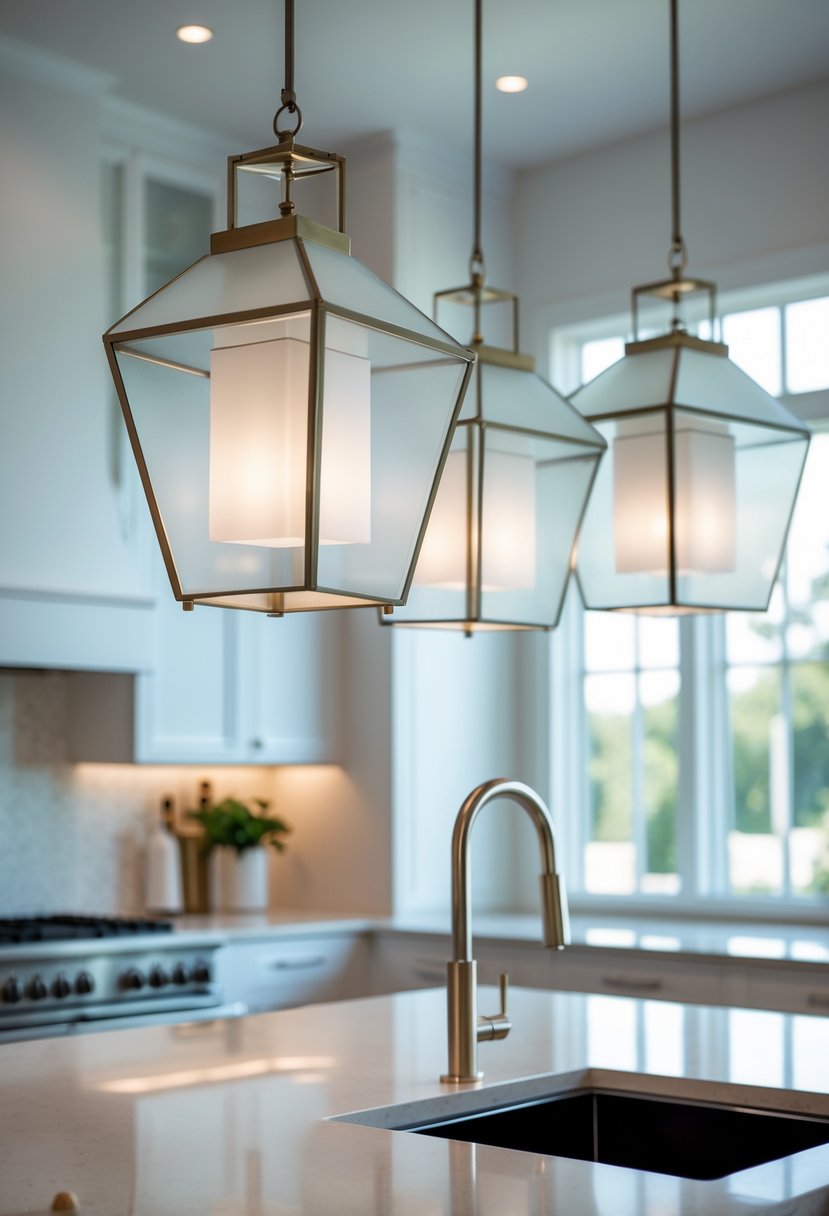
Frosted glass pendant lamps give kitchens a soft, even light that reduces glare. Their diffused glow works well for meal prep and casual dining.
Many Art Deco designs use geometric shapes or stepped details with frosted glass. These features add subtle character while keeping the look clean and functional.
Gold-trimmed open shelving
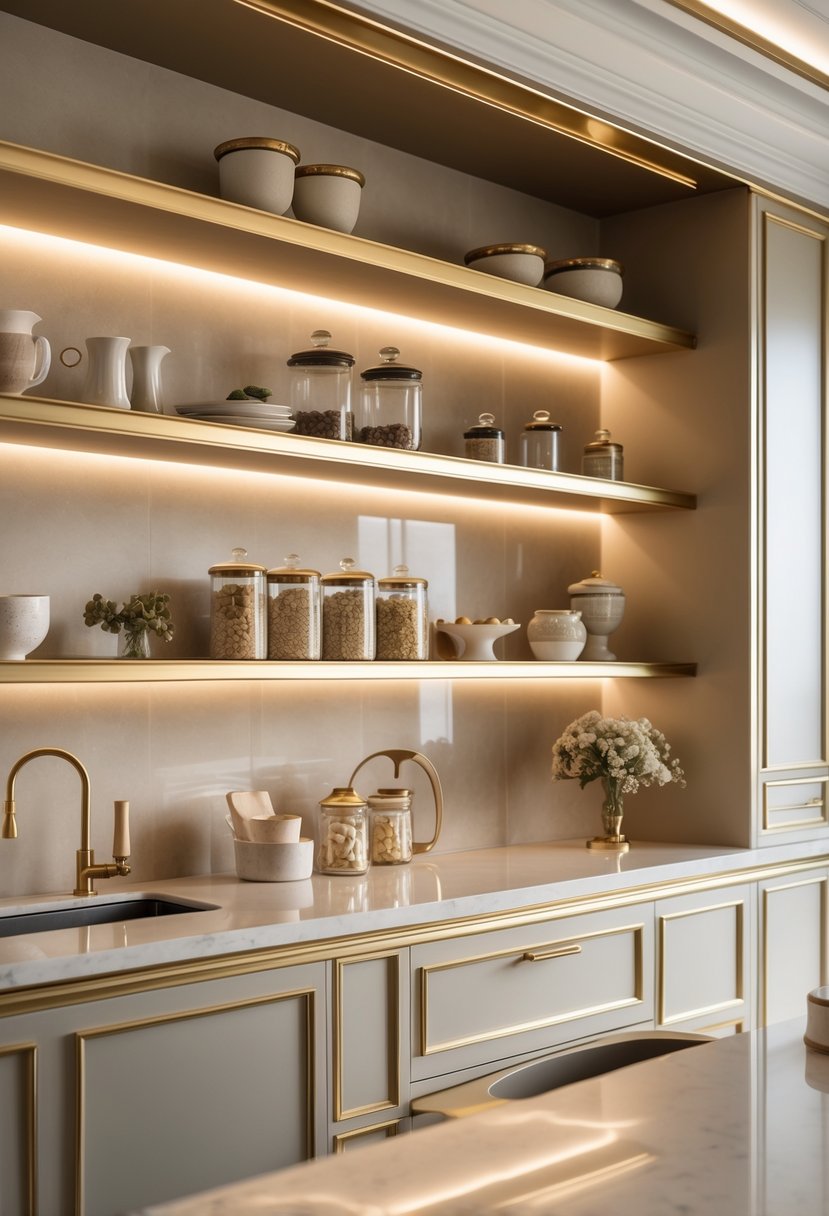
Gold-trimmed open shelving adds a subtle touch of shine while keeping the kitchen practical. The trim highlights clean lines and frames everyday items with a polished look.
These shelves work well with both light and dark cabinetry. They create contrast while still blending with other metallic accents in the space.
Sleek chrome faucet with angular lines
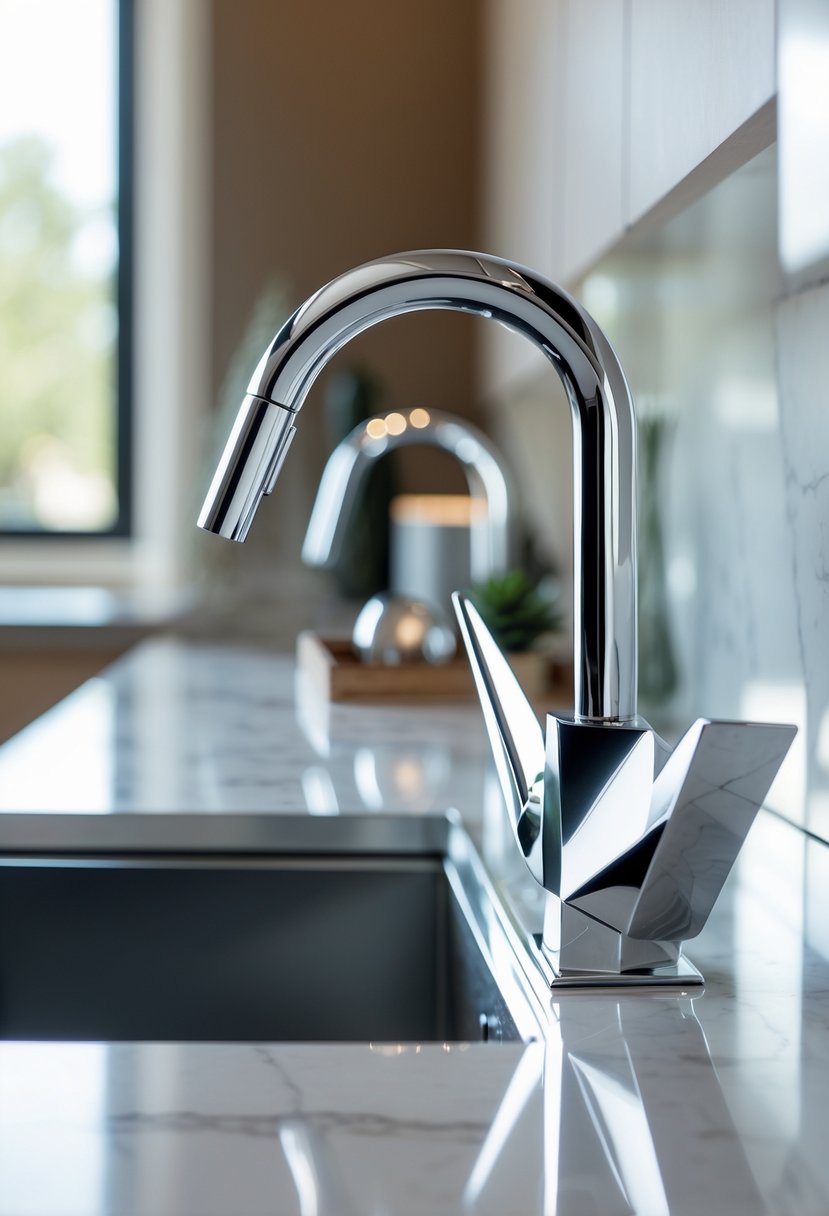
A chrome faucet with sharp, geometric edges fits well in an Art Deco kitchen. Its polished surface reflects light and keeps the space looking clean and modern.
The angular design adds structure without overwhelming other features. It pairs easily with marble counters, brass accents, or dark cabinetry.
Bold chevron tile accents
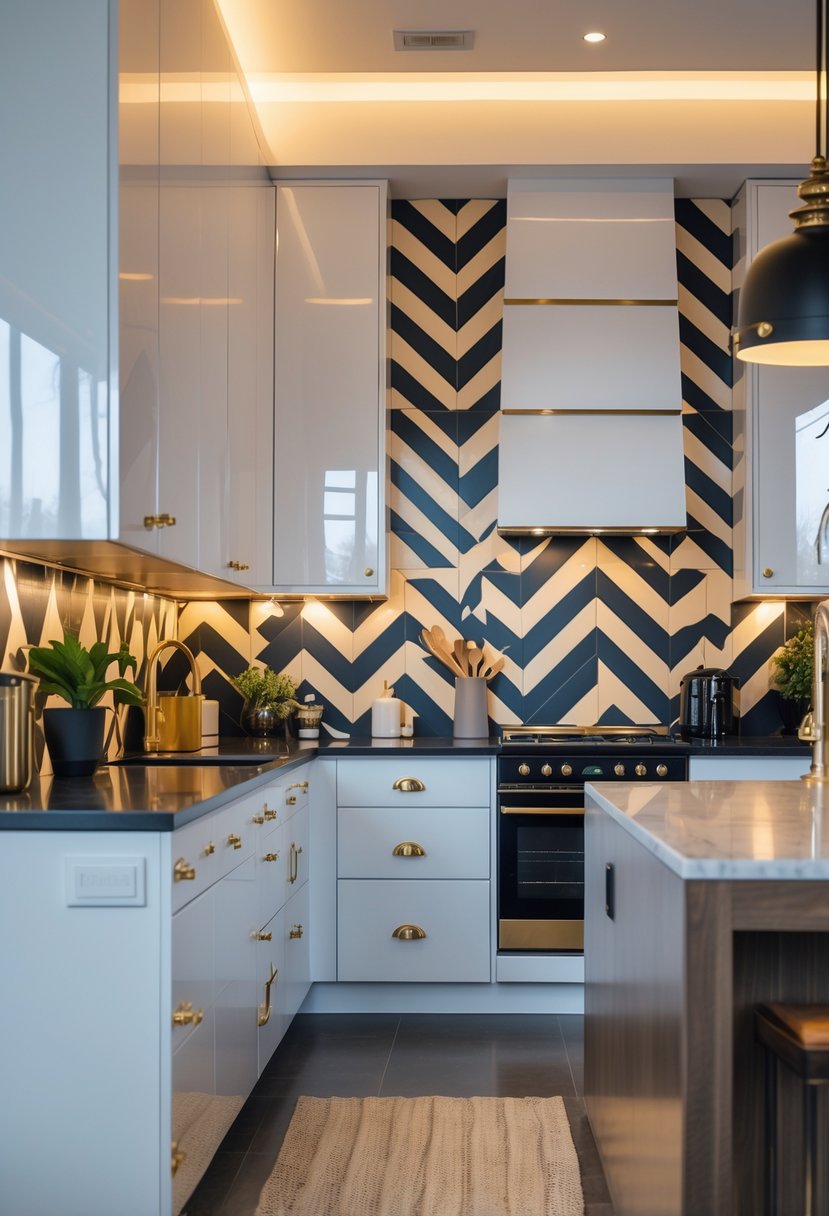
Chevron tile brings a strong geometric element to an Art Deco kitchen. Its sharp lines create rhythm and visual interest without overwhelming the space.
Designers often use black and white chevron patterns on backsplashes or floors. This contrast highlights the symmetry and structure that define the Art Deco style.
Vintage-inspired brass range hood
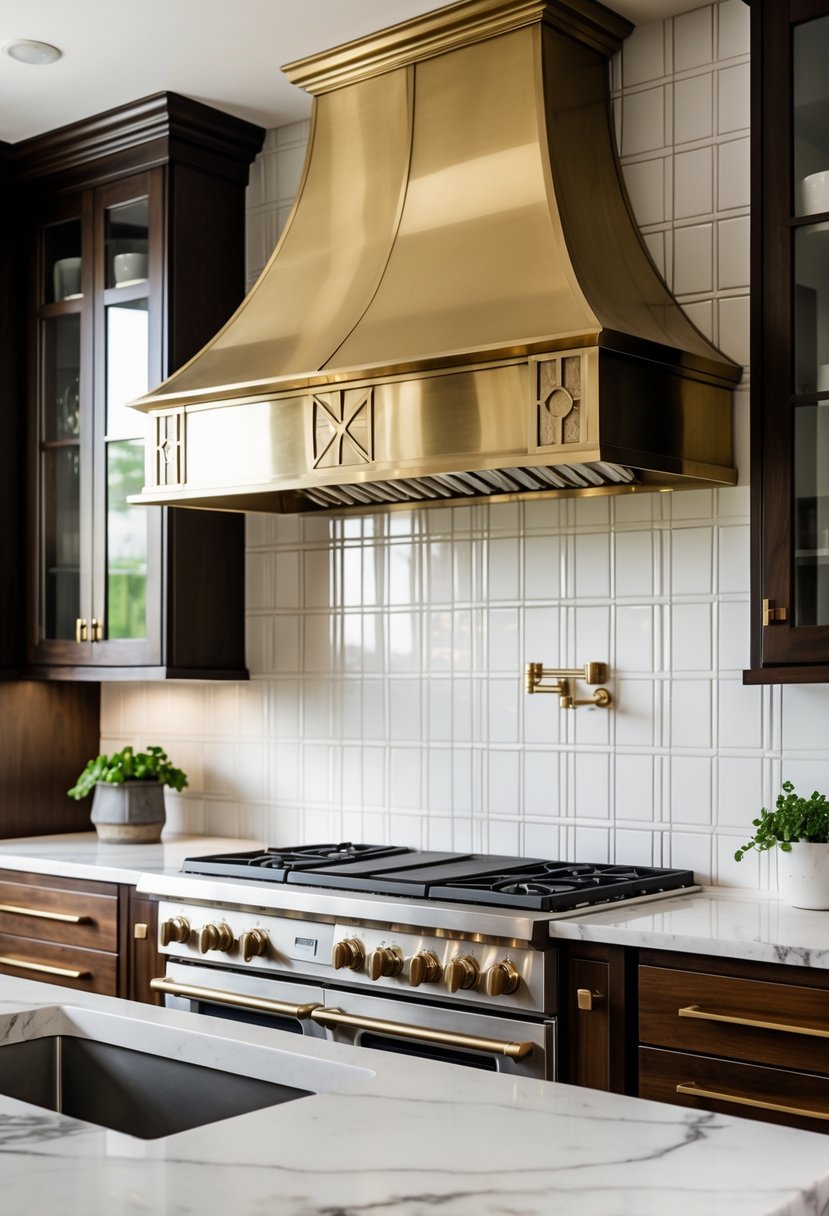
A brass range hood adds a subtle vintage touch to an Art Deco kitchen. Its warm tone pairs well with geometric patterns and bold accents.
Many designs feature handcrafted finishes, from polished to patina. These variations allow homeowners to match the hood with both modern and traditional elements.
High-gloss white cabinetry with black trim
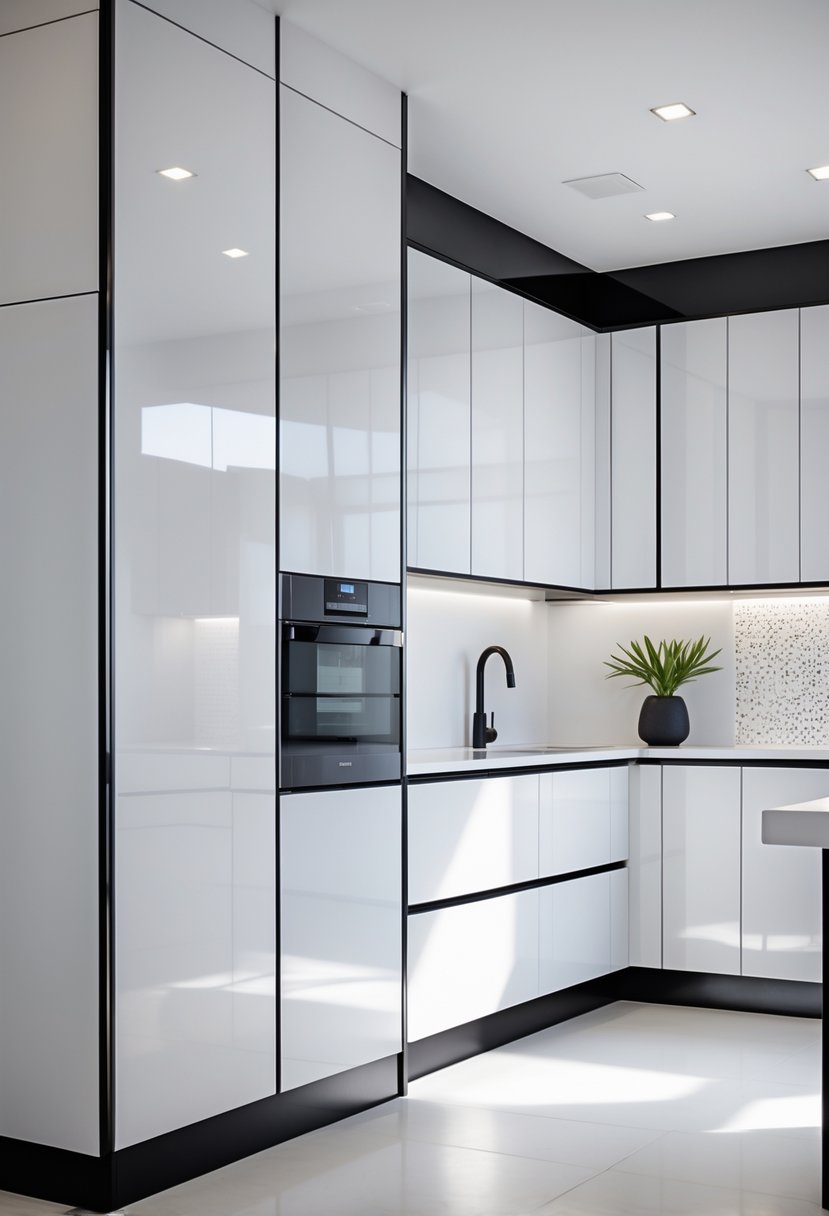
High-gloss white cabinetry reflects light and adds a crisp, polished look. The smooth finish creates a modern surface that is easy to clean.
Black trim frames each cabinet with sharp contrast. This detail highlights the geometry of the design and reinforces the Art Deco style.
Etched glass cabinet inserts
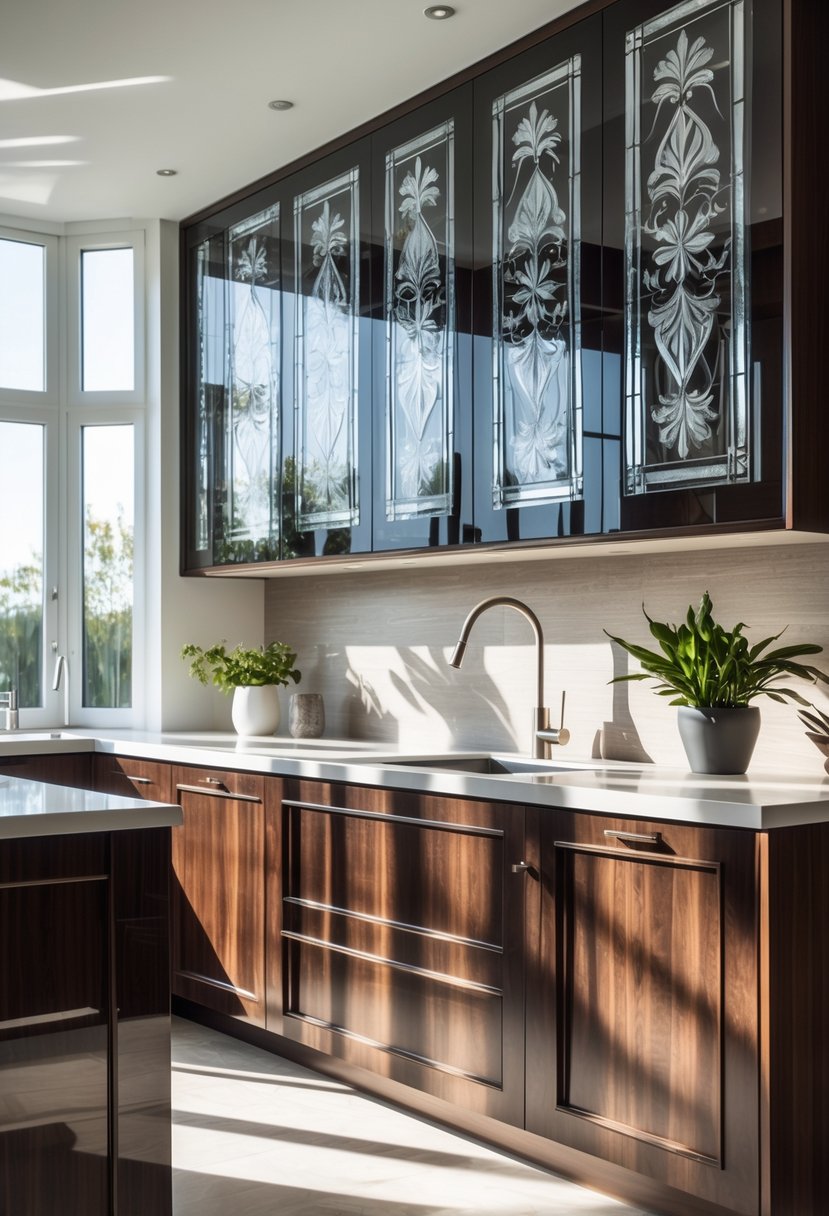
Etched glass cabinet inserts add subtle decoration while keeping storage areas partly hidden.
They often feature geometric lines or repeating patterns that fit well with Art Deco design.
Homeowners can choose from frosted, clear, or textured finishes to match different cabinet styles.
Black granite countertops with metallic flecks
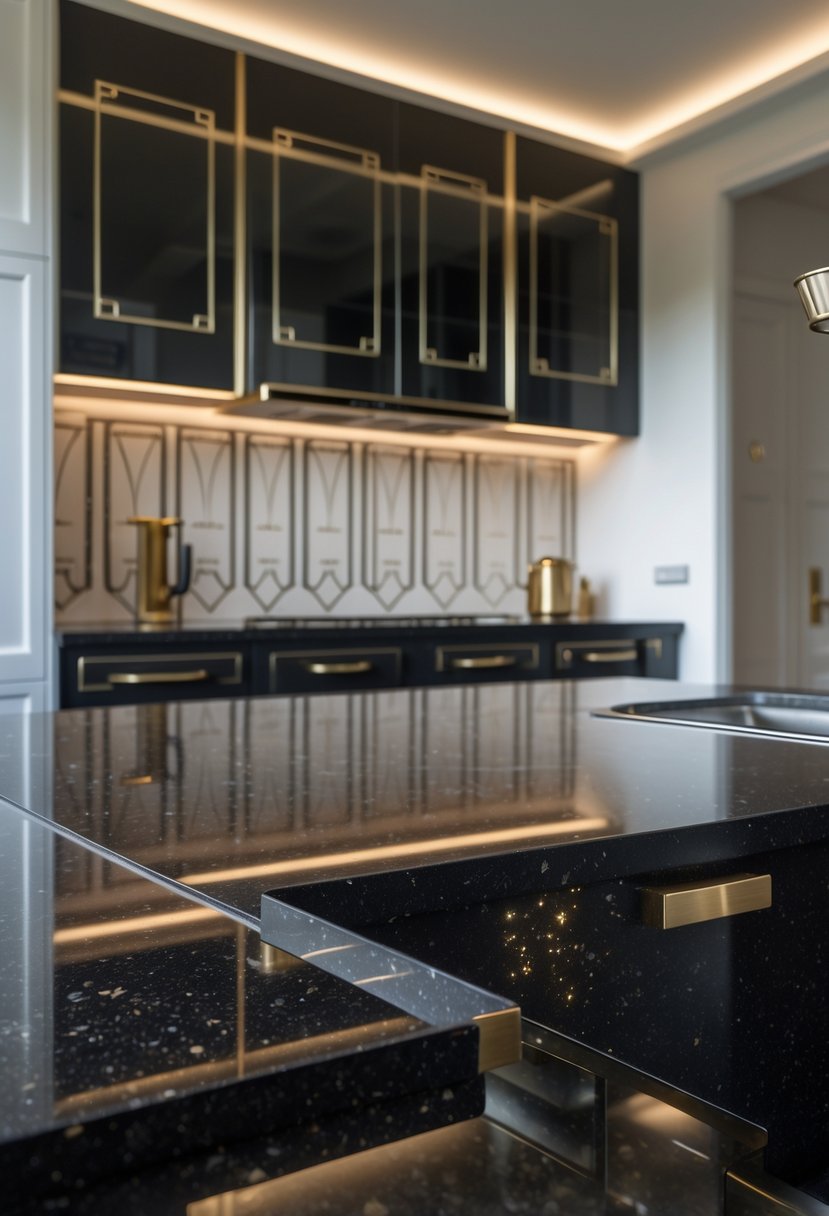
Black granite with metallic flecks adds subtle shine to a kitchen surface. The reflective minerals, often bronze, gold, or silver, catch light and create visual interest.
This material pairs well with streamlined cabinetry and geometric details, making it a fitting choice for an Art Deco-inspired kitchen.
Stepped and layered ceiling moldings
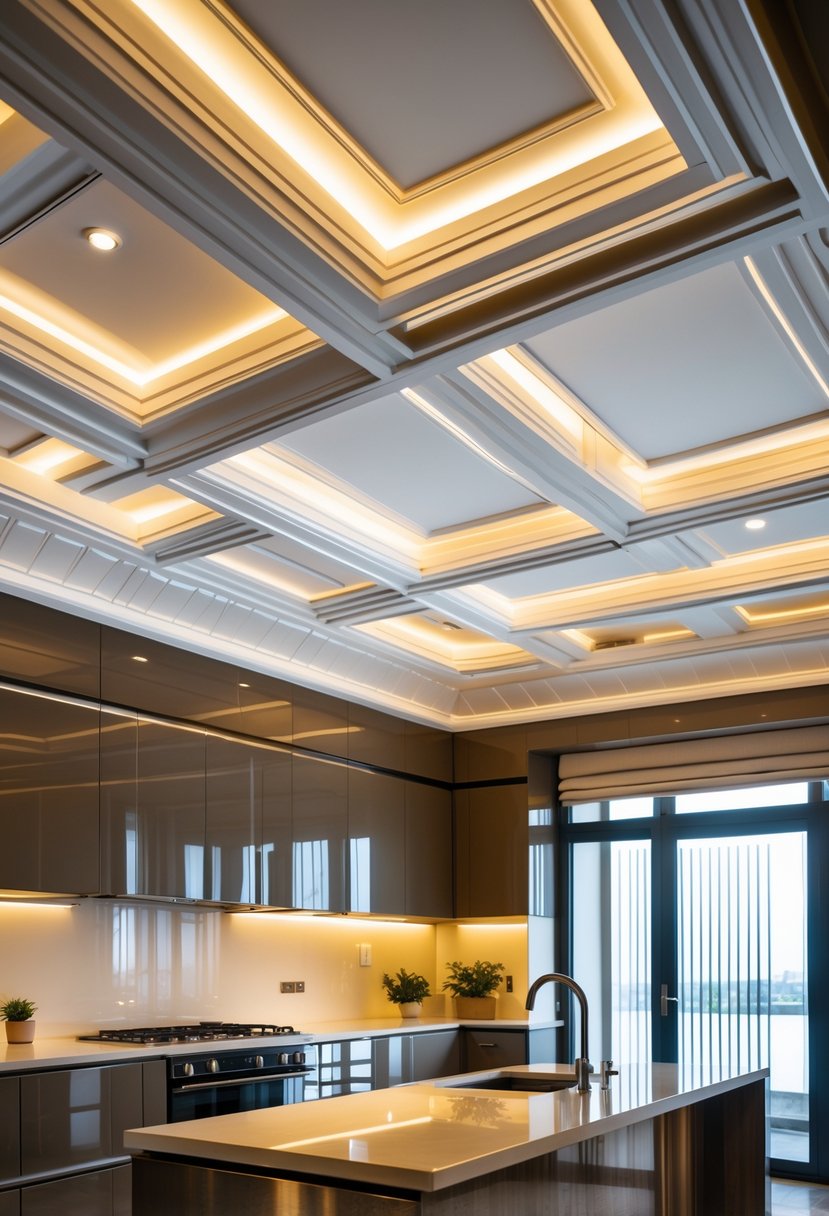
Stepped and layered ceiling moldings reflect a key feature of Art Deco design. They use clean lines and geometric forms to frame the upper edges of a room.
These moldings add depth without heavy ornamentation. In kitchens, they create structure while blending with streamlined cabinets and simple surfaces.
Geometric wallpaper with metallic accents
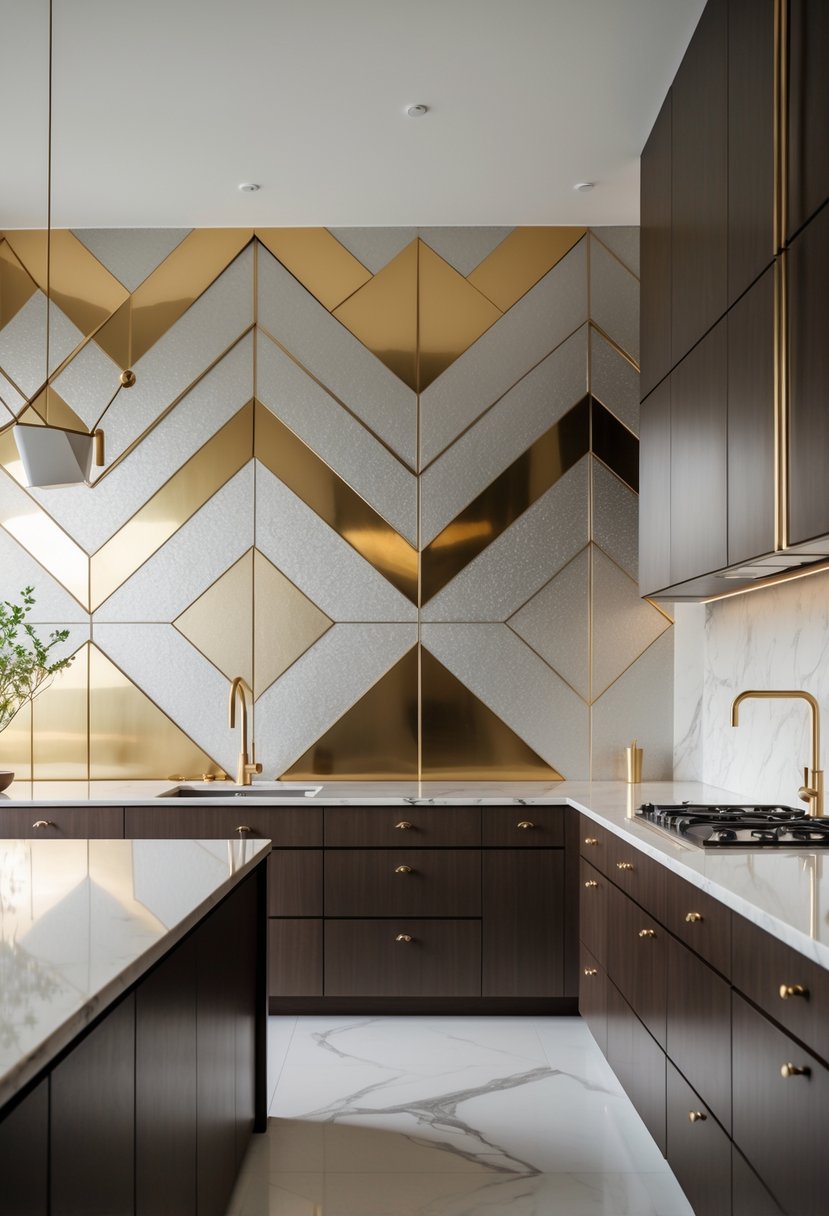
Geometric wallpaper with metallic accents adds structure and detail to a kitchen. Clean lines and repeating shapes give the space a balanced look.
Metallic finishes reflect light, making the room feel brighter. Gold, silver, or copper tones pair well with both dark and light color schemes.
Brass and glass cocktail cart
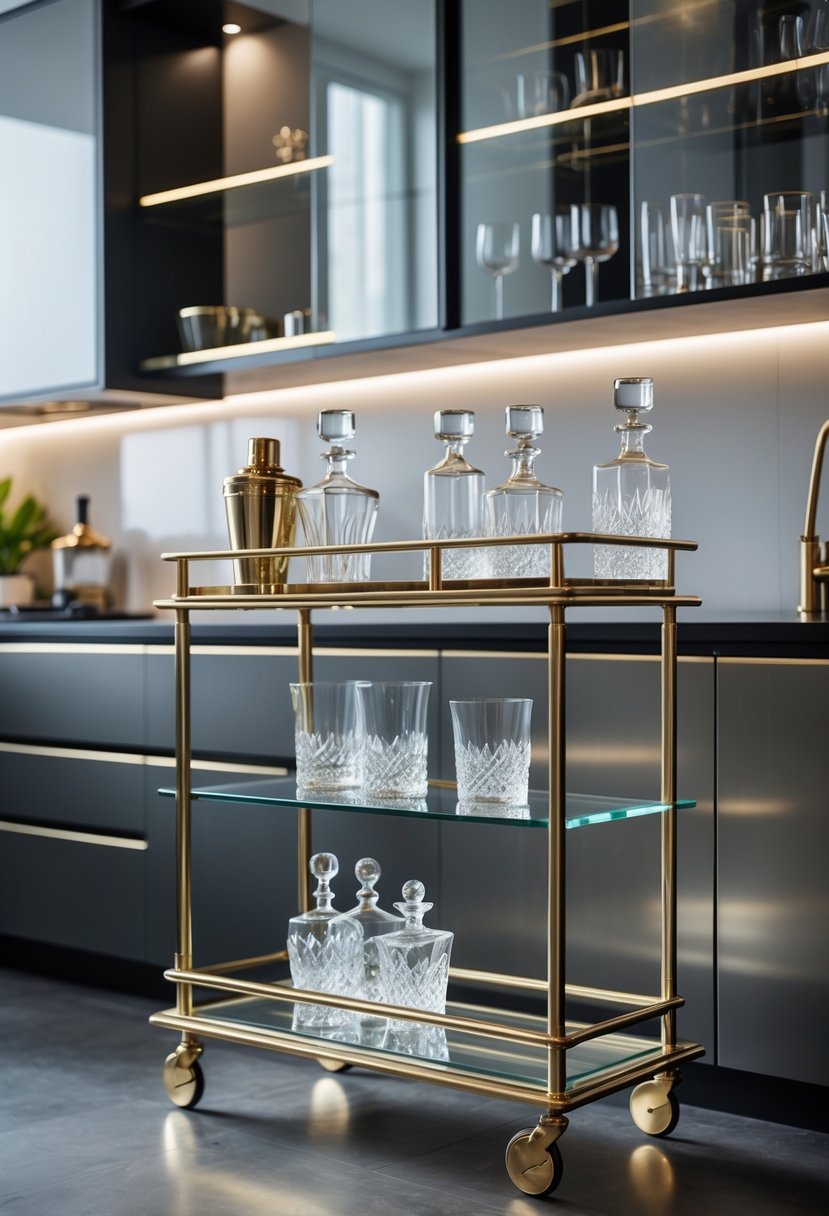
A brass and glass cocktail cart fits well in an Art Deco-inspired kitchen. Its clean lines and reflective surfaces highlight the style’s focus on geometry and shine.
Many designs include two or three tiers, often with mirrored or glass shelves. The brass frame adds warmth while keeping a sleek, structured look.
Inlaid wood flooring with geometric patterns
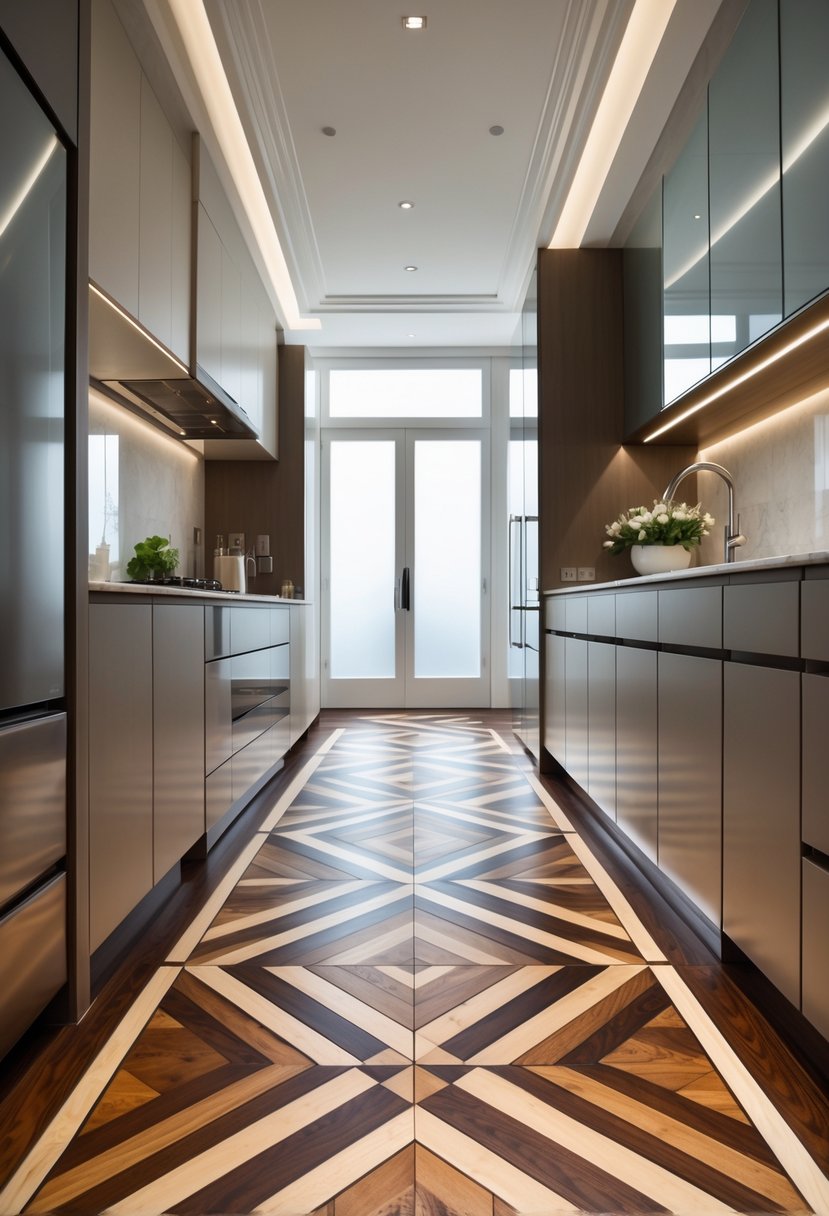
Inlaid wood flooring adds structure and detail to an Art Deco kitchen. Designers often use geometric shapes like chevrons, zigzags, or diamonds to create visual interest.
These patterns highlight contrast between light and dark wood tones. The result is a clean, ordered look that reflects classic Art Deco style.
Reflective black granite island base
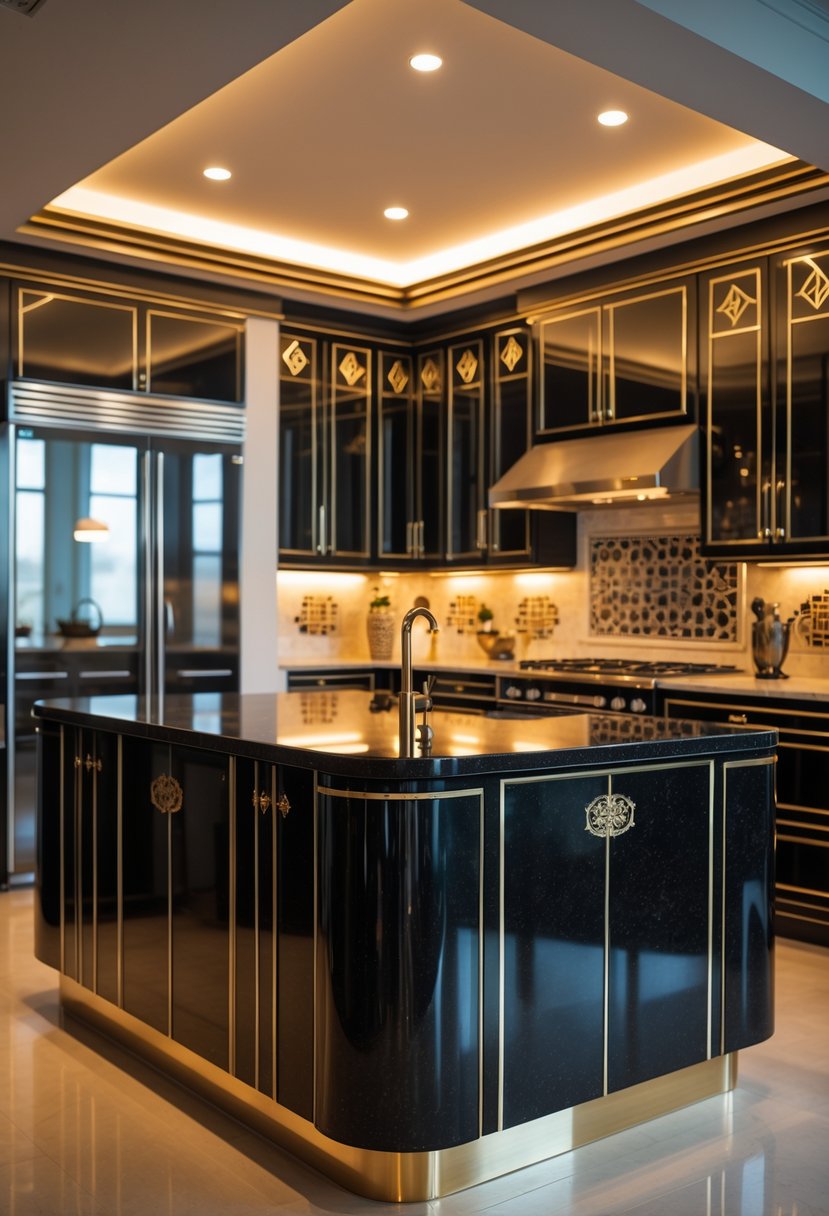
A reflective black granite island base adds depth and contrast to an Art Deco kitchen. Its polished surface highlights clean lines and geometric forms.
The glossy finish pairs well with metallic accents or mirrored panels. This creates a balanced look that feels both functional and decorative.
Black granite also offers durability, making it suitable for daily use while maintaining its sleek appearance.
Key Elements of Art Deco Revival Kitchen Décor
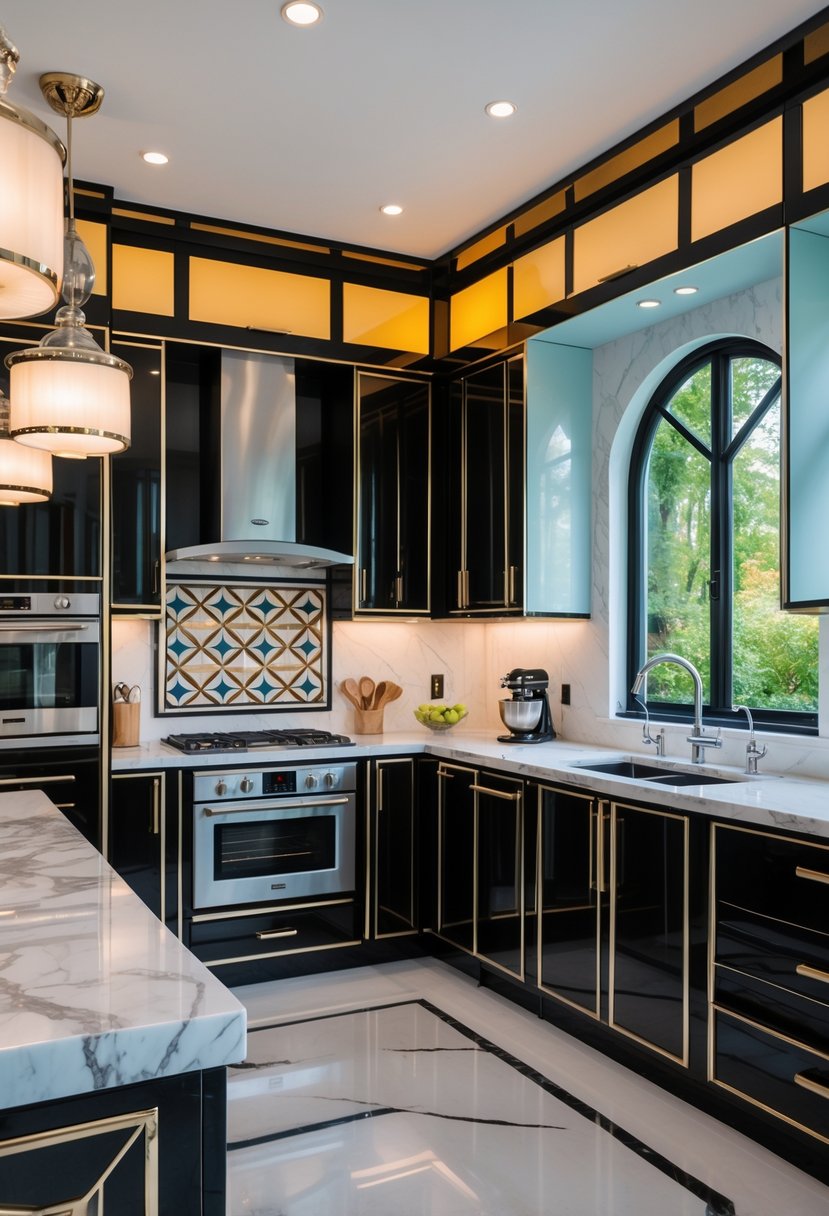
Art Deco revival kitchens rely on bold color contrasts, structured shapes, and polished finishes. Each detail works together to balance luxury with function, creating a space that feels both stylish and practical.
Signature Color Palettes
Color plays a central role in Art Deco design. Revival kitchens often use deep, saturated tones like emerald green, navy blue, or burgundy. These shades are paired with neutrals such as cream, beige, or black to create balance.
Metallic accents add contrast and brightness. Gold, brass, and chrome details appear in cabinet handles, light fixtures, or trim. This mix of bold and reflective tones keeps the space lively without overwhelming it.
A common approach is to use a two- or three-color scheme. For example:
| Main Color | Accent Color | Metallic Finish |
|---|---|---|
| Navy Blue | Cream | Brass |
| Emerald | Black | Chrome |
| Burgundy | Beige | Gold |
This structure helps maintain the clean, tailored look that defines Art Deco style.
Geometric Patterns and Motifs
Art Deco revival kitchens highlight geometry as decoration. Strong lines, symmetry, and repeated motifs appear in tile backsplashes, flooring, and even cabinet fronts.
Common patterns include chevrons, zigzags, sunbursts, and stepped forms. These designs bring rhythm to the space while reinforcing the structured, modern look.
Floor tiles often use black-and-white contrasts in checkerboard or diamond layouts. Backsplashes may feature bold geometric mosaics, sometimes with metallic inlays for extra depth.
Even small details, like etched glass cabinet doors or patterned hardware, can carry geometric themes. By repeating shapes across surfaces, the kitchen gains a cohesive and recognizable Art Deco identity.
Material Choices and Finishes
Materials in Art Deco revival kitchens focus on luxury and durability. Glossy finishes, reflective surfaces, and rich textures define the look.
Cabinetry often uses lacquered wood or high-gloss paint. Countertops may feature marble, quartz, or terrazzo for both style and strength. Metals like chrome, brass, and stainless steel appear in fixtures and trim.
Glass also plays a role. Frosted or patterned glass inserts in cabinets add texture while keeping the space open. Mirrored surfaces, used sparingly, enhance light and create a sense of depth.
Textiles and smaller details, such as leather bar stools or velvet cushions, introduce softness to balance the harder surfaces. This mix of materials ensures the kitchen feels elegant but also practical for everyday use.
Integrating Art Deco Influences Into Modern Kitchens
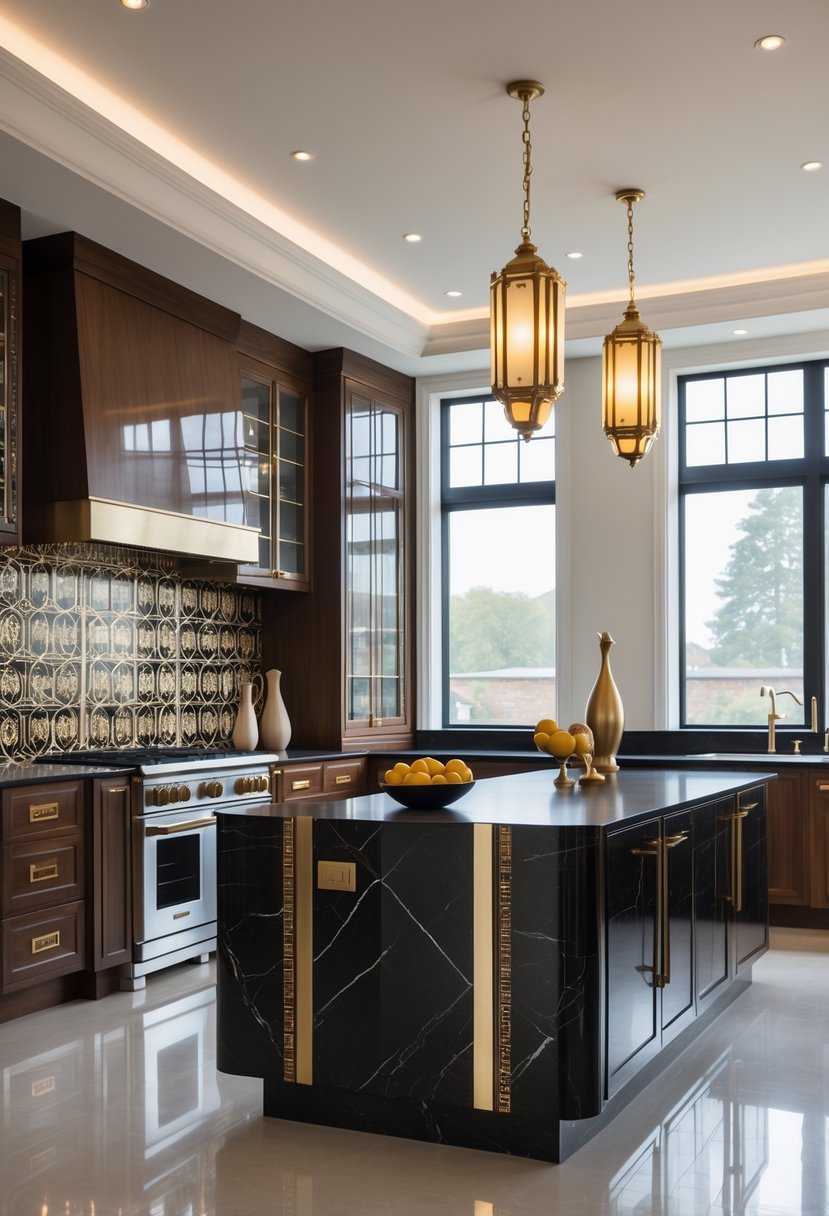
Art Deco elements can enhance a kitchen with bold geometry, rich finishes, and carefully chosen details. The right balance of old and new creates a space that feels both functional and stylish.
Blending Vintage and Contemporary Styles
A modern kitchen can adopt Art Deco influences through geometric forms and streamlined cabinetry. Flat-front cabinets with subtle grooves or inlaid patterns echo the 1920s style while maintaining today’s clean lines. Pairing glossy finishes with matte surfaces also adds contrast without overwhelming the space.
Color plays a major role. Deep tones like navy, emerald, and charcoal often appear in Art Deco design. When combined with neutral walls or light countertops, these colors create a balanced and sophisticated look.
Flooring and backsplashes are another opportunity to merge styles. Chevron tiles, black-and-white checkerboard patterns, or marble with bold veining introduce vintage character while remaining practical in a modern kitchen.
To keep the design cohesive, homeowners often limit ornate details and instead focus on one or two strong Art Deco features. This prevents the space from feeling too themed and ensures everyday usability.
Lighting and Hardware Selection
Lighting and hardware define much of the Art Deco mood. Pendant lights with frosted glass, chrome, or brass finishes bring in period character while still fitting into modern layouts. Geometric or tiered light fixtures also reflect the style’s architectural influence.
Cabinet hardware can make a subtle but important impact. Slim bar pulls in polished nickel, rounded knobs in gold, or blackened metal handles all suit the Art Deco palette. Mixing metals should be done carefully—usually sticking to two finishes keeps the design unified.
Even small accents, such as a mirrored backsplash panel or metallic trim on an island, reinforce the glamour associated with the era. When paired with efficient LED lighting and durable finishes, these details create a kitchen that feels both timeless and up-to-date.
Learn more about Art Deco style from Better Homes & Gardens.


