
White Living Room Ideas 2026: 22 Elegant Designs for a Bright, Modern Space
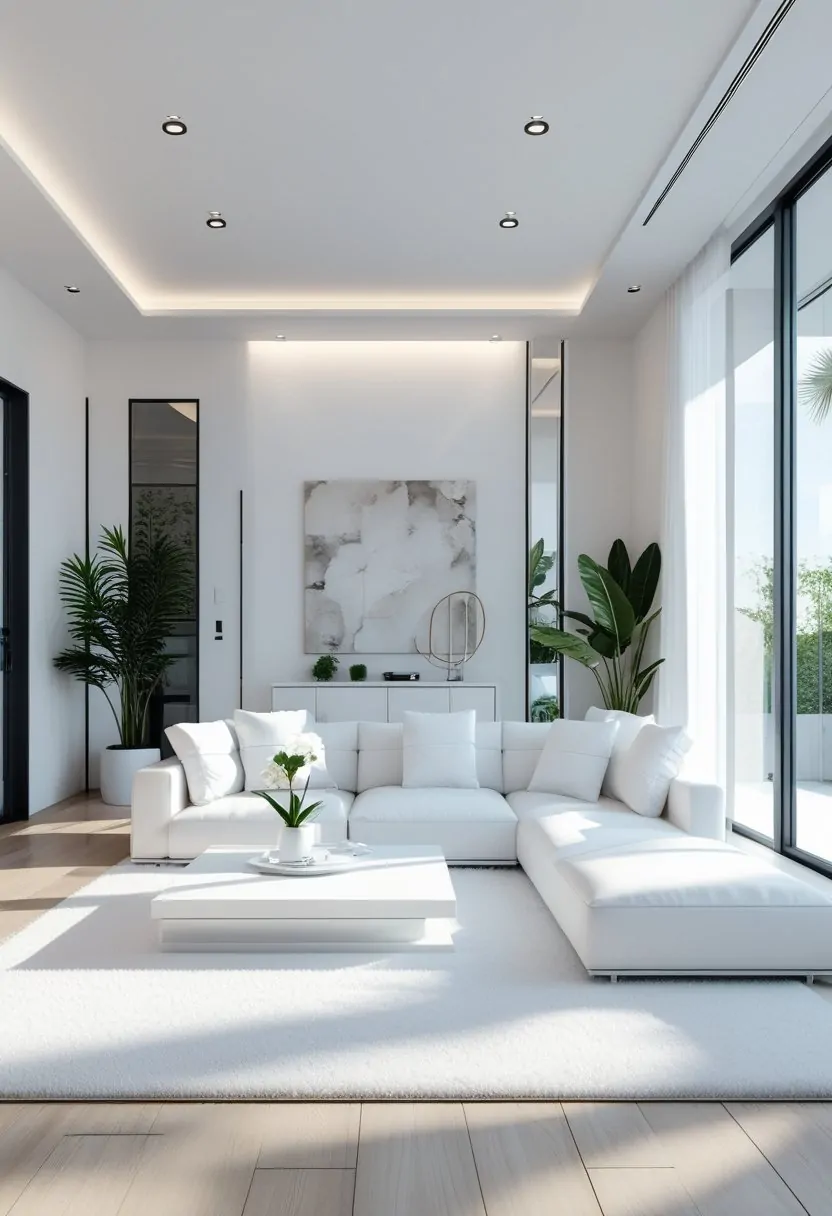
White living rooms in 2026 focus on calm, light-filled spaces that feel both functional and inviting. Clean lines, soft textures, and layered materials shape a balanced look that works in homes of any size or style. This approach helps create a timeless space that feels comfortable, modern, and easy to personalize.
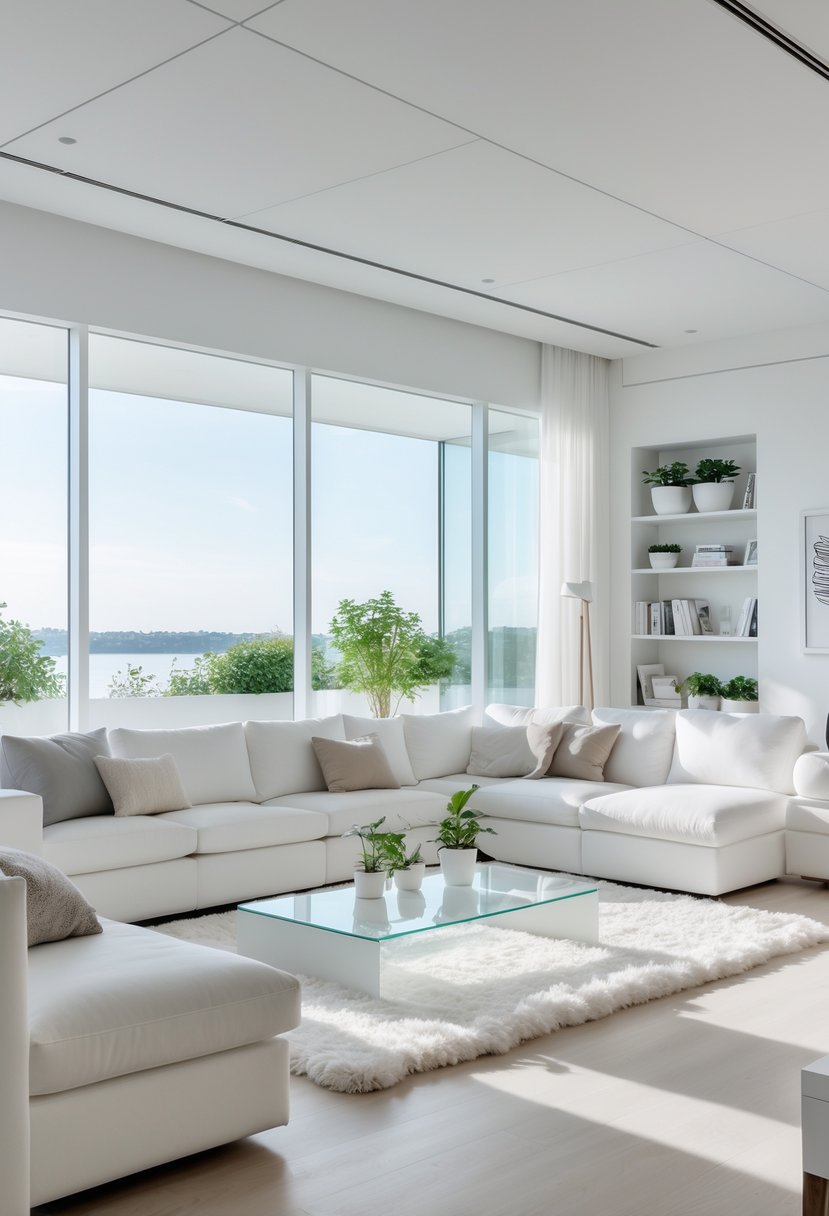
Design trends highlight natural light, subtle contrast, and simple details that keep the space open and warm. From soft fabrics to natural wood and metallic accents, every element supports a sense of harmony and ease. This article explores practical ways to use white as the foundation for a stylish and welcoming living room.
Layer soft white textures with plush rugs and throw pillows
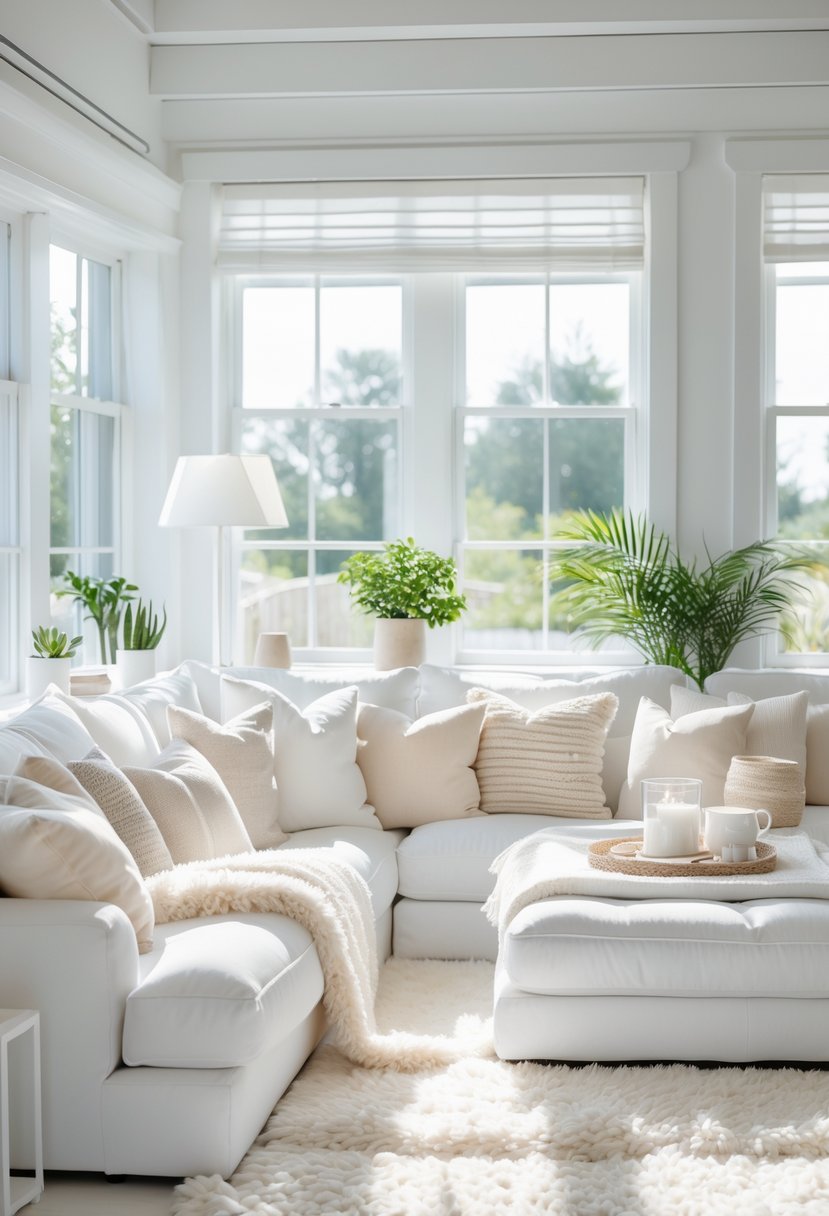
They can create a calm and inviting space by mixing soft white textures.
A plush rug adds warmth underfoot, while throw pillows in different fabrics bring depth to a white sofa.
Using materials like cotton, linen, or faux fur keeps the look cohesive yet comfortable.
Incorporate natural wood accents for warmth
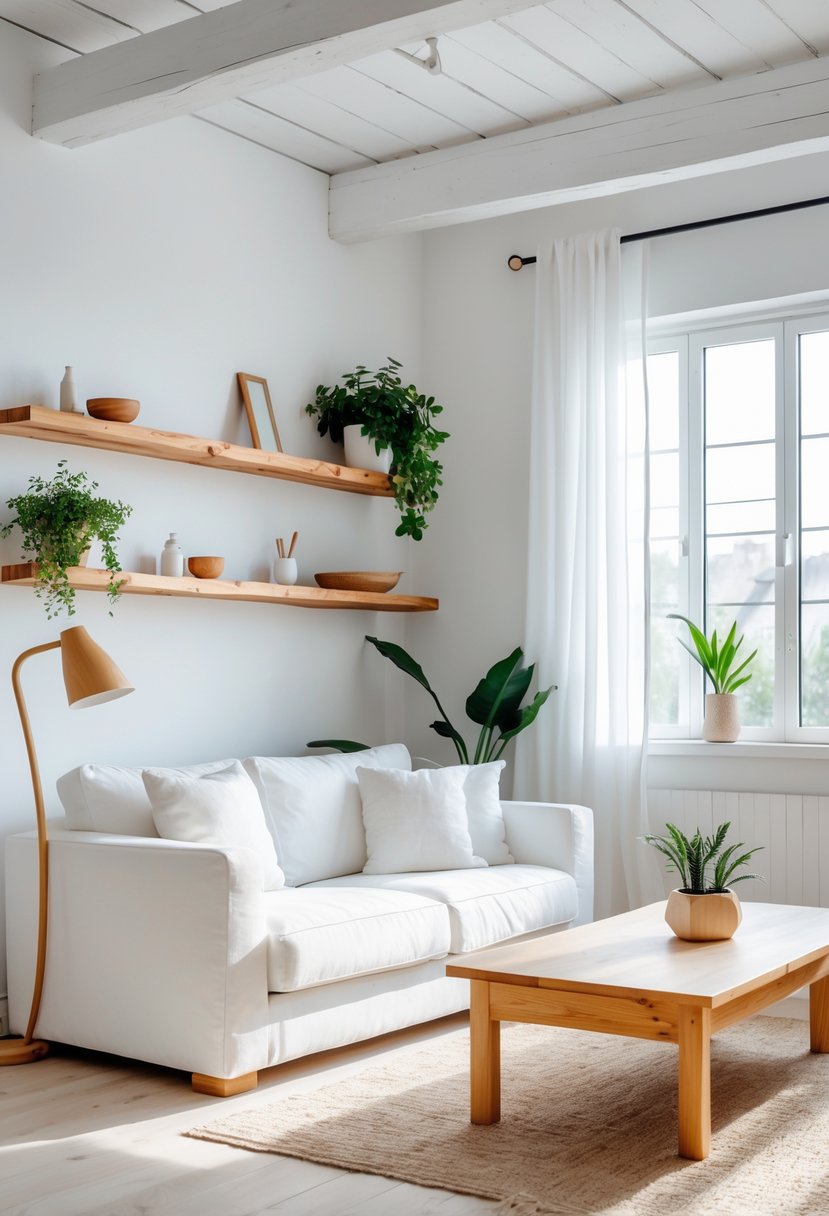
Natural wood accents add warmth and texture to a white living room.
They can appear through furniture, wall panels, or small decor pieces like trays and frames.
Light oak or walnut tones pair well with white walls, creating a balanced look that feels inviting and timeless.
Use sheer white curtains to maximize natural light
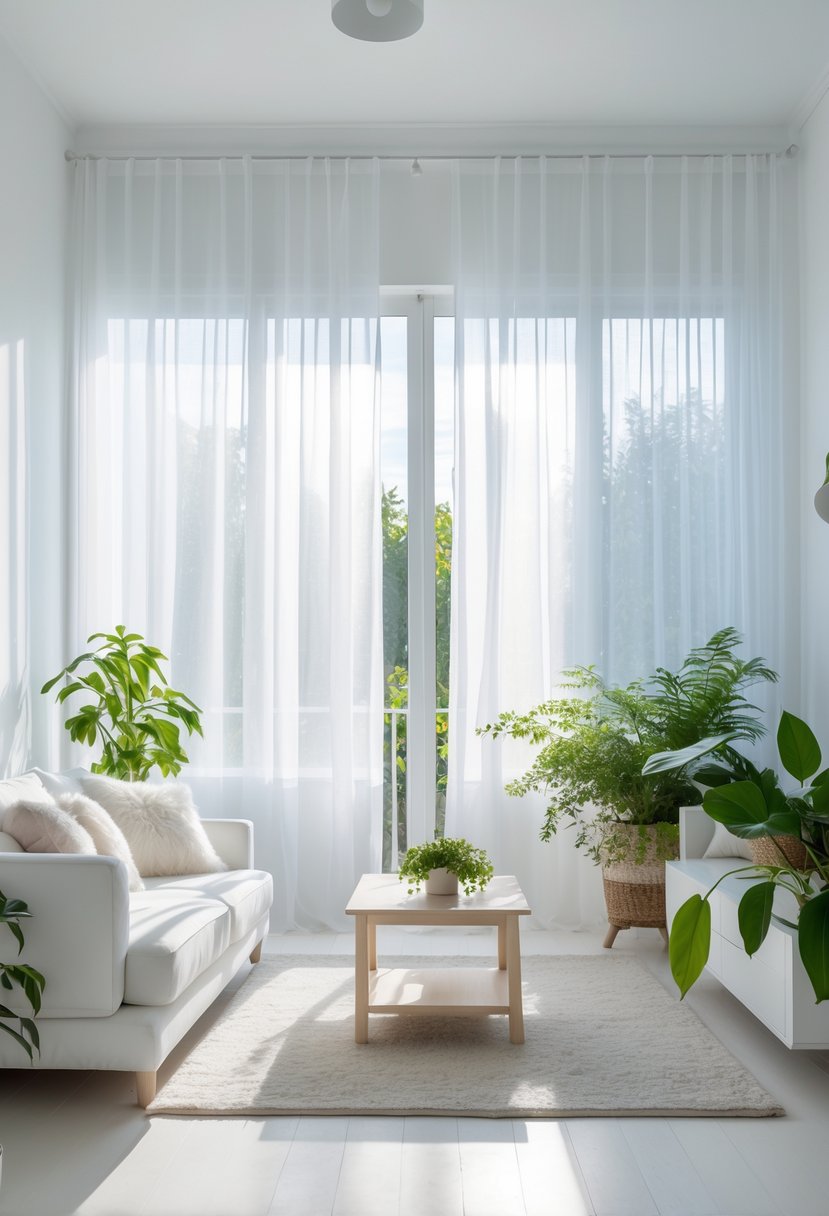
Sheer white curtains let sunlight pass through while keeping privacy.
Their light fabric softens brightness and spreads it evenly across the room.
When hung from floor to ceiling, they make walls appear taller and the space more open.
They pair well with neutral tones and simple furniture for a calm, bright look.
Add metallic accents like gold or silver lamps
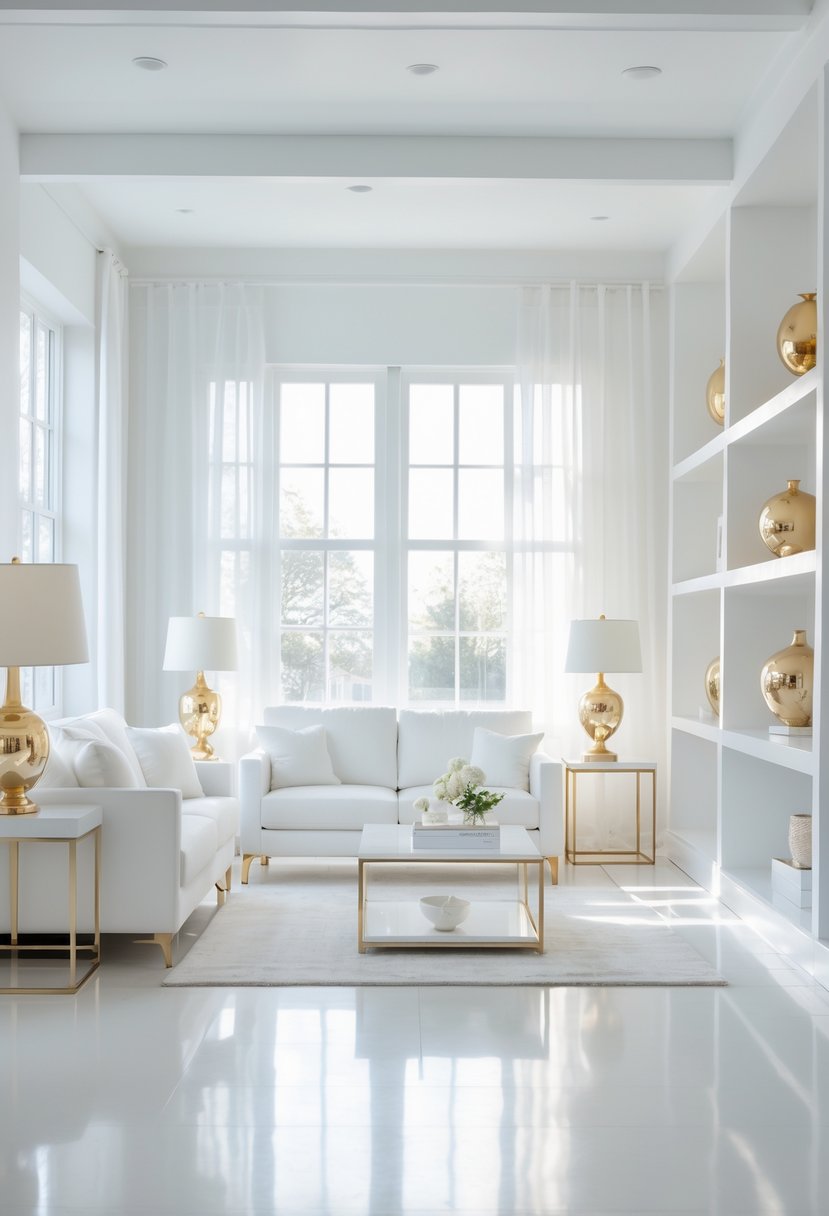
Metallic accents give a white living room a refined and balanced look.
Gold or silver lamps add gentle shine without overpowering the space.
They reflect light, highlight textures, and pair well with neutral tones, making the room feel brighter and more cohesive.
Include green plants for a pop of color
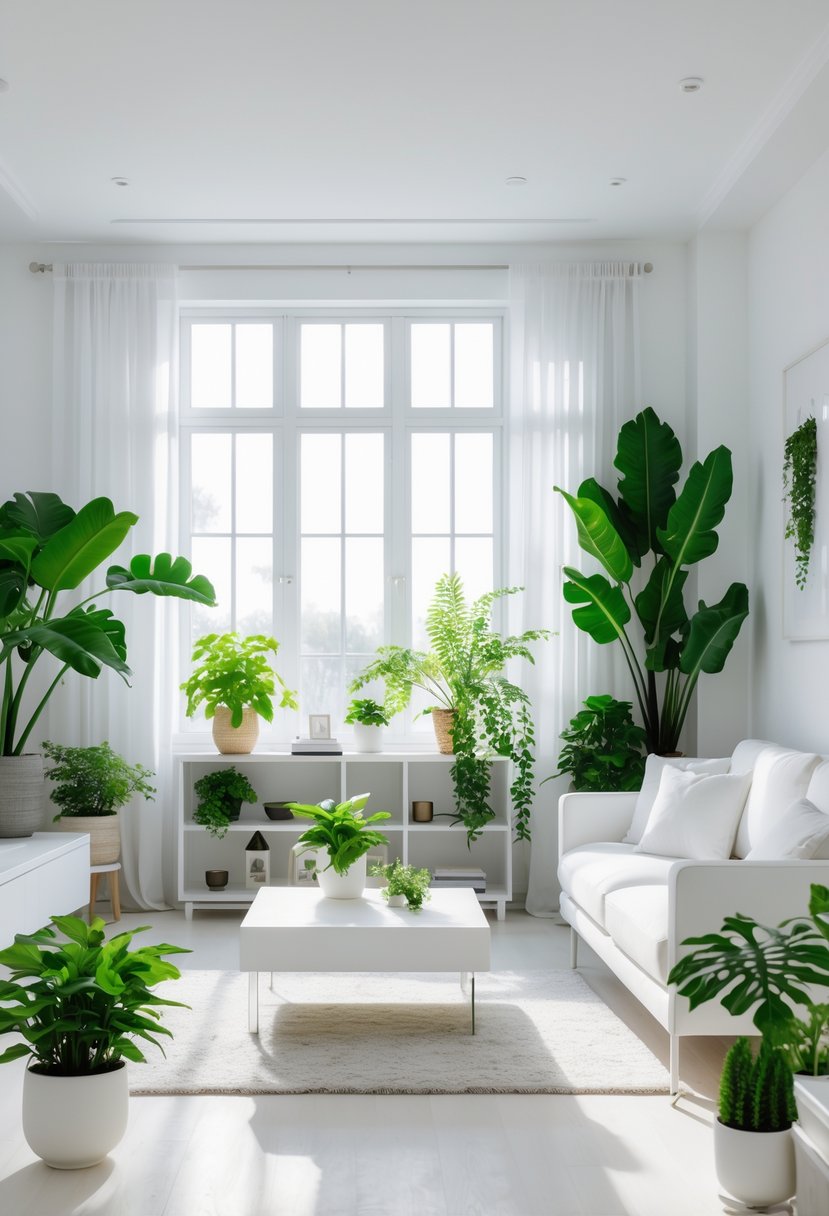
Green plants bring life and balance to a white living room. Their natural tones contrast softly with white walls and furniture.
They also add texture and depth without overwhelming the space. Even a few potted plants or hanging vines can make the room feel fresh and inviting.
Choose white furniture with clean lines
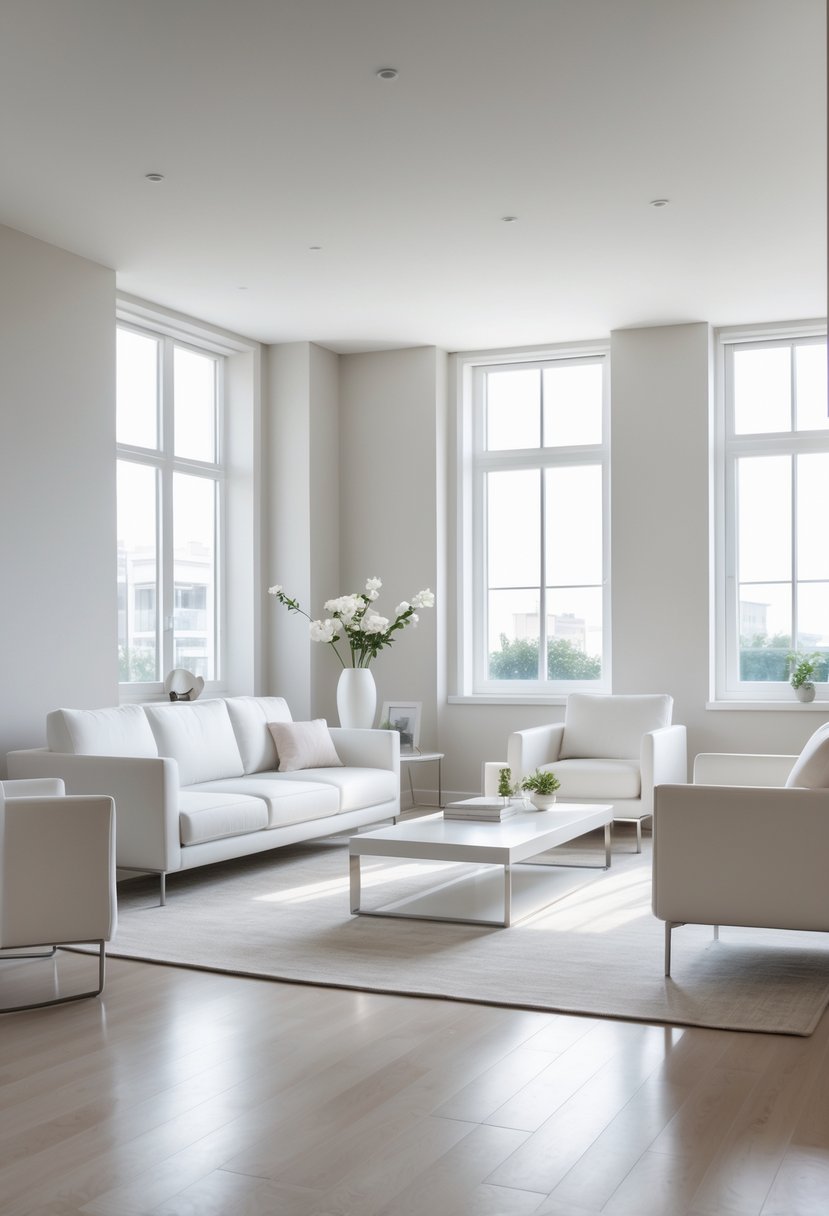
White furniture with clean lines creates a calm and modern look. It helps a living room feel open and organized.
Simple shapes and smooth finishes keep the space from feeling crowded. This style works well with both minimalist and contemporary designs.
They can pair these pieces with soft textures or light wood accents for balance.
Mix matte and glossy white finishes
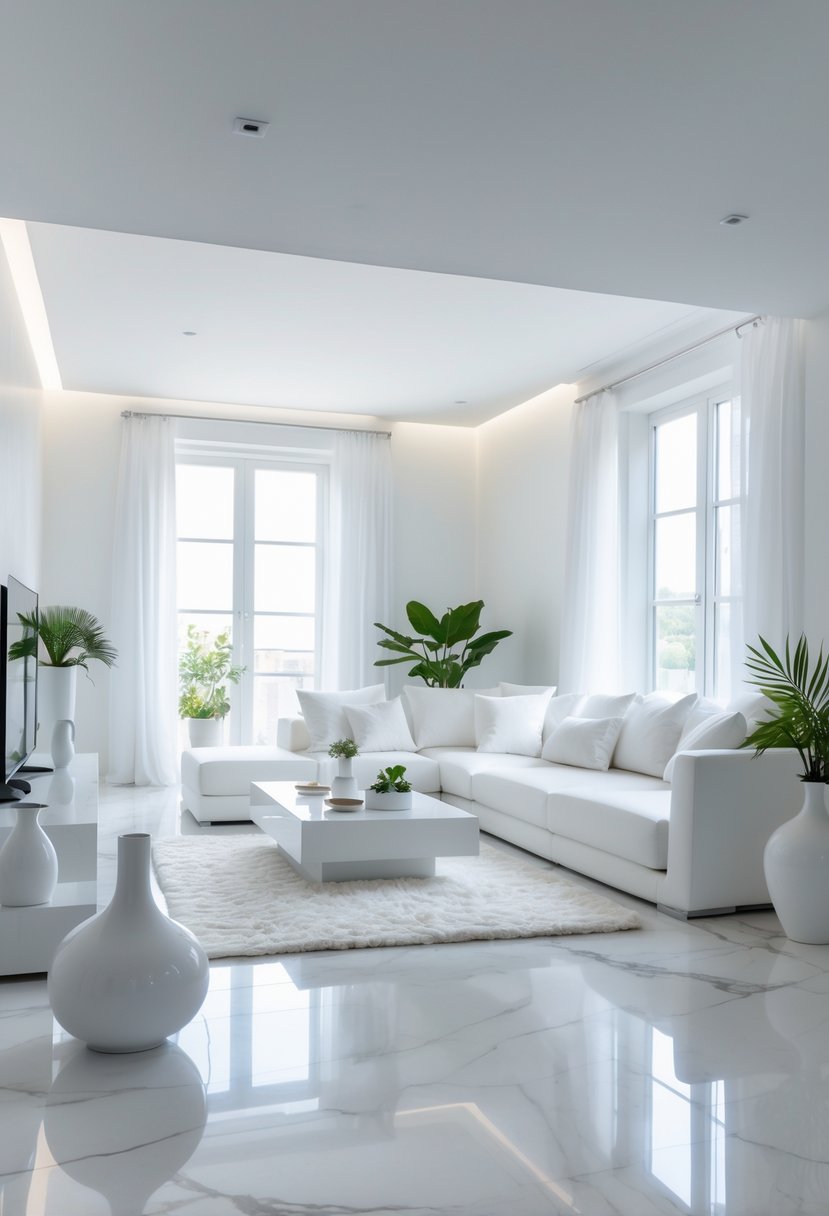
Mixing matte and glossy white finishes adds depth and balance to a living room.
They can pair matte walls with glossy furniture or decor to create gentle contrast.
This combination reflects light differently, making the space feel layered and visually interesting without adding more color.
Use a white marble coffee table
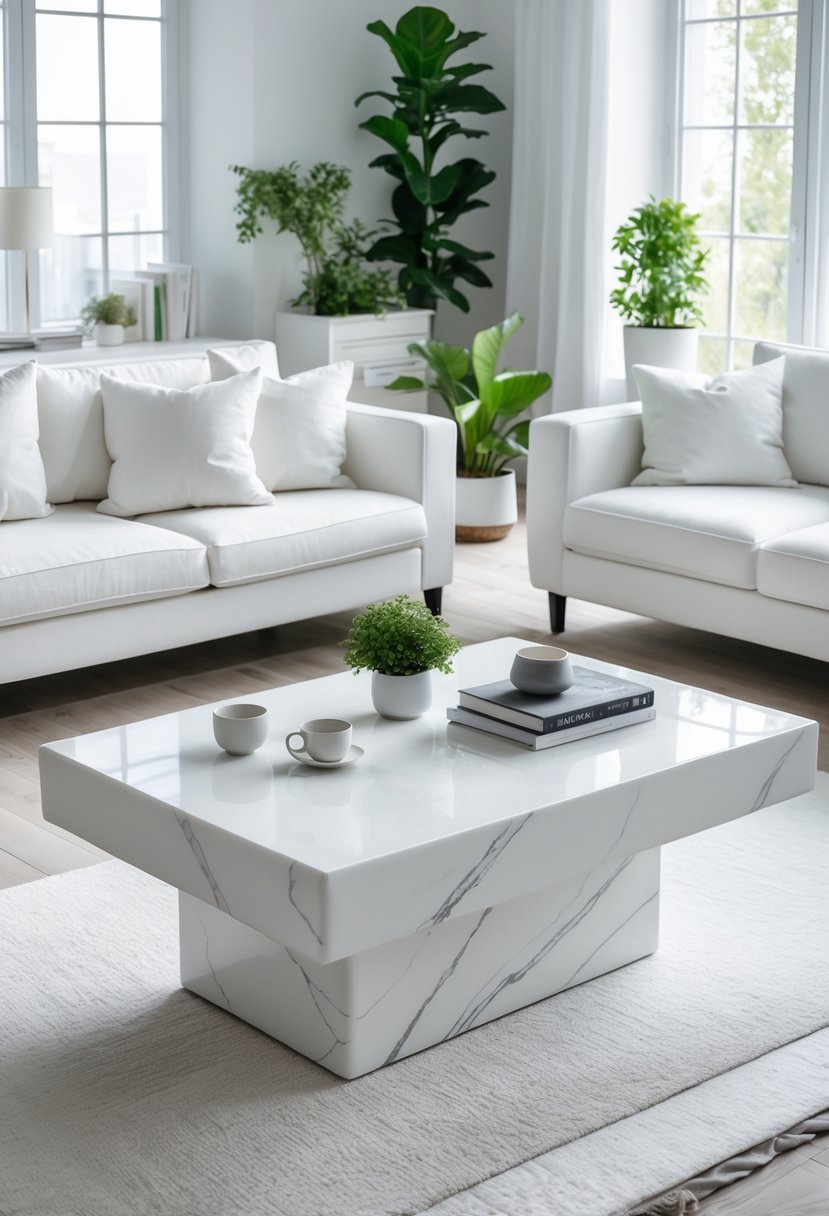
A white marble coffee table adds a clean and timeless look to a living room. Its smooth surface reflects light, helping the space feel open and bright.
They can pair it with neutral or textured decor for balance. Simple accessories, like a small plant or book stack, keep the design uncluttered.
Incorporate subtle beige or cream tones to avoid sterility
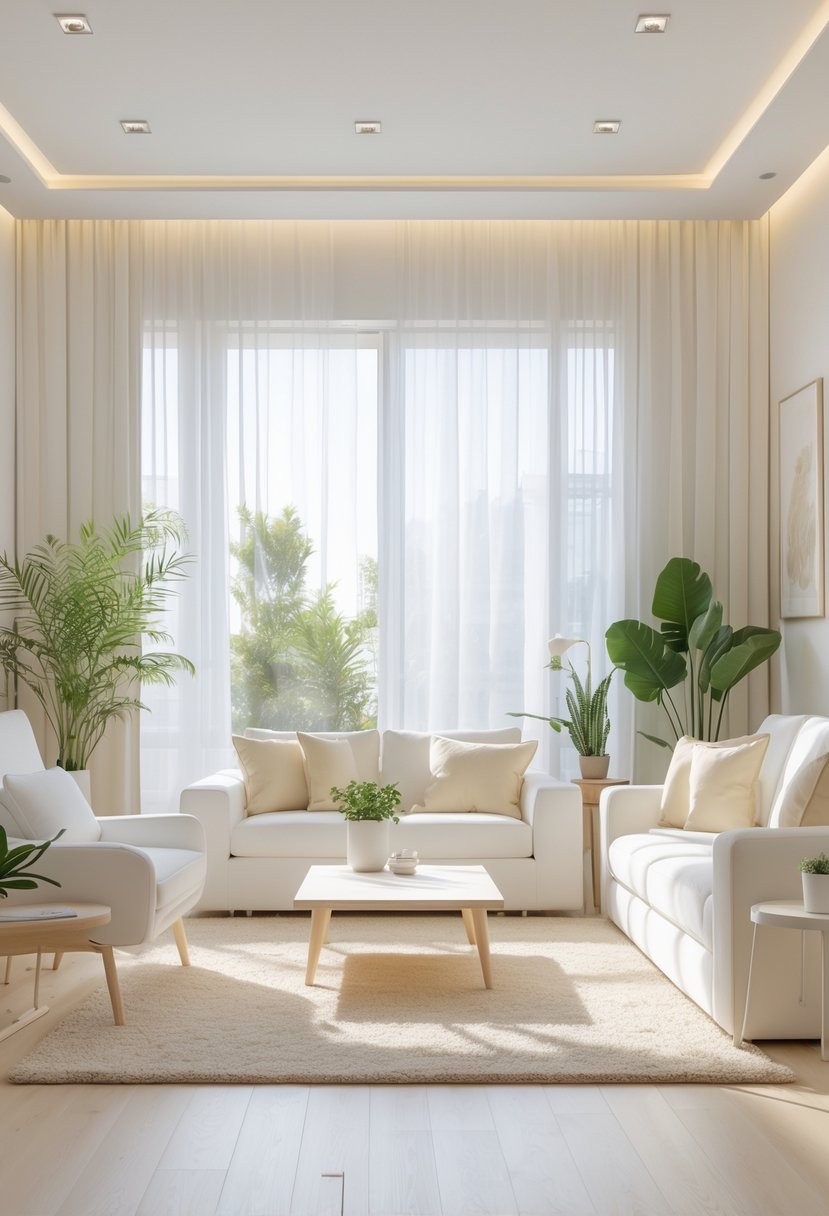
Soft beige or cream accents can warm up a white living room and make it feel more inviting. These tones add depth without overpowering the clean look of white.
They work well in textiles, rugs, or wall paint, creating a calm, balanced atmosphere that feels lived-in yet refined.
Add black or dark gray accents for contrast
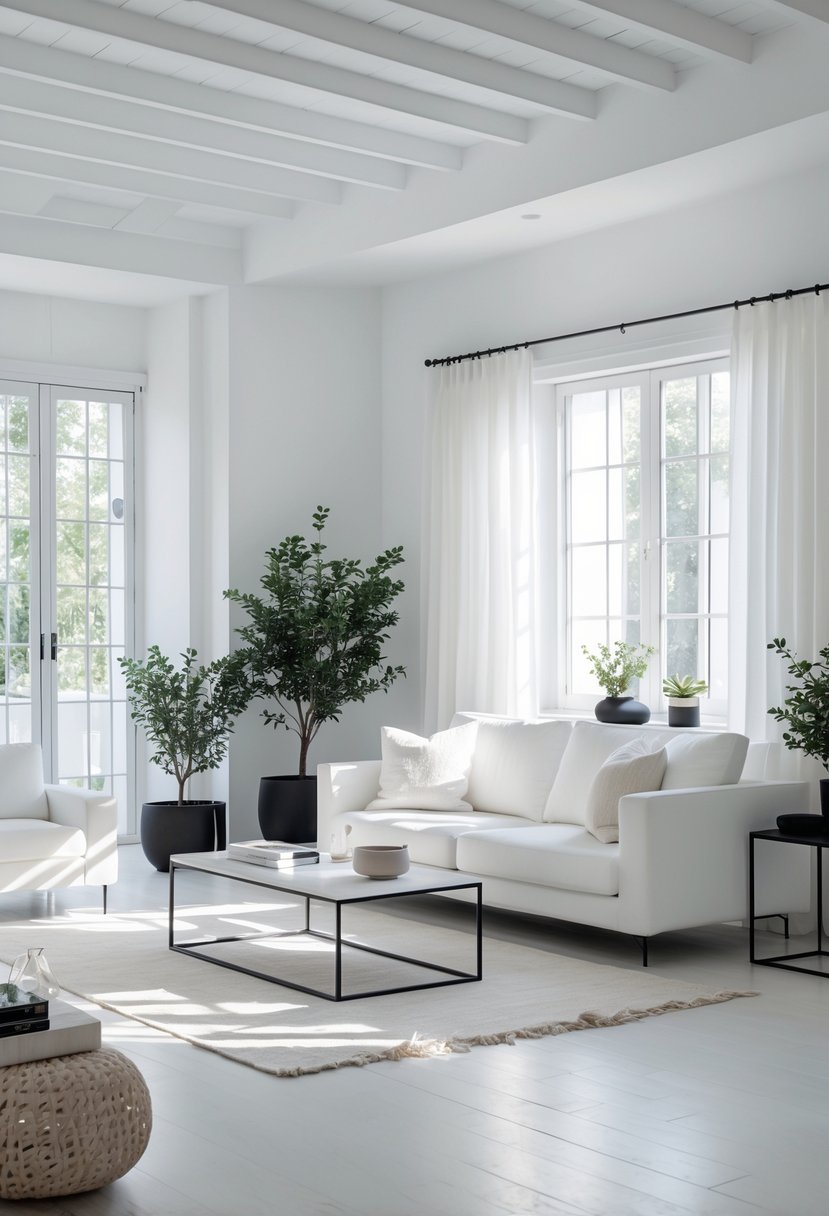
Black or dark gray accents help define a white living room and prevent it from feeling flat.
They can appear in furniture frames, light fixtures, or picture frames, adding structure and depth.
Even small touches, like a charcoal throw pillow or a black vase, create a clear and balanced look.
Install recessed lighting for an even glow
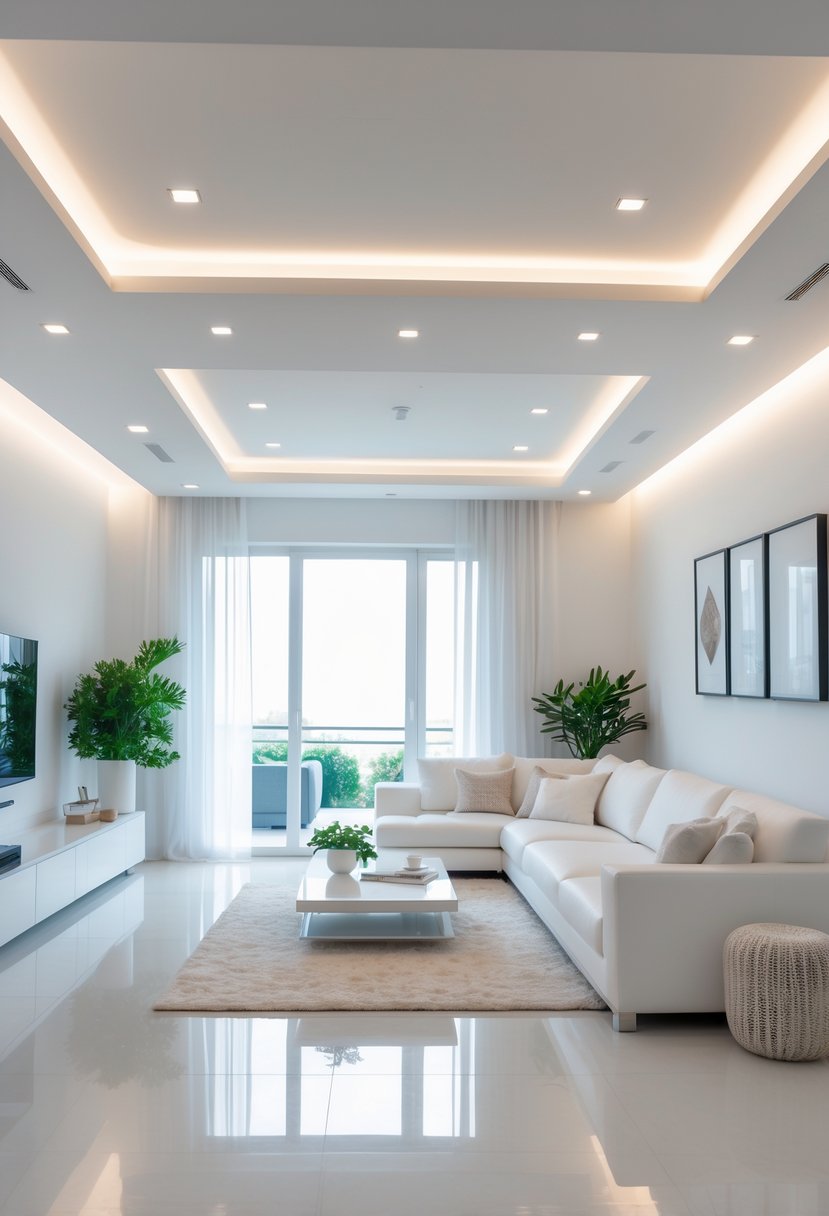
Recessed lighting helps create a clean and balanced look in a white living room. It spreads light evenly across the space without drawing attention to the fixtures.
When placed strategically, these lights reduce shadows and highlight textures or artwork. Dimmable options let homeowners adjust brightness for comfort and mood.
Use whitewashed brick or stone walls
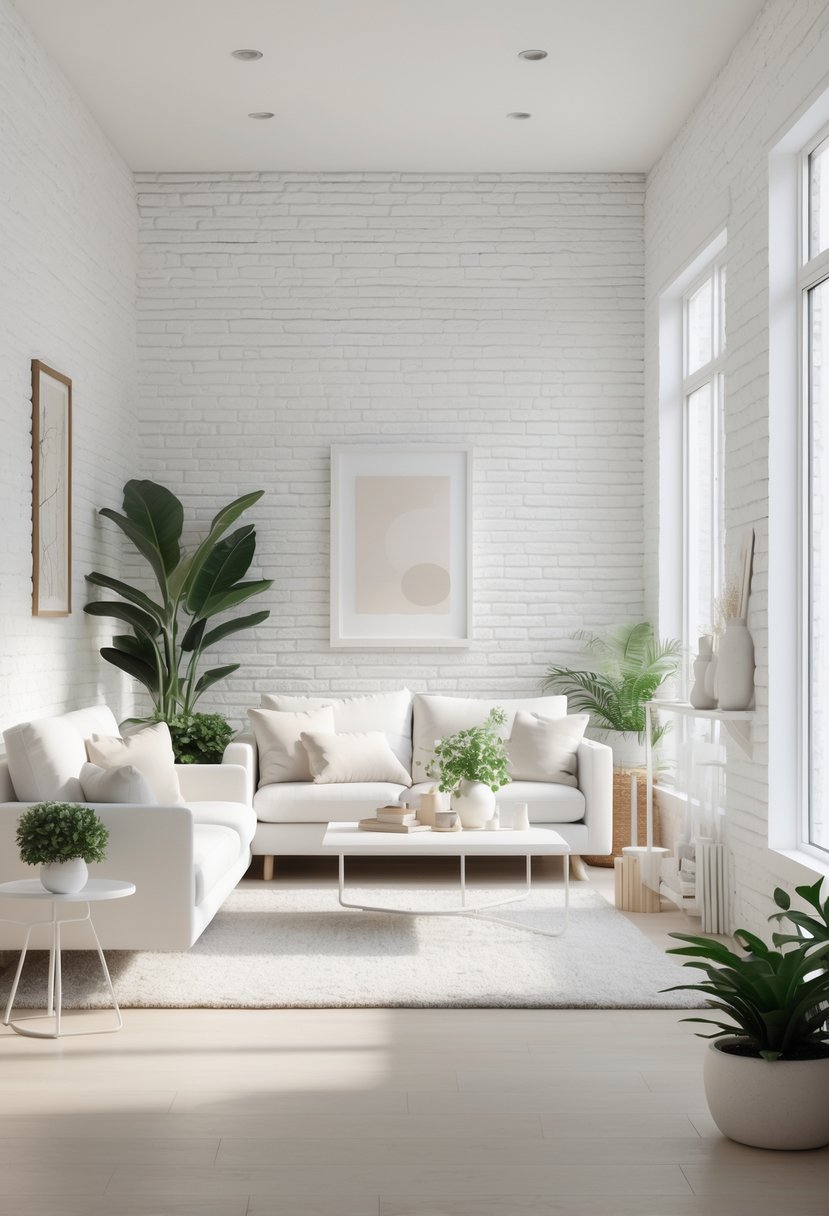
Whitewashed brick or stone walls add quiet texture and depth without overwhelming a white living room.
They create a soft, natural backdrop that works well with both modern and rustic styles.
Their subtle color variation keeps the space from feeling flat while maintaining a clean, bright look.
Display minimalist white artwork
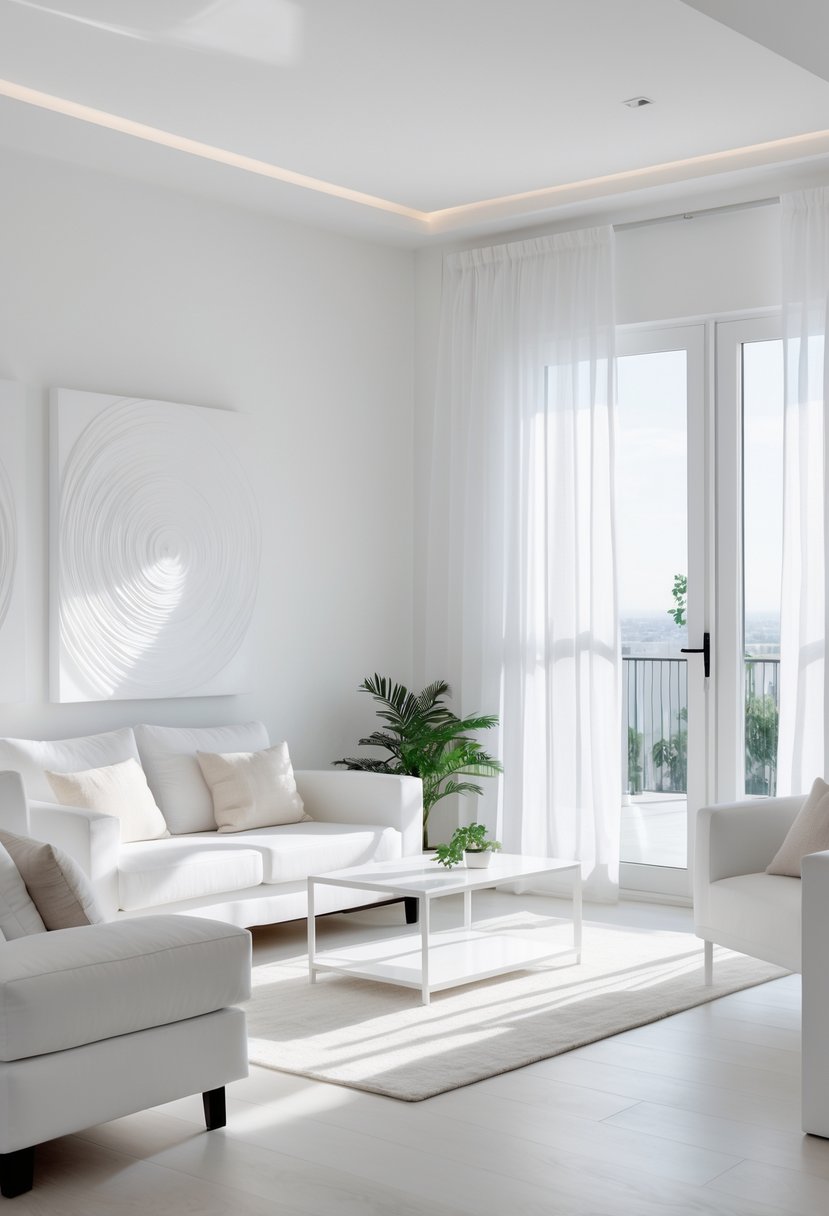
Minimalist white artwork blends seamlessly into a white living room while adding quiet visual interest.
They can choose pieces with simple shapes, clean lines, or subtle textures to keep the room balanced.
Framing the artwork in light wood or thin metal helps maintain the minimalist look without drawing too much attention.
Incorporate woven baskets for texture
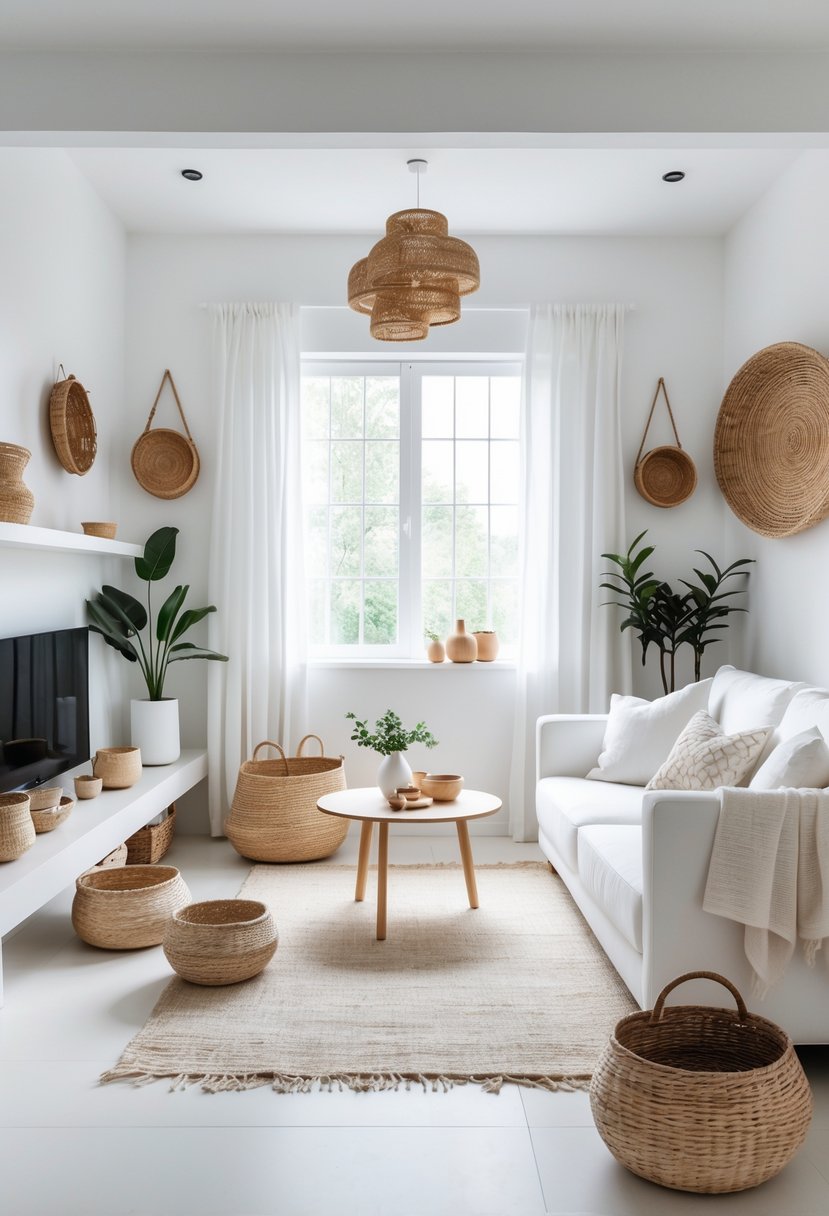
Woven baskets add natural texture and warmth to a white living room. Their earthy tones balance the brightness of white walls and furniture.
They work well as storage for blankets, magazines, or plants. Placing them on shelves or beside seating areas keeps the space tidy and visually interesting.
Add a white slipcovered sofa
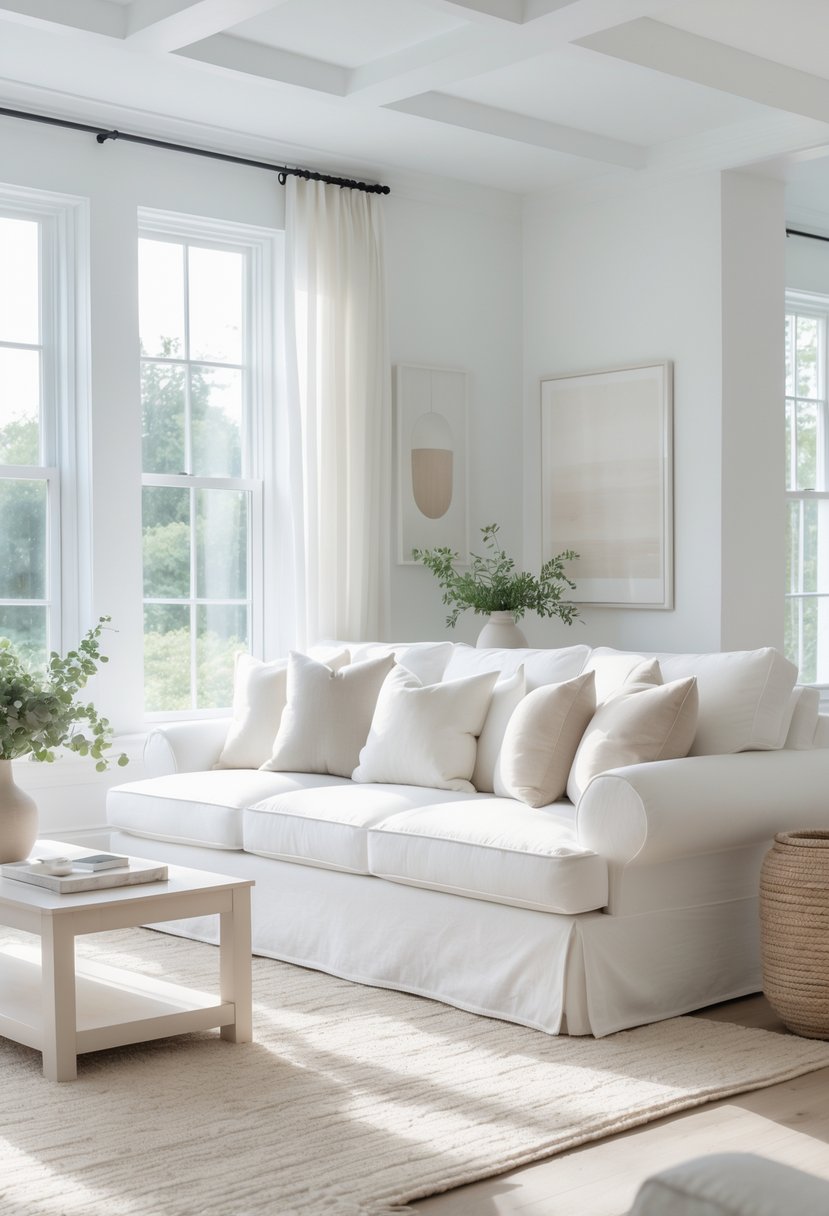
A white slipcovered sofa adds a clean and relaxed look to any living room. Its simple design blends easily with modern or classic interiors.
The removable cover makes it practical, allowing easy cleaning and updates. This feature helps maintain a fresh, bright appearance over time.
They can pair it with soft textures or neutral accents for a calm, balanced space.
Use layered white bedding for adjoining spaces
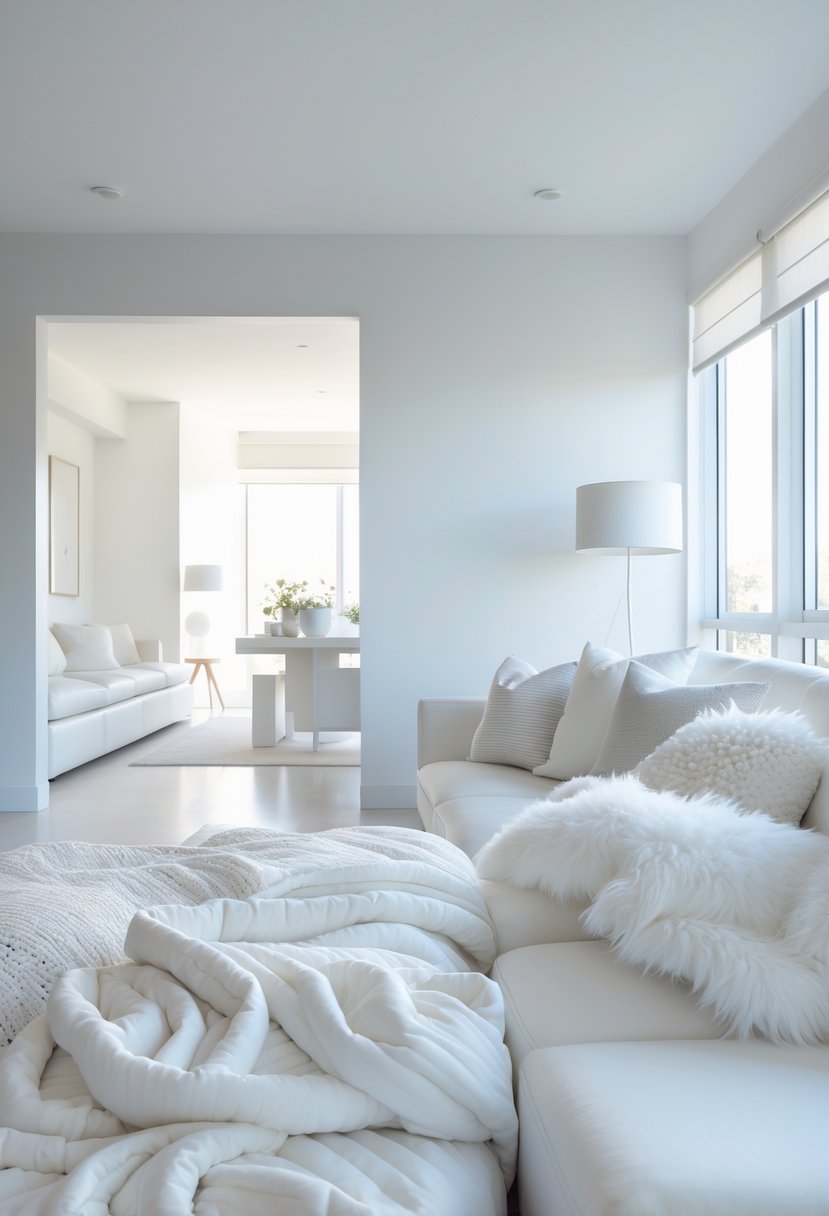
Layered white bedding helps adjoining spaces feel consistent and calm. It connects a bedroom or guest area to a white living room through shared tones and textures.
They can mix quilts, throws, and pillows in different fabrics to add depth without breaking the clean look.
Place a white shag rug for softness
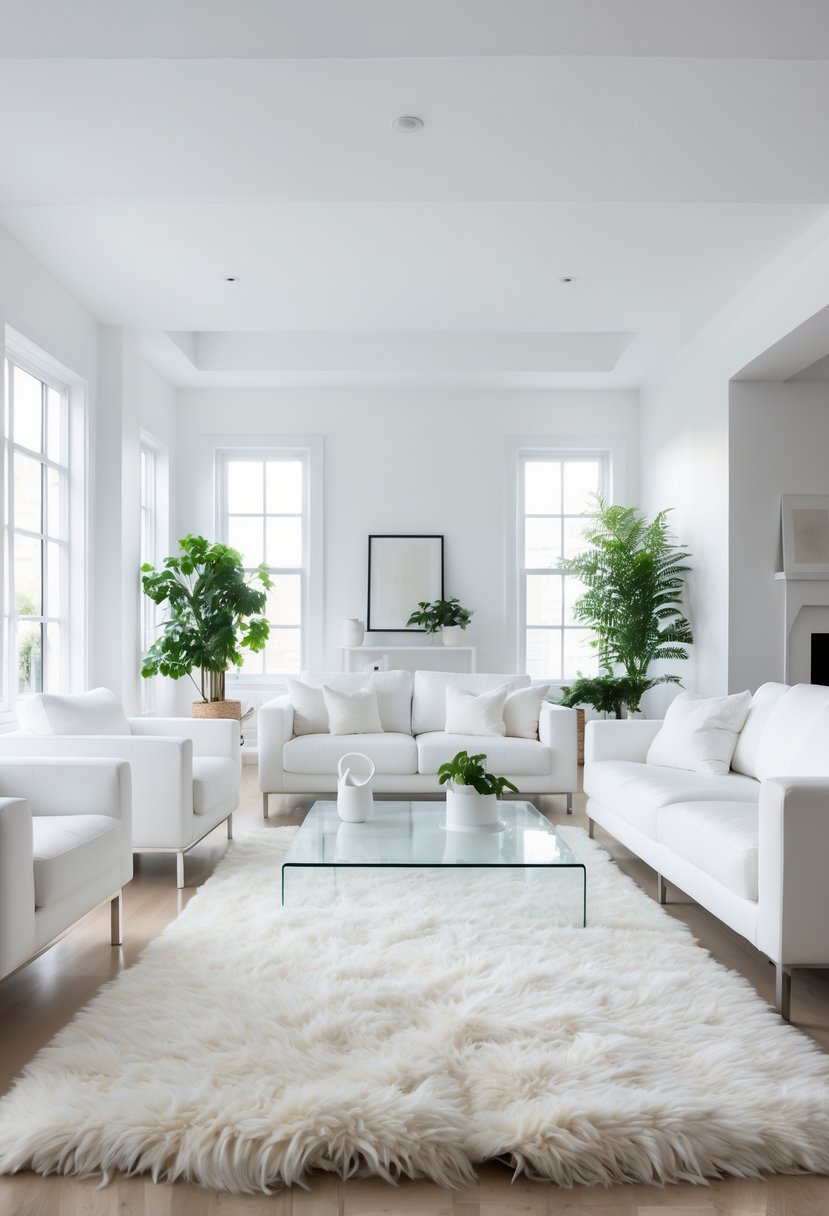
A white shag rug adds gentle texture to a living room. Its thick pile softens hard flooring and creates a comfortable surface underfoot.
They can use it to balance sleek furniture or brighten darker tones. The rug’s neutral color keeps the space calm while still feeling warm and inviting.
Incorporate glass furniture to maintain openness
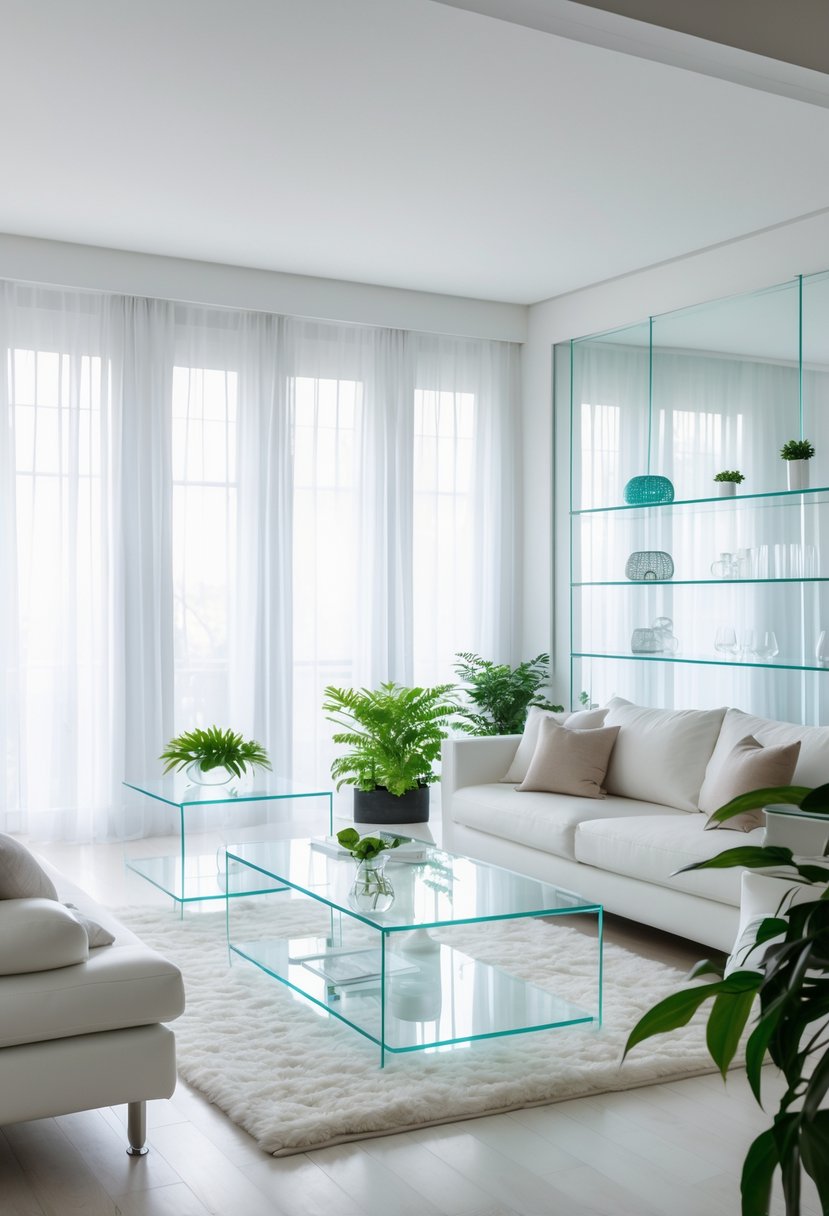
Glass furniture helps a white living room feel bright and uncluttered.
Transparent tables, shelves, or partitions allow light to pass through, making the space appear larger.
They pair well with white walls and neutral tones, keeping the room airy while adding a modern, simple look.
Use white paneled walls for architectural interest
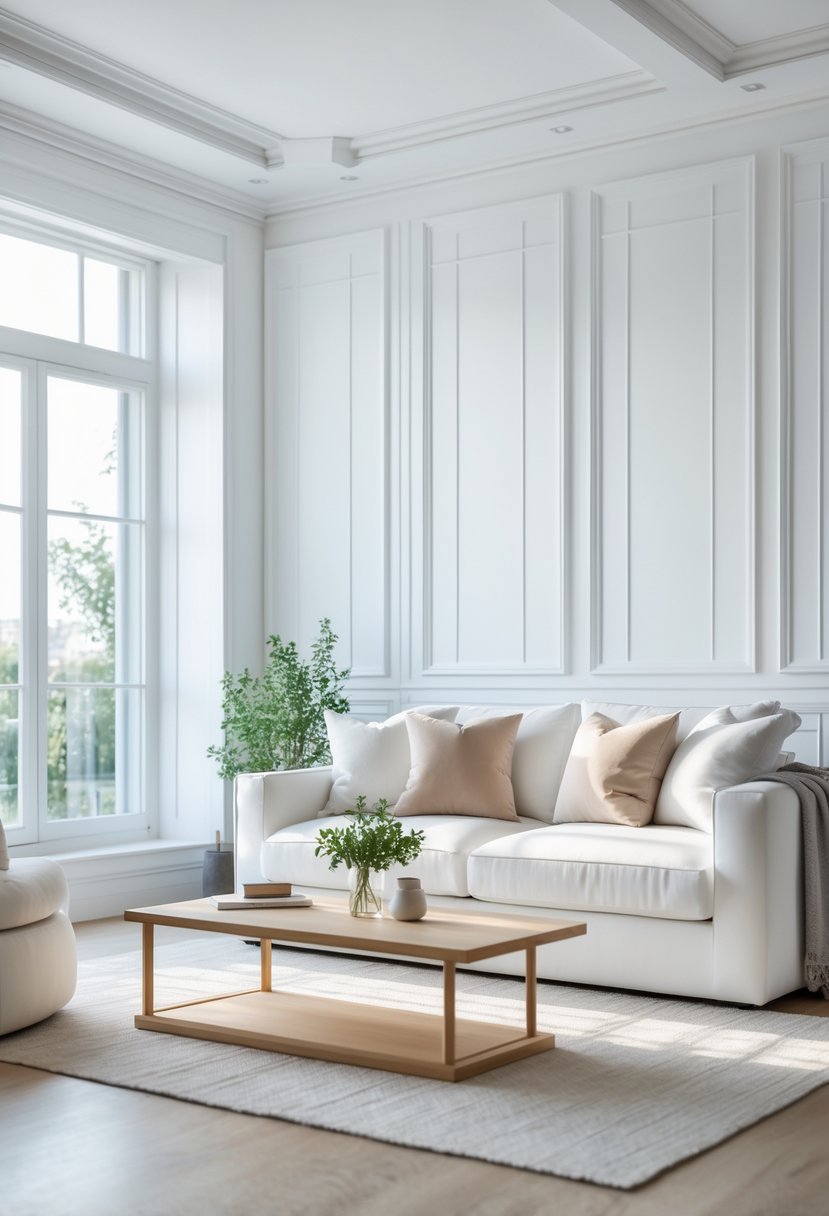
White paneled walls add depth and structure to a living room without overwhelming the space.
They create subtle shadows and texture that keep the room from feeling flat.
Whether using shiplap, beadboard, or geometric panels, the design stays clean while adding visual interest and a sense of craftsmanship.
Add a statement white chandelier
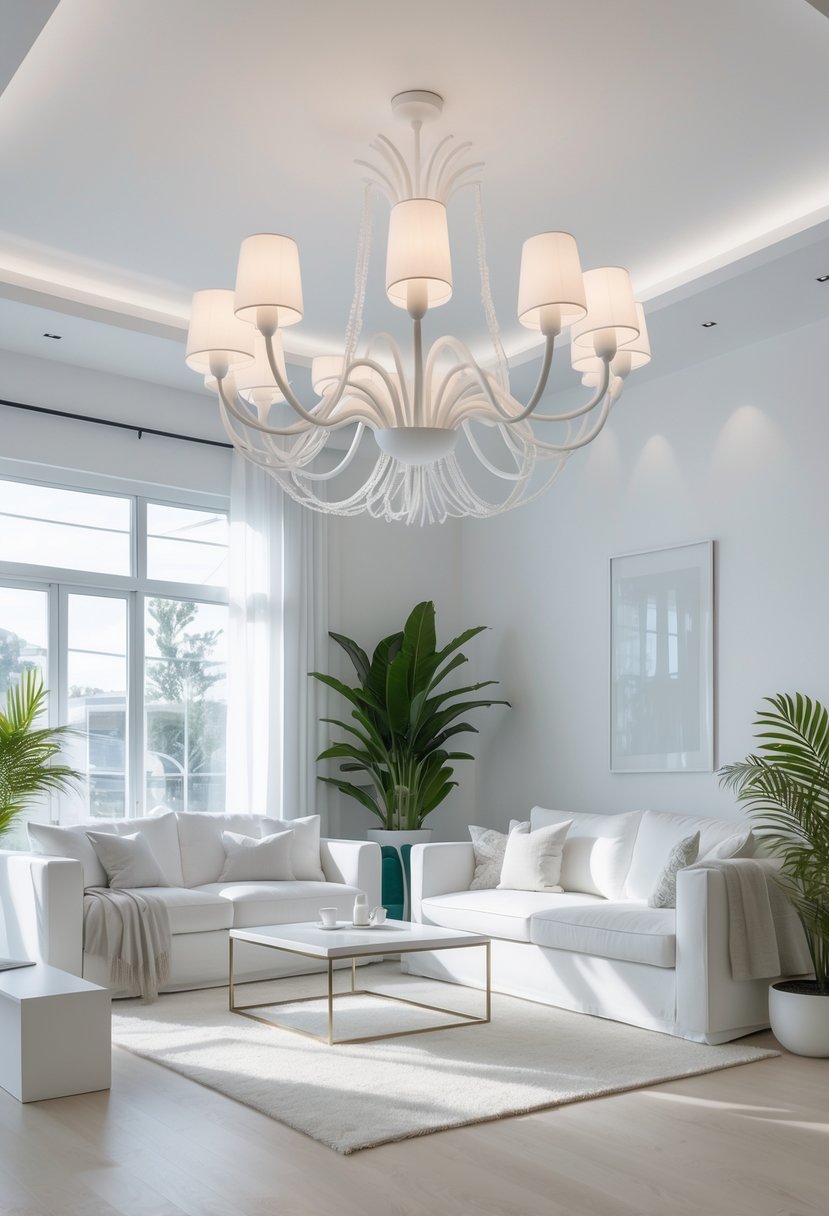
A white chandelier can anchor a living room and draw attention to the ceiling. It adds shape and texture without overpowering the space.
Designers in 2026 favor clean lines, matte finishes, and subtle metallic accents. These details keep the look modern while maintaining a calm, cohesive atmosphere.
Include white ceramic vases and decor pieces
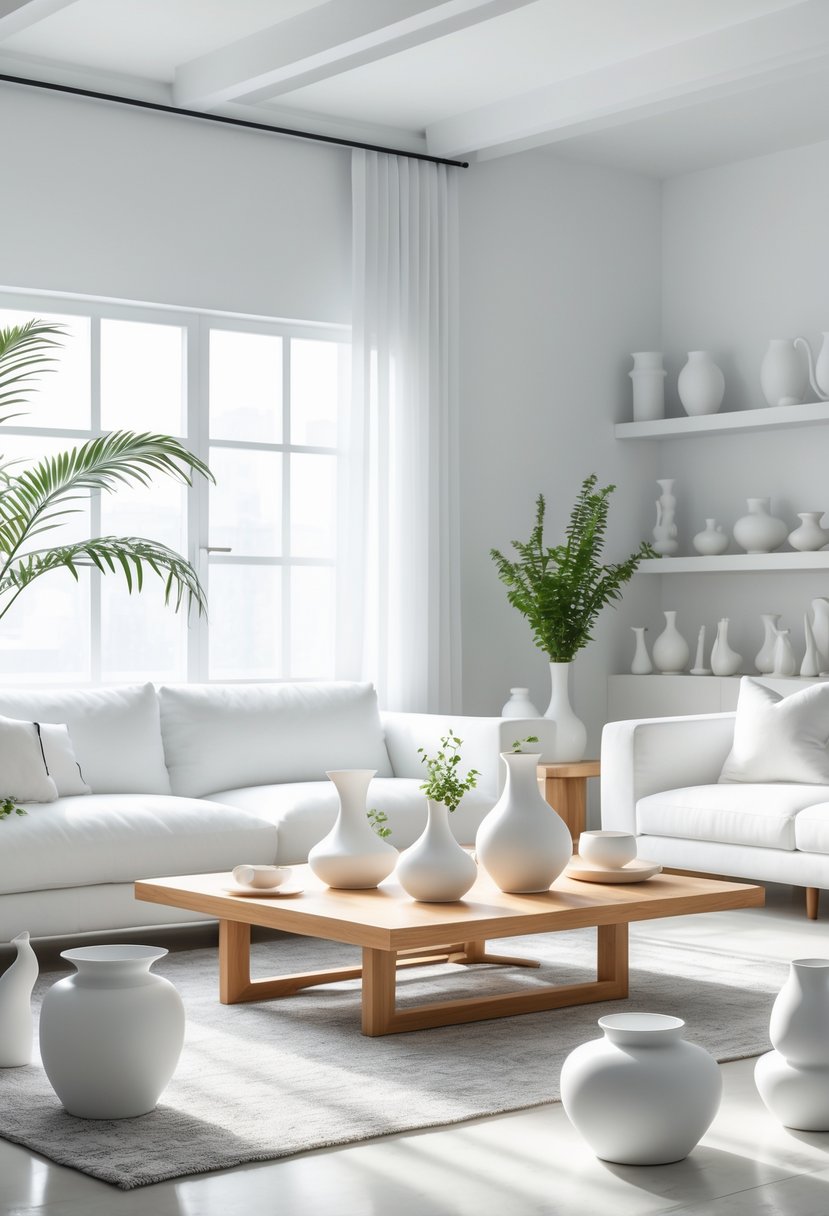
White ceramic vases add texture and balance to a living room. Their neutral color fits both modern and classic spaces.
They can hold flowers or stand alone as simple accents. Grouping vases of different shapes creates visual interest without clutter.
Other white decor pieces, like bowls or sculptures, maintain a clean and cohesive look.
Use white lacquered furniture for a modern feel
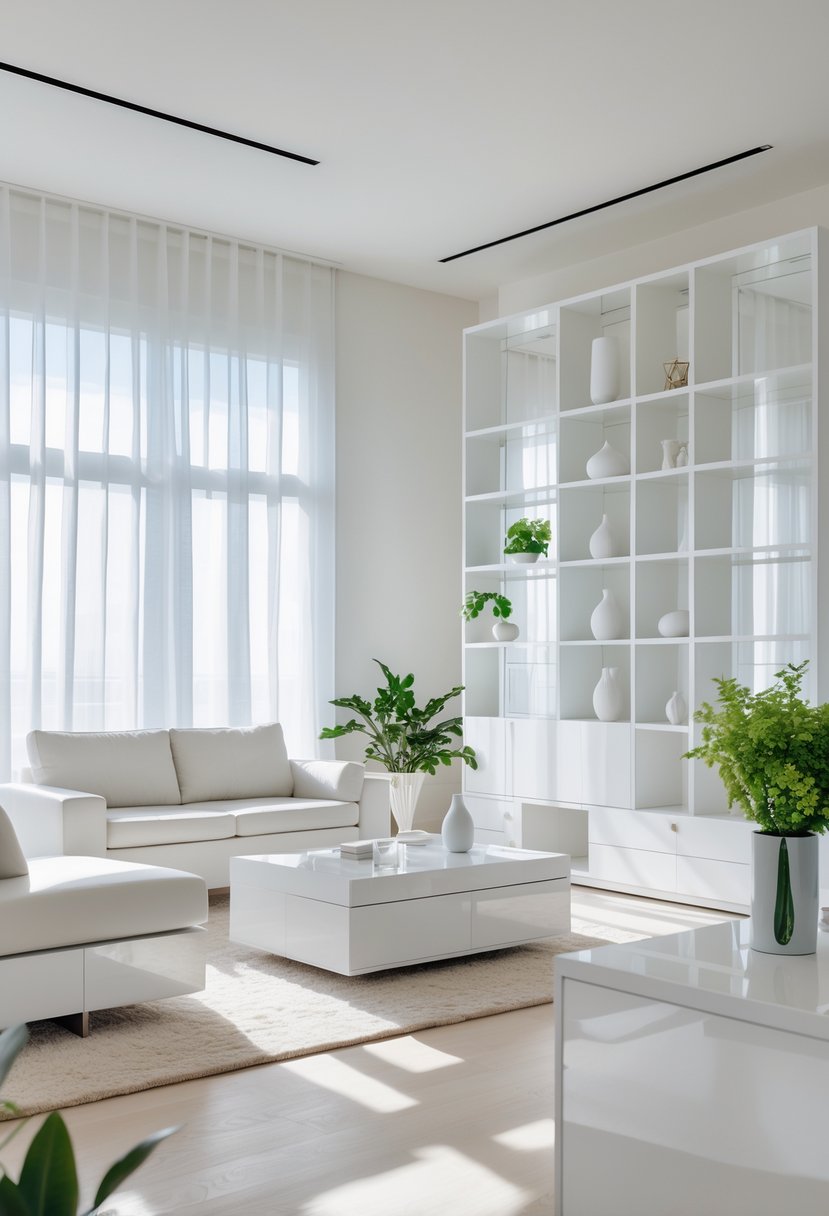
White lacquered furniture gives a living room a clean, polished look. Its smooth, reflective surface helps light bounce around the space, making it appear brighter.
They can pair these pieces with matte textures or soft fabrics to balance the shine and keep the room comfortable and inviting.
Design Principles for White Living Rooms
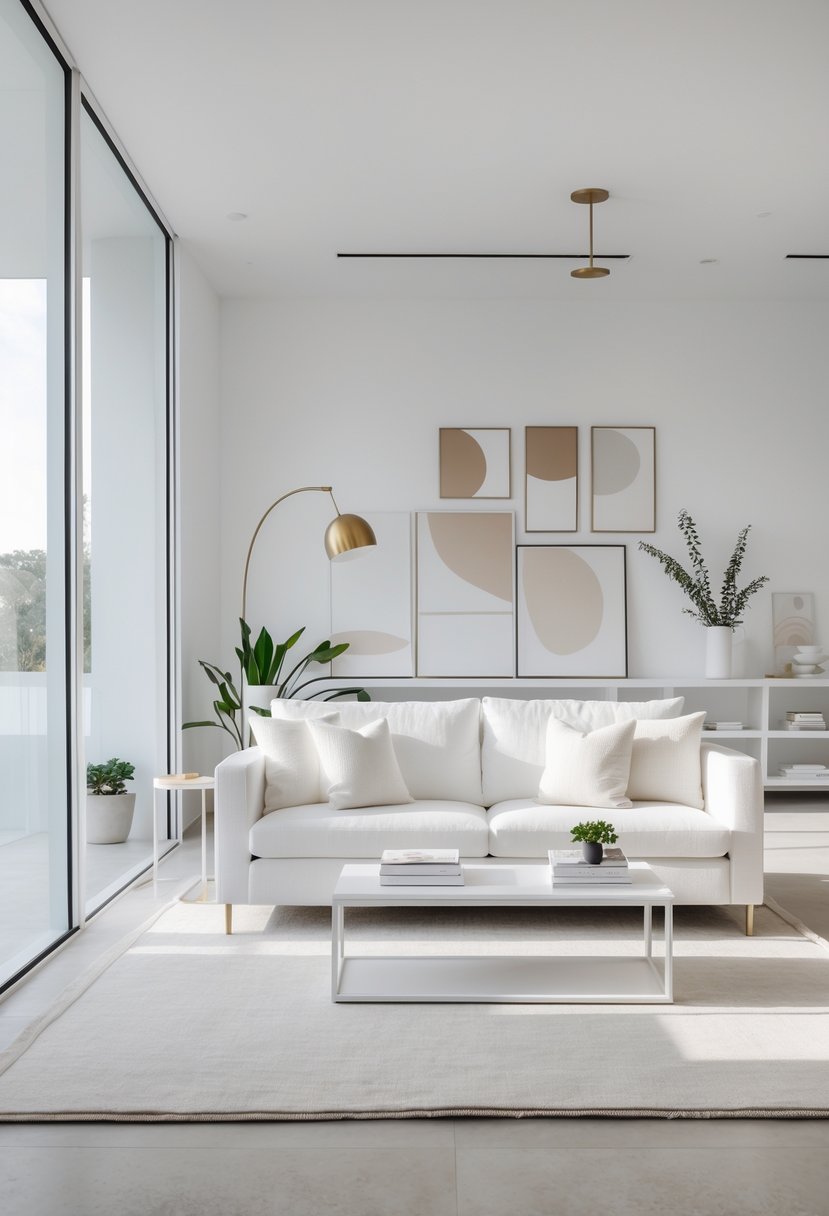
A white living room depends on how light interacts with surfaces, how textures add depth, and how accent colors bring character. Careful coordination of tones, finishes, and materials keeps the space inviting rather than plain.
Balancing Light and Texture
White reflects light, so lighting design strongly affects mood and comfort. Natural light makes a room feel open, while layered lighting—such as floor lamps, wall sconces, and ceiling fixtures—adds warmth and dimension in the evening.
Texture prevents an all-white room from feeling flat. Designers often mix matte, glossy, and woven finishes to create contrast. For example, pairing a smooth leather sofa with a chunky knit throw or a linen curtain softens the look.
Using a mix of materials like wood, stone, and metal can also enhance visual depth. A light oak coffee table, brushed brass hardware, or ceramic vases introduce subtle variation without breaking the neutral theme.
| Material | Effect on Space | Example Use |
|---|---|---|
| Linen | Softens light | Curtains, cushions |
| Marble | Adds polish | Coffee or side tables |
| Wood | Warms tone | Flooring, frames |
Selecting Complementary Accents
Accents define personality in a white living room. Using natural tones like beige, taupe, and soft gray helps maintain a calm atmosphere while adding gentle contrast. Warmer whites and off-whites, such as ivory or cream, can make the space feel cozier.
Small color details—like greenery, artwork, or ceramic décor—introduce life without overwhelming the palette. Metals such as brass or black iron create structure and balance.
To keep the space cohesive, limit accent colors to two or three shades. Repeating these tones across pillows, rugs, and accessories ties the design together and keeps the room visually stable.
Maintaining a Cohesive Color Palette
A consistent palette ensures harmony among walls, furniture, and décor. Designers often use layered shades of white—cool, neutral, and warm—to give subtle variation. This technique avoids a sterile or overly bright appearance.
Testing paint samples under different lighting helps identify undertones. For instance, cool whites pair well with gray or blue accents, while warm whites complement tan or wood elements.
Keeping finishes consistent—such as matching trim and ceiling tones—reinforces unity. Even when mixing materials, maintaining a shared undertone across fabrics and surfaces keeps the design balanced and visually calm.
Styling Tips for a Modern Look
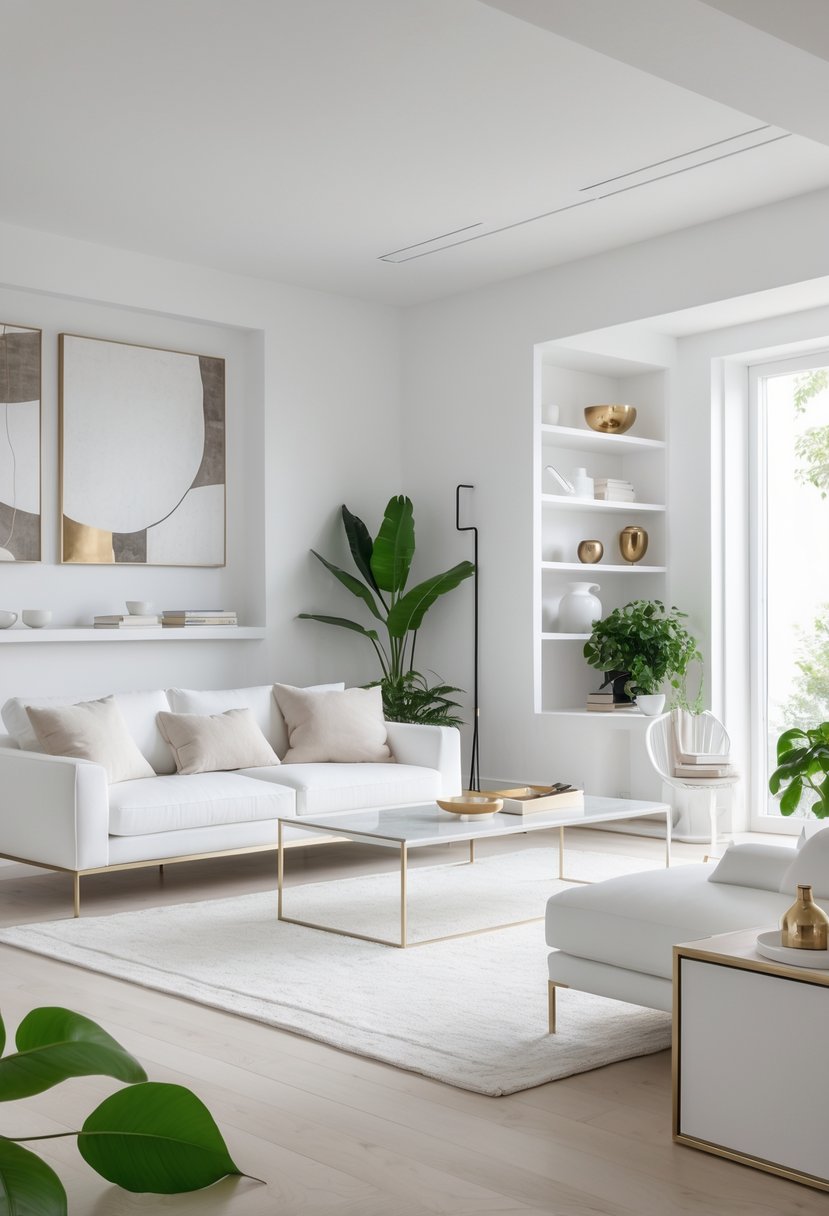
A modern white living room feels calm and balanced when natural textures and layered fabrics soften the crisp backdrop. Using materials like wood, linen, and wool adds warmth, while rugs and textiles bring depth and comfort.
Incorporating Natural Materials
Natural materials prevent a white space from feeling cold or flat. Designers in 2026 lean toward light oak, rattan, and stone to add organic character. These materials pair well with white walls and neutral furniture, creating a clean but inviting look.
Wood tones can appear in coffee tables, shelving, or picture frames. Stone surfaces—like travertine or marble—add subtle pattern and texture. Even small accents, such as ceramic vases or woven baskets, help balance smooth finishes.
A simple way to mix materials is to follow this guide:
| Material | Use | Effect |
|---|---|---|
| Light wood | Furniture, flooring | Adds warmth |
| Rattan | Chairs, baskets | Introduces texture |
| Stone | Tabletops, decor | Creates contrast |
Combining these elements keeps the room modern yet natural.
Layering with Textiles and Rugs
Layering textiles softens the sharpness of white and adds visual depth. Cotton, linen, and wool are popular because they feel comfortable and look timeless. Mixing different textures—like a knit throw with a smooth linen sofa—creates interest without adding clutter.
Rugs define zones in open spaces and bring color variation. A neutral rug with subtle patterning grounds the room while keeping the palette cohesive.
To maintain balance, designers often use two to three textile types in a single space. For example:
- Linen curtains for light diffusion
- Wool rug for warmth
- Cotton cushions for comfort
This approach keeps the design modern, layered, and easy to maintain.
For additional ideas from design experts, see these living room layouts from Apartment Therapy.


