
Eclectic Farmhouse Interior Design With Natural Textures: 22 Inspiring Ideas For Every Room
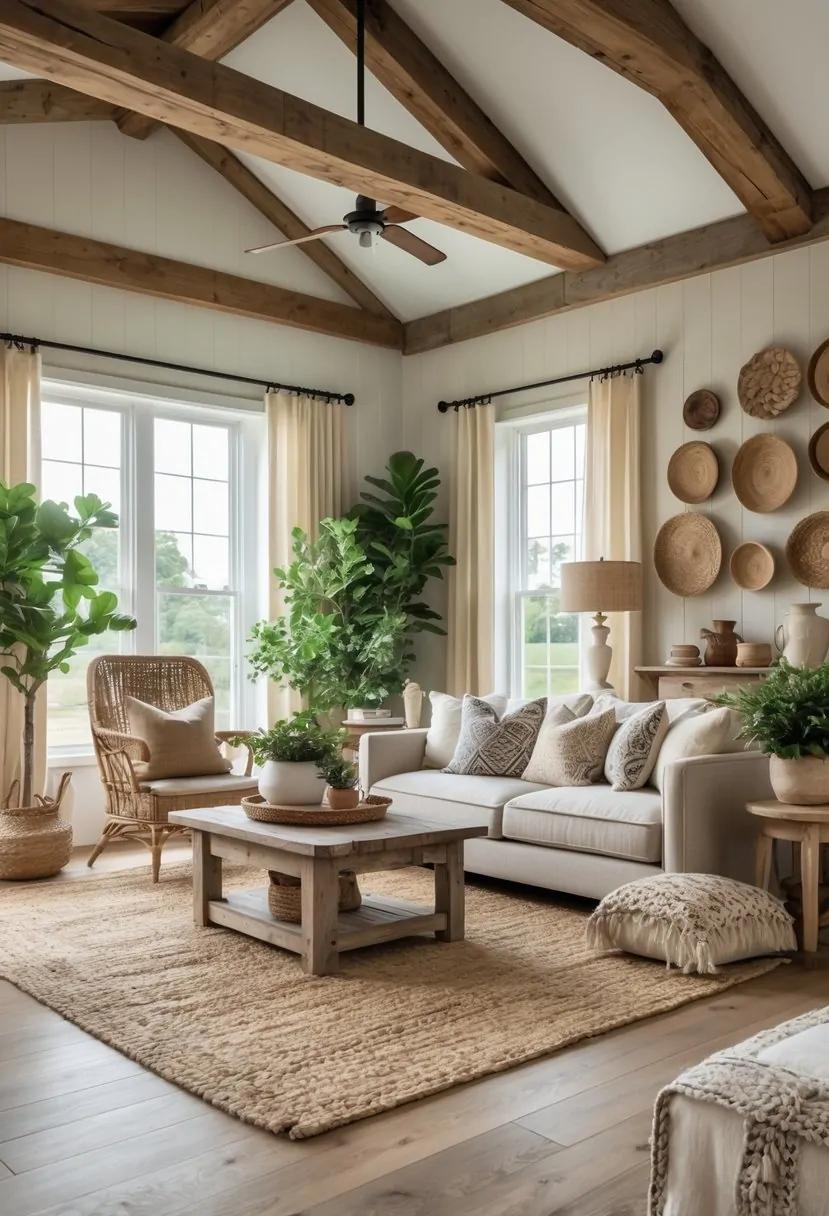
Eclectic farmhouse interior design blends rustic charm with a mix of textures, materials, and styles that feel both timeless and fresh. It draws on natural elements like wood, stone, and fabric to create spaces that feel warm, comfortable, and lived-in. This style shows how combining natural textures with eclectic pieces can transform a home into a space that feels both personal and inviting.
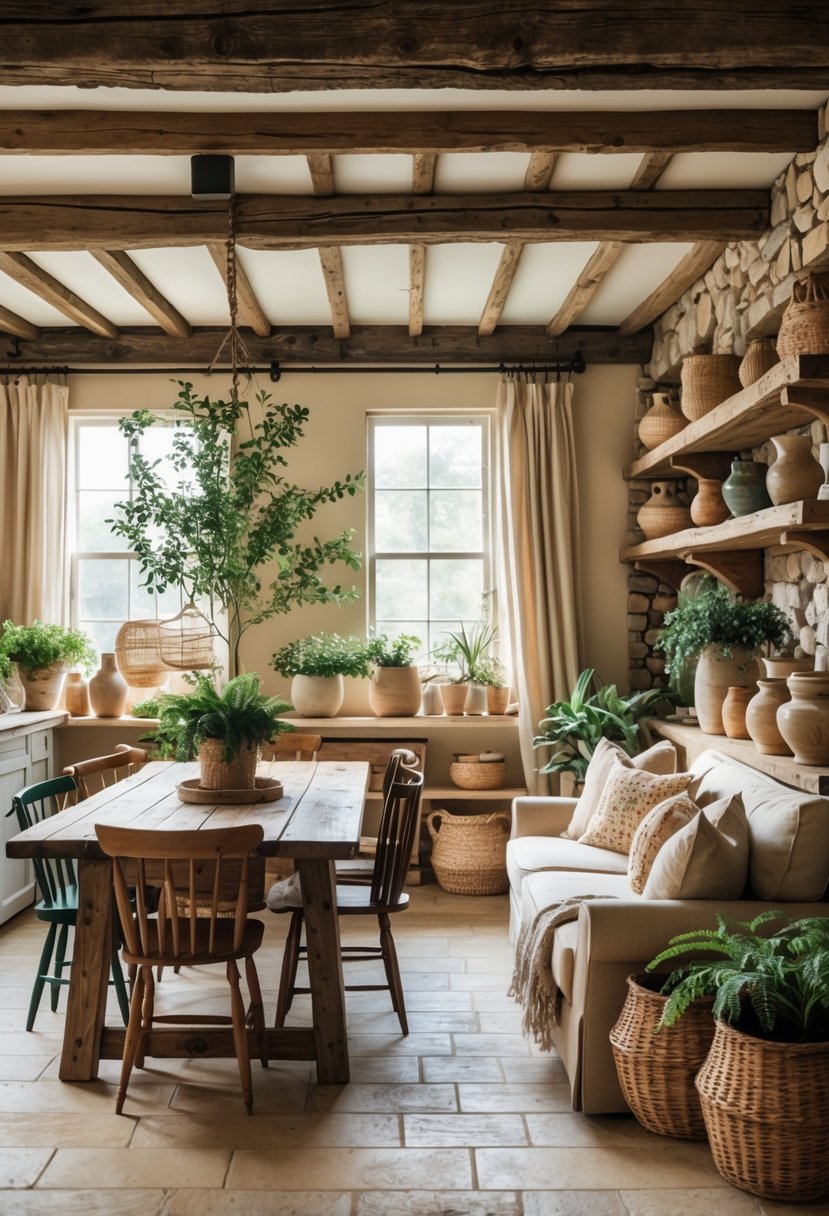
Instead of following a single design rule, eclectic farmhouse interiors encourage balance between old and new, rough and smooth, simple and detailed. By layering textures and mixing materials, the style creates depth and character without losing its welcoming, down-to-earth feel.
Incorporate reclaimed wood beams for rustic charm
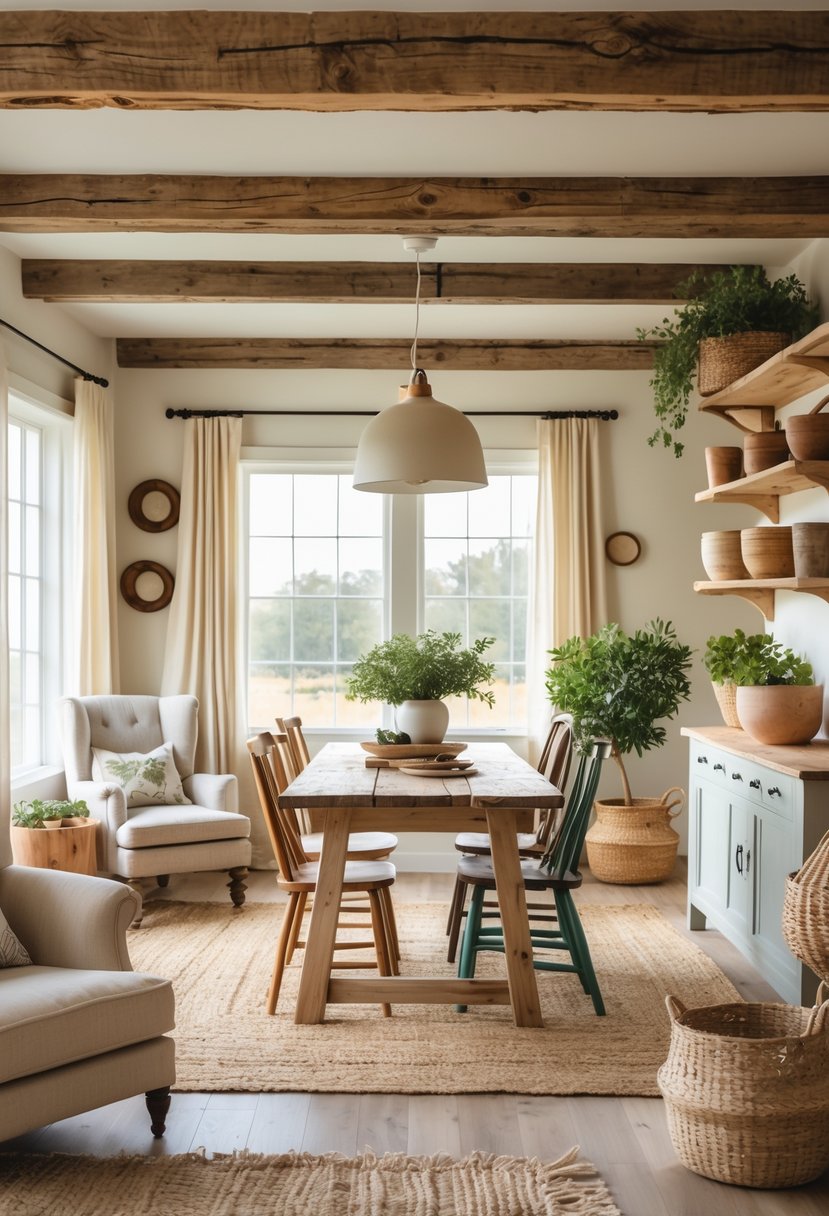
Reclaimed wood beams add texture and history to a farmhouse space. Their natural imperfections highlight the beauty of age and use.
They work well across ceilings, doorways, or as structural accents. Each beam brings warmth and character without overwhelming other design elements.
Sourcing beams from salvage yards or old barns ensures authenticity. This choice supports sustainability while enhancing rustic style.
Use jute rugs to add natural texture
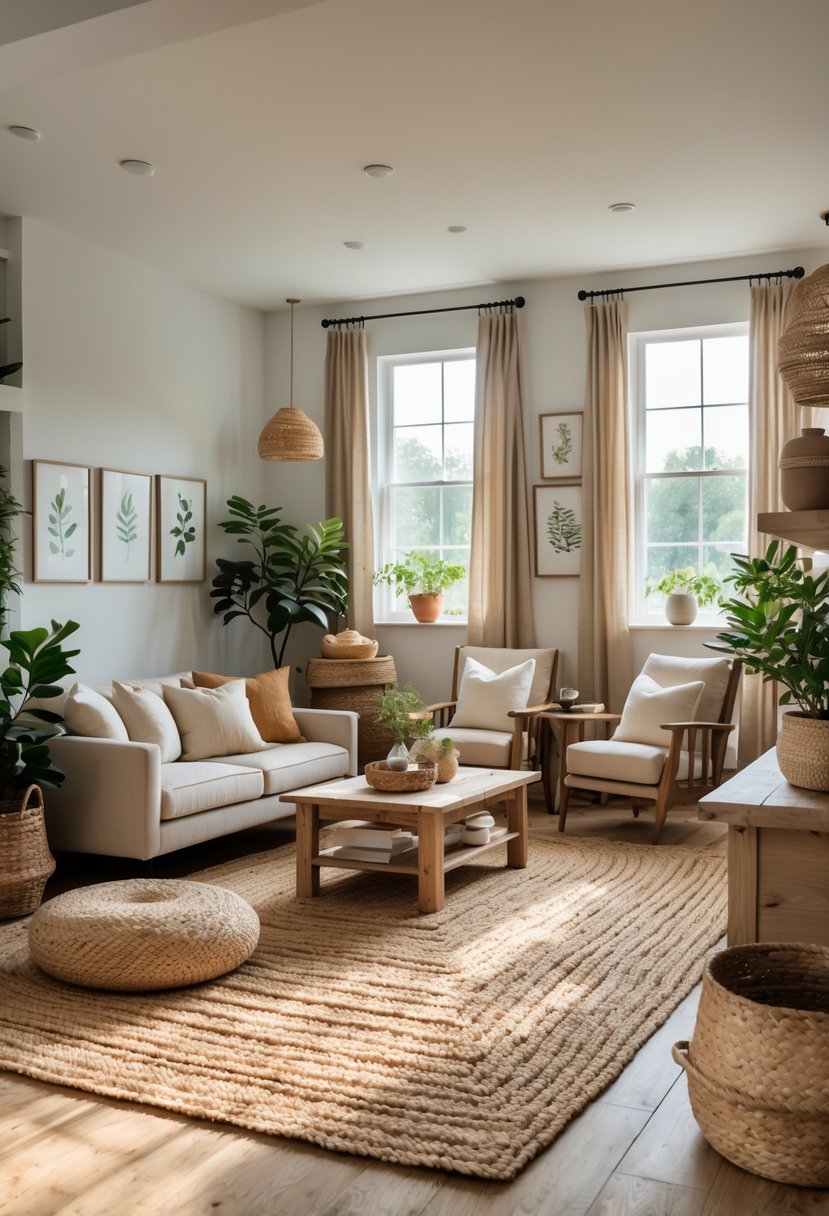
Jute rugs bring a simple, organic look that fits well with farmhouse interiors. Their natural fibers add warmth without feeling heavy.
They work well as base layers under patterned rugs or on their own in living rooms, dining areas, or entryways.
The neutral tones blend easily with wood, stone, and soft fabrics.
Mix vintage leather armchairs with soft linen sofas
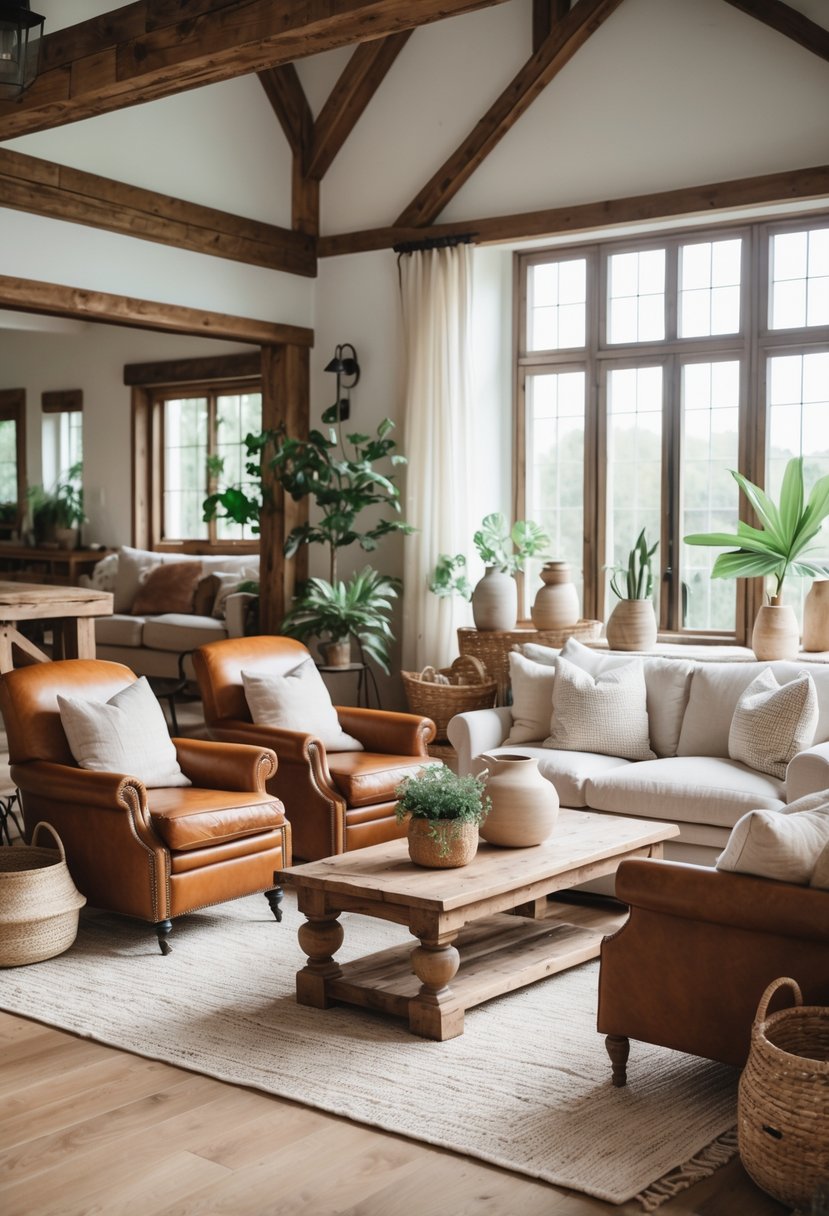
Vintage leather armchairs add warmth and character with their rich texture and timeless appeal.
Soft linen sofas balance this look by introducing a lighter, more relaxed feel.
Together, the mix creates contrast in texture and style while keeping the space comfortable and inviting.
Add woven wicker baskets for stylish storage
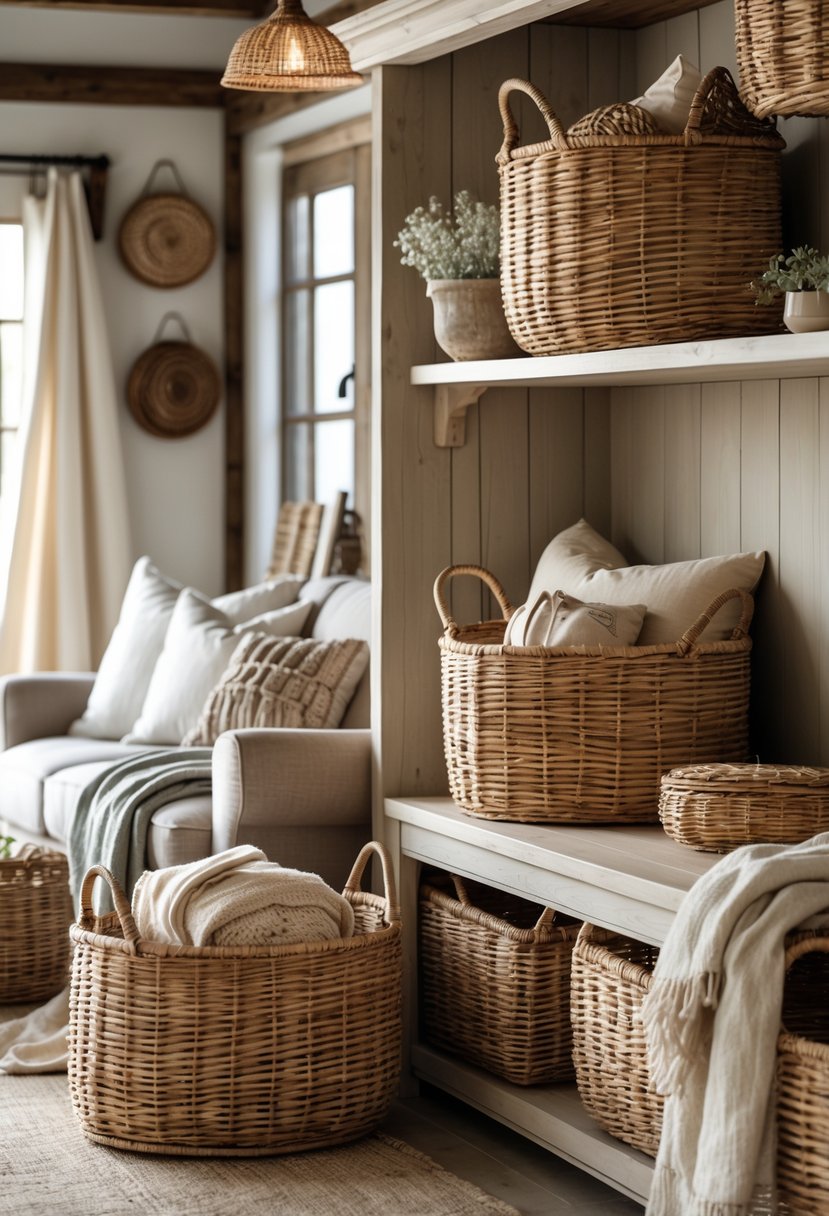
Woven wicker baskets bring both texture and function to farmhouse interiors. They fit well with wood, metal, and other natural finishes.
They work as storage for blankets, pillows, or magazines while adding visual warmth. Smaller baskets can hold books, candles, or decorative accents on tables and shelves.
Layer sisal runners in hallways for warmth
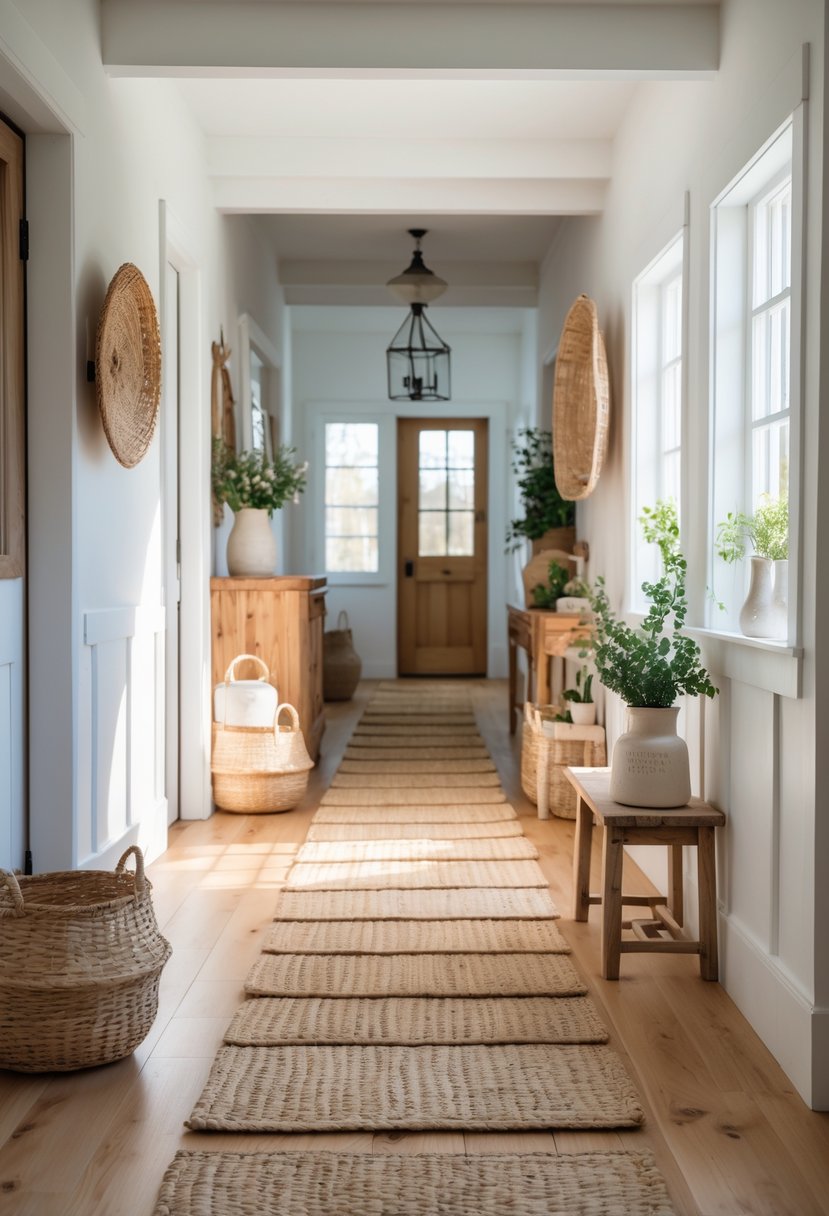
Sisal runners add texture and comfort to hallways with their natural fibers. Their neutral tones pair well with wood floors and farmhouse décor.
They create a soft walking surface while reducing noise in busy areas. The durable weave also makes them practical for high-traffic entryways.
Display antique farmhouse tools as wall art
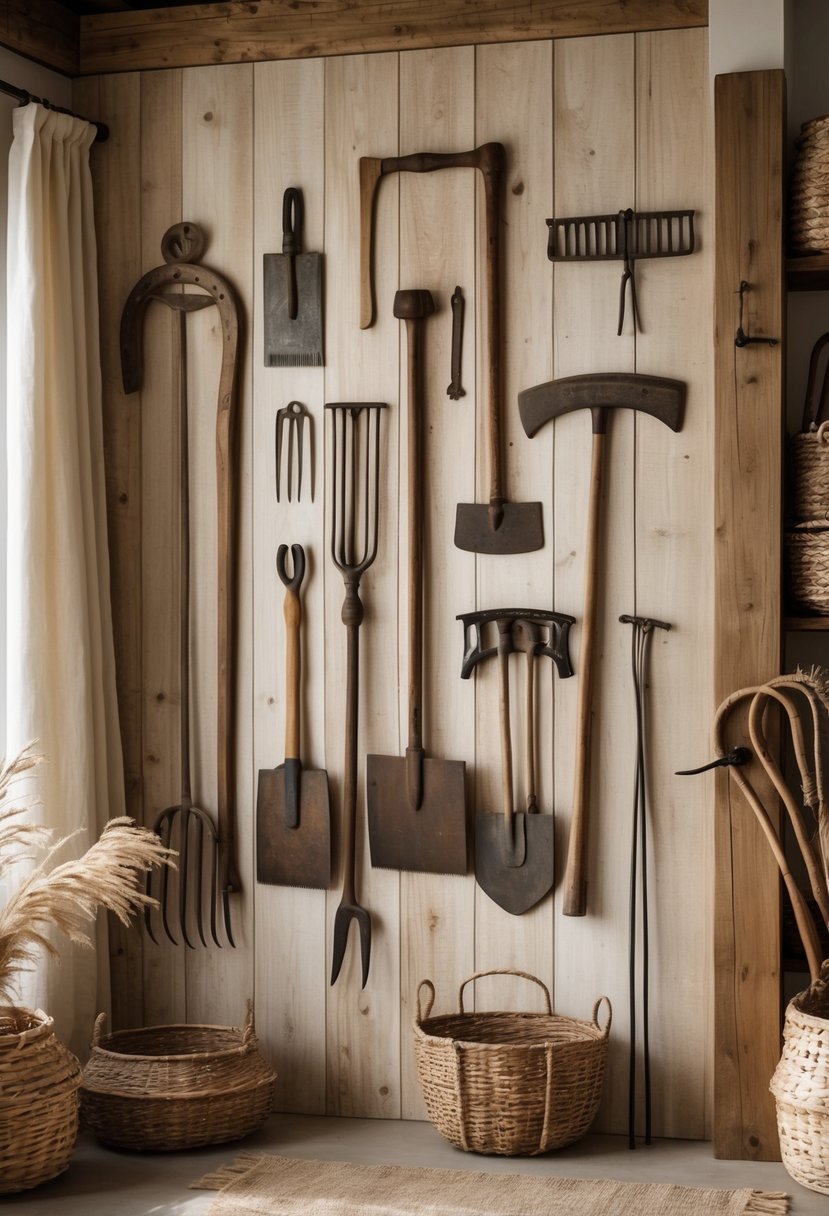
Antique farm tools can serve as simple wall art that adds texture and history to a space. Items like saws, rakes, or hammers bring a rustic touch without overwhelming the room.
Arranging them in groups or as single statement pieces helps highlight their craftsmanship and aged materials.
Combine distressed wood furniture with modern metal accents
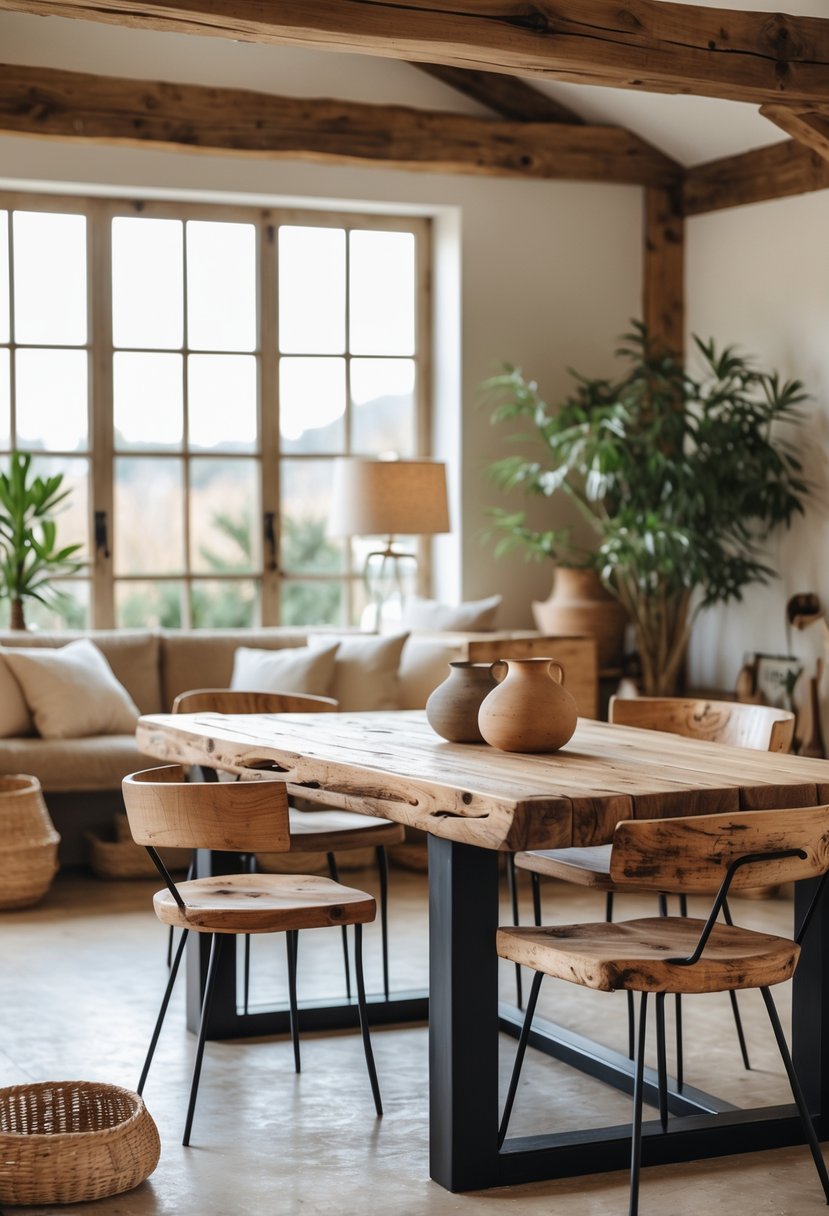
Distressed wood furniture adds warmth and character through its natural texture and aged finish.
Modern metal accents, such as sleek chair frames or light fixtures, bring balance with clean lines and contrast.
Together, they create a practical mix that feels both rustic and contemporary without overwhelming the space.
Use stone accent walls to enhance earthiness
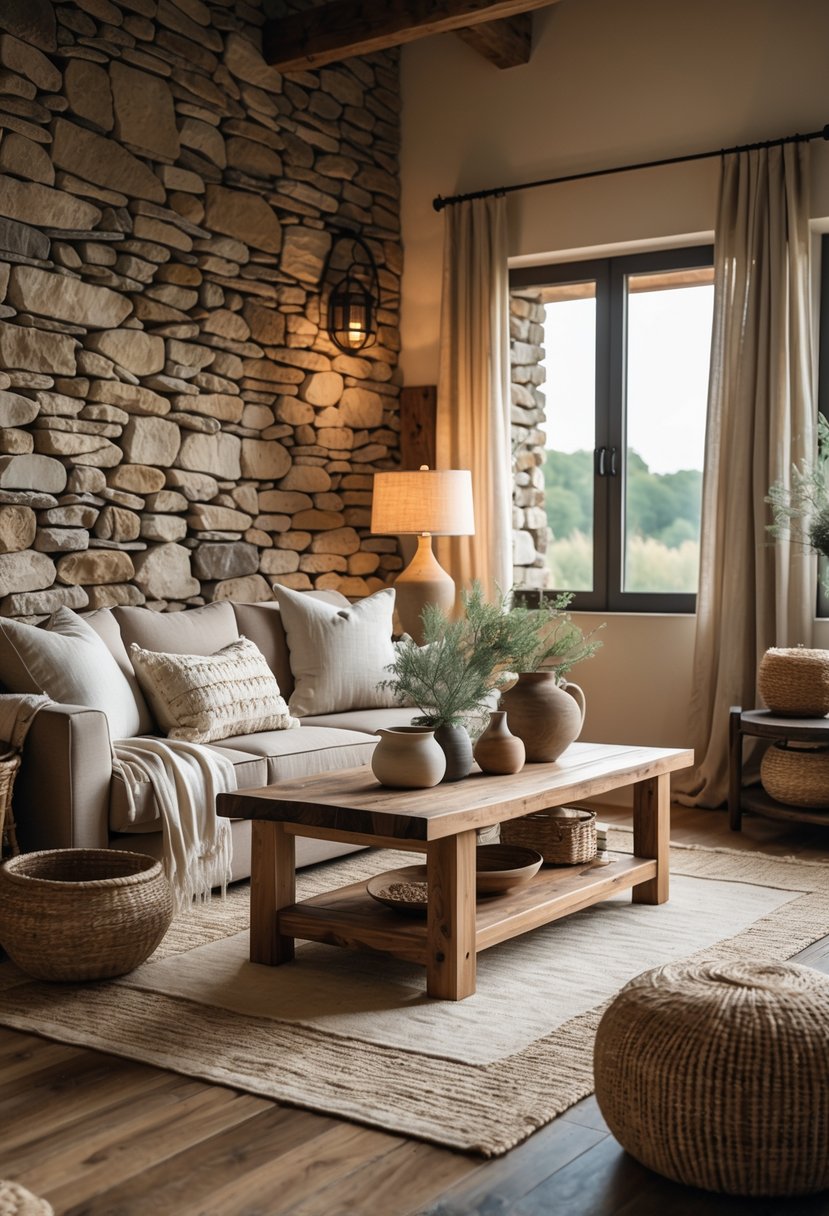
Stone accent walls add natural texture that makes a space feel grounded. Their earthy tones blend well with wood, metal, and fabric often found in farmhouse interiors.
They work in living rooms, kitchens, or entryways, creating a subtle focal point without overpowering other design elements.
Incorporate rattan light fixtures for organic appeal
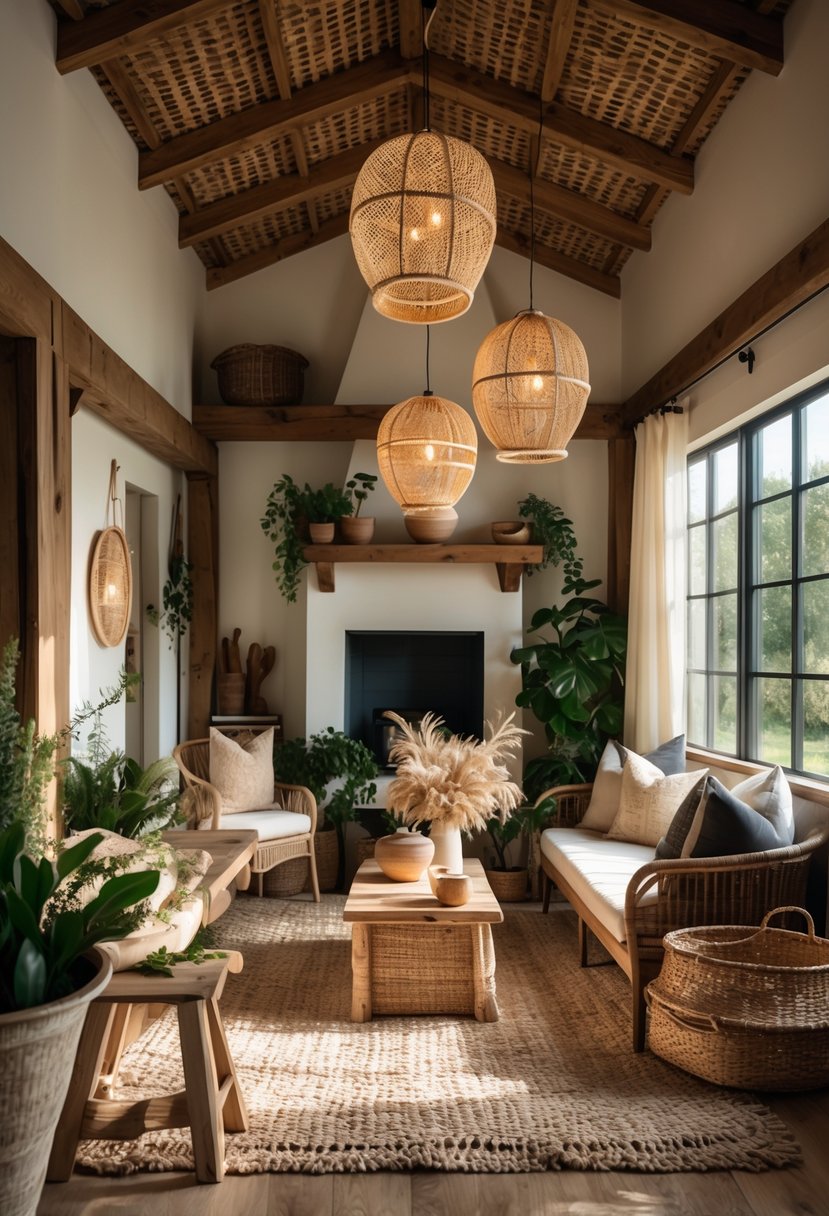
Rattan light fixtures add natural texture that blends well with farmhouse interiors. Their woven patterns filter light softly, creating a warm and inviting atmosphere.
They work in kitchens, dining rooms, or living spaces, pairing easily with wood, linen, and other organic materials.
The neutral tones of rattan complement rustic and modern elements without overwhelming the room.
Blend cozy wool throws with cotton cushions
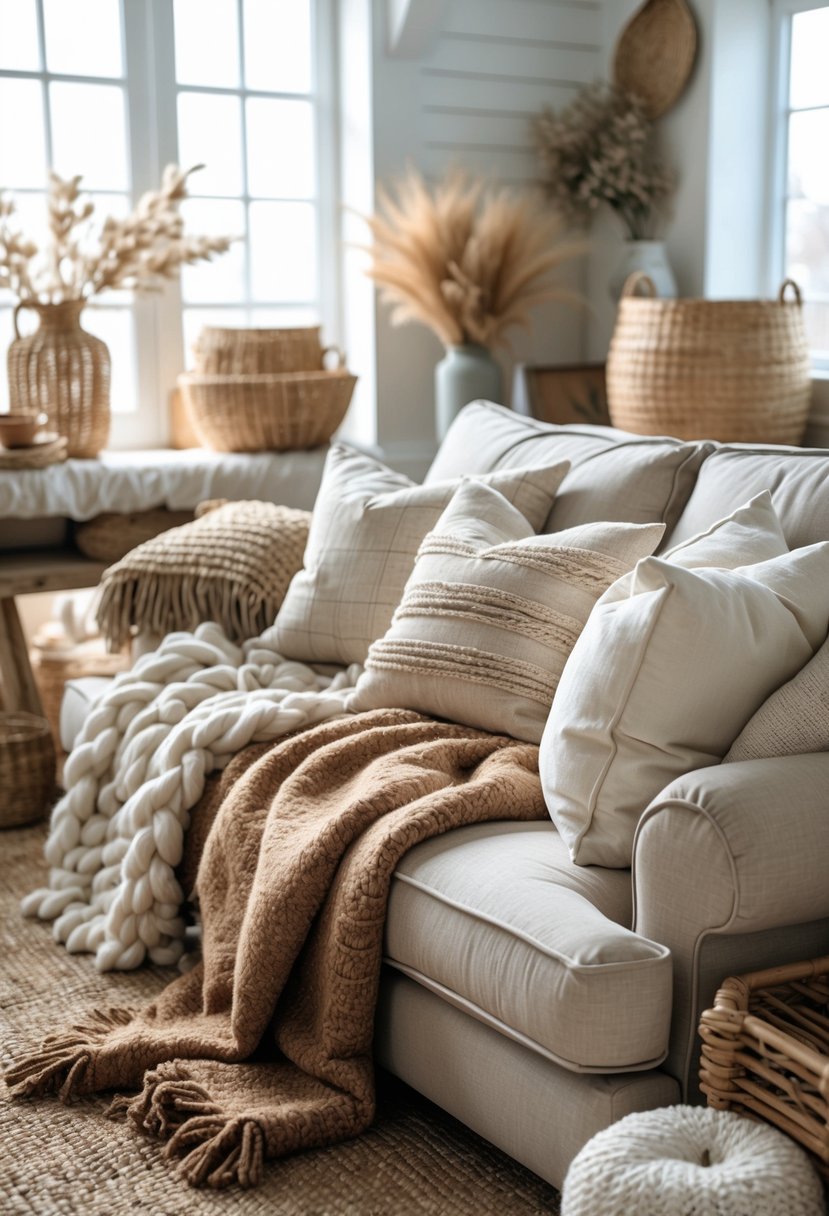
They can pair wool blend throws with cotton cushions to create a balanced mix of warmth and softness.
The wool adds texture and insulation, while cotton keeps the look light and breathable.
Together, these materials bring comfort and a natural farmhouse feel to seating areas.
Add potted greenery in terracotta pots
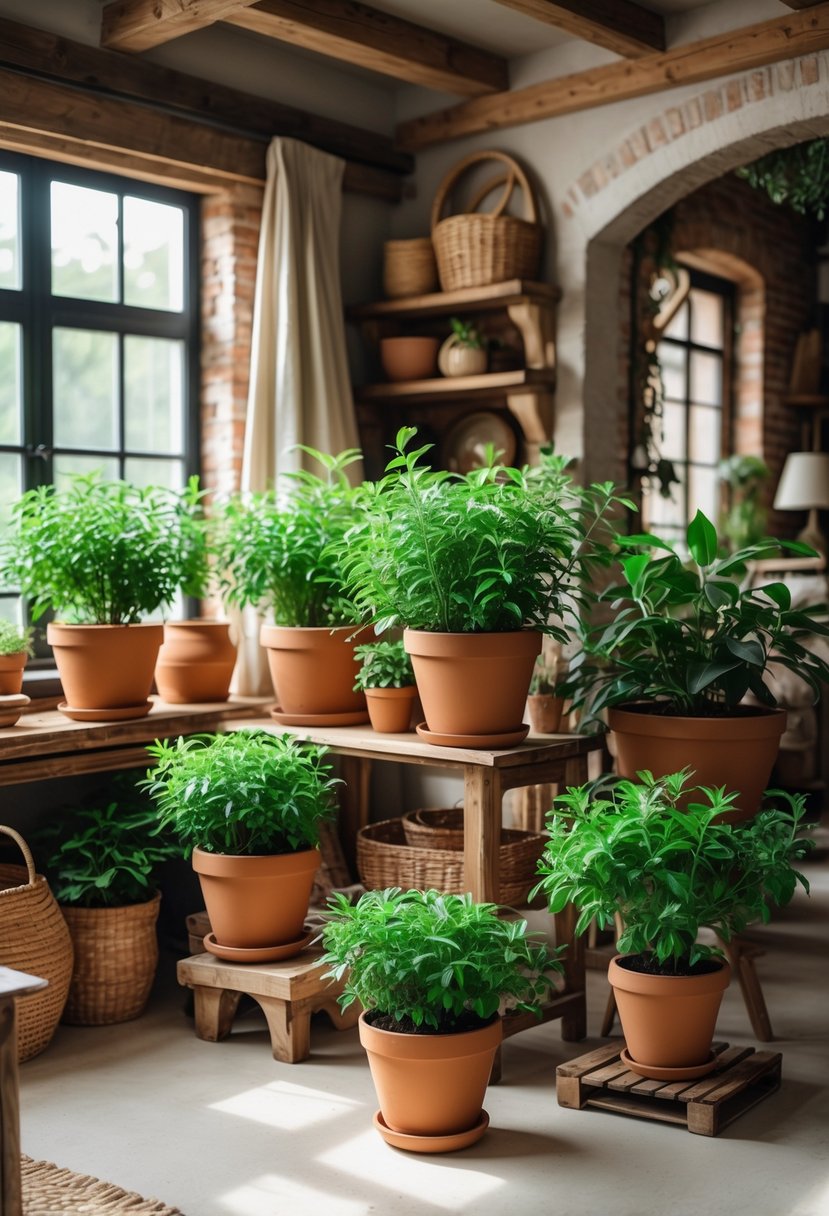
Terracotta pots add a natural texture that fits well with farmhouse interiors. Their warm, earthy color blends easily with wood, stone, and other rustic materials.
They work well for herbs, succulents, or trailing plants. Grouping several pots together creates a simple, cohesive display without overwhelming the space.
Use muted earth-tone paint palettes
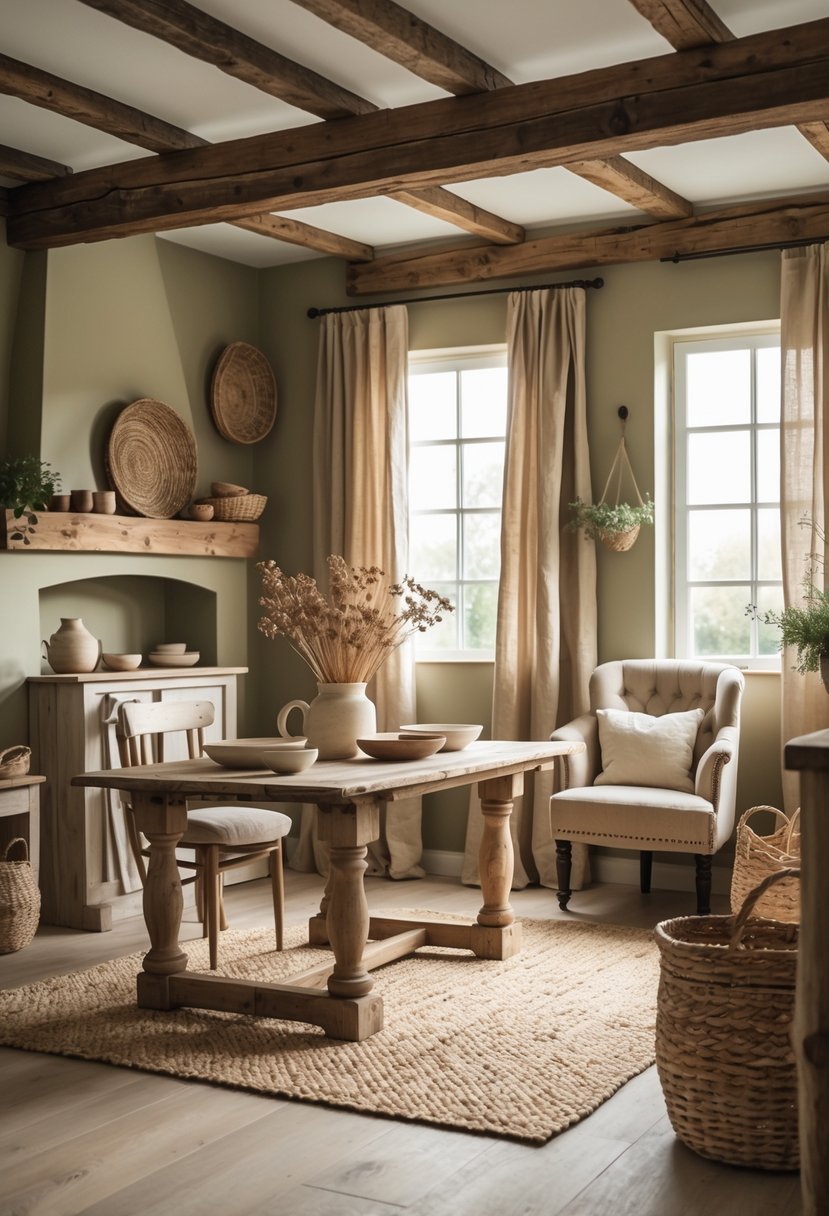
Muted earth tones create a calm backdrop that supports natural textures like wood, stone, and linen.
These shades include soft browns, warm grays, and gentle greens that blend easily with farmhouse elements.
They help highlight vintage pieces and rustic details without making the space feel busy or overwhelming.
Mix patterned kilim rugs with natural fiber mats
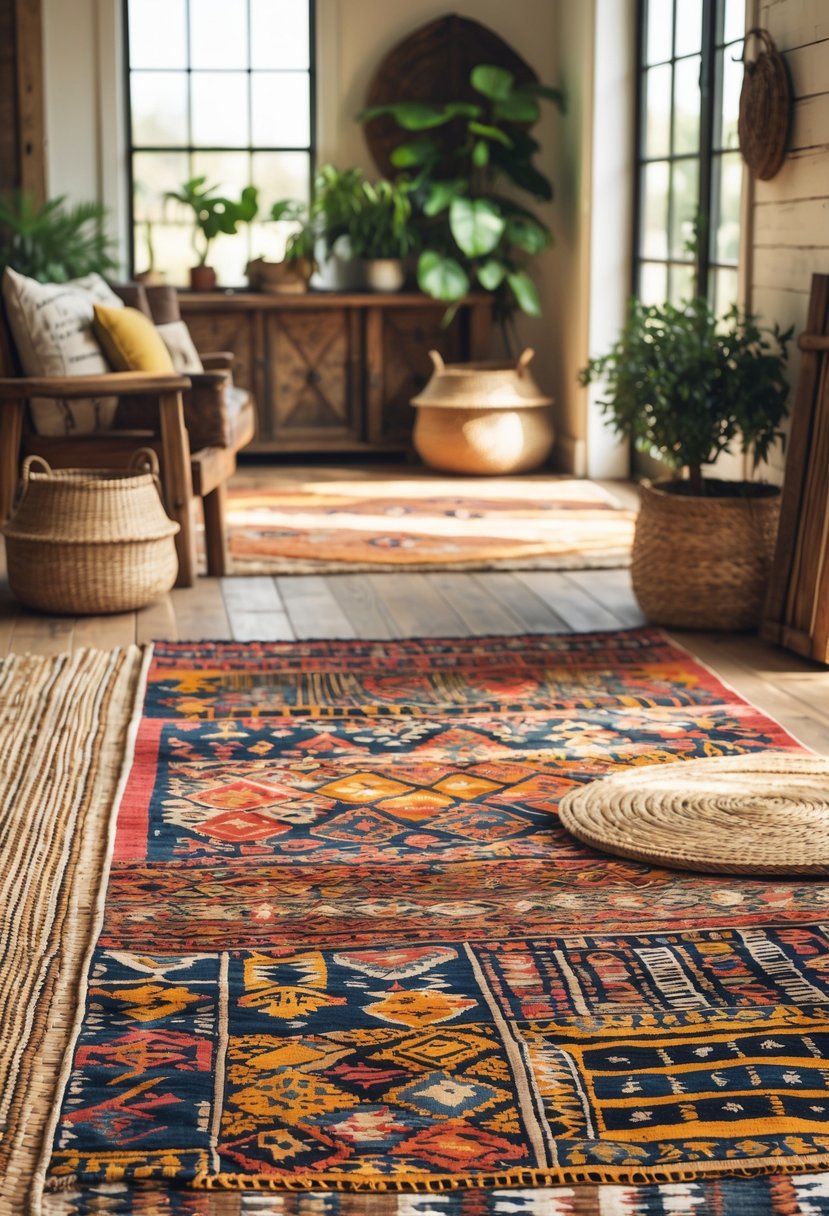
They can layer a colorful kilim rug over a neutral jute or sisal mat to create depth.
The kilim adds pattern and cultural detail, while the natural fiber base grounds the space.
This mix balances texture and design, fitting well with farmhouse and eclectic interiors.
Feature open shelving with ceramic farmhouse dishes
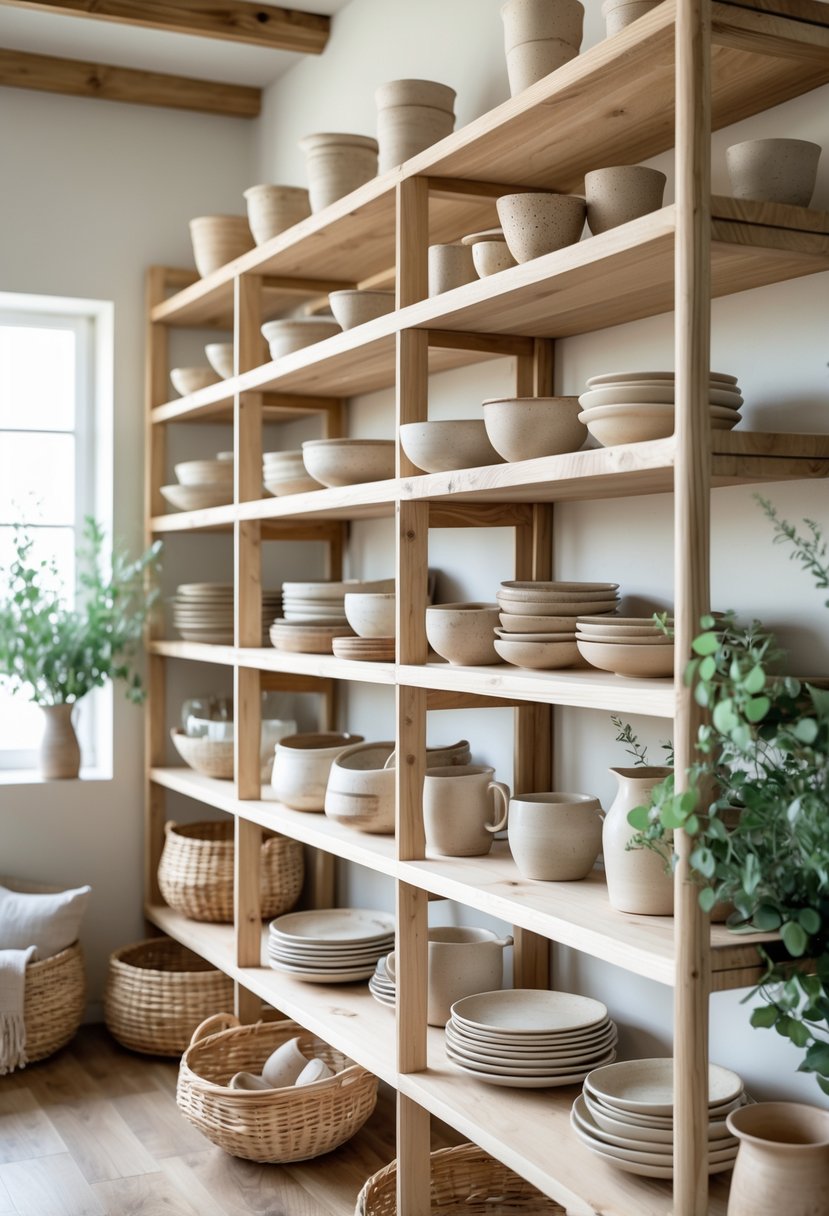
Open shelving allows farmhouse kitchens to display everyday items in a practical way. Ceramic dishes fit naturally with this style, adding both texture and function.
They bring a handmade look that pairs well with wood shelves and natural finishes. Simple stacks of plates or bowls keep the display tidy and inviting.
Include galvanized metal buckets for decor
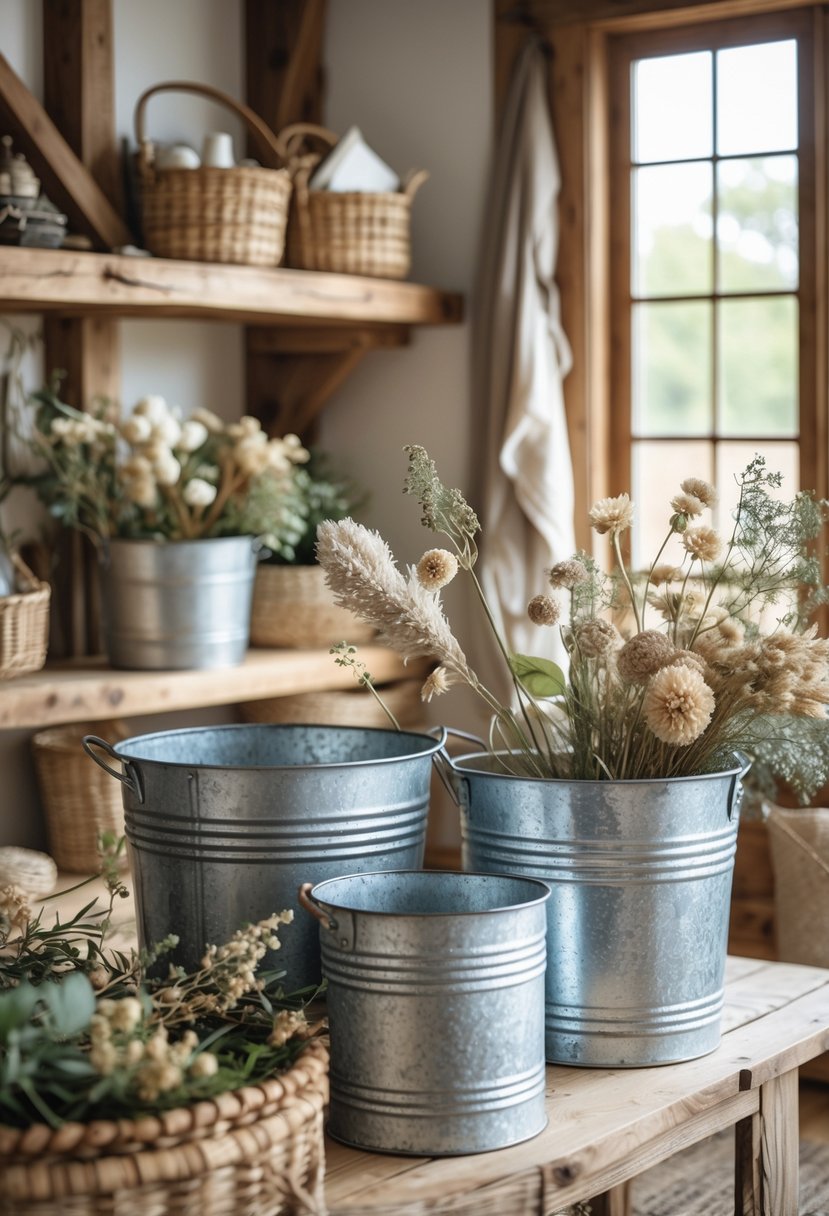
Galvanized metal buckets bring a simple, rustic element to farmhouse interiors. Their muted gray finish pairs well with wood, linen, and other natural textures.
They work as planters, storage containers, or standalone accents. Their durability makes them practical while their aged look adds subtle character to a space.
Use vintage wooden crates as side tables
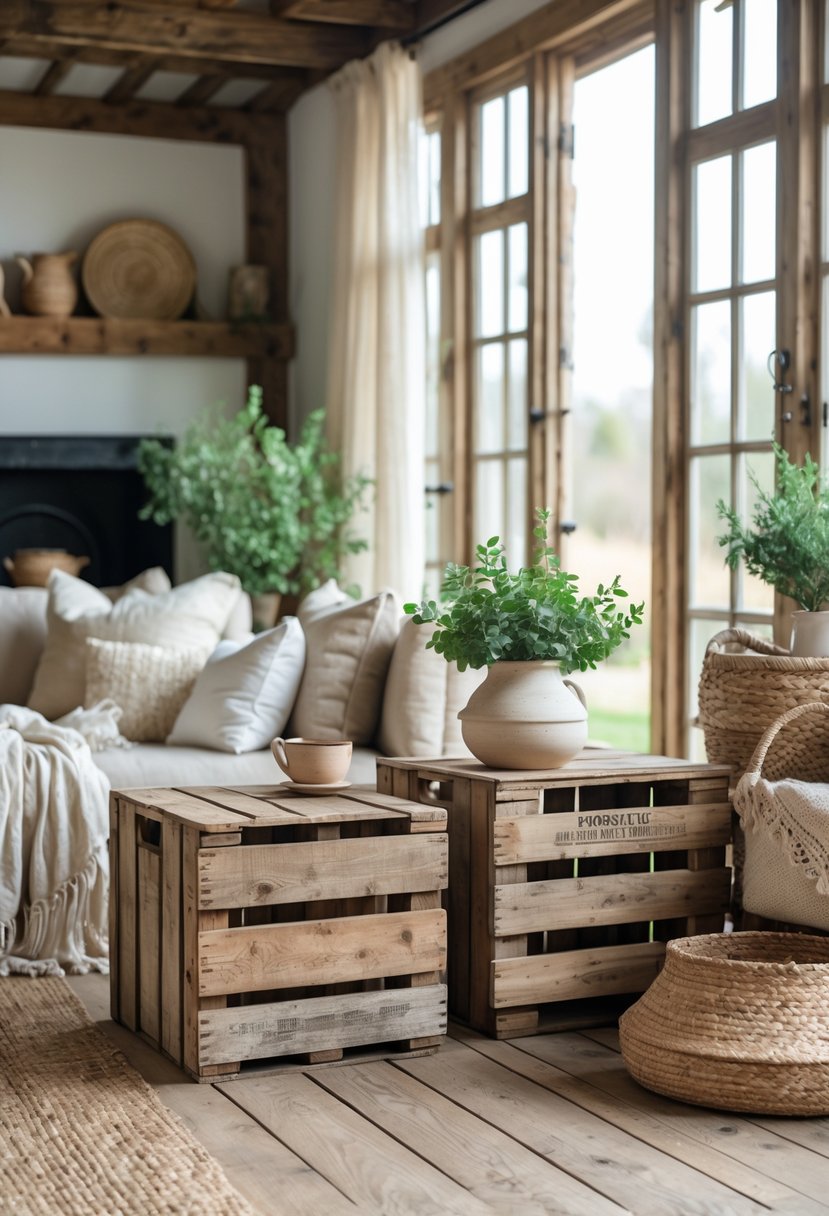
Vintage wooden crates work well as small side tables in a farmhouse setting. Their simple design blends with rustic and eclectic interiors.
Placing a crate beside a sofa or bed provides a functional spot for books or a lamp. Light sanding keeps edges smooth and safe.
Add handmade pottery for artisanal texture
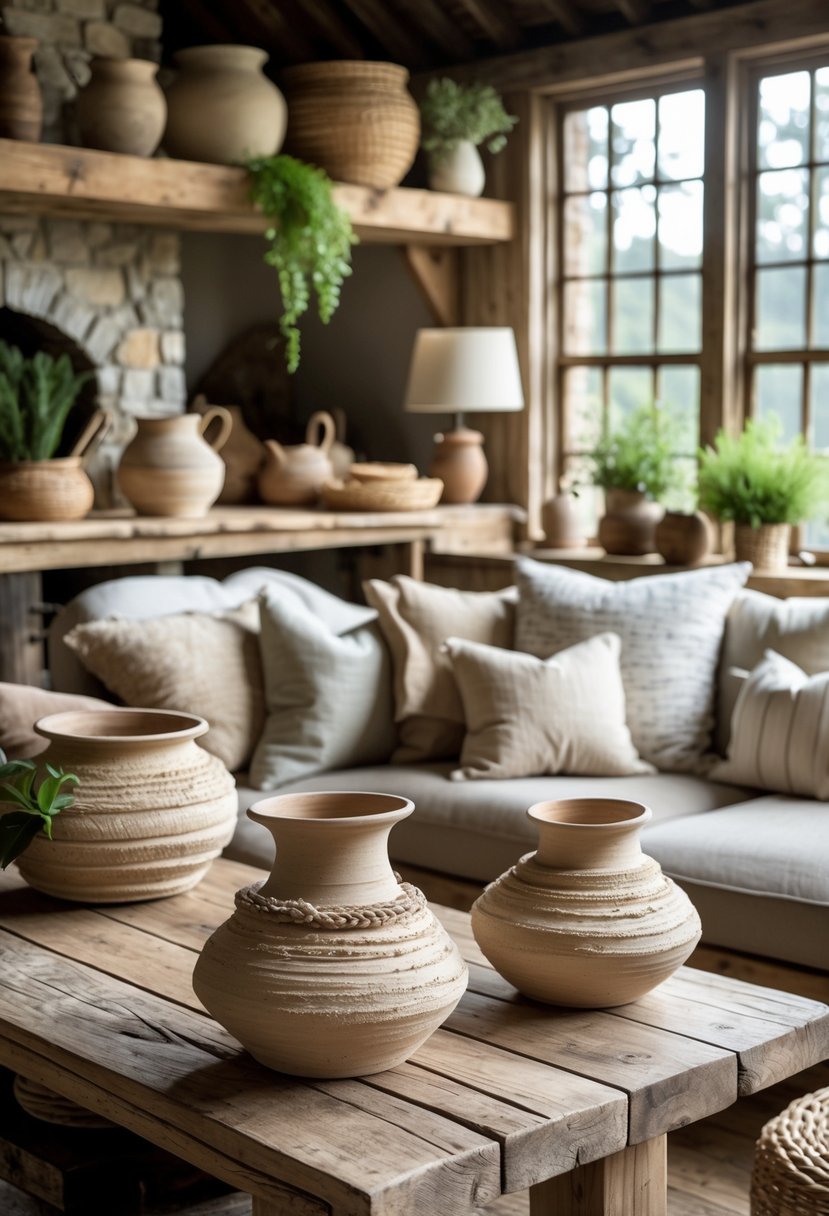
Handmade pottery introduces natural texture that complements rustic wood and fabric in farmhouse interiors. Each piece carries subtle variations in shape and finish.
Clay vases, bowls, and planters add warmth while keeping the look simple and functional. Their earthy tones blend well with neutral palettes and natural materials.
Incorporate linen curtains with subtle patterns
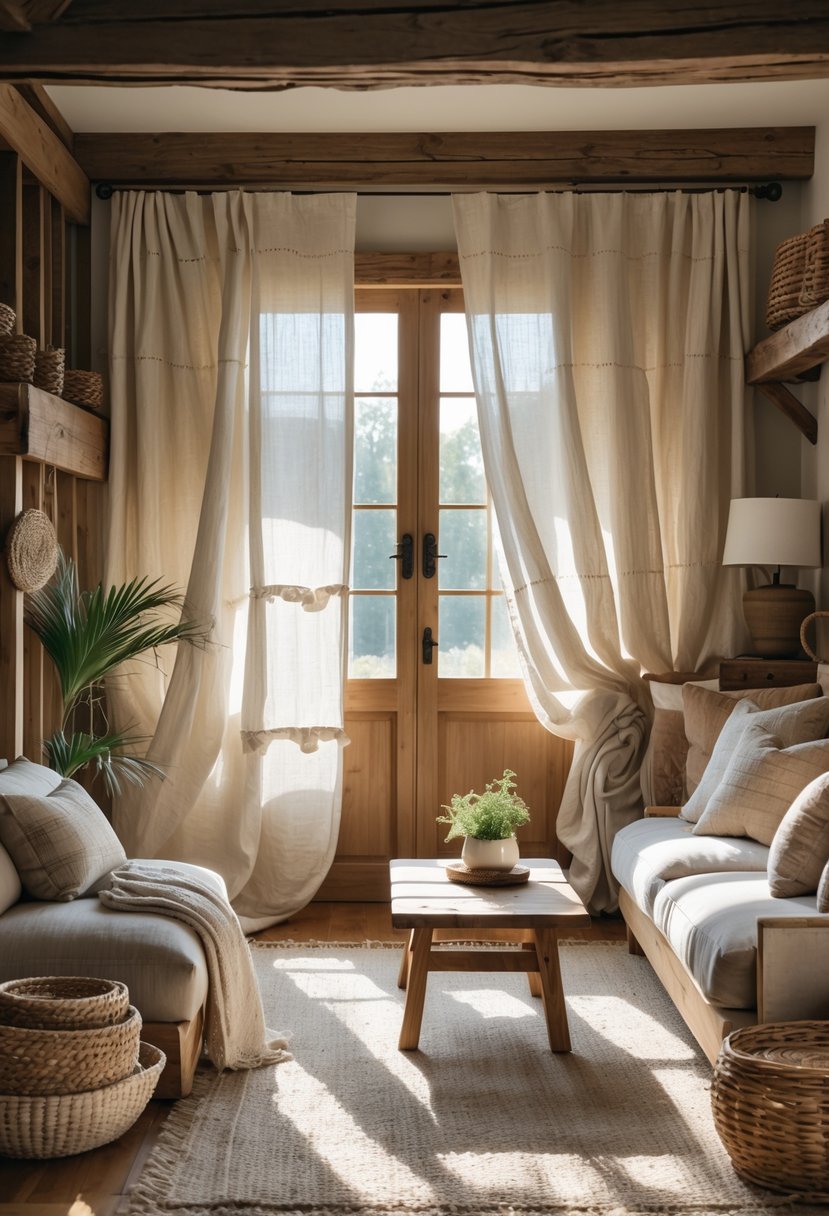
Linen curtains bring a natural texture that fits well with farmhouse interiors. Their lightweight fabric allows soft light to filter through, creating a relaxed atmosphere.
Subtle patterns, such as thin stripes or small checks, add visual interest without overwhelming the space. These details keep the look simple while enhancing the room’s character.
Mix mid-century modern chairs with rustic tables
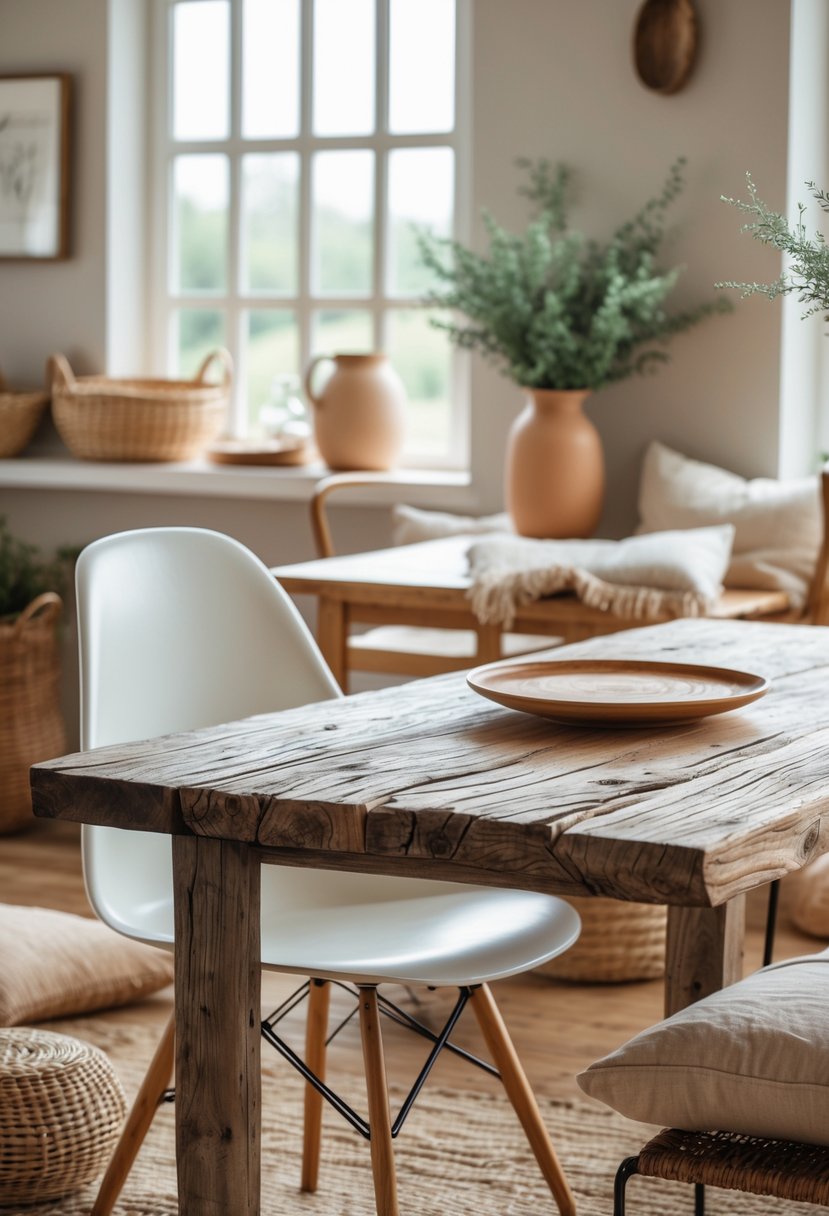
Pairing mid-century modern chairs with rustic tables creates balance between clean lines and natural texture. The smooth shapes of the chairs contrast with the rough wood surface.
This mix highlights both styles without one overpowering the other. It works well in dining rooms, kitchens, or casual gathering spaces.
Use barn door sliders as statement pieces
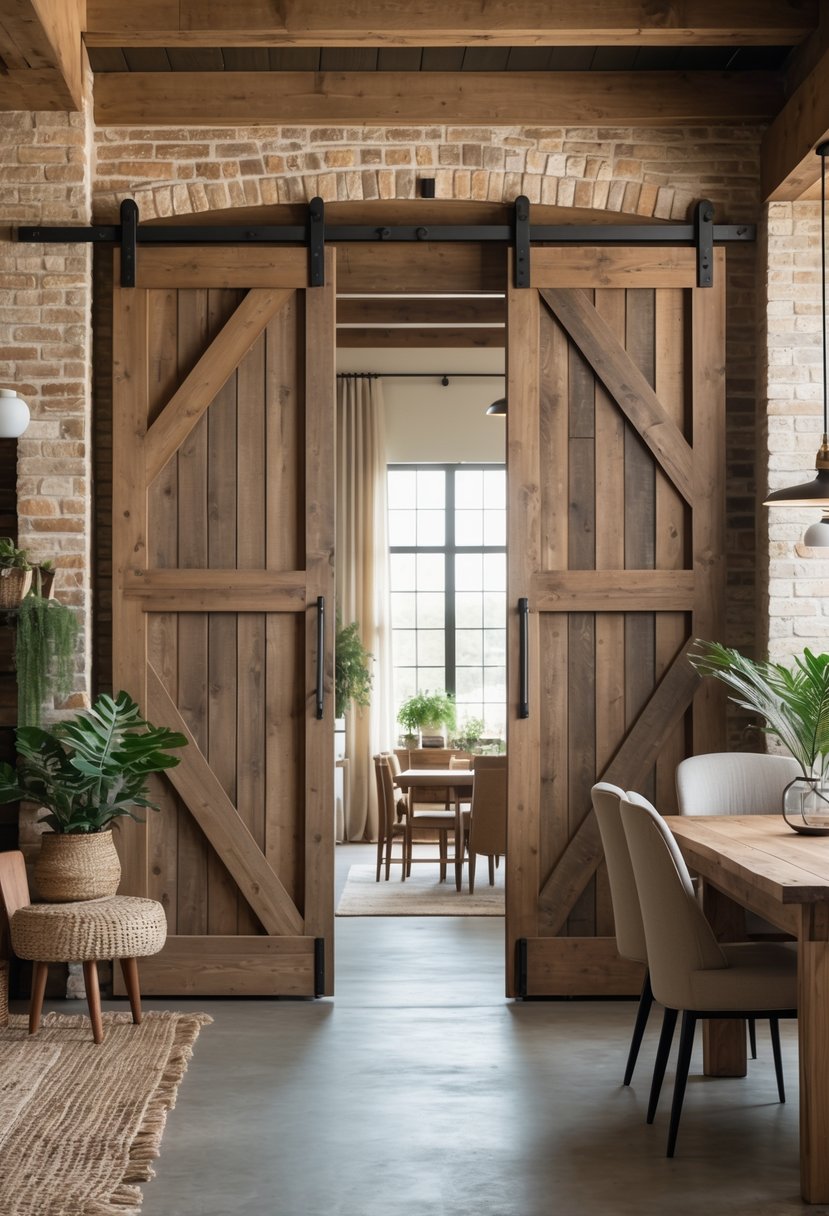
Barn door sliders add function while also serving as a focal point in a room. Their size and material naturally draw attention.
Natural wood, painted finishes, or reclaimed textures can match farmhouse interiors. These doors work well as both dividers and decorative elements.
Carved or custom designs bring individuality, making each door a distinct feature in the space.
Display collections of old glass jars
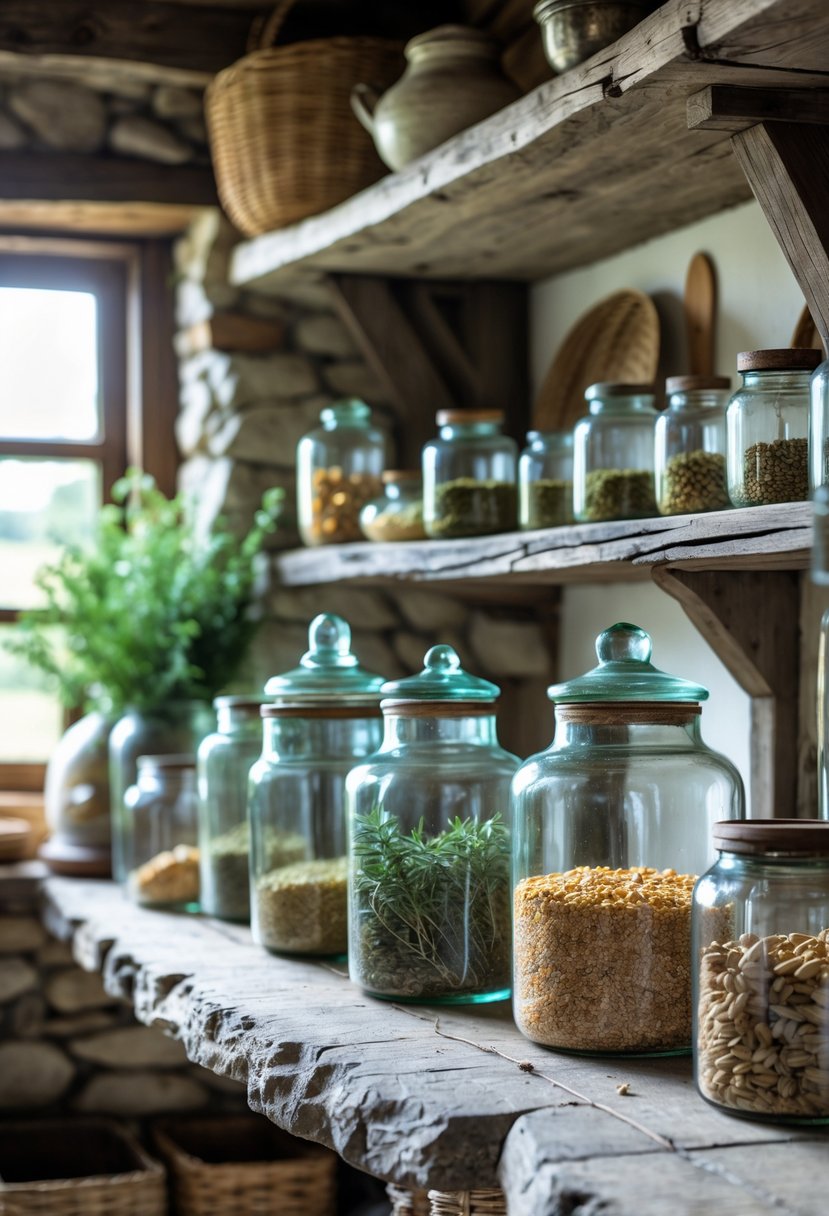
They can place vintage glass jars on open shelves or in a cabinet to highlight their shapes and colors.
Grouping jars by size or style creates a neat, balanced look.
Some people use them as simple vases or storage, adding both function and character to the space.
Add a large farmhouse dining table with a live edge
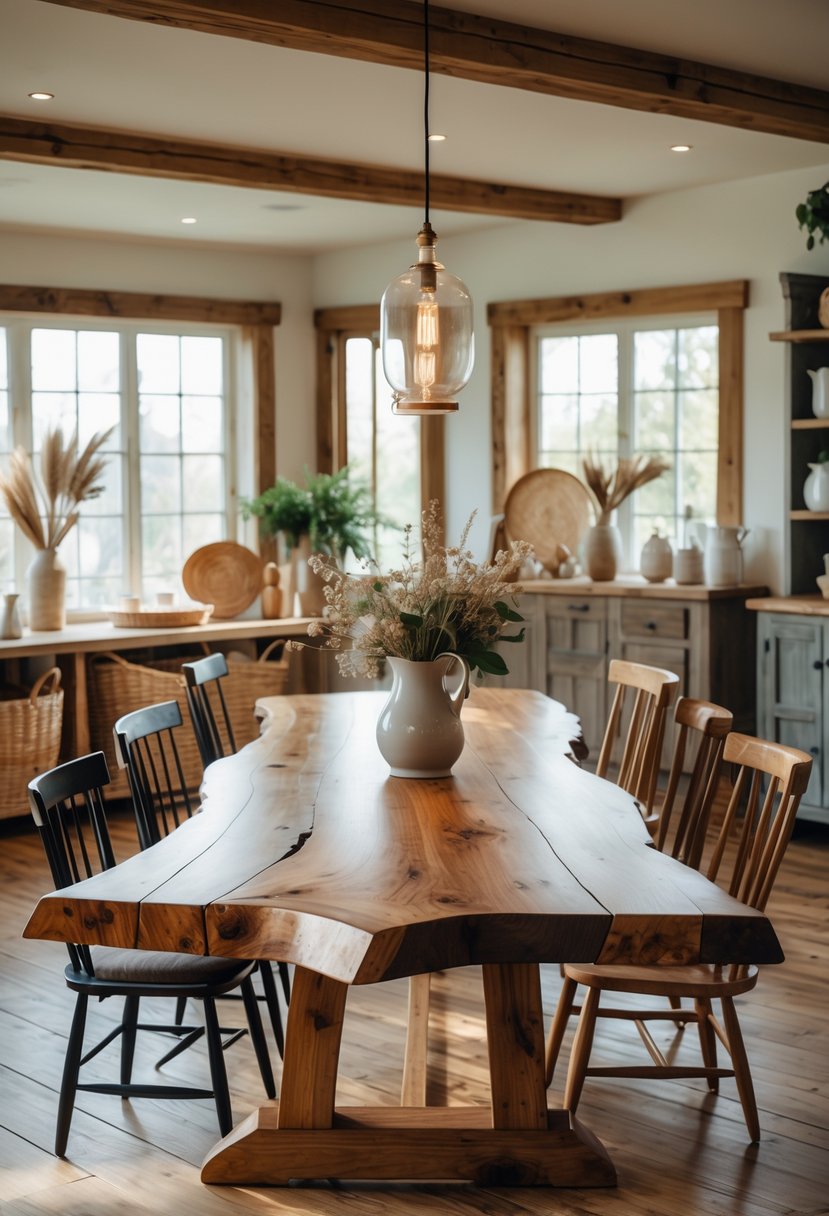
A large farmhouse dining table with a live edge brings natural character into the room. The organic edges highlight the unique grain and shape of the wood.
This style works well with both rustic and modern farmhouse interiors. It pairs easily with simple chairs or mixed seating for a relaxed, inviting look.
Core Principles of Eclectic Farmhouse Interior Design
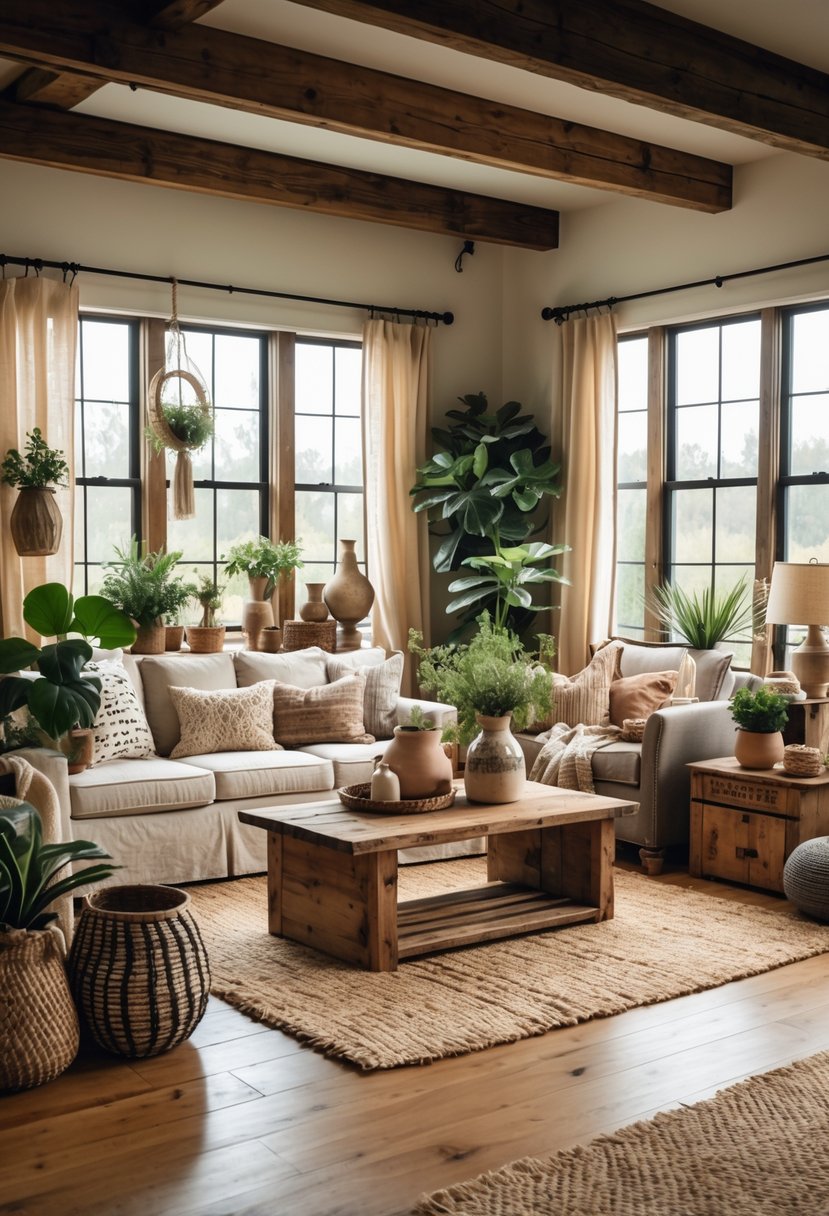
This design style depends on thoughtful mixing. It combines rustic textures with curated details so that the space feels warm, functional, and visually balanced. The approach values both comfort and character while avoiding clutter or mismatched elements.
Blending Styles for a Cohesive Look
Eclectic farmhouse interiors work best when different styles feel connected. Instead of random pairings, each piece should share a common thread such as color, texture, or material. For example, a vintage wooden table can sit comfortably next to modern metal chairs if both feature similar tones or finishes.
A clear color palette helps unify the space. Neutral bases like white, beige, or soft gray allow layered accents—such as patterned rugs, woven baskets, or bold artwork—to stand out without overwhelming the room.
Key strategies include:
- Use natural textures (wood, linen, stone) as grounding elements.
- Repeat colors or shapes across furniture and decor.
- Balance bold patterns with solid, muted backdrops.
This method keeps the design eclectic but not chaotic. Each choice feels intentional, creating a room that looks collected over time rather than pieced together without thought.
Balancing Old and New Elements
The farmhouse style emphasizes history, while eclectic design brings in variety. Blending the two requires careful selection so that vintage and modern items enhance rather than compete with each other.
A reclaimed wood cabinet, for instance, can pair well with sleek lighting if both maintain a simple, functional form. Antique pieces add depth, while modern elements prevent the space from feeling dated.
Examples of combinations:
- Old: distressed wood beams
- New: minimalist pendant lights
- Old: vintage rugs
- New: streamlined sofas
This balance ensures the home feels lived-in yet updated. It respects tradition while allowing room for personal taste and current design ideas. Each room gains warmth from the past and freshness from the present.
Incorporating Natural Textures
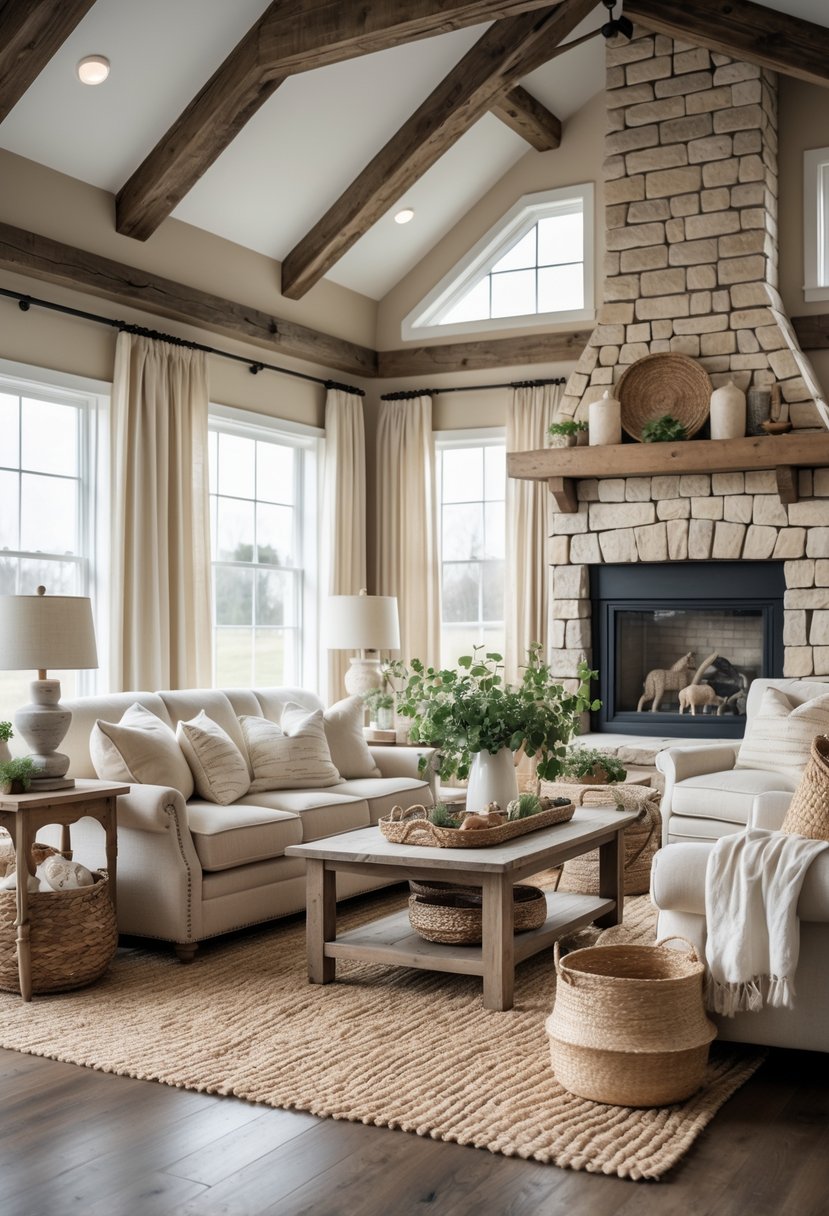
Natural textures bring warmth, depth, and character to farmhouse interiors. They create balance by pairing raw, organic materials with simple finishes, making the space feel both inviting and grounded.
Choosing Natural Materials
A farmhouse interior often relies on wood, stone, and woven fibers as the foundation. Reclaimed wood beams, rustic tables, or wide-plank flooring add visible grain and natural variation that cannot be replicated with synthetic options. Stone elements, such as a fireplace surround or accent wall, provide durability while giving the room an earthy feel.
Textiles also play a key role. Linen curtains, cotton slipcovers, and wool throws soften the harder materials and bring comfort. Woven items like jute rugs, wicker baskets, or rattan chairs add tactile interest and practical function.
When selecting materials, it helps to consider both appearance and use. For example, a stone countertop is long-lasting but cool to the touch, while a butcher block surface feels warmer and suits casual kitchens. Mixing these choices ensures the space feels authentic without appearing staged.
| Material | Best Use | Effect on Space |
|---|---|---|
| Reclaimed Wood | Flooring, Beams, Furniture | Warmth, character, history |
| Stone | Fireplaces, Walls, Countertops | Strength, texture, grounding |
| Linen & Cotton | Curtains, Upholstery | Softness, lightness |
| Jute & Rattan | Rugs, Baskets, Seating | Texture, casual charm |
Layering Textures for Depth
Layering textures prevents a farmhouse interior from feeling flat. A single wood finish or fabric can look plain, but combining smooth and rough surfaces creates visual interest. For example, a polished stone countertop contrasts well with a rustic wood island.
Soft layers are equally important. A wool rug under a linen sofa or woven throw pillows on a leather chair introduce variety without overwhelming the room. Each layer should serve a purpose—whether adding comfort, durability, or subtle contrast.
Color also matters when layering. Neutral tones like beige, gray, and cream allow different textures to stand out without clashing. Keeping the palette consistent makes it easier to mix patterns, such as stripes with checks, while still highlighting the natural materials.
A simple approach is to use three texture types per room:
- One hard surface (wood, stone, or metal)
- One soft fabric (linen, cotton, or wool)
- One woven or organic accent (rattan, wicker, or jute)
This balance adds depth while maintaining the relaxed, grounded feel that defines eclectic farmhouse design.
Learn more about eclectic interior design from Apartment Therapy.


